

We use cookies to ensure our website works properly and to personalise your experience. Cookies policy
Bukidnon State University, College of Education, Graduate Program, Malaybalay City, Bukidnon, Philippines, 8700
This study investigated the teachers’ lived experiences regarding instructional supervision practices of educational leaders. Anchored on instructional, distributed, and transformational leadership theories, the study explored how instructional supervision is experienced by teachers, the challenges encountered during supervision, and the possible improvements that may strengthen supervisory practices. A qualitative hermeneutic phenomenological approach guided was employed to interpret teachers’ lived experiences. Data were gathered through semi-structured interviews, focus group discussions, and document analysis involving Classroom Observation Tool records and Learning Action Cell minutes. Thematic analysis was used in interpreting the data gathered. Findings revealed that instructional supervision demonstrates a dual nature, functioning both as a compliance-oriented process and a source of professional support. Teachers identified structural and communicative challenges, including time constraints, workload demands, inadequate resources, and generalized feedback. The findings further showed that collaborative and contextualized instructional initiatives such as mentoring, coaching, Learning Action Cell sessions, and professional dialogue improve the effectiveness of instructional supervision. Consequently, the study developed the Emerging Framework of Responsive Instructional Supervision to guide educational leaders in implementing supportive and context-responsive supervisory practices.
Instructional supervision plays a significant role in improving teaching quality and strengthening teacher professional development. Educational leaders such as school heads and master teachers are expected to guide, monitor, and support teachers in improving classroom instruction and learner outcomes. Effective supervision promotes reflective teaching, collaborative learning, and continuous professional growth among teachers.¹
However, instructional supervision in many school settings remains compliance-oriented, focusing primarily on monitoring, evaluation, and documentation requirements rather than professional development and instructional support. Teachers also experience challenges related to workload, limited instructional resources, generalized feedback, and time constraints, which influence their experiences with supervision.²
In the Philippine educational context, instructional supervision is guided by the Philippine Professional Standards for Teachers and the Philippine Professional Standards for School Heads, which emphasize instructional leadership, reflective teaching, and professional growth.³â»â´ Despite these policies, variations in supervisory practices remain evident across schools, particularly in terms of mentorship, communication, and contextualized support.
This study aimed to explore teachers’ lived experiences regarding the instructional supervision practices of educational leaders in Medina North District, Division of Misamis Oriental, during the School Year 2025–2026. Specifically, the study examined the instructional supervision practices of educational leaders in terms of teaching and learning as experienced by teachers and developed a contextualized instructional framework based on the findings of the study.
The findings of the study may contribute to the improvement of instructional supervision practices and provide educational leaders with a contextualized framework for responsive instructional supervision.
MATERIALS AND METHODS
This study employed a qualitative research design using hermeneutic phenomenology guided by Manen’ (2016) interpretive approach. The study explored teachers’ lived experiences and interpretations regarding instructional supervision practices implemented by educational leaders.âµ
The study was conducted in selected public elementary schools in Medina North District, Division of Misamis Oriental. The schools varied in size, instructional resources, facilities, and contextual conditions, allowing broader perspectives regarding instructional supervision practices.
Eight elementary school teachers participated in the study through purposive sampling. Participants were currently employed teachers actively handling classes with at least one year of teaching experience.
Data collection involved semi-structured interviews, focus group discussions, and document analysis of Classroom Observation Tool records and Learning Action Cell minutes. Interviews and discussions were audio-recorded with participants’ consent and later transcribed verbatim.
Data were analyzed using thematic analysis following hermeneutic phenomenological approach. Interview transcripts were repeatedly read to achieve immersion and understanding of participants’ experiences. Significant statements relevant to instructional supervision were extracted and coded into meaning units. These units were then clustered based on similarities to generate emerging themes. The researcher engaged in reflective interpretation to uncover deeper meanings of the themes in relation to the phenomenon. Finally, themes were synthesized into thematic descriptions that served as the basis for presenting and discussing the findings. Significant statements were identified, grouped into meaning units, and organized into themes and subthemes.ⶠTo ensure trustworthiness and credibility, the study employed member checking, triangulation, reflective journaling, and intercoder agreement.
This study adhered to ethical standards to ensure the protection of participants and the integrity of the research process. Approval of conducting the study was obtained from relevant educational authorities and school administrators. Participants were fully informed about the purpose, procedures, and expected outcomes of the study, and informed consent was secured prior to data collection.
Participation was voluntary, and participants were informed of their right to withdraw at any time without penalty or to decline answering any question they were uncomfortable with.
The study included elementary school teachers currently teaching in the selected schools who had experience with instructional supervision. Those who did not meet the criteria or declined participation were excluded.
To ensure data credibility, member checking was conducted, allowing participants to review and verify their interview transcripts. Confidentiality and anonymity were maintained using pseudonyms, and all data were securely stored and used solely for research purposes.
RESULTS AND DISCUSSION
The findings revealed three major themes describing teachers’ lived experiences regarding instructional supervision in detail, encompassing both positive and challenging aspects. The results describe the nuanced perspectives teachers shared, covering their appreciation for supportive supervisory approaches, their struggles with compliance-focused practices, and actionable strategies they believe would enhance supervision. The following presentation of themes and subthemes details these shared experiences as reported by the study participants.
Theme 1: The Dual Nature of Supervision
Teachers described Instructional supervision, as experienced by the teacher participants, serves a dual function: monitoring instructional practices and supporting teacher development. Teachers described supervision as a process that ensures teaching practices align with school expectations and educational standards, while also providing opportunities for guidance and professional development. These two aspects of supervision demonstrate the complexity of leadership roles in schools, where supervisors must balance administrative accountability with supportive mentorship.
The participants emphasized that supervision could influence their teaching practices when it provides both constructive feedback and monitoring of instructional delivery. Teachers recognized that while supervisors are responsible for evaluating classroom practices, they also serve as mentors, helping teachers improve their teaching strategies. This balance between evaluation and support reflects the dynamic nature of instructional supervision in educational settings. These are some statements of the participants that led to this theme:
Instructional Supervision by educational leaders can make teaching more effective because it enhances and updates the right way of teaching. It also helps learners to become more interested because teachers can use better teaching strategies. [Teacher F]
Instructional supervision helps teachers to improve their teaching strategies and classroom practices since supervisors give feedback that teaches us how to improve our lessons. [Teacher A]
Instructional supervision is a form of guidance and support to help teachers address their issues in the classroom and helps them enhance their teaching performance. [Teacher D]
These findings indicate that teachers value supervision practices that combine accountability with constructive support. Hallinger emphasized that instructional leadership involves monitoring instruction while simultaneously supporting teacher effectiveness.â· Likewise, Glickman et al. explained that supervision should function as both an evaluative and developmental process.â¸
The experiences of the participants in this study indicate that teachers value supervision as meaningful when it combines accountability and professional support. From the researcher's perspective, this finding underscores the importance of leadership practices that maintain instructional standards while also fostering an environment of support for teacher development.
Subtheme 1: Balancing Compliance
Instructional supervision involves educational leaders in ensuring that teachers adhere to instructional standards and school policies. Teachers recognized that educational leaders play an important role in monitoring lesson implementation, classroom management, and adherence to curriculum guidelines. These monitoring responsibilities help assess the consistency of instruction delivery and ensure that educational goals are achieved.
However, teachers also stressed that their Supervision should not be all about compliance. While monitoring is necessary, teachers expressed the need for guidance to help them improve their teaching practices. When Supervision focuses on checking documents or classroom procedures, the teaching process can be perceived by teachers as judgmental rather than supportive. They shared:
Supervision is helpful but inconsistent at times. Some supervisors are more guidance-oriented, and some are more compliance-oriented. [Teacher B]
Sometimes supervision is more a matter of checking forms and requirements than an opportunity to help teachers improve their teaching strategies. [Teacher G]
Supervisors monitor our teaching practices, but it is more helpful if they also guide us on how to improve our lesson delivery. [Teacher E]
The findings suggest that teachers respond more positively when monitoring responsibilities are balanced with meaningful professional guidance.
Subtheme 2: Constructive Mentorship
Beyond its role in monitoring instructional practices, supervision also serves as a mentoring process, providing support to teachers in enhancing their professional competencies. Teachers in this study explained how constructive feedback, guidance, and technical assistance from supervisors contribute to their professional growth. Mentorship during supervision supports teachers in reflecting on their teaching methods and developing teaching strategies to improve teaching and learning in the classroom.
Participants stressed that when supervisors offer constructive suggestions and professionally encourage them, teachers feel more confident about trying new teaching approaches. Mentoring relationships between supervisors and teachers also help address classroom challenges and improve the effectiveness of teaching practices. They shared:
The supervisor gives constructive suggestions that help the teacher improve his work. [Teacher H]
Supervision motivates teachers to improve their teaching practices because supervisors provide suggestions and recommendations. [Teacher C]
When supervisors give helpful feedback, it encourages teachers to try new strategies in the classroom. [Teacher D]
Darling-Hammond et al. emphasized that mentoring and coaching practices strengthen instructional competence and professional confidence among teachers.â¹
From a transformational leadership perspective, this mentoring process motivates teachers to improve their performance and adopt innovative instructional strategies. The researcher observed that constructive mentorship plays a crucial role in strengthening teacher competence and promoting positive professional relationships between supervisors and teachers.
These findings show that instructional supervision, as experienced by teachers, reflects a dual nature that balances compliance requirements with constructive mentorship and professional support. These highlight the need for supervision practices that integrate accountability with meaningful guidance to support teacher development.
Theme 2: Challenges Faced by Teachers in Instructional Supervision
Despite the benefits of instructional supervision, teachers also encounter various challenges during the supervision process. These challenges influence how teachers interpret feedback and apply supervisory guidance in their teaching practices. Participants reported several challenges related to time constraints, instructional preparation, and communication with supervisors.
Teachers observed that preparing instructional materials, lesson plans, and other requirements can be demanding, especially when supervision schedules overlap with other professional responsibilities. These challenges might make it hard for teachers to be fully attentive to enhancing their instructional practices. These are evident in their statements:
There are many challenges I faced during the period of instructional supervision, particularly in the preparation of instructional materials and lesson planning. [Teacher F]
Sometimes we have difficulty in managing our time because we have a lot of teaching jobs as well. [Teacher E]
It can be hard to prepare everything necessary when supervising and managing other tasks in the classroom. [Teacher A]
The findings suggest that structural and communicative barriers influence teachers’ experiences with supervision. Bush explained that organizational conditions such as workload and time limitations affect the effectiveness of supervisory practices.² From the researcher's perspective, addressing these challenges requires leadership practices that adequately support teachers, especially in time management and instructional resources.
Subtheme 1: Structural Challenges
Structural challenges refer to the institutional conditions influencing the implementation of instructional supervision. Teachers cited problems like a lack of time for classroom observation, heavy workloads, and inadequate instructional materials. These factors may impact the quality of supervision and, as a result, limit opportunities for meaningful professional dialogue between teachers and supervisors. They said:
The challenges I faced include limited instructional materials and the limited time given by the school head during supervision. [Teacher C]
Having the materials and lesson plans ready during supervision is not easy due to a lack of resources. [Teacher F]
Sometimes the schedule for supervision is short, so it is difficult to talk about the lesson in detail. [Teacher G]
In this study, the researcher noted that structural challenges can affect how teachers view supervision and their propensity to engage in professional reflection on the supervision process.
Subtheme 2: Communicative Challenges
Communication between teachers and educational leaders is another important factor in the effectiveness of instructional supervision. Teachers stressed that to provide meaningful supervision, there needs to be clear feedback, open dialogue, and an opportunity for professional discussion. When feedback is unclear or too general, it can be challenging for teachers to incorporate supervisory suggestions into their classroom practices. This is readily seen in the participants’ statements:
A challenge arises when feedback is too general. Concrete suggestions that can be immediately applied are preferred. [Teacher B]
Sometimes we get feedback that is not so specific that we can use in the classroom. [Teacher G]
Clear direction from supervisors helps teachers improve their teaching. [Teacher H]
The findings indicate that open communication and constructive dialogue strengthen trust and collaboration between teachers and supervisors.¹â° These highlight the contextual challenges, including time constraints, workload demands, limited resources, and generic feedback, that influence how teachers experience instructional supervision. These conditions emphasize the need for supervision practices that are responsive to teachers' realities and supportive of their professional growth.
Theme 3: Ways to Improve Instructional Supervision
Instructional supervision is not only designed to assess teaching practices but also to assist teachers in developing their professional competencies and classroom practices. The teacher participants in this study offered various views on how Supervision can be improved to better support teachers and improve student learning outcomes. Their experiences suggest that effective supervision should promote collaboration, ongoing professional learning, and context-based support that is responsive to teachers' instruction needs.
The participants stressed that supervision is meaningful when educational leaders provide opportunities for teachers to learn from one another and engage in professional development. Teachers emphasized that collaboration among colleagues and supervisors helps them share ideas, discuss classroom challenges, and develop innovative instructional strategies that can improve teaching and learning. Their statements make this finding clear:
School leaders can improve instructional supervision by updating teaching strategies and encouraging teachers to participate in professional development. [Teacher F]
Teachers benefit from supervision when it includes mentoring and collaborative discussions. [Teacher D]
Supervision should provide opportunities for teachers to learn from each other's experiences. [Teacher B]
The findings support distributed leadership theory, which emphasizes collaboration and shared responsibility in improving instructional practices.¹¹ In relation to the theory of distributive leadership, the researcher noted that when teachers and educational leaders collaborate, leadership responsibilities are distributed throughout the school community, thereby strengthening instructional improvement efforts.
Subtheme 1: Collaborative Instructional Initiatives
Collaborative instructional initiatives became an important instructional supervision strategy. Teachers shared that collaboration through mentoring and coaching, learning action cells (LAC), peer sharing, and professional dialogue offer opportunities for teachers to reflect on their instructional practices and share effective teaching strategies. These are types of collaborative activities in which teachers can learn from one another's experiences and develop new approaches to classroom challenges.
Participants emphasized that supervision is more guided when educational leaders involve teachers in discussions about teaching strategies and offer opportunities for collaborative problem-solving. Teachers reported that these collaborative efforts help them feel more supported in their professional roles and enable them to improve their teaching practices continuously:
Peer sharing in the Learning Action Cell sessions is effective because we learn from other teachers who have experienced the issues in our classrooms. [Teacher B]
Collaborative supervision helps teachers feel supported and motivated to improve as teachers. [Teacher D]
Working together with colleagues during professional discussions helps teachers to improve their strategies. [Teacher A]
Collaborative initiatives such as mentoring, coaching, and Learning Action Cell sessions encourage reflective teaching, professional learning, and instructional improvement. In relation to instructional leadership theory, the researcher observed that collaborative initiatives encourage teachers to actively participate in improving instructional practices, which ultimately contributes to enhanced student learning outcomes.
Subtheme 2: Contextualized Instructional Initiatives
Another strategy identified by the participants for improving instructional supervision is the need for context-based support that responds to teachers' specific classroom realities. Teachers explained that supervision is more effective when supervisors consider the diverse needs of teachers, learners, and school environments.
Participants emphasized that supervisors should provide guidance relevant to the classroom rather than general feedback that may not apply to the teacher's context. Teachers also shared that individualized guidance from supervisors helps them address challenges such as managing diverse learners, integrating technology in teaching, and implementing appropriate instructional strategies. When Supervision is adapted to teachers' needs, teachers feel more confident in applying the recommendations provided by supervisors. Teacher B noted that a challenge arises when supervisors' feedback is too general. They preferred concrete suggestions that could be immediately applied in their teaching.
Meanwhile, these are what other participants mentioned:
Teachers need guidance that addresses the specific challenges we face with our learners. [Teacher E]
Individualized support from supervisors helps teachers apply strategies that work in their own classrooms. [Teacher H]
The findings indicate that supervision becomes more meaningful when it responds to teachers’ actual classroom conditions and professional needs. Regarding transformational leadership theory, the researcher observed that when leaders provide personalized instructions and encouragement, they are more likely to inspire teachers to improve their instructional delivery and participate in lifelong learning.
These results show how important it is to use collaborative and responsive strategies, like mentoring, learning action cell (LAC) sessions, and professional dialogue, to improve instructional supervision. These methods help create supervision practices that are situation-based, teacher-focused, and continuously improving.
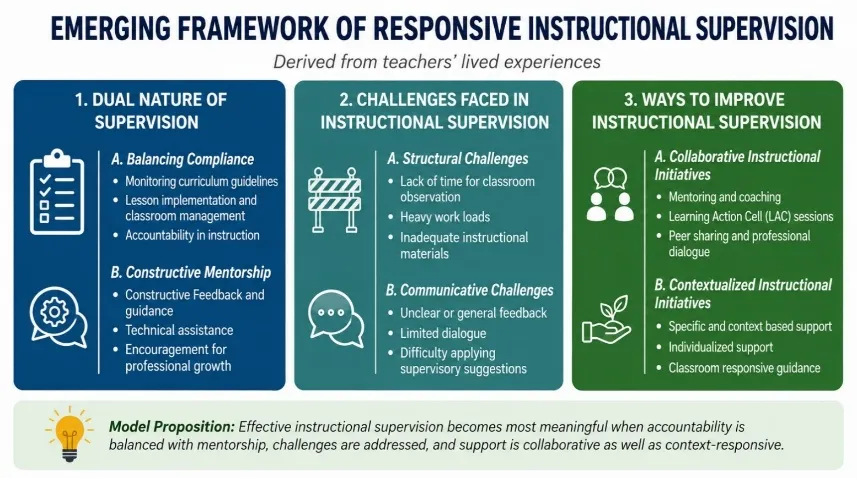
Figure 1. Emerging Framework of Responsive Instructional Supervision Derived from Teachers’ Lived Experiences
The Emerging Framework of Responsive Instructional Supervision posits that instructional supervision becomes most effective when it responds to teachers’ professional needs, classroom realities, and instructional challenges. Developed from teachers’ lived experiences, the framework defines supervision as a developmental and supportive process rather than a purely compliance-oriented practice.
The framework is organized into three interconnected themes: the dual nature of supervision, challenges faced in instructional supervision, and ways to improve instructional supervision.
The framework proposes that responsive instructional supervision can be achieved when educational leaders balance accountability with mentorship, address structural and communicative challenges, and implement collaborative and context-sensitive support systems. The framework further suggests that instructional supervision should function as an ongoing developmental process that strengthens professional learning, enhances instructional practices, and contributes to improved student learning outcomes.
CONCLUSION
The study concludes that instructional supervision becomes most effective when accountability is balanced with constructive mentorship and professional support. Teachers value supervision practices that encourage collaboration, reflective teaching, and meaningful feedback. However, structural and communicative challenges such as workload demands, inadequate resources, time constraints, and generalized feedback affect the quality of supervision experiences.
The findings further suggest that instructional supervision should move beyond compliance-oriented practices and function as a collaborative and developmental process that supports teacher growth and instructional improvement. The Emerging Framework of Responsive Instructional Supervision developed in this study may serve as a contextualized guide for educational leaders in implementing responsive supervision practices that strengthen teacher development, instructional effectiveness, and professional collaboration within schools.
REFERENCES


Else A. Sobremonte*, Michelle Pamela G. Ansayam, Bridging Leadership And Learning: Analyzing The Dynamics Of Instructional Supervision Among Educational Leaders, Int. J. Sci. R. Tech., 2026, 3 (5), 928-935. https://doi.org/10.5281/zenodo.20409621
 10.5281/zenodo.20409621