

We use cookies to ensure our website works properly and to personalise your experience. Cookies policy
Dept. of EEE, Sri Siddhartha Institute of Technology, Tumkur, Karnataka, India
Maximum Power Point Tracking (MPPT) techniques are widely used in photovoltaic (PV) systems to maximize the extraction of solar energy under varying environmental conditions. This paper presents a comparative analysis of two commonly used MPPT algorithms: Perturb and Observe (P&O) and Incremental Conductance (IC). The objective of the study is to evaluate the performance of both techniques in terms of tracking speed, efficiency, steady-state oscillations, and response to changes in solar irradiance and temperature. A boost converter is employed to interface the PV array with the load and to maintain proper impedance matching for efficient power transfer. The PV system integrated with P&O and IC algorithms is modeled and simulated in MATLAB/Simulink. Simulation results demonstrate that both techniques improve the power extraction capability of the PV system; however, the Incremental Conductance.
The increasing global energy demand driven by industrialization and population growth has led to significant investments in alternative energy solutions to address energy efficiency and power quality concerns. Among these, photovoltaic (PV) energy has emerged as a prominent resource, particularly in tropical and temperate regions where solar irradiance can reach up to 1000 W/m².
PV generation is gaining importance due to several advantages, including ease of deployment, high reliability, low maintenance requirements, operational flexibility, and the absence of moving parts, which minimizes noise and mechanical wear. Additionally, PV systems have applications such as desalination and distributed power generation. The conversion efficiency of PV cells typically ranges from approximately 18% for low-cost units to about 29% for high-efficiency modules. Furthermore, the declining cost of photovoltaic modules and modern power electronic systems is encouraging wider adoption and future large-scale installations.
However, PV generation is inherently intermittent and highly dependent on environmental conditions, which reduces its reliability as a standalone power source. To overcome these limitations, maximum power point tracking (MPPT) techniques are employed to ensure that the PV system operates at its optimal power point. This improves energy extraction efficiency and enhances both the steady-state and dynamic performance of the overall power generation system, enabling more stable and reliable power delivery to loads and the utility grid.
MPPT TECHNIQUES
Maximum power point tracking (MPPT) is a technique used to maximize energy extraction from renewable energy sources and is widely applied in photovoltaic (PV) systems.
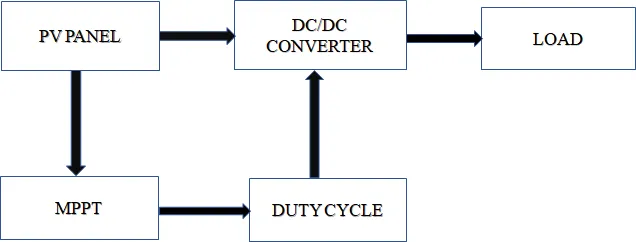
Fig1: Block Diagram of MPPT
In systems without MPPT, the PV panel output is directly connected to the load through a power converter, without any optimization of the operating point. Fig. 2 shows the Simulink model of the system without MPPT.
In contrast, in systems with MPPT, the PV panel output is first processed by an MPPT controller, which determines the optimal operating point. The controlled output is then supplied to the load through a power converter, enabling improved energy extraction and system performance.
Type of MPPT is:
Without MPPT.
To enhance the efficiency of photovoltaic (PV) systems, maximum power point tracking (MPPT) techniques are employed to ensure operation at the optimal power point under varying environmental conditions. The nonlinear characteristics of PV modules, influenced by solar irradiance and temperature, result in a unique maximum power point (MPP) on the power–voltage (P–V) curve. MPPT algorithms continuously track this operating point to maximize energy extraction and improve overall system performance.
Perturb & observe technique.
The Perturb and Observe (P&O) method is one of the most widely used MPPT algorithms in commercial photovoltaic (PV) systems due to its simplicity and ease of implementation. This method operates on a trial-and-error principle, where the PV controller perturbs the operating voltage or power reference and observes the resulting change in output power. If the output power increases, the controller continues to adjust the reference in the same direction. Conversely, if the output power decreases, the direction of perturbation is reversed to avoid operating away from the maximum power point (MPP). This iterative process enables the system to track the MPP under varying environmental conditions, although it may introduce small oscillations around the optimal point. Fig. 3 illustrates the Simulink model of the Perturb and Observe technique.
Incremental Conductance technique.
The Incremental Conductance (IC) technique is one of the most effective Maximum Power Point Tracking (MPPT) methods used in photovoltaic (PV) systems to maximize power extraction under varying environmental conditions. This paper presents the implementation and performance analysis of the Incremental Conductance algorithm in a PV system. The IC method determines the maximum power point by comparing the incremental conductance with the instantaneous conductance, enabling accurate tracking of the operating point. A boost converter is employed to regulate the output voltage and ensure efficient power transfer between the PV array and the load. The proposed PV system with the IC-based MPPT controller is modeled and simulated using MATLAB/Simulink under different irradiance and temperature conditions. The simulation results demonstrate that the Incremental Conductance technique provides faster tracking response, higher efficiency, and reduced steady-state oscillations compared to conventional MPPT methods, making it suitable for efficient solar energy conversion systems.
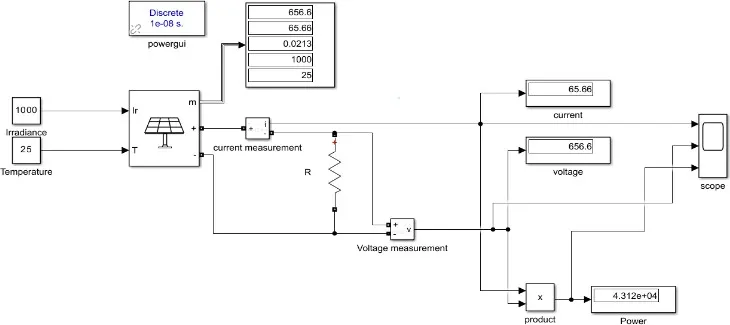
Fig 2: Shows the Without MPPT technique PV system.
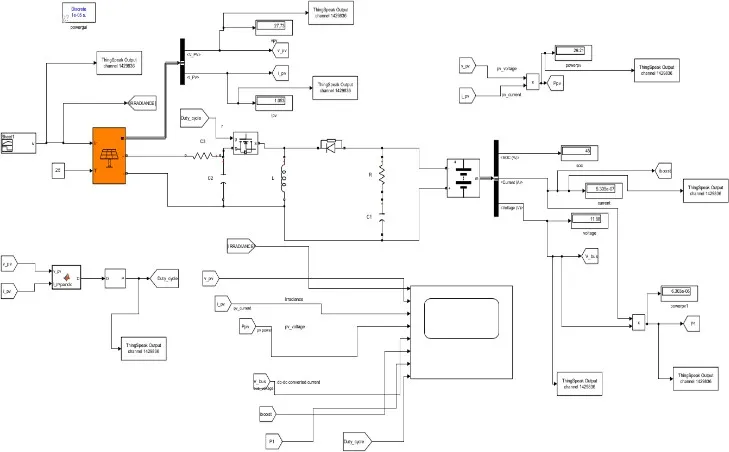
Fig 3: Shows the Perturb and Observe technique applied in PV system.
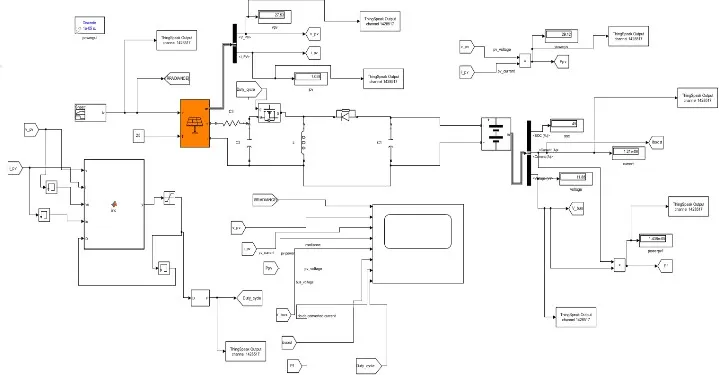
Fig 3: Shows the Incremental Conductance technique applied in PV system.
SIMULATION RESULTS
The simulation results of all two methods—without mppt, perturb & observe (P&O) and MPPT—are compared in this section. And the output waveforms are shown in figures.4, 5, 6, and 7. The output waveform of the 53kV grid-connected system's output is used as the foundation for comparison of the results. The findings of the study using Without MPPT and With MPPT approaches are compared in Table 1.
In Fig 5 Y axis consists of Power, Voltage and Current and X axis consists of Time.
In Fig 6. Y axis consists of Voltage and X axis consists of Time.
In Fig 7, Y axis consists of Current and X axis consists of Time.
In Fig 8 Y axis consists of Power and X axis consists of Time.
In Fig 9 Y axis consists of Power, Voltage, Current and Duty cycle and X axis consists of Time.
|
Parameter |
Without MPPT |
P&O Technique |
IC Technique |
|
Current |
65.56A |
64A |
128A |
|
Voltage |
655.5V |
793.03V |
393V |
|
Power |
43.66KW |
51.55KW |
51.45KW |
TABLE 1: COMPARISION OF WITHOUT MPPT, P&O AND IC TECHNIQUES.
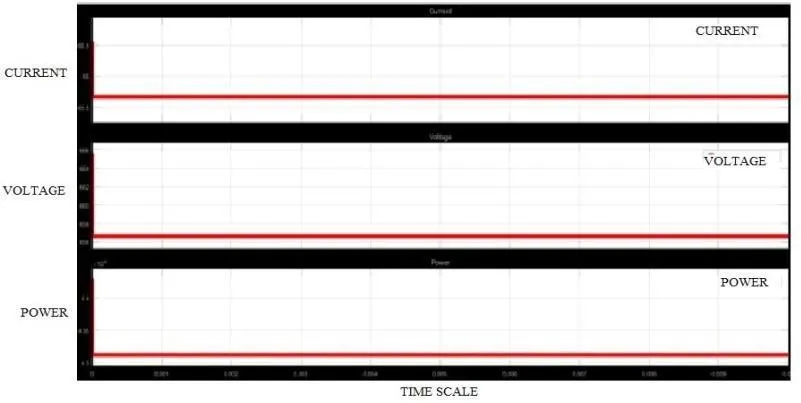
Fig 5: Output of PV model array without MPPT
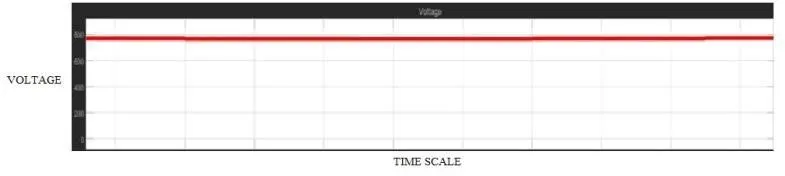
Fig 6: P&O output voltage
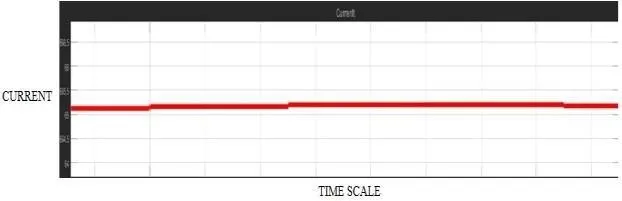
Fig 7: P&O Output current
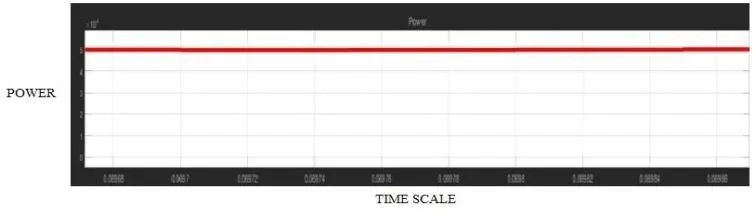
Fig 8: P&O Output power
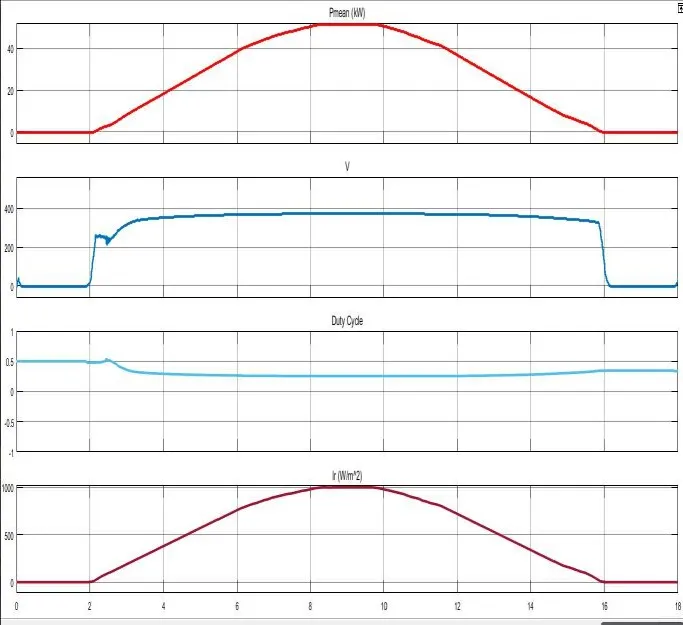
Fig 9: IC Output Power, Voltage, Current
CONCLUSION
This work presents a comprehensive analysis of maximum power point tracking (MPPT) techniques in photovoltaic (PV) systems. The methods considered include Perturb and Observe (P&O), Incremental Conductance and operation without MPPT. The simulation results of the PV array are evaluated based on the load power at the converter output, and the system performance is analysed under grid-connected conditions using a boost converter.
The results indicate that the load power obtained using MPPT techniques is significantly higher than that obtained without MPPT. Among the evaluated methods, the P&O algorithm demonstrates superior performance compared to the system without MPPT. This is attributed to its faster convergence, low computational complexity, effective tracking capability, and satisfactory operating voltage adjustment, which collectively contribute to improved overall system efficiency.
REFERENCES



Maruthi H.*, Yogananda B. S., Lavanya N. S., Comaparative Study Of MPPT Techniques For Photovoltaic Systems, Int. J. Sci. R. Tech., 2026, 3 (5), 1111-1117. https://doi.org/10.5281/zenodo.20443971
 10.5281/zenodo.20443971