

We use cookies to ensure our website works properly and to personalise your experience. Cookies policy
Mechanical Engineering Department, Institute of Technology & Management, Aligarh, India
Absrtact: Water is a basic necessity for survival and development of man, and the growing human population, urbanization, and industrialization have raised the demand for fresh water resources. Though about 97% of Earth’s water is saline water, there is a limited availability of freshwater resources. Thus, simple and economic water treatment techniques are needed. One such effective technique for treating water is solar distillation due to its use of renewable energy source (i.e., sun), simple operation, and simplicity of construction. However, low water productivity is the major drawback associated with solar distillation. In the present study, the experimental performance of single slope single basin solar distillation using various absorbers has been studied in Indian climatic conditions in the months of May and June 2025. Various absorbers used in the study include cotton cloth with pebbles and jute cloth with pebbles. Comparison has been done between the conventional solar still and the proposed still. Experimental results showed that the water productivity increased by 50.00% and 46.15% in case of cotton cloth with pebbles and jute cloth with pebbles, respectively.
Access to clean and drinkable water is the basic requirement of living any kind of existence on the earth. Water is used in numerous human activities which may include domestic, municipal use, industrial process, irrigation, energy sector, military activities etc. Population increase, technology development and resulting allied activities such as agriculture, industrialization, urbanization and globalization have led to an exponential increase in water demand. In addition to that the exploitation of natural resources and environment to satisfy the increasing demands particularly of the developed and rapidly developing nations have worsened the situation and lead to the occurrence of events like climate change. The net result of all these is the degradation of the quantity as well as quality of fresh water resources. Researches have shown that nearly 40% of the world’s population is already facing serious water shortages. This number is predicted to reach at least 60% till 2025 [1]. It has been reported that around 66% of world’s population is already facing water shortage in one month at least every year [2]. According to the available records, nearly 80% of wastewater produced due to human activities is dumped into the environment untreated [3]. As per the present situation, we come to a conclusion that traditional sources of water such as rain, snow melt, water obtained from runoff and stored in lakes and aquifers are inadequate to cater to the constantly increasing demands of water. People are becoming aware of the fact that water scarcity is not restricted to specific places only but it will affect each and every place around the world either directly or indirectly. In this context, UN has set a target of "access to clean water for everyone" by 2030 as the sixth sustainable development goal [4].
Production of freshwater can be done through several techniques, and the most common technique is desalination. The process of desalination involves extracting freshwater with low salinity from the feedwater having high salinity using the application of some external energy like thermal energy, electrical energy, or mechanical energy [6]. Desalination is a good way to meet the growing need for potable water due to availability of vast amount of seawater [7]. Desalination techniques can be categorized on the basis of energy source, as depicted in Fig. 1.
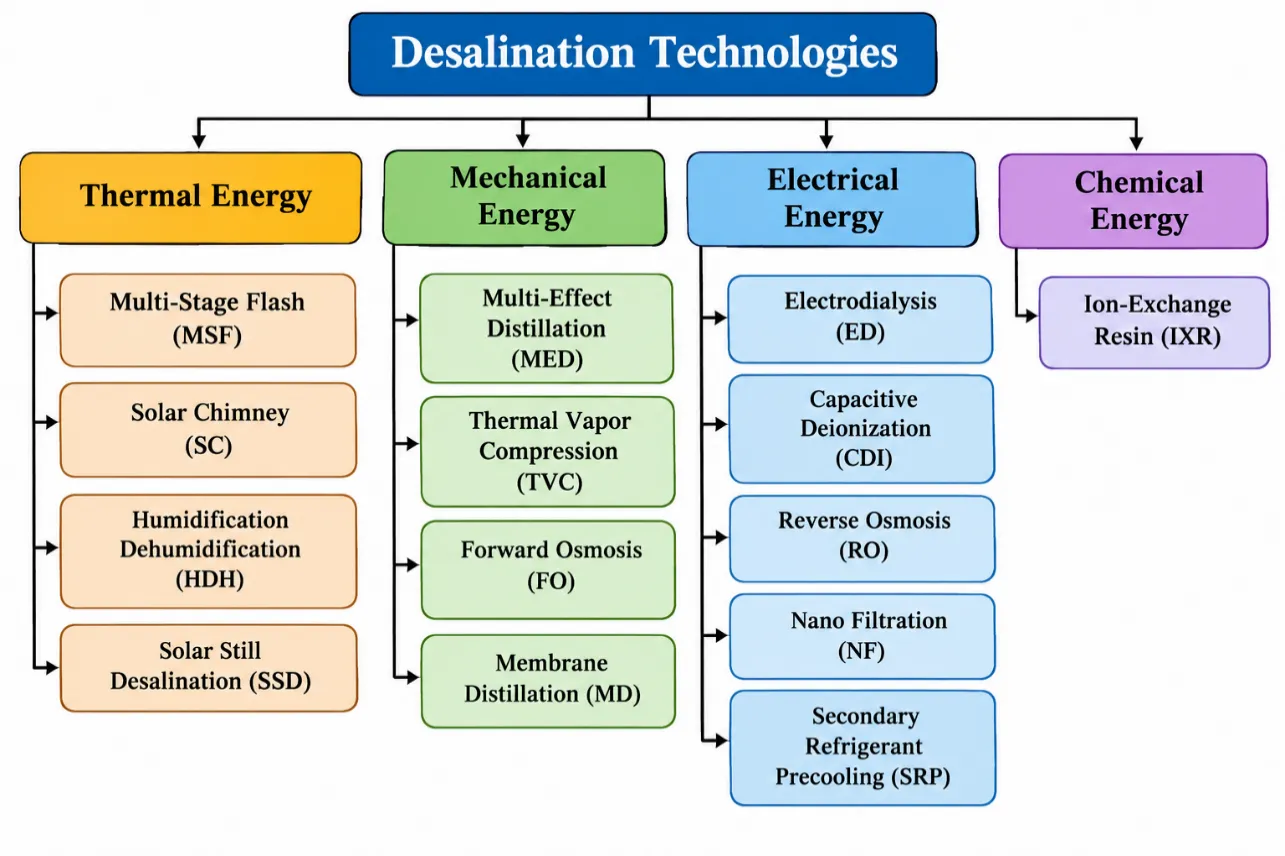
Figure 1: Classification of Desalination Systems Based on Energy Source
The current desalination technologies such as reverse osmosis, multi-stage flash, and multi-effect distillation form about 92% of the desalination units around the world and contribute about 94% of the total water production [8]. These desalination technologies are cost-effective in providing solutions for freshwater production due to technological advancements. However, these desalination technologies are still costly and depend on the use of fossil fuels. For instance, large-scale desalination technologies need about 30 KWh of energy to produce 4 cubic meters of freshwater [9]. The annual emissions from the operation of desalination units up to 2050 is expected to be about 0.4 billion tons of carbon dioxide [10]. The large-scale desalination technologies use large quantities of chemicals like biocides, anti-corrosives, and anti-foaming agents for the pretreatment and post-treatment of the process [11]. The other challenge that comes with the treatment process of removing the excess brine after the process of desalination is equally significant [12]. Additionally, as mentioned above, the cost-effective technologies used for desalination like the reverse osmosis technology can be quite effective when utilized on a large scale, and the plant is situated close to the source of water like the sea [13]. It has been observed that most of such facilities, i.e., almost 70%, are situated in the developed nations. Nevertheless, the problem of water crisis is not restricted to the developed nations alone.
The increase in energy demand is witnessed in the developed nations too due to advancements in technology and higher standards of living. Most of the energy demand is fulfilled by using fossil fuels as an energy source. Fig. 2 shows the pattern in energy consumption according to the different energy sources. It is clear from the graph that the conventional energy sources based on fossil fuels account for almost 80% of total energy consumption [14,15]. As fossil fuels’ consumption rises, the emission of greenhouse gases also increases accordingly. It may have some adverse impacts on the environment such as depletion of the ozone layer and deforestation. The rising rate of fossil fuels consumption, therefore, affects not only the availability of the limited energy source but also the environment and ecology adversely.
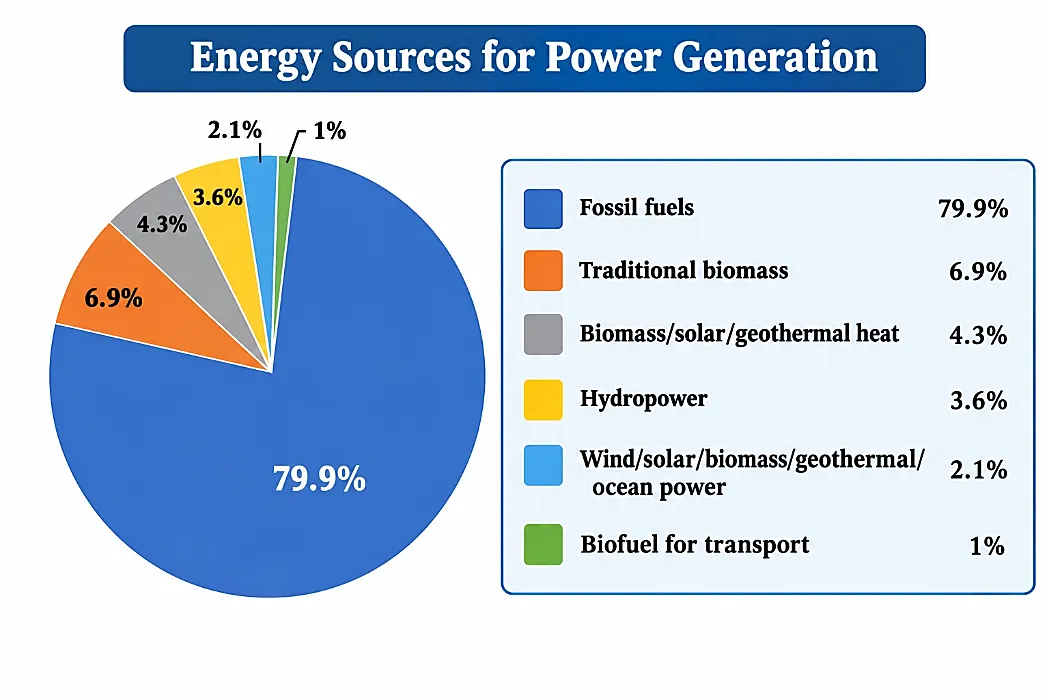
Figure 2: Global Energy Consumption Distribution
The solar absorber with high absorptivity will improve solar-thermal energy conversion. But the high temperature obtained with the absorbers will cause radiation heat loss. This issue could be solved through the use of materials with optical selectivity; when used as solar absorbers, these materials are known as spectrally selective absorbers (SSA). An optimal SSA should have high solar absorptivity in the spectrum of solar-thermal radiation (UV-visible-infrared) and low emissivity in the far infrared region to minimize the heat loss by radiation. Many spectrally selective absorbers have been developed by scientists that range from simple material combinations, intrinsic selective [16], tandem of semiconductor and metal [17], multilayered structures [18], and metal/non-metal-dielectric composite [19]. Spectral selectivity can also be accomplished by altering the surface characteristics of the materials [20].
Hence, it becomes necessary that such energy systems used for solving the problem of water shortage or scarcity have cost-effectiveness, decentralization and sustainability as their goals. Solar stills can be an effective solution to this problem through achieving all these three goals in producing fresh water.
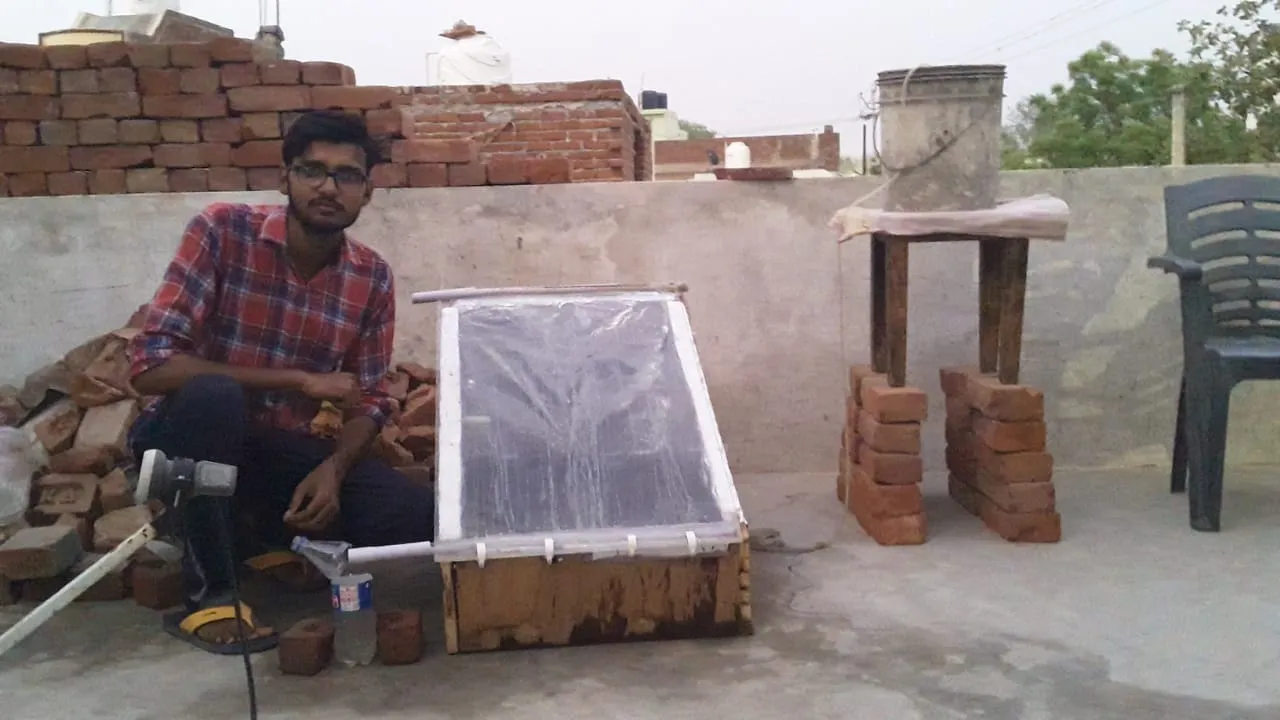
Figure 3: Experimental Setup of Still
EXPERIMENTAL SETUP:
The experiments were performed using a solar still which was placed at the Institute of Technology and Management, Aligarh, Uttar Pradesh, India (26° 44’ 35” N, 83° 16’ 24” E). The experiments were performed during May and June 2020 under the existing climatic conditions at the place of experimentation. The basin of the solar still had the size of 0.5 m × 0.5 m × 0.15 m. In order to ensure the entry of solar radiation inside the solar still and condensation of the produced vapor, a conventional 3 mm thick glass plate was used as the transparent cover. The glass cover was positioned at an optimum angle of 27° to allow the movement of condensate toward the collector duct (Fig. 3).
INSTRUMENTATION AND MEASUREMENT DEVICES:
The instrumentation tools and measurement instruments are essential in the experiments conducted on the solar water distillation process. These are necessary for measuring the variables that affect the evaporation, condensation, and output of a solar still. The measurement of these variables is critical in assessing the efficiency of the solar distillation process.
RESULTS AND DISCUSSION:
Desalination using solar energy provides an effective and economical solution to the problem of global shortage of clean water, especially for those areas with high solar radiation. Nonetheless, conventional single slope solar stills have been noted to be relatively inefficient thermally with respect to the production of distillates on daily basis. This is because of poor solar radiation absorption, slow evaporation and fast rate of heat loss through the basin. In order to solve the aforementioned problems, an experiment was carried out on five different system designs within a period of 24 hours continuously in May and June 2025. The main aim of the experiment was to assess the thermal performance and distillation efficiency of the sensible heat storage material and capillary porous material. To maintain consistent experiment conditions, the basin had a constant amount of 8 liters of saline feed water throughout the experiment process.
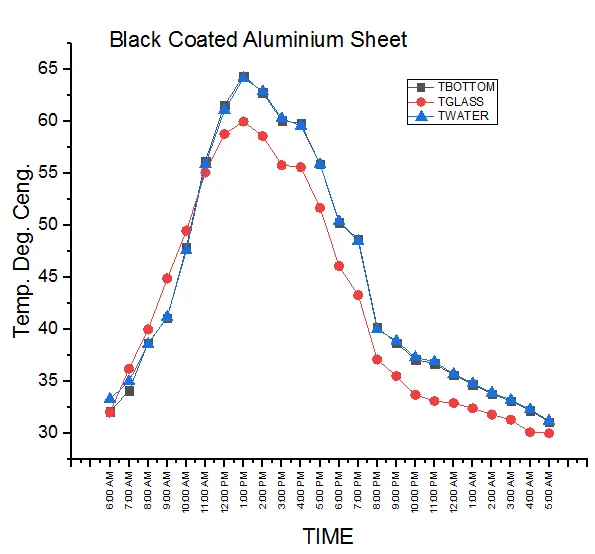
Figure 4: Temperature of Bottom, Glass and Water on Dated 24/05/2025
The experiments were conducted in May 2025, starting from the 24th when the assessment of the first configuration, that is Conventional Base Case (Configuration 1), took place. The aforementioned configuration was used without the inclusion of any absorbing materials, thermal storage blocks, and floating wicks. Acting as the foundation for the experiment, the first configuration produced 350 ml of water in total. Low productivity observed in this stage indicated that it is not efficient to use only the basin liner for the conversion of solar energy into thermal energy, leading to the necessity to implement changes in order to increase mass transport and vaporization (Figure 4).
In order to increase the evaporating area and benefit from the process of capillarity, Configuration 2 (Black Cotton Wick) was introduced on 26th May 2025. Here, it comprised the use of black-dyed cotton materials attached to the interior walls of the distillation basin. The process of capillarity caused by the porous nature of the cotton fabric lifted up saline water to form a very thin liquid layer which readily absorbed the solar rays. In this case, the thermal lag of heating the whole 8 litres water body was eliminated, resulting in an impressive improvement of output rate to 575 ml/day (Fig.5).
The materials of the wick were altered on 28th May 2025 for Configuration 3 (Jute Wick). With the introduction of black jute strands in place of the previous cotton fabric, the effect of a different and more rugged natural fiber structure on the performance of the system was analyzed. Although the jute strands were able to keep a consistently damp surface area for smooth phase change operations, its slightly lower capillary action capacity compared to cotton reduced its performance slightly by the end of 24 hours, yielding a total output of 550 ml.
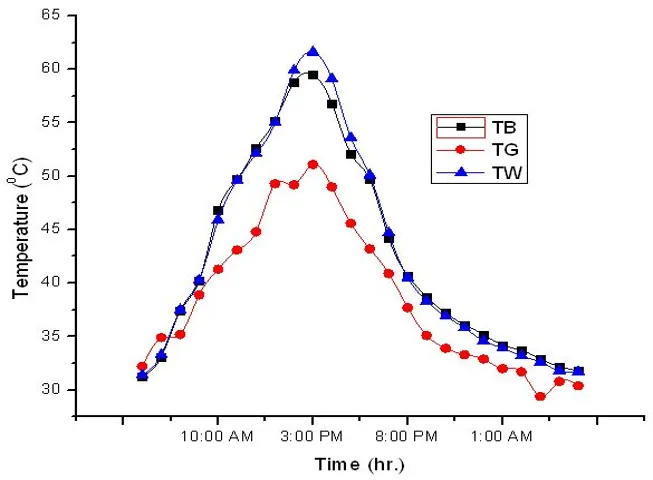
Figure 5: Temperature of Bottom, Glass and Water on Dated 26/05/2025 (with Black Cotton)
With the intention of making use of stored thermal energy during night time distillation from daytime storage of thermal energy, experiments were performed in hybrid systems. On 30th May 2025, Configuration 4 (Cotton Cloth + Pebbles) was performed. In this configuration, the highly absorptive black cotton cloth was paired with 1 kg pebbles placed in the water of the basin. The pebbles acted as sensible heat storing agents that absorbed extra thermal energy when it was abundant during the day time and discharged it into the water during night time.
Moreover, Configuration 5 consisting of jute cloth and pebbles was tested on 2nd June 2025 to evaluate the effectiveness of the black jute cloth along with the same 1 kg pebble matrix storage as before. Like the other previous configurations without any wicks, this configuration of jute cloth and pebbles was quite effective but came slightly behind its cotton counterpart and gave an output of 650 ml. All in all, these successive runs have shown that use of efficient capillary wicks in combination with sensible heat storage improves efficiency of solar stills considerably.
CONCLUSIONS:
Incorporation of performance enhancing materials greatly increases the efficiency of distillation process relative to the baseline system. The performance of the solar still using the cotton cloth was increased by about 39.13% relative to the baseline system. In a similar manner, the system using the jute cloth was found to be 36.36% more productive compared to the baseline system. The highest increase was observed when both wicking materials and sensible heat storage were used together; the combination of cotton cloth and pebbles increased the efficiency of the system by about 50.00%.
REFERENCES


Srikrisan Pathak, Happy Srivastava, Experimental Investigation of the Performance of Solar Stills Using Different Absorbing Materials, Int. J. Sci. R. Tech., 2026, 3 (10), 591-596. https://doi.org/10.5281/zenodo.23259720
 10.5281/zenodo.23259720