

We use cookies to ensure our website works properly and to personalise your experience. Cookies policy
Department of Electrical and Electronics Engineering, K.Ramakrishnan College of Technology, Tiruchirappalli, Tamil Nadu
Absrtact: The Solar Powered Baby Incubator with ECG Monitoring System is designed to provide a controlled and reliable environment for the care of newborn infants, particularly premature and low-birth-weight babies. The system maintains suitable temperature and humidity conditions inside the incubator while continuously monitoring the infant’s heart activity using an ECG sensor. A microcontroller collects and processes the sensor data and displays important parameters such as temperature, humidity, heart rate, and ECG signals on a monitoring interface. The proposed system uses a solar energy source to reduce dependence on conventional electrical power. Solar energy is converted into electrical energy and stored in a rechargeable battery, which can supply power to the incubator and monitoring components when required. An emergency alarm can be activated when the monitored parameters exceed predefined safe limits, allowing caregivers to respond quickly. The integration of thermal control, ECG monitoring, renewable energy, and emergency alerts provides a compact and energy-efficient approach for neonatal monitoring, especially in locations where reliable electricity may not always be available.
Premature and low-birth-weight infants require a controlled environment to support their growth and development. A baby incubator provides suitable temperature and humidity conditions while protecting the infant from environmental changes. Continuous monitoring of vital parameters such as heart rate and body condition is also important for identifying abnormal conditions at an early stage. Conventional incubators, however, generally depend on a continuous electrical power supply, which can be challenging in areas with unreliable electricity.The proposed Solar Powered Baby Incubator with ECG Monitoring System combines thermal regulation, ECG monitoring, and renewable energy in a single system. Temperature and humidity sensors monitor the incubator environment, while an ECG sensor continuously records the infant's cardiac activity. A microcontroller processes the collected data and displays the monitored parameters for caregivers. An alarm can provide an alert when the measured values exceed predefined limits.The system uses solar energy to generate electrical power and a rechargeable battery to store energy for continuous operation. This approach can help reduce dependence on conventional power sources and support operation in locations with limited or unreliable electricity. By integrating environmental control, ECG monitoring, energy storage, and emergency alerts, the proposed system aims to provide a practical and energy-efficient platform for neonatal monitoring .fig.1:shows the baby incubator
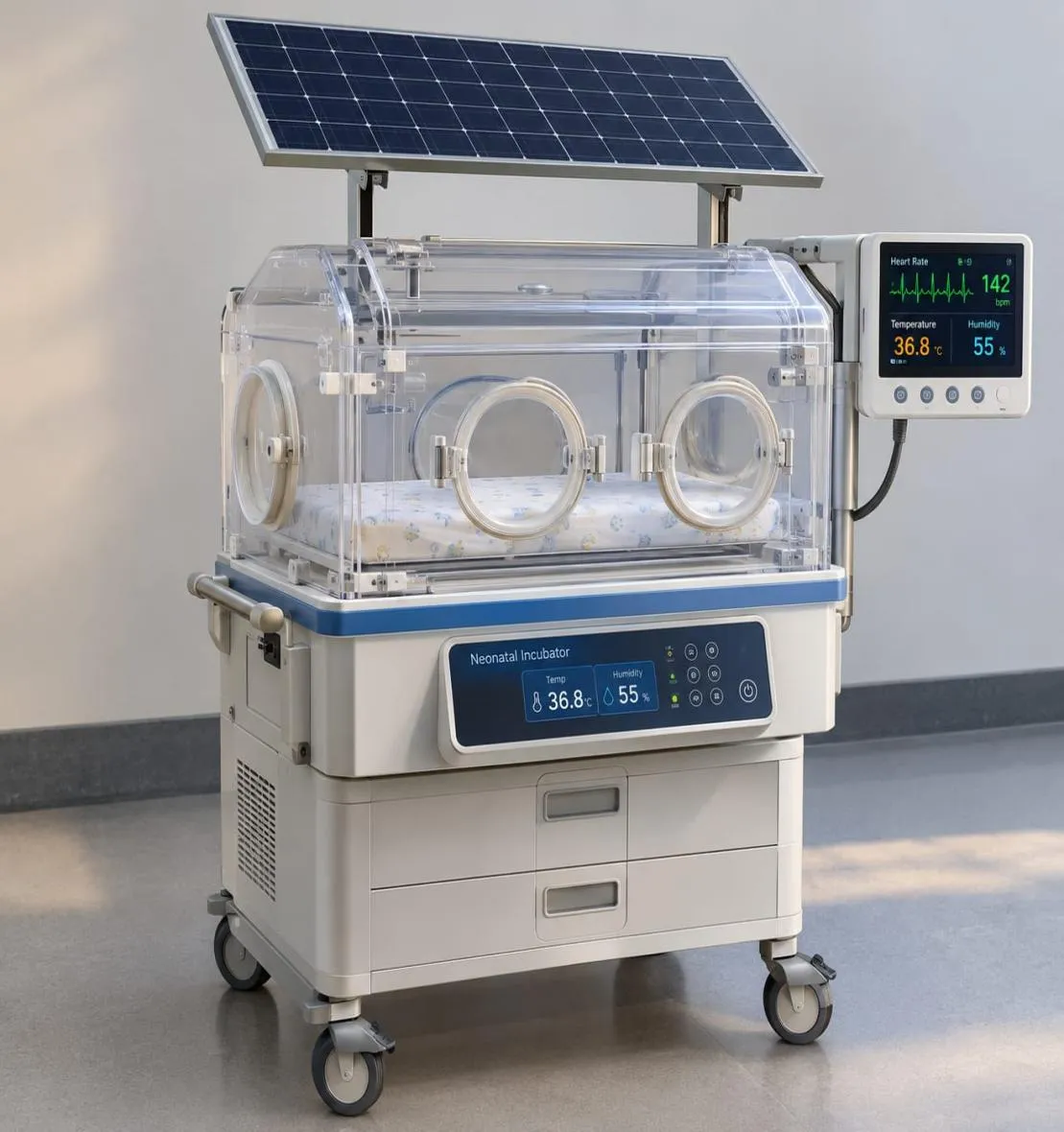
Figure 1: Baby Incubator
The Solar-Powered Baby Incubator with ECG Monitoring System is an innovative paper designed to provide a controlled environment for newborn babies while utilizing renewable solar energy. The solar panel installed above the incubator converts sunlight into electrical energy, which can be used to operate the system. A solar charge controller regulates the charging process, and a rechargeable battery can store energy for use when sunlight is insufficient. This arrangement can help reduce dependence on conventional electricity and support operation in areas where the power supply is unreliable.The incubator consists of a transparent chamber made of suitable medical-grade material that allows healthcare professionals to observe the baby without frequently opening the enclosure. The chamber is designed to maintain an appropriate temperature and humidity level for newborn care. A temperature sensor continuously measures the internal temperature and sends the readings to a microcontroller. Based on these readings, the controller can regulate a heating element to maintain the required environmental conditions. A humidity sensor can also monitor the moisture level inside the chamber and display the measured value on the digital screen.
Literature Survey:
Irianto et al. (2023) developed a baby incubator with a proportional-integral-derivative (PID) controller for reducing temperature overshoot and an ECG-based heart-rate monitoring system using the Internet of Things (IoT). The system used an AHT10 temperature sensor to measure the incubator temperature and a closed-loop PID controller to regulate heating. ECG signals and heart-rate information were processed and transmitted through a Raspberry Pi and an online platform. The study reported temperature-control errors below 5% and successful data transmission during its tests.
This research is closely related to the proposed paper because it combines temperature regulation and ECG monitoring in one system. The proposed solar-powered incubator can adopt similar monitoring and control concepts while using a solar panel and rechargeable battery as its power source. A microcontroller can process temperature readings, regulate the heater, and display the ECG waveform and calculated heart rate. Additional electrical protection and independent thermal safeguards would be necessary before any clinical application.
Cuervo et al. (2023) developed a low-cost, open-source neonatal incubator operated by an Arduino microcontroller. The system was designed to regulate the incubator's temperature and relative humidity and included additional monitoring features, such as weight measurement and an independent temperature alarm. The researchers presented the design to support the development of affordable neonatal equipment and described its construction and evaluation. The study highlights the role of microcontrollers and sensors in automated incubator operation.
This research is relevant to the proposed paper because Arduino-based control can coordinate environmental sensors, heating equipment, and a digital display. A similar control architecture could be combined with solar charging and battery storage to support the incubator's electrical requirements. The proposed system also adds ECG signal acquisition to display cardiac activity and calculate heart rate. The performance of the complete system would need to be validated, particularly its temperature stability, battery endurance, and electrical safety..
Noorizan and Jumadi (2024) developed an infant incubator monitoring system incorporating ECG and temperature sensors with Internet of Things (IoT) connectivity. The prototype used an Arduino Uno microcontroller, a DS18B20 temperature sensor, and an AD8232 ECG sensor. The system enabled continuous monitoring through the Blynk application on a tablet. The researchers reported that both sensors operated successfully during development and testing. However, the ECG measurements showed substantial error, highlighting the importance of signal accuracy and validation in medical monitoring systems.
This research is directly relevant to the proposed solar-powered baby incubator because it demonstrates the integration of ECG signal acquisition and temperature monitoring using accessible electronic components. A similar arrangement can be used to display the ECG waveform and temperature readings on a monitoring interface. The proposed paper extends this concept by including solar energy, battery storage, and automatic temperature control. Further calibration, electrical isolation, and medical-grade testing would be required before clinical use.
Aya-Parra et al. (2023) developed an IoT-based monitoring system for neonatal incubators in a hospital environment. The system used sensors and a microcontroller to collect temperature, humidity, and sound measurements. The collected data were transmitted through Wi-Fi using the MQTT protocol to a database and web application. The application provided real-time access to measurements, alerts, and event records. The researchers tested the system in a biomedical engineering laboratory and a hospital neonatology service, demonstrating its potential for monitoring incubator operating conditions.
This study is relevant to the proposed paper because it demonstrates how sensor data can be collected, recorded, and displayed through a connected monitoring system. The proposed incubator can use similar monitoring principles to display temperature, humidity, and ECG-derived heart-rate information. An alarm system can alert the operator when readings exceed predefined limits. Solar energy and rechargeable battery storage can be incorporated to support the system's electrical requirements, while communication and sensor reliability would need to be tested under different operating conditions.
De Araújo et al. (2013) proposed a method for assessing and calibrating neonatal incubator sensors using an inferential neural network. The study addressed the need for accurate sensor measurements in medical equipment and described a procedure that could evaluate sensor performance while the incubator was operating. The researchers conducted experimental tests using a commercial incubator to validate their approach. Their work highlighted the importance of sensor calibration and measurement reliability in neonatal incubator systems.
This research is relevant to the proposed paper because reliable temperature measurements are essential for feedback-based heating control. The proposed system can use calibrated temperature and humidity sensors to provide readings to a microcontroller, while the ECG module requires separate signal-quality checks and validation. A display can present the measurements, and an alarm can indicate sensor faults or readings outside configured limits. These measures would help evaluate the prototype's technical performance, although they would not by themselves establish clinical safety.
Abdullah and Huong Kah Ching (2024) developed an IoT-based neonatal incubator monitoring system designed to monitor heart rate and oxygen saturation and detect caregiver movement. The system used electronic sensors and wireless connectivity to collect measurements and transmit information through the Blynk application. The research explored how real-time monitoring and alerts could support observation of physiological parameters and caregiver activity. This work illustrates the potential of connected monitoring systems in neonatal-care equipment.
The study is relevant to the proposed paper because it provides a reference for integrating physiological monitoring with wireless communication. The proposed system focuses on ECG-based cardiac signal acquisition, heart-rate calculation, and temperature and humidity monitoring. A digital display can present the measurements, while an optional wireless interface can transmit data to a remote screen. Solar power and battery storage can support the electronics, but the system would require reliable power management, sensor validation, and appropriate medical safety measures before any clinical use.
Daga et al. (1996) investigated the adequacy of solar energy for keeping newborn babies warm. Their study examined a solar-powered room-heating system in a neonatal-care setting, using a fluid heated by solar panels and a servo-controlled heating device to regulate room temperature. The researchers monitored room and infant temperatures to evaluate the system's performance. Their findings indicated that solar-powered room heating could maintain warmth for the infants observed under the study conditions.
This research provides early evidence of the potential use of solar energy in neonatal thermal care. This research provides a foundation for considering renewable energy in the proposed incubator paper. Unlike the room-heating system studied by Daga et al., the proposed design uses a solar panel and rechargeable battery to power electronic components, including the controller, sensors, display, and ECG module. A temperature sensor and feedback controller can regulate the heating element to maintain the required chamber conditions. The paper would need to demonstrate stable operation during changes in sunlight and battery charge, with independent safeguards to prevent unsafe temperatures.
De Araújo et al. (2013) proposed a method for assessing and calibrating neonatal incubator sensors using an inferential neural network. The study addressed the need for accurate sensor measurements in medical equipment and described a procedure that could evaluate sensor performance while the incubator was operating. The researchers conducted experimental tests using a commercial incubator to validate their approach. Their work highlighted the importance of sensor calibration and measurement reliability in neonatal incubator systems.
This research is relevant to the proposed paper because reliable temperature measurements are essential for feedback-based heating control. The proposed system can use calibrated temperature and humidity sensors to provide readings to a microcontroller, while the ECG module requires separate signal-quality checks and validation. A display can present the measurements, and an alarm can indicate sensor faults or readings outside configured limits. These measures would help evaluate the prototype's technical performance, although they would not by themselves establish clinical safety..
Aryanto et al. (2023) investigated energy management and monitoring in neonatal incubators using an IoT-enabled predictive model. The research combined temperature monitoring, remote control, energy-consumption measurement, and machine-learning techniques to estimate energy use. The system included sensors, a communication network, a database, and a web application for displaying operating conditions. The researchers evaluated different predictive models and reported that a combined CNN–LSTM approach achieved lower prediction errors than the individual models tested. The study highlights the importance of energy monitoring and efficient operation in incubator systems.
This research is relevant to the proposed solar-powered incubator because heating and monitoring equipment require a reliable electrical supply. Energy-consumption measurements can help estimate the required solar-panel capacity and battery storage. A future version of the proposed paper could record power use, battery status, and solar-energy generation alongside temperature and ECG measurements. Such monitoring would help assess how long the incubator's electronics can operate on stored energy. Actual performance would need to be tested under realistic power conditions, with essential safety functions maintained independently of the energy-prediction system.
Problem Statement:
Newborn babies, especially premature and low-birth-weight infants, require a controlled environment with proper temperature and continuous health monitoring. Conventional baby incubators depend mainly on electricity and may become difficult to operate in areas with frequent power interruptions or limited access to reliable power. In addition, continuous monitoring of the baby’s heart rate and ECG signals is important for identifying possible abnormalities. Therefore, this paper aims to develop a Solar-Powered Baby Incubator with ECG Monitoring System that uses solar energy as a power source, maintains a suitable temperature inside the incubator, and monitors the baby’s heart activity through ECG sensors. The system is intended to provide a low-cost academic prototype with real-time monitoring and alerts. It requires medical-grade components, rigorous safety testing, and clinical validation before any use with newborn babies.
Scope of the Study:
The scope of the study for the Solar-Powered Baby Incubator with ECG Monitoring System is to develop an academic prototype that uses solar energy to provide electrical power for incubator operation. The system focuses on maintaining a controlled temperature and monitoring humidity using sensors and a microcontroller. It also incorporates an ECG sensor to measure the electrical activity of the heart and display the ECG waveform and heart rate. A display unit is used to present the monitored parameters, while an alarm system provides alerts when readings exceed predefined limits. A rechargeable battery can store solar energy for use when sunlight is insufficient. The study also explores energy efficiency, continuous monitoring, and the possibility of future wireless data transmission. However, the prototype is intended for educational and research purposes only and requires medical-grade components, rigorous safety testing, and clinical validation before it can be considered for use with newborn babies.
PROPOSED SYSTEM:
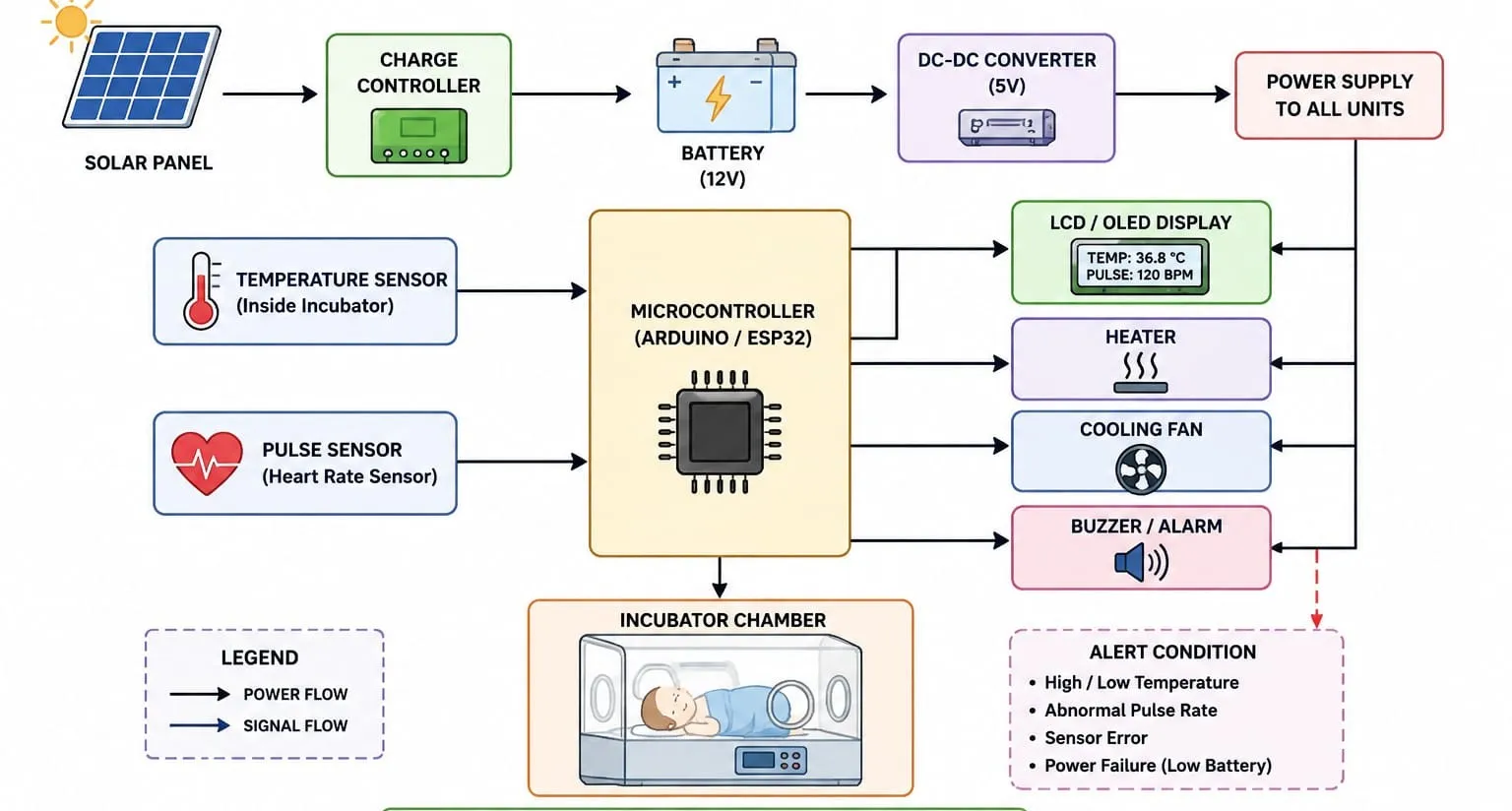
Figure 2: Block Diagram for Solar Powered Incubator
The Solar-Powered Baby Incubator with ECG Monitoring System is an innovative academic paper that combines renewable energy and electronic technology for neonatal care applications. The main objective is to demonstrate how solar energy can be used to provide electrical power for incubator operation. A solar panel converts sunlight into electrical energy, which can be stored in a rechargeable battery for use when sunlight is insufficient. This approach helps explore alternative power sources for areas where the electricity supply is unreliable. The incubator is designed with a transparent chamber to allow visual observation while maintaining a controlled internal environment. Temperature and humidity sensors monitor the conditions inside the chamber, while a microcontroller processes the sensor readings and controls the heating system according to predefined settings. A display unit presents the measured values, and an alarm system can indicate when the monitored conditions exceed specified limits. These features demonstrate the integration of sensors, embedded systems, and automatic control technology. The system also incorporates an ECG monitoring unit to measure the electrical activity of the heart and display the ECG waveform and heart rate on a screen. By combining solar power generation, battery storage, environmental monitoring, and ECG measurement, the paper demonstrates the potential application of renewable energy and electronic systems in healthcare technology. It also provides opportunities for future improvements, such as wireless monitoring and data recording. However, the system is intended for academic and research purposes only; actual use with newborn babies requires medical-grade components, independent safety systems, rigorous testing, and clinical validation. The system shows that ehen the baby in the incubator it mointor the temperature ,heart rate of the baby. Fig.2 shows Block diagram of solar powered incubator
The proposed system is a solar-powered baby incubator with temperature and pulse monitoring designed to provide a controlled and safe environment for newborns. The solar panel converts sunlight into electrical energy, which is regulated by a charge controller and stored in a 12 V battery. A DC–DC converter converts the stored power into the required voltage levels for the electronic components. A temperature sensor placed inside the incubator continuously measures the chamber temperature, while a pulse sensor monitors the baby's heart rate. The collected sensor signals are processed by the Arduino/ESP32 microcontroller, which acts as the main control unit. Based on the temperature readings, the microcontroller automatically controls the heater and cooling fan to maintain the required temperature inside the incubator. The measured temperature and pulse rate are displayed in real time on an LCD/OLED display. If abnormal temperature, pulse rate, sensor failure, or low battery conditions are detected, the buzzer/alarm system provides an immediate warning. Thus, the proposed system integrates solar energy, automatic temperature regulation, continuous pulse monitoring, real-time display, and emergency alerts into a single baby-incubator system.
RESULTS AND DISCUSSION:
The X-axis represents time in seconds, while the Y-axis represents the ECG signal amplitude. The repeated peaks in the waveform indicate successive heartbeats. By measuring the time interval between these peaks, the baby's heart rate in beats per minute (BPM) can be calculated. A regular interval between the peaks indicates a relatively consistent heart rhythm. In the proposed baby incubator with ECG monitoring system, the ECG sensor continuously acquires the baby's cardiac electrical activity and sends the signal to the Arduino/ESP32 microcontroller for processing. The processed ECG signal and calculated heart rate can be displayed on an LCD/OLED screen for real-time observation. If the detected heart rate exceeds predefined monitoring limits or an abnormal condition is detected, the microcontroller can activate a buzzer/alarm to alert the caregiver. Fig.3:shows the output waveform of ECG
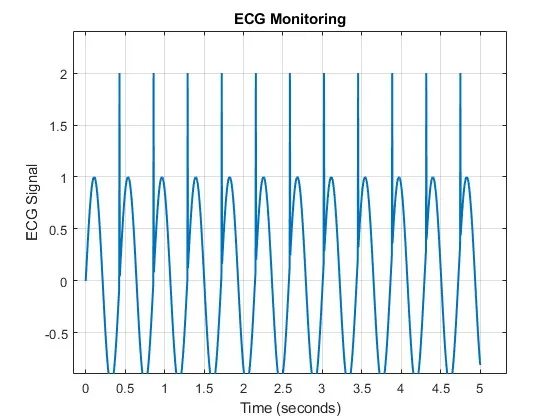
Figure 3: Output Waveform of ECG
The graph shows the temperature variation inside the baby incubator over a period of 100 seconds. The X-axis represents time in seconds, while the Y-axis represents the incubator temperature in °C. The dashed line indicates the set temperature of 36.5°C, which is the desired operating temperature. The measured temperature varies approximately between 36.3°C and 36.7°C, showing small changes around the set value. This indicates that the incubator is maintaining the temperature close to the required level. In the proposed system, the temperature sensor continuously measures the temperature inside the incubator and sends the readings to the Arduino/ESP32 microcontroller. The controller compares the measured temperature with the preset value and controls the heater and cooling fan accordingly. When the temperature falls below the required level, the heater can be activated, while the cooling fan can operate when the temperature becomes too high. This feedback control helps maintain a stable thermal environment for the baby and prevents excessive temperature variations. Fig.4: shows the output waveform of temperature
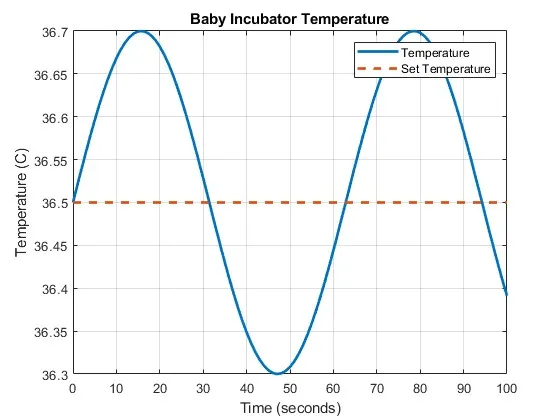
Figure 4: Output Waveform of Temperature
The graph illustrates the relationship between solar power generation and battery charge level over a period of 100 seconds. The blue curve represents the solar power output in watts, which increases from nearly 0 W and reaches a maximum of approximately 100 W around 50 seconds before decreasing as solar availability reduces. The orange curve represents the battery charge level, which gradually increases from about 70% to nearly 90% as the generated solar energy is stored in the battery. In the proposed solar-powered baby incubator, the solar panel supplies electrical energy to the system and charges the battery through a charge controller. During periods of higher solar power generation, more energy is available for operating the incubator and charging the battery. When solar power decreases, the stored battery energy can support the system and maintain continuous operation. This demonstrates the importance of the battery as a backup power source, particularly when solar energy is insufficient. Fig.5:shows the output waveform of power and battery supply
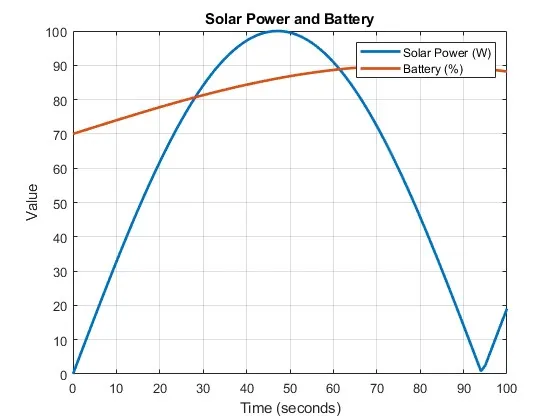
Figure 5: Output Waveform of Power and Battery Supply
The main advantage of this paper is that it uses solar energy to operate the baby incubator, making it useful in areas with limited electricity supply. It continuously monitors the baby's temperature and ECG/heart rate and helps maintain the required temperature using a heater and cooling fan. The system also provides real-time monitoring and alarm alerts when abnormal conditions are detected. The battery provides backup power, allowing the incubator to continue operating when solar power is not available. Overall, the system is energy-efficient, reliable, and suitable for remote areas.
CONCLUSION:
The proposed solar-powered baby incubator with ECG monitoring system provides a reliable approach for maintaining a suitable environment for newborns while continuously monitoring their cardiac activity. The system uses solar energy and battery storage to provide power, while sensors monitor temperature and ECG signals. Automatic control of the heater and cooling fan helps maintain the required temperature, and the display and alarm system provide real-time information and warnings. Overall, the paper combines renewable energy, temperature control, ECG monitoring, and safety alerts in a single system, making it particularly useful for areas with limited access to reliable electricity
REFERENCES


Akkash S., Ajay A., Aravind M., Janapriyan S., Solar Powered Baby Incubator with ECG Monitoring, Int. J. Sci. R. Tech., 2026, 3 (10), 663-670. https://doi.org/10.5281/zenodo.23278980
 10.5281/zenodo.23278980