

We use cookies to ensure our website works properly and to personalise your experience. Cookies policy
Department of Nutrition & Dietetics, JSS Academy of Higher Education and Research, Mysuru, Karnataka, India
Background: A rising demand for sustainable, plant-based protein sources has fueled the development of novel alternatives to traditional dairy products. The intent of this venture was to make paneer from the seeds of watermelon (Citrullus lanatus) and muskmelon (Cucumis melo). Methods: Melon seed paneer was formulated using the extracted milk by cleaning, roasting, and grinding the seeds, and then food-grade coagulants were used for coagulation. Proximate and mineral analyses were carried out using AOAC methods, antibacterial activity was tested using the agar well diffusion method, and sensory evaluation was done using a 9-point hedonic scale. Results: Muskmelon seed paneer had a higher protein that is 28.22%, ash (1.9%), phosphorus (380.4 mg/100 g), potassium (305.2 mg/100 g), and overall acceptability of the sensory attributes was 8.5, whereas watermelon seed paneer had a higher fat content that is 32.80%, crude fiber (58.4%), magnesium (221.6 mg/100 g), zinc (5.1 mg/100 g), and calcium (52.4 mg/100 g). Both formulations showed antimicrobial efficacy against Bacillus cereus, Staphylococcus aureus, Escherichia coli, and Salmonella typhimurium, with muskmelon seed paneer displaying the maximum inhibition against S. aureus (16.5 mm) and watermelon seed paneer against B. cereus (15.8 mm). Sensory evaluation reveals the mean ratings greater than 8.0 for the majority of qualities. During refrigerated storage, both paneer formulations remained acceptable for up to 8 days, with little changes in appearance and texture. Conclusion: Based on the findings, both the paneer varieties are nutrient-rich, sensory palatable, and have potential antibacterial abilities, indicating their potential as sustainable plant-based alternatives to standard paneer and functional meals.
In developing nations like India, where under nutrition and micronutrient deficiencies continue despite advancements in food production, malnutrition remains a significant global public health concern. Protein-energy malnutrition (PEM) is still prevalent among vulnerable populations, including women, children, and economically disadvantaged groups, mostly due to inadequate ingestion of high-quality protein sources (1). Despite being regarded as complete proteins, animal-based proteins like milk and dairy products are not widely used due to their expensive cost, limited availability, and issues including lactose intolerance and allergies (2). This necessitates looking into affordable, eco-friendly, and nutritionally adequate protein alternatives.
Due to growing health consciousness, environmental sustainability, and ethical considerations, plant-based diets have gained popularity in recent years. Plant proteins from legumes, grains, nuts, and seeds have gained popularity due to their nutritional worth and practical attributes (3).
Melon seeds are edible seeds from a range of cucurbit fruits that belong to the Cucurbitaceae family, such as watermelon (Citrullus lanatus) and muskmelon (Cucumis melo).
These seeds are recognized as important sources of nutrients and useful dietary ingredients, despite the fact that they are frequently thrown away as byproducts during fruit preparation. Melon seeds are extremely nutritious as they often contain 20–35% protein, 25–50% good fats, dietary fiber, and important minerals like calcium, magnesium, phosphorus, potassium, iron, and zinc. (4,5,6)
Melon seeds contain a variety of protein fractions, such as albumins, globulins, glutelins, and prolamins, which contribute to desirable functional properties like the ability to hold water, bind oil, emulsify, foam, and form gels (6, 7). With regard to these functional qualities, melon seed proteins can be added to a variety of food products, such as beverages, protein supplements, dairy and plant-based dairy substitutes, baked goods, and other functional food formulations. (4,5)
Melon seeds are high in bioactive compounds, such as phenolic compounds, flavonoids, tocopherols, phytosterols, carotenoids, and natural antioxidants, in addition to their macronutrient composition. These compounds have been linked to a number of health-promoting effects, such as immune-supportive, anti-inflammatory, antimicrobial, cardioprotective, and antidiabetic properties (8,4,5). Considering their outstanding nutritional profile and functional qualities, melon seeds have attracted growing interest as sustainable ingredients for the development of nutrient-dense and value-added foods.
Paneer is a classic dairy product from India that has several culinary applications and a high protein content. For vegetarians, it provides a significant source of protein. However, the rising price of milk and dairy products has made paneer somewhat pricey, making it unavailable to low-income populations. Additionally, as lactose intolerance is becoming more common and vegan diets are becoming more popular, there is an increasing need for plant based alternatives to conventional dairy products (9).
The creation of plant-based paneer substitutes has drawn interest as a possible remedy for these problems. The use of soy, almond, and groundnut as basis materials for paneer alternatives has been studied in the past; however, these substitutes occasionally have drawbacks such allergenicity, strong flavours, or greater manufacturing costs (2). In this regard, watermelon seeds offer an innovative and affordable substitute that hasn't been thoroughly studied. Watermelon seed-based paneer is made by first turning the seeds into plant milk, which is then coagulated to create a product that resembles paneer. This strategy makes greater use of underutilised resources and encourages the production of sustainable and functional foods.
Sensory evaluation plays a major role in the adoption of newly manufactured food products. Taste, texture, colour, fragrance, and general acceptability must all be assessed using accepted methods to ensure consumer preference. Additionally, nutritional profiling, including proximate composition analysis, is essential to assess the product's value as a food high in protein (10).
MATERIALS AND METHODS
Ripe melon fruits were used to gather melon seeds, and standard sources provided drinking water and food-grade coagulants such vinegar or lemon juice. To make melon seed milk, the seeds were cleaned, dried, dehulled, and gently roasted before being ground into a fine paste with water, mixed into a slurry, and filtered through a cotton cloth. After that, the extracted milk was standardised by varying the water content to achieve the proper consistency and total solids required for paneer. To induce coagulation, the standardised melon seed milk was heated to 70–80°C while being continuously stirred.
A muslin cloth was used to separate the ensuing curd from the whey, and any remaining moisture was forced out of the curd to form a compact paneer block. Before being examined further, the paneer was refrigerated at 4°C, allowed to solidify, and then cut into uniform cubes.
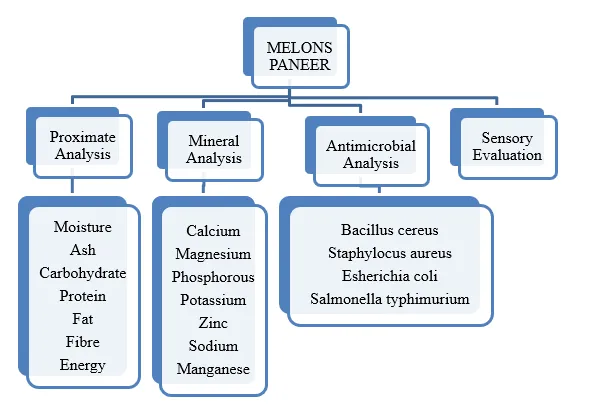
Figure 1: Flow design of the proximate analysis and antimicrobial activity of the melons paneer
Proximate analysis:
The AOAC (2005) methodology was used to determine the mineral content, crude moisture, crude fat, crude protein, crude ash, crude fiber, carbs, and energy. The macro-Kjeldahl method was used to calculate the percentage nitrogen, which was then multiplied by 6.25 to determine the crude protein concentration. The difference determined the amount of carbohydrates.
Mineral analysis:
The mineral content of paneer samples was determined following the procedures described by the AOAC Official Methods of Analysis. Approximately 5 g of dried paneer sample was weighed into a porcelain crucible and subjected to dry ashing in a muffle furnace at 550°C until white ash was obtained. The ash was cooled, dissolved in 10 mL of 1 N hydrochloric acid, filtered, and the volume was made up to 50 mL with distilled water.
The concentrations of calcium (Ca), iron (Fe), zinc (Zn), and magnesium (Mg) were determined using an Atomic Absorption Spectrophotometer (AAS). Sodium (Na) and potassium (K) contents were measured using a flame photometer. Phosphorus (P) was estimated spectrophotometrically using the molybdenum blue method at 650–700 nm. Mineral concentrations were quantified using calibration curves prepared from standard solutions and expressed as milligrams per 100 g of paneer sample (mg/100 g).
Antimicrobial analysis:
The agar well diffusion method was used to assess the antibacterial activity of paneer samples against a number of foodborne pathogens, including as Bacillus cereus, Salmonella Typhimurium, Escherichia coli, and Staphylococcus aureus. Standardised bacterial cultures (10¹ CFU/mL) were added to Mueller-Hinton agar plates. 100 µL of paneer extract was added to wells with a diameter of 6 mm. Antimicrobial activity was assessed by measuring the zone of inhibition (mm) surrounding each well after plates were incubated at 37°C for 24 hours. The mean inhibition zone diameter (mm) ± standard deviation of triplicate measurements was used to express the results.
Sensory Evaluation
A 9-point Hedonic Rating Scale was used to assess the produced watermelon seed paneer's sensory quality. Ten untrained panellists were chosen from among staff and students. The paneer samples were presented at room temperature in a sanitary setting after being cut into homogeneous cubes. In between assessments, drinking water was made available to clear the palate.
The panellists were asked to evaluate the samples according to their general acceptability as well as their appearance, colour, scent, texture, and taste. A 9-point hedonic scale, with 9 representing extreme liking and 1 representing extreme dislike, was used to score each attribute. All panellists' scores were noted and presented as mean ± standard deviation. To ascertain customer approval and preference for the created watermelon seed paneer, a sensory study was carried out.
RESULT AND DISCUSSION
|
Proximate Parameters |
Watermelon Seed Paneer |
Muskmelon Seed Paneer |
|
Moisture (%) |
3.98 |
3.64 |
|
Ash (%) |
1.1 |
1.9 |
|
Energy (Kcal/100g) |
205.8 |
210.4 |
|
Protein (%) |
22.22 |
28.22 |
|
Carbohydrate (%) |
17.3 |
18.4 |
|
Fat (%) |
32.80 |
30.6 |
|
Crude Fibre (%) |
58.4 |
57.2 |
Table 1: Proximate composition of melons paneer
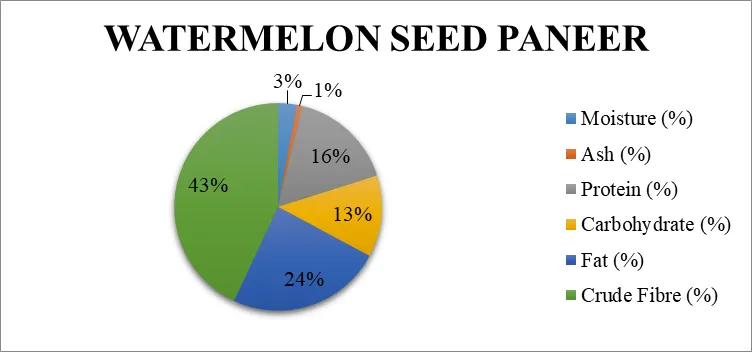
Figure 2: Proximate composition of watermelon seed panner
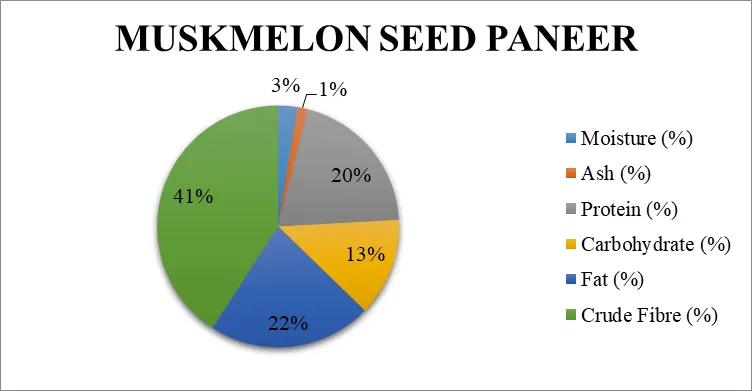
Figure 3: Proximate composition of muskmelon seed paneer
The proximate analysis showed that both watermelon seed paneer and muskmelon seed paneer are nutritionally dense, showing their potential as plant-based functional meals. Watermelon seed paneer had slightly more moisture (3.98%) than muskmelon seed paneer (3.64%), but muskmelon seed paneer had more ash (1.9%), indicating a higher mineral content. Similar results have been reported for seed-based protein products, where lower moisture content was linked to improved storage stability and shelf life (6,4).
Muskmelon seed paneer had a greater protein content (28.22%) than watermelon seed paneer (22.22%), indicating superior nutritional quality and usefulness as a plant-based protein source. This conclusion is consistent with earlier research indicating that Cucumis melo seeds are high in storage proteins and have great functional qualities for food applications (6). Muskmelon seed paneer has somewhat greater carbohydrate content (18.4%) than watermelon seed paneer (17.3%).Watermelon seed paneer had slightly higher fat (32.80%) and crude fiber (58.4%) than muskmelon seed paneer (30.6% and 57.2%, respectively), indicating that it could deliver more calories and dietary fiber (8).
Overall, muskmelon seed paneer had a higher protein and mineral content, and watermelon seed paneer had somewhat more fat and fiber, implying that both formulations are nutritious plant-based alternatives to traditional paneer.
|
Mineralparameters |
Watermelon Seed Paneer |
Muskmelon Seed Paneer |
|
Calcium(mg/100g) |
52.4 |
51.8 |
|
Magnesium(mg/100g) |
221.6 |
202.2 |
|
Phosphorous(mg/100g) |
342.7 |
380.4 |
|
Potassium(mg/100g) |
278.3 |
305.2 |
|
Zinc(mg/100g) |
5.1 |
4.8 |
|
Sodium(mg/100g) |
58.6 |
57.6 |
|
Manganese(mg/100g) |
1.12 |
1.54 |
Table 2: Mineral composition of melons paneer
The mineral study revealed that both watermelon seed paneer and muskmelon seed paneer contain a high concentration of important minerals. Watermelon seed paneer had a bit more calcium (52.4 mg/100 g), magnesium (221.6 mg/100 g), zinc (5.1 mg/100 g), and sodium (58.6 mg/100 g), while muskmelon seed paneer had higher phosphorus (380.4 mg/100 g), potassium (305.2 mg/100 g), and manganese (1.54 mg/100 g). These findings are consistent with prior research, which found that cucurbit seeds are high in macro- and microminerals required for bone health, energy metabolism, muscular function, and antioxidant activity (4,5). Overall, both formulations had a favorable mineral profile, indicating potential as mineral-rich functional meals.
|
Antimicrobial Activity |
Watermelon Seed Paneer [Zone Of Inhibition(Mm)] |
Muskmelon Seed Paneer [Zone Of Inhibition(Mm)] |
|
Bacillus cereus |
15.8 |
14.3 |
|
Staphylococcus aureus |
14.3 |
16.5 |
|
Escherichia coli |
12.6 |
11.8 |
|
Salmonella typhimurium |
11.9 |
13.2 |
Table 3: Antimicrobial activity of melons paneer
Both watermelon seed paneer and muskmelon seed paneer had antibacterial properties against Bacillus cereus, Staphylococcus aureus, Escherichia coli, and Salmonella typhimurium. Watermelon seed paneer inhibited Bacillus cereus the most (15.8 mm), while muskmelon seed paneer was most active against Staphylococcus aureus (16.5 mm). Both formulations demonstrated substantially lesser inhibition against the Gram-negative bacteria E. coli and S. typhimurium, which is consistent with earlier studies on the antibacterial activities of melon seed bioactive components (4,5). These results indicate that both paneer formulations have intriguing natural antibacterial properties for functional food applications.
|
Panellist |
Watermelon Seed Paneer (Mean Score) |
Muskmelon Seed Paneer (Mean Score) |
|
Appearance |
8.4 |
8.2 |
|
Colour |
8.2 |
8.5 |
|
Aroma |
7.6 |
8 |
|
Texture |
8.5 |
8.2 |
|
Taste |
8.5 |
8.5 |
|
Overall acceptance |
8.4 |
8.5 |
Table 4: Sensory evaluation of melons paneer
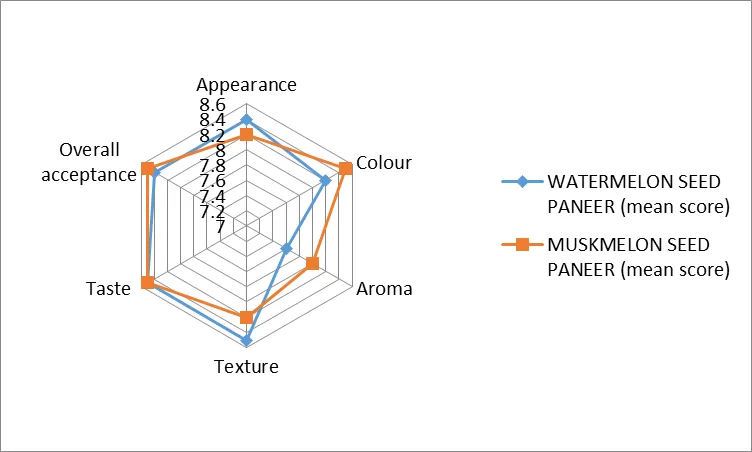
Figure 4: Sensory comparison of melons paneer
Using a 9-point Hedonic Rating Scale, the sensory evaluation of both melon seed paneer demonstrated strong customer acceptability for each attribute. While muskmelon seed paneer scored higher for colour (8.5), scent (8.0), and overall acceptability (8.5), watermelon seed paneer received higher ratings for appearance (8.4) and texture (8.5). The taste scores for both formulae were identical (8.5), suggesting exceptional palatability. Both paneer formulations were well appreciated and have demonstrated potential as practical, plant-based substitutes, according to the high sensory evaluations.
|
Days |
0th Day |
5th Day |
10th Day |
|
Appearance |
No Change |
No Change |
No Change |
|
Texture |
Soft |
Soft |
Soft |
|
Odour |
No off Odour |
No off Odour |
Slightly Undesirable |
|
Presence of rancid smell |
Absent |
Absent |
Present |
Table 5: Shelf life of watermelon seed paneer
|
Days |
0th Day |
5th Day |
10th Day |
|
Appearance |
No Change |
No Change |
No Change |
|
Texture |
Soft |
Soft |
Soft |
|
Odour |
No off Odour |
No off Odour |
Slightly Undesirable |
|
Presence of rancid smell |
Absent |
Absent |
Present |
Table 6: Shelf life of muskmelon seed paneer
Throughout the 10-day refrigerated storage period, the appearance of both types of paneer formulation remained consistent, demonstrating acceptable visual stability. The texture remained soft until the 10th day. The odor was devoid of off-odors for the first 5 days, but it got slightly unpleasant by the 10th day. Importantly, the existence of a rancid odor was not discovered until the 10th day, indicating that spoiling had begun at this point.
CONCLUSION
The current study showed that both the seeds can be successfully used to make plant-based paneer with adequate nutritional, functional, and sensory attributes. Muskmelon seed paneer had higher protein, phosphorus, potassium, and overall acceptability than watermelon seed paneer, which had greater fat content, crude fiber, calcium, magnesium, and zinc. Both formulations demonstrated antibacterial effectiveness against common foodborne pathogens and were well received by the sensory panellists. In addition to, the paneer remained stable under refrigerated storage up to 10 days with little changes in odour. Altogether, the findings emphasize the potential of melon seed paneer as a sustainable, nutrient-dense, and functional alternative to traditional dairy products, along with encouraging the value-added use of underutilized melon seed by-products in the development of novel plant-based meals.
REFERENCES




Nithesh J. D., Navya Raj M. P.*, Thanushree K. R., Spoorthi Nagesh, Formulation And Characterization Of A Plant-Based Paneer Analogue Using Underutilized Melon Seeds, Int. J. Sci. R. Tech., 2026, 3 (7), 1119-1126. https://doi.org/10.5281/zenodo.21702347
 10.5281/zenodo.21702347