

We use cookies to ensure our website works properly and to personalise your experience. Cookies policy
Tatysaheb Kore Institute of Engineering & Technology, Warana University, Warananagar
The increasing demand for sustainable and alternative protein sources has created interest in the utilization of underused plant materials. Taro (Colocasia esculenta) leaves, which are commonly underutilized, contain protein that can potentially be recovered for value-added applications. The present study evaluated the potential of taro leaves as a source of protein and investigated the characteristics of the recovered protein fraction. The developed extraction process produced a protein-rich product, with the highest extraction yield of 61% and protein purity of 74% under optimized alkaline conditions. The recovered fraction showed a final protein content of 61.60%, confirming substantial enrichment of protein from the original plant material. The presence of several amino acids further supported the proteinaceous nature of the extracted product. Overall, the findings demonstrate the potential of taro leaves for protein recovery and valorization, providing a promising basis for their further development as an alternative plant-based protein resource.
The increasing demand for sustainable and nutritionally valuable protein sources has encouraged research into plant-based alternatives. Plant proteins are being investigated because of their potential nutritional benefits, availability, and suitability for developing food and dietary products. Conventional sources such as rice bran and pea protein are already utilized in several applications, while other plant materials and agricultural by-products remain comparatively underexplored. The utilization of such underused resources can provide an opportunity to recover valuable nutrients while reducing agricultural waste.
Taro (Colocasia esculenta) is an important tropical plant primarily cultivated for its edible corm. However, its leaves are also nutritionally significant and contain proteins, carbohydrates, minerals, vitamins, and bioactive compounds. Despite this nutritional composition, taro leaves are frequently treated as an agricultural by-product. Their conversion into a protein-rich ingredient could therefore increase the value of the crop and provide an alternative source of plant-derived protein. The report indicates that protein content in taro leaf extracts can reach approximately 61.6%, demonstrating the potential of this material for protein recovery.
Different plant materials have been investigated for protein production. Rice bran generally contains about 10–15% protein, whereas pea protein commonly contains more than 20%. Banana stem contains comparatively lower protein but has considerable dietary fibre and other bioactive components. In comparison, taro leaves possess a combination of protein, minerals, vitamins, fibre, and antioxidant compounds. The presence of amino acids such as lysine, arginine, and glutamic acid further increases interest in taro leaf protein as a potential nutritional ingredient.
Efficient recovery of protein depends strongly on the extraction technique and operating conditions. Alkaline extraction is commonly employed for plant materials because alkaline conditions can facilitate protein solubilization from the plant matrix. In the present study, sodium hydroxide was used for alkaline extraction of protein from taro leaves. The extracted proteins were subsequently subjected to acid precipitation to facilitate protein separation. Further purification was carried out using dialysis, followed by freeze-drying to obtain a stable protein product. This sequence provides a systematic approach for extracting, concentrating, and preserving protein from the leaf material.
The present work therefore focuses on the extraction and characterization of protein from taro leaves using alkaline extraction followed by acid precipitation, dialysis, and freeze-drying. The obtained product was evaluated for protein content, nutritional composition, and amino acid profile. The study aims to assess the feasibility of utilizing an underused plant resource for producing a protein-rich ingredient and to contribute to the development of sustainable approaches for value addition of agricultural biomass.
MATERIALS AND METHODS
2.1 Raw Material Preparation
Fresh taro (Colocasia esculenta) leaves were collected and washed thoroughly to remove adhering dirt and surface contaminants. The leaves were crushed and dried to reduce moisture content. The dried material was subsequently ground to obtain a fine taro leaf powder suitable for protein extraction.
2.2 Alkaline Extraction
For protein extraction, 100 g of taro leaf powder was mixed with 100 mL of water. A 0.1 N sodium hydroxide (NaOH) solution was added gradually until the extraction mixture reached pH 11. The mixture was homogenized at 400 rpm for 1 h to facilitate disruption of the plant matrix and protein solubilization. The extraction pH was optimized by evaluating protein yield at pH values of 8–12. The highest protein yield was obtained at pH 11, which was therefore selected as the optimum extraction condition.
2.3 Centrifugation and Acid Precipitation
Following alkaline extraction, the suspension was centrifuged to separate insoluble plant material from the protein-containing fraction. Centrifugation was carried out at 5000 rpm. The recovered extract was subjected to acid precipitation using hydrochloric acid (HCl) to reduce protein solubility and facilitate protein separation. The precipitated protein was collected by centrifugation and retained for purification.
2.4 Dialysis and Freeze-Drying
The collected protein fraction was purified by dialysis using a semi-permeable membrane with a molecular-weight cut-off of 10–14 kDa. Dialysis was performed against buffer at room temperature to remove salts and other low-molecular-weight impurities. The purified protein solution was subsequently freeze-dried to obtain a stable dry protein product.
2.5 Characterization
The final product was evaluated for nutritional composition and protein characteristics. Amino acid profiling was performed using GC-MS, while protein presence and composition were assessed through appropriate analytical tests.
3. Procedure
3.1 Pretreatment of Taro Leaves
Fresh taro leaves (Colocasia esculenta) were selected as the starting raw material. The leaves were washed thoroughly to remove adhering soil and other surface contaminants. The cleaned leaves were then crushed to reduce particle size and facilitate subsequent drying and extraction. The crushed material was dried to reduce moisture and improve storage stability. After drying, the material was further ground to obtain a relatively fine and uniform taro-leaf powder. This powder was used as the feed material for the protein-extraction experiment. The sequence represented in the report is: washing and cleaning → crushing → drying → grinding → collection of taro-leaf powder.
3.2 Alkaline Extraction
A measured quantity of 100 g of taro-leaf powder was mixed with 100 mL of water. Sodium hydroxide solution (0.1 N NaOH) was added gradually until the extraction mixture reached pH 11. The alkaline mixture was then subjected to homogenization at 400 rpm for 1 h. The purpose of this operation was to promote disruption of the plant matrix and transfer of soluble protein into the liquid phase. The extraction pH was investigated because protein recovery changed with alkalinity. The experimental observations reported for pH 7–12 are reproduced below; the corresponding protein-yield data were reported for pH 8–12.
Table 1: Alkaline Extraction Observations from the Report.
| Extraction pH | Initial sample (mL) | Collected supernatant (mL) | Observation |
|---|---|---|---|
| 7 | 30 | 15 | Low protein extraction due to insufficient alkalinity |
| 8 | 30 | 18 | Moderate protein solubilization observed |
| 9 | 30 | 21 | Improved extraction efficiency |
| 10 | 30 | 24 | High protein solubilization |
| 11 | 30 | 26 | Maximum extraction efficiency obtained |
| 12 | 30 | 25 | Slight decrease due to possible protein denaturation |
| Extraction pH | Protein yield (%) | Protein purity (%) |
|---|---|---|
| 8 | 32 | 58 |
| 9 | 41 | 63 |
| 10 | 55 | 71 |
| 11 | 61 | 74 |
| 12 | 57 | 68 |
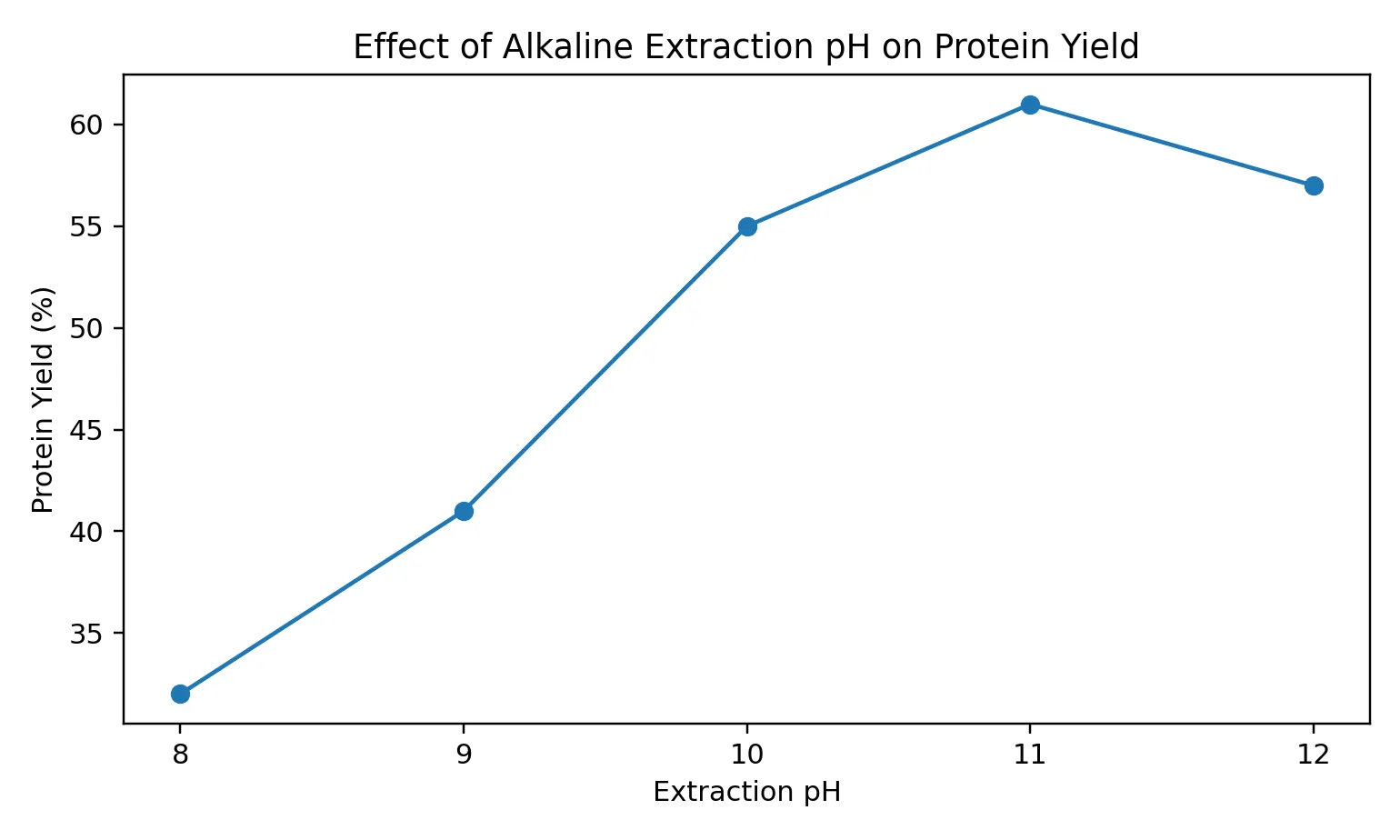
Table 2: Alkaline Extraction Data from the Report.Figure 1. Effect of Alkaline Extraction pH on Protein Yield
The collected supernatant volume increased from pH 7 to pH 11 and then decreased slightly at pH 12. In the reported protein-yield dataset, the maximum protein yield was 61% with a protein purity of 74% at pH 11. Therefore, pH 11 was selected as the optimum alkaline-extraction condition for the subsequent procedure.
3.3 Centrifugation
Following homogenization, the extraction slurry was transferred into centrifuge tubes and centrifuged at 5000 rpm to separate insoluble plant material from the soluble protein-containing fraction. The detailed centrifugation subsection of the report specifies 5000 rpm for 15 min. After centrifugation, the plant debris formed a pellet and the clearer supernatant was retained for the subsequent precipitation step. Centrifugation was therefore used as the solid–liquid separation operation before acid precipitation.
3.4 Acid Precipitation
The retained protein-containing extract was subjected to acid precipitation using hydrochloric acid (HCl). The pH was progressively adjusted under acidic conditions to evaluate protein precipitation. The report identifies pH 5 as the optimum precipitation condition because it produced the maximum collected pellet and the highest reported protein recovery. After acidification, the precipitated protein was separated by centrifugation and the recovered precipitate was washed with distilled water to remove remaining soluble impurities.
Table 3: Effect of pH on Acid Precipitation from the Report.
| Precipitation pH | Initial sample (mL) | Collected pellet (mL) | Observation |
|---|---|---|---|
| 3 | 30 | 2.5 | Low protein precipitation |
| 4 | 30 | 4.0 | Increased pellet formation |
| 5 | 30 | 5.5 | Maximum protein precipitation observed |
| 6 | 30 | 4.3 | Reduced precipitation efficiency |
| 7 | 30 | 3.0 | Low pellet formation |
Table 4: Acid Precipitation Data from the Report.
| Precipitation pH | Protein recovery (%) |
|---|---|
| 3 | 48 |
| 4 | 67 |
| 5 | 74 |
| 6 | 59 |
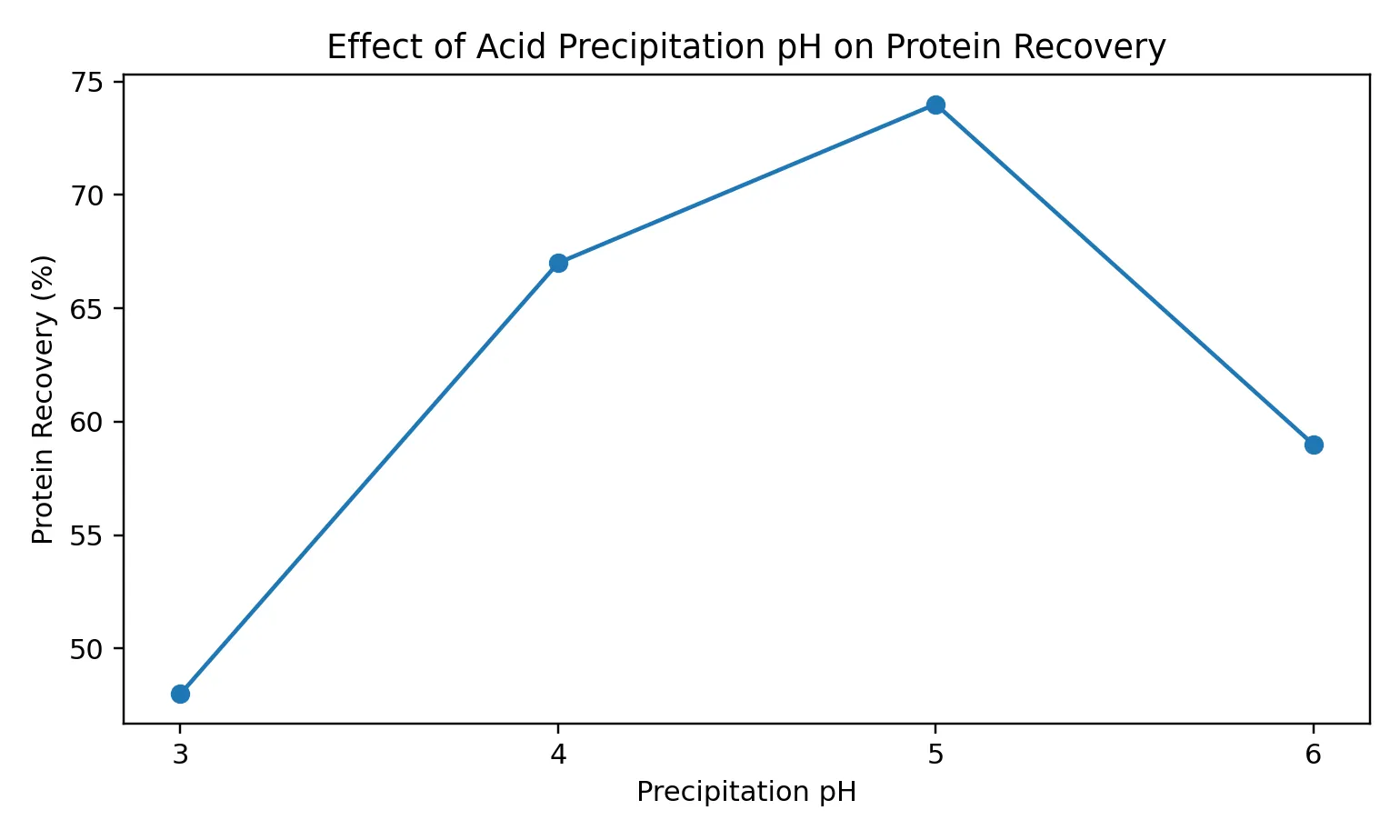
Figure 2: Effect of Acid Precipitation pH on Protein Recovery (Report Data).
The reported recovery increased from 48% at pH 3 to 74% at pH 5 and then decreased to 59% at pH 6. Based on these observations, pH 5 was selected for the acid-precipitation stage.
3.5 Post-Precipitation Centrifugation
After acid precipitation, the mixture was centrifuged again to recover the precipitated protein fraction. The centrifugation separated the protein-rich precipitate from the remaining liquid phase. The pellet was collected and washed with distilled water to reduce residual soluble contaminants. The resulting material was taken forward for membrane-based purification.
3.6 Dialysis Purification
The precipitated protein was purified by dialysis to remove small molecular impurities and excess salts. A semi-permeable dialysis membrane with a molecular-weight cut-off (MWCO) of 10–14 kDa was used. The protein pellet was resuspended in buffer and transferred into the dialysis bag. The report describes Tris-HCl buffer at approximately 20 mM and pH 7.4 as one option; PBS buffer at pH 7.4 is also described as an alternative. The dialysis bag was immersed in sufficient external buffer to maintain contact around the membrane. Dialysis was performed at room temperature for 4–6 h, with replacement of the external buffer after approximately 2–4 h. The report also specifies a stirring range of 50–100 rpm to facilitate exchange. Small molecules such as salts and other low-molecular-weight impurities were allowed to diffuse through the membrane, while the larger protein molecules were retained inside the bag.
3.7 Freeze-Drying and Concentration
After dialysis, the purified protein solution was concentrated and converted into a stable dry product by freeze-drying (lyophilization). The report describes three stages. First, the protein solution was frozen at approximately −30 to −50 °C. Second, vacuum was applied for primary drying so that the frozen water could be removed by sublimation. Third, secondary drying was carried out with gradual temperature adjustment to remove residual moisture. The resulting dry material was collected as the final taro-leaf protein product for storage and analysis.
3.8 Protein Testing and Characterization
The purified extract was subjected to qualitative and compositional characterization. The Biuret test was used to confirm the presence of protein. A Biuret reagent prepared from copper sulfate and sodium hydroxide was mixed with the purified extract and allowed to stand at room temperature for approximately 10–15 min. Development of a violet or purple colour was interpreted as a positive protein reaction. GC-MS was used to identify amino acids in the extract, with the report identifying arginine (m/z 147), lysine (m/z 113), glutamic acid (m/z 99), alanine (m/z 28), glycine (m/z 42), and proline (m/z 57). Nutritional characterization was also performed, and the reported values are included below.
Table 5: Nutritional Value of the Optimized Taro-Leaf Protein Product Reported in the Dissertation.
| Test | Unit per 100 g | Reported result |
|---|---|---|
| Total energy | kcal | 372.43 |
| Carbohydrate | g | 25.32 |
| Protein | g | 61.60 |
| Total fat | g | 2.75 |
| Ash | % | 5.13 |
| Moisture | % | 5.20 |
3.9 Overall Experimental Sequence
The complete experimental workflow can therefore be summarized as: taro-leaf selection and washing → crushing → drying → grinding to powder → preparation of the aqueous suspension → adjustment with 0.1 N NaOH to pH 11 → homogenization at 400 rpm for 1 h → centrifugation at 5000 rpm → recovery of the protein-containing fraction → adjustment with HCl to pH 5 for acid precipitation → centrifugation and collection/washing of the protein precipitate → dialysis using a 10–14 kDa MWCO membrane → freeze-drying at the reported temperature and vacuum stages → Biuret confirmation, nutritional analysis and GC-MS characterization. Under the reported optimized conditions, the alkaline extraction stage gave a maximum protein yield of 61% and protein purity of 74%, while acid precipitation at pH 5 gave a maximum reported protein recovery of 74%.
RESULTS
4.1 Optimization of Alkaline Extraction
The effect of extraction pH on protein recovery from taro leaves was investigated under alkaline conditions. Protein yield and purity increased progressively with increasing extraction pH from 8 to 11. At pH 8, the protein yield was 32% with a purity of 58%. Increasing the pH to 9 and 10 improved the protein yield to 41% and 55%, respectively, while the corresponding protein purity increased to 63% and 71%.
The maximum extraction performance was obtained at pH 11, where the protein yield reached 61% and the protein purity reached 74%. A further increase in pH to 12 resulted in a decrease in protein yield to 57% and purity to 68%. Thus, pH 11 was selected as the optimum extraction condition. The observed decrease at pH 12 indicates that excessively alkaline conditions did not provide additional improvement in protein recovery.
| Extraction pH | Protein Yield (%) | Protein Purity (%) |
|---|---|---|
| 8 | 32 | 58 |
| 9 | 41 | 63 |
| 10 | 55 | 71 |
| 11 | 61 | 74 |
| 12 | 57 | 68 |
Table 4.1: Effect of Extraction pH on Protein Yield and Purity. Table
| Precipitation pH | Protein Recovery (%) |
|---|---|
| 3 | 48 |
| 4 | 67 |
| 5 | 74 |
| 6 | 59 |
4.2. Effect of Acid Precipitation pH On protein recovery.
4.2 Acid Precipitation
Following alkaline extraction, acid precipitation was used to recover the protein fraction from the extract. The precipitation response varied with pH. Protein recovery increased from 48% at pH 3 to 67% at pH 4 and reached a maximum of 74% at pH 5. Further adjustment to pH 6 reduced the recovery to 59%.
The maximum recovery at pH 5 indicates that this condition was the most effective among the investigated precipitation conditions. Therefore, pH 5 was selected for the subsequent purification process.
4.3 Purification and Final Protein Product
The precipitated protein was further purified by dialysis using a 10–14 kDa molecular-weight cut-off membrane. Dialysis was used to remove low-molecular-weight substances and residual salts while retaining the protein fraction. The purified material was subsequently freeze-dried to obtain a stable protein powder.
4.4 Nutritional Composition
The optimized freeze-dried product was subjected to nutritional analysis. The protein concentration was 61.60 g per 100 g of product, representing the major nutritional component. The carbohydrate content was 25.32 g/100 g, while total fat was comparatively low at 2.75 g/100 g. The moisture content was 5.20% and ash content was 5.13%. The measured energy value was 372.43 kcal/100 g.
Table 4.3: Nutritional Composition of the Optimized Taro-Leaf Protein Product.
| Parameter | Optimized Product |
|---|---|
| Moisture (%) | 5.20 |
| Ash (%) | 5.13 |
| Protein (%) | 61.60 |
| Fat (%) | 2.75 |
| Carbohydrates (%) | 25.32 |
| Energy (kcal/100 g) | 372.43 |
4.5 Amino Acid Profile
GC-MS analysis identified six amino acids in the extracted protein fraction. The detected compounds were arginine (m/z 147), lysine (m/z 113), glutamic acid (m/z 99), alanine (m/z 28), glycine (m/z 42), and proline (m/z 57). The presence of these amino acids demonstrates that the extracted material contains a diverse amino-acid composition.
4.6 Overall Result
Overall, the experimental results demonstrate that the combination of alkaline extraction, acid precipitation, dialysis and freeze-drying was capable of producing a concentrated protein product from taro leaves. The optimized alkaline extraction condition was pH 11, giving a reported protein yield of 61% and purity of 74%, while the optimum acid precipitation condition was pH 5, with a reported protein recovery of 74%. The final product contained 61.60% protein and showed the presence of multiple amino acids by GC-MS.
CONCLUSION
The present study demonstrated the feasibility of recovering protein from taro leaves through a sequential alkaline extraction, acid precipitation, dialysis and freeze-drying process. The extraction conditions had a significant influence on protein recovery. Among the investigated alkaline conditions, pH 11 produced the highest reported protein yield of 61% and protein purity of 74%, and was therefore selected as the optimum extraction condition. Acid precipitation further enabled recovery of the protein fraction, with the maximum reported recovery of 74% obtained at pH 5.
The purified and freeze-dried product exhibited a protein content of 61.60 g/100 g, together with 25.32 g/100 g carbohydrate and 2.75 g/100 g fat. The product also showed 5.20% moisture, 5.13% ash and an energy value of 372.43 kcal/100 g. GC-MS analysis identified arginine, lysine, glutamic acid, alanine, glycine and proline in the extracted protein fraction. These results confirm that the developed process was capable of converting taro leaves into a protein-rich powdered product with measurable nutritional value.
The study therefore establishes a laboratory-scale extraction route for obtaining protein from taro leaves and provides optimized conditions for alkaline solubilization and acid precipitation. However, the present results are limited to the conditions investigated in the study. Further work should evaluate protein digestibility, bioavailability, functional properties, process reproducibility, scale-up performance and economic feasibility before applications at larger scale are considered.
REFERENCES


Prashant. B. Dehankar, Pratik Alas Radhey Rajiv Gurav, Sustainable Recovery of Leaf Proteins from Taro (Colocasia Esculenta), Int. J. Sci. R. Tech., 2026, 3 (10), 619-625. https://doi.org/10.5281/zenodo.23261437
 10.5281/zenodo.23261437