

We use cookies to ensure our website works properly and to personalise your experience. Cookies policy
Department of Pharmaceutics, Sree Abirami College of Pharmacy, Coimbatore, India
Rheumatoid arthritis (RA) is a chronic autoimmune inflammatory disorder characterized by joint pain, swelling, stiffness, and progressive cartilage degradation, significantly impairing quality of life. Conventional treatments often involve non-steroidal anti-inflammatory drugs (NSAIDs) and disease-modifying antirheumatic drugs (DMARDs), which are associated with gastrointestinal, renal, and cardiovascular side effects upon long-term use. Herbal alternatives from traditional systems like Ayurveda offer promising safer options. Clerodendrum phlomidis Linn. (family Verbenaceae), commonly known as Agnimantha, is traditionally used for its anti-inflammatory, analgesic, and anti-arthritic properties due to bioactive constituents such as flavonoids, terpenoids, and phenolic compounds. The present study aimed to formulate and evaluate a stable herbal pain relief topical gel incorporating the ethanolic or aqueous extract of C. phlomidis leaves or roots for targeted local delivery in RA management. The gel was prepared using carbopol 940 or xanthan gum as gelling agents, along with penetration enhancers, humectants (e.g., propylene glycol), and preservatives to achieve optimal viscosity, pH (5.5–6.5), spreadability, and skin compatibility. Physicochemical evaluations included homogeneity, extrudability, drug content uniformity, in vitro release studies, and stability testing under ICH guidelines. Anti-inflammatory activity was assessed through in vitro models (e.g., protein denaturation and membrane stabilization assays), while analgesic and anti-arthritic efficacy were evaluated in vivo using carrageenan-induced paw edema and Freund’s complete adjuvant (FCA)-induced arthritis models in Wistar rats. The formulated gel demonstrated significant inhibition of paw edema, reduction in arthritic index, joint diameter, and inflammatory markers such as TNF-? and COX-2, comparable to standard diclofenac gel. Histopathological analysis showed reduced synovial inflammation and cartilage damage in treated groups. The gel exhibited good skin permeation, minimal irritation (Draize test), and sustained release over 8–12 hours. Results indicate that the C. phlomidis-based topical gel is a safe, effective, and patient-compliant herbal formulation for symptomatic relief in rheumatoid arthritis, supporting its traditional ethnomedicinal use. Further clinical studies are warranted to establish its therapeutic potential in humans. This formulation represents a viable natural alternative for localized pain management with reduced systemic side effects.
An herbal pain relief topical gel is a semisolid formulation containing plant-derived bioactive ingredients that is applied directly to the skin to provide localized relief from pain, inflammation, muscle stiffness, and joint discomfort. Unlike oral analgesics, topical herbal gels act primarily at the site of application, minimizing systemic absorption and reducing the risk of gastrointestinal and other systemic side effects. These formulations are widely used for conditions such as arthritis, sprains, strains, sports injuries, back pain, and muscle fatigue.[1]Herbal topical gels commonly incorporate medicinal plant extracts such as Clerodendrum phlomidis Linn. (Thazhuthalai) Boswellia serrata (Indian frankincense), Vitex negundo (Nirgundi), Withania somnifera (Ashwagandha), Curcuma longa (Turmeric), and essential oils like wintergreen, peppermint, or eucalyptus. These natural ingredients possess anti-inflammatory, analgesic, antioxidant, and soothing properties that help reduce pain and swelling while promoting faster recovery of affected tissues.The gel dosage form offers several advantages, including easy application, rapid absorption, a non-greasy feel, enhanced patient compliance, and direct delivery of active constituents to the affected area. Modern herbal gel formulations often use polymers such as Carbopol 940 or natural gelling agents to improve spreadability, stability, and skin retention of herbal extracts. With increasing interest in natural and safer therapeutic alternatives, herbal pain relief topical gels have gained significant attention in pharmaceutical research and healthcare.[1] They represent a promising approach for the management of musculoskeletal pain by combining the traditional knowledge of medicinal plants with modern topical drug delivery technology, offering effective localized pain relief with fewer adverse effects than many conventional synthetic analgesics.
Herbal topical gels are semisolid formulations containing plant-derived active ingredients that are applied to the skin for local or systemic therapeutic effects. They are classified based on their therapeutic use and formulation.[2]
Applications:
These herbal topical gels are widely used in pharmaceutical, cosmetic, and personal care applications because they are generally non-greasy, easy to apply, provide good patient compliance, and can deliver herbal active ingredients directly to the affected area.
Herbal topical gels are applied directly over painful and inflamed joints to relieve the symptoms of Rheumatoid Arthritis. They act locally by delivering herbal bioactive compounds through the skin to the affected tissues, reducing inflammation, pain, and oxidative stress while improving joint function.[3]
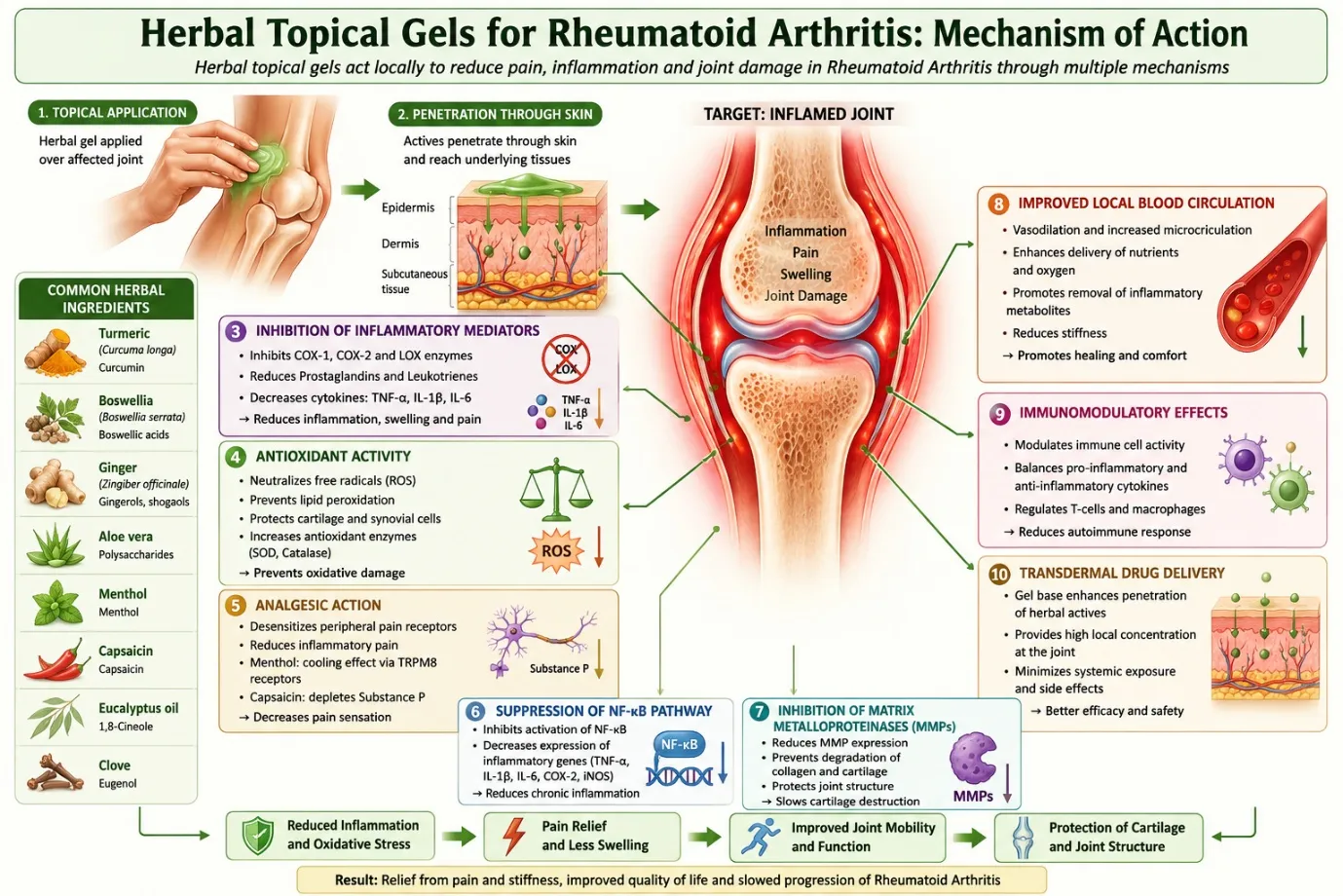
Figure 1: Mechanism of Action in Herbal Topical Gel for Rheumatoid Arthritis
MATERIALS AND METHODS:
Carbopol 940 (Corel Pharma), HPMC K15M (Research-Lab Fine Chem. Industries, Mumbai), propylene glycol, glycerin, triethanolamine, menthol and thymol (Loba Chemie Pvt. Ltd., Mumbai), camphor (Sisco Research Laboratories Pvt. Ltd., Mumbai), and wintergreen oil (AOS Products Pvt. Ltd.) were used as formulation ingredients for the development of the Clerodendrum phlomidis Linn. topical polyherbal gel.
Collection and Extraction of Plant Material:The leaves of Clerodendrum phlomidis Linn. (Agnimantha) were collected, authenticated, shade-dried, and powdered. The powdered material (100 g) was extracted using distilled water by Soxhlet extraction for 8–72 h. In addition, maceration was performed using 100 g of powdered leaves in 500 mL ethanol for 72 h with intermittent stirring. The extracts were filtered, concentrated using a rotary evaporator at 40–50°C, and dried. Percentage yield was calculated as the weight of dried extract divided by the weight of powdered plant material, multiplied by 100.
Preliminary Phytochemical Screening:The extracts were subjected to preliminary phytochemical screening for alkaloids, glycosides, steroids, triterpenoids, tannins, flavonoids, phenols, and proteins using standard qualitative tests, including Hager’s, modified Bornträger’s, Liebermann–Burchard, gelatin, alkaline reagent, ferric chloride, and Biuret tests, respectively.
Solubility Studies:The dried ethanolic extract (10 mg) was separately mixed with 5 mL of water, ethanol, methanol, chloroform, dichloromethane, acetone, and hexane. The mixtures were stirred or sonicated for 30 min at room temperature and visually examined for dissolution, turbidity, and residual particles.[4]
Formulation of Herbal Topical Gel:The gel was prepared using the cold-dispersion method. Carbopol 940 was dispersed in 70–80% of the required distilled water and allowed to hydrate for 30–60 min. HPMC K15M was separately dispersed and hydrated. The ethanolic extract was dissolved in propylene glycol and mixed with glycerin. Wintergreen oil, camphor, menthol, and thymol were combined separately and incorporated into the polymer dispersion along with the extract solution. Triethanolamine was added dropwise to adjust the pH to 6.5–7.0. A suitable quantity of colourant was added, and distilled water was used to make up the final batch weight. The gel was mixed until homogeneous, allowed to stand for 12–24 h for deaeration, and stored in well-sealed containers.[5]
Evaluation of Herbal Topical Gel:The prepared gel was evaluated for colour, odour, appearance, consistency, homogeneity, and grittiness. The pH was measured using a calibrated digital pH meter. Viscosity was determined using a Brookfield viscometer, and spreadability was assessed using the parallel-plate method. Extrudability was evaluated by measuring the ease of gel extrusion from a collapsible tube. Drug content was determined by extracting the gel with methanol, filtering, and measuring absorbance using a UV–Visible spectrophotometer at 279 nm, with quercetin as the reference marker. The percentage drug content was calculated relative to the theoretical content.[6]
In Vitro Drug Release Study:In vitro drug release was evaluated using a Franz diffusion cell fitted with a suitable membrane. The receptor compartment was filled with phosphate buffer and maintained at a controlled temperature with continuous stirring. A measured quantity of gel was placed in the donor compartment, and samples were withdrawn at predetermined intervals and replaced with fresh medium. The samples were analysed spectrophotometrically, and cumulative percentage release was calculated. Release kinetics were evaluated using zero-order, first-order, Higuchi, and Korsmeyer–Peppas models.[8]
In Vitro Anti-inflammatory Activity:The anti-inflammatory activity of the gel was evaluated using the egg albumin protein denaturation assay, with diclofenac sodium as the standard. The gel extract and standard were tested at different concentrations. The reaction mixture containing egg albumin, phosphate buffer (pH 6.4), and test or standard solution was incubated at 37 ± 2°C for 15 min, heated at 70°C for 5 min, and cooled. Absorbance was measured at 660 nm. All experiments were performed in triplicate, and percentage.[7]
Stability Studies: Stability studies were conducted under long-term conditions (25°C/60% RH) and accelerated conditions (40°C/75% RH), following applicable ICH stability-testing principles. Samples were evaluated at predetermined intervals for changes in appearance, pH, viscosity, spreadability, and phase separation. Freeze–thaw cycling and centrifugation tests were additionally performed to assess physical stability.[9]
RESULT:
Table 1: In-vitro Dissolution Studies of Herbal Topical Gel of Ethanolic Extract of Clerodendrum phlomidis Linn.
| Time (Hrs) | Cumulative Amount Released (µg/cm²) | |||
|---|---|---|---|---|
| F1 | F2 | F3 | F4 | |
| 0 | 0 | 0 | 0 | 0 |
| 1 | 18.2 | 15.6 | 13.8 | 11.5 |
| 2 | 33.6 | 30.5 | 28.2 | 24.6 |
| 3 | 46.8 | 43.2 | 40.6 | 36.8 |
| 4 | 58.4 | 55.7 | 53.6 | 49.5 |
| 5 | 68.6 | 66.8 | 65.2 | 61.7 |
| 6 | 76.5 | 75.4 | 74.6 | 71.2 |
| 7 | 84.2 | 83.6 | 82.8 | 80.6 |
| 8 | 91.4 | 92.6 | 95.8 | 89.5 |
[Figure - see the formatted PDF]
Figure 2: Comparative Dissolution Profile for Various Formulations (F1F2F3F4)
Table 2: Stability Study of Herbal Topical Gel
| Parameter | Initial | After 3 Months |
|---|---|---|
| Appearance | Smooth | No Change |
| pH | 6.58 | 6.56 |
| Drug Content (%) | 98.64 | 97.85 |
| Viscosity (cP) | 25,600 | 25,280 |
| Drug Release (%) | 95.8 | 94.9 |
[Figure - see the formatted PDF]
Figure 3: Stability Study of Optimized Formulation F3 Cumulative Percentage Drug Release of Herbal Topical Gel
DISCUSSION:
Extraction and Phytochemical Screening: The aqueous and ethanolic extracts of Clerodendrum phlomidis Linn. yielded 13.5% and 8.5% w/w, respectively. Preliminary phytochemical screening of the ethanolic extract revealed alkaloids, flavonoids, phenolics, tannins, saponins, terpenoids, and glycosides, supporting its potential anti-inflammatory activity.
UV–Visible and FTIR Analysis: The quercetin calibration curve exhibited good linearity at 279 nm, with a regression equation of y = 0.0688x and R² = 0.9994. FTIR analysis revealed characteristic hydroxyl, aliphatic C–H, aromatic, and C–O/C–O–C functional groups, indicating the presence of diverse phytoconstituents. FTIR comparison of the extract and physical mixture supported the compatibility of the formulation ingredients.
Physicochemical Evaluation: The prepared gel formulations exhibited acceptable appearance, homogeneity, and physical stability without syneresis or phase separation. The pH ranged from 6.3 to 6.7. Viscosity increased from 18,500 ± 150 cP (F1) to 28,450 ± 220 cP (F4), whereas spreadability decreased from 18.4 ± 0.4 to 14.2 ± 0.4 g·cm/s. Extrudability also decreased from F1 to F4, reflecting the influence of polymer concentration on the rheological properties of the gel.
Drug Content and In Vitro Release: Drug content ranged from 94.35 ± 0.52% to 98.64 ± 0.31%, with F3 exhibiting the highest value. F3 demonstrated 95.8% cumulative drug release at 8 h. The release profiles best fitted the Korsmeyer–Peppas model (R² = 0.995–0.999), with diffusion exponent values of 0.61–0.68, indicating anomalous, non-Fickian transport involving diffusion and polymer relaxation.
In Vitro Anti-inflammatory Activity: The protein denaturation assay demonstrated concentration-dependent inhibition. F3 exhibited 88.67 ± 1.08% inhibition, comparable to diclofenac sodium (91.79 ± 1.20%). This activity may be associated with the flavonoids, phenolics, and other bioactive constituents present in the extract.
Stability Studies: During three months of storage, the optimized F3 formulation maintained satisfactory physical characteristics and sustained drug-release behaviour. Cumulative drug release at 12 h decreased from 99.52% in the first month to 96.87% in the third month, indicating some variation during storage. Further long-term stability studies are required to confirm the formulation's shelf life.
CONCLUSION:
The present study demonstrated the potential of Clerodendrum phlomidis Linn. ethanolic extract for developing a herbal topical gel for managing pain and inflammation associated with rheumatoid arthritis. The aqueous and ethanolic extracts exhibited yields of 13.5% and 8.5% w/w, respectively. Preliminary phytochemical screening and FTIR analysis indicated the presence of bioactive phytoconstituents and supported the suitability of the selected polymers for gel formulation. Among the formulations, F3 was identified as the optimized formulation, exhibiting 98.64% drug content, 95.8% cumulative drug release at 8 h, and acceptable physicochemical properties. The release kinetics followed the Korsmeyer–Peppas model, indicating non-Fickian transport. F3 also demonstrated significant in vitro anti-inflammatory activity (88.67 ± 1.08%), comparable to diclofenac sodium (91.79 ± 1.20%), and maintained satisfactory stability during three months of evaluation. Overall, F3 represents a promising herbal topical formulation; however, further preclinical and clinical studies are necessary to establish its safety and therapeutic efficacy.
REFERENCES


Sweatha M. D., M. Saravanakumar, D. Dhachinamoorthi, B. Premkumar, Formulation and Evaluation of Herbal Pain Relief Topical Gel for Its Effect on Rheumatoid Arthritis: Clerodendrum Phlomidis Linn., Int. J. Sci. R. Tech., 2026, 3 (10), 911-916. https://doi.org/10.5281/zenodo.23392457
 10.5281/zenodo.23392457