

We use cookies to ensure our website works properly and to personalise your experience. Cookies policy
Wani College Of Pharmacy, Ganegaon, Maharashtra (Affiliated to Dr Babasaheb Aambedkar Technological University, Lonere, Raigad)
Oral ulcers are common lesions of the oral mucosa that may cause pain, burning, difficulty in eating and discomfort during speaking. They may develop because of local trauma, infection, nutritional deficiency, immune changes and several other factors. Treatment is mainly aimed at reducing pain and inflammation and helping the ulcer heal. Herbal medicines are being studied as supportive options because many medicinal plants contain phenolic compounds, flavonoids and tannins with antioxidant, antimicrobial and anti-inflammatory properties. Guava leaf (Psidium guajava L.) is traditionally used in oral care and has been investigated for antimicrobial and antioxidant activity. Jamun (Syzygium cumini L.) also contains several polyphenolic compounds and has shown antioxidant, antimicrobial and anti-inflammatory potential. The present review discusses the possible use of guava leaf and jamun extracts in a herbal oral gel for oral-ulcer management. It covers the causes and features of oral ulcers, phytochemical profile and biological activities of both plants, formulation considerations, suitable evaluation tests, possible mechanism, research gap and future scope. A mucoadhesive gel may provide better contact with the affected mucosa and may help retain the herbal constituents at the site of application. However, the combined guava-jamun formulation requires proper laboratory evaluation, stability studies and clinical investigation before its therapeutic effectiveness can be confirmed.
Oral ulcers are among the common problems affecting the oral mucosa. They may occur as single or multiple painful lesions and can make eating, drinking, speaking and maintaining oral hygiene difficult. Recurrent aphthous stomatitis is one of the commonly reported forms of oral ulceration. Its exact cause is not fully understood and several local and systemic factors may be involved.(1)
The management of oral ulcers depends on the cause and severity of the lesion. Topical preparations are commonly preferred because they can act directly at the affected area. Corticosteroids, analgesics, antiseptics and other agents may be used according to clinical requirements. However, conventional oral preparations can be removed quickly by saliva, which may reduce the time of contact with the ulcer (2)
Medicinal plants are receiving attention because they contain several naturally occurring compounds with biological activity. Guava leaves contain flavonoids, tannins and phenolic compounds and have been investigated for oral antimicrobial and antioxidant activity. Jamun leaves are also rich in polyphenolic compounds and have reported antioxidant and antimicrobial properties. A combination of the two plants in a suitable oral gel may therefore provide a useful research approach for local application to oral ulcers.(3)
Oral health is an important component of general health and quality of life. The oral cavity is continuously exposed to mechanical irritation, microorganisms, food components, changes in temperature, and various chemical substances. Because of these factors, different types of oral mucosal disorders may develop. Among them, oral ulcers are one of the most frequently encountered conditions and may affect individuals of different age groups. Oral ulcers are characterized by localized loss or disruption of the oral mucosal epithelium and are commonly associated with pain, inflammation, burning sensation, difficulty in eating, swallowing, and speaking.(4)
Recurrent oral ulcers, particularly recurrent aphthous ulcers, are common inflammatory lesions of the oral mucosa. They generally appear as well-defined, painful ulcers surrounded by an erythematous margin. Although many uncomplicated ulcers heal spontaneously within a limited period, the associated pain and inflammation can significantly interfere with normal oral activities. Repeated episodes may also affect nutritional intake, oral hygiene, work performance, and overall quality of life. The exact cause of oral ulceration may vary among individuals and can involve local trauma, microbial infection, nutritional deficiencies, stress, immune alterations, hormonal changes, and systemic conditions.(5)
The management of oral ulcers mainly aims to reduce pain and inflammation, control microbial contamination, protect the ulcerated area, and promote healing of the damaged mucosa. Conventional treatment may involve topical analgesics, antiseptic agents, anti-inflammatory drugs, corticosteroids, antimicrobial agents, and protective preparations. Although these approaches can provide symptomatic relief, prolonged or inappropriate use of some conventional agents may be associated with adverse effects, unpleasant taste, irritation, poor patient acceptability, or recurrence after discontinuation. These limitations have encouraged researchers to investigate safer and more acceptable alternatives for the local management of oral ulcers.(6)
Medicinal plants have received considerable attention as potential sources of biologically active compounds for oral healthcare. Plant-derived materials contain several classes of phytoconstituents, including flavonoids, phenolic compounds, tannins, terpenoids, alkaloids, glycosides, and other secondary metabolites. Many of these constituents have been reported to possess antioxidant, antimicrobial, anti-inflammatory, astringent, and tissue-protective properties. Such properties may be useful in managing the local factors associated with oral ulceration and supporting the natural healing process. However, the biological activity of a plant extract depends on several factors, including plant species, geographical origin, extraction method, solvent, concentration, and standardization of the extract.(7)
Among medicinal plants, guava (Psidium guajava L.) has attracted interest because its leaves are rich in biologically active phytoconstituents. Guava leaves contain flavonoids, phenolic compounds, tannins, triterpenoids, and other secondary metabolites. Compounds such as quercetin and related polyphenolic constituents have been investigated for antioxidant and antimicrobial activities. The presence of tannins may also contribute to an astringent effect, which can be relevant to topical oral preparations. These characteristics provide a scientific basis for investigating guava leaf extract in herbal preparations intended for oral mucosal applications.(8)
Jamun (Syzygium cumini L.), commonly known as Indian blackberry or Java plum, is another medicinal plant traditionally used in different systems of medicine. Its leaves contain various phytoconstituents, including phenolic compounds, flavonoids, tannins, and other secondary metabolites. Extracts of different parts of the plant have been investigated for antioxidant, antimicrobial, anti-inflammatory, and other pharmacological activities. The phytochemical profile of jamun therefore provides a rationale for exploring its potential contribution to a herbal formulation intended for oral care.(9)
The combination of guava leaf and jamun may provide a broader phytochemical profile than the use of either plant alone. Guava may contribute flavonoids, tannins, and phenolic constituents, whereas jamun can provide additional polyphenolic and tannin-rich components. A combination approach may therefore be investigated for antioxidant, antimicrobial, and inflammation-related activities relevant to oral ulcer management. However, the presence of two plant extracts should not automatically be considered synergistic; any combined effect needs to be established experimentally through appropriate formulation and biological evaluation.(10)
The selection of a suitable dosage form is equally important for the effective application of herbal extracts. An oral gel can provide several advantages for localized treatment because it can be applied directly to the affected mucosal area. Compared with liquid preparations, a gel may provide better residence at the application site and can facilitate prolonged contact between the active constituents and the ulcerated mucosa. The incorporation of a suitable gelling and mucoadhesive system may further improve retention and ease of application. Carbopol and other pharmaceutically acceptable polymers are commonly investigated for gel preparation because they can provide desirable viscosity, spreadability, and mucoadhesive characteristics.(11)
A properly developed herbal oral gel should possess suitable physical and pharmaceutical characteristics in addition to biological activity. Parameters such as appearance, homogeneity, pH, viscosity, spreadability, extrudability, mucoadhesive strength, extract or marker content, antioxidant activity, antimicrobial activity, in-vitro release, and stability can be considered during formulation development. Evaluation of these parameters is necessary to identify an acceptable formulation and to establish its consistency and quality.(12)
Despite the increasing interest in herbal preparations for oral healthcare, formulation-specific studies combining guava leaf and jamun in an oral gel for oral ulcer management remain limited. Therefore, development of a standardized herbal oral gel containing Psidium guajava leaf and Syzygium cumini leaf extracts may provide a useful research approach for investigating a locally applied plant-based formulation. The present work is focused on formulation development, optimization, and pharmaceutical evaluation of the herbal oral gel, along with assessment of selected phytochemical and biological properties relevant to oral ulcer management.(13)
Oral Ulcers
Local trauma or accidental injury
Stress and other triggering factors
Nutritional deficiencies
Infections
Immune-related conditions
Systemic diseases
Certain medicines
Recurrent aphthous stomatitis
Plant profile
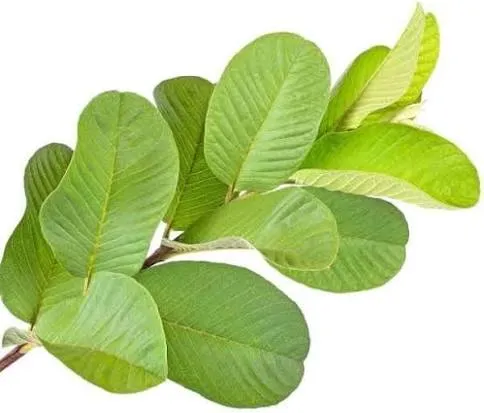
Fig no 1 : Guava Leaf
Flavonoids
Tannins
Phenolic compounds
Quercetin
Guaijaverin
Catechin
Epicatechin
Rutin
Kaempferol
Triterpenoid compounds
Guava leaf extracts have been reported to possess antimicrobial and antioxidant properties. Studies related to oral health have investigated their activity against oral microorganisms. Phenolic and flavonoid compounds may contribute to free-radical scavenging and modulation of inflammatory processes. Traditional use of guava leaves in mouth-related conditions also provides a basis for further investigation.(2)
The possible value of guava leaf in oral-ulcer management is related to its antimicrobial, antioxidant and anti-inflammatory properties. These activities may help create a favorable local environment for healing. Recent clinical research has also examined a guava-based herbal gel in recurrent aphthous stomatitis, supporting the need for further formulation studies.(2)
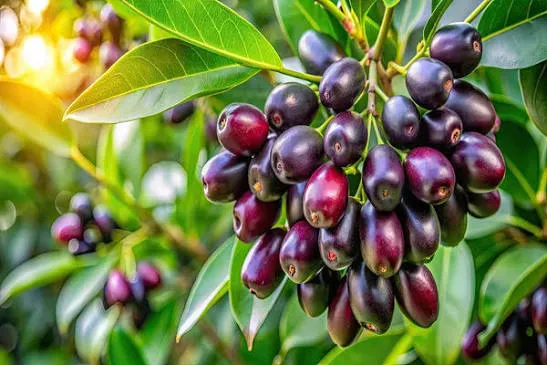
Fig no 2 : Jamun
Tannins
Flavonoids
Phenolic compounds
Gallic acid
Ellagic acid
Malic acid
Essential-oil constituents
Other polyphenolic compounds
Jamun leaves have shown antioxidant and antimicrobial activity in experimental studies. The polyphenolic content may contribute to these effects. Anti-inflammatory activity has also been reported in studies of different parts or extracts of the plant.(5)
The antioxidant and antimicrobial properties of jamun provide a reasonable basis for studying its use in an oral formulation. However, direct clinical evidence for jamun leaf specifically in oral-ulcer treatment is still limited. This makes systematic formulation and biological evaluation important.(2)
Both plants contain flavonoids, tannins and other phenolic compounds. Their reported biological properties suggest that they may complement each other in a topical oral formulation. The proposed combination is expected to be studied for antimicrobial, antioxidant and anti-inflammatory potential while the gel base may improve local retention. Any synergistic effect between the two extracts should be confirmed experimentally and should not be assumed only from their individual activities
Herbal Oral Gel as a Drug Delivery System
A gel is a semisolid preparation in which a liquid phase is held within a polymeric network. For oral application, the formulation should spread easily, remain at the site for a suitable period, have an acceptable pH and be non-irritant. Mucoadhesive polymers can increase contact time with the mucosal surface and may improve local delivery.(6)
MATERIALS & METHODOLOGY
|
Material |
Category/Role |
|
Carbopol 934 |
Gelling and mucoadhesive agent |
|
Glycerin |
Humectant |
|
Propylene glycol |
Co-solvent/humectant |
|
Triethanolamine |
Neutralizing and pH-adjusting agent |
|
Sodium benzoate |
Preservative, if required |
|
Suitable sweetening agent |
Taste masking |
|
Suitable flavour |
Improvement of palatability |
|
Purified water |
Vehicle |
Collection → Authentication → Washing → Shade drying → Powdering → Extraction → Filtration → Concentration → Drying → Storage
Procedure
Percentage Yield
Percentage Yield=Weight of dried extractWeight of powdered drug×100

Process :
Collection → Authentication → Cleaning → Shade drying → Powdering → Extraction → Filtration → Concentration → Drying → Storage
The dried jamun leaf powder is extracted using the selected solvent. After extraction, the filtrate is concentrated under controlled conditions and stored in a well-closed container.
The percentage yield is calculated using (2,7)
Percentage Yield=Weight of dried jamun extractWeight of powdered jamun leaves×100

|
Phytoconstituent |
Suggested test |
|
Alkaloids |
Mayer's/Dragendorff's test |
|
Flavonoids |
Shinoda test |
|
Tannins |
Ferric chloride test |
|
Phenolic compounds |
Ferric chloride test |
|
Saponins |
Foam test |
|
Glycosides |
Suitable chemical test |
|
Terpenoids |
Salkowski test |
|
Steroids |
Liebermann–Burchard test |
FORMULATION OF HERBAL ORAL GEL
Process
EVALUATION PARAMETERS
Purpose : To determine the physical characteristics and uniformity of the prepared gel.
Process : A small quantity of gel is placed in a clean glass container and examined visually under suitable lighting.(5)
Observe:
Process : A small amount of gel is pressed between two clean glass slides or spread over a clean surface.(6)
The formulation is examined for:
Purpose : The pH of an oral gel should be suitable for the oral mucosa and should minimize irritation.(7)
Process
Purpose : Viscosity determines the flow characteristics, ease of application and residence behavior of the gel.(8)
Process
Purpose : To determine how easily the gel spreads over the affected mucosal area.(1)
Method

Where:
S = Spreadability
M = Weight applied
L = Length moved by the slide
T = Time taken
Purpose : To determine the ease with which the gel can be removed from its container/tube.(2)
Process
Purpose : To determine the ability of the gel to adhere to mucosal tissue.(3)
Process
Purpose : To determine whether the optimized formulation remains acceptable during storage.(4)
Parameters
Process
The optimized formulation is stored under selected stability conditions according to the applicable stability protocol. Samples are withdrawn at predefined intervals and compared with initial values.(5)
CONCLUSION
The combination of Psidium guajava (guava) and Syzygium cumini (jamun) leaves offers a promising herbal approach for the management of oral ulcers due to their reported antioxidant, antimicrobial and anti-inflammatory properties. Formulating these extracts as an oral gel may provide direct application, better mucosal contact and improved patient acceptability. Evaluation of physicochemical, phytochemical and biological parameters can help establish the quality and potential effectiveness of the formulation. Further optimization, stability and clinical studies are required to confirm its safety and therapeutic potential.
REFERENCES

Sneha Rushikesh Palimkar1*, Snehal Santosh Pendbhaje2, Formulation And Evaluation Of A Herbal Oral Gel Containing Guava Leaf (Psidium Guajava L.) And Jamun (Syzygium Cumini L.) For The Management Of Oral Ulcers, Int. J. Sci. R. Tech., 2026, 3 (10), 472-480. https://doi.org/10.5281/zenodo.23211108
 10.5281/zenodo.23211108