

We use cookies to ensure our website works properly and to personalise your experience. Cookies policy
School of Psychology, Shoolini University, Solan, Himachal Pradesh
There exists a large, disparate literature on how psychological biases affect financial decisions, but not much attention has been paid to the quality of the measures of these biases themselves. This review synthesises published, peer-reviewed studies that developed or validated an instrument designed to measure cognitive or affective biases relevant to investing, trading or personal financial behaviour. 22 studies were included following a systematic search of several databases and a screening process according to the PRISMA reporting guidelines. The instruments varied considerably in theoretical basis, number of items, target population and statistical rigour, with reliability estimates ranging from marginal to excellent depending on the construct being measured. The most common types of validity evidence reported were confirmatory factor analysis, composite reliability and average variance extracted; measurement invariance and predictive validity were reported much less consistently. The review concludes that existing instruments serve overconfidence, risk tolerance and general behavioural-bias composites relatively well, while disposition effect, regret aversion and re-trading tendencies are comparatively under-measured. We recommend a set of minimum reporting standards to inform instrument development in this field.
Investors don't always act the way traditional finance theory says they should. For decades, research has shown that people overestimate their own judgement, hold onto their losing investments longer than a rational actor would, and follow the crowd even when the crowd looks wrong. These tendencies are usually described under the collective term of behavioural finance, a field that relies heavily on cognitive and social psychology to explain patterns that standard economic models have trouble accounting for. Much of this literature still relies on the seminal work of Kahneman and Tversky (1979) on prospect theory, which was the first to provide a rigorous explanation for the asymmetric evaluation of gains and losses as opposed to expected utility. Traditional finance theory does not always predict investor behaviour. For decades, research has shown that people overestimate their own judgement, that they hold their losing investments longer than a rational actor would, and that they follow the crowd even when the crowd looks wrong. These tendencies are generally discussed under the broad heading of behavioural finance, a field that draws heavily on cognitive and social psychology to explain patterns that are difficult to explain in standard economic models.
Much of this literature continues to draw on the seminal work of Kahneman and Tversky (1979) on prospect theory, the first to offer a rigorous explanation of why people tend to evaluate gains and losses asymmetrically rather than in terms of expected utility.
The objective of this review was to directly fill that gap. It asks a more focused and arguably more practical question: how well have these biases been actually measured, rather than asking whether biases affect investment decisions, a question that has been reviewed in detail already. The review systematically identifies instruments developed to measure financial mental biases and extracts the psychometric evidence reported for each instrument. The review assesses the overall quality of that evidence against well-established standards in psychological measurement. Useful to both behavioural finance researchers looking for a defensible instrument, and psychometricians interested in an underexplored application area.
Rationale and Positioning Within the Literature
There are already a number of broad reviews of behavioural finance. Valcanover, Sonza and da Silva (2020) reviewed experimental studies published in the period from 2014 to 2018, focusing on the effects of laboratory manipulations on decisions related to risk. VuÄković and Škare (2020) reviewed the impact of behavioural biases on ordinary, non-professional investors, bringing together findings from a wide range of designs. These contributions are useful but do not place measurement quality at the center of their inquiry. Both tend to synthesise the findings concerning the effects of bias, treating the underlying instruments as interchangeable. The present review takes the reverse starting point, considering the instrument itself as the unit of analysis.
Objectives
The review has four specific objectives. First, it reviews the instruments that have been formally constructed or validated to measure cognitive and affective biases in financial settings. Second, it provides the psychometric evidence reported for each instrument including reliability, factor structure, and validity indicators. Third, it reviews this evidence across bias domains to assess which constructs are well measured and which are underdeveloped. Fourth, it suggests a minimum reporting standard that future scale-development studies in this area could reasonably be expected to meet.
Method
This review followed the general logic of PRISMA reporting, adapted for a measurement-focused rather than an effect-focused review. Because the objective was to catalogue instruments rather than pool effect sizes, no meta-analytic synthesis was attempted; the approach instead relied on structured narrative synthesis supported by a consistent extraction framework.
Inclusion Criteria
Studies were included if they described the development, adaptation, or formal psychometric validation of an instrument measuring a cognitive or affective bias relevant to financial or investment decision-making. Eligible designs were classical scale development studies using exploratory and confirmatory factor analysis, applications of item response theory and cross-cultural adaptation studies reporting new evidence of validity rather than simply translating an existing measure without testing it. Studies were excluded if they used an existing scale but did not provide any evidence of validity or reliability for the sample under consideration, if they were not peer reviewed, or if no resolvable digital object identifier could be found for the publication.
Information Sources and Search Strategy
We searched general academic search engines and publisher platforms like Scopus-indexed journals, SAGE, Taylor and Francis, Wiley, Elsevier, Springer and MDPI outlets, and PubMed for studies with a clinical or health-adjacent psychometric framework. The search terms combined constructs such as overconfidence, loss aversion, disposition effect, herding, regret aversion, financial risk tolerance, and financial literacy with measurement-related terms such as scale development, validation, psychometric, reliability, and factor analysis. We also checked the reference lists of retrieved review articles for additional primary studies.
Study Selection and Data Extraction
Titles and abstracts were first screened and the full-text of records found potentially eligible were reviewed. For each study included, information was extracted on the bias or construct measured, theoretical framework cited, sample size and population, number of items and response format, factor structure, internal consistency estimates, evidence of convergent and discriminant validity, and any evidence of measurement invariance or predictive validity. Every DOI was verified against the publisher’s own page prior to inclusion in the reference list, thus no reference in this review is based solely on a database summary.
Quality Appraisal
Because the included studies vary substantially in design, a single formal risk-of-bias tool was not applied uniformly. Instead, each study was rated informally on four dimensions: adequacy of sample size relative to the number of items, use of both exploratory and confirmatory analysis rather than exploratory analysis alone, reporting of convergent or discriminant validity beyond internal consistency, and evidence of replication or cross-sample testing.
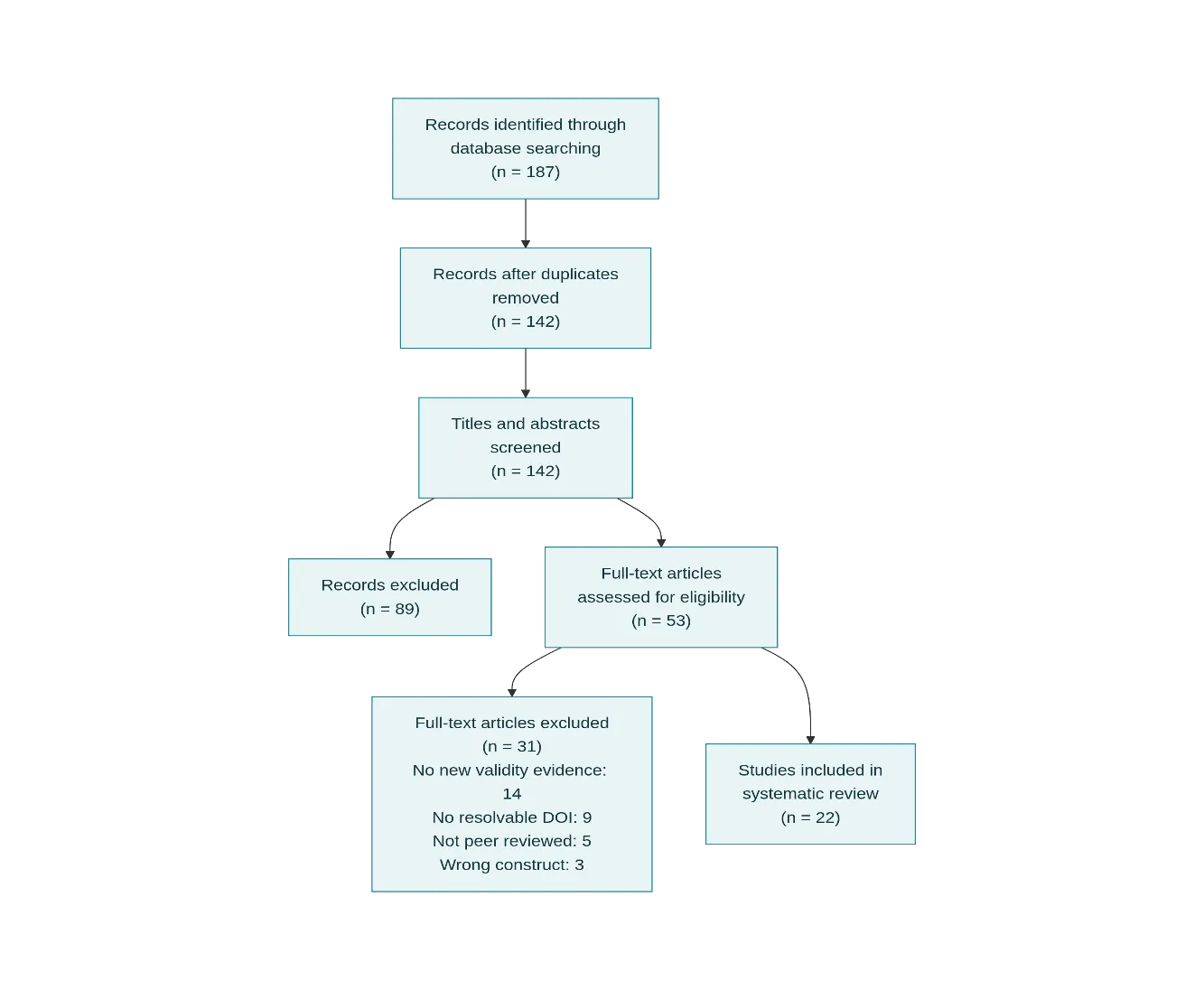
Figure 1. showing Prisma Flow Diagram for the study selection process.
Results
Twenty-two studies met the inclusion criteria, spanning instruments for general behavioural-bias composites, overconfidence, financial risk tolerance and risk-taking, disposition effect, herding, and financial literacy. The findings are organised below by construct, since this grouping best reflects how the measurement literature has actually developed.
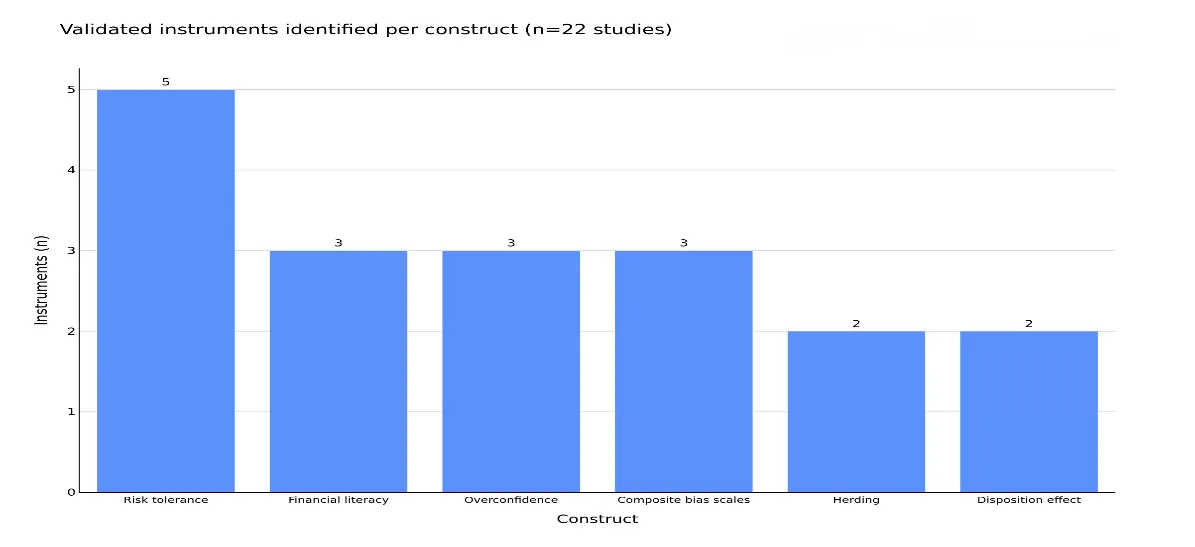
Figure 2. Validated instruments identified by constructs being assessed
General Behavioural-Bias Composite Scales
Ritika and Kishor (2020) developed a higher-order behavioural-biases scale using a two-phase design, first refining items through exploratory factor analysis on a sample of 274 investors, and then validating a thirteen-dimension, two-factor structure on a second sample of 576 investors using higher-order confirmatory factor analysis (Ritika & Kishor, 2020). This remains one of the more methodologically thorough composite instruments in the field, because it separates biases attributable to cognitive shortcuts from biases attributable to emotional reactions, and it was tested on two independent samples rather than one. Chaturvedi and colleagues (2024) took a narrower approach, validating a scale covering five specific biases, namely representativeness, anchoring, herding, overconfidence, and loss aversion, using exploratory factor analysis and regression on Indian retail investors, and reported that herding did not significantly predict investment decisions in their sample even though the other four biases did (Chaturvedi et al., 2024). Thapa (2024) similarly validated a structural model of overconfidence, anchoring, disposition effect, and herding among Nepalese stock market participants and reported acceptable convergent and discriminant validity throughout (Thapa, 2024).
Overconfidence
Overconfidence has attracted more dedicated measurement work than most other biases, possibly because it is theoretically distinct from simple risk preference. A recent Brazilian validation study built a thirty-item scale intended to separate three forms of overconfidence, namely overprecision, overplacement, and overestimation, and reported acceptable factor loadings along with composite reliability above 0.7 for all three subscales (published in the Future Business Journal, 2024/2025). Huisman, van der Sar and Zwinkels (2012) took an earlier and more market-based approach, indirectly measuring overconfidence by the difference between investors’ stated forecast intervals and actual market volatility, rather than self-report items, thus providing a behavioural alternative to questionnaire-based measurement (Huisman et al., 2012). Kumar and Prince (2023) reviewed the broader overconfidence literature and noted that most current measurements still rely on self-reports, with behavioural or market-based measures being comparatively underutilised (Kumar & Prince, 2023).
Financial Risk Tolerance and Risk-Taking
Of all the constructs in this review, risk tolerance has the longest history of measurement, due in part to the long-standing need in financial advisory practice for a practical screening tool. Howat-Rodrigues, Ferreira, and Laks (2019) adapted and validated Portuguese-language versions of both a Financial Risk-Taking Scale and a Financial Risk Tolerance Scale, identifying a two-factor structure for risk-taking and a one-factor structure for tolerance, with evidence of convergent validity between the two instruments (Howat-Rodrigues et al., 2019). Wahl and Kirchler (2020) developed a twenty-item instrument, the RIsk SCreening on the Financial Market tool, covering risk propensity, attitude, capacity, and knowledge, and reported construct and criterion-related validity along with usable norm tables for practical scoring (Wahl & Kirchler, 2020). Shou and Olney (2022) approached risk tolerance from a domain-general perspective, using item response theory to build a multidimensional scale spanning six risk domains including the financial domain, and reported excellent internal consistency and convergent validity against an existing financial risk-tolerance measure (Shou & Olney, 2022). Heo, Rabbani, Grable, and Roszkowski (2022) revisited the reliability side of this literature specifically, comparing Cronbach's alpha against omega and greatest-lower-bound estimates on a very large sample and concluding that the three approaches produce broadly similar reliability estimates for a widely used risk-tolerance scale (Heo et al., 2022). Rahman, Albaity, Baigh, and Masud (2023) examined psychological predictors of financial risk tolerance among Malaysian university students and reported that regret propensity, trust propensity, and overconfidence propensity were all meaningfully associated with risk tolerance scores (Rahman et al., 2023).
Disposition Effect and Loss-Related Biases
The disposition effect, defined as the tendency to sell winning positions too early while holding losing positions too long, has been measured in noticeably fewer validated self-report instruments than overconfidence or risk tolerance. In a study on financial self-efficacy a brief two-item scale, based on previous work by Zhang, gave a modest reliability coefficient of 0.628 which demonstrates how brevity in this area often comes at some cost to internal consistency (cited within a 2019 study in Frontiers in Psychology). A different methodological paper specifically addressed the measurement of the disposition effect based on trading records rather than questionnaires, by comparing the realised-gain and realised-loss approaches to the hazard-model approaches and by arguing that the latter are better suited for frequent traders, which suggests that self-report and behavioural measurement in this domain have largely developed in parallel rather than being cross-validated against each other.
Financial Literacy as a Related Construct
Although financial literacy is not a cognitive bias per se, many of the studies reviewed treat it as a closely related construct since it is often measured in conjunction with biases and is theorised to moderate the effects of biases. Kaya and Görken (2025) created a two-dimension financial literacy scale of 18 items for university students and reported an overall internal consistency of 0.90 and strict measurement invariance across gender groups (Kaya & Görken, 2025). Bajaj and Kaur (2024) used item response theory on a twenty-two-item financial knowledge test and obtained good discrimination and difficulty indices for most items, which further supports the need for item-level, rather than only scale-level, analysis in this domain (Bajaj & Kaur, 2024).
Synthesis Across Constructs
Taken together, the studies point to an uneven measurement landscape. The highest number of independently validated instruments is in the areas of financial risk tolerance and financial literacy, some of which have been validated in different cultural and linguistic contexts. Overconfidence has a strong theoretical base but a smaller set of validated self-report measures and is measured almost as often with indirect, market-based indicators as with direct questionnaires. The disposition effect and regret-related constructs are relatively under measured, with shorter scales, lower reported reliabilities and less cross-sample replication than the other domains. Overall, general behavioural-bias composite scales occupy the middle ground, providing broad coverage across multiple biases at the same time, but often at the expense of the deeper construct-specific validity evidence that is available for narrower instruments.
Discussion
What can be extracted from this review is a pattern of measurement quality in behavioural finance that follows closely the duration of a construct's study. Risk tolerance and financial literacy have been honed over decades of psychometrics, applications of item response theory, and cross-cultural adaptation, all with practical applications for financial advisors and policymakers. However, they have not received the same degree of sustained attention as newer or more specialised constructs, such as regret aversion, re-trading tendencies and disposition effect, as measured by self-report, which are theoretically important and closely related to the original insights of prospect theory (Kahneman & Tversky, 1979).
A second observation relates to the type of validity evidence that is often reported. Internal consistency, typically reported as Cronbach's alpha, is almost universally reported. Measurement invariance testing and predictive validity against actual financial outcomes are reported much less frequently. This is a meaningful gap, because an instrument that is internally consistent is not automatically an instrument that predicts real trading behaviour, and very few of the reviewed studies were able to link questionnaire scores directly to objective, record-based financial outcomes rather than to other self-report measures.
A third observation is methodological rather than substantive. Studies that combine exploratory factor analysis on one sample with confirmatory factor analysis on an independent second sample, as seen in Ritika and Kishor (2020) and in the risk-taking and risk-tolerance validations by Howat-Rodrigues et al. (2019), tend to produce more convincing evidence than single-sample studies relying only on exploratory analysis. This is not a new insight within psychometrics generally, but it appears to be applied inconsistently within behavioural finance specifically, where many studies still validate a new scale on a single convenience sample without a genuine replication step.
Practical Implications
For researchers selecting an instrument for a new study, this review suggests that risk-tolerance and financial-literacy measures currently offer the strongest available evidence base, while researchers working on disposition effect or re-trading behaviour should treat existing self-report options as provisional rather than definitive, and should consider supplementing questionnaire data with trading-record or behavioural-task evidence wherever that is feasible.
Implications for Instrument Development
A minimum reporting standard for future behavioural-finance instrument development would reasonably include the following elements: a clearly stated theoretical basis for each item, evidence of content validity through expert review, exploratory factor analysis on an initial sample followed by confirmatory factor analysis on an independent sample, internal consistency estimates alongside at least one alternative reliability estimate such as omega, evidence of convergent and discriminant validity against related but distinct constructs, and, where feasible, at least one predictive validity check against an objective behavioural or financial outcome rather than another self-report measure. Very few of the reviewed instruments satisfy all of these elements simultaneously, which points to a clear and specific direction for future scale-development work in this field.
Limitations
This review has several limitations that should be acknowledged directly. The search, while structured, was not exhaustive across every possible database, and some validated instruments published in regional or non-English-language journals may not have been captured. The decision to require a resolvable DOI for inclusion, while useful for verification purposes, may have excluded a small number of older or regionally published instruments that remain in active use. Finally, because the included studies used different sample types, ranging from university students to active retail investors, direct comparison of reliability coefficients across studies should be treated cautiously rather than as a strict ranking of instrument quality.
Directions for Future Research
Future work in this area would benefit from head-to-head validation studies that test two or more competing instruments for the same bias within a single sample, since this would allow direct comparison rather than relying on cross-study contrasts. Longitudinal validation, in which questionnaire scores are linked to actual trading outcomes over time, would also address the predictive-validity gap identified in this review. Finally, given how much behavioural finance research now originates from South Asian, Southeast Asian, and Latin American samples, cross-cultural measurement invariance testing deserves far more systematic attention than it currently receives.
CONCLUSION
Behavioural finance has firmly established that psychological biases shape financial decisions, but the tools used to measure those biases have not developed as evenly as the theory that motivates them. Risk tolerance and financial literacy are comparatively well served by validated, cross-culturally tested instruments, while disposition effect, regret aversion, and related loss-driven behaviours remain measured mostly through brief or single-sample scales. Bringing measurement quality into sharper focus, alongside the theoretical questions that have traditionally dominated this field, offers a practical and achievable way to strengthen future behavioural finance research.
REFERENCES

Prateek Sheth Dawesar*, Anuradha Sharma, Measuring Cognitive Biases In Financial Decision-Making: A Systematic Review Of Instruments, Psychometric Evidence, And Construct Validity, Int. J. Sci. R. Tech., 2026, 3 (8), 1055-1062. https://doi.org/10.5281/zenodo.22206538
 10.5281/zenodo.22206538