

We use cookies to ensure our website works properly and to personalise your experience. Cookies policy
K.L.E. Institute of Nursing Sciences, Ankola (U.K.)
Background of the study: Malaria is a mosquito-borne disease that affects many communities. It can be prevented by avoiding mosquito bites and controlling mosquito breeding. Community awareness and proper preventive measures help reduce malaria cases. Objectives of the study are to: 1. To assess the pre-test level of knowledge of community people regarding prevention of malaria . 2. To assess the post- test level of knowledge of community people regarding prevention of malaria. 3. To find the association between pre – existing knowledge of community people regarding prevention of malaria with selected socio-demographic data. Methodology: • Research approach : Quantitative evaluative approach • Research design : One group Pre Test Post Test Design • Research setting : Belekeri village, Ankola • Population : Community people • Sample size : 40 people • Sample technique : Non probability purposive • Tool : Structured knowledge questionnaire Results : The pre-test mean knowledge score was ±9.75 and standard deviation (S.D) ± 5.25 were as the post-test mean knowledge score was ±21.35 and standard deviation (S.D) ± 1.924 the calculated “t” value was 13.12 which was higher than the table value 2.023 at 0.05 level of significance hence H1 and H2 was accepted. The study showed that there was non-significant association between the knowledge score and Age X²=12.92,Df=8,P=0.115,Gender X²=0.936, Df=2, P=0.626 (NS), Family type X²=1.213, Df=2, P=0.545 (NS), Housing type X²=7.19, Df=4, P=0.126(NS), Socioeconomic status X²=1.726, Df=2, P=0.422(NS), Occupation X²=7.049, Df=10, P=0.721 (NS), Education X²=3.208, Df=6, P=0.782(NS)Religion X²=1.52,Df=2,P=0.47. Hence the null hypothesis was accepted and research hypothesis was rejected. Interpretation and Conclusion: The results of the study after introducing planned teaching programme most of the community people had adequate knowledge regarding prevention of malaria. So the study concluded that planned teaching programme is more effective to increase the knowledge of malaria among community peoples.
Malaria is a vector-borne endemic disease caused by parasitic protozoa of the genus Plasmodium. There are various species of Plasmodium causing malaria in humans including Plasmodium malariae, P. ovale, P. vivax, P. falciparum, and P. knowlesi . 1
Malaria transmitted to humans through the bites of infected female Anopheles mosquitoe. It is characterized by high fever and rigors. Malaria remains a major public health problem worldwide. 2 ,3 In 2019 an estimated 229 million cases of malaria occurred globally with approximately 409,000 deaths attributed to the disease. Children under five years of age are particularly vulnerable and accounted for about 67% (274,000) of all malaria deaths worldwide in 2019. The majority of malaria cases and deaths occur in sub-Saharan Africa. However, countries in the South-East Asia, Eastern Mediterranean, Western Pacific, and Americas regions are also affected. 2
According to the World Malaria Report (WMR) 2019, India contributed approximately 3% of the total malaria cases worldwide. India recorded a 49% reduction in reported malaria cases and a 50.5% reduction in malaria-related deaths compared with 2017. 2
In India, the states that have historically reported a high burden of malaria include Uttar Pradesh, Bihar, Karnataka, Odisha, Rajasthan, Madhya Pradesh, and Puducherry. The highest numbers of malaria-related deaths were reported from Odisha, followed by West Bengal, Mizoram, Jharkhand, Meghalaya, Karnataka, Tripura, and Assam. 3
Malaria continues to be a global health threat, causing millions of illnesses and hundreds of thousands of deaths each year. Globally, approximately 228 million cases of malaria were reported in 2018, with an estimated 405,000 deaths. The African Region accounted for approximately 93% of malaria cases and 94% of malaria deaths globally. 1
According to the World Malaria Report 2020, Nigeria had the highest malaria burden in the world, with approximately 51 million cases and 207,000 deaths annually. This represented about 27% of global malaria cases and 23% of global malaria deaths. Approximately 76% of Nigeria's population lived in areas with high malaria transmission. 1
Malaria continues to be a serious public health problem in South-East Asia, including India. Approximately 36% of the world's population is at risk of malaria in malaria-endemic countries. The South-East Asia Region contributes significantly to the global malaria burden, with India accounting for a major proportion of cases in the region.4
According to the World Malaria Report 2014, approximately 22% (275.5 million) of India's population lived in high-transmission areas, 67% (838.9 million) lived in low-transmission areas, and 11% (137.7 million) lived in malaria-free areas. In 2013, approximately 0.88 million malaria cases were reported, and around 128 million tests were conducted among suspected cases. Plasmodium falciparum accounted for approximately 53% of infections, while Plasmodium vivax accounted for 47%. 4
Malaria in India accounted for a significant proportion of malaria cases reported in the WHO South-East Asia Region. According to official figures available from India's National Vector Borne Disease Control Programme, approximately 0.7–1.6 million confirmed malaria cases and 400–1,000 deaths were reported annually. 4
NEED FOR THE STUDY
Malaria is a life-threatening disease. Despite global efforts to eliminate it, malaria remains a critical public health problem, particularly in developing countries, where it contributes significantly to morbidity and mortality. According to 2023 statistics reported by the World Health Organization (WHO), approximately 263 million cases of malaria were estimated worldwide in 2023. The burden of malaria is disproportionately higher in regions with limited healthcare resources, poor sanitation, and inadequate awareness of preventive measures. Socioeconomic and educational disparities also increase vulnerability to malaria by limiting access to effective prevention and treatment. Many individuals in these regions lack adequate knowledge to recognize malaria symptoms, understand its mode of transmission, and adopt appropriate preventive measures, such as using insecticide-treated nets and seeking timely medical care .6
The incidence of malaria continues to be influenced by several factors, including shortage of trained personnel, drug resistance, population mobility, natural disasters, and inadequate knowledge about malaria and its prevention. In India, an estimated 10.6 million malaria cases were reported in 2006, accounting for approximately 60% of the malaria cases in the WHO South-East Asia Region. More than 100 million blood smears were examined annually, and all reported cases were confirmed through laboratory examination. Approximately half of the reported cases were caused by Plasmodium falciparum. However, the proportion of cases detected through active surveillance compared with passive surveillance was not known. 8
Malaria is one of the major communicable diseases of public health importance worldwide. It has historically been a major cause of morbidity and mortality, particularly in tropical and subtropical regions. Despite decades of intensive efforts to control and eliminate the disease, malaria continues to affect people of all age groups and remains a significant obstacle to social and economic development. Although malaria is both preventable and treatable, it continues to cause a substantial burden in endemic areas. Historically, approximately 300–500 million cases of malaria and more than one million deaths occurred annually worldwide. Repeated episodes of malaria place a considerable burden on households, healthcare services, and the economic development of communities and nations. Therefore, the socioeconomic conditions of communities have a direct influence on the occurrence and control of malaria. 12
A community-based cross-sectional study conducted in RS Pura Health Block, Jammu. The study aimed to assess malaria-related knowledge, attitudes, and practices among rural residents. The findings showed that Data from 296 participants were analyzed. Most participants had good knowledge of malaria transmission, symptoms, prevention, and treatment-seeking behaviour. Many considered malaria a serious health problem, preferred government hospitals, and practiced preventive measures. The study concluded that the community had good overall KAP regarding malaria, while understanding sociocultural factors remains important for strengthening malaria prevention and elimination efforts.5
A cross-sectional study was conducted in Devarayasamudra Village, Kolar District, Karnataka, to assess the knowledge and preventive practices regarding malaria among adults in a rural community. The study was was conducted in an area where malaria had previously been a major public health problem. The study included 384 adults aged above 18 years. The sample size was calculated by assuming a 50% proportion; however, the specific sampling technique used was not mentioned. A semi-structured questionnaire was used as the data collection tool. The study found that 73% of participants had knowledge about malaria, 74.7% correctly identified mosquito bites as the mode of transmission and 74.7% reported using mosquito nets as a preventive measure. The study concluded that the overall knowledge and preventive practices regarding malaria were satisfactory, although some misconceptions were still present. The authors recommended continuous health education and awareness programmes to improve knowledge, strengthen preventive practices, and support malaria elimination efforts.17
STATEMENT OF THE PROBLEM
“A Study to assess the effectiveness of planned teaching programme on knowledge regarding the prevention of Malaria among people living in Belekeri village of Ankola.”
OBJECTIVES OF THE STUDY
Objectives of the study were to,
1. To assess the pre-test level of knowledge of community people regarding prevention of malaria.
2. To assess the post-test level of knowledge of community people regarding prevention of malaria.
3. To find the association between pre existing knowledge of community people regarding prevention of malaria with selected socio- demographic data.
HYPOTHESES
Hypothesis – I
The mean post – test knowledge score of community people regarding malaria will be significantly higher than the mean pre – test knowledge score.
Hypothesis-II
There will be significant association between levels of knowledge of community people regarding malaria with selected demographical data.
OPERATIONAL DEFINITIONS
1. Assess: In the study “assess” refers to the measuring the effect of planned teaching programme on knowledge of community people regarding prevention of malaria.
2. Effectiveness: In the study “effectiveness” refers to the significant gain in the knowledge of community people regarding prevention of malaria and the result of effectiveness is obtained by comparing the result mean pre-test and post-test score.
3. Planned teaching programme: In the study “planned teaching programme” refers to teaching method developed by the investigator for the purpose of achieving specified objectives.
Planned teaching programme include: In this study planned teaching programme on prevention of malaria include; charts, flash cards.
4. Malaria: Malaria refers to aspects regarding.
1.Introduction
2.Definition of malaria
3.Incidence of malaria
4.Epidemiological triad
5.Life cycle of Plasmodium
6.Signs and symptoms of malaria
7.Diagnostic evaluation
8.Malaria control strategies
9.Prevention methods
10.Complications
11.Conclusion
5. Community people: In this study, community people refer to the residents living in the Belekeri village Ankola who are participating in the study.
ASSUMPTIONS:
1.Community people may have inadequate knowledge regarding the prevention of malaria.
2.Improving the knowledge of community people may help in the prevention of malaria.
3.A planned teaching programme may be effective in improving the knowledge of community people regarding malaria prevention.
DELIMITATION
1) The study is limited to community people residing in the selected community of Belekeri village Ankola
2) The study is limited to community people who are available and willing to participate at the time of data collection.
CONCEPTUAL FRAMEWORK
A Conceptual Framework is an inter-connected set of ideas about a particular phenomenon. The framework serves as the basis for understanding the casual or co-relational patterns of inter connections across events, ideas, observations, concepts, knowledge, interpretations and other components of experience.
The Conceptual Framework is applied to the present Interventional Study with an aim of evaluating the effectiveness of Planned teaching programme on prevention of malaria among community people based on Ludwig Von Bertalanffy’s general system model. According to the model a system is a set of interacting elements all contributing to the achievement of overall goal of the system.
The System’s approach integrates the analysis and synthesis of the phenomenon under study. The basic assumption of the model is that the whole is more than the sum of parts. Bertalanffy proposed two types of system as follows:-
1. Open system: It is a system in exchange of matter with its environment, presenting import and export, building up and breaking down of its material components.
2. Closed system: It is a system that exchanges energy, but not matter with its environment.
The model includes three main components. Those are Input, Throughput and Output. The phenomena under present study integrate with open system.
INPUT
The first component of the model is Input which refers to what has been put into a system to achieve the goal. When inputs are put into open system, imports energy from surrounding environment, there will be continuous interaction between the systems and environment in order to process the input into outcome (final product) which happens in the second component of the model that is throughput.
In the undertaken study Input went through two phases.
Phase I : Analysis of the Situation & Identification of the Need
The investigator while working identified inadequate knowledge regarding prevention of malaria among people of Belekeri village. The situation was analyzed by going through collecting information from PHC regarding prevalence of malaria and, discussion with medical officer, community leaders and determined to undertake the study.
Phase II: Designing of the intervention of Prevention of Malaria through Planned teaching programme.
After reviewing the literature and studying the situation the investigator determined to undertake the study with greater interest. The investigator worked on designing and developing the best method to teach the community people of Belekeri village regarding prevention of malaria through preparation of teaching aids. Hence decided to teach community people through planned teaching programme.
THROUGHPUT
Throughput refers to a process of transforming inputs into product. It enables the system to achieve goals.
In the present study Throughput is divided into two phase. i.e. Phase III and Phase IV. It includes :-
Phase III: Development of tools
In third phase of development the researcher developed the Two Tools
1. Development and validation of Structured Knowledge Questionnaire.
2. Reliability testing of tools.
In third phase, Structured Knowledge Questionnaire was developed in order to know the level of knowledge of community people regarding prevention of malaria which has direct influence on their competence.
Phase IV: Implementation
Fourth phase deals with the Implementation Phase. In this phase, pretest was conducted to assess with predetermined validated Knowledge Questionnaire.
After pretest, Planned Teaching Programme on prevention of malaria was conducted followed by clarification of doubts.
OUTPUT
Output refers to the Information and Energy produced by the system from inputs. Outputs are the results obtained from the capability of the system to achieve its objectives.
The phase five deals with output phase. In this phase post test was conducted after one week to assess the knowledge of community people.
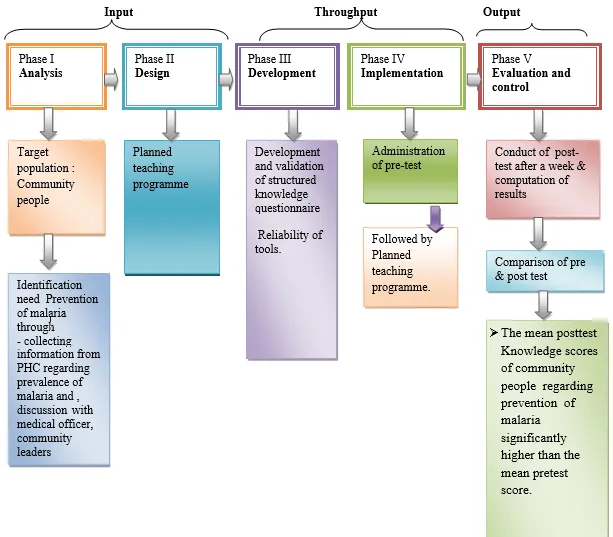
FIGURE I : Conceptual framework based on the Ludwig Von Bertalanffy’s general system theory
DISCUSSION
The present study was conducted to assess the effectiveness of a planned teaching programme on knowledge regarding the prevention of malaria among people residing in Belekeri village, Ankola. The study focused on assessing the existing level of knowledge regarding malaria prevention and developing and administering a planned teaching programme based on the identified needs. The major findings of the study were presented according to the objectives. The primary objective was to assess the knowledge of the participants regarding malaria prevention and to evaluate the effectiveness of the planned teaching programme in improving their knowledge.
REFERENCES







Ganesh Naik, Manjunath Naik, Shreya T. Gaounker, Siya S. Desai, Stenila J. Navegekar, Vaishnavi K. Gurav, Veda V. Sail, Measuring Planned Teaching Effectiveness: A Quantitative Framework, Int. J. Sci. R. Tech., 2026, 3 (8), 1126-1133. https://doi.org/10.5281/zenodo.22207720
 10.5281/zenodo.22207720