

We use cookies to ensure our website works properly and to personalise your experience. Cookies policy
Thiruhrudaya College of Nursing
Background: Smartphone dependency significantly impairs the knowledge acquisition, skill development, and academic efficacy of nursing students. Aim: The aim of the study is to assess the effectiveness of a structured teaching program of knowledge on management of nomophobia among nursing students. Methods: A pre-experimental one group pre-test and post-test design was conducted among 86 nursing students in Kottayam district. Non-probability purposive sampling technique was used to select the samples. A structured teaching program (STP) on the management of nomophobia was given to the participants. The pre-test was conducted before the intervention. After two days, a post-test was conducted to assess the effectiveness of the structured teaching program. Result: The study findings were analyzed using appropriate statistical methods. The Wilcoxon signed rank test showed a statistically significant difference between pre-test and post-test knowledge scores (Z = 8.05, p < 0.05), indicating the effectiveness of the structured teaching program. The Mann–Whitney U test and Kruskal–Walli's test was used to assess the association between demographic variables and pre-test knowledge. Results revealed a significant association between age and academic year with pre-test knowledge (p < 0.05). Additionally, a significant association was found between restlessness when not checking smartphones and pre-test scores (U = 195, p < 0.05). However, no significant association was observed with gender, residence, academic performance, smartphone usage duration, purpose of use, stress without internet access, nervousness due to low battery, and habit of checking smartphones after waking up (p > 0.05). Conclusion: The study concluded that the structured teaching program was effective in improving knowledge regarding the management of nomophobia among nursing students.
Nomophobia, refers to the fear or anxiety that arises from not being able to use one’s mobile phone, has recently emerged as a prevalent problem among students, including nursing students. This phobia is linked to various negative consequences across several areas of life. The health of nursing students with nomophobia could be compromised by physical conditions such as eyestrain, headaches, insomnia, and poor posture resulting from the overuse of mobile phones. In addition, psychological disorders like increased stress levels, anxiety, irritability, and difficulty concentrating may result from nomophobia. In terms of academics, nomophobia can negatively affect learning by reducing students’ concentration spans and distracting them during class.
In nowadays, mobile phones have transformed communication by making it fast, convenient, and easily accessible to people of all age groups. These devices allow individuals to share information, ideas, and messages instantly, improving connectivity across different locations. Mobile internet technology integrated with contemporary media platforms has become a major advancement in society. This technological progress supports the enhancement of important social and communication skills while also expanding access to educational resources and learning opportunities. The advancements in smartphone processing systems and the rapid growth of mobile applications in digital communication have led mobile phones to evolve from basic communication devices into multifunctional tools. The diverse features of smartphones have increased continuous usage, sometimes leading to dependency and addictive behaviours.1
Nomophobia is also with reduced self-esteem, feelings of unhappiness, anxiety, nervousness, discomfort, and distress when individuals are unable to access their phones. Although smartphones serve multiple beneficial purposes in daily life, overdependence may lead to eye strain, neck pain, stress, and emotional disturbances. Extended usage can adversely affect overall health. Among students, reliance on mobile phones for academic tasks, social communication, and personal interactions has increased the incidence of nomophobia. Restricting phone access may result in anxiety, irritability, and uneasiness, ultimately affecting concentration and academic performance.
AIM
The aim of the study is to assess the effectiveness of a structured teaching program of knowledge on management of nomophobia among nursing students.
OBJECTIVES
• To assess the pre-test knowledge on management of nomophobia among nursing students.
• To evaluate the effectiveness of a structured teaching programme on management of nomophobia among nursing students.
• To find out the association between selected demographic variables and pre-test knowledge on management of nomophobia among nursing students.
OPERATIONAL DEFINITIONS
2) Effectiveness: It refers to the improvement in knowledge on the nomophobia among nursing students.
3)Structured teaching programme: Structured teaching programme (STP) is a systematically planned educational programme designed by Researcher to provide adequate knowledge on the nomophobia.
4) Knowledge: Questionnaire are used to assess the understanding of the student regarding the management of nomophobia.
5) Management of nomophobia: Structured teaching programme are used to control and reduce nomophobia among nursing students.
6) Nomophobia: It refers as the fear or anxiety experienced by the person being away from the mobile phone.
7) Nursing students: Nursing students refers to individual who enrolled BSc nursing programme in the selected nursing college of Kottayam district and who fulfil inclusion criteria set by the researcher.
REVIEW OF LITERATURE
A descriptive cross-sectional study to assess the prevalence of nomophobia among nursing students in Kollam. The study involving 635 samples by using purposive sampling techniques and it was conducted at Bishop Benziger College of Nursing, Upasana College of Nursing, VNSS College of Nursing, and Holy Cross College of Nursing, Kollam, Kerala. The objective of study is to assess the prevalence of nomophobia among nursing students at Kollam. The findings found that 2% of the participants are severely addicted to nomophobia. Among 635 participants, more than 50% of them were affected by mild nomophobia. Eleven percent of the private nursing college students are no nomophobia 2.
A descriptive study was conducted to assess the knowledge and effect of nomophobia among nursing students of selected nursing colleges in Mysore. The sample size for the study comprised 60 nursing students who were recruited through non-probability convenience sampling method. Data collection was done by utilizing personal proforma and structured knowledge questionnaire. The results showed that most nursing students possessed average knowledge about, whereas some nursing students possessed poor knowledge about nomophobia. The mean knowledge score was found to be 7.5, and standard deviation was ±1.4. Therefore, it can be concluded that awareness programs must be conducted to increase knowledge about nomophobia3.
A Quasi experimental research study to assess the prevalence of nomophobia and effectiveness of planned teaching program on prevention and managing nomophobia among undergraduate students. The study involving 200 undergraduate students were selected as samples from selected university campus, Kanpur. The objective of the study is to assess the level of knowledge of undergraduate students regarding prevention and management of nomophobia. The result showed the knowledge levels of undergraduate students ranged between poor to moderate. 85% of the undergraduate in both the groups had poor knowledge and 15% had moderate knowledge regarding prevention and management of nomophobia4.
A quasi-experimental study was conducted to assess the effect of a structured teaching program on knowledge regarding nomophobia among students of selected colleges in District Jalandhar, Punjab. The study adopted a non-equivalent pre-test and post test control group design. A total of 100 college students were selected using convenience sampling technique. Data were collected using a self-structured knowledge questionnaire. The findings revealed that the post-test mean knowledge score of the experimental group (18.14) was significantly higher than the pre-test score (8.02). No significant improvement was observed in the control group. The study concluded that the structured teaching program was effective in improving knowledge regarding nomophobia among college students5.
Research Approach: Quantitative research approach.
Research design: Pre – experimental one group pre-test post-test design
Independent variable: Structured Teaching Programme on management of nomophobia.
Dependent variable: knowledge on management of nomophobia among nursing students.
Setting: Selected nursing colleges at Kottayam district
Target population: The population of the present study consists of nursing students aged 17 – 20 and above.
Accessible population: Accessible population consists of nursing students aged 17– 20 and above studying in selected colleges in Kottayam district.
Sample:86 nursing students
Sampling Technique: Purposive sampling
Tools
Section A: Socio-Demographic Data
Section B: Structured Knowledge Questionnaire
Data Analysis
The data were collected from the samples and analysed on the basis of the objectives of the study by using descriptive and inferential statistics. Baseline variables were analysed with descriptive statistics such as frequency, percentage, mean, median and standard deviation and presented in the form of pie chart, bar diagrams and tables. Mann Whitney U test and Kruskal-Walli’s test is used to find out the association between selected demographic variables and pre-test knowledge on management of nomophobia. Wilcoxon signed rank test is used to find the effectiveness of structured teaching program of knowledge on management of nomophobia.
Section I: Distribution of sample according to demographic variables
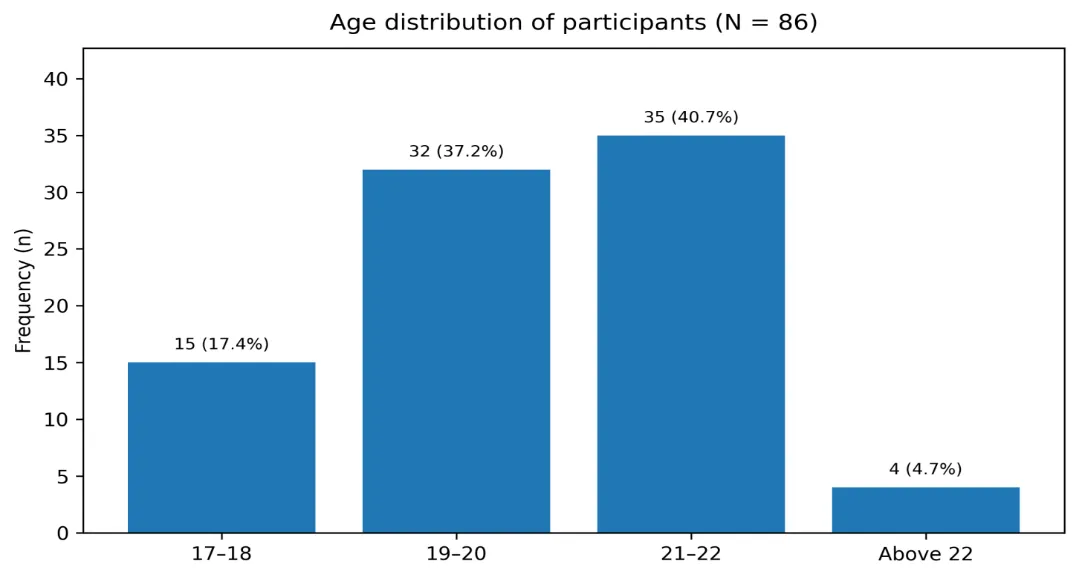
Figure 1. Distribution of participants according to age.
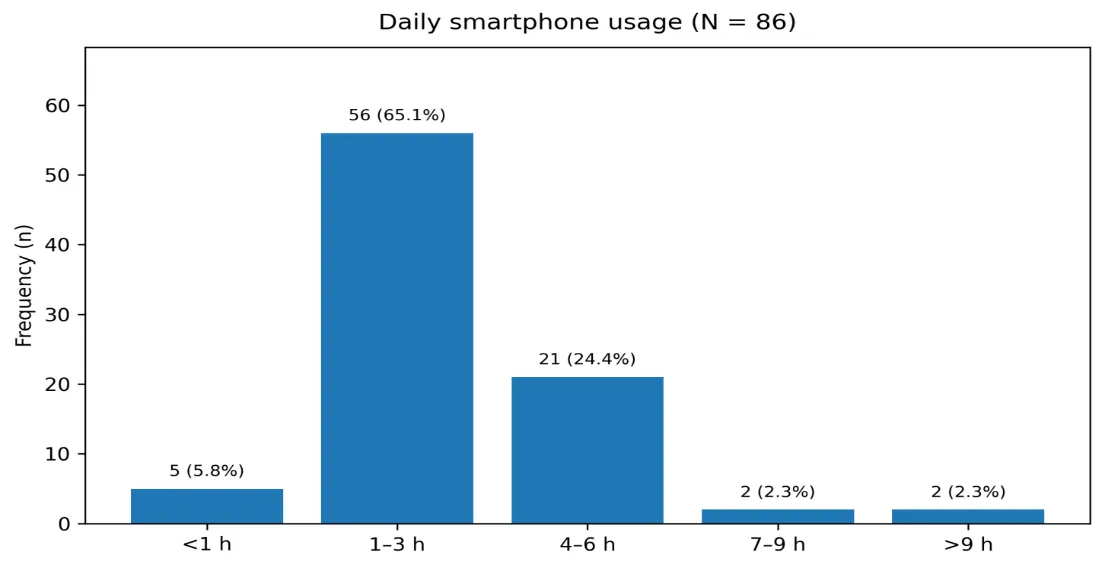
Figure 2. Distribution of participants according to daily smartphone usage
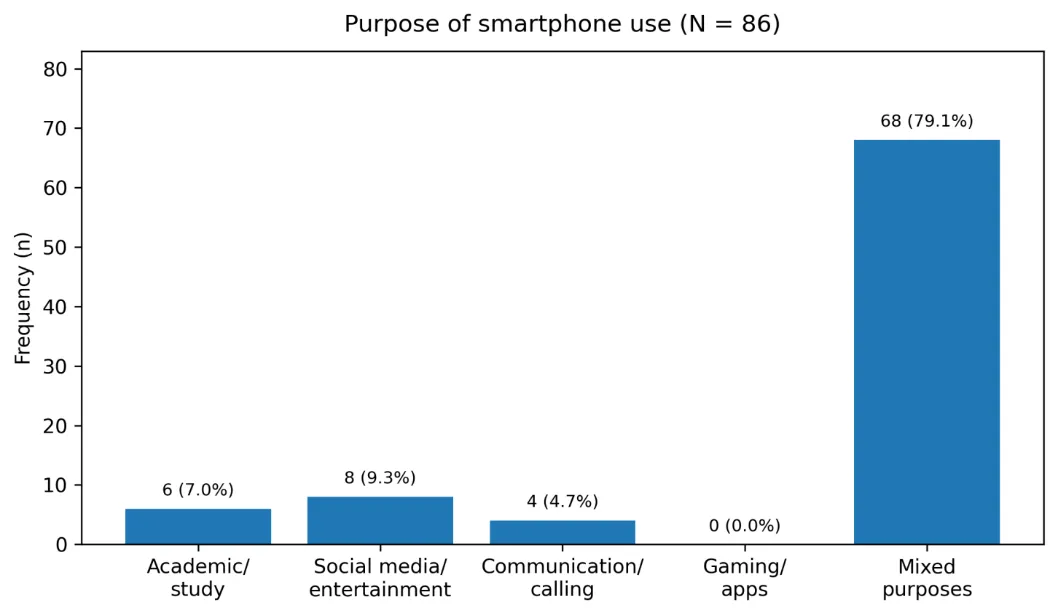
Figure 3. Distribution of participants according to purpose of smartphone use.
|
Variable |
Category |
n |
% |
|
Gender |
Male |
12 |
14.0 |
|
|
Female |
74 |
86.0 |
|
Academic year |
First year |
49 |
57.0 |
|
|
Second year |
0 |
0.0 |
|
|
Third year |
0 |
0.0 |
|
|
Fourth year |
37 |
43.0 |
|
Place of residence |
Hostel |
43 |
50.0 |
|
|
Family |
40 |
46.5 |
|
|
Alone |
3 |
3.5 |
|
Previous academic percentage |
<50% |
0 |
0.0 |
|
|
60–70% |
26 |
30.2 |
|
|
70–80% |
14 |
16.3 |
|
|
>80% |
46 |
53.5 |
|
Stress when there is no internet access |
Yes |
44 |
51.2 |
|
|
No |
42 |
48.8 |
|
Nervousness when phone battery is low |
Yes |
27 |
31.4 |
|
|
No |
59 |
68.6 |
|
Checking smartphone immediately after waking up |
Yes |
30 |
34.9 |
|
|
No |
56 |
65.1 |
|
Restlessness when not checking smartphone for some time |
Yes |
10 |
11.6 |
|
|
No |
76 |
88.4 |
Table 1. Demographic and smartphone-related characteristics of participants (N = 86)
Section II: Association between pre-test knowledge and sociodemographic variables
|
Variable |
Statistical test |
df |
p-value |
Significance |
|
Age |
Kruskal–Wallis, H = 54.42 |
3 |
0.000001 |
Significant |
|
Gender |
Kruskal–Wallis, H = 1.02 |
1 |
0.31 |
Not significant |
|
Academic year |
Kruskal–Wallis, H = 6.85 |
1 |
0.008 |
Significant |
|
Place of residence |
Kruskal–Wallis, H = 1.32 |
2 |
0.52 |
Not significant |
|
Previous academic percentage |
Kruskal–Wallis, H = 3.02 |
2 |
0.22 |
Not significant |
|
Smartphone usage duration |
Kruskal–Wallis, H = 2.11 |
4 |
0.71 |
Not significant |
|
Smartphone usage purpose |
Kruskal–Wallis, H = 0.88 |
3 |
0.83 |
Not significant |
|
Stress in absence of internet access |
Mann–Whitney U = 498 |
— |
0.064 |
Not significant |
|
Nervousness when battery is low |
Mann–Whitney U = 643 |
— |
0.307 |
Not significant |
|
Checking phone immediately after waking |
Mann–Whitney U = 598 |
— |
0.193 |
Not significant |
|
Restlessness when not checking phone |
Mann–Whitney U = 195 |
— |
0.025 |
Significant |
Table 2. Association between pre-test knowledge and selected demographic variables
Section III: Effectiveness of structured teaching program on knowledge on management of nomophobia
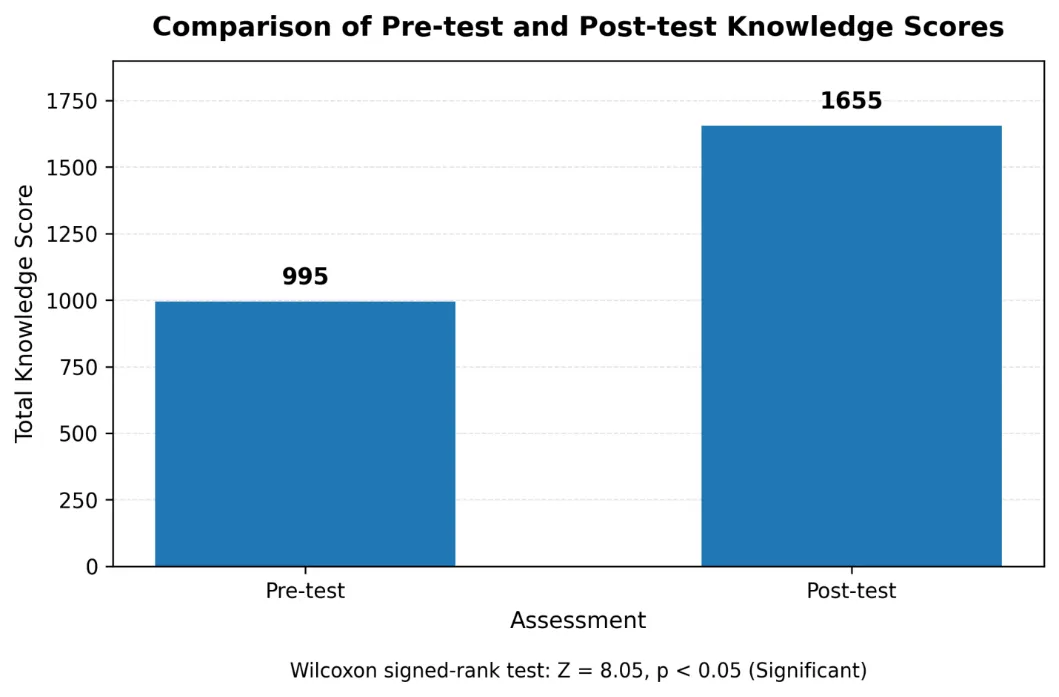
Figure 1. Comparison of total pre-test and post-test knowledge scores (N = 86).
CONCLUSION
The study revealed that the majority of nursing students have good knowledge (72.1%) and 27.9% nursing students have average knowledge on management of nomophobia. There is a statistically significant association found between the pretest scores and selected sociodemographic variables (age, academic year and level of restlessness when smartphone do not check for some time). There was also a significant difference between pre and post-test knowledge scores. The structured teaching program was effective as it provides knowledge on management of nomophobia among nursing students.
REFERENCES









Lintu Maria Thomas*, Aleemath Shaiba, Aleena Shibu, Ansmol Biju, Diya Das, Elizabeth George, Jibiya Behanan, Johncy K Sibichen, Sneha Biju, A Pre-Experimental Study To Assess The Effectiveness Of Structured Teaching Program Of Knowledge On Management Of Nomophobia Among Nursing Students At Selected Nursing College At Kottayam District., Int. J. Sci. R. Tech., 2026, 3 (10), 248-254. https://doi.org/10.5281/zenodo.23161182
 10.5281/zenodo.23161182