

We use cookies to ensure our website works properly and to personalise your experience. Cookies policy
Department of Geography, HNB Garhwal University, Srinagar, Uttarakhand 246174
Municipal solid waste management has emerged as a critical environmental issue in Himalayan pilgrimage destinations because of seasonal fluctuations in tourist arrivals and the resulting increase in waste generation. This study investigates the municipal solid waste management challenges in Devprayag, Uttarakhand, during the Char Dham Yatra. A mixed-methods research design was adopted, combining primary data obtained through field surveys, direct observations, and consultations with officials of the Devprayag Nagar Palika with secondary information from government publications and relevant scientific literature. The study analyses waste generation, collection, transportation, segregation, recycling, and the overall efficiency of the existing waste management system. The results show that the pilgrimage season places considerable pressure on municipal waste management, particularly due to the increased generation of plastic waste. While the municipality has implemented door-to-door waste collection and established a Solid Waste Management (SWM) Plant, limitations in infrastructure, workforce, and financial resources reduce its ability to manage the seasonal waste burden effectively. The study recommends strengthening source segregation, expanding recycling facilities, enhancing public awareness, encouraging community participation, and improving institutional capacity. These measures, together with the adoption of sustainable waste management practices, can reduce environmental degradation, conserve the fragile Himalayan ecosystem, and promote sustainable pilgrimage tourism. The findings also provide practical guidance for policymakers and urban local bodies responsible for waste management in pilgrimage towns.
Pilgrimage tourism is one of the most significant segments of India's tourism industry, contributing substantially to economic development, cultural preservation, and regional livelihoods. Every year, millions of pilgrims visit sacred destinations, creating employment opportunities and supporting sectors such as hospitality, transportation, trade, and handicrafts (United Nations World Tourism Organization (UNWTO, 2023). Among India's major pilgrimage circuits, the Char Dham Yatra in Uttarakhand is of exceptional religious importance, attracting devotees to Yamunotri, Gangotri, Kedarnath, and Badrinath (Rawat et. al. 2026). Devprayag, popularly known as the first Prayag, occupies a unique position because it marks the confluence of the Bhagirathi and Alaknanda rivers, where the River Ganga originates. Its religious significance and strategic location on the Char Dham route have led to a steady increase in pilgrimage tourism, stimulating local economic activities and infrastructure development. However, the growing influx of visitors has also intensified environmental concerns, particularly the generation and management of municipal solid waste (MSW).
Municipal solid waste management has become a major environmental challenge in Himalayan pilgrimage towns because of rugged terrain, fragile ecosystems, seasonal fluctuations in tourist arrivals, and limited municipal infrastructure (Guerrero et al., 2013). During the Char Dham pilgrimage season, the volume of solid waste increases considerably, placing significant pressure on Urban Local Bodies (ULBs) responsible for waste collection, segregation, transportation, recycling, and disposal (Kaza et al., 2018). Inefficient waste management practices, especially the improper disposal of plastic and biodegradable waste, contribute to river pollution, landscape degradation, and ecological disturbances in the Himalayan region (Hoornweg & Bhada-Tata, 2012). Studies conducted in Rudraprayag Municipality have reported that pilgrimage tourism substantially increases municipal solid waste generation and have emphasized the need for improved municipal infrastructure, public awareness, and community participation to ensure sustainable waste management (Naik & Negi, 2025). Similarly, Yadav et al. (2025) observed that pilgrimage towns in Uttarakhand experience greater waste management challenges during peak tourist seasons than during normal periods (Yadav et. al., 2025, Singh et. al. 2026).
In Devprayag, municipal records indicate that plastic waste generation increases from approximately 800–900 kg per day during the normal season to 1.5–2 tonnes per day during the Char Dham Yatra, necessitating additional sanitation workers, vehicles, and waste-processing facilities (Singh et. al. 2023). Despite the presence of a Solid Waste Management (SWM) plant, seasonal tourist pressure continues to challenge the efficiency of the existing waste management system. Furthermore, sustainable environmental management is essential in the fragile Himalayan region, where increasing anthropogenic activities accelerate ecological degradation (Chhonker et al., 2026). Although previous studies have examined pilgrimage tourism and municipal solid waste management independently, limited research has investigated seasonal waste generation and the operational role of Devprayag Nagar Palika during the Char Dham Yatra. This study addresses this research gap by evaluating municipal solid waste management challenges associated with pilgrimage tourism in Devprayag and proposing sustainable strategies to strengthen municipal services and environmental conservation. The findings are expected to support policymakers, municipal authorities, and tourism planners in developing effective waste management practices for sustainable pilgrimage tourism in Himalayan destinations (Yadav et. al. 2026).
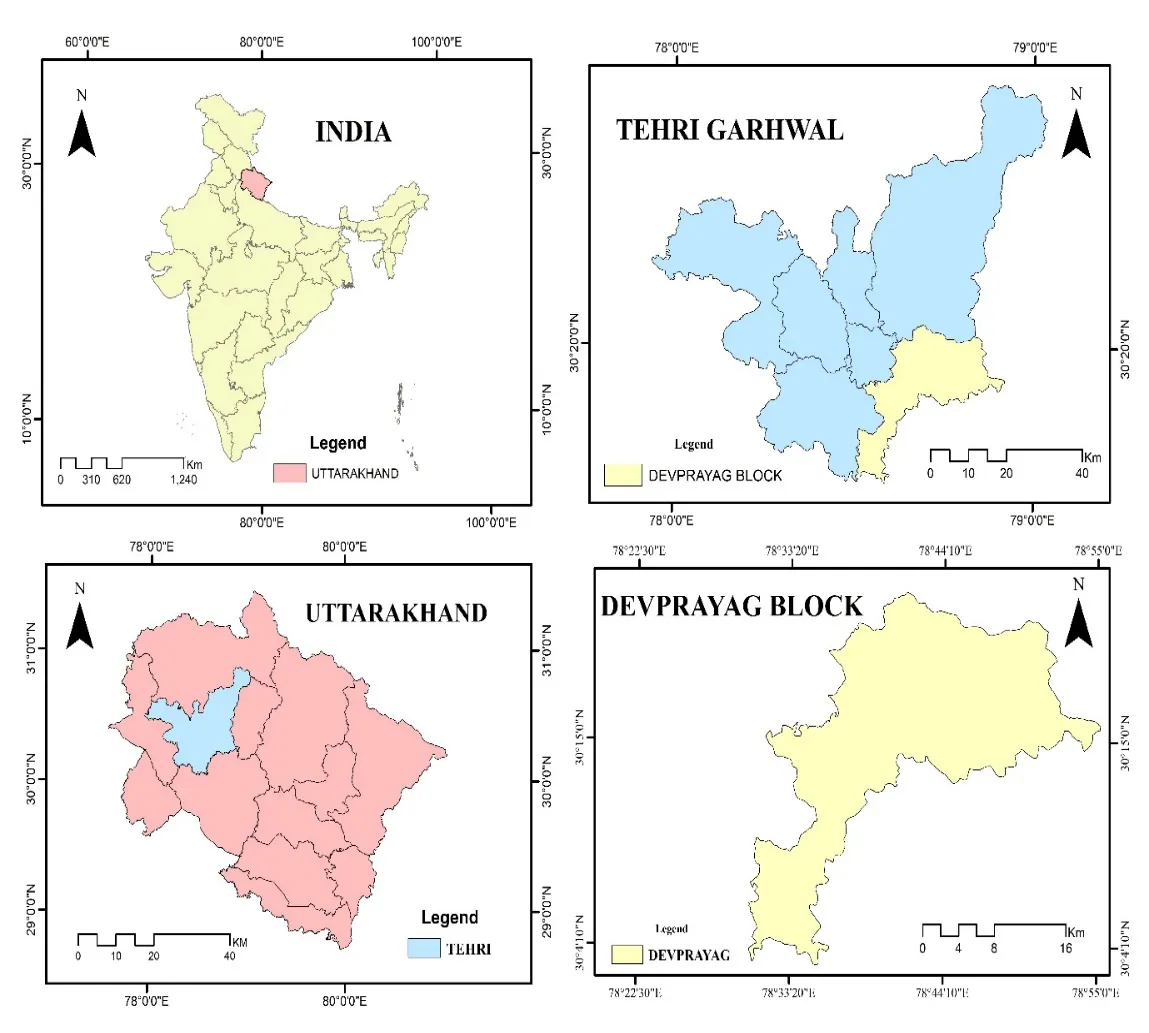
Source: Survey of India, 2011
Figure 1: Map of the Study Area
Devprayag, located in Tehri Garhwal district of Uttarakhand, India, is a prominent pilgrimage town situated at the sacred confluence of the Bhagirathi and Alaknanda rivers, where the River Ganga originates. Positioned at approximately 30°14′51″ N and 78°58′12″ E with an elevation of about 830 m, it serves as an important gateway to the Char Dham pilgrimage circuit through National Highway-7.
The town is surrounded by the rugged Garhwal Himalaya, characterized by steep slopes, narrow valleys, and dense forests. Its fragile mountainous terrain, glacier-fed rivers, and ecological significance make Devprayag an important centre for pilgrimage tourism, watershed management, and environmental conservation (Valdiya, 2014; Kale, 2014).
Devprayag, one of the Panch Prayag of Uttarakhand, is a renowned pilgrimage destination where the Bhagirathi and Alaknanda rivers converge to form the River Ganga. Owing to its religious significance, scenic Himalayan landscape, and rich cultural heritage, the town attracts a large number of domestic and international pilgrims throughout the year. Major attractions include the sacred confluence, Raghunathji Temple, Chandrabadani Temple, and other historic temples, while the surrounding mountains, river valleys, and adventure activities such as trekking and river rafting further enhance its tourism potential. Tourism is a major source of livelihood, supporting hotels, guest houses, transport services, local markets, and religious establishments, thereby contributing significantly to the local economy (Singh et al., 2021). Tourist arrivals increase substantially during the Char Dham Yatra (May–October), resulting in a sharp rise in demand for accommodation, transportation, sanitation, and other municipal services. The seasonal influx also leads to increased generation of municipal solid waste, particularly plastic packaging, food waste, and religious offerings, placing considerable pressure on local infrastructure and environmental resources. Consequently, sustainable tourism planning and efficient waste management have become essential for preserving the ecological integrity of this fragile Himalayan pilgrimage town (Joshi et al., 2023).
Municipal solid waste management (MSWM) in Devprayag is managed by the Devprayag Nagar Palika, which is responsible for waste collection, transportation, segregation, processing, and disposal within the municipal area. The municipality has implemented door-to-door waste collection and operates a Solid Waste Management (SWM) facility to improve waste handling and minimize open dumping. During the Char Dham Yatra, additional sanitation workers, waste collection vehicles, and temporary cleaning arrangements are deployed to manage the increased volume of waste. Municipal records show that plastic waste generation increases from approximately 800–900 kg per day during the normal season to 1.5–2 tonnes per day during the pilgrimage season, reflecting the significant impact of tourism on waste generation. Despite these efforts, the municipality faces challenges due to difficult mountainous terrain, seasonal tourist influx, limited financial resources, and inadequate waste treatment infrastructure. Plastic waste, food packaging, disposable utensils, and religious offerings constitute a major share of the waste stream. Improving waste segregation at source, recycling facilities, public awareness, and institutional coordination is essential to strengthen municipal waste management and support sustainable tourism in this environmentally sensitive Himalayan pilgrimage town (CPCB, 2021; MoHUA, 2021).
The present study employed a case study methodology to investigate the relationship between pilgrimage tourism and municipal solid waste management in Devprayag, Uttarakhand. The research was based on both primary and secondary data sources. Primary data were gathered during field visits in 2024 through direct observations, structured interviews with officials of the Devprayag Nagar Palika, and discussions with municipal staff. Information regarding waste generation, collection, transportation, segregation, recycling, and disposal practices was obtained from municipal records and field surveys. Secondary data were compiled from government publications, census reports, research articles, and other relevant literature related to tourism and solid waste management.
The collected information was analysed using descriptive statistical techniques, including tables, percentages, and comparative analysis. Waste generation during the normal period was compared with that of the Char Dham Yatra season to evaluate the influence of seasonal pilgrimage tourism on municipal solid waste generation and the effectiveness of the existing waste management system in Devprayag
The primary data obtained from the Devprayag Nagar Palika reveal that municipal solid waste generation exhibits marked seasonal variation, largely influenced by tourist arrivals. Among the different waste categories, plastic waste forms the largest proportion, followed by bio-hazardous and electronic waste. Waste generation increases substantially during the Char Dham Yatra season due to the sharp rise in the number of pilgrims and tourists visiting the town.
in Devprayag is primarily composed of three major categories: plastic waste, bio-hazardous waste, and electronic waste. Plastic waste represents the dominant component, accounting for nearly 60% wet waste and 40% dry waste. Bio-hazardous waste comprises both wet and dry materials generated from healthcare and sanitation-related activities, whereas electronic waste consists of discarded electrical and electronic items and contributes only a small proportion of the overall waste stream.
|
Type of Waste |
Waste Composition |
Normal Period |
Char Dham Yatra Season |
|
Plastic Waste |
60% Wet, 40% Dry |
800–900 kg/day |
1.5–2.0 tonnes/day |
|
Bio-hazardous Waste |
Wet & Dry |
5 kg/day |
10–12 kg/day |
|
Electronic Waste |
Dry |
~3 kg/day |
3–5 kg/day |
Source: Primary Survey, Devprayag Nagar Palika, 2024
Table 1. Types and Quantity of Municipal Solid Waste in Devprayag
Plastic Waste: In Devprayag, plastic trash makes up the majority of municipal solid waste. Approximately 800–900 kg of plastic garbage are produced every day on average, but during the Char Dham Yatra season, that amount rises to 1.5–2.0 tonnes. The consumption of packaged food, bottled water, single-use plastic products, and other tourist-related items is the primary cause of this growth.
Biohazardous Waste: The production of biohazardous trash is quite minimal all year round, although it rises during the pilgrimage season. The amount increases from roughly 5 kg/day at regular times to 10–12 kg/day during the Char Dham Yatra, suggesting higher cleanliness and healthcare efforts related to the larger number of visitors.
Electronic Waste: The least amount of municipal solid garbage is made up of electronic waste. About 3 kg of electronic garbage are produced every day on average; during the pilgrimage season, this amount rises to 3–5 kg per day. Discarded electrical and electronic items from businesses and government operations fall under this category.
Regular Days: The production of municipal solid garbage is comparatively constant during the typical tourist season. Electronic garbage stays close to 3 kg every day, bio-hazardous waste averages 5 kg per day, and plastic waste ranges from 800 to 900 kg per day. This amount of rubbish can usually be handled by the current municipal waste collection system.
Season of Char Dham Yatra: The production of municipal solid garbage rises significantly during the Char Dham pilgrimage season. Electronic waste climbs to 3–5 kg/day, biohazardous waste to 10–12 kg/day, and plastic garbage to 1.5–2.0 tonnes/day. Devprayag Nagar Palika uses more sanitation workers, vehicles, and temporary garbage collection methods to handle this seasonal increase.
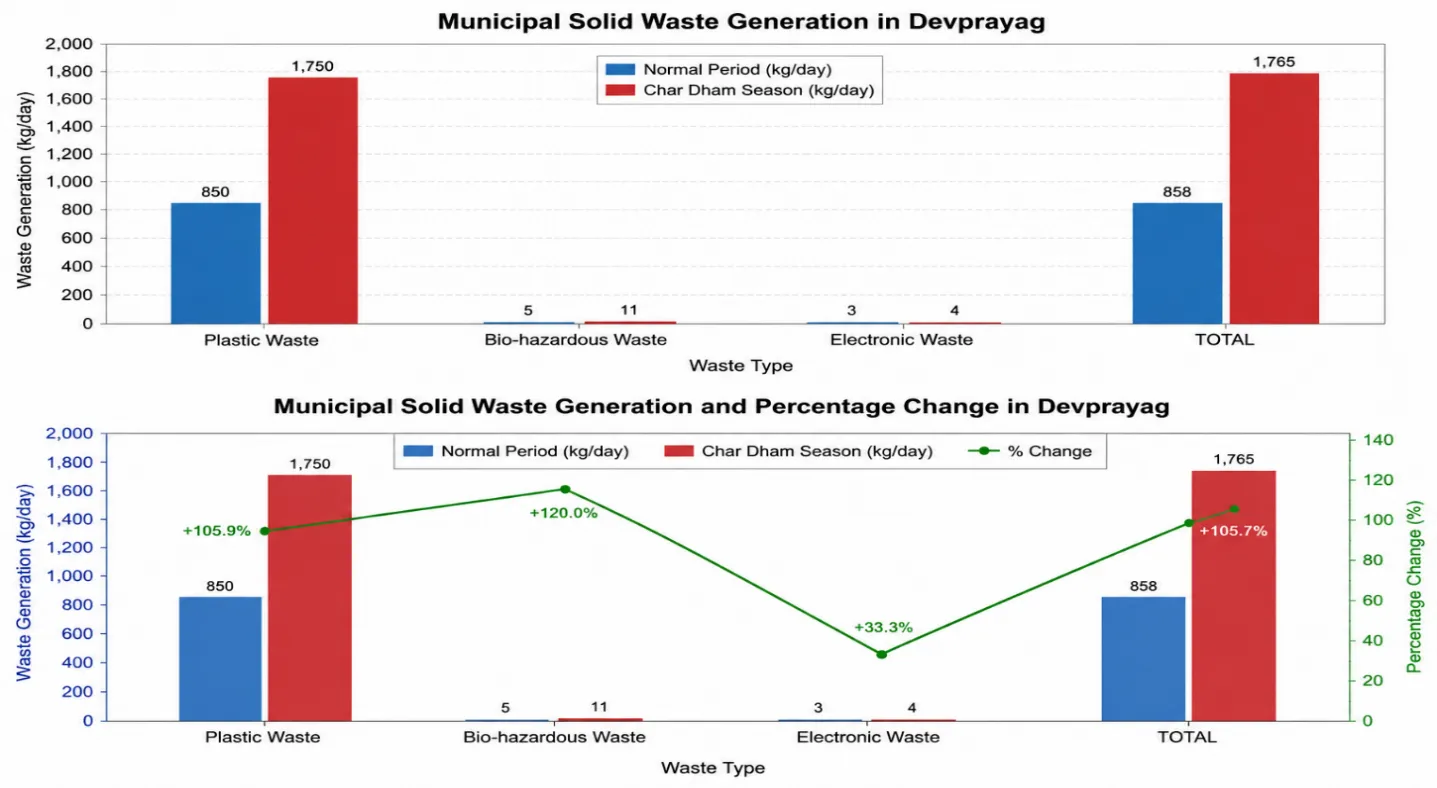
The comparison between the normal period and the Char Dham Yatra season highlights the substantial impact of pilgrimage tourism on municipal solid waste generation in Devprayag, with waste quantities increasing markedly during the peak tourist season.
|
Waste Type |
Normal Period (kg/day) |
Char Dham Season (kg/day) |
% Change |
|
Plastic Waste |
850 |
1,750 |
+105.9% |
|
Bio-hazardous Waste |
5 |
11 |
+120.0% |
|
Electronic Waste |
3 |
4 |
+33.3% |
|
Total |
858 |
1,765 |
+105.7% |
Source: Primary Survey, Devprayag Nagar Palika, 2024.
Table 2. Comparative Analysis of Waste Generation
According to the results, plastic garbage is the most prevalent waste stream and has the most seasonal rise, almost doubling during the Char Dham Yatra. While electronic trash only slightly grows, bio-hazardous waste also rises significantly. These findings underscore the need for more waste management infrastructure and better resource allocation during the busiest pilgrimage seasons due to the strong correlation between seasonal pilgrimage tourism and municipal solid waste generation.
Through door-to-door collection, transportation, and processing at the Solid Waste Management (SWM) plant, the Devprayag Nagar Palika oversees the municipal solid waste collection system in Devprayag. The municipality hires more workers to handle the increasing amount of rubbish produced by pilgrims and visitors during the Char Dham Yatra. Rag pickers, collection vans, permanent and contract drivers, and a SWM facility in Ward No. 4 make up the garbage collection system.
The Devprayag Nagar Palika's main waste collection strategy is door-to-door pickup. Sanitation workers gather household and business waste every day and deliver it to the SWM plant for disposal and segregation. Although collection frequency rises during pilgrimage season due to increased garbage output, the municipality uses a centralized collection technique to preserve cleanliness throughout the town.
|
Operational Component |
Description |
|
Collection Method |
Door-to-door collection of municipal solid waste from residential and commercial establishments. |
|
Responsible Agency |
Devprayag Nagar Palika is responsible for waste collection, transportation, and overall management. |
|
Collection Frequency |
Waste is collected daily, with increased operational intensity during the Char Dham Yatra season. |
|
Collection Workforce |
Waste collection is carried out by rag pickers supported by municipal sanitation staff. |
|
Waste Transportation |
Collected waste is transported using municipal collection vehicles to the designated processing facility. |
|
Waste Processing Facility |
Solid Waste Management (SWM) Plant located in Ward No. 4, Devprayag. |
|
Final Waste Management |
Waste is segregated, recyclable materials are recovered, and the remaining waste is processed or disposed of in accordance with municipal waste management practices. |
Source: Primary Survey, Devprayag Nagar Palika, 2024.
Table 3: Features of Devprayag's Municipal Solid Waste Collection System
A basic framework for managing municipal solid waste in Devprayag is provided by the current waste collection system. However, during times of high pilgrimage visitation, improving personnel capacity, transportation infrastructure, and processing infrastructure is crucial to ensuring sustainable waste management.
Maintaining municipal sanitation services depends heavily on human resources. During regular business hours, the municipality employs ten rag pickers; during the Char Dham Yatra, that number rises to fifteen. Despite the seasonal increase in garbage creation, waste transportation is supported by two permanent drivers and one contracted driver, guaranteeing continuous collection services.
|
Parameter |
Normal Period |
Char Dham Season |
|
Rag Pickers |
10 |
15 |
|
Permanent Drivers |
2 |
2 |
|
Outsourced Drivers |
1 |
1 |
|
Collection Vehicles |
3 |
3 |
Source: Primary Survey, Devprayag Nagar Palika, 2024.
Table 4. Human Resources and Transportation Facilities
A basic framework for managing municipal solid waste in Devprayag is provided by the current waste collection system. However, during times of high pilgrimage visitation, improving personnel capacity, transportation infrastructure, and processing infrastructure is crucial to ensuring sustainable waste management.
The municipality operates three waste collection vehicles for transporting municipal solid waste from residential and commercial areas to the SWM plant. The transportation system remains unchanged during the pilgrimage season; however, vehicle utilization increases substantially because of the higher quantity of waste requiring collection and disposal. The SWM plant located in Ward No. 4 performs waste segregation, recycling, and environmentally safe disposal.
|
Facility (Municipality) |
Details (As per Primary Survey) |
|
Total Collection Vehicles |
3 |
|
Permanent Drivers |
2 |
|
Outsourced Drivers |
1 |
|
SWM Plant Location |
Ward No. 4, Devprayag |
|
Major Function |
Waste segregation, recycling and disposal |
Source: Primary Survey, Devprayag Nagar Palika, 2024.
Table 5. Municipal Waste Transportation Infrastructure
In general, the existing transportation resources and the solid waste management plant offer fundamental infrastructure for managing municipal solid waste in Devprayag. Nevertheless, the scarcity of vehicles and operators emphasizes the necessity to enhance municipal resources to effectively handle the surge of waste produced during the Char Dham pilgrimage season.
The demand for municipal rubbish collection services is significantly increased by the Char Dham Yatra. Increased garbage generation from more visitors necessitates hiring more sanitation workers, keeping collection trucks running, and stepping up transportation initiatives. Even if the municipality hires more people during the pilgrimage season, the current infrastructure is under a lot of operational strain to ensure that rubbish is collected and disposed of on time.
Municipal solid waste generated through the door-to-door collection system in Devprayag is transported to the Solid Waste Management (SWM) Plant situated in Ward No. 4 for segregation, processing, recycling, and final disposal. Based on the primary survey, the SWM plant functions as the municipality's primary waste processing facility, handling biodegradable, recyclable, and hazardous waste generated from residential areas, commercial establishments, and pilgrimage-related activities. Plastic waste represents the dominant component of the municipal waste stream, increasing from an average of approximately 850 kg day⻹ during the normal period to nearly 1,750 kg day⻹ during the Char Dham Yatra season. Consequently, plastic recovery and recycling constitute the major focus of waste management operations. At the facility, recyclable materials, particularly plastics, are separated for recycling, biodegradable waste is processed through appropriate treatment methods, and non-recyclable waste is disposed of in accordance with municipal waste management practices. These segregation and recycling processes help reduce the volume of waste sent to landfills, improve resource recovery, and support environmental protection and public health. Nevertheless, the substantial seasonal rise in waste generation places considerable pressure on the existing waste management infrastructure, as the processing capacity, transportation facilities, and available workforce remain largely unchanged during peak pilgrimage periods. Therefore, enhancing segregation efficiency, expanding recycling facilities, and upgrading the operational capacity of the SWM plant are essential for ensuring sustainable municipal solid waste management in Devprayag, particularly during the high tourist influx associated with the Char Dham Yatra.
The primary survey reveals that municipal solid waste management in Devprayag faces significant challenges during the Char Dham Yatra due to the rapid increase in pilgrim arrivals and seasonal waste generation. Although the municipality operates a door-to-door collection system and an SWM Plant in Ward No. 4, existing infrastructure, workforce, and financial resources are insufficient to manage the increased waste load effectively. The accumulation of plastic waste, limited processing capacity, and manpower shortages reduce the efficiency of waste collection and recycling. In addition, improper waste disposal poses risks to the Alaknanda and Bhagirathi rivers, threatening water quality and the fragile Himalayan environment. Strengthening infrastructure, expanding recycling facilities, and improving financial and human resources are essential for sustainable municipal solid waste management in Devprayag.
The findings of this study indicate that seasonal pilgrimage tourism is the primary factor influencing municipal solid waste management in Devprayag. Similar to other Himalayan pilgrimage towns, the influx of visitors during the pilgrimage season places considerable pressure on the existing waste management system. Although the Urban Local Body is responsible for waste collection, transportation, segregation, recycling, and disposal, the available infrastructure and workforce are insufficient to effectively manage the increased volume of waste during peak tourist periods. These findings highlight the importance of integrating efficient solid waste management practices into sustainable tourism planning to protect the fragile Himalayan environment and maintain the ecological integrity of this religious destination. Strengthening the institutional, financial, and technical capacity of the Urban Local Body is essential for improving waste management services. Furthermore, policy interventions should focus on promoting source segregation, expanding recycling facilities, enhancing sanitation infrastructure, increasing public awareness, and strengthening coordination among municipal authorities, tourism agencies, and local communities. Collectively, these measures would improve waste management efficiency, reduce environmental pollution, safeguard the Alaknanda and Bhagirathi rivers, and support the long-term sustainability of pilgrimage tourism in Devprayag.
An integrated approach involving smart waste collection, source segregation, plastic recycling, tourist awareness, municipal capacity building, community participation, and a circular economy is essential to improve municipal solid waste management and ensure sustainable pilgrimage tourism in Devprayag
CONCLUSION
This study highlights that pilgrimage tourism leads to a substantial increase in municipal solid waste generation in Devprayag, exerting considerable pressure on the existing waste management system. Improving waste collection, segregation, recycling, and institutional capacity is crucial for ensuring environmental sustainability and sustainable pilgrimage tourism.
Primary Data Collection Evidences
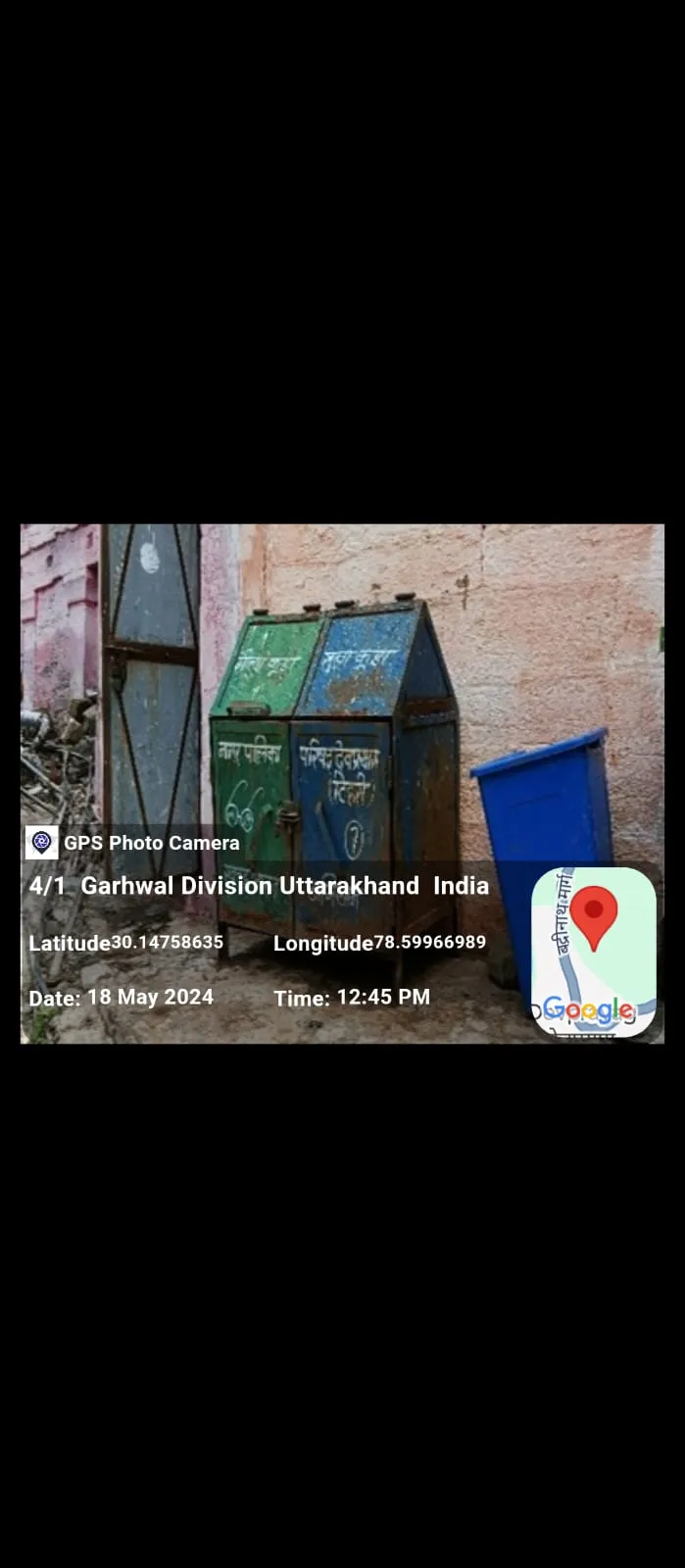
Figure. A
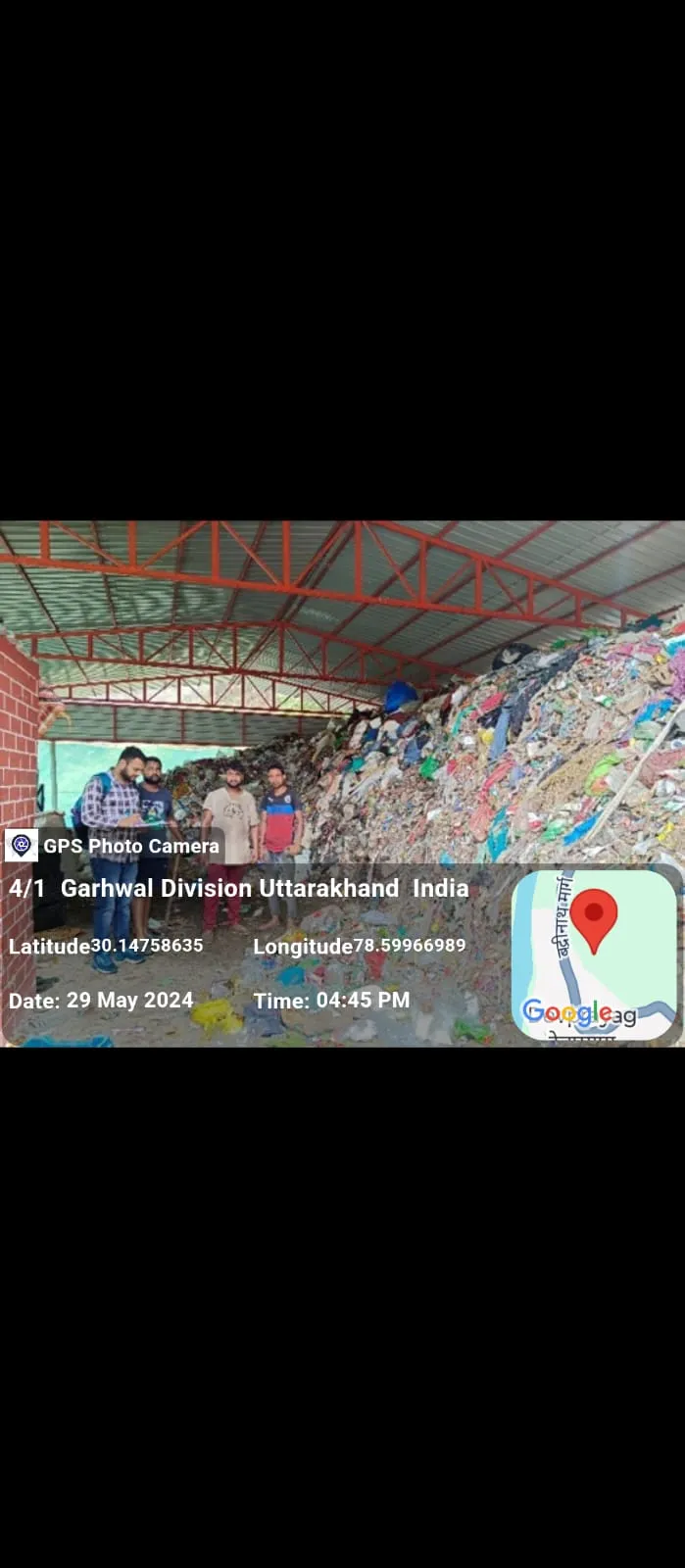
Figure. B
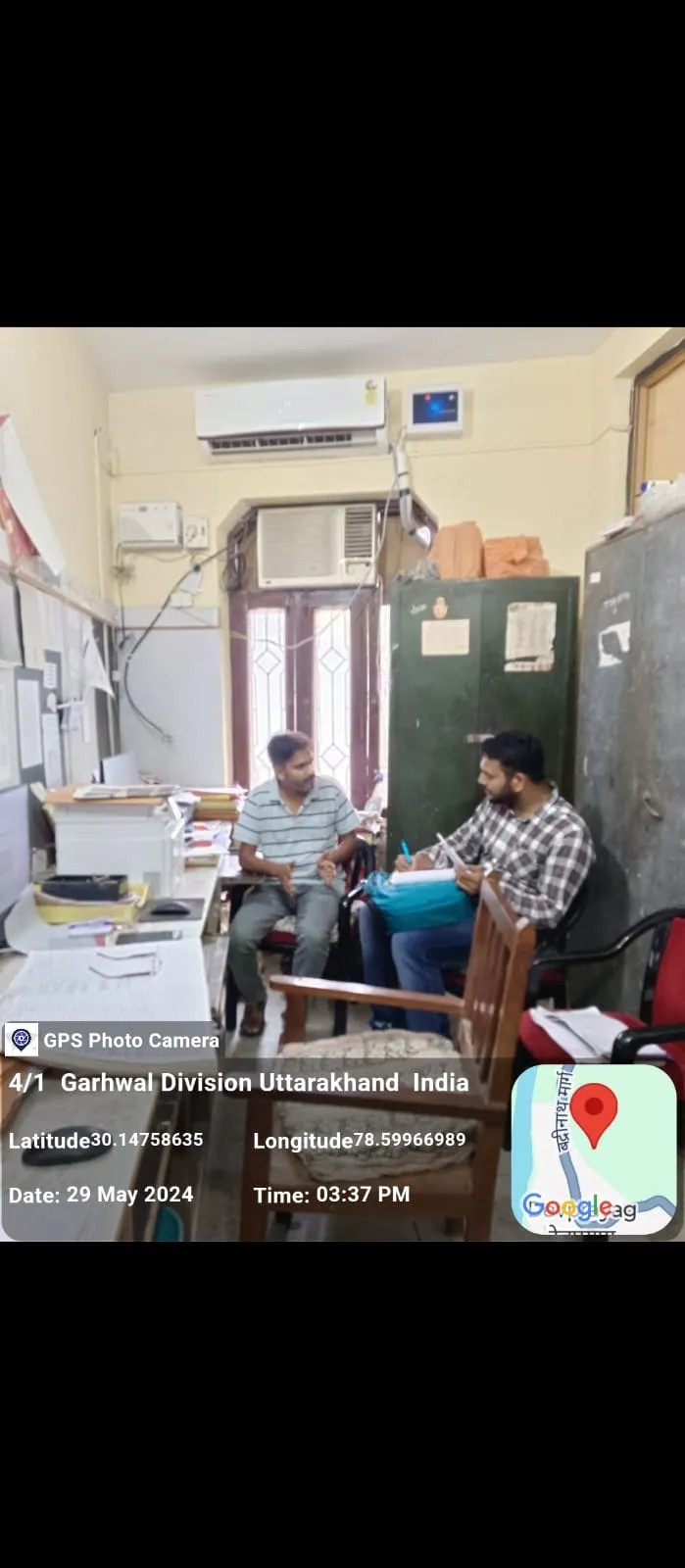
Figure. C
Figure 2 (A, B, C): These are the pictures of Primary Data Collection from the Municipality office, Devprayag
REFERENCES


Rohit Chhonker*, Zion Zeloso Khakha, Dhiraj Kumar Sharma, B. P. Naithani, Municipal Solid Waste Management Challenges During Pilgrimage Tourism: A Case Study of Devprayag, Uttarakhand, Int. J. Sci. R. Tech., 2026, 3 (7), 859-868. https://doi.org/10.5281/zenodo.21534349
 10.5281/zenodo.21534349