

We use cookies to ensure our website works properly and to personalise your experience. Cookies policy
Department of Physics, Ram Krishna Dharmarth Foundation (RKDF) University, Ranchi, India
Department of Physics, Karimpur Pannadevi College, West Bengal, India
The emergence of nanotechnology has significantly transformed topical cosmetic delivery, with nanoemulsions and nanocapsules at the forefront of innovation. Nanoemulsions are nanoscale dispersions of immiscible liquids stabilized by surfactants, whereas nanocapsules possess a core-shell architecture encapsulating active ingredients. These systems overcome limitations of conventional formulations, such as poor solubility, limited dermal penetration, rapid degradation, and non-specific action. Through mechanisms including follicular targeting, intercellular lipid diffusion, and stimuli-responsive release, nanoemulsions and nanocapsules achieve site-specific, controlled delivery of bioactives. Their dermatological and cosmetic applications include anti-aging, skin hydration, pigmentation control, photoprotection, acne management, and barrier repair. Additionally, these nanocarriers enhance bioavailability, protect sensitive ingredients from environmental and enzymatic degradation, and improve aesthetic qualities such as transparency and non-greasy texture. Despite these advantages, challenges remain regarding toxicity, regulatory compliance, and environmental sustainability. Ongoing research focuses on developing biodegradable, multifunctional, and smart nanocarriers capable of personalized and intelligent skincare. Nanoemulsions and nanocapsules thus represent a paradigm shift in cosmetic science, offering highly effective, safe, and customizable strategies for modern topical interventions.
Cosmetic formulations have historically aimed to improve skin aesthetics and provide dermatological benefits. However, conventional topical formulations are frequently hindered by poor solubility of bioactives, limited dermal penetration, chemical instability, and rapid degradation under environmental conditions such as UV light, temperature, and oxidative stress (Bozzuto & Molinari, 2015; Shakeel et al., 2014). These limitations necessitate frequent applications or higher concentrations of active ingredients, increasing the risk of skin irritation and reducing user compliance.
Nanotechnology-driven delivery systems have emerged as a solution to these challenges, enabling the encapsulation and controlled release of cosmetic actives at the nanoscale. Among these, nanoemulsions and nanocapsules are particularly promising for topical delivery. Nanoemulsions are submicron dispersions of immiscible liquids stabilized by surfactants, offering improved solubility, skin permeation, and rapid absorption (Jaiswal et al., 2015). Nanocapsules, with a core-shell architecture, provide controlled release, protection of sensitive actives, and site-specific delivery, enhancing the efficacy of cosmetic formulations (Moghassemi & Hadjizadeh, 2014).
These nanocarriers not only improve penetration and stability but also enable targeted delivery and stimuli-responsive release, ensuring sustained therapeutic and cosmetic effects. The integration of nanoemulsions and nanocapsules into cosmetic science represents a transformative step toward intelligent, personalized, and multifunctional skincare formulations.
Skin Structure and Barriers to Topical Delivery
The human skin is a complex organ composed of three main layers: epidermis, dermis, and hypodermis, each contributing to the skin’s barrier and functional properties. The stratum corneum, the outermost layer of the epidermis, is a dense lipid-protein matrix that provides the primary barrier to percutaneous absorption (Williams & Barry, 2012). Conventional topical formulations frequently result in superficial deposition of actives, necessitating repeated application and higher doses, which may lead to irritation and systemic absorption (Danaei et al., 2018).
Alternative routes such as hair follicles, sebaceous glands, and sweat ducts provide opportunities for targeted delivery. However, conventional formulations rarely exploit these pathways effectively. Nanoemulsions and nanocapsules, due to their nanoscale size, surface modifications, and encapsulation strategies, can overcome these barriers by enhancing follicular penetration, intercellular lipid integration, and cellular uptake (Patel et al., 2021).
Nanoemulsions: Design, Properties, and Mechanisms
Nanoemulsions are nanoscale dispersions of two immiscible liquids, typically oil and water, stabilized by surfactants and co-surfactants. Characterized by droplet sizes ranging from 20 to 200 nm, these systems are either thermodynamically or kinetically stable, offering remarkable advantages in solubility, chemical stability, and rapid dermal absorption due to their nanoscale dimensions and high surface-to-volume ratio (Shakeel et al., 2014). Their small droplet size also reduces creaming, sedimentation, and coalescence, which enhances shelf life and consistency in cosmetic formulations.
Preparation of nanoemulsions can be achieved using high-energy techniques, including ultrasonication, high-pressure homogenization, and microfluidization, which generate fine droplets through mechanical shear forces. Alternatively, low-energy methods, such as spontaneous emulsification, phase inversion temperature, and phase inversion composition, exploit the physicochemical properties of surfactants and the interfacial tension between oil and water phases to form nano-sized droplets. The choice of method directly affects droplet size distribution, polydispersity index, encapsulation efficiency, and overall formulation stability (Jaiswal et al., 2015).
Nanoemulsions facilitate enhanced topical delivery through multiple complementary mechanisms. Follicular targeting allows nanosized droplets to penetrate hair follicles, serving as reservoirs for sustained release of active ingredients. Intercellular lipid diffusion enables lipophilic droplets to integrate into the stratum corneum lipid matrix, promoting passive diffusion into deeper skin layers. Enhanced retention arises from the formation of a thin, occlusive film over the skin surface, prolonging bioavailability and minimizing frequent reapplication. Furthermore, advanced nanoemulsions can exhibit stimuli-responsive release, where changes in pH, temperature, or enzymatic activity trigger controlled release of actives directly at the target site (Shakeel et al., 2014; Tran et al., 2020).
In cosmetic and dermatological applications, nanoemulsions demonstrate considerable advantages, such as improving the solubility of poorly water-soluble compounds, enhancing dermal penetration, increasing bioavailability, and enabling transparent, non-greasy, and aesthetically appealing formulations. They also reduce the frequency of application, improving user adherence and compliance. Collectively, these properties make nanoemulsions versatile and highly effective carriers for delivering active ingredients in modern skincare, anti-aging, hydration, photoprotection, and pigmentation-control formulations (Moghassemi & Hadjizadeh, 2014).
Nanocapsules: Design, Properties, and Mechanisms
Nanocapsules are advanced vesicular systems defined by their distinct core-shell architecture, in which the active ingredient is confined within a polymeric or lipidic core, enveloped by a protective outer shell. This structural design provides multiple advantages, including controlled release, protection against chemical or enzymatic degradation, and the ability to deliver bioactives to targeted skin compartments (Moghassemi & Hadjizadeh, 2014). The encapsulation also enhances the stability of sensitive cosmetic ingredients, such as vitamins, antioxidants, peptides, and botanical extracts, which are prone to degradation under environmental stressors.
The preparation of nanocapsules employs a variety of techniques, each influencing particle size, encapsulation efficiency, and release kinetics. Interfacial polymerization and solvent evaporation are widely used for producing uniform polymeric shells, while nanoprecipitation allows rapid formation of nanocapsules with controlled size distribution. Ionic gelation is often applied for biopolymeric nanocapsules, particularly those using natural polymers such as chitosan or alginate, which offer biodegradability and biocompatibility (Shakeel et al., 2014; Tran et al., 2020).
Nanocapsules facilitate topical delivery through several mechanisms. Controlled release from the polymeric shell allows sustained, time-dependent delivery of active ingredients, reducing the need for frequent application. Follicular penetration enables small nanocapsules to deposit in hair follicles and sebaceous glands, creating reservoirs for prolonged activity. Encapsulation protects labile actives from UV radiation, oxidation, and enzymatic degradation, maintaining efficacy and stability. Advanced formulations using stimuli-responsive polymers can release payloads in response to local pH, temperature, or enzymatic activity, ensuring site-specific delivery (Moghassemi & Hadjizadeh, 2014; Jaiswal et al., 2015).
In cosmetic applications, nanocapsules offer numerous benefits, including prolonged efficacy of actives, reduced systemic absorption, and minimized skin irritation. Their ability to co-deliver multiple actives enables synergistic effects, enhancing outcomes in anti-aging, pigmentation control, moisturization, and photoprotection. Additionally, nanocapsules improve skin hydration, reinforce barrier function, and contribute to aesthetically appealing, non-greasy formulations. Collectively, these features make nanocapsules highly versatile carriers in modern topical skincare products (Shakeel et al., 2014; Tran et al., 2020).
Conventional Versus Nanotechnology-Based Cosmetic Delivery Systems
For many years, conventional formulations such as creams, lotions, gels, ointments, and serums have been the foundation of topical cosmetic products. These delivery systems are relatively easy to formulate, cost-effective, and generally well accepted by consumers. They have been widely used to deliver moisturizers, antioxidants, vitamins, sunscreens, and anti-aging compounds. Despite these advantages, conventional formulations often struggle to achieve efficient delivery of active ingredients into deeper layers of the skin. One of the primary limitations of traditional formulations is the skin's natural barrier function. The stratum corneum acts as a highly selective protective layer that prevents the penetration of most foreign substances. Consequently, a significant proportion of active ingredients remains on the skin surface, where it may be removed through washing, sweating, or natural skin turnover. This limited penetration reduces the effectiveness of many cosmetic products and often necessitates repeated application to maintain desired results.
In addition to penetration-related challenges, many cosmetic ingredients exhibit poor aqueous solubility and limited chemical stability. Bioactive compounds such as retinol, vitamin C, coenzyme Q10, and certain botanical extracts are particularly susceptible to degradation when exposed to oxygen, light, heat, or moisture. As a result, their efficacy may decrease significantly during storage or after application. Increasing the concentration of these ingredients can partially compensate for such losses; however, higher concentrations may increase the risk of irritation, redness, and other adverse skin reactions.
Nanotechnology-based delivery systems have emerged as a promising solution to these challenges. By reducing carrier dimensions to the nanometer scale, these systems can improve the transport, stability, and bioavailability of active compounds. Nanocarriers are capable of interacting more effectively with the skin surface and can exploit alternative penetration pathways such as hair follicles, sebaceous glands, and intercellular lipid channels. Furthermore, encapsulation of active ingredients within nanoscale structures protects them from environmental degradation and allows controlled release over extended periods. Among the different nanocarrier platforms developed for cosmetic applications, nanoemulsions and nanocapsules are particularly noteworthy. Nanoemulsions improve the solubility and dispersion of hydrophobic compounds while enhancing skin penetration through their extremely small droplet size. Nanocapsules, on the other hand, provide a protective core-shell architecture that enables sustained release and targeted delivery of active ingredients. These characteristics make them attractive alternatives to conventional formulations, particularly for products containing sensitive or poorly soluble compounds. Another important advantage of nanotechnology-based systems is their ability to improve the sensory characteristics of cosmetic products. Nanoemulsions, for example, often produce transparent or translucent formulations with a light, non-greasy feel that is highly desirable to consumers. Similarly, nanocapsules can reduce the direct contact of potent active ingredients with the skin surface, thereby minimizing irritation while maintaining efficacy.
Although nanotechnology offers significant advantages, it is important to recognize that conventional formulations continue to play an important role in the cosmetic industry. Their lower production cost, established regulatory framework, and long history of safe use make them suitable for many applications. Nevertheless, growing scientific evidence suggests that nanocarrier-based systems can provide superior performance in situations where enhanced penetration, controlled release, or protection of sensitive ingredients is required.
|
Parameter |
Conventional Formulations |
Nanoemulsions |
Nanocapsules |
|
Skin Penetration |
Limited |
High |
High |
|
Stability of Active Ingredients |
Moderate |
Good |
Excellent |
|
Controlled Release |
Minimal |
Moderate |
Excellent |
|
Protection Against Degradation |
Low |
Moderate |
High |
|
Bioavailability |
Limited |
Enhanced |
Enhanced |
|
Targeted Delivery |
Absent |
Partial |
Significant |
|
Application Frequency |
Frequent |
Reduced |
Reduced |
|
Consumer Sensory Appeal |
Variable |
Excellent |
Good |
|
Manufacturing Cost |
Low |
Moderate |
High |
Table 1. Comparison Between Conventional and Nanotechnology-Based Delivery Systems
The comparison clearly demonstrates that nanotechnology-based systems provide several advantages over conventional formulations. However, the selection of an appropriate delivery platform ultimately depends on the intended application, formulation requirements, safety considerations, and economic feasibility.
Comparative Analysis of Nanoemulsions and Nanocapsules
Nanoemulsions and nanocapsules are among the most widely investigated nanocarrier systems in cosmetic science. Although both technologies aim to enhance the delivery of active ingredients and overcome the limitations associated with conventional formulations, they differ significantly in their structural design, mechanisms of action, release behavior, and ideal applications. Understanding these differences is essential for selecting the most appropriate delivery platform for a particular cosmetic objective. At first glance, both systems appear similar because they operate at the nanoscale and improve the bioavailability of active compounds. However, their underlying architecture determines how they interact with the skin and how they deliver their payloads. Nanoemulsions are essentially nanosized dispersions of oil and water stabilized by surfactants, whereas nanocapsules consist of a core–shell structure that encapsulates active ingredients within a protective membrane. As a result, nanoemulsions primarily enhance delivery through improved dispersion and penetration, while nanocapsules focus on protection, targeting, and controlled release.
One of the major advantages of nanoemulsions is their ability to rapidly spread across the skin surface and facilitate the penetration of active ingredients. Their extremely small droplet size creates a large contact area with the skin, promoting efficient diffusion through the stratum corneum. Consequently, nanoemulsions are particularly useful in formulations where immediate absorption and enhanced skin hydration are desired. In contrast, nanocapsules excel in applications requiring prolonged activity and protection of sensitive compounds. The encapsulating shell acts as a reservoir that gradually releases active ingredients over time. This sustained-release behavior helps maintain therapeutic concentrations for extended periods and reduces the need for frequent reapplication. Furthermore, the shell protects encapsulated compounds from environmental degradation, making nanocapsules particularly suitable for unstable ingredients such as retinoids, peptides, and antioxidants.
Another important distinction lies in their ability to target specific skin structures. Although both systems can penetrate hair follicles, nanocapsules often demonstrate superior localization due to their controlled-release properties. This characteristic is particularly beneficial in acne treatments, anti-aging formulations, and pigmentation-control products where prolonged delivery to specific skin sites is desirable. From a formulation perspective, nanoemulsions are generally easier and less expensive to manufacture. Many production techniques are already well established and can be scaled up relatively easily for industrial applications. Nanocapsules, however, often require more sophisticated preparation methods and stricter quality control measures, which can increase production costs. Despite this disadvantage, the enhanced functionality of nanocapsules may justify the additional expense in premium cosmetic products. Consumer acceptance is another factor that influences formulation selection. Nanoemulsions often provide superior sensory characteristics, including a light texture, rapid absorption, and a non-greasy feel. These attributes are highly valued in modern skincare products. Nanocapsules may not always provide the same level of sensory appeal. However, their ability to reduce irritation and prolong efficacy often compensates for this limitation.
|
Parameter |
Nanoemulsions |
Nanocapsules |
|
Structural Design |
Nanosized oil–water droplets |
Core–shell architecture |
|
Typical Size Range |
20–200 nm |
50–1000 nm |
|
Primary Function |
Enhanced penetration and solubilization |
Encapsulation and controlled release |
|
Protection of Active Ingredients |
Moderate |
High |
|
Encapsulation Efficiency |
Moderate |
High |
|
Controlled Release Capability |
Limited to Moderate |
Excellent |
|
Follicular Targeting |
Good |
Excellent |
|
Stability of Sensitive Compounds |
Good |
Excellent |
|
Sensory Characteristics |
Excellent |
Good |
|
Manufacturing Complexity |
Moderate |
High |
|
Production Cost |
Lower |
Higher |
|
Suitable Applications |
Hydration, sunscreens, rapid-delivery products |
Anti-aging, pigmentation control, acne treatment |
|
Long-Term Activity |
Moderate |
High |
Table 2. Comparative Characteristics of Nanoemulsions and Nanocapsules
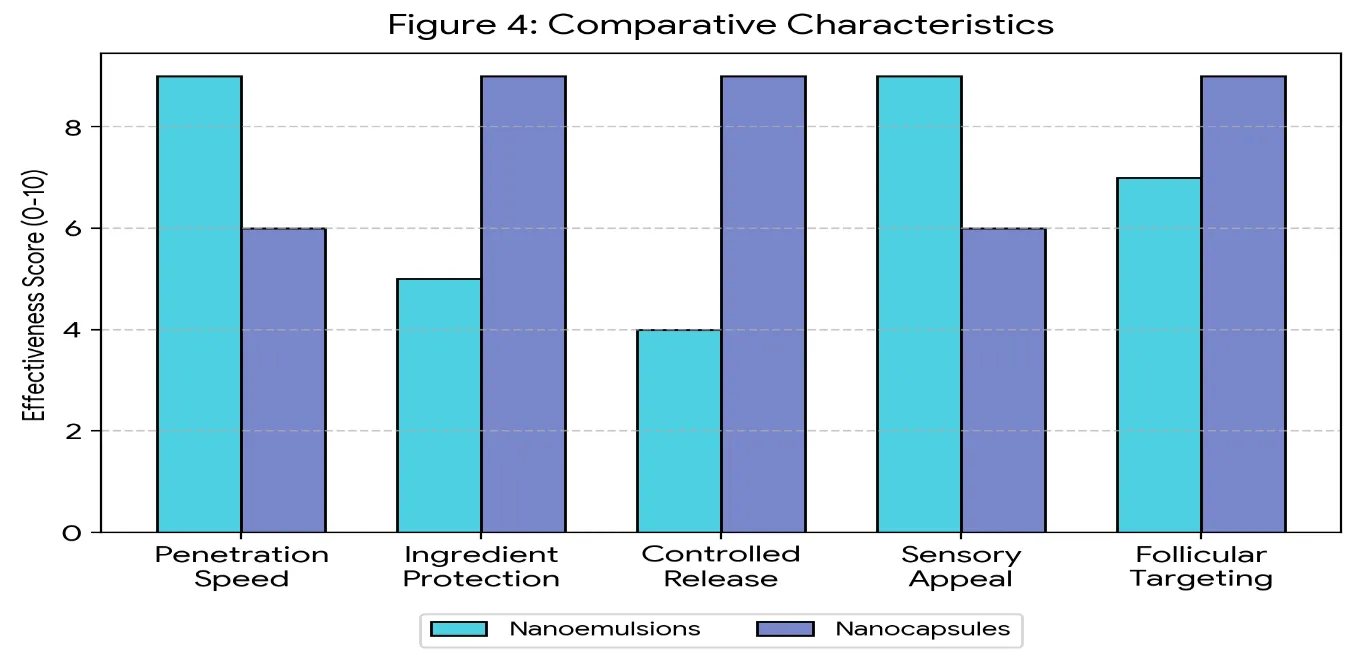
Figure 4. Comparative Advantages of Nanoemulsions and Nanocapsules
The choice between nanoemulsions and nanocapsules ultimately depends on the specific objectives of the formulation. For products requiring rapid absorption, improved hydration, and enhanced sensory properties, nanoemulsions may be the preferred option. Conversely, formulations designed to deliver sensitive ingredients over extended periods, minimize irritation, or achieve targeted delivery are likely to benefit more from nanocapsule technology. It is important to note that these systems should not be viewed as competing technologies but rather as complementary tools within the broader field of nanocosmetics. In fact, recent research has explored hybrid delivery systems that combine the advantages of both nanoemulsions and nanocapsules. Such multifunctional platforms may provide enhanced penetration, improved stability, and controlled release simultaneously, offering exciting opportunities for future cosmetic innovation. Overall, both nanoemulsions and nanocapsules represent significant advancements over conventional delivery systems. Their continued development is expected to play a crucial role in the creation of safer, more effective, and highly personalized cosmetic products in the coming years.
Dermatological and Cosmetic Applications
Smart nanoemulsions and nanocapsules have emerged as highly versatile carriers in dermatology and cosmetic formulations, offering precise delivery of actives with enhanced efficacy and safety. One of the primary benefits is skin hydration: lipid-based nanoemulsions and nanocapsules provide occlusive effects that reduce transepidermal water loss, enhance moisture retention, and facilitate effective delivery of hydrophilic humectants such as glycerin or hyaluronic acid (Müller et al., 2011; Moghassemi & Hadjizadeh, 2014).
In pigmentation control, encapsulating depigmenting agents such as kojic acid, arbutin, and niacinamide ensures targeted delivery to melanocytes and controlled release, which improves efficacy while minimizing irritation and systemic absorption (Agarwal et al., 2021). Similarly, in photoprotection, nanoemulsions enhance the dispersion, stability, and skin compatibility of UV filters like titanium dioxide and zinc oxide, providing broad-spectrum UVA/UVB protection without compromising transparency or skin feel (Shakeel et al., 2014).
Nanocapsules also play a significant role in barrier repair by delivering ceramides, fatty acids, and other bioactive lipids to restore the skin’s protective barrier, improve elasticity, and maintain hydration over extended periods (Tran et al., 2020). Collectively, these mechanisms allow topical formulations to achieve sustained action, reduced irritation, and improved user compliance, which are critical for cosmetic and therapeutic outcomes.
Future Perspectives
The future of nanoemulsion and nanocapsule-based skincare lies in multifunctional, smart, and biodegradable nanocarriers designed for personalized dermatological care. Innovations include the integration of biosensors into nanocarriers for intelligent, stimuli-responsive release of actives. Use of natural lipids and biopolymers aims to create eco-friendly, sustainable formulations with minimal environmental impact. Hybrid nanocarrier systems combining hydration, photoprotection, antioxidant, and anti-inflammatory functions in a single vehicle are also being explored. Furthermore, ligand-functionalized nanocarriers enable precise targeting of melanocytes, fibroblasts, and sebaceous glands, allowing highly specific interventions in pigmentation, aging, and acne treatments.
These advancements are expected to deliver highly effective, safe, and customizable topical treatments, bridging cosmetic science with cutting-edge nanotechnology and offering a new era of precision skincare (Moghassemi & Hadjizadeh, 2014; Agarwal et al., 2021; Shakeel et al., 2014; Tran et al., 2020).
CONCLUSION
Nanoemulsions and nanocapsules have transformed topical cosmetic delivery by overcoming the limitations of conventional formulations. Through enhanced penetration, controlled release, protection of sensitive actives, and targeted delivery, these nanocarriers improve therapeutic and cosmetic outcomes in anti-aging, hydration, pigmentation control, photoprotection, acne care, and barrier repair. While safety, environmental impact, and regulatory compliance require careful attention, ongoing research in biodegradable, stimuli-responsive, and multifunctional nanocarriers underscores their potential to revolutionize personalized, intelligent, and sustainable skincare.
REFERENCES

Rahul Chowdhury*, Nanoemulsions And Nanocapsules: Revolutionizing Topical Cosmetic Delivery, Int. J. Sci. R. Tech., 2026, 3 (6), 1635-1642. https://doi.org/10.5281/zenodo.21032249
 10.5281/zenodo.21032249