

We use cookies to ensure our website works properly and to personalise your experience. Cookies policy
Lucknow Model College of Pharmacy, Luknow
Quercetin is a natural flavonoid that has been extensively studied for its antioxidant, anti-inflammatory, anticancer, cardioprotective, neuroprotective, and antimicrobial effects. Although it has a wide range of therapeutic applications, its use in clinical practice is restricted by its low intestinal permeability, low aqueous solubility, high first-pass metabolism and hence low oral bioavailability. To overcome these drawbacks, nanoliposomal drug delivery system has been developed as a promising delivery system to increase the solubility of quercetin, protects from gastrointestinal degradation, increases the intestinal absorption, and provides a sustained and controlled drug release. Nanoliposomes are vesicles made of biocompatible phospholipid bilayers which allow the efficient entrapment of quercetin and enhance its pharmacokinetic and therapeutic properties. Recent studies have shown that quercetin loaded nanoliposomes have higher encapsulation efficiency, better physicochemical stability, higher cellular uptake, higher oral bioavailability and extended drug release than regular formulations. The review highlights the physicochemical and pharmacological properties of quercetin, formulation strategies for nanoliposomal systems, characterization techniques, mechanism of enhanced oral bioavailability and controlled release of quercetin, and the recent advances in preclinical studies. Besides, the present review covers the formulation stability, large scale production, and clinical translation problems encountered and the future research prospects in developing safe and effective oral nanoliposomal formulations. In conclusion, quercetin loaded nanoliposomal drug delivery system is considered as an exciting platform to enhance oral delivery of quercetin and other water soluble-lipophilic bioactive compounds.
Quercetin, also known as 3,3′,4′,5,7-pentahydroxyflavone, is one of the most common naturally occurring flavonoids present in medicinal plants, apples, berries, tea, onions, and fruits and vegetables. It has been attractive due to its wide range of pharmacological activities such as antioxidant, anti-inflammatory, anticancer, cardioprotective, neuroprotective, antidiabetic, and antimicrobial activities. Although these therapeutic activities are encouraging, clinical translation of quercetin is only limited by, and its bioavailability is poor, as a result of its low aqueous solubility, low permeability, extensive first-pass metabolism, and rapid elimination from the systemic circulation.
Oral delivery is the preferred route of drug delivery due to ease of administration and patient compliance. Nevertheless, quercetin is poorly soluble in gastrointestinal fluids and rapidly metabolized by phase II enzymes, which means that it has poor systemic availability and poor bioavailability. Theraputic effects are therefore limited as only a portion of the dose reaches the systemic circulation when given orally.
A novel approach to solve these problems is the use of nanotechnology drug delivery systems. Nanoliposomes have attracted a great deal of interest due to their biocompatibility, biodegradability, the capacity to encapsulate hydrophilic and lipophilic compounds, as well as the possibility of increasing the stability and intestinal absorption of drugs. Nanoliposomes are formed from phospholipid bilayers that prevent degradation of the quercetin, enhance its solubility, increase circulation time and promote controlled drug release, resulting in an improvement of its pharmacokinetic profile and therapeutic efficacy.
Recent studies have shown that nanoliposomal quercetin loaded formulations has higher encapsulation efficiency, gastrointestinal stability, and cell uptake and drug release duration than free quercetin with greater oral bioavailability. These benefits have broadened their potential uses in treating cancer, inflammatory diseases, cardiovascular diseases, neurodegenerative diseases and metabolic diseases.
The current review briefly summarizes the latest developments in quercetin-loaded nanoliposomal drug delivery systems in terms of formulation strategies, characterization methods, mechanisms of enhanced oral bioavailability and controlled release, therapeutic applications, challenges that exist in the field and future prospects for successful clinical translation.
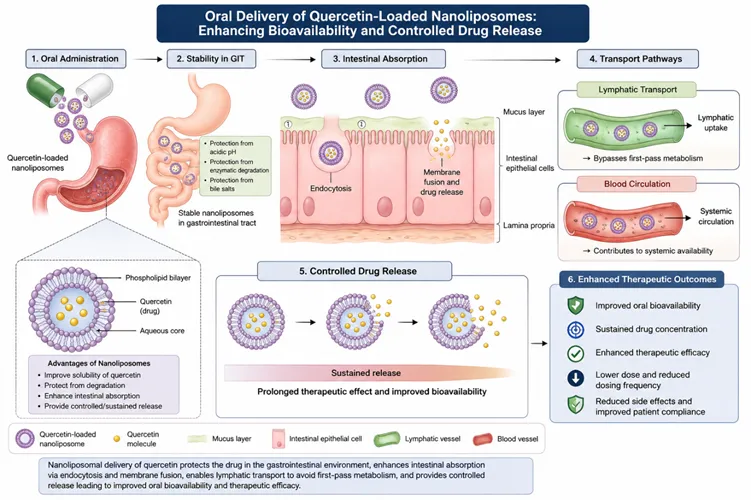
Figure 1. Mechanism of Oral Delivery of Quercetin-Loaded Nanoliposomes for Enhanced Bioavailability and Controlled Drug Release
2. Quercetin: Therapeutic Potential and Oral Delivery Challenges
2.1 Physicochemical and Pharmacokinetic Properties
Quercetin, Câ‚â‚…Hâ‚â‚€O₇, molecular weight: 302.24 g/mol, is a naturally occurring flavonol which is found in fruits, vegetables, tea, and medicinal plants. Its chemical structure contains five hydroxyl groups which are responsible for high antioxidant properties but are the cause of its low water solubility. Quercetin is essentially insoluble in water and has limited dissolution in gastrointestinal fluids, thus limiting oral absorption.
Oral administration of quercetin results in dissolution in the gastrointestinal tract followed by absorption mainly in the small intestine. It is widely metabolised to glucuronide, sulphate and metholate. Further, there is low absorption of the parent compound into the bloodstream after oral administration due to first pass metabolism in the intestinal mucosa and liver as well as rapid elimination. Therefore, absolute oral bioavailability of free quercetin is very low, and formulation approaches are necessary to enhance the pharmacokinetics.
2.2 Pharmacological Activities
Quercetin has a wide range of biological activities, due to its versatility to act on several molecular targets. It is well known to be a strong antioxidant that can remove the reactive oxygen species (ROS), block lipid peroxidation and boost the endogenous antioxidant defense mechanisms.
Quercetin has been shown to have antioxidant properties, as well as substantial anti-inflammatory activity, through the suppression of the production of inflammatory mediators like nuclear factor-kappa B (NF-κB), cyclooxygenase-2 (COX-2), and the production of pro-inflammatory cytokines (TNF-α, IL-1β and IL-6) [8]. A large number of experimental studies has also shown its anticancer activity by blocking cell proliferation, inducing cell death, arresting cell cycle and inhibiting tumor angiogenesis.
In addition, quercetin has been reported with cardioprotective, neuroprotective, antidiabetic, antiviral and antimicrobial activities which suggests its applications in the prevention and treatment of various chronic diseases .
2.3 Limitations Associated with Oral Bioavailability
However, because of a number of biopharmaceutical hurdles, quercetin is not used in therapeutic applications. The main drawback is its poor aqueous solubility which leads to slow dissolution upon oral administration and poor absorption.
Quercetin is also metabolized extensively in the intestine and liver before entering the systemic circulation, and it is chemically unstable under physiological conditions. The efflux transporters like P-glycoprotein also limit the accumulation in the cell, and fast metabolism results in the formation of metabolites with different pharmacological properties. All these contribute to low plasma levels and consequently, sub-optimal therapeutic effects following standard oral administration.
Several different advanced drug delivery systems, such as nanoliposomes, solid lipid nanoparticles, polymeric nanoparticles, nanoemulsions and phytosomes, have been developed to overcome these limitations. Of these, nanoliposomal formulations have proven to be very promising in terms of increasing oral bioavailability of quercetin and its therapeutic effects by improving drug absorption in the intestine, preserving drug stability and enhancing its solubility in water.
3. Nanoliposomes as an Oral Drug Delivery System
3.1.1 Structure of Nanoliposomes
Nanoliposomes are nanosized vesicular drug delivery systems, which contain one or more phospholipid bilayers surrounding an aqueous core, ranging in diameter from 50 to 200nm. Their special architecture allows a single architecture to encapsulate hydrophilic drugs in the water core and lipophilic drugs, like quercetin, in the phospholipid bilayer.
Natural or synthetic phospholipids, such as phosphatidylcholine, phosphatidylserine, phosphatidylethanolamine and cholesterol, are the main constituents of nanoliposomes. The bilayer membrane is formed by phospholipids and cholesterol has the ability to increase the rigidity of the membrane and to decrease drug leakage and to increase the stability of vesicles during storage and gastrointestinal transit. Surface modification using polymers like polyethylene glycol (PEG) or targeting ligands can further help to increase the colloidal stability, circulation time and intestinal uptake.
Nanoliposomes are nanoscale in size and are composed of lipids, which allows them to interact very closely with biological membranes, and makes them good carriers for poorly water soluble compounds like quercetin.
3.2 Advantages of Nanoliposomal Drug Delivery
A number of benefits of nanoliposomal drug delivery systems over conventional systems have been found. When poorly soluble drugs are encapsulated within phospholipid vesicles, their apparent solubility and stability is greatly improved as they are shielded from chemical degradation, oxidation and gastrointestinal enzyme metabolism.
They are lipidic, so they interact with the intestinal epithelium, allowing the better absorption of drugs. In addition, nanoliposomes can facilitate prolonged drug residence time, prevent premature drug degradation, and can also be designed to offer sustained and/or controlled release of the drug, keeping the therapeutic concentrations for extended durations.
For quercetin, nanoliposomal encapsulation has been reported to increase the encapsulation efficiency and improve gastrointestinal stability, cellular uptake and systemic bioavailability when compared to free quercetin. These enhancements add to the therapeutic effectiveness and may result in decreased dosage frequency and systemic side effects.
3.3 Mechanisms of Enhanced Oral Bioavailability and Controlled Release
The oral bioavailability of quercetin can be enhanced by a number of complementary mechanisms that are provided by nanoliposomes. First, the apparent solubility of quercetin is increased by encapsulating it between the phospholipid bilayers, which also help to prevent degradation in the acidic gastric environment. Second, nanosized vesicles have improved adhesion properties to the intestinal mucosa, which leads to a longer stay time and better absorption of the drug.
Nanoliposomes can also be endocytosed and fused to the plasma membrane of intestinal epithelial cells, thus promoting the transcellular transport. Furthermore, lipid-based carriers can enhance lymphatic uptake which partially avoids hepatic metabolism from first-pass, leading to higher systemic availability of quercetin.
Controlled drug release is obtained by a slow release of quercetin across the phospholipid bilayer and slow degradation of the lipid membrane. This extended release results in more consistent therapeutic plasma levels, lesser fluctuations in drug levels, and can decrease the number of doses needed. All in all, these mechanisms make nanoliposomes one of the most promising oral nanocarriers to enhance the clinical performance of quercetin and other poorly bioavailable phytochemicals.
4. Formulation of Quercetin-Loaded Nanoliposomes
4.1 Formulation Components
The main components of a formulation of a nanoliposome containing quercetin are phospholipids, cholesterol, the nanoliposome core lipid, quercetin and an appropriate hydration medium. Phospholipids, such as, soy phosphatidylcholine, egg phosphatidylcholine, hydrogenated soy phosphatidylcholine, and phosphatidylethanolamine are frequently used for the construction of the lipid bilayer, while cholesterol is also added to increase membrane rigidity, stability of vesicles, and prevent drug leakage.
As a lipophilic flavonoid, quercetin is largely loaded in the phospholipid bilayers of nanoliposomes. Depending on the formulation requirements, stabilizers, cryoprotectants such as trehalose or sucrose, polyethylene glycol (PEG) and surface-modifying agents may also be added, which would help to enhance storage stability, circulation time and oral absorption.
The selection and ratio of formulation components play a crucial role in determining vesicle size, encapsulation efficiency, drug release behavior, and overall stability.
4.2 Preparation Methods
Different techniques for preparation of quercetin loaded nanoliposomes have been reported. Of these, the thin-film hydration (Bangham) method is the most popular, because it is simple, reproducible, and efficient at loading drugs. In this technique, phospholipids, cholesterol and quercetin are dissolved in an organic solvent that is then evaporated to leave a thin lipid film. The film is then hydrated with an aqueous buffer to form multi-layered vesicles, and they are then broken down to nano size vesicles (liposomes) using sonication or extrusion.
There are other methods commonly used such as ethanol injection, reverse-phase evaporation, microfluidization and high-pressure homogenization. The methods provide more control over particle size distribution, higher encapsulation, and large-scale production. Now, the use of microfluidic technology has been used to further improve the formulation reproducibility and scalability while reducing batch-to-batch variability.
4.3 Optimization Strategies
It is crucial to optimize the quercetin-loaded nanoliposomal formulations to obtain the desired physicochemical properties and therapeutic activity. The formulation variables that are important are the phospholipid to cholesterol ratio, drug to lipid ratio, hydration conditions, preparation temperature, sonication time, homogenization pressure, and pH of the hydration medium .
Quality by Design (QbD) principles and Design of Experiments (DoE) are often used in modern formulation development to systematically optimize formulation variables. The impact of formulation factors on particle size, polydispersity index, zeta potential, encapsulation efficiency, and drug release profile have been successfully studied using statistical design techniques like factorial design, Box–Behnken design, and central composite design.
Appropriate optimization results in the stability of the formulation, better encapsulation of quercetin, less early release of the drug, and a more extended release of the drug with high oral bioavailability. These optimized nanoliposomal systems are regarded as potential candidates for oral delivery of poorly soluble bioactive compounds such as quercetin.
5. Characterization and Evaluation
5.1 Particle Size, PDI and Zeta Potential
One of the most important parameters that can have an impact on the oral performance of nanoliposomal formulations is the particle size. In general, the intestinal absorption, mucosal penetration and oral bioavailability of nanoliposomes smaller than 200 nm is better. Dynamic light scattering (DLS) is a method often used to measure the particle size and polydispersity index (PDI). The low PDI (PDI value <0.3) means a narrow size distribution and good uniformity of formulation.
The surface charge of the nanoliposomes is an important parameter that gives an idea about their colloidal stability, and is known as the zeta potential. A high positive or negative zeta potential tends to show strong electrostatic repulsion and thus minimises the aggregation of vesicles in the storage phase. These physicochemical parameters play an important role in influencing the stability, cellular uptake and drug release behavior.
5.2 Entrapment Efficiency and Drug Loading
The amount of quercetin that can be incorporated into nanoliposomes is determined by the quality attributes of the nanoliposomes such as entrapment efficiency (EE) and drug loading (DL). Due to its lipophilic nature, quercetin is primarily found within the phospholipid bilayer, thus a relatively high EE can be achieved using appropriate lipid compositions.
The entrapment efficiency is generally calculated by releasing the free quercetin from the liposome-encapsulated one either by ultracentrifugation, dialysis or gel filtration, then by quantitative analysis of released quercetin by UV-visible spectroscopy or high performance liquid chromatography (HPLC). Increased EE leads to increased drug stability, long acting drugs and increased therapeutic efficacy.
5.3 Morphological and Structural Characterization
The morphological evaluation gives information about the shape, surface properties and structural integrity of nanoliposomes. Transmission electron microscopy (TEM) and cryogenic transmission electron microscopy (Cryo-TEM), are commonly used techniques for observing the spherical shape and nanoscale dimensions of liposomal vesicles. After lyophilization, a scan electron microscopy (SEM) can be also used to analyze the surface properties.
Fourier-transform infrared spectroscopy (FTIR), differential scanning calorimetry (DSC) and X-ray diffraction (XRD) are some of the common methodologies employed for structural characterization. FTIR provides information on possible interactions between the quercetin and lipid components, while DSC and XRD provide information on the thermal behavior and crystallinity. The degree of crystallinity of quercetin usually decreases and there are no significant chemical interactions with formulation excipients after successful encapsulation.
5.4 In Vitro Drug Release and Stability
The in vitro drug release studies are carried out to assess the release behavior of quercetin from the nanoliposomal formulation in simulated gastrointestinal conditions. The most frequently used solution, phosphate buffer at physiological pH, is known as dialysis bag diffusion. Generally, nanoliposomal formulations show a prolonged and gradual release pattern when compared to free quercetin, which is released rapidly with high levels of diffusion through the phospholipid bilayer.
Stability studies are carried out to evaluate the physical and chemical integrity of the formulation in the storage environment. The particle size, PDI, zeta potential, EE and DC are checked periodically in the recommended storage conditions. These parameters were found to be very stable in the nanoliposomal formulations, which showed good colloidal stability with no significant changes in the parameters and which have preserved the quercetin molecule in its encapsulated form. In conclusion, thorough characterization is crucial to guarantee the quality, stability, and efficacy of nanoliposomal drug delivery systems containing quercetin.
6. Recent advances in Quercetin-Loaded Nanoliposomal Systems
6.1 Evidence for Enhanced Oral Bioavailability
Recent research has shown that nanoliposomal formulation of quercetin significantly enhances its bioavailability after oral delivery both in terms of aqueous dispersibility as well as proteolytic resistance and decreased extensive first-pass metabolism. Liposomes, which are nanosized, are able to interact with the intestinal epithelium more effectively and increase absorption of the drugs and so increase the systemic exposure level of quercetin in comparison to free quercetin.
Nanoliposomal delivery of quercetin has been shown to significantly boost plasma levels (C_max), area under the concentration-time curve (AUC) and oral absorption. Surface modified liposomes and PEGylated liposomes have also been developed to further improve pharmacokinetic properties, increase stability, and extend circulation time, which could be beneficial for oral quercetin therapy, and nanoliposomal delivery is a promising approach.
6.2 Controlled Drug Release
The main advantage of nanoliposomal formulation is the controlled drug release. The diffusion of quercetin into the solution was retarded and sustained for a longer period of time due to the presence of phospholipid bilayer around the core. This is a controlled release and reduces the “burst effect” that occurs with free quercetin and shortens the duration of therapeutic drug levels.
The release profile is influenced by factors such as phospholipid composition, cholesterol content, vesicle size, and membrane fluidity. Optimization of these parameters can readily lead to the formulation of drugs that have predictable and prolonged drug release. The sustained release is not only expected to help reach therapeutic efficacy, but could also help lower the number of required doses and increase patient compliance.
6.3 In Vitro and In Vivo Studies
Several in vitro studies have now shown that quercetin loaded nanoliposomes have enhanced cellular uptake, antioxidant activity, protection against oxidative stress, and cytotoxicity towards cancer cells than free quercetin. Stability and release have also been reported to be improved in simulated gastrointestinal conditions.
Likewise, quercetin nanoliposomes have been shown to have better pharmacokinetic and therapeutic effects when administered orally in vivo. In animal studies, enhanced pharmacological activities (anti-inflammatory, antioxidant, hepatoprotective, anticancer effects) were observed, along with prolonged systemic circulation and increased bioavailability in plasma. The results presented herein suggest that the major drawbacks of the conventional oral quercetin formulations are overcome by using nanoliposomal delivery.
While there is very positive preclinical evidence, there are relatively few clinical studies that have taken place. Future long-term clinical studies with well-designed nanoliposomal quercetin systems are needed to prove their long-term safety, efficacy, and translation for human therapeutic applications.
|
Authors (Year) |
Formulation |
Key Findings |
Therapeutic Application |
|
Gibis and Weiss (2012) |
Quercetin-loaded liposomes |
Improved oxidative stability and successful encapsulation of quercetin |
Food and nutraceutical delivery |
|
Caddeo et al. (2018) |
Liposomal quercetin |
Sustained drug release, enhanced antioxidant activity, improved skin penetration |
Oxidative stress-related disorders |
|
Tomou et al. (2023) |
Nanoformulations containing quercetin |
Improved solubility, bioavailability, and therapeutic efficacy of quercetin |
Comprehensive review of pharmaceutical applications |
|
Riva et al. (2019) |
Lecithin-based quercetin formulation |
Significantly enhanced oral absorption compared with conventional quercetin |
Oral bioavailability enhancement |
|
Li et al. (2021) |
Quercetin nanosuspension |
Increased gastrointestinal absorption and improved pharmacokinetic profile |
Oral drug delivery |
|
Pattni et al. (2015) |
Liposomal drug delivery system |
Discussed formulation strategies and controlled drug release mechanisms |
Liposomal drug delivery |
|
Sercombe et al. (2015) |
Advanced liposomal formulations |
Highlighted advantages, stability, and clinical challenges of liposomes |
Nanomedicine and oral delivery |
7. Challenges and Limitations
Although those nanoliposomes containing quercetin have shown great potential in therapeutic applications, there are a number of challenges which hinder their clinical use. Physical and chemical instability of liposomal formulations is one of the major concerns. Nanoliposomes are prone to the following issues that could impact their shelf life and therapeutic efficacy during storage: phospholipid oxidation, hydrolysis, vesicle aggregation, fusion and leakage of drug molecules.
One of the other drawbacks is the relatively short-term stability of encapsulated quercetin. Liposomal encapsulation may prevent complete degradation of quercetin, but the degradation rate may increase depending on the duration of storage and the conditions such as light, oxygen and temperature. The possibility of improving the storage stability by lyophilization using appropriate cryoprotectants has been studied.
Production in large scale is not so easy as well. Standardized manufacturing processes are needed and strict quality control must be implemented to obtain uniform particle size and high encapsulation efficiency in every batch, as well as low production costs. In addition, lack of scalability of the laboratory preparation processes to industrial scale without changing the critical quality requirements is still a challenge.
Biologically, oral nanoliposomes can be degraded by gastrointestinal enzymes and bile salts and can release the drug prematurely before it gets absorbed. Furthermore, differences in gastrointestinal physiology between individuals could affect the absorption of the liposomal formulations and their bioavailability.
There are also regulatory and clinical issues to be resolved. Although many in vitro and in vivo studies have already shown promising results, there are few clinical data available on long-term safety and efficacy, pharmacokinetics, and therapeutic effects of quercetin-loaded nanoliposomal systems. To have these formulations ready for use in routine clinical practice, they need to be comprehensively evaluated for toxicology, characterized consistently, and designed in well-designed clinical trials.
In conclusion, the formulation, manufacturing, stability and regulatory hurdles will be important factors in the successful clinical use and commercialization of nanoliposomal drug delivery systems containing quercetin.
8. Future Perspectives
QNS systems have shown great efficacy in improving the oral bioavailability and realizing the controlled release of drugs. Future work should concentrate on the formulation of next generation liposomal formulations that are more stable, have higher encapsulation efficiency, provide increased gastrointestinal protection, and have site specific intestinal absorption. Modification of the surface with polymers, ligands and mucoadhesive materials may further enhance the oral uptake and therapeutic activity.
The use of Quality by Design (QbD), artificial intelligence (AI) and machine learning tools for formulation optimization will facilitate the development of robust and reproducible nanoliposomal systems. Advanced manufacturing technologies, like microfluidics, and continuous processing can also potentially provide large-scale production while preserving product quality and batch-to-batch consistency.
More detailed pharmacokinetic, pharmacodynamic and toxicological studies are required in the future to gain a deeper insight into the long term safety of oral nanoliposomal quercetin. Furthermore, studying the interaction between nanoliposomes and the intestinal microbiota and biological barriers could yield new information about improving oral drug delivery.
While promising preclinical evidence exists, well-designed clinical trials in humans will be needed for successful clinical translation of quercetin loaded nanoliposomes to confirm their safety and efficacy, as well as optimal dosage and therapeutic value in different disease conditions. Harmonisation of regulations, standardisation of characterization procedures and scale-up of manufacturing processes will also be key for commercialisation.
The overall picture is that continued progress in nanotechnology, pharmaceutical engineering and translational research will mark the potential of the quercetin loaded nanoliposomal systems as an effective platform for the oral delivery of poorly water-soluble phytochemicals and bioactive molecules.
CONCLUSION
Quercetin is a potential natural flavonoid with multiple pharmacological properties such as antioxidant, anti-inflammatory, anti-cancer, cardio-protective and neuro-protective properties. Unfortunately, its poor aqueous solubility, limited intestinal absorption, extensive first-pass metabolism, and low oral bioavailability have greatly limited its use in clinical practice.
Nanoliposomal drug delivery systems have proved to be a great solution to these drawbacks. Nanoliposomes have the phospholipid bilayer structure which not only increases the solubility and stability of quercetin, but also reduces degradation in the gastrointestinal tract, promotes intestinal absorption and improves the sustained release of drug. Many preclinical studies have demonstrated that quercetin's pharmacokinetic profile is improved, its therapeutic efficacy is enhanced, and its dosing frequency is reduced when compared to the quercetin in conventional formulations.
The formulation technology, surface modification, and optimization of nanoliposomes, which have been developed in recent years, have also enhanced the potential of quercetin-loaded nanoliposomes for oral drug delivery. Despite this, there are still issues that need to be solved before a successful commercialisation, such as long-term stability, large scale production, regulatory approval and limited clinical evidence.
Overall, nanoliposomal systems loaded with quercetin appear to be a promising platform that can be used to improve oral bioavailability and control drug release. Future studies aimed at optimizing formulations, scaling-up production and carefully designed clinical trials will be important to help them move from research to clinical practice.
REFERENCES


Riya Singh, Shashank Tiwari*, Sarita Rawat, Quercetin-Loaded Nanoliposomal Drug Delivery Systems For Enhanced Oral Bioavailability And Controlled Release: Recent Advances And Future Perspectives, Int. J. Sci. R. Tech., 2026, 3 (7), 1192-1201. https://doi.org/10.5281/zenodo.21716440
 10.5281/zenodo.21716440