

We use cookies to ensure our website works properly and to personalise your experience. Cookies policy
Government Polytechnic Karad, DTE Maharashtra (AICTE), Maharashtra, India
The increasing accumulation of persistent plastic waste has intensified research into biodegradable polymers as potential alternatives to conventional petroleum based plastics. Recent advances in polymer chemistry, biotechnology, nanotechnology, and sustainable manufacturing have enabled the development of materials with improved mechanical strength, thermal stability, processability, and controlled degradation characteristics. This review examines the classification, synthesis, modification, applications, and environmental implications of biodegradable polymers, with particular emphasis on polylactic acid (PLA), polyhydroxyalkanoates (PHAs), polybutylene succinate (PBS), polybutylene adipate terephthalate (PBAT), and polycaprolactone (PCL). Advances in microbial fermentation, renewable feedstocks, polymer blending, nanocomposite development, and enzyme assisted degradation are discussed in relation to material performance and end of life management. Emerging applications include food packaging, agricultural mulch films, biomedical devices, tissue engineering, and disposable consumer products. The review also evaluates the influence of polymer structure, crystallinity, molecular weight, temperature, moisture, and microbial activity on biodegradation. Although biodegradable plastics offer promising opportunities to reduce dependence on fossil resources and manage selected waste streams, their environmental benefits depend on production methods, product design, collection systems, and suitable treatment infrastructure. Importantly, bio based origin does not necessarily indicate biodegradability, and biodegradability does not guarantee rapid decomposition in natural environments. Recent literature emphasizes the importance of standardized testing, life cycle assessment, and application specific waste management. Future progress will require cost effective manufacturing, improved material performance, reliable biodegradation verification, and integration with circular economy strategies. Biodegradable polymers should therefore be considered complementary components of sustainable plastics management rather than universal replacements for conventional polymers.
Synthetic plastics have become indispensable in modern society because of their low cost, lightweight structure, durability, chemical resistance, and versatility. They are widely used in packaging, agriculture, healthcare, construction, transportation, and consumer products. However, the extensive production and consumption of conventional plastics, combined with inadequate collection, recycling, and disposal systems, have contributed to persistent environmental pollution [1]. Plastic debris can fragment into smaller particles, while additives and associated contaminants may introduce additional environmental concerns. These challenges have encouraged the development of materials that combine useful performance with more sustainable production and end of life options [2].
Biodegradable polymers are materials that microorganisms can convert into simpler substances, such as carbon dioxide, water, mineral salts, and biomass under aerobic conditions, or methane and other products under suitable anaerobic conditions. The actual degradation pathway depends on the polymer structure and the surrounding environment. Consequently, biodegradation in industrial composting facilities cannot automatically be assumed to occur at the same rate in soil, freshwater, or marine environments [3].
Recent research has focused on several important polymer families, including PLA, PHAs, PBS, PBAT, and PCL. PLA is commonly produced from lactic acid derived from fermentable resources and is attractive for packaging and biomedical applications [4]. PHAs are synthesized by microorganisms and offer considerable structural diversity. PBS and PBAT provide useful processing and flexibility characteristics, while PCL is valued for its relatively low melting temperature and potential applications in controlled drug delivery and tissue engineering [5].
Material performance has improved through copolymerization, blending, reactive extrusion, surface modification, and incorporation of selected natural or inorganic fillers. Advances in microbial engineering and enzyme technology have also expanded opportunities for renewable polymer production and improved degradation pathways [6]. Recent reviews nevertheless emphasize that material performance, manufacturing costs, environmental conditions, and waste management infrastructure remain important barriers to widespread adoption [7].
The distinction between bio based and biodegradable plastics is particularly important. Bio based plastics originate partly or entirely from biological resources, but some remain resistant to biodegradation. Conversely, some biodegradable polymers are produced from fossil derived feedstocks [8]. Environmental assessment must therefore consider raw materials, energy consumption, greenhouse gas emissions, durability, recycling potential, and actual disposal conditions rather than relying exclusively on a biodegradable label [9].
This review examines recent advances in biodegradable polymers and plastics, including their classification, synthesis, material modification, applications, biodegradation mechanisms, environmental limitations, and future research priorities. Its central objective is to explain how material design and appropriate end of life management can work together to improve the practical sustainability of biodegradable plastics.
2. CLASSIFICATION OF BIODEGRADABLE POLYMERS
Biodegradable polymers can be classified according to their origin, chemical structure, production pathway, and degradation behaviour. Natural polymers include cellulose, starch, chitosan, alginate, and proteins [10]. Synthetic biodegradable polymers include PLA, PCL, PBS, and PBAT, while PHAs form an important group of microbially produced polyesters. These categories overlap because polymers can be produced from renewable or fossil derived feedstocks and may differ substantially in their degradation characteristics [11,12].
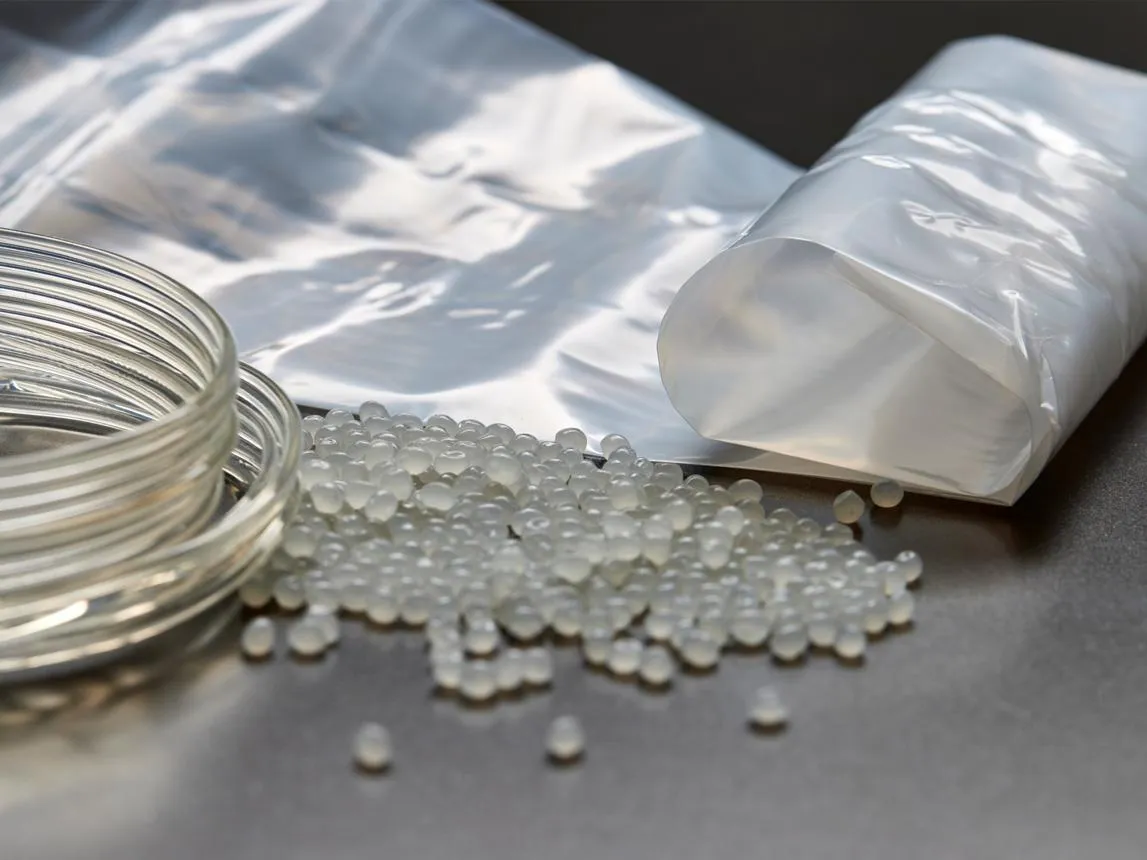
Figure 1: Representative PLA Based Biodegradable Plastic Material and Packaging. the Photograph Is Illustrative; Actual Biodegradation Depends on Material Formulation and Treatment Conditions.
2.1 Natural biodegradable polymers
Natural polymers are derived from biological materials and are often attractive because of their availability, renewability, and potential biodegradability. Starch is obtained from crops such as maize, potato, and cassava, whereas cellulose is available from plant biomass and agricultural residues. Chitosan is generally produced by processing chitin from biological sources.
These materials can be used in films, coatings, hydrogels, packaging, and biomedical systems. Nevertheless, hydrophilic natural polymers may exhibit poor water resistance, limited dimensional stability, or insufficient mechanical strength. Blending with biodegradable polyesters, chemical modification, and reinforcement with natural fibres can improve their functionality [14,15].
2.2 Synthetic biodegradable polymers
Synthetic biodegradable polymers are engineered to achieve particular mechanical, thermal, and processing characteristics.
Polylactic acid (PLA) is a thermoplastic polyester generally produced from lactic acid obtained through the fermentation of renewable carbohydrate sources. It is characterized by its relatively high stiffness, transparency, and suitability for conventional plastic processing techniques. PLA is widely studied for food packaging, fibres, three dimensional printing, and biomedical devices. However, its brittleness, limited heat resistance in some formulations, and condition dependent degradation have encouraged research into polymer blending, plasticization, and reinforcement to improve its performance.
Polyhydroxyalkanoates (PHAs) constitute a diverse group of polyesters synthesized intracellularly by microorganisms as carbon and energy storage materials. Their properties vary according to monomer composition and molecular structure, allowing the development of materials with different levels of flexibility, strength, and thermal performance. PHAs are promising for packaging, agricultural products, and biomedical applications because many members of this polymer family are biodegradable under appropriate conditions. Nevertheless, high production costs, fermentation efficiency, and polymer recovery remain important challenges for large scale commercialization.
Polybutylene succinate (PBS) is an aliphatic biodegradable polyester that combines flexibility, toughness, and good processability. It can be processed into films, fibres, moulded products, and agricultural materials. Research has focused on improving its mechanical strength, thermal characteristics, and renewable content through copolymerization, blending, and reinforcement. Its degradation rate depends on polymer composition, crystallinity, specimen dimensions, and environmental conditions.
Polybutylene adipate terephthalate (PBAT) is a flexible aliphatic aromatic copolyester commonly investigated for biodegradable films, packaging materials, and agricultural mulch products. Its flexibility and suitability for film processing make it useful in applications where conventional rigid biodegradable polymers may be insufficient. PBAT is frequently blended with PLA or starch to improve material performance and adjust cost. However, its aromatic content, formulation, and environmental exposure influence degradation behaviour, so biodegradability claims must be supported by appropriate testing.
Polycaprolactone (PCL) is a biodegradable aliphatic polyester with a relatively low melting temperature, good flexibility, and compatibility with selected polymer blending systems. It has attracted considerable interest in biomedical engineering, particularly for tissue engineering scaffolds, drug delivery systems, and specialized biodegradable devices. Its degradation can be relatively slow under certain conditions, which may be advantageous for applications requiring prolonged material stability but may limit its suitability for products intended to degrade rapidly.
2.3 Bio based and biodegradable plastics
The terms bio based and biodegradable describe different characteristics. Bio based indicates that a material is derived partly or entirely from biological resources. Biodegradable indicates that microorganisms can break down the material under specified conditions and within an appropriate timeframe. Neither characteristic alone establishes the overall environmental superiority of a plastic [3,18].
3. RECENT ADVANCES IN BIODEGRADABLE POLYMER TECHNOLOGY
3.1 Advances in polylactic acid
PLA remains one of the most widely studied bio based biodegradable polymers because of its relatively high stiffness, transparency, and established processing routes. It is produced through lactic acid fermentation followed by polymerization, commonly using lactide ring opening polymerization to obtain high molecular weight material [19,20].However, conventional PLA may exhibit brittleness, limited heat resistance in some formulations, and slow degradation under ambient environmental conditions. Current development strategies include plasticization, copolymerization, nucleating agents, stereocomplex formation, and blending with more flexible biodegradable polymers.
3.2 Advances in polyhydroxyalkanoates
PHAs are produced by microorganisms through intracellular accumulation of polyester reserves. Their synthesis can use selected sugars, plant oils, organic acids, and certain waste derived carbon sources. Polyhydroxybutyrate (PHB) and polyhydroxybutyrate copolymers are prominent examples [24,25].Recent advances include metabolic engineering, optimized fermentation, mixed microbial cultures, and improved downstream recovery. These strategies seek to reduce feedstock costs, increase polymer productivity, and improve control over polymer composition. Waste derived feedstocks may contribute to resource efficiency, although contamination, pretreatment requirements, and variation in feedstock composition remain challenges [26,27]. PHAs are particularly promising because their degradation can occur across a range of biological environments, depending on the specific polymer and environmental conditions. However, production cost, mechanical variability, and purification requirements continue to affect commercial competitiveness [28].
3.3 Advances in PBS and PBAT
PBS offers a useful combination of flexibility, processability, and thermal properties. Research has focused on renewable monomer production, copolymerization, polymer blending, and fibre reinforcement. These approaches aim to improve material strength, dimensional stability, and performance in agricultural and packaging applications [29,30]. PBAT is a flexible copolyester used particularly in films, bags, and selected agricultural products. Its properties can be modified through blend design, compatibilizers, fillers, and processing conditions. PBAT is often combined with PLA or starch to balance flexibility, stiffness, and cost. Nevertheless, its partially aromatic structure and formulation can influence degradation behaviour, making appropriate testing essential [31,32].
3.4 Enzyme assisted biodegradation
Enzyme assisted approaches represent an important area of recent research. Enzymes such as cutinases, lipases, and esterases can catalyse the hydrolysis of susceptible polyester bonds. Their activity depends on substrate accessibility, temperature, pH, enzyme stability, and polymer morphology [33,34].Researchers are investigating engineered enzymes, immobilization, encapsulation, and enzyme incorporation into polymer formulations. These approaches may improve degradation under selected conditions, but maintaining enzyme activity during high temperature processing and demonstrating safe, complete breakdown remain important challenges. Enzyme assisted treatment should not be confused with proof of rapid degradation in uncontrolled natural environments [35].Recent reviews also emphasize that microbial synthesis and biodegradation need to be considered together. A polymer that can be manufactured biologically is not automatically biodegradable in every environment, and the environmental effectiveness of degradation depends on material properties and actual treatment conditions [36].
4. POLYMER MODIFICATION AND MATERIAL ENGINEERING
4.1 Polymer blending
Polymer blending is used to combine the properties of two or more materials. For example, PLA may be blended with PBAT to improve flexibility, while starch can reduce the proportion of synthetic polyester required in selected formulations. Compatibilizers and reactive extrusion may improve interfacial adhesion and processing stability [37,38].The resulting properties depend on blend composition, phase morphology, molecular interactions, and manufacturing conditions. Poor compatibility can reduce mechanical strength, while some additives can alter biodegradation kinetics or complicate recycling. Each formulation therefore requires independent characterization.
4.2 Nanocomposites and natural fibre reinforcement
Nanocomposites incorporate nanoscale or finely dispersed reinforcing materials to improve mechanical, thermal, barrier, or functional properties. Potential reinforcing materials include cellulose nanocrystals, cellulose nanofibres, nanoclays, and selected inorganic particles. Natural fibre reinforced biodegradable polymers can reduce the use of conventional reinforcing materials and may improve stiffness. However, moisture sensitivity, filler dispersion, interfacial adhesion, and possible effects on compostability must be evaluated. Nanomaterial selection should also consider potential release, occupational exposure, and environmental fate [39,40].
4.3 Additive manufacturing and advanced processing
Biodegradable polymers are increasingly investigated for extrusion based additive manufacturing, porous structures, custom biomedical components, and prototyping. PLA is particularly relevant because of its processability, while PCL and selected PHAs are studied for specialized biomedical and engineering applications. Recent developments include optimized printing parameters, multilayer structures, composite filaments, and controlled porosity. Processing temperature, cooling rate, molecular weight, and crystallinity influence the final product's strength and degradation behaviour [41,42].
5. COMPARATIVE PROPERTIES OF MAJOR BIODEGRADABLE POLYMERS
Table 1: Comparative Characteristics and Applications of Major Biodegradable Polymers
| Polymer | Typical characteristics | Major applications | Important limitations |
|---|---|---|---|
| PLA | Relatively stiff, transparent, thermoplastic | Packaging, fibres, 3D printing, biomedical devices | Brittleness, heat resistance limitations, condition dependent degradation |
| PHAs | Adjustable properties, microbial origin | Packaging, agricultural materials, biomedical research | Production cost, recovery and purification |
| PBS | Flexible, processable polyester | Films, fibres, packaging, agricultural products | Cost and dependence on treatment conditions |
| PBAT | Flexible, suitable for film processing | Compostable bags, packaging, mulch films | Often fossil derived, formulation dependent degradation |
| PCL | Low melting temperature, flexible | Tissue engineering, drug delivery, specialty blends | Slow degradation in some conditions and limited heat resistance |
| Starch based materials | Renewable, hydrophilic, potentially low cost | Films, fillers, selected packaging | Moisture sensitivity and variable mechanical properties |
| Cellulose based materials | Renewable, fibrous, film forming | Coatings, packaging, composites | Moisture sensitivity and processing challenges |
| Chitosan | Film forming, bioactive potential | Coatings, biomedical research, food packaging | Moisture sensitivity and dependence on source and processing |
6. APPLICATIONS OF BIODEGRADABLE PLASTICS
6.1 Food packaging
Food packaging is a major area of research because it requires materials with appropriate mechanical strength, gas and moisture barrier properties, food contact safety, and reliable processing. PLA, starch based films, cellulose derivatives, and PLA/PBAT blends are investigated for trays, films, coatings, and disposable products [44,45]. Active packaging research includes materials designed to release or immobilize selected functional substances, such as antioxidants or antimicrobial agents. These formulations require careful evaluation of migration, toxicity, shelf life, and regulatory compliance. A biodegradable package must also meet its intended performance requirements before its end of life benefits can be considered meaningful [46].
6.2 Agricultural applications
Biodegradable mulch films can help regulate soil temperature, suppress weeds, and conserve moisture. PLA blends, PBAT based formulations, starch blends, and selected PHAs have been investigated for agricultural use. Their performance depends on mechanical durability during cultivation and degradation after use. An important challenge is ensuring that materials degrade appropriately under local soil conditions without leaving persistent residues. Temperature, moisture, soil microorganisms, film thickness, and chemical composition can substantially influence the outcome [47,48].
6.3 Biomedical and pharmaceutical applications
Biodegradable polymers are widely studied for controlled drug delivery, absorbable devices, scaffolds, wound management, and tissue engineering. PLA, PCL, and selected PHAs are useful because their mechanical properties and degradation rates can be adjusted to some extent through molecular design and processing. For pharmaceutical applications, polymer degradation may influence drug release, local acidity, tissue response, and device performance. Medical grade materials require stringent biocompatibility, sterility, degradation product, and clinical performance assessments. Environmental compostability is not the same as biological compatibility or suitability for implantation [49,50].
6.4 Water treatment and other emerging applications
Natural polymer based adsorbents and biodegradable composite materials are being investigated for pollutant removal, filtration, and water treatment. Their potential benefits include renewable feedstocks and opportunities for surface functionalization. However, polymer fragments, additives, and spent adsorbent disposal must be evaluated to avoid transferring contamination from water to another environmental compartment [51].
7. MECHANISMS AND FACTORS AFFECTING BIODEGRADATION
Biodegradation generally involves a combination of physical, chemical, and biological processes. Depending on polymer chemistry, environmental exposure may cause water absorption, hydrolysis, oxidation, surface erosion, or changes in molecular weight. Microorganisms and extracellular enzymes may then transform accessible polymer chains or degradation products into simpler compounds.
For many biodegradable polyesters, hydrolysis reduces molecular weight and generates oligomers or monomers that may subsequently be assimilated by microorganisms. The relative importance of surface erosion and bulk degradation varies with polymer chemistry, dimensions, morphology, and environmental conditions [5,33].
7.1 Important controlling factors
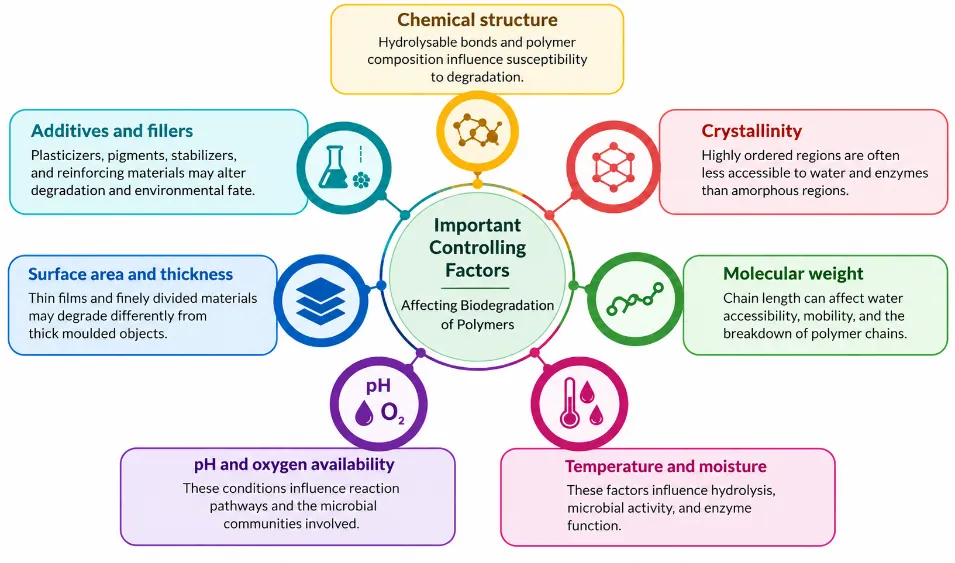
Figure 4: Important Controlling Factors Affecting the Biodegradation of Polymers.
7.3 Biodegradation testing and standards
Biodegradation testing should distinguish polymer fragmentation, loss of mass, chemical changes, and actual biological conversion. A specimen that breaks into smaller pieces has not necessarily undergone complete biodegradation. Standardized methods provide a basis for assessing biodegradation and compostability under specified conditions. Examples include ISO 14855 for ultimate aerobic biodegradability under controlled composting conditions, ISO 17088 for specifications for compostable plastics, and ASTM D6400 for plastics intended for municipal or industrial aerobic composting facilities [54,55].Testing should also examine disintegration, ecotoxicity where relevant, and the quality of the resulting compost. Claims must identify the environment and conditions under which a material has been evaluated.
8. SUSTAINABILITY ASSESSMENT AND CIRCULAR ECONOMY
Biodegradable plastics should be assessed using a life cycle perspective rather than by biodegradability alone. Life cycle assessment can compare raw material extraction, agricultural inputs, polymer synthesis, energy use, manufacturing, transport, use, collection, recycling, composting, and final disposal. Renewable feedstocks may reduce dependence on fossil resources, but their overall benefits depend on land use, water demand, fertilizer use, process efficiency, and the energy mix. Waste derived feedstocks and microbial conversion can improve resource utilization, although pretreatment and purification may introduce additional burdens [11,56].The preferred end of life option depends on the product. Durable biodegradable polymers may still benefit from reuse or recycling where feasible, while selected contaminated products may be more suitable for controlled biological treatment. Mixing biodegradable plastics with conventional recycling streams can create sorting and processing challenges, so clear labelling and compatible collection systems are important [57,58]. A circular economy approach should prioritize reducing unnecessary material use, improving product durability where needed, enabling reuse, supporting appropriate recycling, and using composting only where technically suitable. Biodegradable plastics can contribute to this approach, but they cannot replace effective waste collection, pollution prevention, and responsible product design.
9. CHALLENGES AND RESEARCH GAPS
Despite significant advances, several challenges continue to limit the widespread adoption of biodegradable plastics.First, production costs for some polymers remain higher than those of established commodity plastics. Microbial fermentation, feedstock purification, polymer recovery, and quality control can substantially affect overall cost. Second, mechanical performance remains application dependent. Improving flexibility or strength may require additives and blending strategies that change degradation behaviour.
Third, environmental degradation data are not always comparable. Differences in specimen thickness, crystallinity, temperature, moisture, test duration, and measurement methods make direct comparisons difficult. Laboratory biodegradation results may not represent field performance, particularly in aquatic environments or unmanaged waste settings [2,6].
10. EMERGING TECHNOLOGIES AND FUTURE PERSPECTIVES
The next generation of biodegradable plastics is expected to benefit from integration of biotechnology, polymer chemistry, computational materials science, and advanced manufacturing. Several research directions are particularly important.
10.1 Engineered microorganisms and renewable feedstocks
Metabolic engineering can improve microbial productivity and enable the conversion of selected waste streams into polymer precursors. Research on engineered microorganisms, mixed microbial cultures, and fermentation optimization may help reduce manufacturing costs. However, the suitability of a feedstock depends on its availability, composition, pretreatment requirements, and competition with other uses [26,27,36].
10.2 Smart materials and enzyme incorporation
Functional biodegradable materials may combine mechanical performance with responsive degradation or other specific functions. Enzyme incorporation and surface immobilization are being explored as strategies for accelerating polyester breakdown under selected conditions. Their effectiveness depends on enzyme stability, accessibility, manufacturing conditions, and the surrounding environment. Further research is required to establish long term performance and prevent incomplete degradation [34,35].
10.3 Artificial intelligence and computational polymer design
Computational modelling and machine learning could assist researchers in predicting relationships between polymer composition, crystallinity, mechanical properties, and degradation behaviour. These methods may help prioritize candidate formulations before laboratory testing. Their reliability, however, depends on representative experimental datasets and validation under realistic environmental conditions.
CONCLUSION
Recent advances in biodegradable polymers and plastics offer promising opportunities to reduce the environmental impact of conventional plastic waste. Polymers such as polylactic acid (PLA), polyhydroxyalkanoates (PHAs), polybutylene succinate (PBS), polybutylene adipate terephthalate (PBAT), and polycaprolactone (PCL) have demonstrated potential in packaging, agriculture, biomedical engineering, and pharmaceutical applications. Advances in microbial fermentation, polymer blending, nanocomposites, and enzyme assisted degradation have improved material properties and expanded their potential uses. However, challenges related to production costs, mechanical performance, degradation rates, and waste management infrastructure remain. Biodegradation depends on polymer composition, crystallinity, temperature, moisture, microbial activity, and environmental conditions. Therefore, appropriate testing and life cycle assessment are essential to establish environmental benefits. Future research should focus on cost effective production, renewable feedstocks, improved material performance, and standardized biodegradation methods. Ultimately, biodegradable plastics can support sustainable materials management when integrated with plastic reduction, reuse, recycling, and appropriate waste treatment strategies.
REFERENCES

Komal Vishnu Mankar, Recent Advances in Biodegradable Polymers and Plastics: Materials, Processing Technologies, Applications, and Future Perspectives, Int. J. Sci. R. Tech., 2026, 3 (10), 1469-1478. https://doi.org/10.5281/zenodo.23827995
 10.5281/zenodo.23827995