

We use cookies to ensure our website works properly and to personalise your experience. Cookies policy
Dr. Rajendra Gode College Of Pharmacy
Good Manufacturing Practices (GMP) are essential to pharmaceutical quality assurance, guaranteeing that medicinal goods are continuously manufactured and regulated in accordance with recognised quality standards. Good Manufacturing Practices (GMP) mitigate risks that cannot be entirely eradicated through final product testing alone, therefore ensuring product quality, patient safety, and adherence to regulatory standards. Recent years have witnessed substantial developments in GMP, revolutionising pharmaceutical manufacturing with the incorporation of risk-based methodologies, digital technology, quality management systems, and improved regulatory monitoring. Contemporary GMP frameworks prioritise quality-by-design (QbD), data integrity, process analytical technology (PAT), continuous production, and real-time monitoring to enhance manufacturing efficiency and product reliability. Global regulatory bodies have progressively embraced risk-based inspection and testing methodologies, facilitating more efficient resource allocation while upholding rigorous quality requirements. Furthermore, progress in automation, artificial intelligence, electronic documentation systems, contamination control techniques, supplier qualification programs, and workforce training has enhanced compliance and operational excellence within the pharmaceutical industry. This analysis emphasises recent global advancements in GMP, developing trends, regulatory revisions, and technical advances that are influencing pharmaceutical manufacturing. These improvements are essential for ensuring that pharmaceutical goods adhere to the highest standards of safety, efficacy, and quality, hence safeguarding public health worldwide.
Good Manufacturing Practices (GMP) represent a comprehensive system of quality assurance designed to ensure that pharmaceutical products are consistently manufactured and controlled according to predefined quality standards. The concept of GMP was introduced to regulate pharmaceutical manufacturing and packaging operations, ensuring that medicines produced for public use are safe, effective, and of high quality. GMP guidelines cover all aspects of production, including raw material procurement, manufacturing processes, packaging, labeling, storage, distribution, quality control, and personnel management. These guidelines serve as a foundation for maintaining product integrity throughout the pharmaceutical supply chain. [1]
The pharmaceutical industry operates in a highly regulated environment where product quality directly impacts patient health. Therefore, GMP requirements are established to minimize risks associated with pharmaceutical production that cannot be completely eliminated through final product testing alone. Such risks include contamination, cross-contamination, product mix-ups, labeling errors, and deviations from approved manufacturing procedures. By implementing GMP principles, manufacturers can ensure that medicines are produced under controlled conditions and consistently meet regulatory and quality specifications. [2]
In recent years, the scope of GMP has expanded beyond traditional manufacturing controls to incorporate modern quality management approaches, including Quality by Design (QbD), risk management, process validation, data integrity practices, and digitalized manufacturing systems. These advancements have strengthened the pharmaceutical industry's ability to detect, prevent, and control quality issues throughout the product lifecycle. The adoption of automated monitoring systems, electronic batch records, and real-time process analytics has further enhanced manufacturing reliability and regulatory compliance. [3]
A fundamental objective of GMP is to protect patients by ensuring that pharmaceutical products possess the required safety, efficacy, purity, and quality attributes. To achieve this objective, manufacturers must establish robust quality management systems, maintain qualified personnel, validate manufacturing processes, and ensure that facilities and equipment operate under controlled conditions. Continuous employee training and adherence to hygiene standards are also essential components of GMP implementation. [4]
Good Manufacturing Practices (GMP)
GMP guidelines provide a structured framework for preventing quality defects and ensuring product consistency throughout the manufacturing process. These regulations encompass every stage of drug production, from the selection and testing of raw materials to final packaging and distribution. Manufacturers are required to implement strict controls to prevent contamination, maintain equipment performance, verify production processes, and document all critical activities. Effective GMP compliance contributes significantly to product quality, regulatory acceptance, and consumer confidence.
Furthermore, modern GMP emphasizes a proactive approach to quality assurance by integrating risk assessment tools, continuous improvement programs, and advanced technologies. This shift from traditional quality control toward quality-by-design principles enables pharmaceutical companies to build quality directly into manufacturing processes rather than relying solely on end-product testing.
Role of Regulatory Inspections
Regulatory inspections are essential for verifying compliance with GMP requirements and ensuring the integrity of pharmaceutical manufacturing operations. Regulatory agencies conduct inspections to assess production facilities, quality control laboratories, warehouses, documentation systems, and overall quality management practices. These inspections help identify deficiencies, evaluate compliance status, and ensure that manufacturers consistently meet established quality standards.
Inspections may be performed for various purposes, including routine surveillance, pre-approval assessments, for-cause investigations, and post-marketing evaluations. Before granting approval for a new pharmaceutical product, regulatory authorities often inspect manufacturing facilities to verify their capability to consistently produce medicines that meet required specifications. Through these activities, inspections contribute significantly to safeguarding public health and maintaining confidence in pharmaceutical products.
Risk-Based Inspection Approach
A significant advancement in modern GMP regulation is the adoption of risk-based inspection strategies. Rather than inspecting all manufacturing facilities at identical frequencies, regulatory agencies prioritize inspections based on potential risks to product quality and patient safety. Factors such as product complexity, manufacturing history, compliance records, process criticality, and previous inspection outcomes are considered when determining inspection frequency.
High-risk products, including biological medicines, sterile formulations, advanced therapy medicinal products, and life-saving drugs, generally receive more frequent regulatory oversight. Similarly, facilities with histories of GMP violations, product recalls, or quality deficiencies may be subject to increased inspection frequency. Conversely, manufacturers demonstrating strong compliance records and mature quality systems may benefit from reduced inspection burdens. This risk-based approach enables regulatory authorities to allocate resources more efficiently while maintaining robust oversight of pharmaceutical quality and patient safety. [5]
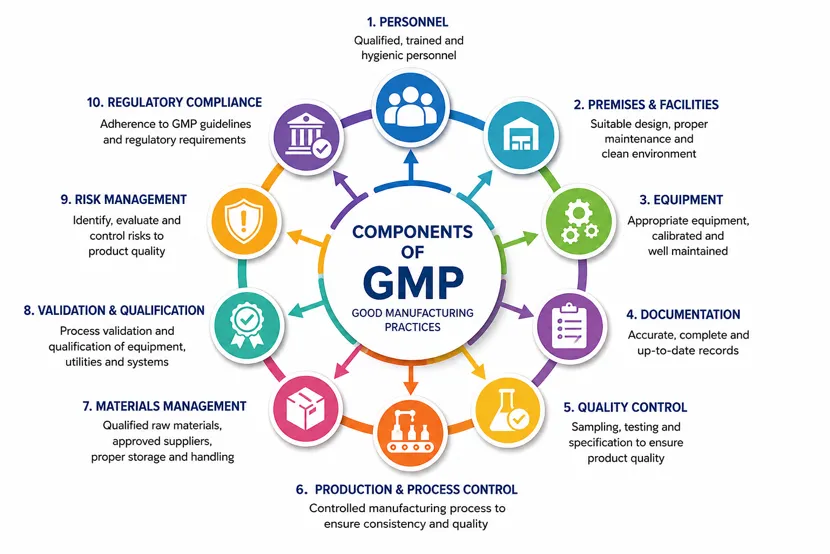
Figure 1. Components of Good Manufacturing Practices (GMP).
|
Sr. No. |
Area of Advancement |
Description |
Benefits |
|
1 |
Improved Product Quality and Consistency |
Advanced quality control systems, process validation, and continuous monitoring ensure consistent manufacturing and adherence to predefined quality standards. |
Enhanced product quality, reduced batch failures, and increased consumer confidence. |
|
2 |
Regulatory Compliance |
Updated GMP guidelines align with current scientific knowledge, technological developments, and international regulatory requirements. |
Improved compliance, reduced regulatory violations, and smoother global market access. |
|
3 |
Risk Management |
Implementation of risk-based approaches to identify, assess, and mitigate potential hazards such as contamination, cross-contamination, and manufacturing errors. |
Improved patient safety and reduced product recalls. |
|
4 |
Technology Integration |
Adoption of automation, digitalization, artificial intelligence (AI), electronic batch records, and real-time monitoring systems. |
Increased operational efficiency, faster problem detection, and enhanced data integrity. |
|
5 |
Sustainability Initiatives |
Incorporation of environmentally sustainable manufacturing practices, including waste reduction, energy-efficient operations, and eco-friendly materials. |
Lower environmental impact and improved resource utilization. |
|
6 |
Supply Chain Management and Traceability |
Advanced tracking systems enable monitoring of raw materials and finished products throughout the supply chain. |
Enhanced product traceability, improved recall management, and supply chain transparency. |
|
7 |
Training and Workforce Development |
Continuous GMP training programs and competency-based learning ensure personnel remain updated on current regulations and technologies. |
Improved workforce performance, compliance, and manufacturing quality. |
Table 1. Scope of Recent Advances in Good Manufacturing Practices (GMP)[6,7]
|
Sr. No. |
Purpose |
Description |
|
1 |
Ensure Product Quality |
To guarantee that pharmaceutical products are consistently produced and controlled according to established quality standards. |
|
2 |
Protect Patient Safety |
To minimize risks associated with pharmaceutical manufacturing, including contamination, mix-ups, and labeling errors. |
|
3 |
Regulatory Compliance |
To ensure compliance with national and international regulatory requirements such as WHO-GMP, US FDA, EMA, and other regulatory authorities. |
|
4 |
Standardize Manufacturing Processes |
To establish uniform procedures for production, packaging, storage, and distribution of pharmaceutical products. |
|
5 |
Facilitate Regulatory Inspections |
To provide a framework for routine and for-cause inspections conducted by regulatory agencies. |
|
6 |
Improve Operational Efficiency |
To enhance manufacturing efficiency through validated processes, trained personnel, and proper documentation practices. |
|
7 |
Support Global Market Access |
To ensure products meet international quality requirements, enabling export and global commercialization. |
|
8 |
Promote Continuous Improvement |
To encourage adoption of new technologies, quality management systems, and risk-based approaches for ongoing improvement. |
Table 2. Purpose of Good Manufacturing Practices (GMP)
Adapted from WHO Good Manufacturing Practices (GMP) Guidelines and recent regulatory updates. [8,9]
GMP Guidelines
Good Manufacturing Practice (GMP) guidelines provide a comprehensive framework for manufacturing, quality control, and quality assurance activities to ensure that pharmaceutical products are consistently safe, effective, and of high quality. Rather than prescribing specific manufacturing methods, GMP establishes a set of fundamental principles that manufacturers must follow throughout the product lifecycle. These principles help minimize risks associated with pharmaceutical production, including contamination, cross-contamination, product mix-ups, labeling errors, and deviations from established procedures.[10]
A key requirement of GMP is the maintenance of clean and hygienic manufacturing environments. Pharmaceutical facilities must be designed, operated, and maintained in a manner that prevents contamination and ensures product integrity. Controlled environmental conditions, including temperature, humidity, air quality, and sanitation measures, are essential to reducing the risk of microbial and particulate contamination that may compromise product safety.[11]
GMP also requires that all manufacturing processes be clearly defined, scientifically validated, and consistently controlled. Critical production operations must undergo validation to demonstrate their ability to repeatedly produce products that meet predetermined quality specifications. Any modifications to manufacturing processes, equipment, materials, or procedures must be evaluated through a formal change-control system to assess their potential impact on product quality, safety, and efficacy.[12]
Documentation forms the foundation of GMP compliance. Standard Operating Procedures (SOPs), manufacturing instructions, batch records, quality control reports, and equipment logs must be written in clear and unambiguous language. Accurate documentation ensures traceability of all manufacturing activities and provides evidence that products have been produced according to approved procedures. Both manual and electronic records must be maintained to support regulatory inspections and facilitate product investigations when necessary.[13]
Another important aspect of GMP is effective distribution and recall management. Pharmaceutical products must be stored and transported under conditions that preserve their quality throughout the supply chain. Manufacturers should establish robust systems capable of rapidly tracing and recalling defective products from the market whenever quality concerns arise. Additionally, customer complaints must be systematically investigated to identify root causes, implement corrective and preventive actions (CAPA), and prevent recurrence of similar issues.[14]
Principles of Good Manufacturing Practices (GMP)[15,16,7,18]
The fundamental principles of GMP focus on ensuring that pharmaceutical products are consistently manufactured, packaged, labeled, tested, and distributed according to established quality standards. These principles collectively reduce the risk of contamination, human error, and process deviations that may adversely affect product quality.
a. Quality Management System
A robust Quality Management System (QMS) serves as the cornerstone of GMP compliance. Manufacturers must establish comprehensive quality policies, quality assurance programs, risk management procedures, and Standard Operating Procedures (SOPs) to ensure that all operations are conducted in a controlled and documented manner. Continuous monitoring and improvement of the quality system are essential for maintaining product excellence and regulatory compliance.
b. Personnel
Qualified and well-trained personnel are critical to successful GMP implementation. Employees involved in manufacturing, quality control, quality assurance, and maintenance activities must receive appropriate training, competency assessments, and continuing education. Personnel should understand their responsibilities and follow established procedures while maintaining high standards of hygiene and professional conduct.
c. Facilities and Equipment
Pharmaceutical facilities and equipment must be properly designed, constructed, qualified, maintained, and calibrated to ensure reliable operation and product quality. Manufacturing areas should provide adequate space, environmental control, and protection against contamination. Equipment maintenance and calibration programs help ensure accurate performance and consistent manufacturing outcomes.
d. Material Management
Effective material management ensures the quality and traceability of raw materials, packaging components, intermediates, and finished products. GMP requires proper supplier qualification, material testing, storage under appropriate conditions, inventory control, and complete documentation. These practices help prevent the use of unsuitable materials and support supply chain integrity.
e. Documentation and Record Keeping
Comprehensive documentation is essential for demonstrating GMP compliance and ensuring product traceability. Every stage of the manufacturing process must be accurately recorded, from raw material receipt to product distribution. Documents such as batch manufacturing records, testing reports, SOPs, validation protocols, and equipment logs provide a complete history of product manufacture and facilitate investigations when quality issues arise. Modern GMP systems increasingly utilize electronic documentation and data integrity controls to enhance accuracy, accessibility, and regulatory compliance.
By adhering to these principles, pharmaceutical manufacturers can ensure consistent product quality, regulatory compliance, operational efficiency, and, most importantly, patient safety.
f. Quality Control and Quality Assurance
Quality Control (QC) and Quality Assurance (QA) are essential components of Good Manufacturing Practices (GMP). They ensure that pharmaceutical products are consistently manufactured according to established quality, safety, and efficacy standards. Quality Assurance focuses on preventing defects through proper procedures, documentation, training, and process validation, while Quality Control involves testing raw materials, in-process materials, and finished products to verify compliance with specifications. GMP requires robust sampling, analytical testing, and record-keeping systems to maintain product quality and regulatory compliance. Together, QA and QC help ensure the production of safe, effective, and high-quality pharmaceutical products.
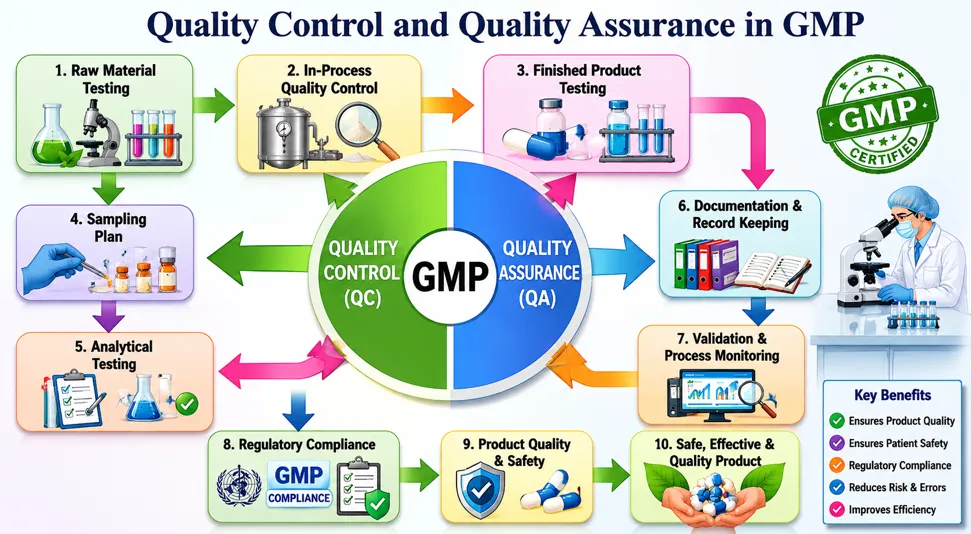
Figure 2. Role of Quality Control and Quality Assurance in Good Manufacturing Practices (GMP).
Technological Innovations and Developments
Recent technological advancements have greatly improved GMP compliance through automation, digitalization, and advanced manufacturing systems. Technologies such as automated production equipment, electronic batch records, Process Analytical Technology (PAT), and Good Automated Manufacturing Practice (GAMP) frameworks help reduce human errors, improve product consistency, and enhance manufacturing efficiency. [19]
Regulatory Updates
Regulatory agencies, including the U.S. Food and Drug Administration (FDA), have updated Current Good Manufacturing Practice (cGMP) guidelines to incorporate modern scientific and technological developments. These regulations emphasize process control, quality risk management, and data integrity to ensure product quality and patient safety. [20]
Global Perspective
International organizations such as the World Health Organization promote harmonized GMP standards worldwide, enabling pharmaceutical products to meet global quality requirements and facilitating international trade. [21]
Challenges and Future Directions
Despite significant progress, challenges such as limited infrastructure, skilled workforce shortages, and regulatory constraints remain, particularly in developing countries. Future GMP systems are expected to utilize artificial intelligence (AI), machine learning, and predictive analytics to improve manufacturing efficiency, risk management, and product quality. [22]
|
Sr. No. |
Advancement Area |
Key Features |
Benefits |
|
1 |
Digitalization and Industry 4.0 |
Integration of IoT, AI, Machine Learning (ML), and Big Data Analytics for real-time monitoring and predictive maintenance. |
Improved traceability, reduced errors, enhanced efficiency, and better decision-making. |
|
2 |
Biopharmaceutical GMP |
Continuous manufacturing, single-use technologies, and optimized cell culture processes. |
Increased productivity, flexibility, and product consistency. |
|
3 |
Quality Risk Management (QRM) |
Use of risk assessment tools such as FMEA and FTA to identify and mitigate manufacturing risks. |
Proactive quality management and improved patient safety. |
|
4 |
Regulatory Harmonization |
Global adoption of ICH, WHO, FDA, and EMA GMP guidelines. |
Consistent international quality standards and easier global market access. |
|
5 |
Green Manufacturing |
Sustainable raw materials, energy-efficient processes, and waste minimization practices. |
Reduced environmental impact and improved sustainability. |
|
6 |
RTRT and PAT |
Real-Time Release Testing (RTRT) and Process Analytical Technology (PAT) for in-process quality monitoring. |
Faster product release and improved process control. |
|
7 |
Training and Workforce Development |
E-learning platforms, simulation-based training, and continuous skill development. |
Enhanced GMP knowledge and workforce competency. |
|
8 |
Artificial Intelligence (AI) and Machine Learning (ML) |
Predictive maintenance, process optimization, and advanced quality analytics. |
Reduced downtime, improved quality control, and operational efficiency. |
|
9 |
Personalized Medicine Manufacturing |
Modular facilities, closed systems, and patient-specific production processes. |
Safe and effective manufacturing of personalized therapies. |
|
10 |
Remote and Digital Audits |
Virtual inspections, video conferencing, and digital document review. |
Cost-effective inspections and wider regulatory oversight. |
|
11 |
GMP in Emerging Markets |
Training programs, technology transfer, and strengthened regulations. |
Improved global compliance and manufacturing capabilities. |
|
12 |
Advanced Analytical Technologies (PAT) |
NIR spectroscopy, Raman spectroscopy, and real-time process monitoring. |
Better quality assurance and process optimization. |
|
13 |
AI in Drug Discovery and Manufacturing |
AI-assisted drug development and manufacturing process monitoring. |
Faster drug discovery and improved manufacturing performance. |
|
14 |
Cell and Gene Therapy GMP |
Specialized facilities, strict process validation, and contamination control. |
Enhanced safety and efficacy of advanced therapies. |
|
15 |
Nanotechnology in Drug Manufacturing |
Nanoparticle characterization, sterility assurance, and toxicological evaluation. |
Improved targeted drug delivery and therapeutic effectiveness. |
|
16 |
3D Printing in Pharmaceuticals |
Customized dosage forms, process validation, and personalized medicines. |
Flexible production and patient-specific treatment. |
|
17 |
Advanced Cleaning and Validation |
Automated cleaning systems, in-situ validation, and disposable technologies. |
Reduced contamination risk and improved operational efficiency. |
|
18 |
Environmental Monitoring |
Monitoring of air quality, temperature, humidity, and microbial contamination. |
Enhanced contamination control and product quality. |
|
19 |
Advanced Quality Control Technologies |
Automated QC systems, genomic analysis, proteomics, RTRT, and PAT. |
Improved quality assurance, regulatory compliance, and product reliability. |
Table 3.: Recent Advances and Emerging Trends in GMP[23-42
CONCLUSION
Good Manufacturing Practices (GMP) are essential for ensuring the quality, safety, and efficacy of pharmaceutical products throughout their lifecycle. Recent advancements in GMP, including automation, digitalization, artificial intelligence, Process Analytical Technology (PAT), Real-Time Release Testing (RTRT), and Quality Risk Management (QRM), have significantly enhanced manufacturing efficiency and product quality. The adoption of Industry 4.0 technologies, continuous manufacturing, advanced analytical methods, and sustainable production practices has transformed the pharmaceutical industry and strengthened regulatory compliance.Global harmonization of GMP standards through organizations such as WHO, ICH, FDA, and EMA has further improved consistency in pharmaceutical manufacturing worldwide. Although challenges related to infrastructure, regulatory implementation, and workforce training remain, especially in developing countries, continuous technological innovation and international collaboration are helping to address these issues.In conclusion, the evolution of GMP continues to play a critical role in protecting public health by ensuring that medicines are manufactured to the highest standards of quality and safety. Future developments in artificial intelligence, smart manufacturing, digital quality systems, and personalized medicine are expected to further strengthen GMP compliance and support the production of safer, more effective, and high-quality pharmaceutical products globally.
REFERENCES

Dhanashri Gajanan Chaudhari*, Tanvi Gopalrao Chuke, Om Suresh Kale, K. R. Jaiswal, H. S. Sawarkar, Recent Advances In Good Manufacturing Practices (GMP): Emerging Technologies, Regulatory Trends, And Global Perspectives, Int. J. Sci. R. Tech., 2026, 3 (6), 1-10. https://doi.org/10.5281/zenodo.20483037
 10.5281/zenodo.20483037