

We use cookies to ensure our website works properly and to personalise your experience. Cookies policy
1Rajashri college of pharmacy Mehkar Buldhana, Maharashtra, India.
2Laxminarayan College of Pharmacy, Khamgaon Buldhana, Maharashtra, India.
3Smt. Kishoritai Bhoyar College of Pharmacy Gada Kamptee Nagpur,Maharashtra, India
4Gawande College Of Pharmacy Sakharkherda, Maharashtra, India
5Pravara rural education society's college of pharmacy for women,Nashik, Maharashtra, India
6Department of Pharmacognosy, Gawande College Of Pharmacy Sakharkherda, Maharashtra, India
7Vidyaniketan College of Pharmacy Anjangao surji, Maharashtra, India.
8Institute of Science, Mumbai, Maharashtra, India
9Dept. of Pharmaceutics, Datta Meghe Institute of Higher Education and Research (Deemed to be University), Sawangi (M), Wardha, Maharashtra, India.
Herbal medicines are increasingly recognized for their therapeutic and commercial potential and are widely used as components of healthcare systems worldwide. However, their development and regulatory approval present unique challenges compared with chemically defined medicines because botanical products are complex mixtures with considerable variability arising from plant identity, geographical origin, cultivation, harvesting, processing, extraction, and storage conditions. This review examines the major regulatory challenges associated with the development and approval of herbal medicines, with particular emphasis on botanical authentication, raw-material control, standardization, contamination and adulteration, Good Agricultural and Collection Practices (GACP), Good Manufacturing Practices (GMP), analytical-method validation, stability, toxicological evaluation, herb drug interactions, clinical efficacy, labeling, product classification, and pharmacovigilance. The review also highlights recent global regulatory developments, including the World Health Organization’s Global Traditional Medicine Strategy 2025–2034, which emphasizes evidence-based traditional medicine, safety, quality, regulation, innovation, and appropriate integration into health systems. Regulatory approaches adopted by major agencies such as the European Medicines Agency (EMA) and the U.S. Food and Drug Administration (FDA) are considered, along with the evolving regulatory framework in India. Particular attention is given to the need for scientifically justified quality standards, reliable analytical techniques, traceability, risk-based assessment, and lifecycle quality management. Overall, effective regulation of herbal medicines requires a balanced approach that respects traditional knowledge while ensuring scientifically established quality, safety, and efficacy. Greater regulatory harmonization, improved analytical science, standardized manufacturing practices, and strengthened post-marketing surveillance can facilitate the development and wider acceptance of safe, effective, and high-quality herbal medicines..
The global regulatory environment for herbal medicines is moving toward stronger evidence, quality assurance and safety monitoring. WHO's Global Traditional Medicine Strategy 2025–2034, adopted by the Seventy-eighth World Health Assembly in May 2025, establishes four broad strategic objectives, including strengthening the evidence base and ensuring safety and appropriate regulation. [1,2] WHO's 2025 global report further provides baseline information on national policies and regulation of herbal medicines. [3] Medicinal plants have been used for centuries in traditional systems such as Ayurveda, Siddha, Unani, Traditional Chinese Medicine and other indigenous healthcare systems. The continued use of herbal products and the growth of commercial botanical preparations have created a need for regulatory systems that can preserve access to traditional therapies while ensuring consistent quality, safety and appropriate evidence of effectiveness.
A central difficulty is that a herbal medicinal product is rarely a single chemical entity. A plant extract can contain many constituents, some known and many incompletely characterized. The concentration of these constituents can change according to species, chemotype, soil, climate, geographical origin, harvesting season, plant maturity and post-harvest processing. WHO specifically notes that the quality of finished herbal products is influenced by the quality of raw materials and that quality control of mixtures can be more complex than for chemical medicines. [4,5]
The regulatory challenge therefore begins before the manufacturing site. Correct botanical identification, cultivation or collection practices, harvesting, drying, storage and transportation all influence the final product. Once the material reaches the manufacturer, extraction, concentration, blending and formulation introduce additional sources of variation. The final product must then be supported by appropriate specifications, validated methods, stability data, safety evidence and, where required, clinical evidence.
Regulatory classification adds another layer of complexity. Similar products can be classified as traditional medicines, herbal medicinal products, botanical drugs, dietary supplements, natural health products or complementary medicines depending on jurisdiction, intended use, composition and claims. WHO's 2026 work on regulatory-system gaps highlights this international diversity and its implications for standards, evidence requirements, market surveillance and public-health protection. [6]
For this reason, a successful herbal-medicine development program should be based on a lifecycle strategy rather than a final-product testing strategy alone.
2. CURRENT REGULATORY SCENARIO (2025–2026)
The current scenario is characterized by increasing regulatory convergence but continuing differences in product classification and evidence requirements. In the European Union, EMA/HMPC provides dedicated guidance covering quality, non-clinical, clinical and safety aspects of herbal medicinal products. [7] The current effective EMA quality guideline is Revision 3, adopted in 2022. [8] In the United States, FDA treats botanical drugs as a distinct development category because they may be complex mixtures without a single identifiable active ingredient and may have substantial prior human use. [9,10]
In India, herbal products can fall under different regulatory pathways depending on their system, claims and classification. The broader Indian regulatory environment is also becoming more stakeholder-oriented. In August 2026, CDSCO announced quarterly stakeholder meetings chaired by the DCGI to discuss regulatory developments, implementation issues and procedures, reflecting a current emphasis on regulatory transparency and structured industry engagement. [11] [12]
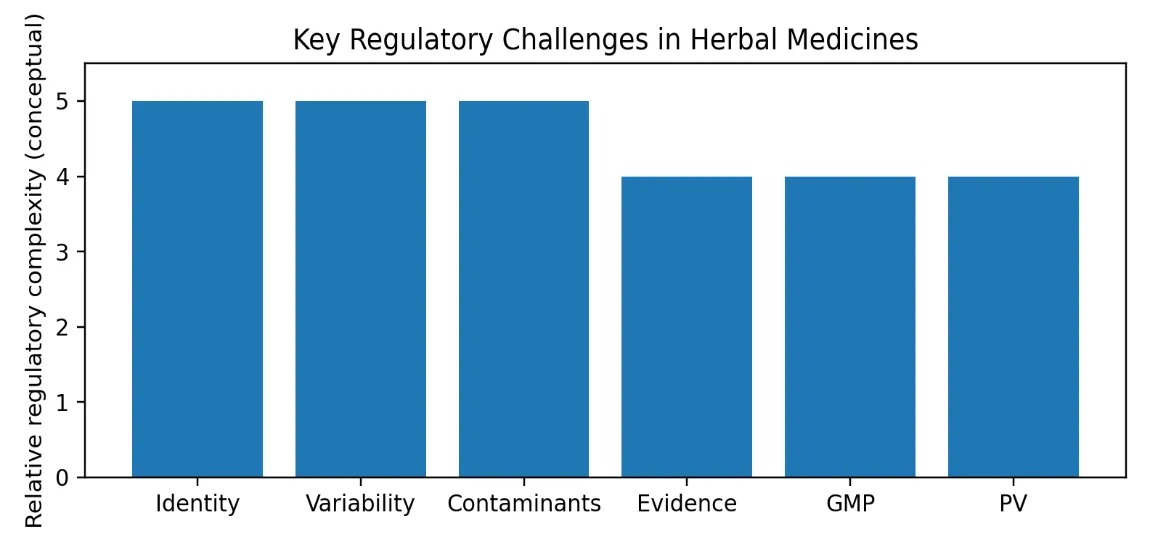
Figure 1. Key regulatory challenges
3. MAJOR REGULATORY CHALLENGES
Botanical authentication is fundamental because substitution or misidentification can alter safety and efficacy. Variability is influenced by species, chemotype, plant part, geography, cultivation, harvesting, drying, extraction and storage. GACP, pharmacopoeial standards and documented supply-chain controls are therefore important. [13–18]
Standardization remains difficult because many herbal products contain numerous constituents and no single compound necessarily explains the therapeutic effect. A combination of chromatographic fingerprints, marker compounds, spectroscopic methods, DNA authentication and chemometric approaches can improve characterization. [19–24]
Contamination and adulteration are major safety concerns. Pesticide residues, heavy metals, microbes, mycotoxins, residual solvents and undeclared pharmaceutical substances may occur. Risk-based specifications, validated analytical methods and appropriate supplier qualification are necessary. [25–30]
Evidence requirements are another major challenge. Traditional use can provide supportive evidence but may not establish modern standards of efficacy, dose-response or safety. Regulatory pathways differ between traditional-use products and products developed as medicines through conventional clinical development. [31–35]
Manufacturing and lifecycle management require special attention because changes in raw materials, extraction processes or suppliers can modify the chemical profile of a complex botanical mixture. GMP, process controls, stability programs and change-control strategies are essential. Pharmacovigilance is also complicated by incomplete product identification and herb–drug interactions. [36–43]
|
Sr.no |
Jurisdiction |
Main classification/pathway |
Key focus |
Major challenge |
Current direction |
|
1 |
WHO |
TCIM / national frameworks |
Evidence, safety, quality, regulation |
Global heterogeneity |
Strategy 2025–2034 |
|
2 |
EU |
Herbal medicinal products / traditional registration |
Quality, non-clinical, clinical, safety |
Complex mixtures & evidence |
Dedicated HMPC guidance |
|
3 |
USA |
Botanical drugs / dietary supplements (different regimes) |
CMC, IND/NDA, safety & efficacy |
Complex botanical mixtures |
Botanical-drug framework |
|
4 |
India |
AYUSH medicines / phytopharmaceuticals and other applicable routes |
Identity, quality, safety, efficacy |
Multiple classifications |
Greater regulatory engagement |
Table 1. Comparative regulatory overview
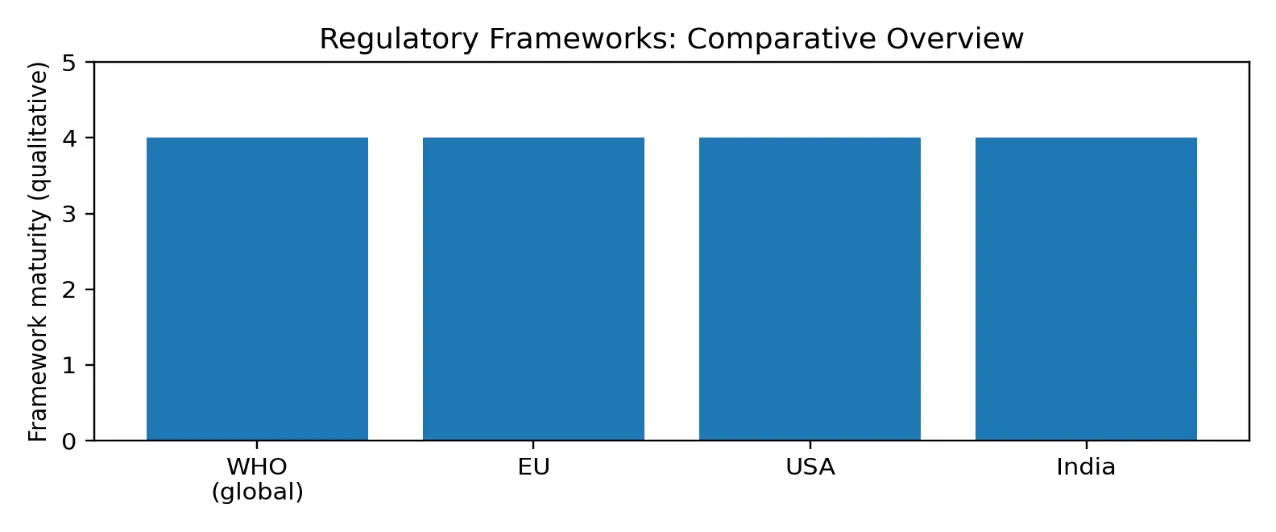
Figure 2. Qualitative author-created comparison of the presence of structured regulatory frameworks; it is not a quantitative ranking of jurisdictions.
|
Sr. No |
Challenge |
Regulatory implication |
Recommended approach |
|
1 |
Botanical identity |
Wrong species/plant part may invalidate quality |
Voucher specimens, taxonomic authentication, DNA methods where justified |
|
2 |
Batch variability |
Inconsistent chemical profile |
GACP, controlled cultivation, fingerprints, marker specifications |
|
3 |
Contamination/adulteration |
Patient safety and regulatory non-compliance |
Supplier qualification, risk-based testing, validated methods |
|
4 |
Clinical evidence |
Uncertain benefit–risk |
Product-specific clinical development and justified traditional-use evidence |
|
5 |
Manufacturing changes |
Loss of comparability |
Validated process, change control, stability and lifecycle management |
|
6 |
Pharmacovigilance |
Under-reporting and poor traceability |
Digital product identification, ADR reporting and active surveillance |
Table 2. Regulatory challenges and recommended solutions
4. EMERGING REGULATORY PRIORITIES
Three themes are especially important for the next phase of herbal-medicine regulation: (i) stronger evidence generation, (ii) better quality and safety systems, and (iii) responsible use of technology. WHO's 2025–2034 strategy explicitly links traditional medicine regulation with research, innovation, sustainability, biodiversity and evidence-based integration. [1,2] Advanced analytical platforms may strengthen identity and consistency assessment, but they should complement not replace validated quality systems and clinically meaningful evidence.
5.IMPORTANCE OF REGULATORY CONTROL
Regulation protects patients from poor-quality products and provides a framework through which manufacturers can demonstrate reproducibility. A strong system addresses identity, purity, strength, quality, safety and efficacy as appropriate to the product category. It also creates mechanisms for inspections, laboratory testing, adverse-event reporting and market surveillance.
|
Sr. No |
Regulatory objective |
Main question |
Examples of evidence |
|
|
Identity |
Is the correct plant and plant part used? |
Taxonomy, microscopy, voucher specimen, fingerprint |
|
|
Quality |
Is the product consistent? |
Specifications, marker assay, chromatographic profile |
|
|
Purity |
Is it free from unacceptable contamination? |
Microbial, pesticide, elemental and mycotoxin tests |
|
|
Safety |
Can it be used without unacceptable risk? |
Toxicology, clinical safety, interaction assessment |
|
|
Efficacy |
Does it provide the claimed therapeutic benefit? |
Clinical trials or justified traditional-use evidence |
|
|
Manufacturing |
Is it produced reproducibly? |
GMP, validation, batch records |
|
|
Lifecycle safety |
Are new risks detected? |
Pharmacovigilance, complaints, recalls |
Table 1. Major regulatory objectives for herbal medicines.
6. BOTANICAL AUTHENTICATION AND IDENTIFICATION
Botanical authentication is the foundation of herbal quality. The scientific name, family, plant part and appropriate variety or chemotype should be established. Reliance on common names is unsafe because one common name may be applied to several species. Substitution can also occur when visually similar species are collected or when commercial materials are intentionally adulterated.
Authentication may use macroscopic examination, microscopic characters, organoleptic properties, taxonomic expertise, voucher specimens and chemical fingerprinting. DNA barcoding can be a useful complementary method for processed materials where morphology is difficult to assess. However, DNA authentication cannot establish the concentration of active or marker constituents, contaminant levels or therapeutic quality. Therefore, botanical identity should be integrated with chemical and physicochemical quality testing.
A practical regulatory system should require supplier qualification, documented source information and traceability. Each incoming batch should be linked to the supplier, collection or cultivation information and test results. Reference specimens or authenticated standards can support investigations when an unusual analytical result occurs.
7. RAW-MATERIAL VARIABILITY AND GACP
Natural variability is one of the defining challenges of herbal medicines. Plant chemistry can be influenced by genetics, soil nutrients, rainfall, temperature, altitude, light exposure, cultivation method, harvest timing and post-harvest treatment. Even material obtained from the same geographical area may vary from season to season.
Good Agricultural and Collection Practices reduce these risks by defining requirements for plant identification, propagation, cultivation or collection, harvesting, drying, primary processing, packaging, storage and transportation. GACP also supports traceability and helps ensure that raw material is collected from an appropriate source. [44]
For manufacturers, raw-material specifications should include botanical identity, plant part, physical characteristics, moisture or loss on drying where appropriate, foreign matter, microbial quality, relevant contaminants and chemical markers. Risk-based sampling should account for the heterogeneous nature of botanical material.
Failure to control raw materials can result in a finished product that meets some laboratory tests but does not have the same chemical or clinical characteristics as the material used during development. Therefore, GACP should be viewed as a pharmaceutical quality activity rather than merely an agricultural activity.
8. STANDARDIZATION AND BATCH-TO-BATCH CONSISTENCY
Standardization is a major scientific and regulatory challenge because a complex extract may contain multiple constituents contributing to activity. In many cases, the true active constituent is unknown. A single marker compound may therefore be insufficient to describe the overall quality of the extract.
A comprehensive control strategy may combine quantitative markers with chromatographic fingerprints, physicochemical characteristics and process controls. The objective is not necessarily to prove that every constituent is identical but to establish scientifically justified boundaries within which the product remains consistent with the material used to support safety and efficacy.
WHO guidance on marker substances recognizes the need for appropriate marker selection for quality control. [4] EMA's herbal quality guideline also provides herbal-specific expectations for quality aspects. [45] Modern chemometric and metabolomic approaches can assist in comparing batches, but these techniques require validated interpretation and appropriate reference materials.
|
Sr. No |
Approach |
Strength |
Limitation |
|
|
Single-marker assay |
Simple quantitative control |
May not represent whole extract |
|
|
Multi-marker assay |
Better chemical representation |
More analytical complexity |
|
|
Chromatographic fingerprint |
Captures overall profile |
Requires validated comparison criteria |
|
|
DNA authentication |
Useful for botanical identity |
Does not assess chemical potency |
|
|
Metabolomics/chemometrics |
Broad characterization |
Requires expertise and robust reference datasets |
Table 2. Approaches to standardization of herbal medicines.
9. CONTAMINATION, ADULTERATION AND SAFETY
Contamination may occur during cultivation, collection, drying, storage or manufacturing. Important hazards include microorganisms, pesticides, heavy metals or other elemental impurities, mycotoxins, foreign matter and residual solvents. The risk depends on the plant, geographical source, agricultural practices and manufacturing process.
Adulteration is a separate but serious problem. It may involve substitution with a cheaper plant, addition of undeclared pharmaceutical ingredients or dilution with unrelated materials. Adulteration can lead to therapeutic failure, unexpected toxicity and loss of confidence in herbal products.
A regulatory control program should therefore include supplier qualification, risk assessment, validated testing, appropriate acceptance criteria, traceability and investigation of out-of-specification results. WHO has specifically developed guidance addressing contaminants and residues in herbal medicines. [46]
The statement that 'natural means safe' is not a scientifically adequate basis for regulatory approval. Plants can contain toxic constituents and biologically active compounds. Safety can also be affected by dose, duration of use, patient characteristics, pregnancy, organ impairment and interactions with conventional medicines.
10. ANALYTICAL QUALITY CONTROL
Analytical characterization is essential for demonstrating identity, consistency and purity. Techniques are selected according to the plant material and dosage form. HPLC and HPTLC are commonly useful for non-volatile constituents; GC and GC-MS may be appropriate for volatile components and essential oils; LC-MS/MS can support sensitive analysis of specific constituents or contaminants; spectroscopic methods can provide rapid screening.
Analytical procedures must be fit for purpose. Where quantitative or qualitative claims are made, method performance should be demonstrated through appropriate validation. Specificity, accuracy, precision, range, robustness and other characteristics should be considered according to the intended use and relevant guidelines.
The complexity of herbal matrices can create matrix effects, co-eluting peaks and difficulties in obtaining reference standards. Therefore, analytical development should begin during product development rather than after clinical studies have been completed.
11. MANUFACTURING AND GMP
GMP provides the operational framework for reproducible manufacturing. WHO's GMP guidance for herbal medicines covers quality assurance, sanitation and hygiene, qualification and validation, complaints, recalls, personnel, premises, equipment, materials, documentation, production and quality control. [47]
For herbal products, GMP must be connected to raw-material control. Extraction yield, solvent-to-drug ratio, temperature, extraction time, concentration, drying and blending can influence the chemical profile. Process parameters should therefore be defined and controlled. Where applicable, process validation should demonstrate that the manufacturing process consistently produces material meeting established specifications.
Documentation is especially important. Batch manufacturing records, analytical results, deviations, change controls, cleaning records, supplier qualification and stability data should be maintained. A change in supplier, plant source or extraction process can alter the product and should be evaluated through formal change control.
12. STABILITY AND SHELF-LIFE
Stability is another difficult area because herbal preparations can undergo complex chemical changes. Oxidation, hydrolysis, volatilization, microbial growth, light exposure and moisture can change the quality profile. Different constituents may degrade at different rates.
Stability studies should evaluate relevant quality attributes under proposed storage conditions and support the assigned shelf-life. Packaging is part of the stability strategy because the container closure system may protect the product from moisture, oxygen and light. Stability-indicating analytical procedures should be selected where appropriate.
EMA's current herbal quality Q&A specifically covers stability together with specifications, testing, contaminants, manufacturing and water quality. [48] This illustrates that shelf-life should be supported by an integrated quality package rather than a single observation.
13. TOXICOLOGY AND HERB–DRUG INTERACTIONS
Safety evaluation should be based on the composition, dose, duration, route of administration, intended population and existing evidence. Products with extensive traditional use may have a different evidence pathway from novel botanical products, but the absence of reported toxicity is not proof of absolute safety.
Potential safety issues include hepatotoxicity, nephrotoxicity, cardiovascular effects, reproductive toxicity, genotoxicity and allergic reactions. Herb–drug interactions are also important, especially for patients taking medicines with narrow therapeutic ranges. Interactions may involve drug-metabolizing enzymes, transporters, pharmacodynamic effects or changes in absorption.
Identify constituents with known toxicological concern.
Assess exposure relative to traditional or proposed clinical use.
Evaluate interaction potential when clinically relevant.
Include warnings and contraindications supported by evidence.
Maintain post-marketing surveillance for rare events.
14. CLINICAL EFFICACY AND DEVELOPMENT CHALLENGES
Clinical development must establish whether the product provides the claimed benefit. The evidence required depends on the regulatory classification and jurisdiction. Traditional-use pathways may allow reliance on documented long-term medicinal use under defined conditions, whereas a novel botanical drug intended to treat a disease generally requires a conventional drug-development program.
One major problem is ensuring that the product used in clinical trials is representative of the commercial product. If the composition changes substantially between development and commercial manufacture, the clinical evidence may no longer adequately support the final product.
Randomized controlled trials of herbal products can face difficulties in creating matching placebos, controlling concomitant therapies and selecting appropriate endpoints. Standardized dose and formulation are essential. Safety monitoring should be systematic and should capture adverse events, laboratory abnormalities and possible interactions.
For traditional medicines, evidence should be documented rather than assumed. Traditional use can contribute to the evidence base, but regulatory authorities may still require proof of quality and appropriate safety.
15. UNITED STATES REGULATORY FRAMEWORK
In the United States, botanical products can fall into different regulatory categories depending on intended use and claims. FDA defines a botanical drug as a product intended for diagnosis, cure, mitigation, treatment or prevention of disease and notes that botanical drugs commonly have complex mixtures, lack a distinct active ingredient and may have substantial prior human use. [8,49]
FDA's Botanical Drug Development Guidance provides recommendations for IND and NDA development of botanical drugs. [50] The guidance recognizes that conventional approaches may require adjustment because of the unique features of botanical products. Nevertheless, quality, safety and efficacy remain central to development.
A developer should therefore establish early whether the intended product is a botanical drug or another category. Marketing claims are particularly important because a product positioned as a disease-treatment product may be subject to drug requirements.
16. EUROPEAN UNION REGULATORY FRAMEWORK
The European Union has a dedicated framework for herbal medicinal products and traditional herbal medicinal products. EMA's current effective quality guideline is Revision 3, which describes the special quality problems of herbal medicines and their differences from products containing chemically defined active substances. [45]
EMA's current Questions and Answers document, Revision 7, addresses declaration of active substances, specifications and testing, contaminants, manufacturing, water quality and stability. [48] This shows the breadth of the quality package expected for herbal medicines.
The European system also recognizes traditional herbal medicinal products. The European Commission notes that the HMPC establishes monographs and lists for certain traditional herbal substances, and applicants can use this information when registering eligible traditional products; quality still needs to be verified before approval. [51]
17. INDIAN REGULATORY PERSPECTIVE
India has a substantial traditional-medicine sector and a dedicated Ministry of AYUSH framework for Ayurveda, Siddha and Unani systems. Regulatory control includes licensing, quality standards, pharmacopoeial resources and GMP requirements. Developers must identify the applicable product category and authority before beginning development.
A further challenge is the interface between traditional medicines and modern phytopharmaceutical development. Products intended to be developed as scientifically standardized plant-derived drugs may require evidence and regulatory controls beyond those used for traditional preparations. Clear classification, quality characterization and appropriate clinical evidence are therefore essential.
For Indian manufacturers seeking international markets, compliance with Indian requirements may not be sufficient by itself. The target country may require additional evidence, different specifications, different labeling and a different application pathway.
18. INTERNATIONAL REGULATORY DIFFERENCES
International regulatory divergence increases development complexity. The same plant preparation can be treated as a medicine in one country, a traditional medicine in another and a supplement or complementary product elsewhere. These differences affect manufacturing standards, clinical evidence, permitted claims, labeling, licensing and post-market monitoring.
|
Sr. No |
Region |
Main challenge for developers |
Potential response |
|
|
India |
Multiple traditional and modern pathways |
Early classification and authority-specific strategy |
|
|
EU |
Herbal-specific quality and traditional-use requirements |
Use EMA guidance and monographs |
|
|
USA |
Different pathways for botanical drugs and supplements |
Define intended use and claims early |
|
|
Canada |
Natural health product requirements |
Product/site licensing and evidence planning |
|
|
UK |
Traditional Herbal Registration/medicines framework |
Align evidence and claims with pathway |
|
|
Australia |
Complementary-medicine framework |
Classify product and evidence level early |
Table 3. Regulatory differences affecting international development.
19. CURRENT AND FUTURE PERSPECTIVES
The regulatory environment for herbal medicines continues to evolve. WHO announced in June 2026 a technical gap-analysis initiative examining regulatory systems, standards and oversight mechanisms for herbal medicines across selected jurisdictions. The initiative specifically recognizes that herbal products may be regulated differently depending on national legislation, intended use, claims, composition and risk profile. [6]
Modern analytical technologies may improve regulatory confidence. DNA-based authentication can help confirm botanical identity; high-resolution mass spectrometry and metabolomics can provide broad chemical characterization; chemometrics can compare fingerprints; and digital supply-chain systems can improve traceability. However, these technologies should complement established quality systems rather than replace validated specifications and GMP.
Greater international convergence would reduce duplicated work and make it easier for manufacturers to prepare globally acceptable dossiers. At the same time, harmonization should not weaken country-specific risk controls. The goal should be scientifically justified, transparent and proportionate regulation.
20. STRATEGIES TO OVERCOME REGULATORY CHALLENGES
Establish regulatory classification and intended claims before product development.
Use authenticated botanical material and maintain reference/voucher specimens.
Implement GACP and supplier qualification from the beginning.
Develop scientifically justified raw-material and finished-product specifications.
Use marker assays together with chromatographic fingerprints where appropriate.
Validate analytical methods and establish suitable reference standards.
Control pesticides, elemental impurities, microbes, mycotoxins and other relevant contaminants.
Apply GMP, process validation, deviation management and formal change control.
Perform stability studies using packaging representative of the marketed product.
Generate safety and clinical evidence appropriate to the regulatory pathway.
Ensure clinical batches are representative of the intended commercial formulation.
Maintain accurate labeling, contraindications and warnings.
Establish pharmacovigilance and product-recall systems.
Use regulatory scientific advice early for novel or complex botanical products.
Develop country-specific submission plans for international commercialization.
CONCLUSION
Herbal medicines possess considerable therapeutic and commercial potential; however, their development and regulatory approval are challenging because of the inherent variability and chemical complexity of botanical materials. Major regulatory concerns include botanical authentication, raw-material control, standardization, contamination and adulteration, analytical method validation, Good Manufacturing Practices (GMP), stability, toxicological assessment, herb–drug interactions, clinical efficacy, product classification, labeling, and pharmacovigilance. A robust development strategy should therefore consider quality, safety, and efficacy as lifecycle responsibilities, beginning with authenticated plant materials and Good Agricultural and Collection Practices (GACP), followed by controlled extraction, GMP-compliant manufacturing, validated analytical methods, stability studies, appropriate safety evaluation, and clinical evidence based on the intended claims and regulatory category. Traditional use and natural origin should not replace scientific assessment of quality and safety. Early regulatory planning is essential because product classification and therapeutic claims determine the evidence required for approval. Greater regulatory harmonization, improved analytical technologies, stronger supply-chain traceability, and risk-based regulatory approaches can make herbal-medicine development more consistent and predictable. Overall, integrating traditional knowledge with modern pharmaceutical science, rigorous quality standards, appropriate clinical evaluation, and effective post-marketing surveillance can facilitate the safe and effective development of herbal medicines while promoting wider access, innovation, and public confidence.
REFERENCES

Vrushali S. Borey1*, Aniket S. Mule2, Jayashri R. Dhage3, Ankita S. Jaiswal4, Shraddha V. Holkar5, Sakshi N. Holkar5, Anushree M. Marde6, Sonali A. Kantale7, Krutika A. Katke8, Shivshankar M. Nagrik9, Regulatory Challenges In The Development And Approval Of Herbal Medicines, Int. J. Sci. R. Tech., 2026, 3 (10), 219-231. https://doi.org/10.5281/zenodo.23124972
 10.5281/zenodo.23124972