

We use cookies to ensure our website works properly and to personalise your experience. Cookies policy
MIMER Medical College, Talegaon, Maharashtra, India
The concept of Panchamahabhuta (Akasha, Vayu, Agni, Jal, and Prithvi) forms the foundation of Indian scripture and philosophy, describing the five fundamental elements that constitute both the human body and the universe. Health is believed to exist when these elements remain in harmony, while imbalance leads to disease and environmental disruption. This article explores the relevance of the Panchamahabhuta concept in understanding modern environmental crises through an ethical and scientific perspective. Five major environmental disasters were selected to represent disturbances in each Mahabhuta: ozone depletion (Akasha), the Bhopal Gas Tragedy (Vayu), the Australian Black Summer bushfires (Agni), Minamata disease caused by mercury contamination (Jal), and hexavalent chromium contamination in Hinkley, California (Prithvi). Each incident demonstrates how anthropogenic activities have disrupted the natural equilibrium of the environment, resulting in profound consequences for human health, biodiversity, and ecosystem sustainability. While scientific and technological advancements have contributed significantly to human progress, these events highlight the ethical responsibility to balance development with environmental stewardship. The discussion integrates the ancient principle of Panchamahabhuta with contemporary concepts of environmental ethics and global bioethics, emphasizing that the health of humans and the environment is inseparable. Successful initiatives such as the Montreal Protocol illustrate that collective ethical action can restore ecological balance, whereas many other environmental disasters continue to be addressed only after irreversible damage has occurred. The Panchamahabhuta framework offers a holistic perspective that complements modern environmental science and underscores the need for sustainable policies guided by ethical responsibility toward present and future generations.
The core of human existence is in its surroundings. The word panchamahabhuta is made up of three words: ‘pancha’, ‘maha’, and ‘bhuta’. ‘Pancha’ means five, ‘maha’ means great, and ‘bhuta’ means that which exists. All living and non-living objects in the universe are composed of the panchamahabhuta.[Cha.Sa.Sutra Sthana 26/10]. Therefore, panchamahabhuta are the five fundamental elements responsible for the creation of the universe, including humans. Each individual has a unique panchabhautik constitution. It includes Akasha, Vayu, Agni, Jal and Prithvi Mahabhuta. This constitution remains in a state of equilibrium in health, and any imbalance results in disease. Our Vedas and modern science believe in one origin for humans and the universe. We coexist in the form of energy. Food and water are the connecting link between humans and the universe. Food is the ultimate source of life energy (Prana). Food is considered the base material from which the body’s energy is produced. In Hindu rituals, food symbolizes life, sustenance, prosperity, and the interconnectedness of all beings. Through the following incidents, we try to connect the dots for the imbalance between the Panchamahabhutas in the surroundings and humans.
Incident 1- Akasha Mahabhuta
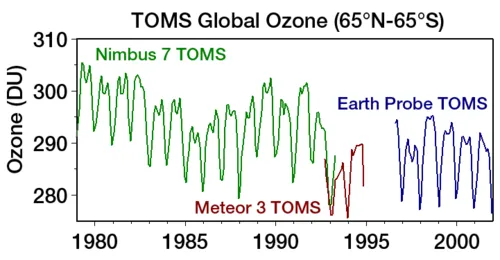
Ozone depletion consists of two related events observed since the late 1970s: a lowered total amount of ozone in Earth's upper atmosphere, and a much larger springtime decrease in stratospheric ozone (the ozone layer) around Earth's polar regions.[1] The latter phenomenon is referred to as the ozone hole. There are also springtime polar tropospheric ozone depletion events in addition to these stratospheric events.
The main causes of ozone depletion and the ozone hole are manufactured chemicals, especially manufactured halocarbon refrigerants, solvents, propellants, and foam-blowing agents (chlorofluorocarbons (CFCs), HCFCs, halons), referred to as ozone-depleting substances (ODS).[2] These compounds are transported into the stratosphere by turbulent mixing after being emitted from the surface, mixing much faster than the molecules can settle.[3] Once in the stratosphere, they release atoms from the halogen group through photodissociation, which catalyze the breakdown of ozone (O3) into oxygen (O2).[4] Both types of ozone depletion were observed to increase as emissions of halocarbons increased.
Ozone depletion and the ozone hole have generated worldwide concern over increased cancer risks and other negative effects. The ozone layer prevents harmful wavelengths of ultraviolet (UVB) light from passing through the Earth's atmosphere. These wavelengths cause skin cancer, sunburn, permanent blindness, and cataracts,[5] which were projected to increase dramatically as a result of thinning ozone, as well as harming plants and animals.
Incident 2- Vayu Mahabhuta
On 3 December 1984, over 500,000 people in the vicinity of the Union Carbide India Limited pesticide plant in Bhopal, Madhya Pradesh, India were exposed to the highly toxic gas methyl isocyanate, in what is considered the world's worst industrial disaster.[3] A government affidavit in 2006 stated that the leak caused approximately 558,125 injuries, including 38,478 temporary partial injuries and 3,900 severely and permanently disabling injuries.[4] It caused coughing, severe eye irritation, a feeling of suffocation, blepharospasm, breathlessness, stomach pain, and vomiting. Bhopal now has high rates of birth defects, miscarriage rate 7 times higher than the National average.

Incident 3- Agni Mahabhuta
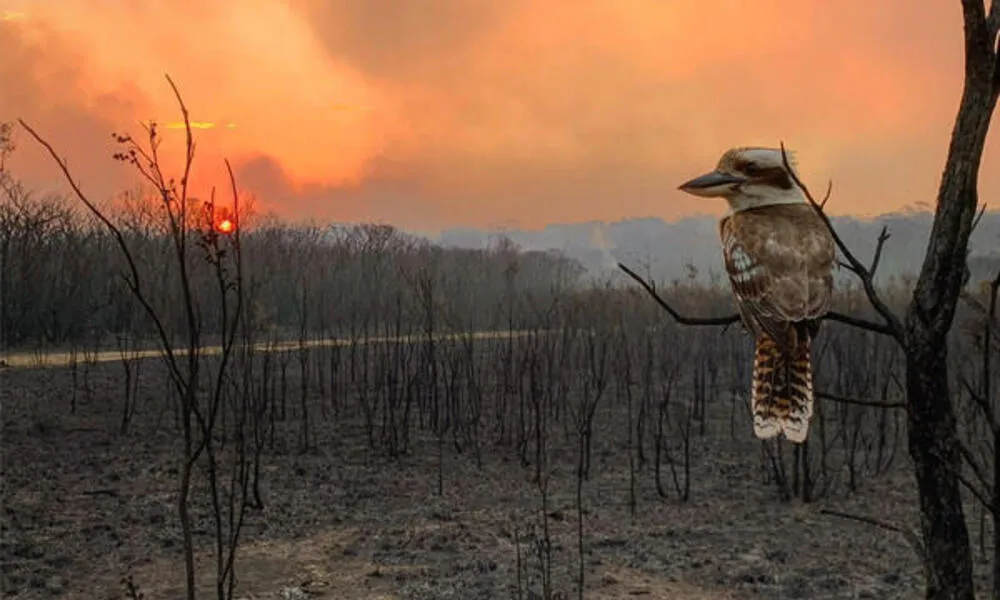
The 2019–20 Australian bushfire season, also known as Black Summer, was one of the most intense and catastrophic fire seasons on record in Australia. Exceptionally dry conditions, a lack of soil moisture, and early fires in Central Queensland led to a premature start to the bushfire season from June 2019.[14] Tens of thousands of fires burnt, mainly in the south-east of the country, until March 2020. The most severe fires hit from December 2019 to January 2020.
The fires burnt more than 24 million hectares (59 million acres; 240,000 square kilometres; 93,000 square miles) destroyed over 3,000 buildings, and directly killed 33 people.[3][15] Bushfire smoke was responsible for an additional 417 deaths.[4] An estimated three billion terrestrial vertebrates, mostly reptiles, were killed or displaced.[5] Some species may have been driven to extinction.[16] In all affected states, air quality dropped to dangerous levels, and smoke moved across the Southern Ocean to impact weather conditions in other continents.[17] Carbon emissions exceeded 700 million tonnes.[18]
Incident 4- Jaal Mahabhuta
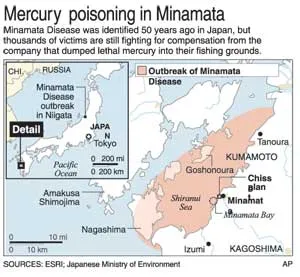
The story of the poisonings starts in several small fishing villages on the edge of Minamata, Japan, on the coast of Minamata Bay. Minamata disease is methylmercury poisoning that leads to neurological symptoms.1 The condition develops after a person has been eating heavily contaminated seafood daily. It was first discovered in 1956, caused by Chisso Corporation's Chemical factory discharging industrial wastewater containing methyl mercury into Minamata bay. This highly toxic chemical bioaccumulated and biomagnified in shellfish and fish, which, when eaten by the local population, resulted in mercury poisoning.
Incident 5- Prithvi Mahabhuta
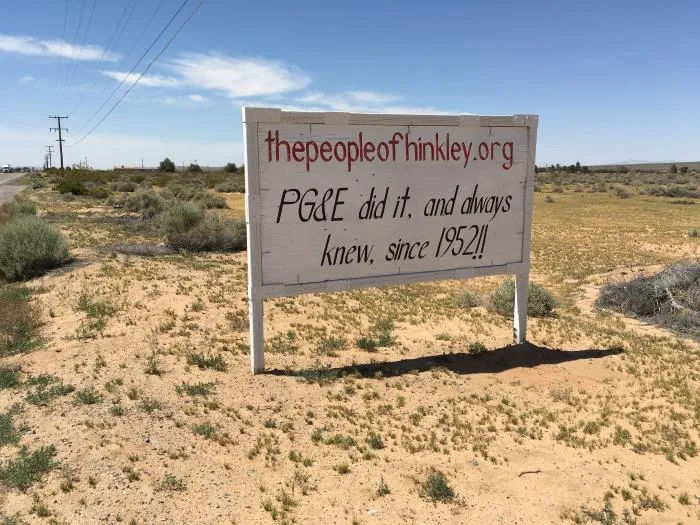
From 1952 to 1966, Pacific Gas and Electric Company (PG&E) dumped about 370 million U.S. gallons (1.4×10⁹ liters) of chromium-tainted wastewater into unlined wastewater spreading ponds around the town of Hinkley, California, located in the Mojave Desert about 120 miles (190 kilometers) north-northeast of Los Angeles.[1][2]
PG&E used chromium 6, or hexavalent chromium (a cheap and efficient rust suppressor), in its compressor station for natural-gas transmission pipelines.[1][3] Hexavalent chromium compounds are genotoxic carcinogens. It leads to cancers of GIT, brain, kidney, uterus, mammary gland, birth defects, and poisoning.
CONCLUSION
Above mentioned incidents showcase that our actions for progress are affecting harmony and equilibrium in the universe. Few can be corrected by formulating the policies like Montreal Protocol 1987 Global agreement, which bans the production of CFCs, halons, and other ozone-depleting chemicals.[6] Over time, scientists have developed new refrigerants with lower global warming potential (GWP) to replace older ones. For example, in new automobiles, R-1234yf systems are now common, being chosen over refrigerants with much higher GWP such as R-134a and R-12. But for rest of cases only damage control and compensation, rehabilitation was provided. Is this the way we want our progress??
Conscious of the unique capacity of human beings to reflect upon their own existence and on their environment, to perceive injustice, to avoid danger, to assume responsibility, to seek cooperation and to exhibit the moral sense that gives expression to ethical principles,
Reflecting on the rapid developments in science and technology, which increasingly affect our understanding of life and life itself, resulting in a strong demand for a global response to the ethical implications of such developments,
Recognizing that ethical issues raised by the rapid advances in science and their technological applications should be examined with due respect to the dignity of the human person and universal respect for, and observance of, human rights and fundamental freedoms,
Resolving that it is necessary and timely for the international community to state universal principles that will provide a foundation for humanity’s response to the ever-increasing dilemmas and controversies that science and technology present for humankind and for the environment.
REFERENCES

Ashwini Bhele*, Vaishnavi Dole, Time To Reconsider Environmental Protection, Biosphere And Biodiversity – A Case Based Review, Int. J. Sci. R. Tech., 2026, 3 (8), 165-169. https://doi.org/10.5281/zenodo.21805872
 10.5281/zenodo.21805872