

We use cookies to ensure our website works properly and to personalise your experience. Cookies policy
1Department of Medicine, King George’s Medical College, Shah Mina Road, Chowk, Lucknow, Uttar Pradesh – 226003, India
2Department of Neurology, King George’s Medical College, Shah Mina Road, Chowk, Lucknow, Uttar Pradesh – 226003, India
3Department of Rheumatology, King George’s Medical College, Shah Mina Road, Chowk, Lucknow, Uttar Pradesh – 226003, India
Ischemic stroke in young adults demands a broad diagnostic search encompassing conventional vascular risk factors, arterial dissection, cardioembolism, thrombophilia, autoimmune vasculitis, monogenic vasculopathies, and infection. Scrub typhus, caused by Orientia tsutsugamushi, typically presents with fever and thrombocytopenia and, in severe disease, may progress to multi-organ dysfunction; central nervous system involvement more commonly manifests as meningoencephalitis, cranial neuropathies, or cerebellitis, while vasculitis-mediated stroke remains a rare but under-recognized presentation. A 23-year-old previously healthy woman presented with a one-month history of intermittent high-grade fever, followed by bilateral pretibial hyperpigmented skin lesions, pedal edema, and sudden-onset right-sided weakness. MRI brain revealed multiple acute infarcts involving the left corona radiata, frontal lobe, and parasagittal region, with normal MR angiography. Nerve-conduction studies showed predominantly motor axonal neuropathy, indicating simultaneous central and peripheral nervous system involvement. Extensive evaluation for autoimmune vasculitis, antiphospholipid syndrome, cardioembolic sources, and adenosine deaminase 2 deficiency (DADA2) was unrevealing. Scrub typhus IgM ELISA was positive, and doxycycline therapy produced rapid defervescence, regression of skin lesions, and marked neurological recovery—supporting a unifying endothelial-inflammatory mechanism linking the cerebral, cutaneous, and peripheral nerve findings.Scrub typhus can closely mimic systemic vasculitis in young patients presenting with stroke, fever, and rash, and should be considered even in the absence of a classic eschar. A structured, phenotype-guided approach—integrating neuroimaging, cardiac and thrombotic evaluation, autoimmune screening, targeted genetic testing, and infectious work-up—helps identify treatable infectious mimics, avoid unnecessary immunosuppression, and improve neurological outcomes, particularly in endemic settings.
Stroke in young adults is uncommon relative to older age groups but has a broad differential diagnosis. Contemporary reviews define young adult stroke broadly as 18–49 years and emphasize that evaluation must extend beyond conventional vascular risk factors to cervical dissection, cardioembolism, patent foramen ovale, thrombophilia, vasculitis/vasculopathy, infection, pregnancy-related states, drugs and monogenic disorders [1,2]. This case illustrates the diagnostic difficulty when fever, inflammatory skin lesions and peripheral neuropathy accompany ischemic stroke. The final diagnosis was scrub typhus, an infectious vasculitic mimic, and the case provides a practical approach to young-onset stroke in an endemic setting.
Case Report
A previously healthy 23-year-old woman with no known chronic medical illness was evaluated for acute ischemic stroke in the context of a one-month febrile illness. One month back, she developed fever and malaise, followed by multiple non-pruritic, hyperpigmented, maculopapular lesions over both pretibial regions after 10 days of fever. She also complained of bilateral pedal edema but there was no history of breathlessness or decreased urine output. With these complaints she visited a nearby hospital after 2 weeks of febrile period. However during this course of hospital stay, she developed sudden-onset weakness of the right upper and lower limbs. There was no loss of consciousness, seizures, visual disturbance, or bowel/bladder involvement involvement. Patient was given IV antibiotics and supportive treatment and fever subsided within a week. During this hospital stay of 10 days weakness partially improved but persisted. The initial CT brain at the referring hospital showed a left parietal hypodensity. MRI brain demonstrated multiple acute infarcts involving the left corona radiata, frontal lobe and parasagittal region as shown in Fig1.
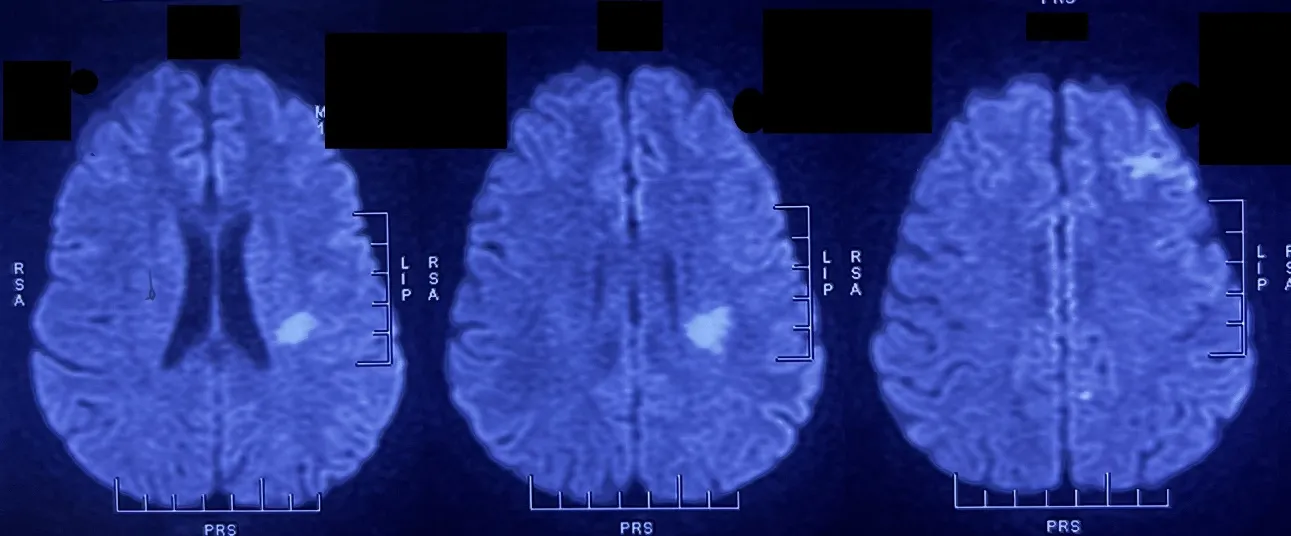
Figure 1: MRI brain demonstrating multiple acute infarcts involving the left corona radiate and frontal lobe
The patient was then referred to our tertiary center for further evaluation. There was no history of malar rash, joint pain, alopecia, or oral ulcer suggesting lupus vasculitis. However skin assessment revealed faded hyperpigmented maculopapular lesions on both pretibial areas .On examination, she was hemodynamically stable and afebrile. Neurological assessment showed residual right hemiparesis with approximately 4/5 strength, brisk deep tendon reflexes on the affected side, and an extensor plantar response. Sensory and cerebellar findings were normal. Her higher mental functions and speech remained intact. Patient was not having atrial fibrillation and no murmur was present on cardiac examination, and there were no signs suggestive of endocarditis, such as pallor, splenomegaly, splinter hemorrhages, Janeway lesions, or Osler nodes to rule out cardio-embolic stroke. We suspected small to medium vessel vasculitis or an autoimmune disease as the cause of stroke with rash in this young patient.
MR angiography showed normal intracranial arteries without stenosis, aneurysm or vessel-wall irregularity as shown in figure 2. Nerve-conduction studies demonstrated a predominantly motor axonal neuropathy, supporting simultaneous central and peripheral nervous system involvement.
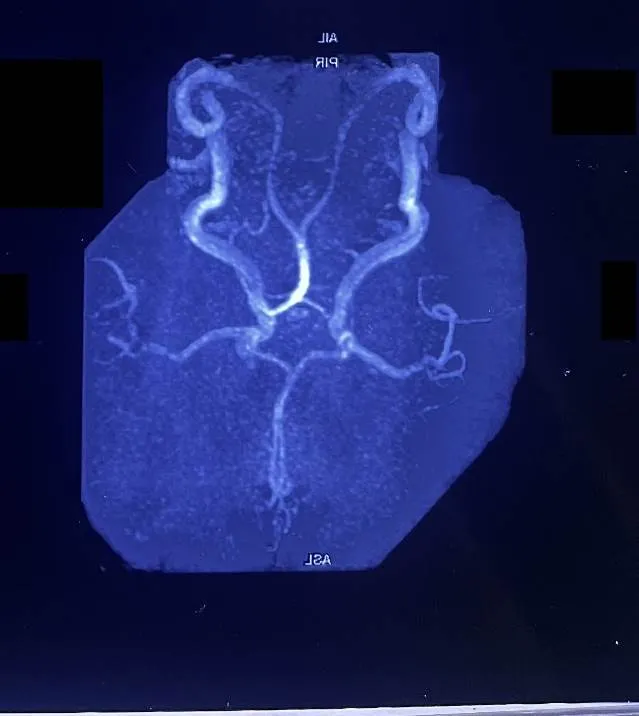
Figure 2: MR angiography showing normal intracranial arteries without stenosis, aneurysm or vessel-wall irregularity
Cardioembolic evaluation was unrevealing: ECG, transthoracic echocardiography and carotid Doppler ultrasonography were normal. Laboratory testing showed mild normocytic anemia and transient neutrophilic leucocytosis; renal and liver function remained normal. Inflammatory markers were elevated, with CRP subsequently declining during the clinical course. Autoimmune testing showed low-titre fine-speckled ANA positivity but a negative ENA profile. MPO-ANCA, PR3-ANCA, lupus anticoagulant, anticardiolipin antibodies, anti-β2-glycoprotein I antibodies, cryoglobulins and complement levels were unremarkable. HIV, hepatitis B and hepatitis C serology were negative. The complete investigation profile is presented in Table 1, which demonstrates the broad exclusion of cardioembolic, autoimmune, thrombotic, large-vessel and genetic causes.
|
Investigation |
Result |
Interpretation |
|
Complete blood count |
Mild normocytic anaemia with transient neutrophilic leukocytosis |
Consistent with inflammatory illness |
|
Renal function tests |
Within normal limits |
No renal involvement |
|
Liver function tests |
Within normal limits |
No hepatic dysfunction |
|
ECG |
Normal |
Cardioembolic source unlikely |
|
HIV, HBsAg, anti-HCV |
Negative |
Viral infections excluded |
|
ANA |
Low-titre fine-speckled positivity |
Non-specific finding |
|
ENA profile |
Negative |
Connective-tissue disease unlikely |
|
MPO-ANCA |
Negative |
ANCA-associated vasculitis unlikely |
|
PR3-ANCA |
Negative |
ANCA-associated vasculitis unlikely |
|
Lupus anticoagulant |
Negative |
Antiphospholipid syndrome unlikely |
|
Anticardiolipin antibody |
Negative |
Antiphospholipid syndrome unlikely |
|
Anti-β2 glycoprotein I antibody |
Negative |
Antiphospholipid syndrome unlikely |
|
Complement (C3/C4) |
Normal |
Against immune-complex vasculitis |
|
Cryoglobulins |
Negative |
Cryoglobulinemic vasculitis excluded |
|
Transthoracic echocardiography |
Normal |
Structural heart disease excluded |
|
Carotid Doppler |
Normal |
Large-vessel disease excluded |
|
MRI brain |
Acute infarcts involving the left corona radiata, frontal lobe and parasagittal region |
Acute ischemic stroke |
|
MR angiography |
Normal intracranial circulation |
No large-vessel vasculitis |
|
Nerve-conduction study |
Predominantly motor axonal neuropathy |
Peripheral nervous-system involvement |
|
ADA2 gene sequencing |
No pathogenic variant detected |
DADA2 excluded |
|
Scrub typhus IgM ELISA |
Positive |
Confirmatory diagnosis in the clinical context |
Table 1. Summary of investigations
Given the combination of young-onset stroke, inflammatory skin lesions, recurrent fever, peripheral neuropathy, and family history, a systemic or monogenic vasculopathy was suspected, prompting consideration of adenosine deaminase 2 deficiency (DADA2). Targeted ADA2 gene sequencing detected no pathogenic variant.
As all the above workup we were inconclusive of cause of stroke in this young patient and taking significant past history of fever in this tropical country we suspected of tropical infection like scrub and leptospirosis. Scrub typhus IgM ELISA test came back positive, confirming a diagnosis of Orientia tsutsugamushi infection affecting systemic endothelium.
DISCUSSION
Scrub typhus most commonly presents with fever and thrombocytopenia, and in more severe or advanced disease, it can progress to a multi-organ dysfunction syndrome (MODS) involving the lungs, liver, kidneys, and cardiovascular system, reflecting the widespread endothelial damage caused by the organism. When the central nervous system is involved, the typical modes of presentation include aseptic meningitis, meningoencephalitis, cranial neuropathies, or cerebellitis. A vasculitic process leading to overt stroke is a considerably rarer manifestation, which is precisely what makes this pathway important to recognize rather than overlook. The biological basis for this rare presentation lies in the behavior of Orientia tsutsugamushi itself, an obligate intracellular organism with a marked preference for infecting vascular endothelial cells. Once bloodborne spread occurs, the pathogen colonizes endothelium throughout the body, provoking a vasculitis-like reaction marked by endothelial activation, infiltration of lymphocytes and histiocytes around vessel walls, and heightened capillary permeability—the same endothelial injury that underlies both the systemic organ dysfunction seen in severe cases and the neurological complications discussed below. Within the brain, this typically produces the more common syndromes noted above, but cerebrovascular injury—arising from direct endothelial damage, immune-complex-driven vasculopathy, or a transient procoagulant tendency—can, less frequently, culminate in ischemic stroke [1]. A skin eschar, although a classic clue, is often absent, and its absence should not be used to lower diagnostic suspicion. Supporting the plausibility of this vascular mechanism, a recent cohort identified twelve thromboembolic complications, one of them an ischemic stroke, among ninety-three patients with scrub typhus, indicating that the infection can drive a short-lived hypercoagulable, endothelium-centered state even though such outcomes remain uncommon overall [2]. Notably, the combination of cerebral infarction occurring alongside polyneuropathy has been reported previously, giving this particular constellation of findings a documented clinical precedent rather than making it an isolated curiosity [3].
The peripheral findings in this patient plausibly stem from the same small-vessel, endothelial-driven process rather than from a separate disease mechanism. The vasculitic-looking rash and lower-limb edema are consistent with microvascular injury and leakage in the skin and subcutaneous tissue, while the motor-predominant axonal neuropathy fits with ischemic or immune-mediated damage to the vasa nervorum supplying peripheral nerves—a feature that has been described in severe scrub typhus infection [1,3]. Rather than interpreting the cerebral infarcts, cutaneous vasculitic lesions, and neuropathy as three unrelated problems, it is more coherent to regard them as different tissue expressions of one systemic endothelial-inflammatory insult, an interpretation reinforced by the prompt clinical improvement once doxycycline was initiated. This mirrors the earlier report in which comparable neurological complications resolved with timely antirickettsial treatment, underscoring that early recognition—rather than an exhaustive diagnostic search—was the decisive factor in both cases [3].
Even so, much of this case's teaching value comes from the alternative diagnoses that had to be reasonably excluded before an infectious cause could be accepted. Young-onset stroke carries a wide and mechanistically varied differential, spanning cardioembolic sources, cervical arterial dissection, hereditary or acquired hypercoagulable states, and monogenic vasculopathies such as ADA2 deficiency, each of which needed to be worked through before the infectious explanation could be considered secure [4,5,6,7]. This distinction carries real clinical weight, since autoimmune vasculitis and an infectious mimic like scrub typhus can present in an almost indistinguishable manner—fever, rash, and stroke—yet demand opposite therapeutic responses: immunosuppression aimed at vasculitis risks worsening an unrecognized infection, while missing a genuine autoimmune or monogenic vasculopathy delays the specific treatment it requires [8,7,9]. Consequently, the most dependable approach to young-onset stroke with systemic features is not simply to request every available test simultaneously, but to move through vascular confirmation, cardiac and thrombotic assessment, autoimmune and genetic evaluation, and infectious screening in a logical, phenotype-guided sequence [4,5,8,9].
CONCLUSION
This case highlights that in young-onset stroke, especially in endemic areas, infection should be considered alongside autoimmune, thrombotic, cardioembolic, vascular, and genetic factors. Fever and multisystem inflammatory signs are key diagnostic clues rather than incidental findings. Employing a structured, phenotype-driven approach can help detect treatable infectious mimics, prevent unnecessary immunosuppression, and enhance neurological outcomes.
REFERENCES





Satyendra Kumar Sonkar1*, Bhawana Lalwani1, Pranjal Gulati1, Ravi Uniyal2, Arjun Bal K. P.2, Urmila Dhakad3, Young-Onset Ischemic Stroke With Fever, Vasculitic Rash, And Motor Axonal Neuropathy: An Unusual Presentation Of Scrub Typhus., Int. J. Sci. R. Tech., 2026, 3 (9), 410-415. https://doi.org/10.5281/zenodo.22899323
 10.5281/zenodo.22899323