

We use cookies to ensure our website works properly and to personalise your experience. Cookies policy
Shri. Gurudatta Shikshan Prasarak Sanstha’s Institute of Pharmacy, Akola
The pharmaceutical industry is experiencing a major transformation with regard to the use of Artificial Intelligence (AI) and Industry 4.0. This is an important phase, in which the industry moves from conventional production processes to advanced ones. Utilization of modern technologies such as machine learning and computer vision in the production process helps to increase the quality of the product due to constant monitoring and analytics. Besides, the use of AI helps to achieve a higher degree of regulatory compliance, makes it possible to make decisions based on data, and provides cost savings thanks to reduced waste. In conjunction with advanced sensors, modern technologies can also provide for automatic control of the entire production process. However, deployment of these solutions on the international level faces certain difficulties. The key obstacles are represented by rigorous data validation, testing of models, increased cybersecurity risks, and regulatory resistance. Also, there is a need to upgrade the current pharmaceutical workforce to work with these digital platforms. This article analyzes in detail the roles of AI, its implementation in the pharmaceutical industry and the key innovative technologies used. The major barriers to implementing AI technology in the pharmaceutical industry are discussed in the article.
Tablets still remain the most common pharmaceutical dosage form due to their low cost of production, stability, easy administration, and patient compliance. The demand for quality drugs has necessitated the development of manufacturing processes that guarantee constant product quality while conforming to strict regulatory guidelines. Tablet compression and coating are two important manufacturing processes which determine the quality of the tablets in terms of hardness, weight distribution, dissolution and coating characteristics[1,2,3].
Pharmaceutical manufacturing technology has moved from traditional batch manufacturing to integrated manufacturing systems. Batch manufacturing used end product testing for quality control which meant that process variations were detected late, there was wastage of material, and limited manufacturing flexibility. Such challenges have increased the pace at which new manufacturing technologies are being developed[2,4,5].
The arrival of Pharma 4.0 which relies on the concept of Industry 4.0 has revolutionized pharmaceutical manufacturing through the incorporation of Artificial Intelligence (AI), Machine Learning (ML), the Internet of Things (IoT), cloud computing, cyber physical system, big data analysis, robotics, and digital twins technology. Such technological innovations allow for real-time monitoring, intelligent process control, and continuous data collection through QbD, PAT, and continuous manufacturing[4,5,6,7].
In particular, among all these technologies, AI is one of the major drivers of intelligent pharmaceutical manufacturing. AI algorithm can analyze complex manufacturing data to predict and optimize the critical process parameters including compression force, tablet weight, fill depth, punch displacement, tablet hardness, and coating. AI facilitates PAT through continuous monitoring and decision- making[8,9,10].
Predictive manufacturing is another major breakthrough in which AI and data analytics technologies predict the deviations in the process, decrease the equipment downtime, prevent wastage of resources, and enhance production efficiency. In this case, the digital twin technology makes virtual copies of the manufacturing process enabling real-time simulation and optimization of the process without halting it[11,12,13].
Nevertheless, despite its many benefits, there are certain barriers that limit the use of Pharma 4.0, including the high cost of investment, cybersecurity issues, regulatory approval, data quality problems, and the need for qualified professionals. This article provides an overview of the development of pharmaceutical manufacturing, the concept of Pharma 4.0, AI, machine learning, PAT, digital twins, and predictive manufacturing, as well as the current status and future perspectives of AI-driven Tableting 4.0[14,15,16].
Conventional Manufacturing Processes
(Batch Processing, Manual Control)
↓
Automation Period
(Control by PLC Systems)
↓
Industry 3.0
(Mechanization by Computerization)
↓
Industry 4.0
(IoT, Big Data, Cloud Technology)
↓
AI-Driven Tableting 4.0
(Predictive Manufacturing, Digital Twins, Real-time Optimization)
Figure 1. Evolution of pharmaceutical manufacturing from traditional batch processing to AI-driven Tableting 4.0
|
Parameter |
Conventional Manufacturing |
AI-Driven Manufacturing |
|
Process Monitoring |
Periodic |
Continuous Real-Time |
|
Quality Control |
End-product testing |
Predictive Quality Assurance |
|
Decision Making |
Operator-based |
Data-driven |
|
Defect Detection |
After occurrence |
Before occurrence |
|
Process Optimization |
Manual |
Automated |
|
Production Efficiency |
Moderate |
High |
|
Waste Generation |
Higher |
Lower |
|
Manufacturing Flexibility |
Limited |
Adaptive |
Table 1. Comparison of conventional tablet manufacturing and AI-driven pharmaceutical manufacturing systems
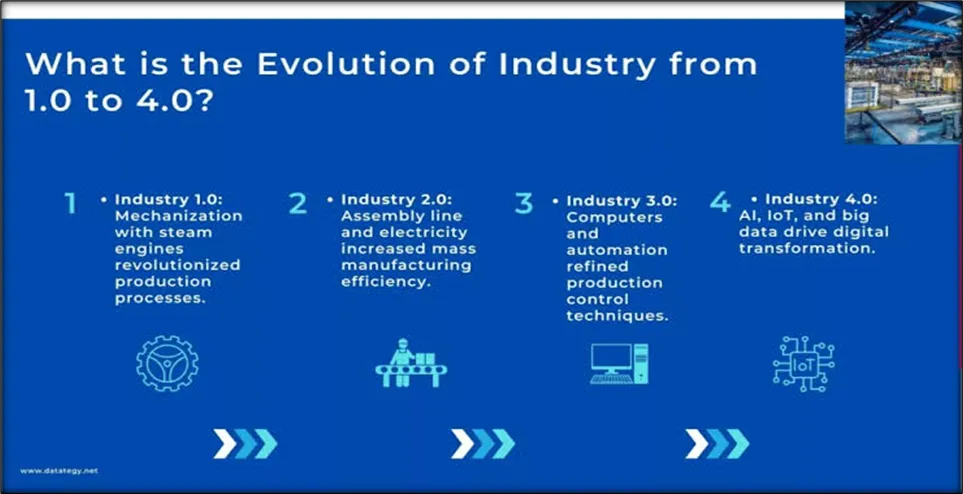
Figure 2. Evolution of Industry from 1.0 to 4.0
2. BASICS OF TABLET PRODUCTION
Tablets manufacture is one of the critical processes in the pharmaceutical industry, which leads to receiving solid dosage forms of uniform quality, safety, and efficacy. Depending on the composition, the manufacturing of the tablet involves dispensing, blending, granulating (if required), drying, milling, lubricating, compressing, coating, and packaging. Strict control of each process stage is extremely important to get the expected results [1,3,17].
2.1 Tablet Compression
Compression is the process of tablets production from powders or granulates under the mechanical action. The quality of tablets produced via this technique depends on properties of materials used and such process parameters as compression force, punch speed, and dwell time. Failure to exercise sufficient control may lead to several tablet defects, including capping, lamination, sticking, and weight variation, etc [17,18,19,20].
2.2 Tablet Coating
The goal of tablet coating is to improve the appearance, stability, masking of the unpleasant taste, and controlled drug release of the product. Film coating is widely used because it allows producing a uniform coat with minimum weight gain. Some of the most significant coating process parameters are spray rate, inlet air temperature, atomization pressure, and pan speed [21,22,23].
2.3 Critical Quality Attributes and Manufacturing Issues
Critical Quality Attributes (CQAs) which affect the quality of the pharmaceutical tablets include hardness, friability, weight variation, dissolution, disintegration, and uniformity of content. Batch variation, equipment problems, and delayed defect detection as a result of off-line quality control measures have been some of the issues associated with conventional manufacturing methods. As a result, PAT, AI-based monitoring, and predictive manufacturing have been adopted in the manufacturing of modern pharmaceuticals [3,17,24].
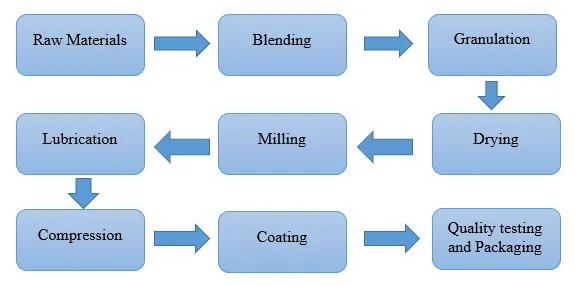
Figure 3. Basic process of Tablet Manufacturing
3. AI AND PHARMA 4.0 TECHNOLOGIES
Pharmaceutical companies are rapidly evolving through the adoption of Artificial Intelligence (AI) and Pharma 4.0 technologies in the industry. The application of such sophisticated digital tools helps increase the efficiency, accuracy, and quality of manufacturing tablets through real-time monitoring and decision-making and process automation. The combination of AI and digital technologies also enables predictive manufacturing, reduced human intervention, limited process variation, and reliable manufacturing process (8–10).
3.1 Artificial Intelligence in Pharmaceutical Manufacturing
Artificial intelligence refers to the use of computer systems that have been developed to carry out tasks like learning, reasoning, prediction, and decision making. With regards to the manufacture of pharmaceutical tablets, AI can be used to process large volumes of process data with an aim of improving the processes of compression and coating and predicting the quality of products [6,7,8,14].
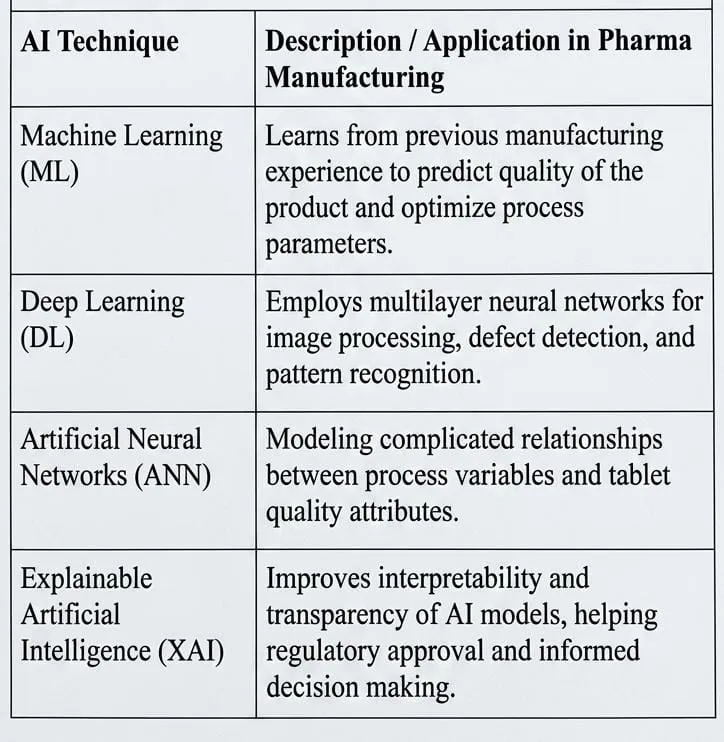
Figure 4. AI Techniques applied in Pharmaceutical Manufacturing
3.2 Pharma 4.0 Technologies
Pharma 4.0 is an application of Industry 4.0 in pharmaceutical manufacturing for creating intelligent manufacturing systems that make use of various technologies, including artificial intelligence (AI), internet of things (IoT), automation, cloud computing, and analytics. Such systems allow real-time monitoring, analysis, and decision-making based on data. Pharma 4.0 enables minimizing variability in processes, human intervention, and manufacturing mistakes. Predictive maintenance is also among other advantages of using Pharma 4.0 in manufacturing[4,5,7,13].
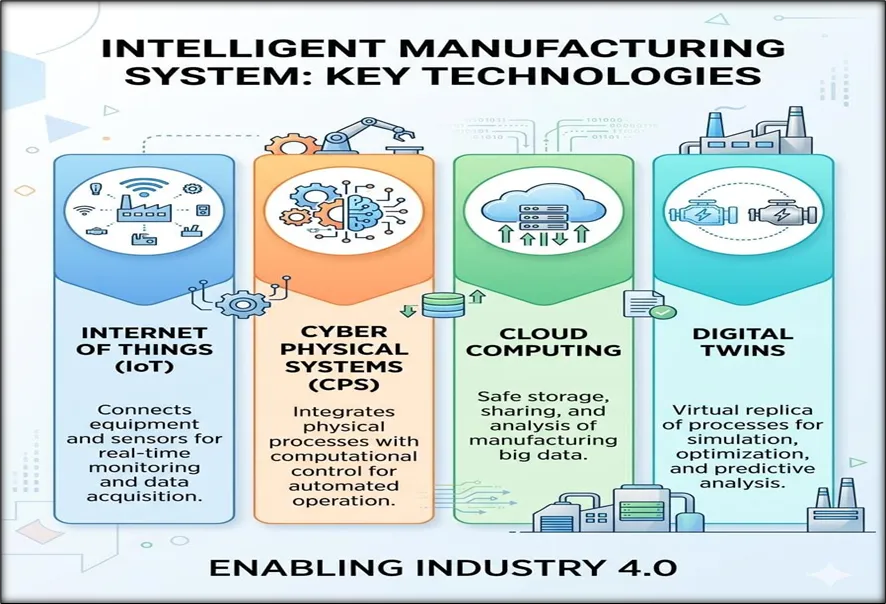
Figure 5. Key technologies of Pharma 4.0
4. AI APPLICATIONS IN TABLET COMPRESSION AND COATING
AI is being utilized extensively in the process of producing tablets to monitor processes, predict quality, detect defects, and optimize processes. AI-based models analyze the data produced through the manufacture of tablets to detect process variations to enable data-driven control of tablet compression and coating. Such practices are helpful in achieving product consistency and minimizing losses incurred during the process of manufacture.
4.1 AI in Tablet Compression
Tablet compression is the process of converting powder or granules into tablets having the necessary mechanical and quality properties. Various techniques of artificial intelligence like ML and ANN can be used to study the process parameters such as compression force, punch speed, dwell time, and powder properties to predict the quality of the tablet. It will help in controlling tablet hardness, weight variability, friability, dissolution, and minimize problems like capping, lamination, sticking, and weight variation [9,10,18,19,20,24,25,26].
|
AI Application |
Purpose |
Outcome |
|
Hardness Prediction |
Estimate tablet strength |
Improved quality consistency |
|
Defect Detection |
Identify capping and lamination |
Reduced batch failures |
|
Process Optimization |
Adjust compression parameters |
Enhanced efficiency |
|
Real-Time Monitoring |
Continuous process control |
Better product quality |
|
Quality Prediction |
Predict critical quality attributes |
Reduced variability |
Table 2. Applications of Artificial Intelligence in Tablet Compression
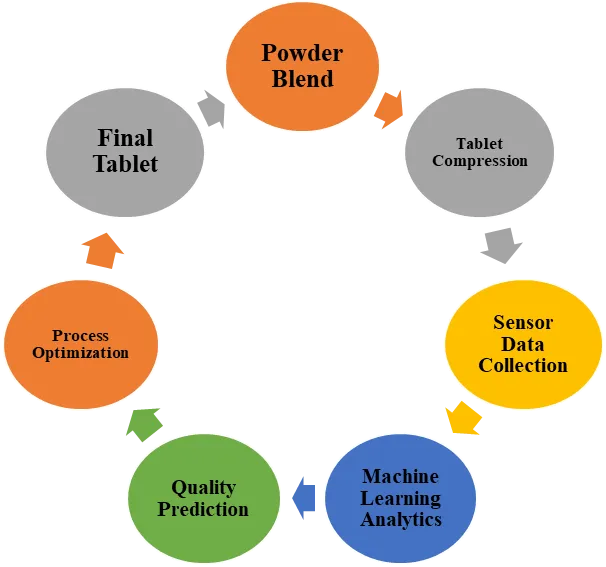
Figure 6. AI-Driven Tablet Compression Workflow
4.2 AI in Tablet Coating
Tablet coating enhances the appearance, stability, masking of taste, and drug release properties of the product. AI helps to control tablet coating parameters including spray rate, inlet air temperature, atomization pressure, pan speed, and coating thickness. ML and computer vision help enhance coating uniformity and detect defects like mottling, peeling, cracking, twinning, and poor coating [13,21,22,23,25,27].
|
AI Application |
Purpose |
Outcome |
|
Coating Thickness Prediction |
Estimate coating uniformity |
Improved product quality |
|
Spray Rate Optimization |
Control coating process |
Reduced variability |
|
Drying Process Control |
Optimize drying conditions |
Enhanced efficiency |
|
Computer Vision Inspection |
Detect coating defects |
Improved quality assurance |
|
Real-Time Monitoring |
Continuous process evaluation |
Reduced production losses |
Table 3. Applications of Artificial Intelligence in Tablet Coating
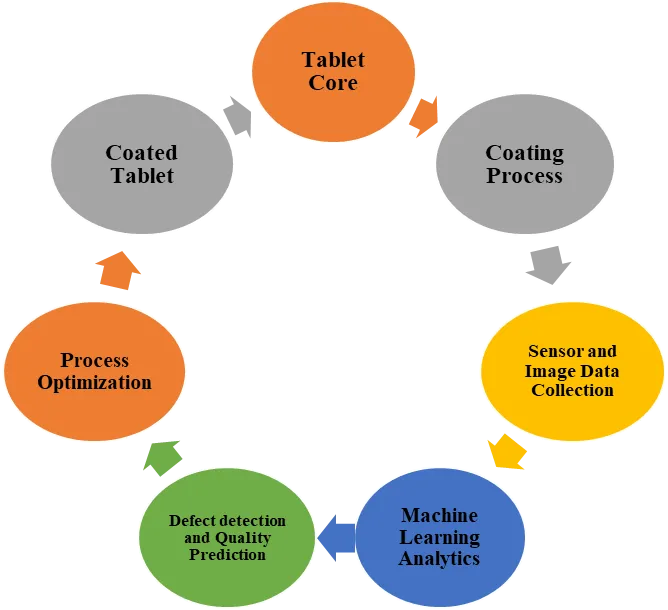
Figure 7. AI-Driven Tablet Coating Process
4.3 AI-Based Defect Detection and Predictive Maintenance
Computer vision and sensor systems based on AI technology facilitate the quick discovery of tablet defects and equipment malfunction. Computer vision is capable of detecting variations in tablet size, shape, color, and coating, whereas predictive maintenance algorithms can help recognize the precursors of malfunction by analyzing equipment performance data [13,25,27,29,30].
5. PREDICTIVE MANUFACTURING AND PROCESS ANALYTICAL TECHNOLOGY (PAT) INTEGRETION
Another component of Pharma 4.0 involving the use of AI, PAT, and data analytics is predictive manufacturing that is aimed at increasing the efficiency of pharmaceutical manufacturing process by analyzing the process data to predict quality outcomes, detect defects, and suggest solutions. Unlike the traditional process of manufacturing, the predictive manufacturing involves the analysis of process data continuously for the purpose of predicting and preventing potential defects in the production. It ensures the maximum process reliability, reduces wastage of resources, and improves quality consistency of tablets [9,10,14,29].
5.1 Process Analytical Technology (PAT)
Process Analytical Technology (PAT), which was developed by the FDA (Food and Drug Administration) of the US is a technology for the design, analysis and control of the manufacturing process of pharmaceuticals using the measuring of CPPs (Critical Process Parameters) and CQAs (Critical Quality Attributes). PAT allows continuous monitoring of the processes of compression and coating of the tablet without testing the final product [12].
|
PAT TOOLS |
APPLICATIONS OF PAT TOOLS IN TABLET MANUFACTURING |
|
Near-Infrared (NIR) Spectroscopy |
Measures blend uniformity, moisture content, and content uniformity [21,22,28]. |
|
Raman Spectroscopy |
Identifies raw materials and measures coating thickness and chemical composition[23,28]. |
|
Machine Vision Systems . |
Detects tablet defects, coating uniformity, color variation, and surface imperfections[13,25]. |
|
Acoustic and Force Sensors |
Measures compression force and performance of equipment[18,19,24]. |
Table 4. PAT Tools and its Applications in Tablet Manufacturing
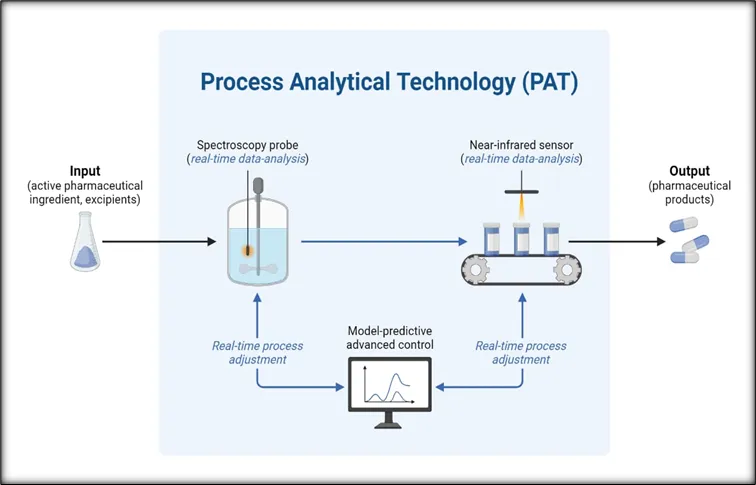
Figure 8. PAT Process Workflow
5.2 AI-Driven Predictive Manufacturing
AI is able to help in PAT through analysis of large amounts of data in real time as well as prediction of process outcomes even before the quality defects appear. Machine Learning helps in detecting the connections between the parameters of the process and the quality of tablets and helps in optimization of the process. This makes the production more efficient, prevents batch failures and allows for continuous manufacturing and Real-Time Release Testing [9,10,11,14].
Thus, by using these two technologies together, the pharmaceutical industry can make a shift from quality control to quality assurance. Thus, tablet production process becomes more reliable and robust.
The Digital Twin technology is one of the innovations in the Pharma 4.0 system that offers visualization of the tablet manufacturing process on a virtual level. With the use of Digital Twins, process information in real time is studied using AI and tablet compression and coating is modeled, monitored, and optimized without interruption of the process [11,30,31].
Artificial Intelligence helps the Quality by Design (QbD) concept work better because of the analysis of correlations between Critical Material Attributes (CMAs), Critical Process Parameters (CPPs), and Critical Quality Attributes (CQAs). With AI-QbD, formulation and process parameter optimization can be performed along with prediction of the quality outcome and maintenance of consistency of the product being manufactured [3,14,32].

Figure 9. Digital Twin Driven Framework for Continuous Tablet Manufacturing and Quality Prediction
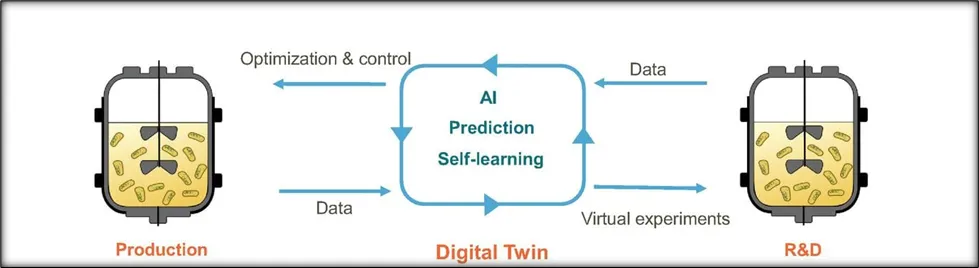
Figure 10. AI- Driven Digital Twin Framework for Predictive Manufacturing in Tableting 4.0
|
Sr. No. |
Advantages |
Disadvantages |
|
1. |
Enables real-time monitoring and control of compression and coating processes. |
High initial investment in AI systems, sensors, and infrastructure. |
|
2. |
Predicts equipment failures and supports predictive maintenance. |
Requires large volumes of high-quality process data for reliable predictions. |
|
3. |
Improves detection of tablet defects and coating irregularities. |
Integration with existing manufacturing equipment can be complex. |
|
4. |
Optimizes process parameters such as compression force, speed, temperature, and coating conditions. |
Skilled personnel are required to develop, operate, and maintain AI-based systems. |
|
5. |
Reduces batch-to-batch variability and improves product consistency. |
Poor-quality or biased data can lead to inaccurate predictions. |
|
6. |
Minimizes material waste, production downtime, and manufacturing costs. |
Cybersecurity and data privacy risks may increase with connected systems. |
|
7. |
Supports faster identification and correction of process deviations. |
AI models require continuous validation and updating to maintain accuracy. |
|
8. |
Enhances product quality and supports regulatory compliance through data-driven monitoring. |
Lack of standardized AI frameworks may create regulatory challenges. |
|
9. |
Enables predictive manufacturing and more efficient production planning. |
Dependence on digital systems may create operational difficulties during system failures. |
|
10. |
Improves overall process efficiency, productivity, and scalability. |
Implementation may be challenging for small-scale pharmaceutical manufacturers[7,8,14,15,16,29]. |
Autonomous manufacturing, Generative AI, robotics, and digital twins will shape the future of AI-driven Tableting 4.0 and help optimize the process and predict the results of tablet compression and coating to create an effective manufacturing process. The further integration of Artificial Intelligence in conjunction with the Pharma 4.0 technologies such as Process Analytical Technology (PAT), Internet of Things (IoT), cloud computing, AI-QbD, and continuous manufacturing will allow building smart pharmaceutical factories with minimum human interference. The explainable artificial intelligence (XAI) will help in creating more transparent and acceptable manufacturing systems. With the development of the digital infrastructure and regulation, AI-driven pharmaceutical manufacturing is likely to become more sustainable, flexible, and patient-centered. The future improvements will help to decrease the cost of production and minimize waste, improve product quality and move towards an intelligent manufacturing process [2,5,22,31,32].
CONCLUSION
Artificial Intelligence has proved to be a revolutionary technology in the manufacture of pharmaceutical tablets by transforming the way tableting and coating operations are carried out via predictive analytics, machine learning and process monitoring. By adopting Pharma 4.0 technologies such as IoT, PAT, cloud computing, and digital twins, smarter and more efficient manufacturing systems have been created.AI-based systems improve process optimization, quality prediction, defect detection, predictive maintenance, and continuous manufacturing while ensuring quality by design (AI-QbD) principles are maintained. Such technologies ensure high-quality products, reduction in variability of processes, minimal waste and increased efficiency in the manufacture of pharmaceutical products. Although data quality issues, validation problems, compliance, cyber security, cost of implementation, and workforce readiness continue to pose challenges, the future looks bright as technological improvements and a favorable regulatory framework will facilitate faster uptake. AI-Driven Tableting 4.0 is one important step towards achieving autonomous and reliable pharmaceutical manufacturing.
REFERENCES









Anisha Lohiya*, Anjali Pawsale, Supriya Sawarkar, Ankita Shegokar, Pranjali Thombal, Aditi Dahapute, Anubhav Harwani, Shweta Nisang, Mohit Wadhwani, A Review On AI – Driven Tableting 4.0 : Revolutionizing Tablet Compression And Coating Through Predictive Manufacturing, Int. J. Sci. R. Tech., 2026, 3 (8), 292-304. https://doi.org/10.5281/zenodo.21860335
 10.5281/zenodo.21860335