

We use cookies to ensure our website works properly and to personalise your experience. Cookies policy
1Department of pharmaceutical technology, Brainware university, 398, Ramkrishnapur Road, Barasat, near Jagadighata Market, Kolkata, West Bengal 700125.
2Department of Pharmaceutical Chemistry, Bharat Technology, Uluberia, Howrah-711316, West Bengal, India.
3BCDA College of Pharmacy and Technology, 78, Jessore Rd, South, Hridaypur, Barasat, Kolkata, West Bengal- 700127, India.
4Vidyasagar Pharmaceutical College of Education, Narapati Para, Simurali, Chakdaha, Nadia 741248, West Bengal, India.
5Faculty of Medical Science and Research, Sai Nath University, Ranchi, Jharkhand-835219, India.
Microwave-assisted organic synthesis (MAOS) has been an effective technology to speed up drug discovery and development. This method uses microwave energy to heat the chemical reactions, and in this way, the reaction time is dramatically shortened to hours or days. And in most cases, yields and purity are also boosted. This review will discuss the underlying concepts of MAOS, its practical uses in the synthesis of pharmaceutically significant molecules, how it can be used in conjunction with green chemistry objectives, and the limitations that currently prevent its broader use. This technology has been beneficial to key classes of drugs such as quinolones, imidazoles, benzimidazoles, and triazoles. Although the industrial-scale scalability of MAOS is still constrained, MAOS is an important innovation in the synthetic chemistry field and continues to be actively developed in pharmaceutical sciences.
One of the most time-consuming and expensive activities of contemporary science is the discovery and development of new pharmaceutical compounds. A single new drug can take 10–15 years to move from initial synthesis in the laboratory to approval for patient use, with a large part of this time dedicated to chemical synthesis and optimization of drug candidates. Although well-established, traditional ways of organic synthesis may need long reaction times, high temperatures, and extensive uses of solvents, all of which are limiting to efficiency and sustainability.
Microwave-assisted organic synthesis (MAOS) has become a popular topic in recent decades because it is a technique that can accelerate chemical reactions dramatically. With microwave radiation, chemists are able to run reactions in a few minutes, instead of hours, with lower quantities of undesired side products by transferring energy directly to the molecules. The technique has developed since its initial descriptions in 1986, by Gedye and Giguere and colleagues, and is now recognized as a respected instrument in academic and commercial pharmaceutical research across the globe [1,2].
The purpose of this review is to present a concise and accessible overview of MAOS in drug discovery. We explain the fundamentals of the mechanism of action of microwave energy to drive the chemical reaction; compare MAOS with conventional heating techniques; discuss special cases of pharmaceutically relevant compounds synthesized by the method; explain how the method fits into the principles of green chemistry; and outline the challenges that remain before MAOS can be fully adopted in large-scale pharmaceutical production.

Fig. 1: Microwave Synthesis Apparatus.
Source: https://www.researchgate.net/publication/332662327_Microwave-Assisted_Green_Chemistry_Approach
2. Principles of Microwave-Assisted Synthesis
2.1 How Microwave Heating Works
Microwave radiation is a part of the electromagnetic spectrum between radio waves and infrared light and typically has frequencies of around 2.45 GHz in laboratory equipment. In contrast to traditional heating, which achieves heating by the outside of a reaction vessel to a reaction mixture, microwave energy directly interacts with polar molecules within the reaction mixture by two important processes: dipolar polarization and ionic conduction.
In dipolar polarization, polar molecules (those with an uneven distribution of electrical charge) try to align themselves with the rapidly changing electric field generated by the microwave. This continuous movement of the molecules causes heat to be produced in the sample itself. Dissolved ions transport themselves through the solution in ionic conduction in response to the electric field, and the resulting friction produces heat as well. All these mechanisms lead to a rapid and even heating of the entire reaction mixture when stored together—a phenomenon that cannot be attained with traditional oil baths or heating mantles [3].
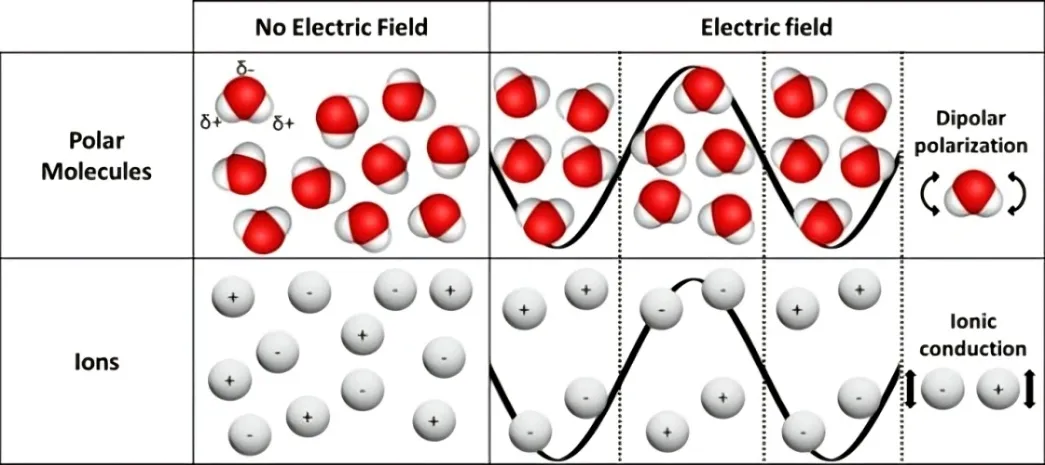
Fig. 2: Schematic diagram of (a) dipolar polarization and (b) ionic conduction mechanisms under microwave irradiation.
Source: https://www.researchgate.net/publication/344040382_Microwave-Assisted_Synthesis_of_Covalent_Organic_Frameworks_A_Review
2.2 The "Microwave Effect"
A much-debated topic in the field is whether microwaves produce effects beyond simple rapid heating—often called "specific microwave effects" or "non-thermal microwave effects" [4]. Other scientists have found that some reactions run quicker or produce other products in the presence of the microwave at the same temperature as conventional heating, indicating that the electromagnetic field itself can also affect reaction mechanisms. Recent scientific consensus, however, has largely credited the perceived advantages to the rapidity and consistency of heating and no special electromagnetic action. This remains an area of active research and healthy scientific discussion.
3. Microwave vs. Conventional Synthesis: A Comparison
To appreciate the advantages of MAOS, it is useful to compare it directly with conventional heating techniques. Table 1 summarizes the key differences between these two approaches across several important parameters [5].
|
Feature |
Conventional Heating |
Microwave-Assisted Synthesis |
|
Reaction Time |
Hours to days |
Minutes to hours |
|
Energy Efficiency |
Low (heat loss to environment) |
High (direct molecular heating) |
|
Temperature Control |
Difficult; uneven heating |
Precise and reproducible |
|
Yield |
Variable; often lower |
Generally higher |
|
By-product Formation |
More common |
Reduced |
|
Scalability |
Easier at large scale |
Challenging at industrial scale |
|
Solvent Use |
High volumes required |
Often solvent-free or reduced |
|
Equipment Cost |
Low |
Moderate to high |
Table 1. Comparison of Conventional Heating and Microwave-Assisted Synthesis
As shown in Table 1, MAOS offers several practical advantages in a drug discovery context. The ability to screen multiple reaction conditions rapidly is a process called reaction optimization. It is particularly valuable in medicinal chemistry, where chemists must evaluate dozens or even hundreds of chemical variants of a drug candidate in a short time.

Fig. 3: Comparison between conventional and microwave-assisted heating methods: (a) conventional heating leads to non-uniform temperature distribution due to heat transfer from the vessel walls, whereas (b) microwave heating provides rapid and uniform volumetric heating through direct interaction with the reaction mixture
Source: https://iopscience.iop.org/article/10.1149/2162-8777/ac255d
|
Compound synthesized |
Reaction time: microwave |
Reactional time: conventional |
|
Methyl benzoate |
5 minutes |
8 hours |
|
4-nitrobenzyl ester |
2 minutes |
1.5 hours |
|
Zeolite synthesis |
30 seconds |
60 minutes |
|
Cubanite |
3minutes |
3 days |
|
NaAIH4 |
2 hours |
8 hours |
|
CuBI2O4 |
5 minutes |
18 hours |
|
Ag3In |
2 minutes |
48 hours |
Table 2: Comparison of reaction time using microwave verses conventional heating [6].
4. Applications in Drug Discovery
4.1 Synthesis of Heterocyclic Drug Scaffolds
Most of the approved drugs contain heterocyclic rings—ring structures that have at least one atom not carbon, e.g., nitrogen, oxygen, or sulfur. These rings play the central role in the capacity of a drug to interact with biological targets: enzymes, receptors, or DNA. The use of MAOS has been particularly successful in the development of these complex ring systems.
Quinolones and fluoroquinolones are a group of commonly used antibacterial agents, which are conventionally synthesized in a multi-step procedure with high temperatures and long reaction times. A number of studies have shown that MAOS can decrease the synthesis period of fluoroquinolone intermediates from 6-12 hours to 15-30 minutes while maintaining or improving chemical yields [7]. Likewise, such imidazoles as benzimidazoles, which are used in the treatment of fungal infections as well as cancer, have been produced effectively in microwave conditions by condensation and cyclodehydration reactions [8].
Table 3. shows some selected examples of drug classes onto which MAOS has been successfully used, including the type of chemical transformation that occurred and the therapeutic area it covers.
|
Drug Class |
Reaction Type |
Time Saved |
Therapeutic Application |
|
Quinolones |
Cyclization |
~80% reduction |
Antibacterial [9] |
|
Imidazoles |
Condensation |
~70% reduction |
Antifungal, Antiparasitic [10] |
|
Benzimidazoles |
Cyclodehydration |
~85% reduction |
Antiparasitic, Anti-cancer [11] |
|
Pyrimidines |
Biginelli reaction |
~75% reduction |
Antiviral, Anticancer [12] |
|
Oxazolidinones |
Coupling reaction |
~65% reduction |
Antibacterial (e.g., linezolid) [13] |
|
Triazoles |
Click chemistry |
~90% reduction |
Antifungal, Anticancer [14] |
Table 3: Examples of Pharmaceutically Relevant Compounds Synthesized via MAOS
Note: Time reduction percentages are approximate estimates based on reported literature comparisons between microwave and conventional synthesis protocols. They vary depending on specific reaction conditions and substrates used.
Some of the microwave-assisted organic synthesis reactions are given below:

Fig. 4: Synthesis of pyridocarbazoles

Fig. 5: Synthesis of pyrazoles
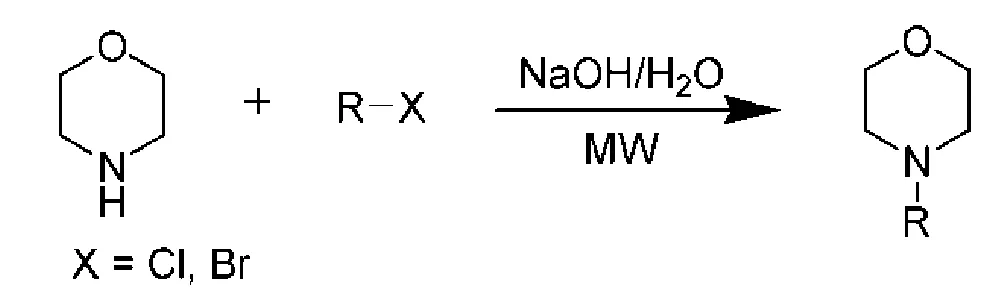
Fig. 6: NaOH-Catalyzed N-Alkylation in Water Using MW Irradiation

Fig. 7: Synthesis of Benzoic acid through oxidation of toluene using MW Irradiation
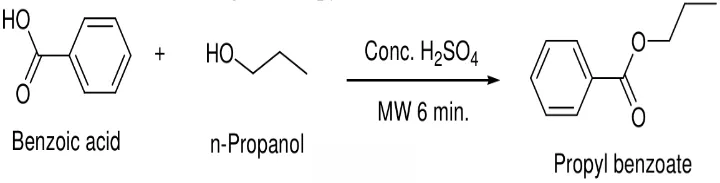
Fig 8: Synthesis of Propyl benzoate through esterification using MW Irradiation
4.2 Multicomponent Reactions
One the most powerful uses of MAOS in drug discovery in multicomponent reactions (MCRs) where three or more starting materials are reacted together in a single step to produce a complex product. An example is the Biginelli reaction, which yields dihydropyrimidines (antihypertensive and antiviral) by the reaction of an aldehyde, urea, and ethyl acetoacetate. In normal circumstances, this reaction may require 12-48 hours. When in microwave conditions, it can be done in less than 30 minutes with high yield [18].
Similarly, the Hantzsch reaction in the synthesis of dihydropyridines, which find application in cardiovascular medicine, is also microwave accelerated. The Ugi reaction (to generate peptidomimetics) and the Gewald reaction (to generate thienopyridines) have been scaled to microwave conditions to enable quicker library generation during medicinal chemistry programs [19].
4.3 Click Chemistry
The copper-catalyzed azide-alkyne cycloaddition (CuAAC) reaction, widely known as click chemistry, has become a pillar of contemporary drug discovery to assemble drug-like molecules containing triazole linkages rapidly. This reaction is highly compatible with microwave conditions, and reported reaction times have dropped from several hours to under 10 minutes in many cases. Triazole-based compounds have exhibited activity against fungi, bacteria, and various cancers, and click chemistry under MAOS conditions is a significant approach to the synthesis of novel drug candidates [20].
5. Green Chemistry Considerations
Green chemistry is a scientific philosophy that seeks to develop chemical processes to reduce waste, to lower energy consumption, to eliminate dangerous substances, and to enhance efficiency. MAOS is consistent with most of the twelve principles of green chemistry stated by Anastas and Warner.
Since microwave heating is more efficient and quicker, less energy is consumed in operating a reaction than when heating it conventionally over the same time period. A large number of MAOS protocols also employ smaller amounts of solvent or are run under solvent-free conditions, both of which minimize chemical waste and the danger of toxic exposure. Greater selectivity of microwave reactions also usually leads to the formation of fewer undesired by-products, thereby lessening the waste that has to be disposed of [21].
|
Green Metric |
Conventional Method |
Microwave Method |
Improvement |
|
Atom Economy |
Low to moderate |
Moderate to high |
Significant |
|
E-factor (waste/product) |
High (>50) |
Low to moderate (<20) |
Moderate–High |
|
Solvent Consumption |
High |
Reduced or eliminated |
High |
|
Energy Consumption |
High |
Lower |
Moderate–High |
|
Reaction Steps |
Multiple (often) |
Fewer (telescoping possible) |
Moderate |
Table 4: Green Chemistry Metrics: Conventional vs. Microwave-Assisted Synthesis
Table 4. shows that while MAOS does not perfectly satisfy every green chemistry metric, it represents a meaningful improvement over conventional methods in most areas. Continued innovation in solvent selection, catalyst design, and equipment efficiency is expected to further improve the environmental footprint of microwave chemistry.
6. Challenges and Limitations
6.1 Scale-Up Difficulties
One obstacle to the wider use of MAOS in the pharmaceutical industry, perhaps the greatest, is the challenge of scaling laboratory-scale reactions (usually in the milliliters) to the level of manufacturing (which may be in thousands of liters) [22]. The depth of microwave penetration into a sample is also limited—a few centimeters in depth normally based on frequency as well as the characteristics of the solvent or mixture. This implies that the higher the volume of a reaction is, the higher the chances of heating the outer layer of the material and keeping the inside cool. This large-scale uneven heating may result in an inconsistent quality of products and safety issues.
Flow microwave reactors—systems where the reaction mixture passes through a continuously flowing zone, exposed to microwave irradiation within a thin tube—are one promising solution to this problem. Flow systems permit the application of microwave heating to scales that otherwise would have been impractical by keeping the reaction volume small at any given time and by operating continuously so as to maintain continuous production. Several pharmaceutical companies have begun exploring this approach, though it requires significant engineering investment.
6.2 Reproducibility and Standardization
Another difficulty is that the results of various microwave instruments and laboratories vary. Different factors like the microwave power output, vessel design, stirring efficiency, and temperature measurement methods may influence the outcome of a reaction. Reproducibility and validity of processes are essential in the pharmaceutical industry, and the lack of standard procedures in MAOS can complicate the process of gaining regulatory approval. Some development is underway towards improved reporting standards and calibration procedures in microwave chemistry [23].
6.3 Safety Considerations
The use of sealed reaction vessels when microwave irradiation is applied at high pressures introduces certain safety considerations. The majority of modern microwave reactors have pressure sensors and auto shut-off systems, although chemists should be trained in their proper use. Solvents that are flammable or explosive must be treated with special care, and the change of an open to closed vessel system can necessitate a re-optimization of reaction conditions.
7. Future Directions
The future of MAOS in pharmaceutical chemistry is bright. There are a number of trends that are likely to influence the field in the next few years. First, the integration of MAOS with continuous flow chemistry represents one of the most actively pursued areas of development. Flow reactors permit automated, continuous synthesis with precise control of temperature, pressure, and residence time, and the addition of microwave heating has the potential to provide the ultimate synthesis technology.
Second, the application of MAOS together with machine learning and artificial intelligence to optimize the reaction is gaining attention. Algorithms may be trained to model the best microwave conditions for new reactions, saving time on manual trial and error experimentation. Such integration may also speed up the drug discovery process even more.
Third, solvent-free or ionic liquid-based MAOS protocols are still being developed to overcome the environmental concerns without compromising the reaction efficiency. Ionic liquids, which are salts that remain liquid at room temperature, are excellent microwave absorbers and have been used as both solvents and catalysts in pharmaceutical synthesis.
Lastly, with the price of microwave instrumentation steadily falling and more people becoming familiar with the technology in less resource-rich environments, MAOS can become more available to research institutions everywhere, and advanced synthetic options can be democratized by the developing world.
CONCLUSION
MAOS has now become a well-established and useful method in modern pharmaceutical chemistry. By enabling faster, cleaner, and often higher-yielding chemical reactions, MAOS has the potential to significantly shorten the drug discovery timeline—an urgent need in a world where diseases continue to outpace the availability of effective treatments.
While challenges remain, particularly around scale-up and standardization, ongoing technological advances are steadily addressing these limitations. The synergy between MAOS and other emerging technologies—including flow chemistry, automation, and computational tools—suggests a bright future for this approach in the pharmaceutical sciences. Medicinal chemists, process chemists, and chemical engineers all stand to benefit from continued investment in microwave chemistry research and infrastructure.
REFERENCES


Subhayan Mishra1, Shrayata Jana2, Sayan Pal3, Supriti Biswas3, Supriya Hazra4, Deep Jyoti Shah5*, Accelerating Drug Discovery: A Review Of Microwave-Assisted Organic Synthesis In Pharmaceuticals, Int. J. Sci. R. Tech., 2026, 3 (5), 1041-1048. https://doi.org/10.5281/zenodo.20427190
 10.5281/zenodo.20427190