

We use cookies to ensure our website works properly and to personalise your experience. Cookies policy
Department of Pharmaceutics, D. K. Patil Institute of Pharmacy, Loha, Nanded.
Nanosponges are emerging as a novel class of nanostructured carriers that offer significant advantages in modern drug delivery systems. These three-dimensional porous networks, commonly prepared using cyclodextrins and suitable cross-linking agents, possess the ability to encapsulate a wide range of therapeutic molecules, including hydrophilic, hydrophobic, and biomacromolecular drugs. The unique architecture of nanosponges provides enhanced drug solubility, improved stability, controlled release, and targeted delivery, thereby overcoming many limitations associated with conventional dosage forms. Recent advancements in nanosponge technology have led to the development of stimuli-responsive, biodegradable, targeted, and multifunctional nanosponge systems with improved therapeutic performance. Various preparation methods such as solvent method, ultrasound-assisted synthesis, emulsion solvent diffusion, melt method, and microwave-assisted techniques have been successfully employed for nanosponge fabrication. Comprehensive characterization using particle size analysis, zeta potential measurement, SEM, TEM, FTIR, DSC, and XRD ensures the quality and efficacy of nanosponge formulations. Nanosponges have demonstrated promising applications in oral, topical, ocular, pulmonary, and parenteral drug delivery. Furthermore, their therapeutic potential has been extensively explored in cancer therapy, antimicrobial treatment, anti-inflammatory drug delivery, and neurological disorders. Despite numerous advantages, challenges such as large-scale production, regulatory approval, long-term safety evaluation, and formulation stability continue to hinder their widespread commercialization. Future research is focused on integrating nanosponges with personalized medicine, gene delivery, theranostics, artificial intelligence-driven formulation design, and green synthesis approaches. Overall, nanosponge technology represents a versatile and innovative platform with immense potential to revolutionize pharmaceutical drug delivery and improve therapeutic outcomes across a broad spectrum of diseases.
The advancement of nanotechnology has revolutionized pharmaceutical sciences by enabling the development of novel drug delivery systems that improve therapeutic efficacy and patient compliance. Conventional drug delivery systems often suffer from limitations such as poor aqueous solubility, low bioavailability, rapid degradation, frequent dosing, and non-specific distribution of drugs. To overcome these challenges, nanocarrier-based drug delivery systems such as liposomes, nanoparticles, dendrimers, micelles, and nanosponges have been extensively investigated (1,2).
Nanosponges are three-dimensional porous nanostructures capable of encapsulating a wide variety of therapeutic agents, including hydrophilic and hydrophobic drugs. Their unique architecture provides high surface area, tunable pore size, enhanced stability, and controlled drug release properties. These features make nanosponges promising carriers for targeted and sustained drug delivery applications (3).
Initially developed using cyclodextrin polymers, nanosponge technology has evolved significantly, leading to the development of polymeric, biodegradable, and stimuli-responsive nanosponges. Recent studies have demonstrated their potential in oral, topical, ocular, pulmonary, and parenteral drug delivery systems. Furthermore, nanosponges have shown remarkable utility in improving the solubility of poorly water-soluble drugs and enhancing therapeutic outcomes in cancer, infectious diseases, and neurological disorders (4,5).
Due to their versatility, safety, and cost-effectiveness, nanosponges have emerged as an attractive platform in modern pharmaceutical research. This review focuses on the structure, properties, advantages, recent developments, and pharmaceutical applications of nanosponges in drug delivery.
2. OVERVIEW OF NANOSPONGES
Nanosponges are nanosized, highly cross-linked polymeric structures containing interconnected cavities and pores capable of entrapping active pharmaceutical ingredients. They act as molecular sponges that absorb, encapsulate, and release drug molecules in a controlled manner (6).The porous architecture of nanosponges allows accommodation of molecules of different sizes and physicochemical characteristics. Depending on the polymer and cross-linking agent used, nanosponges can be engineered to provide desired release profiles and targeting capabilities (7).Nanosponges can exist as solid particles or colloidal dispersions with particle sizes generally ranging from 50 to 500 nm. They exhibit excellent thermal stability, biocompatibility, and loading efficiency, making them suitable for diverse therapeutic applications (8).
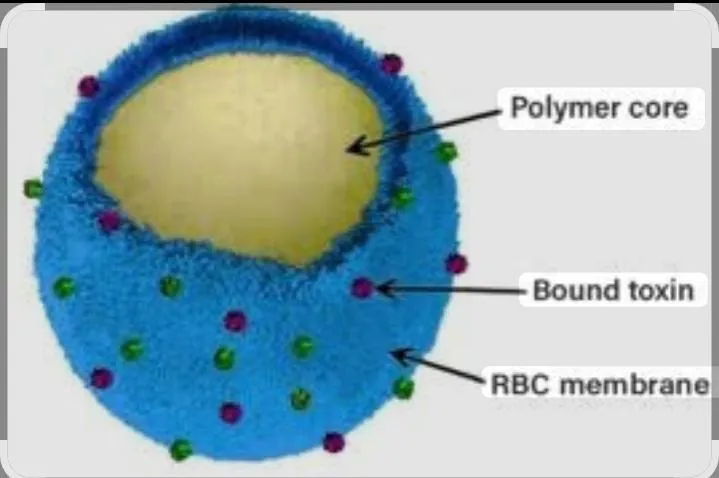
Figure 1. General Representation of Nanosponge Structure
2.1 Definition and Structure
Nanosponges are hyper-crosslinked polymeric nanoparticles composed of a three-dimensional network of polymers interconnected through cross-linking agents. The resulting structure forms nanoscale cavities capable of encapsulating drug molecules and protecting them from environmental degradation (9).
Cyclodextrin-based nanosponges are the most extensively studied systems. In these systems, cyclodextrin molecules are cross-linked using agents such as diphenyl carbonate, carbonyldiimidazole, or pyromellitic dianhydride to form a porous network (10).
The structure consists of:
• Polymer backbone
• Cross-linking bridges
• Nanocavities for drug entrapment
• Surface functional groups
The drug may be physically trapped inside pores or chemically associated with the polymer matrix depending on its physicochemical properties.
|
Component |
Function |
|
Polymer Matrix |
Provides structural framework |
|
Cross-linker |
Forms porous network |
|
Nanocavities |
Drug encapsulation |
|
Surface Groups |
Enhance targeting and stability |
|
Pores/Channels |
Facilitate drug diffusion |
Table 1. Structural Components of Nanosponges
2.2 Properties and Advantages
Nanosponges possess several unique physicochemical and biological properties that distinguish them from conventional drug delivery systems.
|
Property |
Description |
|
Nanoscale Size |
Typically 50–500 nm |
|
Porous Structure |
High surface area for drug loading |
|
Biocompatibility |
Safe and non-toxic |
|
Thermal Stability |
Resistant to temperature variations |
|
Chemical Stability |
Protects drugs from degradation |
|
Controlled Release |
Sustained therapeutic action |
|
High Entrapment Efficiency |
Accommodates diverse drugs |
|
Versatility |
Suitable for multiple routes of administration |
Table 2. Important Properties of Nanosponges
|
Parameter |
Conventional Delivery |
Nanosponges |
|
Drug Solubility |
Limited |
Enhanced |
|
Drug Stability |
Moderate |
High |
|
Targeting Ability |
Poor |
Excellent |
|
Drug Release |
Immediate |
Controlled |
|
Toxicity |
Higher |
Reduced |
|
Bioavailability |
Lower |
Improved |
|
Patient Compliance |
Moderate |
Better |
Table 3. Advantages of Nanosponges Compared with Conventional Systems
3. Materials Used in Nanosponge Preparation
The selection of suitable polymers and cross-linking agents is crucial in the fabrication of nanosponges, as these materials determine the structural integrity, drug-loading capacity, release characteristics, and biocompatibility of the final formulation. Various natural and synthetic polymers have been utilized to develop nanosponges with tailored properties for specific pharmaceutical applications (15).
3.1 Polymers Used in Nanosponge Preparation
Polymers form the backbone of the nanosponge structure and provide the porous network required for drug encapsulation. Cyclodextrins are the most widely used polymers because of their ability to form inclusion complexes with drug molecules. Other polymers such as ethyl cellulose, polymethyl methacrylate, polycaprolactone, and biodegradable copolymers have also been investigated for nanosponge synthesis (16,17).
|
Polymer |
Characteristics |
Applications |
|
β-Cyclodextrin |
High inclusion capacity, biocompatible |
Oral and topical delivery |
|
Hydroxypropyl-β-cyclodextrin |
Improved aqueous solubility |
Solubility enhancement |
|
Ethyl Cellulose |
Biodegradable, sustained release |
Oral delivery |
|
Polycaprolactone |
Biocompatible and biodegradable |
Controlled drug release |
|
PMMA |
Mechanical stability |
Targeted delivery |
|
Chitosan |
Mucoadhesive and biodegradable |
Nasal and ocular delivery |
Table 4. Common Polymers Used in Nanosponge Preparation
3.2 Cross-Linking Agents
Cross-linking agents connect polymer chains and generate the porous three-dimensional architecture of nanosponges. The degree of cross-linking significantly influences pore size, drug loading, and release kinetics (18).
|
Cross-Linking Agent |
Function |
|
Diphenyl Carbonate (DPC) |
Produces highly porous nanosponges |
|
Carbonyldiimidazole (CDI) |
Forms stable cross-linked networks |
|
Pyromellitic Dianhydride (PMDA) |
Enhances structural rigidity |
|
Citric Acid |
Biocompatible cross-linker |
|
Epichlorohydrin |
Produces stable polymeric matrices |
Table 5. Common Cross-Linking Agent
3.3 Solvents Used During Preparation
Various solvents are employed during nanosponge synthesis depending on the polymer and cross-linker selected. Solvents facilitate polymer dissolution and improve reaction efficiency (19).
|
Solvent |
Purpose |
|
Dimethylformamide (DMF) |
Polymer dissolution |
|
Dimethyl Sulfoxide (DMSO) |
Reaction medium |
|
Ethanol |
Purification and washing |
|
Acetone |
Solvent evaporation techniques |
|
Water |
Green synthesis approaches |
Table 6. Solvents Used in Nanosponge Synthesis
3.4 Factors Affecting Material Selection
The choice of materials depends on:
Proper selection of polymers and cross-linkers enables the development of nanosponges with high entrapment efficiency, improved stability, and controlled drug release characteristics (20).
4. METHODS OF PREPARATION
Several techniques have been developed for nanosponge synthesis. The preparation method significantly affects particle size, morphology, drug loading capacity, and release behavior. Selection of a suitable method depends on the nature of the polymer, cross-linking agent, and intended application (21).
4.1 Solvent Method
The solvent method is one of the most commonly employed techniques for preparing cyclodextrin-based nanosponges. In this method, the polymer is dissolved in a suitable solvent and reacted with a cross-linking agent under controlled temperature conditions. After completion of the reaction, the product is purified and dried to obtain nanosponges (22).
Advantages
Limitations
4.2 Ultrasound-Assisted Method
In this technique, polymer and cross-linking agent mixtures are subjected to ultrasonic energy without using solvents. Ultrasonic waves promote efficient cross-linking and formation of porous nanostructures (23).
Advantages
Limitations
4.3 Emulsion Solvent Diffusion Method
This method is widely used for preparing polymeric nanosponges. The polymer and drug are dissolved in an organic phase and emulsified into an aqueous phase containing stabilizers. Solvent diffusion and evaporation lead to nanosponge formation (24).
Advantages
Limitations
4.4 Melt Method
In the melt method, polymers and cross-linkers are heated above their melting points without the use of solvents. Cross-linking occurs during heating, resulting in nanosponge formation (25).
Advantages
Limitations
4.5 Microwave-Assisted Synthesis
Microwave irradiation accelerates the cross-linking reaction and significantly reduces preparation time. Uniform heating improves nanosponge formation and reproducibility (26).
Advantages
Limitations
4.6 Green Synthesis Approaches
Recent studies focus on eco-friendly preparation methods utilizing biodegradable polymers, aqueous media, and natural cross-linkers. Green synthesis minimizes environmental impact while maintaining formulation performance (27).
|
Method |
Advantages |
Limitations |
|
Solvent Method |
High yield, simple |
Organic solvent use |
|
Ultrasound Method |
Solvent-free, eco-friendly |
Specialized equipment |
|
Emulsion Solvent Diffusion |
High entrapment efficiency |
Residual solvents |
|
Melt Method |
Economical |
Not suitable for heat-sensitive drugs |
|
Microwave Method |
Fast synthesis |
Equipment cost |
|
Green Synthesis |
Environmentally friendly |
Scale-up challenges |
Table 7. Comparison of Nanosponge Preparation Methods
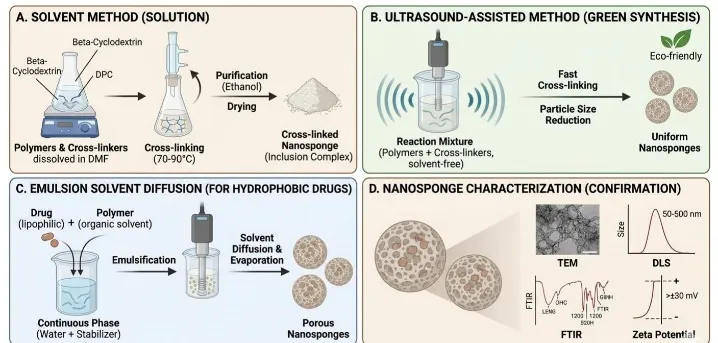
Figure 2: Preparation and Characterization of Nanosponges
5. CHARACTERIZATION OF NANOSPONGES
Characterization of nanosponges is essential to evaluate their physicochemical properties, drug-loading efficiency, stability, and drug-release behavior. Various analytical techniques are employed to ensure the quality and performance of nanosponge formulations. Proper characterization helps establish a correlation between structural properties and therapeutic efficacy (28).
5.1 Particle Size Analysis
Particle size is a critical parameter influencing drug loading, release kinetics, biodistribution, and cellular uptake. Nanosponge particle size is commonly measured using Dynamic Light Scattering (DLS), laser diffraction, or nanoparticle tracking analysis (29).
Significance
|
Particle Size |
Effect |
|
<100 nm |
Enhanced cellular uptake |
|
100–300 nm |
Optimal drug delivery |
|
>500 nm |
Reduced bioavailability |
Table 8. Importance of Particle Size in Nanosponges
5.2 Zeta Potential
Zeta potential measures the surface charge of nanoparticles and predicts colloidal stability. Higher absolute zeta potential values indicate greater repulsive forces between particles, preventing aggregation (30).
Interpretation
|
Zeta Potential (mV) |
Stability |
|
±0–10 |
Highly unstable |
|
±10–20 |
Relatively stable |
|
±20–30 |
Moderately stable |
|
> ±30 |
Highly stable |
5.3 Surface Morphology
The morphology and surface characteristics of nanosponges are evaluated using:
These techniques provide information regarding particle shape, pore structure, and surface texture (31).
5.4 Fourier Transform Infrared Spectroscopy (FTIR)
FTIR spectroscopy is used to identify functional groups and investigate drug-polymer interactions. Shifts in characteristic absorption peaks indicate successful encapsulation and compatibility between the drug and nanosponge matrix (32).
Applications
5.5 Differential Scanning Calorimetry (DSC)
DSC evaluates thermal behavior and physical state changes in nanosponge formulations. It is useful for determining melting points, crystallinity, and drug-polymer interactions (33).
Significance
5.6 X-Ray Diffraction (XRD)
XRD analysis determines the crystalline or amorphous nature of the drug and nanosponge system. Drug encapsulation often results in reduced crystallinity, enhancing drug solubility and dissolution (34).
|
Technique |
Purpose |
|
DLS |
Particle size measurement |
|
Zeta Potential |
Stability assessment |
|
SEM |
Surface morphology |
|
TEM |
Internal structure |
|
FTIR |
Drug-polymer interaction |
|
DSC |
Thermal behavior |
|
XRD |
Crystallinity analysis |
Table 9. Characterization Techniques and Their Applications
5.7 Entrapment Efficiency
Entrapment efficiency represents the percentage of drug successfully incorporated into the nanosponge matrix relative to the total drug used during formulation (35).
Factors Affecting Entrapment Efficiency
5.8 In Vitro Drug Release Studies
Drug release studies evaluate the release profile of encapsulated drugs under simulated physiological conditions. Commonly used dissolution media include phosphate buffer, simulated gastric fluid, and simulated intestinal fluid (36).
Objectives
6. DRUG LOADING AND RELEASE MECHANISM
Drug loading and release are the fundamental functions of nanosponge-based drug delivery systems. The porous structure of nanosponges provides numerous cavities capable of entrapping active pharmaceutical ingredients and releasing them in a controlled manner (37).
6.1 Drug Loading Mechanism
Drug loading involves incorporation of drug molecules into nanosponge cavities through physical adsorption, inclusion complexation, diffusion, or molecular entrapment (38).
Steps in Drug Loading
Drug Solution
↓
Mixing with Nanosponges
↓
Drug Diffusion into Cavities
↓
Encapsulation
↓
Loaded Nanosponges
Factors Affecting Drug Loading
6.2 Drug Release Mechanism
Drug release from nanosponges occurs through diffusion, desorption, erosion, swelling, or environmental stimuli. The release profile depends on the nature of the polymer, cross-linking density, and physicochemical properties of the drug (39).
Drug Release from Nanosponges
Drug Loaded
Nanosponges
↓
Penetration of Medium
↓
Drug Diffusion
↓
Controlled Release
↓
Therapeutic Action
6.3 Diffusion-Controlled Release
The majority of nanosponge systems release drugs by diffusion. After exposure to biological fluids, drug molecules gradually diffuse through nanosponge pores into the surrounding medium (40).
Advantages
6.4 Stimuli-Responsive Release
Advanced nanosponges can release drugs in response to specific stimuli such as:
These systems provide site-specific and on-demand drug delivery (41,42)
7. Recent Advances in Nanosponge Technology
Nanosponges have emerged as one of the most promising nanocarrier systems due to their unique porous architecture, high drug-loading capacity, and ability to provide controlled and targeted drug delivery. Recent advances in nanosponge technology have focused on improving therapeutic efficacy, biocompatibility, targeting capability, and responsiveness to physiological stimuli. These developments have expanded the application of nanosponges beyond conventional drug delivery systems (43).
7.1 Stimuli-Responsive Nanosponges
Stimuli-responsive or "smart" nanosponges are designed to release drugs in response to specific environmental triggers such as pH, temperature, enzymes, redox potential, or light. These systems improve site-specific drug delivery and minimize adverse effects on healthy tissues (44).
Advantages
|
Stimulus |
Mechanism of Drug Release |
Therapeutic Application |
|
pH |
Release in acidic/basic environment |
Cancer therapy |
|
Temperature |
Heat-triggered release |
Hyperthermia treatment |
|
Enzymes |
Enzyme-mediated degradation |
Infection targeting |
|
Redox |
Intracellular glutathione response |
Tumor targeting |
|
Light |
Phototriggered release |
Photodynamic therapy |
Table 10:. Types of Stimuli-Responsive Nanosponges
7.2 Targeted Nanosponge Systems
Surface-functionalized nanosponges have been developed for active targeting of specific tissues and cells. Ligands such as antibodies, peptides, folic acid, and aptamers are attached to the nanosponge surface to enhance cellular uptake and target specificity (45).
Benefits
7.3 Hybrid Nanosponges
Hybrid nanosponges combine nanosponges with other nanocarriers such as liposomes, metallic nanoparticles, hydrogels, and polymeric nanoparticles. These hybrid systems integrate the advantages of multiple delivery platforms (46).
Applications
7.4 Biodegradable Nanosponges
Recent research emphasizes biodegradable nanosponges prepared from natural and synthetic biodegradable polymers. These systems undergo degradation after drug release, minimizing long-term toxicity and environmental concerns (47).
Common Biodegradable Polymers
7.5 Nanosponges for Biological Molecules
Modern nanosponge systems are capable of delivering proteins, peptides, nucleic acids, and vaccines. Their porous structure protects sensitive biomolecules from enzymatic degradation and enhances bioavailability (48).
|
Innovation |
Key Benefit |
|
Smart Nanosponges |
Stimulus-triggered release |
|
Targeted Nanosponges |
Site-specific delivery |
|
Hybrid Nanosponges |
Multifunctional performance |
|
Biodegradable Nanosponges |
Improved safety |
|
Gene Delivery Nanosponges |
Nucleic acid protection |
|
Vaccine Delivery Systems |
Enhanced immune response |
Table 11:. Recent Innovations in Nanosponge Technology
7.6 Nanosponges in Cancer Therapy
Advanced nanosponge formulations have demonstrated significant potential in cancer treatment through controlled release and targeted delivery of chemotherapeutic agents. These systems improve drug accumulation in tumor tissues while reducing systemic toxicity (49).
8. APPLICATIONS OF NANOSPONGES IN DRUG DELIVERY
Nanosponges have attracted considerable attention as versatile drug carriers due to their ability to encapsulate both hydrophilic and hydrophobic drugs. Their porous structure allows controlled release, improved stability, and enhanced bioavailability, making them suitable for various routes of administration (50).
8.1 Oral Drug Delivery
Oral administration is the most widely used route of drug delivery. Nanosponges improve the solubility and dissolution rate of poorly water-soluble drugs, thereby enhancing oral bioavailability (51).
Advantages
Examples
8.2 Topical Drug Delivery
Nanosponges are extensively used in topical formulations such as creams, gels, lotions, and ointments. They provide sustained release of drugs at the skin surface and reduce local irritation (52).
Advantages
Applications
8.3 Ocular Drug Delivery
Ocular drug delivery remains challenging because of rapid tear turnover and limited corneal permeability. Nanosponge systems increase drug residence time on the ocular surface and improve drug penetration (53).
Advantages
Applications
8.4 Pulmonary Drug Delivery
Nanosponges have demonstrated potential for pulmonary administration due to their small particle size and controlled-release characteristics. They enable direct delivery of drugs to the lungs, enhancing therapeutic effectiveness (54).
Advantages
Applications
8.5 Parenteral Drug Delivery
Parenteral administration allows direct delivery of nanosponge formulations into systemic circulation. Nanosponges improve the stability of injectable drugs and facilitate targeted delivery to diseased tissues (55).
Advantages
Applications
8.6 Future Direction of Drug Delivery Applications
The integration of nanosponges with advanced targeting strategies, nanotechnology, and personalized medicine is expected to further improve drug delivery efficiency. Future research is focused on multifunctional nanosponges capable of simultaneous diagnosis and therapy, often referred to as theranostic nanosponges (56).
9. THERAPEUTIC APPLICATIONS OF NANOSPONGES
Nanosponges have gained considerable attention in pharmaceutical research due to their ability to enhance drug solubility, stability, bioavailability, and targeted delivery. Their unique porous structure enables encapsulation of a wide range of therapeutic agents, making them suitable for the treatment of various diseases. Recent studies have demonstrated significant applications of nanosponges in cancer therapy, antimicrobial treatment, inflammatory disorders, and neurological diseases (57).
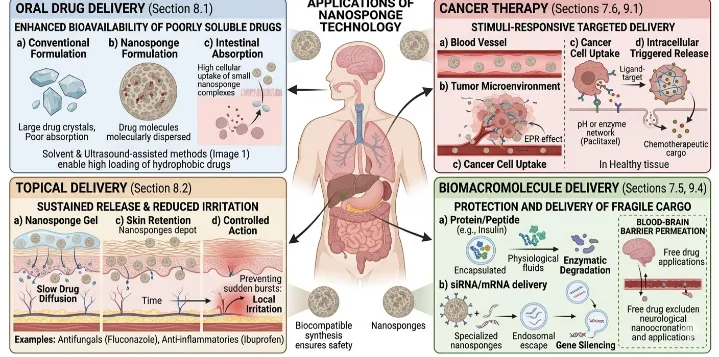
Figure 3: Application of Nanosponges
9.1 Cancer Therapy
Cancer remains one of the leading causes of mortality worldwide. Conventional chemotherapy often suffers from poor selectivity, systemic toxicity, and multidrug resistance. Nanosponge-based drug delivery systems have emerged as promising carriers for anticancer drugs due to their ability to provide controlled and targeted drug release (58).
Nanosponges can encapsulate chemotherapeutic agents such as paclitaxel, doxorubicin, camptothecin, and tamoxifen, improving their aqueous solubility and reducing adverse effects on healthy tissues. Surface-functionalized nanosponges further enhance tumor targeting through receptor-mediated uptake (59).
Benefits in Cancer Therapy
|
Drug |
Therapeutic Use |
Benefit of Nanosponge Delivery |
|
Paclitaxel |
Breast and lung cancer |
Improved solubility |
|
Doxorubicin |
Solid tumors |
Reduced cardiotoxicity |
|
Camptothecin |
Colorectal cancer |
Enhanced stability |
|
Tamoxifen |
Breast cancer |
Controlled release |
Table 11: Anticancer Drugs Delivered Using Nanosponges
9.2 Antimicrobial Drug Delivery
The emergence of antimicrobial resistance has created a need for more effective drug delivery systems. Nanosponges improve the delivery of antibiotics, antifungal agents, and antiviral drugs by enhancing their stability and maintaining therapeutic concentrations for prolonged periods (60).
Encapsulation within nanosponges protects antimicrobial agents from degradation and improves penetration into infected tissues. This approach may reduce dosing frequency and minimize resistance development.
Applications
Advantages
|
Drug |
Infection Treated |
Advantage |
|
Fluconazole |
Fungal infections |
Enhanced penetration |
|
Voriconazole |
Ocular fungal infections |
Sustained release |
|
Ciprofloxacin |
Bacterial infections |
Improved stability |
|
Acyclovir |
Viral infections |
Better bioavailability |
Table 12:. Antimicrobial Applications of Nanosponges
9.3 Anti-inflammatory Drug Delivery
Inflammatory disorders require prolonged therapy, often associated with adverse effects due to repeated administration. Nanosponges offer controlled and localized drug delivery, reducing systemic exposure and improving therapeutic outcomes (61).
Anti-inflammatory drugs such as diclofenac, meloxicam, ibuprofen, and celecoxib have been successfully incorporated into nanosponge systems. Controlled drug release helps maintain therapeutic drug levels over extended periods.
Benefits
9.4 Neurological Disorders
Treatment of neurological diseases is often limited by the blood-brain barrier (BBB), which restricts drug penetration into the central nervous system. Nanosponges have shown potential in enhancing brain delivery of therapeutic agents through improved permeability and controlled release (62).
Nanosponge formulations have been investigated for the treatment of:
Advantages in Neurological Therapy
|
Disease |
Drug Candidate |
Expected Benefit |
|
Alzheimer's Disease |
Donepezil |
Improved brain delivery |
|
Parkinson's Disease |
Levodopa |
Sustained release |
|
Epilepsy |
Carbamazepine |
Enhanced bioavailability |
|
Brain Tumors |
Temozolomide |
Targeted delivery |
Table 13: Neurological Applications of Nanosponges
10. ADVANTAGES OF NANOSPONGES
Nanosponges possess several advantages over conventional drug delivery systems due to their unique porous structure and versatile drug-loading capabilities (63).
1. Enhanced Drug Solubility:Nanosponges improve the aqueous solubility of poorly water-soluble drugs through inclusion complex formation and molecular encapsulation.
2. Controlled and Sustained Release:The porous matrix allows gradual drug release, maintaining therapeutic drug concentrations for extended periods.
3. Improved Stability:Encapsulation protects drugs from hydrolysis, oxidation, photodegradation, and enzymatic degradation.
4. Reduced Toxicity:Targeted and controlled drug delivery minimizes exposure of healthy tissues to drugs, reducing adverse effects.
5. High Drug Loading Capacity:Large internal cavities facilitate efficient incorporation of therapeutic molecules.
6. Versatility: Nanosponges are versatile nanostructured carriers capable of encapsulating hydrophobic and hydrophilic drugs, proteins, peptides, anticancer agents, and antimicrobial agents.
11. Challenges and Limitations
Despite their numerous advantages, nanosponge systems face several challenges that limit their widespread clinical and commercial application (64).
11.1 Manufacturing Challenges:Large-scale production of nanosponges remains difficult due to complex synthesis procedures, reproducibility issues, and process optimization requirements.
11.2 Drug Loading Limitations:Not all drugs are suitable for nanosponge encapsulation. Drug loading depends on molecular size, polarity, and affinity toward the polymer matrix.
11.3 Toxicity Concerns:Although generally considered biocompatible, long-term toxicity and biodistribution studies remain limited for several nanosponge formulations.
11.4 Regulatory Challenges:The absence of standardized regulatory guidelines for nanosponge-based formulations delays product approval and commercialization.
11.5 Stability Issues:Certain nanosponge formulations may experience aggregation, particle growth, or drug leakage during storage.
11.6 Cost of Production:Advanced preparation methods and specialized characterization techniques increase manufacturing costs.
12. Future Perspectives
Nanosponge technology has emerged as a versatile and promising platform in advanced drug delivery. Although significant progress has been made in recent years, continuous innovations in material science, nanotechnology, biotechnology, and pharmaceutical engineering are expected to further expand the scope of nanosponges in clinical medicine. Future research is directed toward developing safer, smarter, and more efficient nanosponge systems capable of overcoming current limitations and addressing unmet therapeutic needs (65)
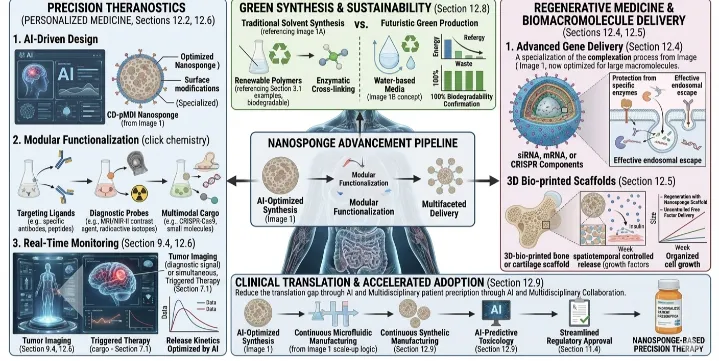
Figure 4 : Future presepective of Nanosponge
12.1 Development of Smart and Stimuli-Responsive Nanosponges
One of the most promising future directions involves the development of smart nanosponges capable of responding to specific physiological or external stimuli. These advanced systems can release drugs selectively in response to changes in pH, temperature, enzyme concentration, redox potential, magnetic fields, or light irradiation (66).
Such stimuli-responsive nanosponges may significantly improve therapeutic outcomes by ensuring that drugs are released only at the desired site of action. This approach minimizes systemic exposure, reduces adverse effects, and increases treatment efficacy, particularly in cancer and inflammatory diseases.
Potential Applications
12.2 Personalized Medicine
The growing emphasis on personalized medicine presents a significant opportunity for nanosponge technology. Future nanosponge formulations may be customized according to individual patient characteristics, including genetic profile, disease state, metabolic status, and therapeutic requirements (67).
Personalized nanosponge systems could enable:
Integration of pharmacogenomics and nanosponge-based drug delivery may play a critical role in tailoring treatments for chronic and complex diseases.
12.3 Targeted Drug Delivery Systems
Targeted drug delivery remains one of the most important goals of pharmaceutical research. Future nanosponges are expected to incorporate targeting ligands such as antibodies, peptides, aptamers, folic acid, and receptor-specific molecules to achieve highly selective delivery to diseased tissues (68).
Benefits of Targeted Nanosponges
Targeted nanosponge systems are particularly promising for cancer therapy, neurological disorders, autoimmune diseases, and infectious diseases.
12.4 Gene and Nucleic Acid Delivery
Recent advances in gene therapy have highlighted the need for safe and effective carriers capable of delivering nucleic acids. Nanosponges possess structural characteristics suitable for the delivery of:
Future nanosponge-based gene delivery systems may provide improved protection against enzymatic degradation while enhancing intracellular uptake and transfection efficiency (69).
Potential Therapeutic Areas
12.5 Nanosponges for Protein and Peptide Delivery
Protein- and peptide-based therapeutics have gained considerable attention because of their high specificity and efficacy. However, their clinical application is often limited by instability and rapid degradation.
Future nanosponge systems may provide effective encapsulation and controlled release of biologics, improving stability and extending circulation time (70).
Potential Applications
12.6 Theranostic Nanosponges
Theranostics refers to the combination of diagnosis and therapy within a single platform. Emerging nanosponge systems are being engineered to simultaneously deliver therapeutic agents and diagnostic molecules such as fluorescent probes, contrast agents, and imaging markers (71).
Advantages
Theranostic nanosponges are expected to become valuable tools in oncology, cardiovascular diseases, and precision medicine.
12.7 Artificial Intelligence and Machine Learning in Nanosponge Design
Artificial intelligence (AI) and machine learning (ML) are transforming pharmaceutical development. Future nanosponge research may increasingly utilize computational approaches to optimize formulation parameters, predict drug-loading efficiency, evaluate release kinetics, and identify suitable polymer-crosslinker combinations (72).
Applications of AI in Nanosponge Research
These technologies can significantly reduce development time and costs while improving formulation quality.
12.8 Green and Sustainable Nanosponge Technology
Environmental sustainability is becoming increasingly important in pharmaceutical manufacturing. Future research is expected to focus on green synthesis approaches utilizing:
Green nanosponge technology may reduce environmental impact while maintaining formulation performance and safety (73).
Benefits
12.9 Clinical Translation and Commercialization
Despite encouraging laboratory results, only a limited number of nanosponge-based products have reached clinical development. Future efforts should focus on bridging the gap between research and commercialization through:
Successful clinical translation will enable broader adoption of nanosponge technology in pharmaceutical products and healthcare systems (74).
CONCLUSION
Nanosponges are revolutionizing drug delivery by leveraging a unique, porous architecture that dramatically enhances drug solubility, loading capacity, and controlled release across various administration routes. By seamlessly integrating targeted, stimuli-responsive therapies with advanced diagnostics, these versatile nanocarriers are overcoming historical manufacturing and safety hurdles. Ultimately, driven by breakthroughs in AI and biotechnology, nanosponges are poised to become a cornerstone of next-generation personalized medicine, offering safer, more effective, and patient-centric treatments for complex diseases like cancer and neurological disorders.
REFERENCES


Vaishnavi Rajeshwar Bhimewad*, Ajay Kshirsagar, S. M. Ambore, Samiksha Prakash Kawade, Nanosponges In Drug Delivery: Recent Advances, Applications, Challenges, And Future Perspectives, Int. J. Sci. R. Tech., 2026, 3 (6), 1247-1266. https://doi.org/10.5281/zenodo.20796528
 10.5281/zenodo.20796528