View Article

  • Comparative Analysis Of Blue Value Estimation Of Starch Extracted From Ipomea Batatas L. (Lam.) And Amorphophallus Paeoniifolius (Dennst.) Nicolson Tubers

  • Department of Botany, Faculty of Science, The Maharaja Sayajirao University of Baroda, Vadodara-390002

Abstract

Starch is a renewable and biodegradable polymer whose functional properties are strongly influenced by its molecular composition, particularly the relative characteristics of amylose and amylopectin. Blue value estimation based on iodine-starch complex formation gives a simple spectrophotometric approach for evaluating the iodine-binding characteristics of starch. This study is aimed to evaluate blue values Comparison of the Amorphophallus paeoniifolius and Ipomoea batatas starch extract. Starch was extracted from 500 g of fresh tuber material using an aqueous sedimentation method. The starch yield was subjected to iodine-spectrophotometric analysis, and absorbance was measured at 620 nm. I. batatas yielded 146 g of dry starch, which is 29.2%, whereas A. paeoniifolius yielded 122 g, corresponding to a yield of 24.4%. The mean blue value of A. paeoniifolius starch found is 0.435 ± 0.072, which is comparatively higher than that of mean values of I. batatas (0.226 ± 0.003). The higher blue value indicates greater iodine-binding capacity and suggests amylose-associated characteristics differences between two starches. Starch yield and blue value showed contrasting trends observed in starch yield and blue value, that indicates the starch yield does not correspond to its molecular characteristics. These findings describe preliminary comparative information of these two tuber starches and further support evaluation of direct quantification of amylose and additional characterization of physiological parameters.

Keywords

Blue value, Amylose, Starch, Amorphophallus paeoniifolius, Ipomoea batatas, Iodine-starch complex.

Introduction

× Popup Image

Starch is one of the most abundant naturally occurring polysaccharides and the primary carbohydrate reserve in higher plants. (Vardhan et al., 2025). It is renewable, biodegradable, non-toxic, and cost-effective (Ogunsona et al., 2018), because of that it is gaining popularity for use in the food, pharmaceutical (Chakraborty et al., 2019), textile, paper, adhesive (Ma et al., 2023), and biodegradable materials (Saranyadevi et al., 2026) industries. Also, due to its biodegradability, biocompatibility, and general availability, starch has emerged as an appealing alternative to petroleum-derived polymers in the development of sustainable materials. However, the functional performance of starch is largely determined by its molecular composition and structural organization, which differ amongst plant sources (Pfister & Zeeman, 2016).

Starch is largely made up of two glucose polymers, amylose and amylopectin, which appear in variable quantities depending on the plant species and cultivar. Amylose is a linear polymer made up of α-(1→4)-linked D-glucose units, while amylopectin is a highly branched polymer with α-(1→4) and α-(1→6) glycosidic connections (Thuan et al., 2026; Koksel etl al., 2023). The relative proportions of these two components have a substantial impact on starch's physicochemical and functional qualities, such as gelatinization, paste viscosity, retrogradation, gel formation, water absorption, swelling capacity, digestibility, and film-forming ability (Wang et al., 2024; Cornejo-Ramírez et al., 2018). As a result, estimating amylose content is an important part of starch characterization in both food and non-food applications.

Amylose content has been determined using a variety of analytical techniques, including colorimetric assays, chromatographic procedures, differential scanning calorimetry, and enzymatic analyses. The iodine-binding colorimetric method is one of the most extensively used due to its simplicity, speed, and low cost (Chen et al., 2025; Zhu et al., 2008). In this method, iodine molecules connect with the helical shape of amylose to generate a distinctive blue inclusion complex, whereas amylopectin is widely branched structure has a reduced iodine-binding affinity (Pesek et al., 2024; Pesek et al., 2022). The intensity of the blue value, is directly proportional to starch's iodine-binding ability and serves as an indirect estimate of its apparent amylose concentration. Blue value calculation has been widely used for comparative evaluation of starches from various botanical origins because it is simple and reproducible.

Tuber crops are important commercial sources of starch due to their high carbohydrate content and wide industrial application (Hundekari et al., 2023; Wang et al., 2020; Chandrasekara et al., 2016). Ipomea batatas (sweet potato) is an economically important root crop that is grown all over the world and is known for its high starch content and functional qualities (Laveriano-Santos et al., 2022; Bach et al., 2021; Jung et al., 2011). Similarly, an underutilized tropical tuber Amorphophallus paeoniifolius (elephant foot yam) is recognized for its high starch content and wide range of agroclimatic conditions tolerance. In addition to its usage as a food crop, starch has gained interest in food processing, medicine, biomaterials, and other value-added products (Panda et al., 2025; Srivastava et al., 2024; Suba et al., 2025; Hurkadale et al., 2012). These two Starches have different particle morphology, molecular structure, and amylose-to-amylopectin ratios, which can also affect their iodine-binding properties and functional performance.

A. paeoniifolius and I. batatas both has been studied as potential starch source, there is still a lack of comparison data regarding their starch yield and blue values under the same extraction and analytical circumstances. In addition to providing baseline data for choosing appropriate starch sources for applications where starch composition affects material performance, such comparative study is helpful in comprehending variations in iodine-binding capacity.

The current work used an iodine-spectrophotometric method to evaluate and compare the difference of blue value for starch extracted from A. paeoniifolius and I. batatas. It is anticipated that the results will shed light on the similarities and difference of starch qualities such as starch yield and iodine-binding capacity for indirect amylose estimation of these two tuber crops and their assessment as possible raw materials for medicine, industrial, culinary, and biodegradable material applications.

  1. MATERIALS AND METHODOLOGY

Requirements: I. batatas and A. paeoniifolius tubers, 95% Ethanol, Sodium Hydroxide (NaOH), Acetic Acid, Iodine (I2), Potassium Iodide (KI), Distilled Water (d.w.), Mixture, Sieves, Spectrophotometer, Cuvettes. 

    1. Starch extraction

Amorphophallus paeoniifolius and Ipomoea batatas tubers (500gm each) washed thoroughly under running tap water to remove adhering soil, dirt and other impurities. Chopped the cleaned tubers into small pieces and separately homogenized with distilled water at ratio of 1:2 (tuber:distilled water) using a mixture to obtain a uniform slurry.

Then slurry filtered through a sieve of 250 μm (ASTM) pore size. The filtrate was allowed to kept for 2-3hrs to settle starch. Later, the supernatant was decanted carefully, then extracted starch was washed for two to three times using distilled water to remove residual impurities and other non-starch components. The washed starch was again allowed to settle for an additional 1 h, after that supernatant was decanted.

The extracted purified starch dried in a hot air oven at 60°C for 3-4 hrs. The dried starch of A. paeoniifolius and I. batatas was ground into a fine powder. Starch yield is calculated using the Eq. (1) (Vithu et al., 2020). Dried starch stored separately in airtight containers to use for the further blue value estimation.

                                                      Eq. (1)
    1. Blue value estimation

The blue value of the extracted starch was determined by slightly modifying an iodine-binding spectrophotometric method (Stawski 2008; Mohammadkhani et al., 1998; Samotus et al., 1993). For which took 0.1 g of starch sample into a test tube, that followed by the 1 mL of 95% ethanol and 9 mL of 1 M sodium hydroxide (NaOH) addition into it. Then it was heated in a boiling water bath for 10 min which helped starch to gelatinize. After heating it was kept to cool. Then starch solution was transferred to a 100 mL volumetric flask and diluted the prepared starch solution by adding distilled water to make it 100ml. An aliquot (2.5 mL) of the diluted starch solution was taken into a separate volumetric flask, which is followed by the 0.5 mL of 1 M acetic acid and 1 mL of stock iodine solution (0.2 g I and 2 g KI dissolved in 100 mL d.w.) addition into it. The volume was then adjusted to 50 mL by adding distilled water, and reaction mixture was after that allowed to stand for 20 min at room temperature to ensure complete development of the starch-iodine complex which led to the color change.

The absorbance of blue-colored resulting solution was measured at 620 nm using a UV-Visible spectrophotometer (Hitachi U-2900), where the stock iodine solution prepared without starch used as the blank. All the measurements performed in triplicates. Results are expressed as the mean ± standard deviation. The blue value was calculated using the following equation (2):

                                                                       Eq. (2)
    1. Statistical Analysis

Starch yield calculated as the percentage of dry starch obtained from the initial 500 g fresh tuber sample. All blue value measurements were performed in triplicate, and the results were expressed as mean ± standard deviation (SD). The mean and SD were calculated from the three analytical determinations for each starch sample.

  1. RESULTS AND DISCUSSIONS
    1. Starch yield of extracted starch

Starch was extracted from tubers of Amorphophallus paeoniifolius and Ipomoea batatas using above described aqueous extraction procedure. From total 500 g of fresh tuber material, 122 g of dry starch produced from A. paeoniifolius, which represent starch yield of 24.4%. while, 146 g of dry starch was produced from I. batatas, denotes 29.2% of starch yield (Table 1). Thus, in the present study under the same extraction conditions, I. batatas showed a higher starch yield in comparison of A. paeoniifolius. Difference is represented in Figure 1.

Starch

Fresh tuber weight (gm.)

Dry starch (gm.)

Starch yield (%)

A. paeoniifolius

500

122

24.4

I. batatas

500

146

29.2

Table 1. Starch yield from A. paeoniifolius and I. batatas

The difference in starch yield (Figure 1) could be attributed to variation in the native starch content and composition of the two plant sources (Rasul et al., 2026; Rashwan et al., 2024) Also, differences in starch extraction process during blending, filtration, sedimentation, washing, and decantation. Starch yield is also affected by factors such as cultivar, growing season, maturity, moisture content, particle disruption, solvent-to-sample ratio, and extraction efficiency (Puri et al., 2025; Vithu et al., 2020)
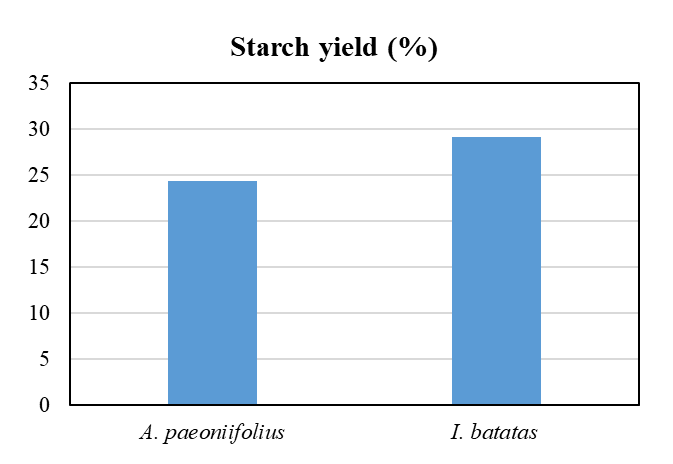
Figure 1.  Starch yield (%) comparison of A. paeoniifolius and I. batatas

Blue value then evaluated for extracted starches using the iodine-spectrophotometric method. The absorbance of the starch-iodine complex measured at 620 nm wavelength. For A. paeoniifolius OD ranged from 0.461 to 0.640, while I. batatas OD ranged from 0.279 to 0.286 (Table 2). Based on the derived blue value equation, the corresponding blue values ranged for A. paeoniifolius is 0.3688, 0.4240, and 0.5116, with a mean of 0.4348 ± 0.0720. In contrast, I. batatas showed lower blue values of 0.2272, 0.2234, and 0.2282, with a mean value of 0.2263 ± 0.0025.

Starch

Replicate

OD620

Blue Value

Amorphophallus paeoniifolius

1

0.460

0.3688

2

0.530

0.4240

3

0.640

0.5166

Mean ± SD

0.435 ± 0.072

Ipomea batatas

1

0.284

0.2272

2

0.279

0.2234

3

0.285

0.2282

Mean ± SD

0.226 ± 0.003

Table 2. Absorbance and blue value of starch-iodine complexes
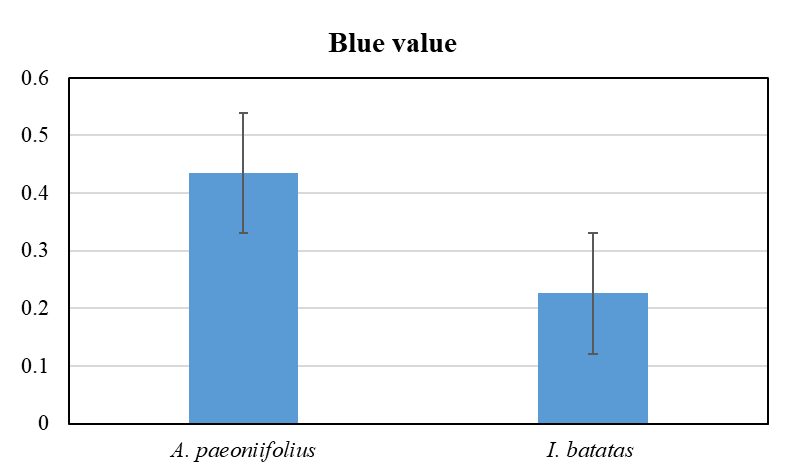
Figure 2. Blue value comparison of A. paeoniifolius and I. batatas starch
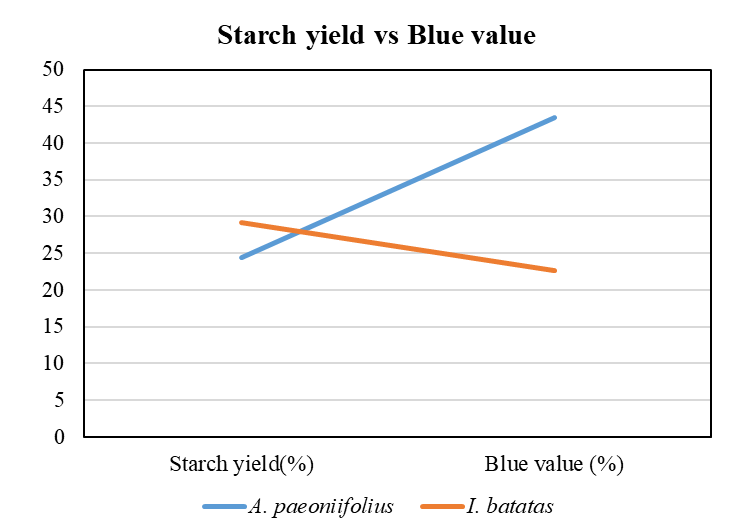
Figure 3. Starch yield vs blue value of A. paeoniifolius and I. batatas starch

A distinct difference in blue value was observed between the two starch sources (Figure 2). The mean blue value of A. paeoniifolius (0.4348) was approximately 1.92-fold that of I. batatas (0.2263), which is approximately 92.2% higher than I. batatas. The higher blue value indicates a greater iodine-binding capacity of the A. paeoniifolius starch compared with the I. batatas starch.

The blue value is based on the starch and iodine interaction and it is influenced by molecular characteristics of starch (Pesek et al., 2024). Helical structure in starch formed by amylose that accommodate iodine/polyiodide species, that produce the characteristic blue starch-iodine complex. Blue color is mainly due to amylose-iodine complex, because amylose complex absorbs iodine at the ~620 nm, while amylopectin iodine absorption affinity is very smaller, maximum at ~540nm, that develop reddish-brown color. Which clearly indicates the blue value evaluation result can be used indirectly to estimate the amylose content of the starch (Kim and Jung, 2022; Pesek et al., 2022; Rani et al., 2021; Landolt 1886).

The greater blue value observed for A. paeoniifolius indicates that its starch possesses a greater iodine-binding capacity and greater amylose contribution compare to the starch obtained from I. batatas. Wickramasinghe et al. (2009) mentioned in his study that amylose related characteristics very according to species (within species or between species) based on the variety, growing conditions, tuber maturity etc. it is also previously observed by other researchers (Aryee et al., 2006; Thitipraphunkul et al., 2003; Noda et al., 2001; Moorthy et al., 1986). These observations support this study that differences in the blue value of two different species could be attributed to its origin, molecular structure and growing conditions.

Distinct observations seen in these results are starch yield and blue value developed opposite trends (Figure 3). I. batatas produced a higher quantity of starch content, with a yield of 29.2%, while A. paeoniifolius produced a lower quantity of starch which is 24.4%. However, the A. paeoniifolius starch showed higher blue value than I. batatas. It indicates that the quantity of starch yielded during extraction is not direct indication of its iodine-binding characteristics. Starch yield primarily represents the amount of starch isolated under the applied extraction conditions, whereas blue value provides information about the molecular characteristics and iodine-binding behaviour of the starch.

blue value difference between two different species may have functional significance because amylose-to-amylopectin characteristics influence several physicochemical properties of starch such as, gelatinization, pasting properties, retrogradation, swelling, and film-forming behaviour of starch (Wang et al., 2024; Kou et al., 2022). Therefore, the higher blue value of A. paeoniifolius suggests that this it is suitable for the application where higher amylose-associated functionality is desired but, such potential applications cannot be established solely on the basis of blue value, it also requires the additional physicochemical and functional characterization. Whereas I. batatas produce the higher starch content which makes them suitable for such application which require the higher starch yield.

The current study represents clear difference between A. paeoniifolius and I. batatas starch in terms of starch yield and iodine-binding characteristics. Although, I. batatas provided a higher starch yield, A. paeoniifolius showed a higher blue value. The contrasting trends demonstrate that starch yield and blue value represent different characteristics of starch and should be evaluated independently when selecting plant sources for further starch-based applications. The present findings provide preliminary comparative information of these two tuber starches and establish a base for further investigation of their amylose content, structural characteristics, thermal properties, pasting behaviour, and potential suitability for biodegradable material development.

CONCLUSION

The current study represents comparative blue-value profiles for the starch obtained from Amorphophallus paeoniifolius and Ipomoea batatas.  Higher starch yield (29.2%) found in I. batatas than A. paeoniifolius (24.4%) processed under same extraction conditions, A. paeoniifolius starch exhibited higher blue value (0.435 ± 0.072) compared with I. batatas (0.226 ± 0.003). The contrasting results demonstrate that starch yield and iodine-binding characteristics are two distinct properties and that does not linearly align with each other, a higher starch yield does not necessarily correspond to a higher blue value. The blue values obtained can serve as baseline reference values for future comparative studies of these two starch sources when the same analytical procedure and conditions are followed. Future researchers can use these blue-value measurements of respective starches to evaluate their corresponding amylose characteristics with established standard amylose calibration curve without repeating the whole preliminary experiment and comparative analysis used here in this study.

Conflict of Interest

There is no conflict of interest between authors.

REFERENCES

  1. Aryee FN, Oduro I, Ellis WO, Afuakwa JJ. The physicochemical properties of flour samples from the roots of 31 varieties of cassava. Food control. 2006 Nov 1;17(11):916-22.
  2. Bach D, Bedin AC, Lacerda LG, Nogueira A, Demiate IM. Sweet potato (Ipomoea batatas L.): a versatile raw material for the food industry. Brazilian Archives of Biology and Technology. 2021 Jun 11;64:e21200568.
  3. Chakraborty R, Kalita P, Sen S. Natural starch in biomedical and food industry: perception and overview. Current drug discovery technologies. 2019 Dec 1;16(4):355-67.
  4. Chandrasekara A, Josheph Kumar T. Roots and tuber crops as functional foods: a review on phytochemical constituents and their potential health benefits. International journal of food science. 2016;2016(1):3631647.
  5. Chen F, Song Y, Dong M, Xie Y, Qiao Z, Zhu Y, Cao P, Yu Y, Yuan C. A high-throughput method for determining the amylose content of rice. PLoS One. 2025 Nov 25;20(11):e0336600.
  6. Cornejo-Ramírez YI, Martínez-Cruz O, Del Toro-Sánchez CL, Wong-Corral FJ, Borboa-Flores J, Cinco-Moroyoqui FJ. The structural characteristics of starches and their functional properties. CyTA-Journal of Food. 2018 Jan 1;16(1):1003-17.
  7. Hundekari SN, Swami SB. Tuber Crop Starches Importance, Properties and Applications. International Journal of Food and Fermentation Technology. 2023;13(2):215-28.
  8. Hurkadale PJ, Shelar PA, Palled SG, Mandavkar YD, Khedkar AS. Hepatoprotective activity of Amorphophallus paeoniifolius tubers against paracetamol-induced liver damage in rats. Asian Pacific Journal of Tropical Biomedicine. 2012 Jan 1;2(1):S238-42.
  9. Jung JK, Lee SU, Kozukue N, Levin CE, Friedman M. Distribution of phenolic compounds and antioxidative activities in parts of sweet potato (Ipomoea batata L.) plants and in home processed roots. Journal of food composition and analysis. 2011 Feb 1;24(1):29-37.
  10. Kim Y, Jung C. Reaction mechanisms applied to starch modification for biodegradable plastics: Etherification and esterification. International Journal of Polymer Science. 2022;2022(1):2941406.
  11. Koksel H, Muti SO, Kahraman K. Starch. InICC Handbook of 21st Century Cereal Science and Technology 2023 Jan 1 (pp. 45-54). Academic Press.
  12. Kou T, Song J, Liu M, Fang G. Effect of amylose and crystallinity pattern on the gelatinization behavior of cross-linked starches. Polymers 14 (14): 2870 [Internet]. 2022
  13. Landolt H. Ueber die Zeitdauer der Reaction zwischen Jodsäure und schwefliger Säure. Berichte der deutschen chemischen Gesellschaft. 1886 Jan;19(1):1317-65.
  14. Laveriano-Santos EP, López-Yerena A, Jaime-Rodríguez C, González-Coria J, Lamuela-Raventós RM, Vallverdú-Queralt A, Romanyà J, Pérez M. Sweet potato is not simply an abundant food crop: A comprehensive review of its phytochemical constituents, biological activities, and the effects of processing. Antioxidants. 2022 Aug 25;11(9):1648.
  15. Ma Y, Kou Z, Hu Y, Zhou J, Bei Y, Hu L, Huang Q, Jia P, Zhou Y. Research advances in bio-based adhesives. International Journal of Adhesion and Adhesives. 2023 Aug 1;126:103444.
  16. Mohammadkhani A, Stoddard FL, Marshall DR. Survey of amylose content in Secale cereale, Triticum monococcum, T. turgidum and T. tauschii. Journal of Cereal Science. 1998 Nov 1;28(3):273-80.
  17. Moorthy SN, Ramanujam TJ. Variation in properties of starch in cassava varieties in relation to age of the crop. Starch‐Stärke. 1986;38(2):58-61.
  18. Noda T, Kobayashi T, Suda I. Effect of soil temperature on starch properties of sweet potatoes. Carbohydrate Polymers. 2001 Mar 1;44(3):239-46.
  19. Ogunsona E, Ojogbo E, Mekonnen T. Advanced material applications of starch and its derivatives. European Polymer Journal. 2018 Nov 1;108:570-81.
  20. Panda J, Nongbet A, Mishra B, Talukdar R, Sarma A, Nath PC, Rustagi S, Avula SK, Mohapatra S, Mohanta YK. Underutilized Amorphophallus paeoniifolius trending in food security and sustainable nutraceuticals. Discover Food. 2025 Dec 30;6(1):61.
  21. Pesek S, Silaghi-Dumitrescu R. The iodine/iodide/starch supramolecular complex. Molecules. 2024 Jan 30;29(3):641.
  22. Pesek S, Lehene M, Brânzanic AM, Silaghi-Dumitrescu R. On the origin of the blue color in the iodine/iodide/starch supramolecular complex. Molecules. 2022 Dec 16;27(24):8974.
  23. Pfister B, Zeeman SC. Formation of starch in plant cells. Cellular and molecular life sciences. 2016 Jul;73(14):2781-807.
  24. Puri A, Mohite P, Ramole A, Verma S, Kamble M, Ranch K, Singh S. Starch science advancement: Isolation techniques, modification strategies, and multifaceted applications. Macromol. 2025 Sep 8;5(3):40.
  25. Rani A, Ali U. Degree‐Based Topological Indices of Polysaccharides: Amylose and Blue Starch‐Iodine Complex. Journal of Chemistry. 2021;2021(1):6652014.
  26. Rashwan AK, Younis HA, Abdelshafy AM, Osman AI, Eletmany MR, Hafouda MA, Chen W. Plant starch extraction, modification, and green applications: A review. Environmental Chemistry Letters. 2024 Oct;22(5):2483-530.
  27. Rasul S, Alam MZ, Tarique M, Chiang JH, Yuliarti O. Comparative Study of Different Starch Sources in their Contribution to the Structural Properties of Plant-Based Meatballs. Food Hydrocolloids. 2026 Jun 29:113076.
  28. Samotus B, Tuz J, Doerre E. Evaluation of Blue Value in different plant materials as a tool for rapid starch determination. Acta Societatis Botanicorum Poloniae. 1993;62(3-4):137.
  29. Saranyadevi S, Neupane S, Pawde SV, Liu S, Ali S, Wei S. Starch based biodegradable packaging systems and their interactions with food components, shelf-life implications: A review. Carbohydrate Polymer Technologies and Applications. 2026 Mar 1;13:101067.
  30. Srivastava S, Pandey VK, Tripathi A, Singh R, Dash KK. Ultrasound-assisted oxalate reduction vs. conventional methods: A comparative study in elephant foot yam (Amorphophallus paeoniifolius) and process optimization using response surface methodology. Food and Humanity. 2024 May 1;2:100217.
  31. Stawski D. New determination method of amylose content in potato starch. Food Chemistry. 2008 Oct 1;110(3):777-81.
  32. Suba G, Mathanghi SK, Narayanan R, Murugan B. Phytochemical and antioxidant properties of elephant foot yam (Amorphophallus paeoniifolius) based RTC valorized product. Journal of Applied Horticulture. 2025 Jul 1;27(3):518-23.
  33. Thitipraphunkul K, Uttapap D, Piyachomkwan K, Takeda Y. A comparative study of edible canna (Canna edulis) starch from different cultivars. Part I. Chemical composition and physicochemical properties. Carbohydrate Polymers. 2003 Aug 15;53(3):317-24.
  34. Thuan CM, Duy TT, Tien NN, Van Hung P. Multivariate analysis of structural and physicochemical properties of different rice starches influenced by apparent amylose content. LWT. 2026 Jul 2:119718.
  35. Vithu P, Dash SK, Rayaguru K, Panda MK, Nedunchezhiyan M. Optimization of starch isolation process for sweet potato and characterization of the prepared starch. Journal of Food Measurement and Characterization. 2020 Jun;14(3):1520-32.
  36. Wang H, Yang Q, Gao L, Gong X, Qu Y, Feng B. Functional and physicochemical properties of flours and starches from different tuber crops. International journal of biological macromolecules. 2020 Apr 1;148:324-32.
  37. Wang Y, Ou X, Al-Maqtari QA, He HJ, Othman N. Evaluation of amylose content: Structural and functional properties, analytical techniques, and future prospects. Food Chemistry: X. 2024 Dec 30;24:101830.
  38. Wickramasinghe HA, Takigawa S, Matsuura-Endo C, Yamauchi H, Noda T. Comparative analysis of starch properties of different root and tuber crops of Sri Lanka. Food chemistry. 2009 Jan 1;112(1):98-103.
  39. Zhu T, Jackson DS, Wehling RL, Geera B. Comparison of amylose determination methods and the development of a dual wavelength iodine binding technique. Cereal Chemistry. 2008 Jan;85(1):51-8.

Reference

  1. Aryee FN, Oduro I, Ellis WO, Afuakwa JJ. The physicochemical properties of flour samples from the roots of 31 varieties of cassava. Food control. 2006 Nov 1;17(11):916-22.
  2. Bach D, Bedin AC, Lacerda LG, Nogueira A, Demiate IM. Sweet potato (Ipomoea batatas L.): a versatile raw material for the food industry. Brazilian Archives of Biology and Technology. 2021 Jun 11;64:e21200568.
  3. Chakraborty R, Kalita P, Sen S. Natural starch in biomedical and food industry: perception and overview. Current drug discovery technologies. 2019 Dec 1;16(4):355-67.
  4. Chandrasekara A, Josheph Kumar T. Roots and tuber crops as functional foods: a review on phytochemical constituents and their potential health benefits. International journal of food science. 2016;2016(1):3631647.
  5. Chen F, Song Y, Dong M, Xie Y, Qiao Z, Zhu Y, Cao P, Yu Y, Yuan C. A high-throughput method for determining the amylose content of rice. PLoS One. 2025 Nov 25;20(11):e0336600.
  6. Cornejo-Ramírez YI, Martínez-Cruz O, Del Toro-Sánchez CL, Wong-Corral FJ, Borboa-Flores J, Cinco-Moroyoqui FJ. The structural characteristics of starches and their functional properties. CyTA-Journal of Food. 2018 Jan 1;16(1):1003-17.
  7. Hundekari SN, Swami SB. Tuber Crop Starches Importance, Properties and Applications. International Journal of Food and Fermentation Technology. 2023;13(2):215-28.
  8. Hurkadale PJ, Shelar PA, Palled SG, Mandavkar YD, Khedkar AS. Hepatoprotective activity of Amorphophallus paeoniifolius tubers against paracetamol-induced liver damage in rats. Asian Pacific Journal of Tropical Biomedicine. 2012 Jan 1;2(1):S238-42.
  9. Jung JK, Lee SU, Kozukue N, Levin CE, Friedman M. Distribution of phenolic compounds and antioxidative activities in parts of sweet potato (Ipomoea batata L.) plants and in home processed roots. Journal of food composition and analysis. 2011 Feb 1;24(1):29-37.
  10. Kim Y, Jung C. Reaction mechanisms applied to starch modification for biodegradable plastics: Etherification and esterification. International Journal of Polymer Science. 2022;2022(1):2941406.
  11. Koksel H, Muti SO, Kahraman K. Starch. InICC Handbook of 21st Century Cereal Science and Technology 2023 Jan 1 (pp. 45-54). Academic Press.
  12. Kou T, Song J, Liu M, Fang G. Effect of amylose and crystallinity pattern on the gelatinization behavior of cross-linked starches. Polymers 14 (14): 2870 [Internet]. 2022
  13. Landolt H. Ueber die Zeitdauer der Reaction zwischen Jodsäure und schwefliger Säure. Berichte der deutschen chemischen Gesellschaft. 1886 Jan;19(1):1317-65.
  14. Laveriano-Santos EP, López-Yerena A, Jaime-Rodríguez C, González-Coria J, Lamuela-Raventós RM, Vallverdú-Queralt A, Romanyà J, Pérez M. Sweet potato is not simply an abundant food crop: A comprehensive review of its phytochemical constituents, biological activities, and the effects of processing. Antioxidants. 2022 Aug 25;11(9):1648.
  15. Ma Y, Kou Z, Hu Y, Zhou J, Bei Y, Hu L, Huang Q, Jia P, Zhou Y. Research advances in bio-based adhesives. International Journal of Adhesion and Adhesives. 2023 Aug 1;126:103444.
  16. Mohammadkhani A, Stoddard FL, Marshall DR. Survey of amylose content in Secale cereale, Triticum monococcum, T. turgidum and T. tauschii. Journal of Cereal Science. 1998 Nov 1;28(3):273-80.
  17. Moorthy SN, Ramanujam TJ. Variation in properties of starch in cassava varieties in relation to age of the crop. Starch‐Stärke. 1986;38(2):58-61.
  18. Noda T, Kobayashi T, Suda I. Effect of soil temperature on starch properties of sweet potatoes. Carbohydrate Polymers. 2001 Mar 1;44(3):239-46.
  19. Ogunsona E, Ojogbo E, Mekonnen T. Advanced material applications of starch and its derivatives. European Polymer Journal. 2018 Nov 1;108:570-81.
  20. Panda J, Nongbet A, Mishra B, Talukdar R, Sarma A, Nath PC, Rustagi S, Avula SK, Mohapatra S, Mohanta YK. Underutilized Amorphophallus paeoniifolius trending in food security and sustainable nutraceuticals. Discover Food. 2025 Dec 30;6(1):61.
  21. Pesek S, Silaghi-Dumitrescu R. The iodine/iodide/starch supramolecular complex. Molecules. 2024 Jan 30;29(3):641.
  22. Pesek S, Lehene M, Brânzanic AM, Silaghi-Dumitrescu R. On the origin of the blue color in the iodine/iodide/starch supramolecular complex. Molecules. 2022 Dec 16;27(24):8974.
  23. Pfister B, Zeeman SC. Formation of starch in plant cells. Cellular and molecular life sciences. 2016 Jul;73(14):2781-807.
  24. Puri A, Mohite P, Ramole A, Verma S, Kamble M, Ranch K, Singh S. Starch science advancement: Isolation techniques, modification strategies, and multifaceted applications. Macromol. 2025 Sep 8;5(3):40.
  25. Rani A, Ali U. Degree‐Based Topological Indices of Polysaccharides: Amylose and Blue Starch‐Iodine Complex. Journal of Chemistry. 2021;2021(1):6652014.
  26. Rashwan AK, Younis HA, Abdelshafy AM, Osman AI, Eletmany MR, Hafouda MA, Chen W. Plant starch extraction, modification, and green applications: A review. Environmental Chemistry Letters. 2024 Oct;22(5):2483-530.
  27. Rasul S, Alam MZ, Tarique M, Chiang JH, Yuliarti O. Comparative Study of Different Starch Sources in their Contribution to the Structural Properties of Plant-Based Meatballs. Food Hydrocolloids. 2026 Jun 29:113076.
  28. Samotus B, Tuz J, Doerre E. Evaluation of Blue Value in different plant materials as a tool for rapid starch determination. Acta Societatis Botanicorum Poloniae. 1993;62(3-4):137.
  29. Saranyadevi S, Neupane S, Pawde SV, Liu S, Ali S, Wei S. Starch based biodegradable packaging systems and their interactions with food components, shelf-life implications: A review. Carbohydrate Polymer Technologies and Applications. 2026 Mar 1;13:101067.
  30. Srivastava S, Pandey VK, Tripathi A, Singh R, Dash KK. Ultrasound-assisted oxalate reduction vs. conventional methods: A comparative study in elephant foot yam (Amorphophallus paeoniifolius) and process optimization using response surface methodology. Food and Humanity. 2024 May 1;2:100217.
  31. Stawski D. New determination method of amylose content in potato starch. Food Chemistry. 2008 Oct 1;110(3):777-81.
  32. Suba G, Mathanghi SK, Narayanan R, Murugan B. Phytochemical and antioxidant properties of elephant foot yam (Amorphophallus paeoniifolius) based RTC valorized product. Journal of Applied Horticulture. 2025 Jul 1;27(3):518-23.
  33. Thitipraphunkul K, Uttapap D, Piyachomkwan K, Takeda Y. A comparative study of edible canna (Canna edulis) starch from different cultivars. Part I. Chemical composition and physicochemical properties. Carbohydrate Polymers. 2003 Aug 15;53(3):317-24.
  34. Thuan CM, Duy TT, Tien NN, Van Hung P. Multivariate analysis of structural and physicochemical properties of different rice starches influenced by apparent amylose content. LWT. 2026 Jul 2:119718.
  35. Vithu P, Dash SK, Rayaguru K, Panda MK, Nedunchezhiyan M. Optimization of starch isolation process for sweet potato and characterization of the prepared starch. Journal of Food Measurement and Characterization. 2020 Jun;14(3):1520-32.
  36. Wang H, Yang Q, Gao L, Gong X, Qu Y, Feng B. Functional and physicochemical properties of flours and starches from different tuber crops. International journal of biological macromolecules. 2020 Apr 1;148:324-32.
  37. Wang Y, Ou X, Al-Maqtari QA, He HJ, Othman N. Evaluation of amylose content: Structural and functional properties, analytical techniques, and future prospects. Food Chemistry: X. 2024 Dec 30;24:101830.
  38. Wickramasinghe HA, Takigawa S, Matsuura-Endo C, Yamauchi H, Noda T. Comparative analysis of starch properties of different root and tuber crops of Sri Lanka. Food chemistry. 2009 Jan 1;112(1):98-103.
  39. Zhu T, Jackson DS, Wehling RL, Geera B. Comparison of amylose determination methods and the development of a dual wavelength iodine binding technique. Cereal Chemistry. 2008 Jan;85(1):51-8.

Photo
Punita Parikh
Corresponding author

Department of Botany, Faculty of Science, The Maharaja Sayajirao University of Baroda, Vadodara-390002

Photo
Pinaki Parmar
Co-author

DDepartment of Botany, Faculty of Science, The Maharaja Sayajirao University of Baroda, Vadodara-390002

Photo
Shreya Patel
Co-author

Department of Botany, Faculty of Science, The Maharaja Sayajirao University of Baroda, Vadodara-390002

Pinaki Parmar, Shreya Patel, Punita Parikh*, Comparative Analysis Of Blue Value Estimation Of Starch Extracted From Ipomea Batatas L. (Lam.) And Amorphophallus Paeoniifolius (Dennst.) Nicolson Tubers, Int. J. Sci. R. Tech., 2026, 3 (8), 817-824. https://doi.org/10.5281/zenodo.22012958

Related Articles
Bioactive Compounds and Biological Activities of Jacquemontia Pentanthos (Jacq.)...
Nainesh Modi , Dweipayan Goswami , Milan Dabhi , Riya Kadia , Meet Dhokiya...
Chemical Evaluation of Vitamin C and Reducing Properties of Selected Fruit Juice...
Naveen Awasthi, Rajesh Kishor Tripathi, Divya Jyoti Mishra...
A Review On RP-HPLC Method Development And Validation For Simultaneous Estimatio...
Nikhil A. Bawane, Pratiksha D. Wagh, Mamata D. Wadkar, Jotshna R. Adhagale, Pallavi D. Borse, Vanita...
More related articles
A Review On RP-HPLC Method Development And Validation For Simultaneous Estimatio...
Nikhil A. Bawane, Pratiksha D. Wagh, Mamata D. Wadkar, Jotshna R. Adhagale, Pallavi D. Borse, Vanita...
Comparative Analysis of Free Radical Scavenging in Moringa oleifera, Sauropus an...
Nisha Shri Chengamaraju, M. Ganga Raju, NVL. Suvarchala Reddy, M. Lakshmi Madhuri, Chong Man Ning...
A Review On RP-HPLC Method Development And Validation For Simultaneous Estimatio...
Nikhil A. Bawane, Pratiksha D. Wagh, Mamata D. Wadkar, Jotshna R. Adhagale, Pallavi D. Borse, Vanita...
Comparative Analysis of Free Radical Scavenging in Moringa oleifera, Sauropus an...
Nisha Shri Chengamaraju, M. Ganga Raju, NVL. Suvarchala Reddy, M. Lakshmi Madhuri, Chong Man Ning...