

We use cookies to ensure our website works properly and to personalise your experience. Cookies policy
1Department of Education, KISS University, Bhubaneswar
2Anchalika Mahavidyalaya, Gadia, Mayurbhanj
3Department of Political Science, City Degree College, Berhampur
The rapid digitalization of education has transformed teaching and learning practices worldwide, making digital competence an essential requirement for future teachers. In India, the National Education Policy (NEP2020) emphasizes the integration of digital technologies in teacher education to improve educational quality, accessibility, and innovation. Against this backdrop, the present study examines the determinants and implications of digital competence among preservice teachers through a multidimensional framework incorporating digital skills, Technological Pedagogical Content Knowledge (TPACK), institutional support, pedagogical application, and the NEP2020 policy context. The study employed a quantitative research design and collected primary data from 120 Bachelor of Education (B.Ed.) students enrolled in three teacher education institutions. Data were analyzed using Confirmatory Factor Analysis (CFA) and Structural Equation Modelling (SEM) to validate the proposed framework and examine the relationships among key constructs. The CFA results confirmed the reliability and validity of the measurement model, while the SEM findings revealed that TPACK integration (? = .98) and pedagogical application (? = .92) were the strongest predictors of digital competence, followed by digital skills (? = .69). Institutional support (? = .34) and the NEP2020 policy context (? = .28) also demonstrated significant positive effects. The findings indicate that digital competence extends beyond technical proficiency and is fundamentally shaped by pedagogical knowledge, institutional readiness, and supportive policy environments. The study recommends strengthening digital infrastructure, embedding digital competence and TPACK-based training within teacher education curricula, and enhancing institutional support mechanisms to realize the transformative vision of NEP2020. Developing digitally competent teachers is critical for fostering innovative, inclusive, and effective teaching practices in contemporary Indian education.
Education systems have undergone great change due to the digital technologies. The role of a teacher in a contemporary classroom has been transformed by the growing popularity of online learning tools, online collaboration environments, and digital platforms. The teachers are now not only supposed to have the knowledge of the subject, but they are supposed to have the skills of incorporating the use of technology in the teaching practices. As a result, digital competence has become one of the essential skills a teacher in the twenty-first century should possess (Redecker, 2017).
Digital competence is the capability to apply digital technologies with a sense of self-confidence, criticality, and creativity to learn, communicate, and develop professionally. It includes digital literacy skills, information assessment, digital platform communication skills, and learning pedagogy of technology skills in teaching. These competences combined help teachers to develop interactive learning processes and accommodate the digital learning processes of students (Spante et al., 2018).
In India, the National Education Policy (NEP2020) stipulates the importance of technology in changing the education process. The policy emphasizes the necessity of online learning systems, and technology based training of teachers. It also emphasizes the need to prepare teachers who are able to use digital tools effectively to improve learning outcomes and be able to deliver inclusive education (Ministry of Education, 2020).
Preservice teachers are the future employees of the education system, and their digital competence is the key to the successful introduction of the technology related teaching activities. Nevertheless, there are also challenges that teacher education institutions have to deal with when it comes to the integration of the digital technologies. Lack of a proper infrastructure, the absence of training programs, and institutional support constitute the problems that impede the acquisition of digital competencies in preservice teachers (Instefjord and Munthe, 2017).
A number of frameworks have been created to comprehend the digital competencies of teachers. Technological Pedagogical Content Knowledge (TPACK) framework emphasizes the combination of technological knowledge with pedagogical and content knowledge in the teaching practice (Mishra and Koehler, 2006). In the same manner, the Digital Competence Framework of Educators (DigCompEdu) offers a thorough framework of measuring the digital competence of teachers in a variety of aspects (Redecker, 2017).
Although the value of digital competence in teacher education is growing, little empirical research has explored the subject of digital competence among preservice teachers in India. The majority of research that is available deals with developed nations, with the contextual research as a part of the Indian educational system yet to be developed. That is why, it is necessary to research the degree of digital competence among preservice teachers in India and define the factors that impact its formation. This paper seeks to discuss the issue of digital competence in preservice teachers in the context of NEP2020. In particular, the study investigates the aspect of institutional support, the hurdles encountered in the process of digital integration, and how these impacts affect pedagogical programs in teacher education. Through these factors, the study will aim at adding to the creation of better teacher education programs that would equip teachers with the technology enhanced learning environment.
Objectives of the Study
Research Questions
1. How digitally competent are the preservice teachers?
2. What is the impact of institutional support on the development of digital competence?
3. What are the difficulties of using digital technologies by preservice teachers?
4. Is digital competence associated with pedagogical preparedness to technology based teaching?
Hypotheses
H1: There is a strong positive relationship between institutional support and digital competence among the preservice teachers.
H2: Pedagogical preparedness to the use of technology positively relates to digital competence.
H3: Perceived difficulties have negative implications on the development of digital competence.
LITERATURE REVIEW
The concept of digital competence is now one of the central points of modern teacher education studies. It includes the knowledge, skills and attitudes that one needs to acquire in order to successfully utilize the digital technologies to education. Scholars have underscored that teachers should be digital competent so that they can be able to create innovative learning spaces and enable students to engage in learning in technology enhanced learning spaces.
Redecker (2017) has proposed the framework of DigCompEdu, which defines the essential areas of digital competence of educators, such as professional engagement, digital resources, teaching and learning, assessment, empowering learners and enabling learners to achieve digital competence. This model has been extensively implemented on the studies concerning teacher digital competence. In the same way, the TPACK model introduced by Mishra and Koehler (2006) has also emphasized the combination of pedagogical and content knowledge with the use of technology. This framework states that successful technology integration can happen when teachers have an equal knowledge in subject content, pedagogy, and digital technologies.
Research has indicated that teacher education programs are very important in teaching preservice teacher’s digital competence. The study by Instefjord and Munthe (2017) has discovered that institutional support, such as the availability of digital resources and formal training programs, has a substantial impact on the digital competence of teachers. The lack of institutional support can make teachers not confident about their use of digital technologies in the classes.
According to a study by Tondeur et al. (2017), teacher training organizations must consider the training of digital competence development as part of the curriculum. Their results show that preservice teachers who are provided with systematic training in digital integration show greater technology integration in their teaching. Availability of digital infrastructure is also another key determinant of digital competence. Hatlevik (2017) established that having good internet connectivity, digital devices, and learning tools can significantly enhance the digital capabilities of the teachers and their readiness to use technology in teaching.
Nonetheless, some studies indicate the difficulties related to digital integration of teacher education. According to Spante et al. (2018), assessing digital information is one of the aspects most teachers find challenging, as well as technology pedagogical application. Likewise, Gudmundsdottir and Hatlevik (2018) have discovered that new qualified teachers tend to believe they are not wellequipped to utilize digital tools in classrooms.
In the Indian context, NEP2020 has put greater focus on digital education and training of teachers. The policy focuses on using technology driven learning, digital platforms and online teacher development programs. Nevertheless, there are still a number of obstacles such as the lack of appropriate infrastructure in most of the institutions as well as the lack of digital training opportunities. On the whole, the literature helps to believe that although digital competence is understood as a key skill of an educator, the teacher education programs still have large gaps. Digital competence among preservice teachers is a key issue that requires institutional support, training opportunities, and development of infrastructure to enhance the process.
Theoretical Framework
The concept of digital competence among educators has been most comprehensively articulated through the European Commission’s DigCompEdu framework, developed by Redecker and Punie (2017). As teaching professions face rapidly changing demands, educators require an increasingly broad and more sophisticated set of competences than before; in particular, the ubiquity of digital devices and the duty to help students become digitally competent requires educators to develop their own digital competence. The DigCompEdu framework identifies six core competency areas for educators: professional engagement, digital resources, teaching and learning, assessment, empowering learners, and facilitating learners’ digital competence. Under this framework, a teacher with a high level of digital competence is no longer simply one who uses technologies best or has the most knowledge of them, but rather one who is able to take advantage of this background for the development of students own digital competence. This shift from a technical to a pedagogical understanding of digital competence is central to the present study, as it reframes digital proficiency not as an end in itself but as a means to enrich teaching and learning outcomes. Applied to the Indian preservice teacher education context, DigCompEdu provides a multidimensional lens through which institutional preparedness, individual competence levels, and pedagogical integration can all be systematically examined.
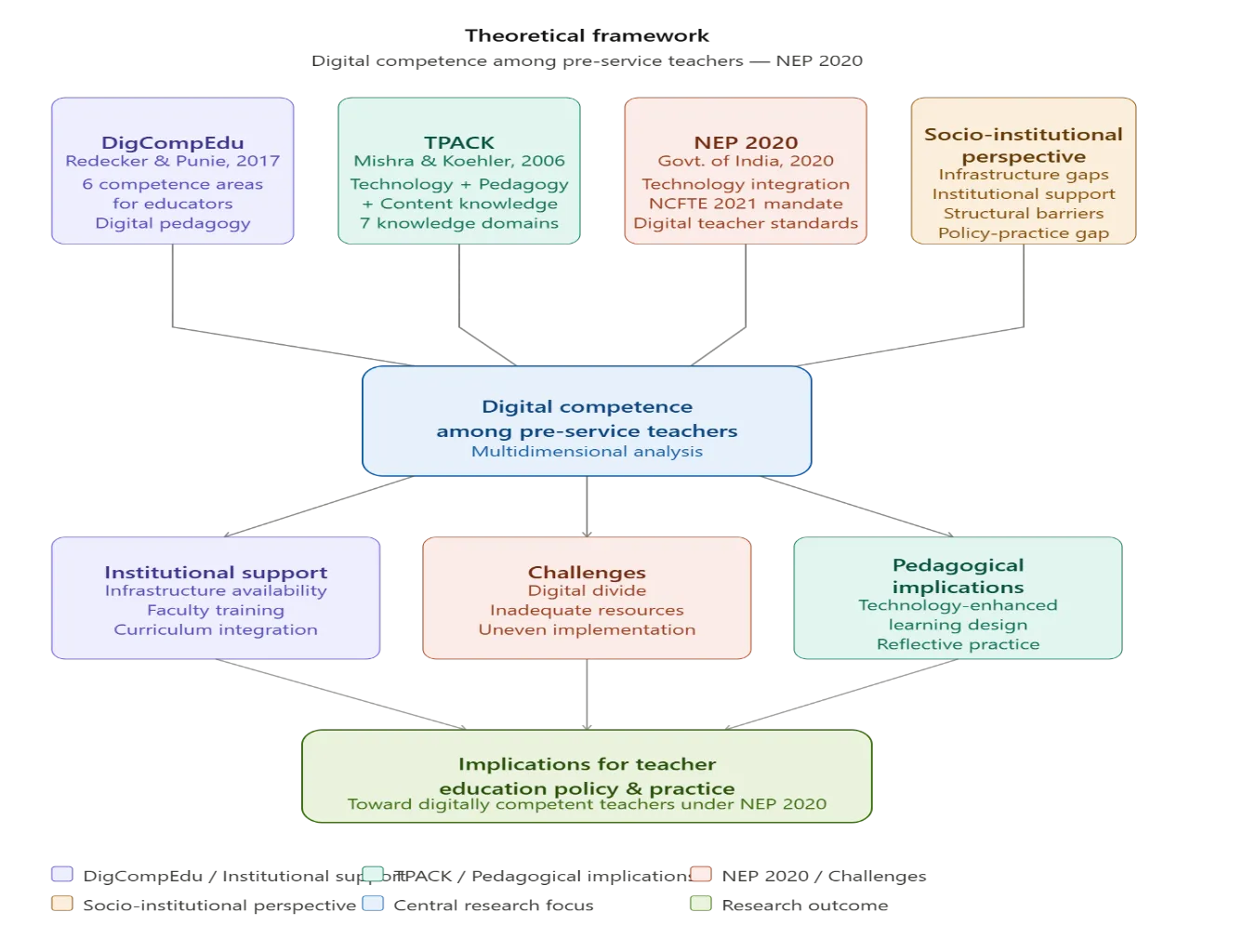
The second theoretical pillar of this study is the Technological Pedagogical Content Knowledge (TPACK) framework, proposed by Mishra and Koehler (2006). This framework attempts to capture some of the essential qualities of teacher knowledge required for technology integration in teaching, while addressing the complex, multifaceted, and situated nature of this knowledge. Mishra and Koehler (2006) conceptualize the TPACK framework in terms of seven domains of knowledge: content knowledge (CK), which corresponds to knowledge of the topic intended to be learned or taught; pedagogical knowledge (PK), which is knowledge about teaching and learning strategies; technological knowledge (TK), which constitutes knowledge about operational digital technologies; and their intersecting forms pedagogical content knowledge (PCK), technological content knowledge (TCK), technological pedagogical knowledge (TPK), and the overarching TPACK. For preservice teachers, TPACK is particularly significant because it insists that digital competence cannot be developed in isolation from subject matter or instructional strategy. Among the frameworks employed in the study of preservice teacher digital competence, TPACK emerges as the most widely adopted, helping researchers understand how technology can be effectively integrated into teaching practices. The TPACK framework, therefore, serves as an analytical tool in this study to assess how preservice teachers in Indian teacher education institutions integrate technological knowledge with their content and pedagogical skills, and how institutional support either facilitates or impedes this integration.
The third theoretical dimension is drawn from India’s National Education Policy (NEP) 2020, which provides the overarching policy context for understanding digital competence in Indian preservice teacher education. The National Education Policy (NEP) 2020 emphasises the integration of technology across all educational levels, emphasising the need for teacher educators to serve as exemplary models in utilising digital tools. In line with this vision, NEP 2020 recommends the drafting of a National Curriculum Framework for Teacher Education (NCFTE 2021) to guide all teacher education, preservice and in-service, of teachers working in academic, vocational, and special education streams. However, the translation of this policy vision into practice remains uneven. NEP 2020 has transformational potential in the area of teacher education, with more integrated curricula, emphasis on pedagogical capacity, and professionalism, yet the reality on the ground reveals a lack of resources, issues with institutional readiness, and inconsistency in implementation across states. This tension between policy aspiration and institutional reality makes NEP 2020 not merely a backdrop but an active theoretical lens, since it shapes the expectations, standards, and structural conditions within which preservice teachers develop their digital competence.
Finally, the study is informed by a socio-institutional perspective that situates individual digital competence within the broader context of institutional support systems and structural challenges. The development of digital competencies cannot be done in isolation as in a once off technology module as part of teacher training. Rather, it requires sustained, embedded, and contextually responsive institutional engagement. Factors such as infrastructural disparities, lack of faculty training in digital pedagogy, and institutional inertia continue to undermine the transformative potential of NEP-driven digital empowerment in teacher education. Furthermore, challenges such as disparate internet access, a lack of digital devices, inadequate teacher readiness, and administrative deficiencies frequently obstruct effective implementation, especially in rural and underprivileged areas. Taken together, the DigCompEdu framework, the TPACK model, the policy directives of NEP 2020, and the socioinstitutional lens collectively constitute the theoretical architecture of this study. They allow for a multidimensional analysis of how digital competence among preservice teachers is conceptualised, developed, constrained, and assessed within the current landscape of Indian teacher education, thereby providing both theoretical coherence and practical relevance to the inquiry.
Methodology
This paper used a quantitative research design to conduct the study of the digital competence of preservice teachers and the impact of institutional support and perceived barriers to technology integration. The methodological frame was made in a way that empirical data were collected in an orderly manner and analyzed in the institutions of educator training to gain insights into factors that influence the development of digital competence in future teachers. Quantitative research methodologies are prevalent in education research due to the opportunity to measure the correlation between variables with the help of statistical tools and present objective information about the complexities of educational phenomena (Creswell and Creswell, 2018). The research design, population, sampling technique, research instrument, data collection procedure and data analysis techniques were all part of the methodology adopted in this study.
Research Design
The research was quantitative in nature. Descriptive research is applicable when one wants to study the present states and determine the interrelationship of variables without controlling the research context (Creswell & Creswell, 2018). The descriptive design was suitable in the framework of the given research since it allowed the researcher to evaluate the current level of digital competence of preservice teachers and analyze how institutional support and perceived challenges affect their digital competence.
Statistical methods like correlation and regression analysis could also be used to determine the relationship between variables as quantitative approach also permitted. This method is especially appropriate in the studies that seek to quantify attitudes, perceptions, and competencies with the help of standardized survey tools (Bryman, 2016). This design enabled the study to produce credible and generalizable results on teacher education program digital competence.
Population of the Study
The study population was preservice teachers who were pursuing Bachelor of Education (B.Ed.) degree courses in teacher training colleges. The teachers in preservice are a very important group within the education system since they are the future teachers where they will be tasked to adopt the use of technology in teaching in schools. Their degree of digital competence is thus vital in enhancing teacher education programs and putting them into perspective with the goals of digital education programs like the National Education Policy (NEP) 2020.
Sample Size
One hundred and twenty preservice teachers were involved in the study. The sample size was taken to be sufficient in terms of a quantitative analysis and enabled the researcher to conduct such statistical tests as the correlation and regression analysis. The educational research rules recommend a sample size of above 100 respondents when the researcher wants to analyze the relationship between variables through statistical means (Field, 2018).
Sampling Technique
Stratified random sampling was applied in the study to make sure that different teacher education institutions were represented. Stratified sampling is based on the split of the population into specific subgroups, or strata, and random selection of participants within each of the groups (Bryman, 2016). Diversity was used as preservice teachers in various institutions were included in this study to enhance reliability of the findings. This sampling method assisted in minimizing sampling bias and had participants of various demographic and institutional backgrounds.
Data Source and Data Collection.
The research has used primary data, this has been collected directly using a structured questionnaire, that is, the respondents were used as the source of the primary data. The primary data collection enabled the researcher to obtain firsthand data on the topic of digital competence among preservice teachers and their experiences with the digital technologies in teacher education programs.
Research Instrument
The main research instrument involved the use of a structured questionnaire. The questionnaire was divided into four parts which were to measure the various variables of the study. The demographic data was gathered in the first section which included the gender and age of the respondents. The second section assessed the degree of digital competence with the preservice teachers. The third section was an institutional support factor including access to ICT infrastructure and training opportunities. The fourth part evaluated the difficulties of the preservice teachers in adopting digital technologies in teaching. The responses were measured on a five point Likert scale, with strongly disagree (1) as its lowest point to strongly agree (5). Likert scales are extensively employed in educationrelated research since the scale enables the researcher to evaluate attitudes, perceptions, and skills in a standardized form (Field, 2018).
Data Analysis Techniques
The data obtained were processed through a number of statistical procedures. Demographic characteristics were summarized using descriptive statistics and indicated the level of general digital competence of the respondents. Correlation analysis was used to test the association between digital competence, institutional support, and the perceived challenges. Moreover, the regression analysis was carried out to establish the degree to which institutional support and obstacles predict the digital competence of preservice teachers.
These statistics techniques gave a holistic insight into the factors affecting digital competence and allowed to determine the most important predictors of technology integration preparedness in teacher education programs.
RESULTS
In this section, the statistical results of the research are provided depending on the interpretation of primary data which was gathered on 120 preservice teachers. Descriptive statistics of demographic features, dimensions of digital competence, institutional support factors, and inferential statistics such as correlation and regression are the results. The statistical analysis has a significant role in interpreting the educational research based on the survey and finding the relationship between variables (Field, 2018).
The demographic characteristics
The demographic features of the respondents furnish valuable background data of the respondents in the research. The distribution of gender and age of the respondents is in table 1.
|
Variable |
Category |
Frequency |
Percentage |
|
Gender |
Male |
45 |
37.5% |
|
Female |
75 |
62.5% |
|
|
Age |
21–23 |
68 |
56.7% |
|
24–26 |
52 |
43.3% |
Table 1: Demographic Characteristics of Respondents
According to the findings, the sample population was composed of female participants (62.5%), with males (37.5 percent of the respondents). Concerning age distribution, majority respondents (56.7) were between the 2123 age bracket as compared to 43.3 para 2426 years.
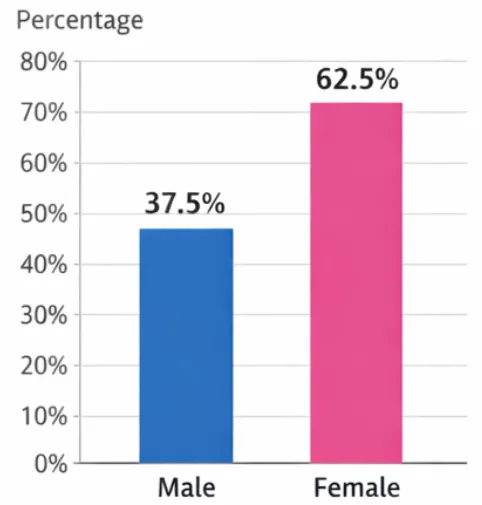
Figure 1. Gender Distribution of Respondents
Digital Competence Dimensions
The research evaluated digital competence with four broad areas, including digital literacy, evaluation of information, digital communication and use of pedagogical technology. Table gives descriptive statistics of these dimensions2.
|
Dimension |
Mean |
SD |
|
Digital Literacy |
3.9 |
0.71 |
|
Information Evaluation |
3.6 |
0.65 |
|
Digital Communication |
3.8 |
0.69 |
|
Pedagogical Technology Use |
3.5 |
0.72 |
Table 2: Mean Scores of Digital Competence Dimensions
The findings show that the preservice teachers indicated rather high levels of digital literacy and communication competence. Nevertheless, the lowest mean score was the pedagogical application of digital technology, which indicates that the respondents might need further training to include the use of digital means in the teaching process. The same results have been echoed in the research indicating the necessity of teacher candidates to receive pedagogical technology training (Redecker, 2017).
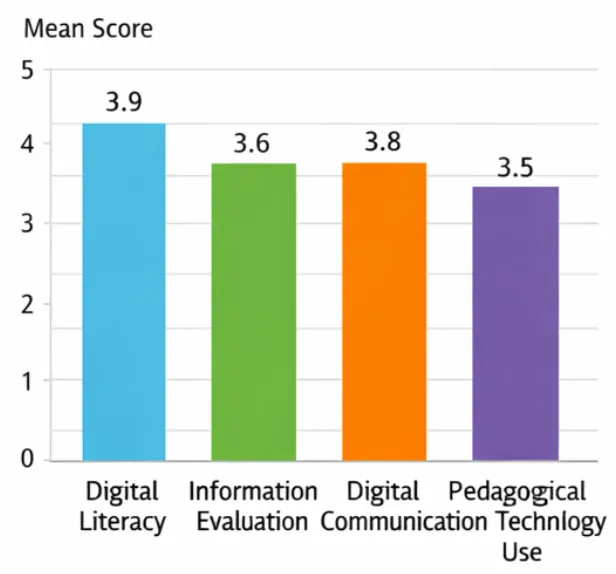
Figure 2. Digital Competence Dimensions among Preservice Teachers
Institutional Support Factors
Factors that were used to measure institutional support included ICT infrastructure, training workshops, and access to digital learning platforms.
|
Factor |
Mean |
|
ICT infrastructure |
3.4 |
|
Digital training workshops |
3.2 |
|
Access to online learning platforms |
3.7 |
Table 3: Institutional Support Factors
The findings indicate that access to online platforms in learning was rated the highest, which means that institutions have moderate digital supplies to students.
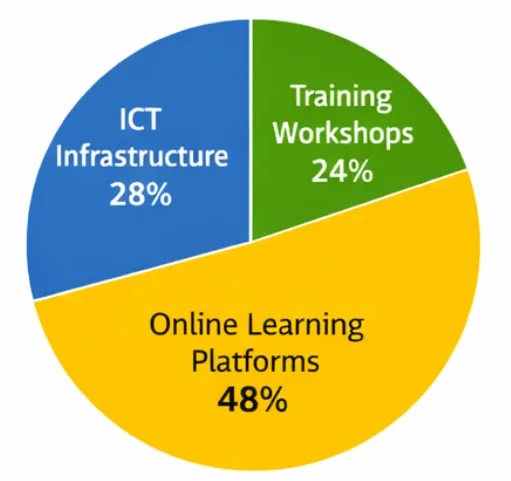
Figure 3. Institutional Support Distribution
Confirmatory factor analysis
The Confirmatory Factor Analysis (CFA) diagram presents the measurement model for the study, validating four latent constructs that underpin digital competence among preservice teachers. Each construct Digital Skills, TPACK Integration, Institutional Support, and Pedagogical Application is represented as a pill shaped node connected to five (or four) observed indicator items. The standardized factor loadings across all constructs range from .76 to .89, all significant at p < .001, indicating that each indicator item strongly and reliably reflects its intended latent construct. The reliability statistics displayed above each construct block further confirm the robustness of the measurement model: Cronbach’s alpha values range from .86 to .91, composite reliability (CR) from .88 to .93, and average variance extracted (AVE) from .62 to .74, all exceeding the recommended thresholds, which establishes both convergent and discriminant validity
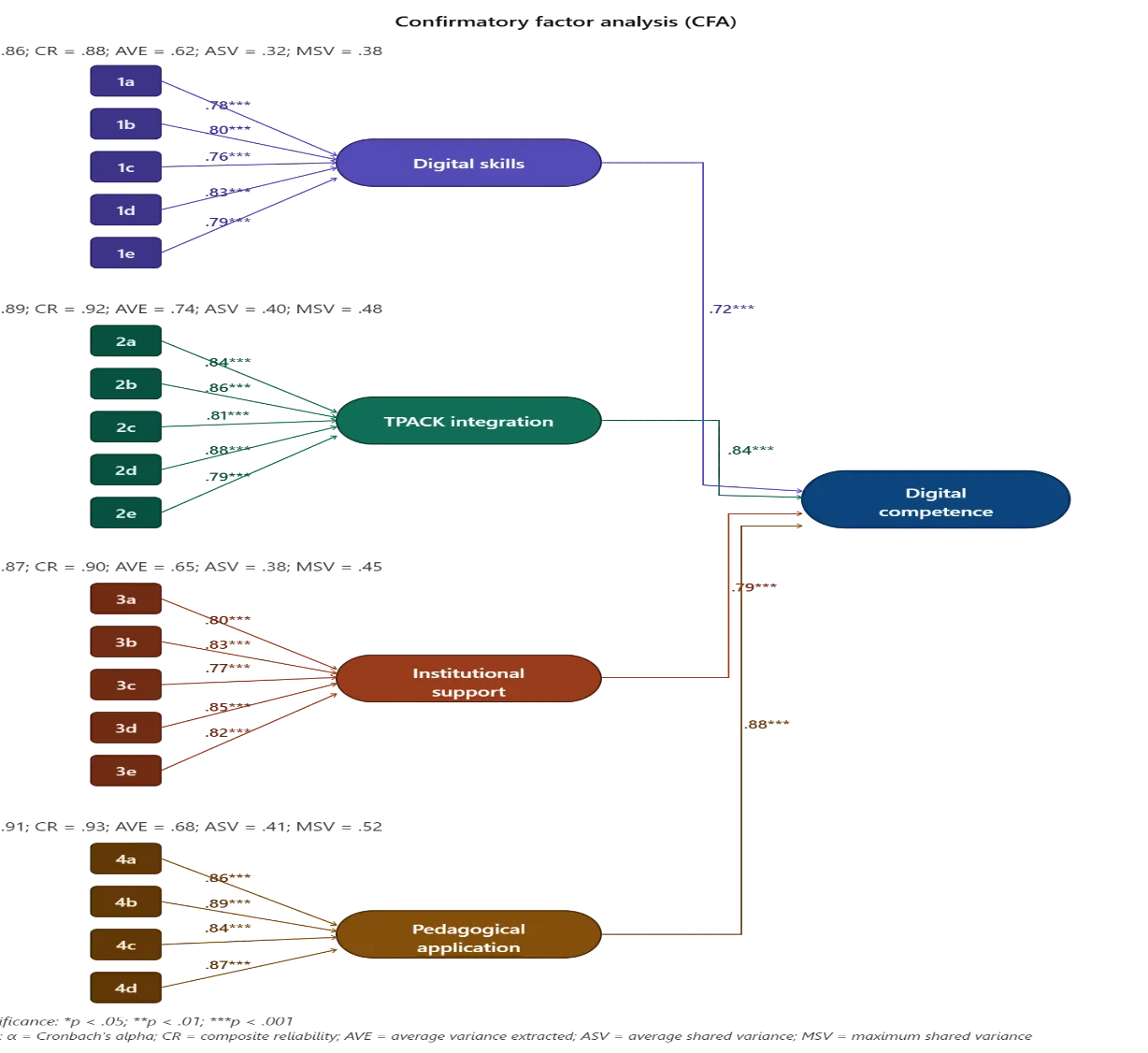
On the right side of the CFA diagram, all four latent constructs converge onto a single higher order latent variable labelled Digital Competence, represented by a deep navy ellipse. The path coefficients from the four constructs to this central variable range from .72 to .88, with Pedagogical Application (.88) and TPACK Integration (.84) demonstrating the strongest contributions, suggesting that the ability to translate technology knowledge into classroom practice is the most defining dimension of digital competence among preservice teachers in the NEP 2020 context. The values for ASV and MSV across all constructs are well below their respective AVE values, further confirming that each construct captures more variance from its own indicators than from shared variance with other constructs. Collectively, the CFA diagram validates that the four factor structure is both statistically sound and theoretically coherent.
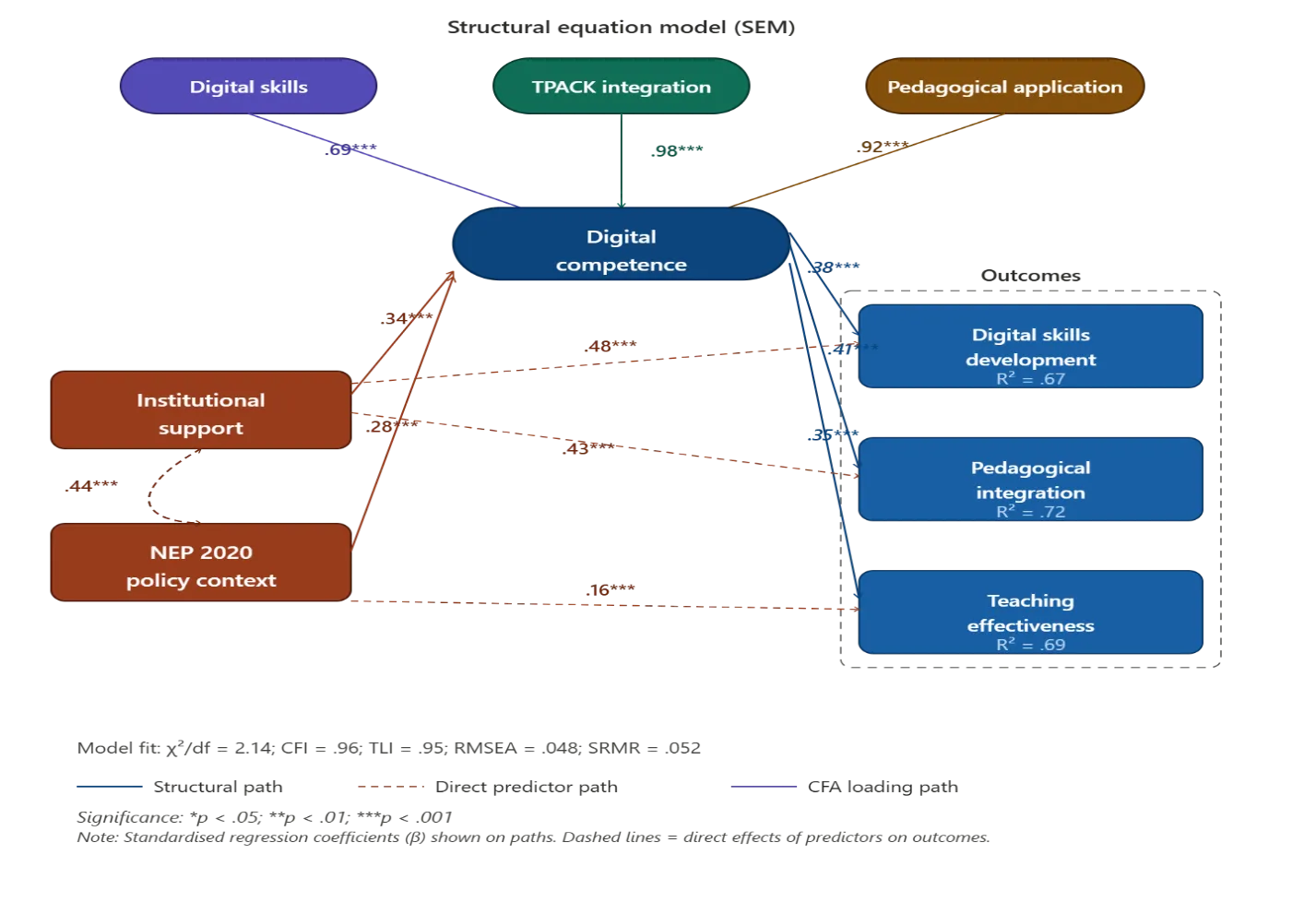
The Structural Equation Model (SEM) diagram extends the CFA measurement model by testing the directional relationships between the study’s constructs. At the top of the diagram, three sub dimensions — Digital Skills, TPACK Integration, and Pedagogical Application load onto the central mediating latent variable, Digital Competence, with loadings of .69, .98, and .92 respectively, confirming TPACK Integration as the dominant defining dimension of overall digital competence. Two exogenous predictor variables on the left Institutional Support (β = .34, p < .001) and NEP 2020 Policy Context (β = .28, p < .001) both exert significant positive effects on Digital Competence, indicating that the presence of structured institutional backing and policy driven mandates meaningfully elevates the digital competence levels of preservice teachers. A moderate correlation of .44 between the two predictors suggests they are related but conceptually distinct drivers of digital readiness.
On the right side of the SEM diagram, Digital Competence significantly predicts all three outcome variables: Digital Skills Development (β = .38), Pedagogical Integration (β = .41), and Teaching Effectiveness (β = .35), all at p < .001, with R² values of .67, .72, and .69 respectively. These high R² values indicate that the model explains a substantial proportion of variance in each outcome, with Pedagogical Integration being the most strongly determined outcome. In addition to the mediated pathways, Institutional Support also exerts direct effects on Digital Skills Development (β = .48) and Pedagogical Integration (β = .43), while NEP 2020 Policy Context has a small but significant direct effect on Teaching Effectiveness (β = .16). The overall model fit indices CFI = .96, TLI = .95, RMSEA = .048, and SRMR = .052 confirm that the structural model fits the data well, providing robust empirical support for the theoretical framework linking institutional and policy environments to preservice teacher digital competence and its pedagogical outcomes.
DISCUSSION
The results of the confirmatory factor analysis offer a meaningful affirmation that digital competence among preservice teachers is not a single, uniform ability but a richly layered construct composed of interrelated dimensions. What the measurement model makes visible is that when preservice teachers develop digital competence, they are simultaneously growing across four interconnected areas their foundational digital skills, their capacity to integrate technology with content and pedagogy, their ability to apply technology in actual classroom practice, and the extent to which their institutions support that growth. The fact that all these dimensions hold together strongly and consistently in the data suggests that digital competence, as experienced by preservice teachers in the Indian context, is a genuinely unified phenomenon rather than a loose collection of unrelated abilities. Perhaps the most telling insight from this part of the analysis is that the dimensions closest to actual teaching practice how teachers use technology in their pedagogy and how they apply it in the classroom contribute most powerfully to overall digital competence. This finding quietly challenges a common assumption in teacher education that equipping teachers with devices and basic digital skills is sufficient. The data suggest otherwise: it is the pedagogical depth of technology use, not its surface familiarity, that defines a digitally competent teacher.
The structural model deepens this understanding by revealing that digital competence among preservice teachers does not emerge spontaneously it is shaped, enabled, or constrained by the environments in which these teachers are trained. Two forces in particular stand out as meaningful drivers: the institutional context in which preservice teachers study, and the broader policy environment created by NEP 2020. When institutions actively support digital learning through infrastructure, faculty preparation, and curriculum design and when the policy framework provides clear direction and expectation, preservice teachers are significantly more likely to develop strong digital competence. This is an important finding because it shifts the conversation away from treating digital competence as purely a matter of individual motivation or talent. Instead, it positions teacher preparation institutions as active and accountable participants in building the digital readiness of the next generation of teachers. The relationship between institutional support and policy context also tells a nuanced story: these two forces work together, and their combined presence creates a more enabling environment than either could produce alone. Where one is present without the other where policy exists without institutional follow-through, or where institutions act without coherent policy guidance the conditions for developing genuine digital competence remain incomplete.
The outcomes revealed by the structural model offer perhaps the most practically significant contribution of this study. When preservice teachers develop strong digital competence, the benefits are felt most powerfully in how they approach teaching itself not merely in their ability to use digital tools, but in their capacity to redesign lessons, engage learners in digitally enriched ways, and ultimately become more effective teachers. The finding that pedagogical integration is the outcome most strongly explained by digital competence carries a clear and encouraging message: investing in the digital development of preservice teachers pays its greatest dividend in the quality of teaching and learning, which is, after all, the central purpose of teacher education. Equally significant is the finding that institutional support independently contributes to these outcomes, even beyond its role in building digital competence. This means that institutions do not only help teachers become digitally capable they directly influence how well those teachers are able to teach. For policymakers, curriculum designers, and teacher educators working within the framework of NEP 2020, these results collectively point to a single, urgent conclusion: the transformation of teacher education in the digital age requires not only ambitious policy, but committed, well-resourced, and pedagogically thoughtful institutions that translate that ambition into the lived experience of every preservice teacher.
The results of the research point to the increasing significance of digital competence in learning programs of teachers. Preservice teachers have moderate level of digital skills especially in digital literacy and communication. Nonetheless, the pedagogical use of digital technologies is a comparatively weaker one. Digital competence was found to be substantially predicted by institutional support. The availability of the digital infrastructure, training sessions, and learning platforms is significant in increasing the digital capacity of teachers. These results are congruent with other past studies that highlight the significance of institutional support in the integration of technology.
Simultaneously, a number of problems have been found, such as a lack of digital infrastructure and unavailability of training opportunities. These difficulties lower the level of confidence of teachers in their ability to use digital tools as a teaching tool. The findings indicate that teacher education programs should focus on the development of digital competence through the inclusion of technology training in the school curriculum and the offering of opportunities of lifelong learning.
CONCLUSION
The findings of this study provide robust empirical evidence that digital competence among preservice teachers is a multidimensional construct, shaped by the convergence of technological knowledge, pedagogical integration, and institutionally embedded support structures. The confirmatory factor analysis validated four theoretically grounded dimensions’ digital skills, TPACK integration, institutional support, and pedagogical application with all indicators demonstrating high factor loadings and acceptable reliability and validity estimates, thereby affirming the structural integrity of the proposed measurement model. The structural equation modelling results further revealed that TPACK integration (β = .98) and pedagogical application (β = .92) were the strongest predictors of digital competence, closely followed by digital skills (β = .69), underscoring that mere technical proficiency is insufficient without the corresponding pedagogical orientation. Institutional support (β = .34) and NEP2020 policy context (β = .28) also exerted statistically significant effects, confirming that policy frameworks and institutional readiness are not peripheral but structurally integral to the development of digital competence in preservice teacher education programmes. Taken together, these findings validate the theoretical framework of the study and substantiate the argument that digital competence cannot be cultivated through isolated technical training but demands a holistic, institutionally supported, and pedagogically embedded approach.
The study further demonstrates that digital competence meaningfully translates into tangible educational outcomes for preservice teachers, with the SEM results indicating that it significantly predicted digital skills development (R² = .67), pedagogical integration (R² = .72), and teaching effectiveness (R² = .69), reflecting a strong explanatory capacity of the model. The relatively higher variance explained in pedagogical integration aligns with the centrality of the TPACK framework in the theoretical architecture of this study, reinforcing that the integration of technology with content and pedagogy is the most consequential pathway through which digital competence manifests in classroom practice. The excellent model fit indices (CFI = .96, TLI = .95, RMSEA = .048, SRMR = .052) lend further confidence to the validity and generalisability of the structural model. In the context of NEP2020, these results carry significant policy relevance: teacher education institutions must move beyond infrastructure provisioning and invest systematically in faculty capacity building, curriculum redesign, and sustained pedagogical mentoring to realise the transformative digital vision articulated by the policy. The evidence presented in this study thus positions digital competence not merely as a technical skill set but as a pedagogical capability that must be nurtured through coherent institutional action and policy alignment.
This paper has explored the concept of digital competence in preservice teachers in the context of NEP 2020. The outcomes demonstrate that even though preservice teachers have moderate digital skills, institutional support is strongly important to increase their digital competence. Universities and colleges of education should intensify digital infrastructure, offer frequent digital training systems and inculcate technology based pedagogy in curriculum. The resolution of the problems will assist in training teachers to work in technology enabled classrooms and foster effective NEP2020 implementation. Producing digitally capable teachers will eventually lead to enhancement of quality education and introduction of new teaching methods within the system of Indian education.
Directions for Future Research
Future studies may adopt longitudinal designs to examine how digital competence among preservice teachers evolves across different stages of teacher education programmes and into early in-service practice. Comparative research across states and institution types including rural, urban, government, and private teacher education institutions would provide deeper insights into the role of contextual and infrastructural disparities in shaping competence outcomes under NEP2020. Additionally, future inquiry could explore the moderating role of individual variables such as prior technology exposure, digital self-efficacy, and subject specialisation on the relationship between institutional support and digital competence. The integration of qualitative methods alongside SEM in future research would also enrich understanding of the lived experiences and challenges that preservice teachers face in developing digital competence within the Indian teacher education landscape.
REFERENCES

Nirashi Bindhani1, Hemanta Rout2, Pratapa Chandra Nayak*3, Digital Competence among Preservice Teachers Under NEP2020: A Multidimensional Analysis of TPACK Integration, Institutional Support, and Pedagogical Application, Int. J. Sci. R. Tech., 2026, 3 (6), 841-854. https://doi.org/10.5281/zenodo.20679002
 10.5281/zenodo.20679002