

We use cookies to ensure our website works properly and to personalise your experience. Cookies policy
Department Of Pharmacy, JES’s SND College Of Pharmacy Babhulgaon (Yeola), India
Digital health technologies (DHTs) are becoming more and more common in clinical research to Practise flexible, patient-centred, evidence-based approaches to clinical trials. As with any other implementation, implementing a telehealth program or system requires a certain amount of funding.digital, electronic informed consent, remote patient monitoring, and patient-reported outcomes Other digital platforms and treatments allow for remote interaction and collection of clinical data. As well as information generated by patients.[1,5] The primary forms and uses of DHTs are covered in this review.Focus on their role in Traditional, Hybrid and Decentralized Clinical Research.Models of clinical trials. DHTs can enhance the retention, enrollment, and convenience of participants.Selected trials, data access and continuous gathering of data activities. However, implementing them comes with difficulties in terms of data privacy,Interoperability, accessibility, data quality, validation, cybersecurity and technical infrastructure Ethical standards and rules are followed and participants participate. Also, the analysis highlights new advancements in AI and machine learning, and advanced wearables,Decentralized research, real world evidence and digital biomarkers, patient centered. Ethical implementation, regulatory oversight, standardization and validation will be required.Be required for the safe application of DHT. Generally, DHTs can be used to make clinical.Continue to focus on research that is patient-centered, data-driven, flexible and accessible.Ethical and scientific needs.[2,19]
Clinical studies are an essential part of clinical research and are crucial for determining the safety, effectiveness, and clinical performance of medical treatments and healthcare procedures. Traditionally, clinical trials have conducted through centralized research centers where informed consent, recruitment, follow-up, clinical assessment and data collection are done by the patients who come to the facilities at specific times. However, frequent visits to the site can create issues of time, travel, geography, and participation, and could limit access to clinical research for individuals who live far from the research site.[1]
Decentralized clinical trial (DCTs) is a more patient-focused and flexible approach that has transformed from being predominantly held at conventional clinical trial sites. Depending on the design of the study, DCTs can involve telemedicine, remote visits, home-based health care, direct-to-participant services, digital data collection, and remote monitoring. These techniques can help increase participation, reduce participant burden, and help research in real world contexts.
Digital Health Technologies (DHTs) have also seen a significant evolution and the potential for decentralized clinical research has grown. Communication, data collection, assessment of outcomes, and monitoring can be facilitated by remote monitoring technologies, telemedicine, electronic informed consent, electronic patient-reported outcomes, electronic health records, wearables, and mobile health applications, outside of the typical research environments. In addition, they are able to encourage more frequent evaluation of health outcomes and health information from patients.[3]
A comprehensive scoping review identified 510 research articles covering 169 medical conditions, with many of these studies utilising digital technologies to collect patient generated behavioural, physiological and symptom related data. Wearable technologies, and mobile applications, were important approaches for measuring real-world clinical outcomes.[4] These tools made people realize the potential of using Digital Health Technologies (DHTs) for data collection in real-world setting for clinical research.
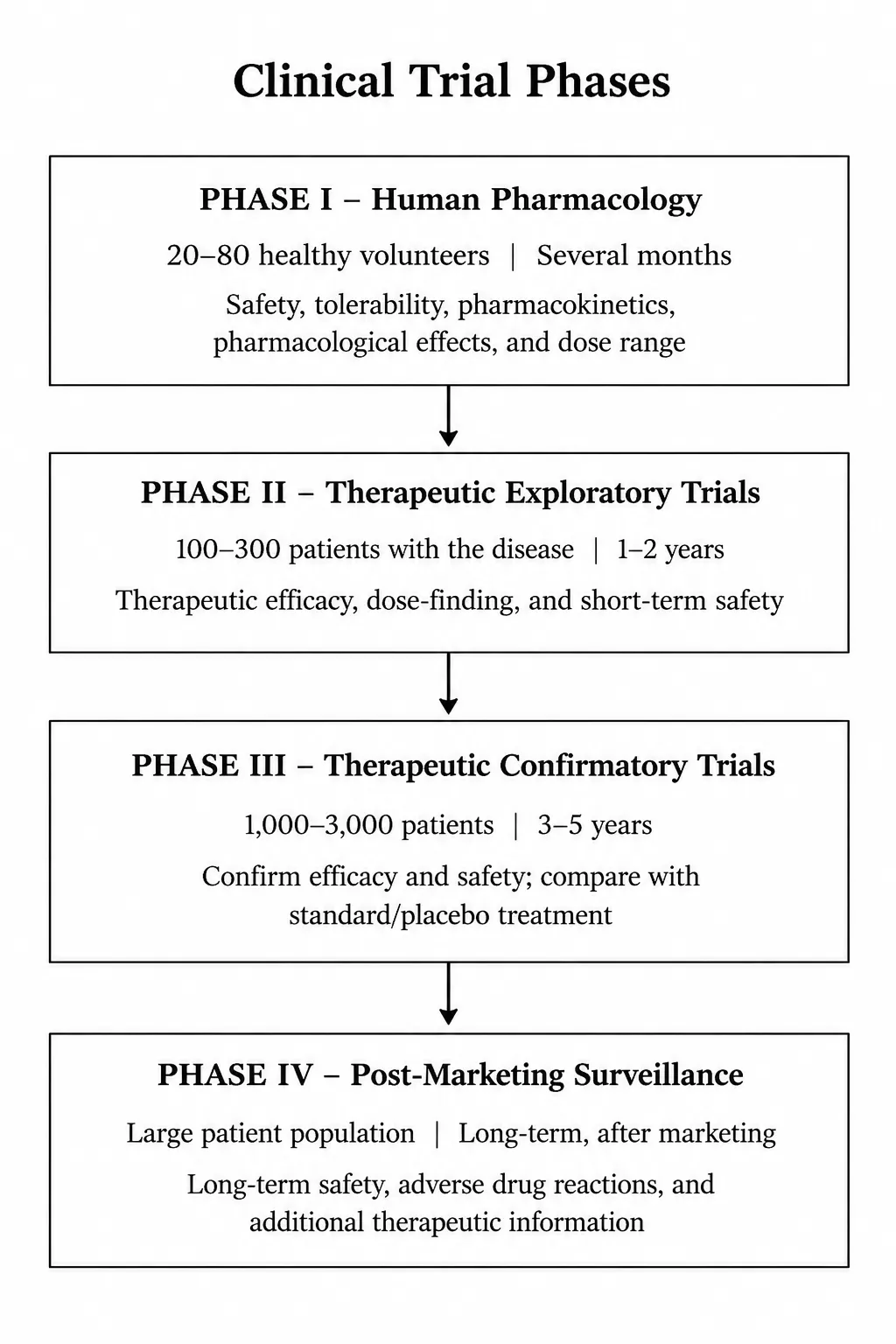
2. The various categories of digital health technology
2.1 Telemedicine / Telehealth
Telemedicine is a digital health solution that facilitates healthcare and clinical communication.patients and their families can receive services via information and communication technologies without having to go to a clinic.physical presence of healthcare professionals at the same location. It supports remote assessment, follow-up, monitoring, and communication in a clinical context.Telemedicine may facilitate remote participant visits, clinical follow-up, and clinical research.[1,3]
communication between investigators and remote monitoring. It enables decentralized clinical trials.picked study activities to be carried out nearer to the homes of participants, lowering regular site attendance assists participant-centered, flexible trial models and pays them a visit.Wearables, PROs, remote monitoring systems, and other tools can also be supplemented by telemedicine.Online platforms. Accessibility, Communication, and attention are needed for implementation.the suitability of remote assessment, quality, privacy, data security, and regulatory requirements.Adequate validation, interoperability, participant adherence, digital literacy, and the digital
Also, consider division.[11,19]
2.2 mHealth (Mobile Health) Applications
Software-based digital health instruments that may be accessed using a smartphone or tablet are known as mobile health (mHealth) apps.to facilitate communication, data gathering, monitoring, and engagement, mobile gadgets between research or healthcare teams and participants.In clinical research, mHealth apps can promote participant involvement, symptom management, and adherence to behavioral assessment, reporting, distant follow-up, and patient-generated health information(PGHD) is a genetic disorder caused by mutations in the gene that encodes the protein translocase of the inner mitochondrial membrane 8A. They can gather information about symptoms during everyday activities.[5]
supplementing other health measures, treatment-related information, and behaviors regular clinical assessments. With wearables, remoteness, and decentralized research, mHealth apps can function in a hybrid manner.to facilitate remote engagement and data collection, utilize digital platforms, EPROs, and monitoring systems move. Considerations for data quality, privacy, security, and interoperability must be given while implementing. Validation, connectivity, adherence, and usability.
2.3 Wearable gadgets
Digital technologies known as "wearable gadgets" are used to record health-related data over time.everyday tasks. They facilitate the gathering of physiological, behavioral, and data in clinical research.outside of conventional research environments, data pertaining to activity.Continuous information about physical activity, sleep, and physiological markers that may be missed by standard clinical exams can be obtained through wearables.participants' health status. They may be connected to remote mobile applications.remote data collection and transmission via digital platforms, monitoring systems, and digital platforms.While digital metrics and endpoints can be produced by wearables, validation is necessary.must be demonstrated to be trustworthy and medically pertinent. Among the key issues are interoperability, privacy, participant adherence, device validation, data quality, and data interpretation2. Types of digital health technology.[11]
2.4 Remote Patient Monitoring (RPM)
Through the use of digital tools, Remote Patient Monitoring (RPM) gathers and transmits health-related information from individuals not in typical clinical or research environments.It facilitates remote monitoring and data collecting between scheduled study visits.
RPM may utilize wearables, sensors, mobile apps, and connected digital platforms to acquire details on physiology, behavior, and symptoms. The requirement may be lowered for remote participation, ongoing assessment, and support follow-up for frequent site visits.During participants' regular daily activities, RPM may give information and aid with clinical support.evidence generation and outcome evaluation from actual settings. Effective and productive Data quality, validation, adherence, interoperability, and implementation all need attention.the management of data that is produced continuously, as well as its security and privacy.[4]
2.5 eConsent (Electronic Informed Consent)
eConsent, which stands for electronic informed consent, employs digital and electronic techniques to offer research participants with information.obtain informed consent from research participants and offer information. It may facilitate the consent process, especially if trial operations are being carried out remotely.In hybrid and decentralized clinical studies, eConsent has the potential to minimize the necessity for in-person attendance.only for consent purposes and may be used with digital platforms, telemedicine,ePROs and remote monitoring systems.Participant comprehension, autonomy, accessibility, privacy, and security must all be considered for eConsent.documentation, and confidentiality. It shouldn't just swap paper consent for a digital consent form.Participants should have the chance to understand the study data in an electronic manner.to voluntarily agree to and ask questions in compliance with ethical and regulatory standards requirements.[19]
2.6 Electronic Clinical Outcome Assessments (eCOA) and Electronic Patient-Reported Outcomes (ePRO)eCOA (Assessments)
Digital methods for gathering data include electronic Patient-Reported Outcomes (ePRO).immediately from participants regarding their health, experiences with treatment, and symptoms state. eCOA is a broader category that includes clinician-, observer-, and patient-generated data.assessments based on performance.ePRO/eCOA may be put into practice using tablets, web platforms, and mobile applications.
efficient electronic data collecting is supported by smartphones. They are able to support both symptom and recurring outcome collecting, remote evaluation, treatment evaluation, and digital endpoints.Additionally, they can be utilized in mHealth applications, wearables, and distance surveillance systems. Usability, adherence, data quality, privacy, and implementation need to be carefully considered validation, accessibility, and interoperability.[11,19]
2.7 Digital Therapeutics (DTx)
Digital Therapeutics (DTx) are software-based, evidence-based therapeutic interventions designed to prevent, manage, or treat medical disorders or diseases. Unlike general health or wellness applications, DTx are intended to produce therapeutic effects and therefore require appropriate clinical evidence.
In clinical research, DTx can support remote intervention delivery, participant engagement and monitoring, outcome assessment, and decentralized clinical research. Their remote delivery makes them relevant to home-based and patient-centred trials. Clinical evaluation may involve randomized controlled trials, real-world or usage data, and digital biomarkers or endpoints. Important considerations include clinical evidence, validation, participant engagement, usability, and standardization of digital endpoints.[2]
2.8 Electronic Health Records (EHR)
Electronic Health Records (EHRs) are digital records containing information generated during patients’ healthcare encounters. In clinical research, they provide routinely collected clinical information and support research and evidence generation.
Applications of EHRs:
However, effective use of EHRs requires attention to data quality, interoperability, privacy, security, governance, and appropriate access.
2.9 Software as a Medical Device (SaMD)
Software that fulfills a medicinal function is known as Software as a Medical Device (SaMD) without being included in a piece of hardware used for medical purposes. In clinical studies, SaMD can assist with: evaluation, surveillance, observation, and judgment.
SaMD uses include:
â— Examining patients and keeping an eye on their progress
â— Digital assessment of outcomes
â— Interpretation and processing of digital data
â— Providing support for decentralized trial activities
SaMD may be incorporated with mobile apps, wearables, and remote monitoring.digital clinical platforms and systems.However, its usage requires attention to clinical validation, intended purpose, dependability, data quality, andregulatory requirements, and clinical relevance.[11,19]
2.10 Artificial Intelligence (AI) and Machine Learning (ML)
Machine Learning (ML) employs data-driven techniques to detect patterns and produce predictions or classifications, whereas Artificial Intelligence (AI) allows computer systems to carry out jobs requiring analysis or reasoning. AI/ML can assist in data-driven clinical study design and evidence synthesis in clinical research.
How AI/ML are Used in Clinical Research:
By identifying meaningful patterns in large datasets, AI/ML may be able to help researchers analyze data collected from wearables, mobile apps, remote monitoring systems, EHRs, and other digital platforms.[4,12]
2.11 Electronic Data Capture (EDC)
Electronic systems used to capture, store, and manage clinical trial data are referred to as Electronic Data Capture (EDC).managing, storing, and transferring clinical trial data. It offers a structured digital environment for minimizing reliance on paper-based data collection by offering information pertinent to a study.The gathering and administration of information produced during study appointments is supported by EDC,trial operations such as assessments are available for review with information organized and analysis.
The main responsibilities of the EDC are as follows:
â— Control and collection of electronic data
â— Unification of data from remote monitoring, wearables, and ePROs
â— Review and analysis data organization
â— Enabling dispersed and technology-powered trials[11]
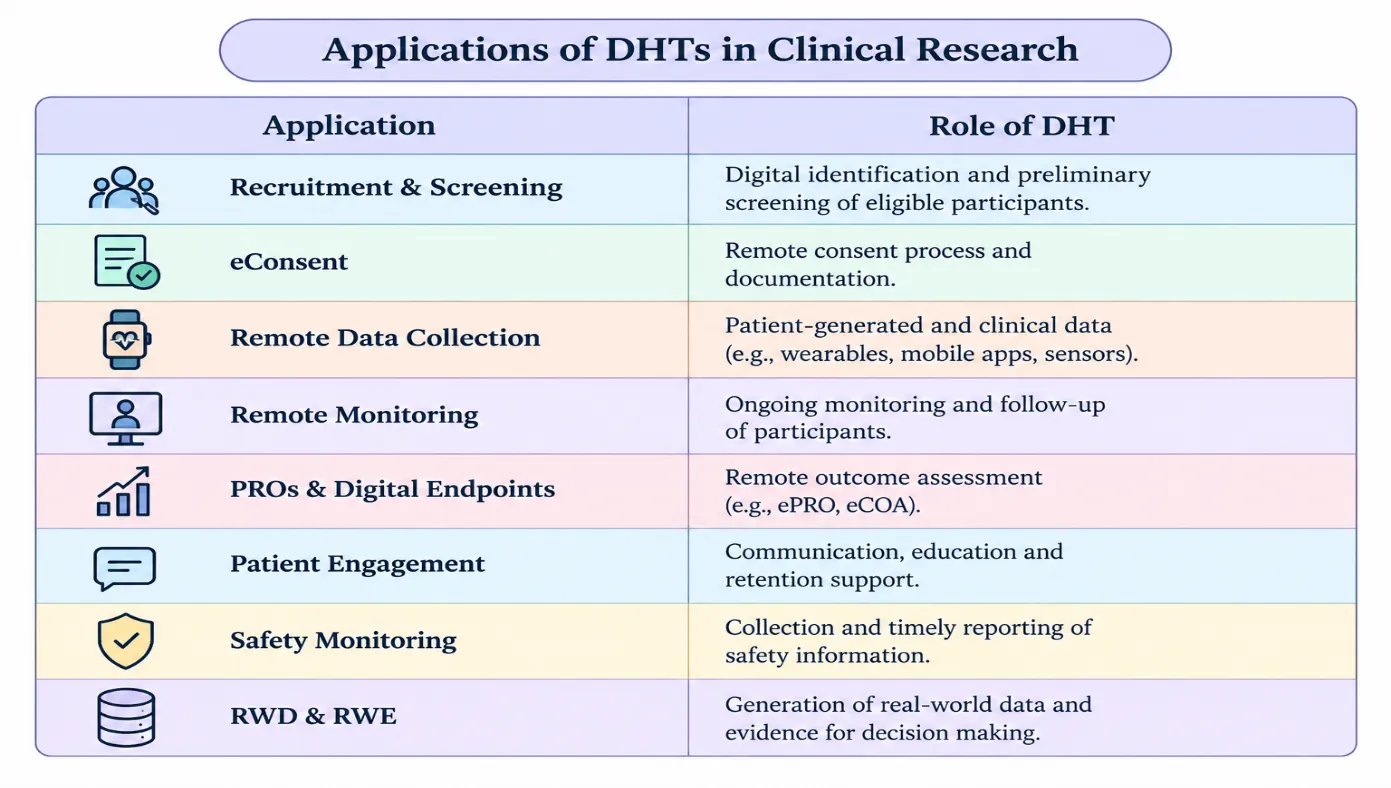
3 Applications of Digital Health Technologies in Clinical Research
3.1 Participant Recruitment and Screening
The process of locating and assessing eligible participants for clinical research is known as participant recruitment and screening. By allowing electronic communication and expanding recruitment outside of standard research locations, digital health technologies (DHTs) may help these activities.
Websites, mobile apps, social media, EHRs, online recruiting platforms, and digital communication channels are examples of digital tools that may aid in finding and communicating with possible participants. Rosa and colleagues found that digital technology plays a critical role in clinical trials for data collection, retention, and recruitment.
Applications include:
3.2 Electronic Informed Consent (eConsent)
Clinical research participants can learn about the study and give their educated consent through electronic informed consent (eConsent) procedures. It is extremely important for hybrid and decentralized clinical trials, where consent-related activities can be carried out from a distance. By enabling patients to electronically examine study information without having to go to a research site, eConsent can facilitate remote enrollment. As a result, it may help decentralize things and make participants' lives simpler.
Important points to remember:
3.3 Remote Data Collection
Researchers can use digital health technologies to gather study-related data from a distance utilizing wearable technology, ePROs, remote monitoring systems, and mobile applications other digital platforms. Traditional site-based data collection is less dependent as a result.Patient-generated health data (PGHD) may be gathered during remote data collection. participant's regular activities, such as those related to their symptoms, behavior, physiology, and more information pertaining to the activity.Participants are able to send and create information during decentralized clinical studies.going to a study facility for every evaluation. Diverse data may be gathered by a range of technologies.
data categories:
â— Data related to activity and physiology from wearables and sensors.
â— ePROs and mobile apps for participant-reported health and symptoms information.
â— Monitoring systems located remotely that provide ongoing health-related data.
Repeated and longitudinal measurements can be supported by remote data collecting, which may providecomplementing typical and information from the participants' usual surroundings evaluations of clinical data.[1,3]
3.4 Remote Monitoring and Follow-up
Clinical research teams may collect and examine participant-related information outside of traditional research sites using digital health technologies via remote monitoring. Connected digital platforms, ePROs, mobile apps, telemedicine, sensors, and wearable devices are just a few of the ways that it might be supported and it is a key component of dispersed clinical research. Remote monitoring helps with follow-up, ongoing observation, and evaluation between scheduled research visits in clinical trials. Participants' physiological, behavioural, and symptom-related data can be collected using digital technologies in their natural surroundings.
Key uses for remote monitoring include:
3.5 Patient-Reported Outcomes and Digital Endpoints
Information reported directly by subjects on health outcomes is called patient-reported outcomes (PROs).their health status, symptoms, functionality, or experience with an intervention. When they are referred to as having been gathered online using mobile applications or digital platforms.ePROs, or electronic Patient-Reported Outcomes.Remote and frequent collection of PROs is made easier by digital health technology.participants reporting knowledge outside of typical site visits and facilitating longitudinal reporting evaluation.
Applications:
â— Remote PRO collection – symptoms and health data may be provided electronically.
â— Longitudinal assessment – Data can be gathered repeatedly throughout time.
â— Digital endpoints - physiological, behavioral, and symptom data may offer measurements derived digitally.
â— Comprehensive outcome assessment: smart devices, ePROs, sensors, and wearables can deliver real-time or longitudinal data in addition to traditional assessments.[4]
3.6 Patient Engagement and Retention
Because they are essential for effective clinical research, patient involvement and retention are important.Continued involvement facilitates the completion of planned assessments and the gathering of dependable research data. Communication, data reporting, and data sharing are just a few ways that DHTs may foster participation.interacting with research teams, and watching them.Digital technologies, such as digital platforms, telemedicine, remote monitoring, mobile apps, and ePROs,Throughout a study, interaction can be sustained via monitoring. In decentralized trials, need is lessened.may improve convenience and facilitate ongoing engagement in frequent physical visits.
How DHTs May Aid in Engagement and Retention:
â— Simple communication with research teams.
â— Remote data reporting and assessments.
â— Fewer site visits are required.
â— Frequent engagement and digital criticism.[15]
3.7 Safety Monitoring
For the purpose of discovering and assessing safety-related information during a clinical study, safety monitoring is a crucial part of clinical research. Remote collection and transmission of participant-related data are made possible by digital health technologies, which may aid in safety monitoring.You can collect information about participant safety using technologies such as wearable devices, remote monitoring systems, telemedicine, electronic patient-reported outcomes (ePROs), and linked digital platforms.Research teams can gather information in between scheduled site visits and may support more ongoing observation using these methods.Remote monitoring can aid with follow-up and safety assessment in decentralized clinical research. Electronic notifications, alerts, and the sharing of safety-related information might also be supported by digital systems. When appropriately validated and integrated into the study workflow, remotely gathered symptom-related or physiological data might offer more insights.[12]
Some of the major considerations are:
3.8 Real-World Data and Real-World Evidence
RWD is defined as health-related data gathered outside of conventional settings.RWE is created by using real-world data (RWD) in healthcare practice, whereas randomized controlled trial (RCT) settings generate clinical trial evidence.RWD may be analyzed to provide data regarding healthcare interventions and outcomes. Digital health technology, when used in conjunction with wearable gadgets, may help produce RWD.digital platforms like EHRs, remote monitoring systems, and mobile apps. These are not the toys that I would have chosen.During their regular activities and healthcare, technologies may capture information. giving information from real-world situations.
Important applications of DHTs in RWE/RWD:
â— routine activity-generated patient data collection.
â— Ongoing or frequent monitoring of health-related data.
â— Outcome evaluation conducted apart from planned clinical examinations.
â— Supplementing traditional clinical trial data with real-world data.
Clinical research can be expanded beyond conventional methods by integrating DHTs with RWE and RWD. provide more information about results in real-world environments and trial settings.The utility of RWD and RWE relies on the reliability, completeness, quality, and right understanding of the source data. Discrepancies in the methods used to gather and analyze data Comparative analysis may be hampered by variations in approaches, approaches, and technology. Therefore, the appropriate data It's critical to consider the management and methodology.[4]
4–Role of Digital Health Technologies in Different Clinical Trial Models
4.1 Traditional Clinical Trials
Through established research sites, where the majority of standard clinical trials are carried out,Participants attend scheduled appointments for informed consent, clinical assessments, and recruitment.data collection, intervention-related procedures, and follow-up. Most trial operations includebetween research employees and participants.Without being modified, conventional trials can include digital health technologies.overall site-based structure. Electronic data collection, ePROs, and wearable technologies are examples of such technologies.Remote monitoring, digital outcome evaluation, and equipment may all enhance traditional processes and increase the management and collection of trial data.
DHTs play essential roles in conventional tests:
â— Management and collection of electronic data
â— Evaluation of Digital Outcomes
â— Monitoring remotely between appointments
â— Gathering patient-generated data via wearables and ePROs
Participant travel, planned site visits, and physical exams may still be required in traditional trials.infrastructure for research. Consequently, DHT integration may be able to lessen some site-based demands But it doesn't decentralize the trial.
4.2 Hybrid Clinical Trials
Remote or decentralized activities are combined with conventional site-based activities in hybrid clinical trials. Some experiment processes may be completed remotely, while others require in-person participation. Hybrid trials' remote components may be supported by Digital Health Technologies (DHTs), including eConsent, wearables, telemedicine, ePROs, and remote monitoring.
Hybrid clinical trials are characterized by:
4.3 Decentralized Clinical Trials (DCTs)
DCTs (Decentralized Clinical Trials) are trials that involve specific operations performed conducted outside of traditional research sites using appropriate technology, services, and distant strategies. The purpose of DCTs is to get clinical research activities closer to participants.places and customary environments, lessening reliance on regular physical site visits.By supporting remote recruitment, eConsent, and real-time monitoring of participants, DHTs are essential to DCTs.remote monitoring, telemedicine, digital, ePROs, and wearable data collection evaluation of results.
The primary functions of DHTs within DCTs include:
â— Telemedicine: assists with follow-ups and remote consultations.
â— Wearables and sensors – deliver continuous or repeated physiological and behavioral information.
â— ePROs and mobile apps make it easier to gather information provided by participants. activities pertaining to communication and study.
â— EHRs and Digital Data Sources – support participant identification, data collection, and generation of evidence.
â— Remote monitoring - makes it possible to gather and follow up on study-related data. sites outside of research.
Participant access may be enhanced by DCTs, which can lessen geographic and travel restrictions.convenience and accessibility. Additionally, they enable data collection from participants in the investigation.rather than just at scheduled site visits, they are in their actual settings.To successfully implement digital accessibility, we must think carefully about how it relates to the internet.data quality, privacy, cybersecurity, and interoperability, as well as the accessibility of devices and digital literacy.regulatory compliance.Not every trial task can be completed remotely. Physical may be necessary for some procedures.direct contact with healthcare professionals, specialized equipment, or an examination.Thus, the study design should dictate the level of decentralization, participant population, clinical requirements, outcome measures, and intervention.[1,11,16]
5 – Benefits of Digital Health Technologies
5.1 Patient-Centric Approach, Convenience and Reduced Participant Burden
By allowing a few clinical research operations to be carried out closer to participants and, if necessary, in their natural surroundings, digital health technologies can promote a patient-centered strategy.
The key benefits are:
Accessibility, usability, digital literacy, and the availability of suitable technology must be taken into account when implementing digital strategies in a patient-centric manner to avoid the creation of new obstacles.
5.2 Better Participant Recruitment, Access and Retention
Digital health technologies can help researchers recruit participants by allowing them to connect with potential candidates through online platforms and remote communication. These digital methods can reach people beyond the usual research sites and make it easier for those who live far away to join studies. By using remote trial activities, participants can avoid traveling to sites, making it simpler and more convenient for them to take part in the research.
Tools like mobile apps, telemedicine, electronic consent forms (eConsent), electronic patient-reported outcomes (ePROs), and remote monitoring keep the lines of communication open between participants and research teams throughout the study.
The main advantages include:
However, participation may still be limited by issues like lack of digital access, problems with usability, low digital skills, and other technology-related challenges.[11,19]
5.3 Remote and Continuous Data Collection
Digital health technologies enable researchers to collect clinical and patient-generated data remotely, meaning participants don’t need to visit the research site for every assessment. Tools like wearable devices, sensors, mobile apps, electronic patient-reported outcomes (ePROs), and remote monitoring systems can collect information while participants go about their daily activities. These technologies help in collecting data repeatedly and continuously, giving insights at various times rather than just during scheduled visits. The data collected can include information about health measurements, behaviors, symptoms, and activities based on what the study needs and the technology used.
By gathering data remotely, researchers get information from participants in their everyday environments, which enhances traditional clinical assessments. Combining different digital data sources also helps in providing a more comprehensive and ongoing evaluation during clinical research.[4]
5.4 Improved Data Quality and Data Availability
Digital health technologies make it easier to collect clinical and patient-generated data in a structured and timely way. Electronic platforms help reduce the need for paper-based methods, allowing for quicker access to study information for review and analysis.
The main advantages include:
However, just having better access to data doesn't mean the quality will improve automatically. To ensure reliable digital research data, it's important to focus on validation, standardization, interoperability, participant engagement, and good data management.
5.5 Reduced Cost and Time
Digital health tools can lessen the number of in-person visits, which can help save time and travel for participants. Activities like telemedicine, electronic consent, remote monitoring, and online data collection let certain trial tasks be done without needing to visit a site in person. Collecting data digitally offers quick access to study details, which can help avoid delays that come from handling data by hand. Remote involvement might also cut down the time needed for both participants and research staff to finish specific trial tasks. Using technology can make trial processes more efficient, especially when different activities are combined through digital platforms.
5.6 Greater Flexibility and Efficiency in Clinical Trial Conduct
Digital health technologies offer more flexibility in how certain clinical trial tasks are carried out. By using remote and digital methods, researchers can mix on-site and off-site activities based on what the study needs.
DHTs can support various types of trials, such as traditional, hybrid, and decentralized ones. Tools like telemedicine, eConsent, electronic patient-reported outcomes (ePROs), wearables, and remote monitoring help link different activities within a digital process.
The main advantages include:
6–Challenges and Limitations of Digital Health Technologies
6.1 Data Privacy and Cybersecurity
Digital health technologies involve gathering, sharing, and storing health data from clinical settings, personal sources, and patients themselves. Tools like mobile apps, wearable gadgets, remote monitoring systems, and cloud platforms expand the number of digital methods used to manage research data. Because of this, protecting data privacy and confidentiality is crucial in digital clinical studies. It’s essential to take steps to keep data safe from unauthorized access, leaks, loss, or misuse.
Key factors to consider include:
Researchers and tech providers need to think about privacy and cybersecurity needs while designing and implementing digital clinical research systems.[19]
6.2 Data Quality and Validation
Digital health technologies can create a large amount of clinical, physiological, behavioral, and patient-generated data from various sources. The data collected from wearables, sensors, mobile apps, and ePRO systems can differ in format, measurement features, and quality. To ensure their reliability and suitability for clinical research, digital devices and measures need proper technical and clinical validation. Without standardization, it becomes challenging to compare or combine data from different technologies. Factors related to participants, such as how they use the device, their commitment to using it regularly, and mistakes in entering data can also impact the quality and completeness of the data collected.
Key factors include:
Implementing suitable data management practices Before using digital endpoints and measures derived from digital health technology for assessing clinical outcomes or generating evidence, they must be validated properly.[4]
6.3 Interoperability and Data Integration
Digital health technologies collect data from various devices, apps, and online platforms. The differences in how this data is formatted and stored can make it hard to share and combine information across these technologies.To merge data from electronic health records (EHRs), wearables, mobile apps, electronic patient-reported outcomes (ePROs), and remote monitoring systems, we need compatible systems and proper data standards. When systems don't function well together, it can result in disorganized data, duplicated information, and difficulties in handling and understanding the data.
Important factors to consider are:
Effective integration of data is essential when combining information from different digital health technologies for clinical evaluations and creating evidence. Therefore, it's important to think about interoperability when choosing, setting up, and integrating these technologies in clinical research.
6.4 Digital Divide and Accessibility
The use of digital health technologies might be restricted due to differences in access to devices, internet service, and technology infrastructure. Participants may also vary in their ability to use digital tools, including their digital skills and knowledge.
These variations can create challenges for participation, especially for groups that have little access to digital technologies. Complicated designs and low usability can make it even harder for people to use these tools effectively.
Key issues include:
As a result, when conducting digital clinical research, it's important to think about accessibility, ease of use, digital skills, and the availability of technical help when choosing and implementing technology. Technologies that are easy to use and proper support for participants can help lower these barriers and avoid unintentionally leaving out certain groups of people.
6.5 Technical and Infrastructure Challenges
To use digital health technologies effectively, you need dependable devices, good internet access, software platforms, and the right technical setup. Issues like device breakdowns, loss of connectivity, software glitches, or problems with data transfer can disrupt trial activities.
Different digital health tools may need different amounts of technical help, upkeep, and training for participants. Combining various digital technologies can make managing the trial's infrastructure and data more complicated.
Key factors include:
6.6 Regulatory and Ethical Challenges
Digital health technologies (DHTs) used in clinical research must follow important regulatory and ethical rules. Their use can lead to worries about participant privacy, informed consent, data safety, and the proper handling of digital health information.
Before using digital technologies and measures from DHTs for clinical research outcomes, they may need to be validated and backed up with evidence. The rules that apply can change depending on the technology, what it's meant to do, the type of data gathered, and how it relates to the research.
Key factors include:
The quick growth of digital technologies can make it hard to set clear standards for their assessment and use.It's essential to remember regulatory and ethical rules when designing, carrying out, and assessing clinical research that involves digital health technologies (DHTs).
6.7 Participant Adherence and Usability
The successful use of digital health technologies relies on participants being able to use them correctly and regularly throughout the study. If the interfaces are hard to navigate, there are technical issues, or the instructions are unclear, it may lead to problems with following through and continuing to use the technology.
In studies that involve digital health tools, how well participants stick to using these tools can affect how complete and trustworthy the data collected is. Using mobile apps, wearables, sensors, or electronic reporting systems regularly might also add extra requirements for participation.
Key factors include:
By providing proper training, technical support, and a user-friendly design, we can make it easier for participants to use these tools and keep them engaged. Therefore, when choosing and implementing digital health technologies in clinical research, it's important to focus on participant engagement and adherence.[11,19,4]
7 – Regulatory and Ethical Considerations
7.1 FDA Perspective
The U.S. Food and Drug Administration (FDA) plays a key role in assessing and regulating technologies and digital tools used in clinical research. Digital health technologies (DHTs) in clinical trials can include wearables, sensors, mobile apps, electronic patient-reported outcomes (ePROs), remote monitoring systems, and digital endpoints.
Before DHT-derived measures can support clinical research results, they need proper validation and evidence. The rules for their regulation and the proof needed may differ based on how they are intended to be used.
Regulatory issues are also crucial for decentralized clinical trials, especially for technologies that involve remote monitoring, eConsent, ePROs, and wearable devices. Having standardized and consistent regulatory approaches is important for the broader use of DHTs in clinical research.[5]
7.2 ICH Perspective
The International Council for Harmonisation (ICH) provides guidelines that are accepted around the globe to help make sure that clinical research is high-quality, safe, and reliable.As digital health technologies (DHTs) become more common, it's essential to have uniform methods for gathering, handling, and assessing digital data in clinical research environments. Data collected from wearables, sensors, mobile apps, and electronic systems must be managed and evaluated properly based on how it will be used. Key points include:
Using uniform methods can help lessen the variations in how data generated by digital health technologies (DHT) are gathered, assessed, and included in clinical research. This supports their broader and consistent use.
7.3 CDSCO/Indian Regulatory Perspective
The Central Drugs Standard Control Organization (CDSCO) is the main authority in India that oversees the regulation of drugs and activities related to clinical research. As digital health technologies become more popular in clinical research, there is an increasing need for proper rules and consistent methods.Digital tools used in clinical trials can include electronic data collection, remote monitoring, eConsent, digital endpoints, and data generated by patients. Key factors to consider are data integrity, participant safety, privacy, informed consent, and the validation of these digital tools.
For decentralized and technology-driven clinical research, it is crucial to have clear regulatory guidelines to ensure that remote trial activities meet scientific, ethical, and quality standards. Aligning regulatory requirements can help with the responsible use of digital health technologies while keeping the reliability and integrity of clinical research data intact.
7.4 Ethical Considerations
Using digital health technologies in clinical research means we must protect the rights, privacy, confidentiality, and independence of participants. Participants need to understand exactly how their digital health data will be collected, kept, handled, and used.Electronic informed consent (eConsent) should help participants fully understand the study and willingly agree to take part. Ongoing or remote data collection might create extra concerns about privacy, data security, and how much control participants have over their information.
When implementing these technologies ethically, we also need to think about accessibility and the digital divide. This way, we ensure that people are not unfairly left out due to limited access to technology. Researchers must guarantee proper data protection, secure management of information, and responsible use of digital tools during the study.
Ethical issues are especially crucial when digital health technologies gather sensitive health information from patients remotely.[19,20]
8 – Future Perspectives and Emerging Trends
8.1 Artificial Intelligence and Machine Learning
Artificial Intelligence (AI) and Machine Learning (ML) are new technologies that can assist in various parts of clinical research. They can analyze large and complicated datasets produced by digital health tools.
AI/ML can aid in finding participants, examining data from patients, identifying digital biomarkers, and defining digital endpoints. Connecting with digital platforms can enhance how we interpret data and make decisions.
For future use, it’s important to focus on the quality of data, making sure it is validated, being transparent, ensuring privacy, and following regulations.
8.2 Advanced Wearables and Digital Biomarkers
Modern wearable devices and sensors can help gather data about people's physical health, behaviors, and activities continuously and from a distance while they go about their daily routines. This information can be useful in creating and evaluating digital biomarkers and endpoints, which give insights into changes in health, symptoms, activity levels, and how well treatments are working. To move forward, it will be important to validate these tools, standardize them, assess the quality of the data they collect, and gain approval from regulatory bodies. Combining wearables with other digital health technologies may enhance remote clinical research that focuses on patients. [12]
8.3 Growing Adoption of Hybrid and Decentralized Clinical Trials
Digital health technologies are set to enhance the ongoing use of hybrid and decentralized clinical trials (DCTs). Tools like telemedicine, electronic consent (eConsent), wearable devices, mobile apps, electronic patient-reported outcomes (ePROs), and remote monitoring allow certain trial tasks to be done from a distance.
Hybrid trials mix remote activities with important in-person steps, while DCTs aim to make suitable research tasks more accessible to participants and lessen travel challenges. Future trial designs will likely merge digital methods with traditional ones based on the needs of the study. For broader use, it's essential to focus on data quality, participant safety, accessibility, technical support, and meeting regulatory standards
8.4 Combining Digital Health Technologies with Real-World Evidence
Digital health technologies can produce real-world data (RWD) through devices like wearables, mobile apps, remote monitoring systems, electronic health records (EHRs), and other connected platforms. By merging data generated from these technologies with RWD, we can gain extra insights into patient outcomes, how well treatments work, and patients' experiences beyond traditional clinical trials. Future studies should concentrate on improving data quality, ensuring different systems can work together, validating the information, and creating standardized ways to combine digital data with RWE. Having proper rules and methods will be crucial for the trustworthy use of real-world information obtained through digital means.
8.5 Patient-Centred Digital Clinical Research
Digital health technologies are set to help make clinical research more focused on patients. Tools like mobile apps, telemedicine, electronic patient-reported outcomes (ePROs), wearables, and remote monitoring allow trials to take place from home or nearby, making it easier for participants. These methods can lower the need for travel and make it simpler to join studies while also offering more flexibility. In the future, it’s important to prioritize designs that are easy to use, ensure everyone can access them, improve digital skills, provide support for participants, and maintain privacy, safety, and data quality.
8.6 Standardization and Regulatory Development
To use Digital Health Technologies (DHTs) more widely, we need to standardize digital measures, data formats, and validation methods. Having consistent approaches can make the data from different technologies more reliable and easier to compare.
It's also crucial to have clear rules for digital biomarkers, digital endpoints, and real-world data created by DHTs. Working together with researchers, tech developers, healthcare workers, and regulatory agencies can help us implement these technologies responsibly while ensuring good data quality, safety, privacy, and ethical standards.
8.7 Integration of Emerging Technologies
Future clinical studies might increasingly use AI/ML, wearable devices, mobile technology, remote monitoring, and digital markers together. By combining different digital health tools (DHTs), researchers can get a better understanding of both patient data and clinical information.Connected digital systems can improve our ability to collect data, monitor progress, and assess outcomes. They can also support hybrid and decentralized clinical trials.. For this integration to work well, we will need to focus on making sure the systems can communicate with each other, ensuring the quality of the data, validating it, protecting privacy, and following regulations.
8.8 Personalized and Adaptive Clinical Research
New digital technologies can help make clinical research more personalized. Data collected continuously from wearables, mobile apps, and remote monitoring can track individual patterns and changes over time. By combining this digital data with advanced analytics, researchers can better assess how well treatments are working for each person and the outcomes they experience. Using digital technologies in a flexible way allows researchers to adjust certain trial activities based on the needs of the study and the participants, all while ensuring that validation, data quality, privacy, and regulations are properly managed.[12,19]
CONCLUSION
Digital health technologies play a key role in today’s clinical research, helping to move away from traditional site-based trials towards hybrid and decentralized models. Tools like telemedicine, mobile apps, wearables, electronic patient-reported outcomes (ePROs), remote monitoring, and eConsent allow patients to participate from afar, gather digital data, and create trial processes that focus on the patient. These technologies can make it easier for participants by improving recruitment and retention, increasing data availability, collecting real-world data, and enhancing the overall efficiency of trials. However, using these tools requires careful consideration of privacy issues, cybersecurity measures, data quality, validation processes, interoperability, accessibility, technical infrastructure needs, regulatory requirements, and participant commitment.
In the future, clinical research is likely to see more use of artificial intelligence/machine learning (AI/ML), advanced wearables, digital biomarkers, real-world evidence, and decentralized methods. For these technologies to be effectively used, it will be important to have standardization, validation processes, and suitable regulatory frameworks in place.
REFERENCES


Sujata Nagare*, Payal Khairmode, Lanke Yogita, Samiksha Jadhav, Digital Health Technologies In Clinical Research: Transforming The Future Of Clinical Trials, Int. J. Sci. R. Tech., 2026, 3 (11), 599-614. https://doi.org/10.5281/zenodo.24215155
 10.5281/zenodo.24215155