

We use cookies to ensure our website works properly and to personalise your experience. Cookies policy
Ojas College of Pharmacy, Revgaon Road, Ambevadi, Jalna (431203)
Artificial intelligence (AI) has become an influential technology in modern cardiovascular pharmacotherapy, offering new opportunities to enhance therapeutic outcomes and patient management. Through advanced approaches such as machine learning, deep learning, and computational modeling, AI enables the identification of promising drug candidates, prediction of therapeutic responses, and early recognition of potential adverse drug events. These capabilities contribute significantly to precision medicine by facilitating the selection of individualized treatment strategies and accelerating the development of innovative cardiovascular therapies. AI-based analytical platforms can process extensive clinical and real-world healthcare datasets to evaluate drug–drug interactions, predict patient-specific treatment outcomes, and support evidence-based decision-making. In addition, AI technologies are increasingly being utilized to improve clinical trial processes by enhancing patient selection, enabling continuous monitoring of treatment responses, and increasing overall trial efficiency and reliability. Despite its considerable potential, the integration of AI into cardiovascular drug management faces several challenges. The accuracy and generalizability of AI models depend on the availability of high-quality data and validation across diverse patient populations. Furthermore, concerns related to data security, algorithmic bias, ethical considerations, and patient privacy must be carefully addressed to ensure equitable and safe healthcare delivery. The establishment of robust regulatory frameworks, standardized validation procedures, and transparent governance policies will be essential for the successful adoption of AI in routine clinical practice. This review summarizes recent developments in the application of AI to cardiovascular pharmacotherapy, emphasizing its contributions to personalized medicine, drug discovery, therapeutic optimization, clinical trial enhancement, and future advancements in cardiovascular healthcare. Aim: To comprehensively review the emerging applications of artificial intelligence (AI) in cardiovascular drug management, with a focus on its role in improving drug discovery, personalized pharmacotherapy, clinical decision-making, and patient outcomes. Objectives : 1. To review the current applications of artificial intelligence in cardiovascular pharmacotherapy. 2. To evaluate the role of AI in drug discovery, drug repurposing, and prediction of adverse drug reactions. 3. To assess the contribution of AI in the personalized management of cardiovascular diseases, including hypertension, coronary artery disease, heart failure, diabetes, dyslipidaemia, and pulmonary hypertension. 4. To examine the use of AI-based clinical decision support systems for optimizing drug selection, dosing, and treatment monitoring. 5. To identify the challenges, ethical considerations, and future prospects of AI integration into cardiovascular healthcare and clinical practice.
Artificial intelligence (AI), a rapidly evolving field within computer science, focuses on developing systems capable of simulating human cognitive abilities to solve complex problems. By emulating human reasoning, learning, and decision-making processes, AI has become an important tool in modern healthcare. It can efficiently collect, process, integrate, and analyze large volumes of medical information, including electronic health records, diagnostic imaging, medication data, laboratory findings, and clinical research results. This capability enables healthcare professionals to derive meaningful insights, improve clinical decision-making, and support more accurate and personalized patient care.
AI depends on machine learning, which could capture subtle connections from a series of data rather than manually encoding. Accordingly, these subtle findings might revolutionize the progression of human diseases in prediction, diagnosis, prognosis and recovery. AI is designed to emulate human intelligence by processing and interpreting complex data. In the healthcare sector, it has become an essential technology for managing large-scale medical information, allowing efficient data identification, integration, analysis, and interpretation to support diagnosis, treatment planning, and overall patient management.
Artificial intelligence (AI) has transformed multiple aspects of healthcare, including medical imaging, disease diagnosis, rehabilitation, drug discovery, biomedical research, patient engagement, and treatment adherence. AI-powered technologies also support personalized healthcare by enabling virtual consultations, remote patient monitoring, and continuous disease management. The major branches of AI include machine learning (ML), deep learning (DL), artificial neural networks (ANNs), convolutional neural networks (CNNs), and cognitive computing. Among these, ML is one of the most widely adopted approaches, utilizing algorithms that learn from large datasets to identify hidden patterns, predict clinical outcomes, and assist in disease diagnosis. By analyzing complex medical information with high accuracy, ML enhances diagnostic precision, supports evidence-based clinical decision-making, and contributes to improved patient care.
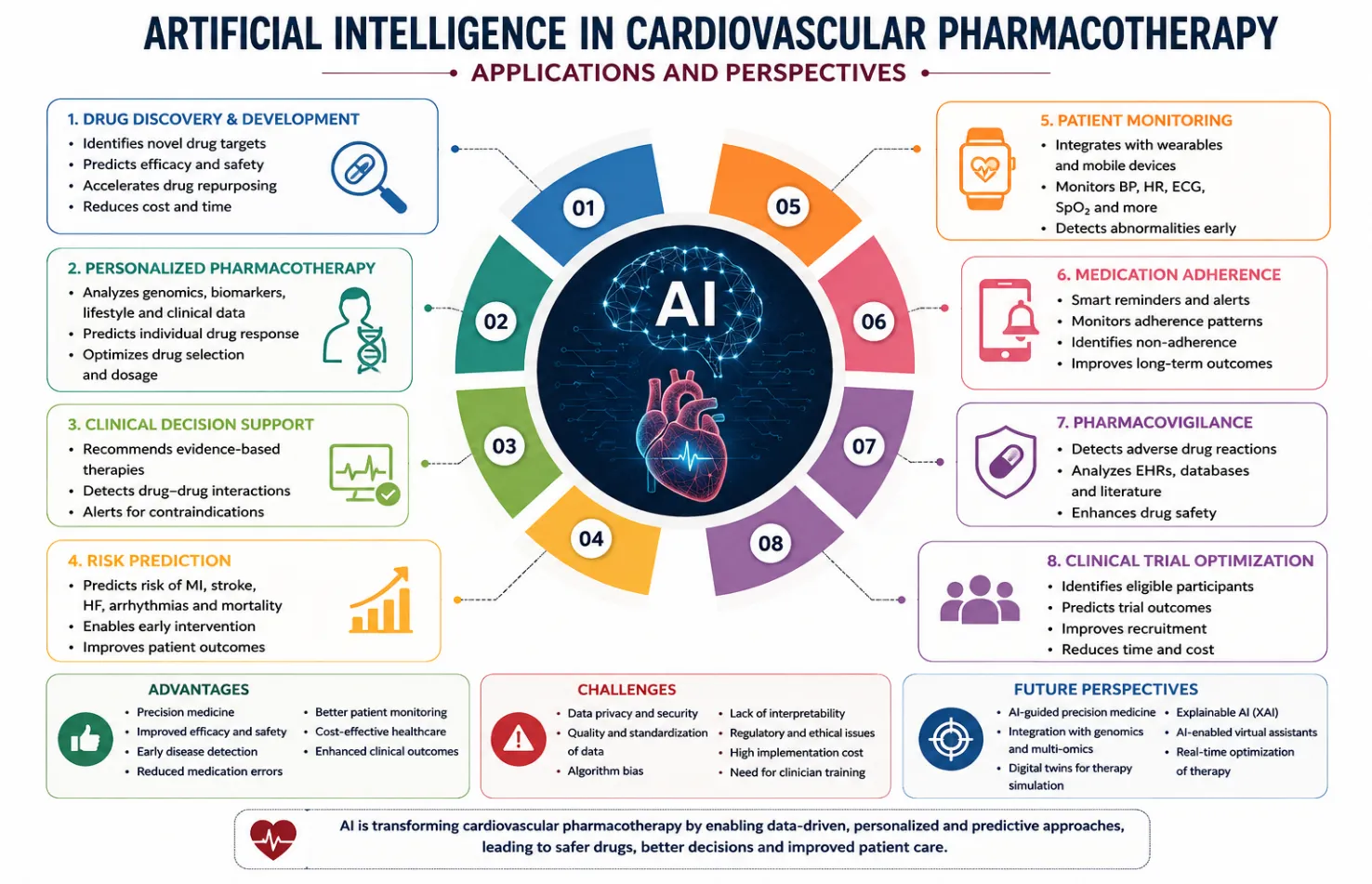
Graphical Abstract
Artificial Intelligence-Driven Innovations in Cardiovascular Diseases:
Timely detection, accurate diagnosis, and appropriate treatment are fundamental to reducing disease progression and improving the prognosis of cardiovascular diseases (CVDs). Among the available diagnostic modalities, electrocardiography (ECG) and cardiac magnetic resonance (CMR) are regarded as gold-standard techniques for diagnosing several cardiovascular disorders, including ventricular dysfunction, aortic stenosis, and dilated cardiomyopathy. Despite their clinical utility, these advanced diagnostic tools are constrained by high costs and the need for expert technical personnel, limiting their applicability for large-scale population screening and creating challenges for the early diagnosis of cardiovascular diseases (CVDs).
Electrocardiography (ECG) is a simple, cost-effective, and widely accessible diagnostic tool that is routinely used in both specialized healthcare facilities and resource-limited settings. It has long served as an essential method for detecting and monitoring various cardiovascular diseases (CVDs). However, the accuracy of ECG interpretation largely depends on the clinician's knowledge and experience, which may result in variability in diagnosis. Moreover, ECG recordings contain a vast amount of complex waveform data that can be challenging to analyze manually, potentially limiting the extraction of clinically relevant information. Artificial intelligence (AI), particularly through advanced machine learning and deep learning techniques, overcomes these limitations by efficiently processing large volumes of ECG data. AI algorithms can identify subtle waveform patterns and hidden features that are often imperceptible to the human eye, thereby improving diagnostic accuracy and enabling the early detection of specific cardiovascular disorders.
AI-Based Innovations in Pulmonary Hypertension: From Early Detection to Precision Medicine:
Pulmonary hypertension (PH) is a complex and heterogeneous group of disorders characterized by elevated pressure within the pulmonary circulation. Traditionally, PH has been defined by a mean pulmonary artery pressure (mPAP) of ≥25 mmHg at rest, although recent clinical guidelines have updated this threshold. The disease often presents with nonspecific symptoms that develop gradually as right ventricular (RV) function deteriorates. Exertional dyspnea is typically the earliest and most common clinical manifestation, followed by fatigue, generalized weakness, chest discomfort, and episodes of syncope. As PH progresses, sustained pressure overload leads to right ventricular hypertrophy, chamber dilation, reduced exercise capacity, and ultimately right-sided heart failure if left untreated.
Integration of multiple clinical data modalities used to support AI applications in pulmonary hypertension. Information derived from cardiac auscultation, ECG, chest X-ray, echocardiography, CT, and CMR imaging is combined to develop robust AI algorithms capable of detecting disease at an earlier stage, improving diagnostic accuracy, enhancing patient risk stratification, and guiding individualized therapeutic management.
The Growing Role of AI in Cardiovascular Pharmacotherapy
Systemic Hypertension:
Hypertension is one of the leading modifiable risk factors for cardiovascular disease, yet optimal blood pressure control remains difficult to achieve in many patients despite the availability of numerous antihypertensive medications. Poorly controlled hypertension substantially increases the risk of cardiovascular complications, including myocardial infarction, stroke, heart failure, and chronic kidney disease. Artificial intelligence (AI) has emerged as a valuable tool in hypertension management by assisting with early diagnosis, identifying individuals at high risk, improving risk stratification, predicting clinical outcomes, and supporting personalized treatment decisions. These AI-driven approaches have the potential to enhance blood pressure control and improve long-term cardiovascular outcomes.
Artificial intelligence (AI) has shown considerable promise in optimizing hypertension pharmacotherapy by enabling individualized treatment strategies based on patient-specific characteristics. AI-driven predictive models can estimate the probability of achieving optimal blood pressure (BP) control and assist clinicians in selecting the most appropriate antihypertensive regimen. For example, Herzog and colleagues developed a deep neural network (DNN) using clinical data from 16 917 patients with newly diagnosed hypertension to predict the most effective combinations of antihypertensive medications after one year of treatment. The model demonstrated better predictive performance than routine physician-guided treatment selection. However, its clinical applicability remains limited because it has not undergone external validation, and the training dataset predominantly consisted of White patients, raising concerns about its generalizability to more diverse populations.
Dyslipidaemia:
Dyslipidaemia is a major modifiable risk factor for cardiovascular disease and is characterized by abnormal levels of plasma lipids, including elevated low-density lipoprotein cholesterol (LDL-C), triglycerides, and reduced high-density lipoprotein cholesterol (HDL-C). Effective lipid-lowering therapy is essential for reducing the risk of atherosclerotic cardiovascular events; however, treatment outcomes vary considerably among individuals because of differences in genetic, clinical, and lifestyle factors.
Artificial intelligence (AI) is increasingly being applied to improve the management of dyslipidaemia by supporting risk prediction, treatment selection, and patient monitoring. Machine learning algorithms can analyze large-scale clinical, laboratory, genetic, and lifestyle data to identify patients at high cardiovascular risk and predict their response to lipid-lowering therapies such as statins, ezetimibe, and PCSK9 inhibitors. AI-based clinical decision support systems can also assist healthcare professionals in selecting personalized treatment strategies, optimizing medication doses, and improving adherence to guideline-directed therapy.
Furthermore, AI enables continuous assessment of treatment effectiveness by integrating data from electronic health records and wearable devices, allowing early identification of patients who may require therapy modification. Although these technologies show considerable promise, further validation in diverse populations and prospective clinical studies is required before AI can be routinely implemented in dyslipidaemia pharmacotherapy.
Diabetes:
Diabetes mellitus is a chronic metabolic disorder characterized by persistent hyperglycemia resulting from impaired insulin secretion, insulin action, or both. It is a major risk factor for cardiovascular diseases, including coronary artery disease, heart failure, stroke, and peripheral vascular disease. Effective glycemic control through appropriate pharmacotherapy is essential to reduce the risk of diabetes-related complications and improve long-term clinical outcomes.
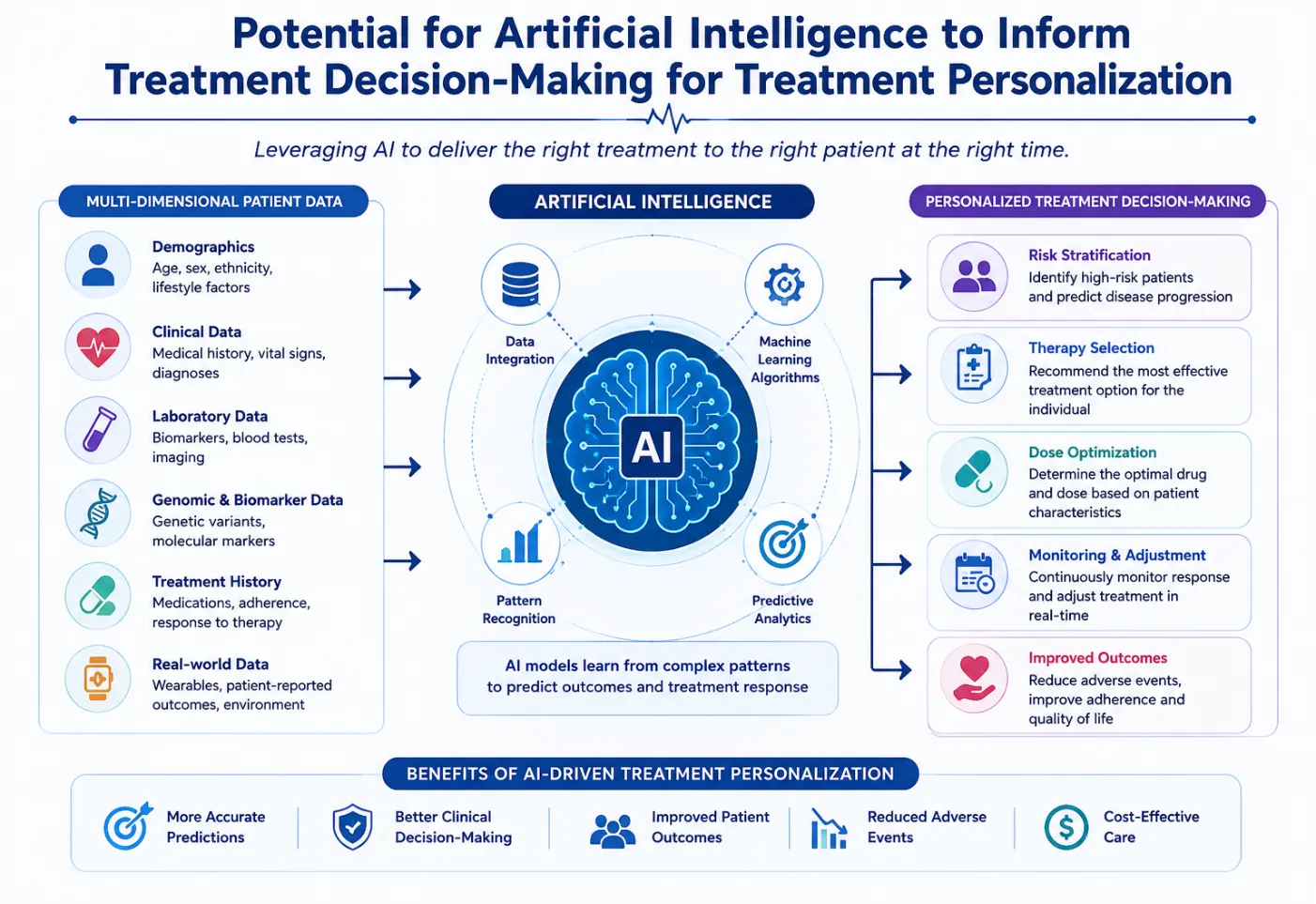
Artificial intelligence (AI) is increasingly transforming diabetes management by enabling personalized treatment strategies and improving clinical decision-making. AI-based models integrate electronic health records, laboratory findings, continuous glucose monitoring (CGM) data, lifestyle information, and patient demographics to predict glycemic control, disease progression, and the risk of diabetes-related complications. These predictive tools assist clinicians in selecting the most appropriate glucose-lowering therapies based on individual patient characteristics.
Machine learning algorithms can identify patients at high risk of hypoglycemia or poor glycemic control, optimize insulin dosing, and support medication adjustments in real time. AI-powered clinical decision support systems also enhance treatment adherence by providing personalized recommendations, remote monitoring, and timely interventions. Furthermore, AI facilitates precision medicine by incorporating genetic, metabolic, and clinical data to predict individual responses to antidiabetic medications such as metformin, sodium-glucose cotransporter-2 (SGLT2) inhibitors, glucagon-like peptide-1 (GLP-1) receptor agonists, and insulin.
Despite its promising applications, several challenges remain, including the need for large, high-quality datasets, external validation of predictive models, data privacy protection, algorithm transparency, and seamless integration into routine clinical practice. With continued advancements and rigorous clinical validation, AI has the potential to optimize diabetes pharmacotherapy, improve glycemic control, reduce complications, and support personalized patient care.
Key Applications of AI in Diabetes Pharmacotherapy:
Coronary artery disease:
Coronary artery disease (CAD) is the most common form of cardiovascular disease and remains a leading cause of morbidity and mortality worldwide. It develops primarily due to the progressive accumulation of atherosclerotic plaques within the coronary arteries, resulting in reduced myocardial blood flow and oxygen supply. Clinical manifestations range from stable angina to acute coronary syndromes, including myocardial infarction, depending on the severity of arterial obstruction. Early diagnosis, accurate risk assessment, and timely pharmacological intervention are essential for preventing adverse cardiovascular events and improving patient outcomes.
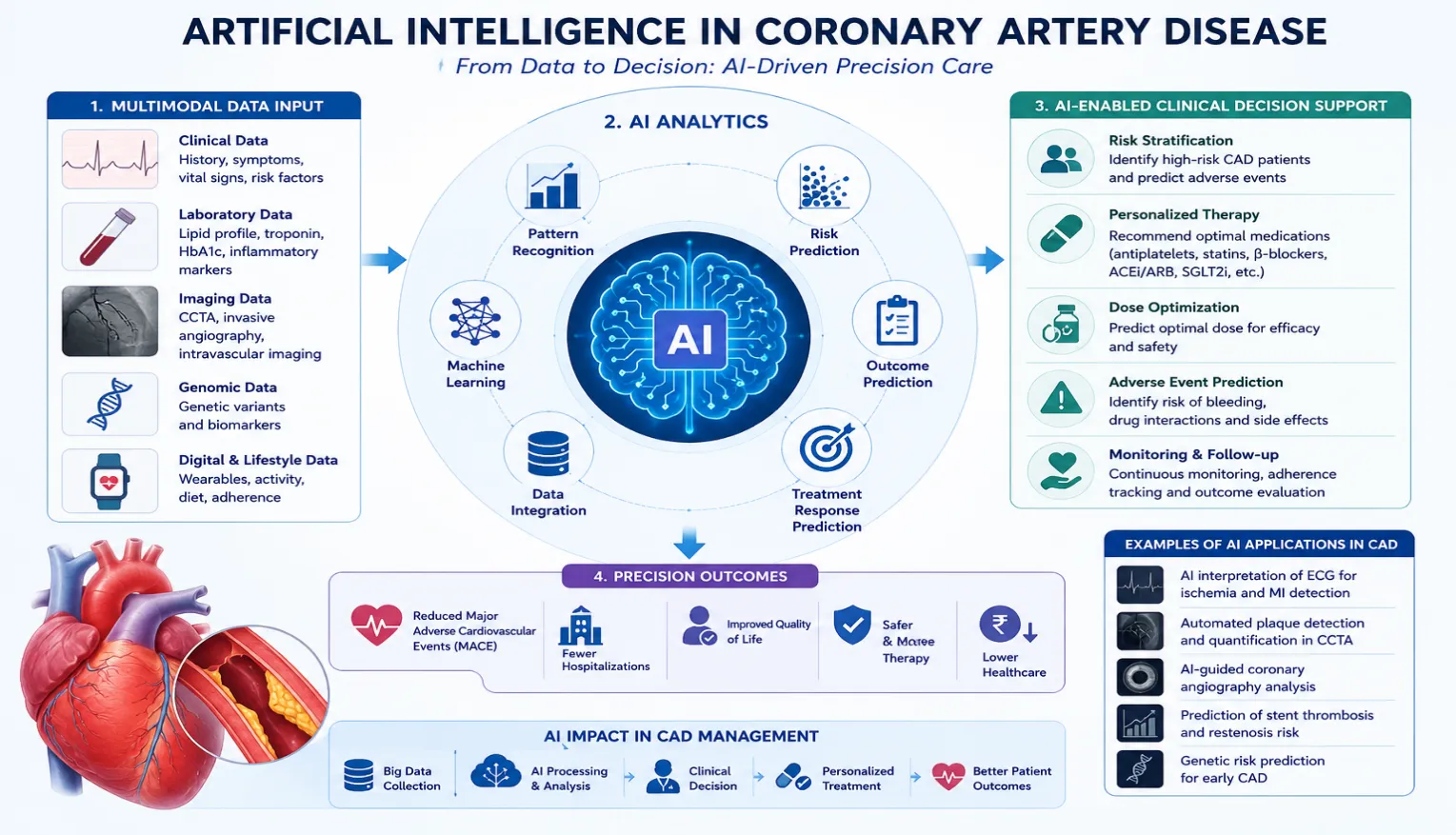
Artificial intelligence (AI) is increasingly being integrated into the management of CAD by enhancing diagnostic accuracy, risk prediction, and treatment personalization. Machine learning and deep learning algorithms can analyze multimodal data, including electronic health records, electrocardiograms (ECGs), coronary computed tomography angiography (CCTA), intravascular imaging, laboratory biomarkers, and clinical characteristics, to identify patients at high risk of disease progression and future cardiovascular events. These AI-driven models support clinicians in making evidence-based decisions regarding pharmacological therapy and long-term disease management.
In cardiovascular pharmacotherapy, AI facilitates personalized treatment by predicting individual responses to medications such as antiplatelet agents, statins, β-blockers, angiotensin-converting enzyme (ACE) inhibitors, angiotensin receptor blockers (ARBs), and sodium-glucose cotransporter-2 (SGLT2) inhibitors. AI can also estimate the likelihood of adverse drug reactions, optimize medication dosing, improve adherence through digital health technologies, and identify patients who may benefit from more intensive therapeutic strategies. Furthermore, integrating genomic, imaging, and clinical data enables precision medicine approaches that improve treatment efficacy while minimizing drug-related complications.
Although AI has demonstrated promising results in CAD diagnosis and pharmacotherapy, its widespread clinical implementation requires further validation through large, multicenter prospective studies. Challenges related to data quality, model interpretability, algorithm bias, privacy protection, and integration into clinical workflows must also be addressed before routine adoption in clinical practice.
Heart failure:
Heart failure (HF) is a complex clinical syndrome that occurs when the heart is unable to pump sufficient blood to meet the body's metabolic demands or can do so only at elevated filling pressures. It represents the final stage of many cardiovascular disorders, including coronary artery disease, hypertension, valvular heart disease, and cardiomyopathy. Patients with heart failure commonly present with symptoms such as dyspnea, fatigue, reduced exercise tolerance, and peripheral edema, which significantly impair quality of life and increase the risk of hospitalization and mortality.
Artificial intelligence (AI) has emerged as a transformative technology in heart failure management by improving early diagnosis, risk prediction, therapeutic decision-making, and long-term patient monitoring. AI algorithms integrate multimodal data, including electronic health records, electrocardiograms (ECGs), echocardiography, cardiac magnetic resonance imaging (CMR), laboratory biomarkers, wearable device data, and genomic information to identify patients at risk of developing heart failure and predict disease progression. These models enable clinicians to detect subtle changes in cardiac function before the onset of overt clinical symptoms.
In cardiovascular pharmacotherapy, AI supports personalized treatment by predicting individual responses to guideline-directed medical therapies, including angiotensin-converting enzyme (ACE) inhibitors, angiotensin receptor blockers (ARBs), angiotensin receptor-neprilysin inhibitors (ARNIs), β-blockers, mineralocorticoid receptor antagonists (MRAs), sodium-glucose cotransporter-2 (SGLT2) inhibitors, and diuretics. AI-based clinical decision support systems can optimize medication selection and dosing, estimate the risk of adverse drug reactions, and identify patients who may benefit from advanced therapies or closer clinical monitoring. Furthermore, AI-enabled remote monitoring using wearable sensors and implantable devices facilitates the early detection of clinical deterioration, allowing timely intervention and reducing hospital readmissions.
Despite the promising role of AI in heart failure management, several challenges remain, including the need for large and diverse datasets, external validation of predictive models, algorithm transparency, data privacy, and integration into routine clinical workflows. Continued research and prospective clinical trials are necessary to establish the effectiveness and safety of AI-assisted heart failure pharmacotherapy and support its widespread adoption in clinical practice.
Key Applications of AI in Heart Failure
Present and future of artificial intelligence in cardiovascular pharmacotherapy:
Artificial intelligence (AI) is rapidly transforming cardiovascular pharmacotherapy by supporting evidence-based clinical decision-making, improving treatment precision, and enabling personalized patient care. Current AI applications utilize machine learning (ML), deep learning (DL), and natural language processing (NLP) to analyze large volumes of clinical, imaging, genomic, and pharmacological data. These technologies assist clinicians in predicting treatment response, optimizing drug selection and dosing, identifying adverse drug reactions, and improving medication adherence.
AI has demonstrated promising applications across several cardiovascular conditions, including hypertension, coronary artery disease, heart failure, atrial fibrillation, dyslipidaemia, and pulmonary hypertension. AI-powered clinical decision support systems can integrate patient-specific information with current clinical guidelines to recommend individualized therapeutic strategies. Additionally, wearable devices and remote monitoring platforms enable continuous assessment of physiological parameters, facilitating early detection of disease progression and timely therapeutic interventions. Despite these advances, challenges related to data quality, algorithm transparency, external validation, regulatory approval, ethical concerns, and seamless integration into healthcare systems continue to limit widespread clinical implementation.
Future Perspective
The future of AI in cardiovascular pharmacotherapy is expected to be driven by advances in precision medicine, multimodal data integration, and real-time clinical decision support. Future AI systems will combine electronic health records, genomic information, proteomics, metabolomics, wearable sensor data, and advanced cardiac imaging to develop highly individualized treatment strategies. These integrated platforms have the potential to predict disease progression, optimize medication regimens, and minimize adverse drug reactions with greater accuracy than current approaches.
Generative AI and large language models are also anticipated to enhance clinical workflows by assisting healthcare professionals with evidence synthesis, clinical documentation, medication review, and patient education. Furthermore, digital twins and predictive simulation models may enable clinicians to evaluate treatment outcomes virtually before initiating therapy, thereby supporting safer and more effective pharmacological decisions.
As AI technologies continue to evolve, collaborative efforts among clinicians, data scientists, regulatory authorities, and policymakers will be essential to ensure algorithm fairness, transparency, data privacy, and patient safety. Large-scale prospective clinical trials and international validation studies will play a crucial role in establishing the clinical effectiveness, reliability, and cost-effectiveness of AI-driven cardiovascular pharmacotherapy. Ultimately, AI is expected to complement rather than replace clinical expertise, facilitating precision medicine and improving cardiovascular outcomes through more personalized, efficient, and evidence-based therapeutic strategies.
Key Future Directions
CONCLUSION
Artificial intelligence is transforming cardiovascular drug management by enabling precision medicine, improving diagnostic accuracy, optimizing therapeutic decisions, and supporting personalized patient care. AI-driven technologies have shown significant potential to enhance drug discovery, predict treatment outcomes, reduce adverse drug reactions, and improve medication adherence. However, challenges such as data quality, algorithm validation, transparency, privacy, and regulatory compliance must be addressed before widespread clinical implementation. With continued technological advancements and rigorous clinical validation, AI is expected to become an indispensable decision-support tool that complements healthcare professionals and improves cardiovascular treatment outcomes.
Future developments in explainable AI, precision medicine, multimodal data integration, wearable health technologies, and digital twin models are expected to further expand the role of AI in cardiovascular care. As these technologies continue to evolve, AI is likely to serve as a powerful clinical decision-support tool that complements, rather than replaces, the expertise of healthcare professionals. With continued research, robust clinical validation, and ethical implementation, AI has the potential to transform cardiovascular pharmacotherapy by delivering safer, more effective, and highly personalized treatment strategies that improve both patient outcomes and healthcare efficiency.
REFERENCES

Rushikesh D. Mohite*, Vitthal G. Kuchake, Pramod M. Bhosale, Emerging Applications Of Artificial Intelligence In Cardiovascular Drug Management, Int. J. Sci. R. Tech., 2026, 3 (8), 305-315. https://doi.org/10.5281/zenodo.21872024
 10.5281/zenodo.21872024