

We use cookies to ensure our website works properly and to personalise your experience. Cookies policy
School of Information Technology –Indira University
Bitcoin has evolved from an experimental digital currency into a financial and technological asset with increasing relevance to modern businesses. Companies across different industries are exploring Bitcoin for payments, international transactions, investment, treasury management, and digital business innovation. The decentralized nature of Bitcoin allows transactions to occur without traditional financial intermediaries, potentially reducing transaction costs and increasing accessibility across borders. However, its use in business remains constrained by price volatility, regulatory uncertainty, cybersecurity risks, accounting complexity, and limited acceptance as a medium of exchange. .This paper examines the role of Bitcoin in the contemporary business environment and analyzes its major applications, advantages, challenges, and future prospects. The study is based on secondary research from academic literature and recent studies on cryptocurrency and corporate adoption. The findings suggest that Bitcoin's role in business is increasingly shifting beyond simple payment transactions toward strategic financial uses, particularly as a corporate treasury or investment asset. Nevertheless, widespread adoption will depend on regulatory clarity, technological infrastructure, risk-management systems, and business confidence.
The development of digital technology has significantly transformed the global business environment. Electronic commerce, mobile banking, digital payments, and financial technology have changed the way organizations conduct transactions and manage financial resources. One of the most important innovations within this transformation is Bitcoin, the first widely recognized decentralized cryptocurrency. Bitcoin operates through block chain technology, a distributed digital ledger that records and verifies transactions across a network. Unlike traditional currencies, Bitcoin is not controlled by a central bank or government. This decentralized structure has created new possibilities for businesses, particularly in international trade and digital commerce. .Initially, Bitcoin was mainly associated with technology enthusiasts and speculative investment. However, its business relevance has expanded. Modern companies are investigating Bitcoin for accepting customer payments, transferring funds internationally, diversifying corporate assets, and developing new financial strategies. Despite these opportunities, Bitcoin remains controversial. Its price can change rapidly, regulatory systems differ between countries, and businesses must manage security and accounting challenges. Therefore, understanding the practical role of Bitcoin in the current business world is important for managers, entrepreneurs, researchers, and policymakers.
2. OBJECTIVES
This study explores Bitcoin's technical foundations and its growing role in the modern business ecosystem. It begins by examining the core mechanics of Bitcoin, including its decentralized, peer-to-peer network, Proof-of-Work consensus, and underlying block chain architecture. Building on this foundation, the research investigates how businesses currently utilize Bitcoin, ranging from point-of-sale customer transactions and B2B cross-border payments to strategic balance sheet allocations and asset-backed financing. To assess its broader commercial viability, the study evaluates the operational benefits of corporate adoption—such as lower transaction costs, immediate global settlement, and immunity to credit card chargebacks—alongside the critical challenges and risks firms face, including high market volatility, complex tax compliance, key security management, and regulatory uncertainty. Furthermore, it analyzes Bitcoin’s emerging function in corporate finance and treasury strategy, exploring how companies manage market exposure, utilize institutional custody, and navigate updated fair-value accounting frameworks. Concluding with an outlook on long-term trends, the study assesses future prospects for Bitcoin integration, considering the impact of Layer-2 scaling solutions, institutional financial instruments, and shifting macro-monetary policies on global enterprise adoption.
3. RESEARCH METHODOLOGY
This study adopts a mixed-methods comparative research design to examine Bitcoin’s technical architecture, operational utility, corporate treasury applications, and future business prospects. The core analytical framework relies on a side-by-side comparative evaluation of the Proof-of-Work (PoW) algorithm (Bitcoin’s core native protocol) and the Proof-of-Stake (PoS) algorithm (the dominant alternative protocol used by assets like Ethereum).
1. Research Design Architecture
The architectural model of block chain outlines a five-layer blockchain framework configured for a Proof of Work (PoW) ecosystem, illustrating how decentralized data moves from physical infrastructure up to user interfaces. At the foundational base sits the Network Layer, which handles the core communication and physical hardware infrastructure through virtual servers, peer-to-peer (P2P) protocols, distributed storage, and active Ethereum nodes that broadcast data globally without relying on a central hub. Just above it, the Transaction Layer serves as the computational engine where individual transactions undergo verification to prevent double-spending, and miners utilize heavy hardware processing power to solve cryptographic puzzles during the mining process.
Once processed, this data passes into the Blockchain Layer, which organizes the validated transactions into chronological, immutable blocks and ensures strict block validation guidelines are met, whether running on a public framework or a permissioned private blockchain configuration. The critical governance of this ecosystem is managed by the Trust Layer, which houses the consensus algorithms that dictate how decentralized nodes across the entire network agree on the true state of the shared ledger. Finally, at the peak sits the Application Layer, the user-facing ecosystem where developers build front-end interfaces, back-end APIs, decentralized applications (Dapps), and smart contracts, allowing regular users to execute trustless transactions that seamlessly trigger processes down through every lower structural layer.
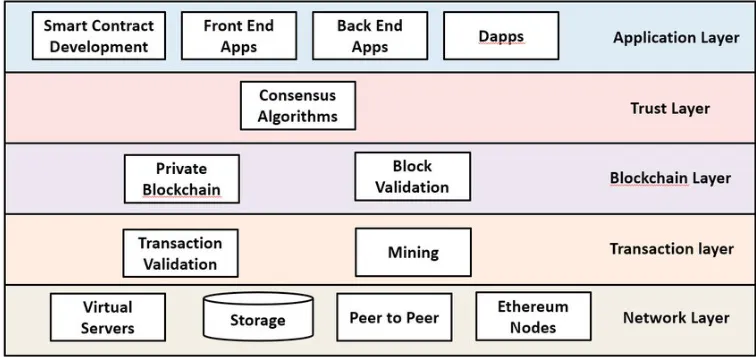
Architecture of Block chain Application
When a user executes a transaction (e.g., through a Dapp in the Application Layer), the request is passed via P2P routing down to the Network Layer. From there, the Transaction Layer steps in to perform Transaction Validation, while miners compete via Mining. Once the Consensus Algorithm rules in the Trust Layer confirm a miner solved the cryptographic puzzle, the new block goes through Block Validation in the Block chain Layer and is permanently written into distributed Storage.
4. Major Uses of Bitcoin in the Current Business World
4.1 Bitcoin as a Payment Method
One of the most direct uses of Bitcoin in business is as a method of payment. Some businesses allow customers to purchase products and services using Bitcoin. Bitcoin payments can be useful for e-commerce transactions, online services, digital products, international sales, and technology-based businesses.
4.2 International and Cross-Border Transactions
Global businesses frequently face challenges when transferring money between countries. Bitcoin offers the possibility of transferring value through a global digital network without relying entirely on traditional correspondent banking systems., potentially faster settlement, and availability outside conventional banking hours.
4.3 Bitcoin as a Corporate Investment Asset
A major development in the business use of Bitcoin is its adoption as an investment or treasury asset. Traditionally, companies hold assets such as cash, government securities, bonds, gold, and foreign currencies. Some companies have explored adding Bitcoin to their corporate balance sheets as an alternative asset.
4.4 Bitcoin in Corporate Treasury Management
Corporate treasury management involves managing an organization's financial assets, liquidity, and financial risks. Bitcoin may be considered by companies seeking to diversify their treasury holdings. Potential benefits include portfolio diversification, exposure to a digital asset, and possible long-term capital appreciation.
4.5 Bitcoin and Small Businesses
Small and medium-sized enterprises may be interested in Bitcoin because it can potentially expand payment options, reach international customers, support online commerce, and promote technological innovation.
|
|
|
|
|
|
|

|
|
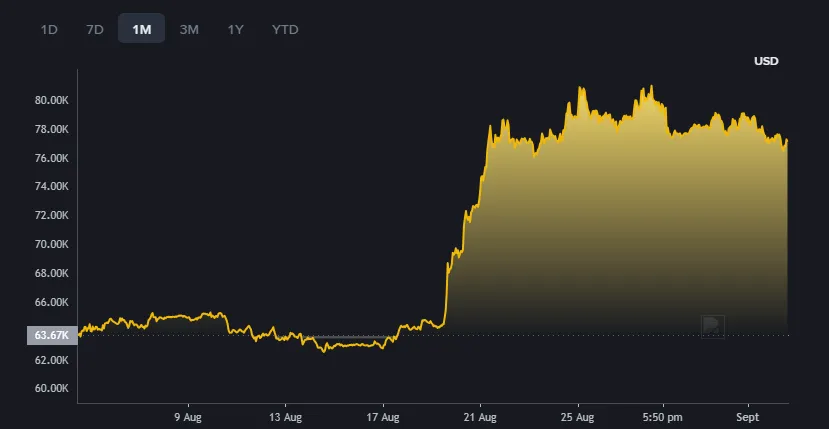
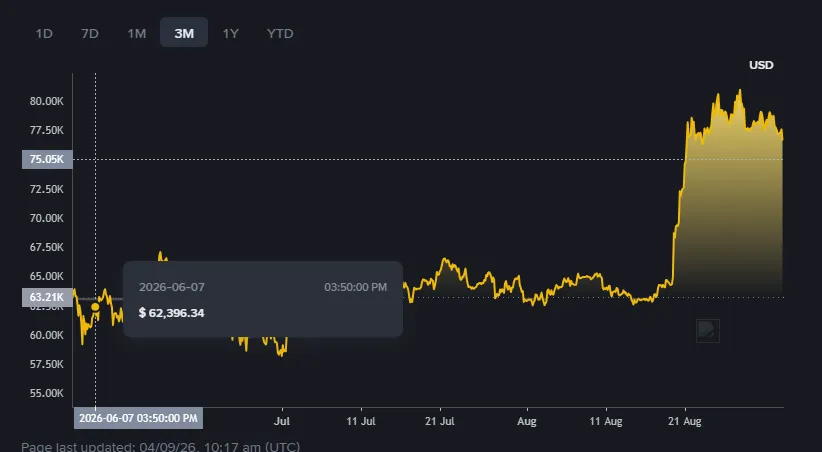
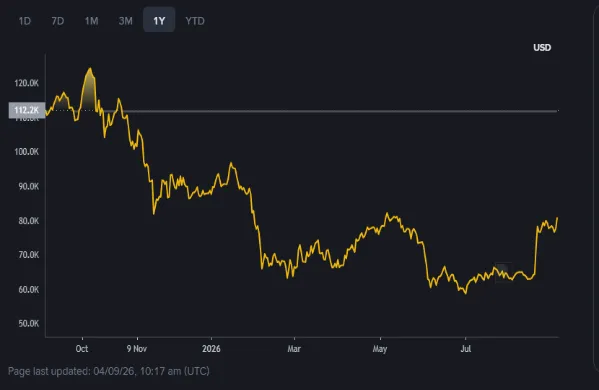
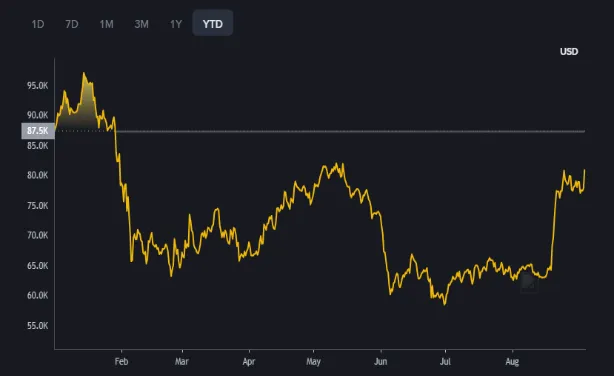
Periodic Cost of Bitcoin in Corporate Investment Assets
|
Feature |
Traditional Credit Cards / PayPal |
Bitcoin Network (Direct / Layer-2) |
Bitcoin via Payment Processor (e.g., BitPay) |
|
Average Processing Fees |
1.5% to 4.0%+ |
Variable network fee (often cents via Lightning) |
~1.0% flat |
|
Settlement Time |
2 to 5 business days |
Minutes to Hours |
Next-day fiat bank deposit |
|
Chargeback Risk |
High (Merchant bears liability) |
Zero (Transactions are final) |
Zero (Processor assumes volatility risk) |
|
Volatility Exposure |
None (Fiat native) |
High (Price moves continuously) |
None (Instantly converted to fiat cash) |
Comparison of Payment Processing Fees, Settlement Time, Chargeback Risk, and Volatility Exposure
5. Advantages of Bitcoin for Businesses
Bitcoin offers businesses a lower-cost, faster, and fraud-resistant alternative to traditional payment networks by completely eliminating intermediaries like credit card companies and banks. By bypassing standard credit card processing networks, companies can avoid steep merchant fees—which typically range from 1.5% to 3.5%—and instead benefit from the fraction-of-a-cent fees offered by scaling solutions like the Lightning Network. Additionally, because Bitcoin transactions are cryptographically secured and entirely irreversible once confirmed on the blockchain, businesses are fully protected against the multi-billion-dollar threat of credit card chargeback fraud. This digital asset also strips away international friction, enabling instant cross-border settlements 24/7 without the multi-day delays or heavy foreign exchange conversion rates imposed by standard legacy banks. Finally, integrating Bitcoin payments allows companies to attract a highly tech-savvy, global demographic of consumers, while giving forward-thinking businesses the option to diversify their corporate treasury or protect against fiat inflation by holding a decentralized asset. Operating through a decentralized, global network, Bitcoin provides businesses with the infrastructure to seamlessly execute international value transfers. By facilitating direct peer-to-peer transactions, this framework effectively eliminates the traditional reliance on banks and payment intermediaries, reducing bureaucratic friction. Integrating Bitcoin into operations allows forward-thinking enterprises to position themselves as technologically innovative market leaders. Furthermore, because every transaction is permanently logged on a public block chain, it establishes an immutable, completely verifiable transaction history that enhances corporate transparency. Finally, while Bitcoin presents a unique vehicle for potential long-term investment returns, its market price remains highly volatile, meaning past performance does not guarantee future financial outcomes
6. Challenges and Risks of Bitcoin in Business
Cryptocurrencies Challenges grouped into seven distinct operational and analytical vectors that businesses and developers face when interacting with digital assets. At the analytical level, Price Prediction and Volatility Prediction present massive challenges due to market fragmentation, sentiment shifts, and macroeconomic factors, which directly complicate the stability of Automated Trading strategies and algorithmic execution models. Operationally, Mining presents intense infrastructural difficulties regarding energy efficiency and computational hardware scaling, while balancing Anonymity & Privacy remains a persistent regulatory hurdle for networks trying to protect user identities without violating compliance rules. Finally, on the defensive front, systems must continuously innovate in Fraud Detection to mitigate malicious network activity and strengthen overarching network Security protocols against evolving smart contract vulnerabilities and cyberattacks.
 Multiple pricing model used in Bitcoin Digital Currency
Price Volatility
The most significant challenge associated with Bitcoin is price volatility. A business that receives Bitcoin as payment may experience changes in its value before conversion into local currency.
6.2 Regulatory Uncertainty
Cryptocurrency regulations differ across countries. Businesses may face varying rules regarding taxation, financial reporting, anti-money-laundering compliance, and cross-border transfers.
6.3 Cybersecurity Risks
Bitcoin ownership requires secure management of private cryptographic keys. Businesses therefore require secure digital wallets, strong cybersecurity systems, internal access controls, backup procedures, and employee training.
6.4 Accounting and Financial Reporting
Businesses need appropriate procedures for recording Bitcoin transactions, valuing holdings, recognizing gains and losses, and managing tax obligations.
6.5 Limited Consumer and Business Acceptance
Although Bitcoin is widely known, it is not universally accepted for everyday transactions. Limited acceptance can reduce its usefulness as a routine payment method.
7. Bitcoin and the Changing Business Environment
The role of Bitcoin is changing. In its early years, Bitcoin was primarily promoted as an alternative digital currency. Today, its role in business is more complex. It may function as a payment mechanism, a cross-border transfer tool, a speculative investment, a corporate treasury asset, and a symbol of technological innovation.Bitcoin's future business role is likely to differ across industries and countries depending on organizational capabilities, technological infrastructure, and regulatory conditions.
8. Impact on Different Business Sectors
The integration of cryptocurrency and blockchain technology across major business sectors is driving a fundamental shift toward automated, borderless operations. In finance and banking, the traditional landscape is shifting toward institutional tokenization and Decentralized Finance (DeFi) networks, enabling 24/7 global settlement via stablecoins and the fractionalization of real-world assets to eliminate slow, multi-day legacy clearing windows. For e-commerce and retail, these decentralized rails bypass expensive traditional credit networks, lowering transaction overhead while utilizing irreversible cryptographic payments to eliminate chargeback fraud entirely. Within supply chain and logistics, blockchain serves as an unalterable ledger that tracks product provenance from ranch to consumer to combat counterfeiting, while using automated smart contracts to execute instant supplier payouts upon delivery. Finally, the real estate sector is overcoming historical liquidity barriers by tokenizing commercial and residential properties, enabling worldwide fractional ownership and cutting out expensive middlemen, deed registration delays, and administrative issuing costs.9. Future Prospects of Bitcoin in Business.
CONCLUSION
Bitcoin has become an important subject in the modern business environment. Although it has not replaced traditional currencies or banking systems, it has introduced new possibilities for payments, international transactions, investment, and corporate treasury management.The use of Bitcoin in business provides potential advantages such as global accessibility, reduced dependence on intermediaries, technological innovation, and asset diversification. At the same time, significant challenges remain, including price volatility, regulatory uncertainty, cybersecurity risks, accounting complexity, and limited acceptance.Bitcoin should not be viewed as a universal replacement for conventional business finance. Instead, its usefulness depends on the particular objectives and circumstances of each organization. For some businesses, Bitcoin may serve as a payment option; for others, it may be considered an investment or treasury asset.In the future, Bitcoin's position in the business world will depend on technological development, regulatory policies, institutional adoption, and the ability of companies to manage associated risks. Businesses considering Bitcoin should therefore adopt a cautious and strategic approach supported by strong cybersecurity, financial controls, regulatory compliance, and risk-management systems.
REFERENCES

Deven Mahajan*, Jyoti Jadhav, Evaluating The Operational And Financial Impact Of Bitcoin Adoption In Modern Enterprise Frameworks, Int. J. Sci. R. Tech., 2026, 3 (9), 469-474. https://doi.org/10.5281/zenodo.22916149
 10.5281/zenodo.22916149