

We use cookies to ensure our website works properly and to personalise your experience. Cookies policy
Dr. Rajendra Gode College Of Pharmacy
Stress is a common physiological and psychological condition that can negatively impact health and well-being. Herbal nutraceuticals offer a natural and safe approach for stress management due to their adaptogenic and neuroprotective properties. The present study aimed to formulate and evaluate a polyherbal nutraceutical powder containing Ashwagandha (Withania somnifera), Brahmi (Bacopa monnieri), Jatamansi (Nardostachys jatamansi), and Shankhpushpi (Convolvulus prostratus). The formulation was prepared using the geometric dilution method with lactose and magnesium stearate as excipients. Evaluation included organoleptic properties, pH, moisture content, ash value, and phytochemical screening. The powder showed satisfactory characteristics with a light brown color, aromatic odor, bitter taste, smooth texture, pH of 6.86, moisture content of 6.57%, and ash value of 14%. Phytochemical analysis confirmed the presence of alkaloids, flavonoids, tannins, saponins, carbohydrates, and proteins. The results indicate that the formulated polyherbal nutraceutical powder is stable and may serve as a promising natural supplement for stress management and mental wellness.
Stress is a common physiological and psychological response to challenges that can adversely affect physical and mental health. Prolonged stress has been associated with anxiety, depression, cognitive impairment, weakened immunity, hypertension, diabetes, and other chronic disorders. Although short-term stress may help the body adapt to demanding situations, chronic stress can significantly reduce overall well-being and quality of life. [1]
The World Health Organization (WHO) defines health as a state of complete physical, mental, and social well-being and not merely the absence of disease. Ayurveda, the traditional Indian system of medicine, similarly emphasizes the maintenance of physical, mental, and spiritual balance for achieving optimal health. [2]
Herbal medicines have been used for centuries to manage stress and promote mental wellness. Ayurvedic herbs such as Ashwagandha (Withania somnifera), Brahmi (Bacopa monnieri), Jatamansi (Nardostachys jatamansi), and Shankhpushpi (Convolvulus prostratus) are well known for their adaptogenic, anxiolytic, neuroprotective, and cognitive-enhancing properties. These herbs help the body cope with stress, improve memory and concentration, and support emotional stability. [3,4]
Therefore, the present study focuses on the formulation and evaluation of a polyherbal nutraceutical powder containing these medicinal herbs as a natural approach for stress management and the promotion of mental well-being.
MATERIALS AND METHODS
Materials
The herbal ingredients used in the formulation were Ashwagandha (Withania somnifera) root powder, Brahmi (Bacopa monnieri) powder, Jatamansi (Nardostachys jatamansi) rhizome powder, and Shankhpushpi (Convolvulus prostratus) powder. Lactose was used as a diluent, and magnesium stearate was used as a lubricant. All materials were obtained from authenticated herbal and pharmaceutical suppliers.
|
Name |
Family |
Kingdom |
Uses |
Figure |
|
Ashwagandha |
Solanaceae |
Plantae |
anti-inflammatory, antioxidant,and immunomodulatory |
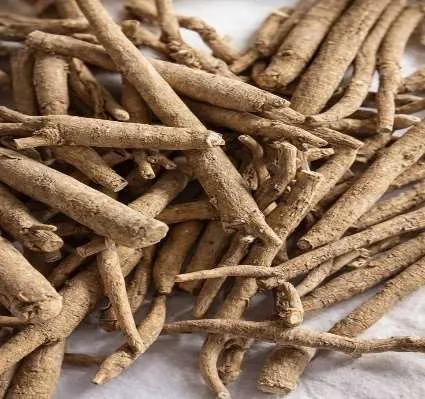
|
|
Brahmi |
Scrophulariaceae |
Plantae |
Anti-anxiety, antidepressant, anti-inflammatory, and antioxidant |
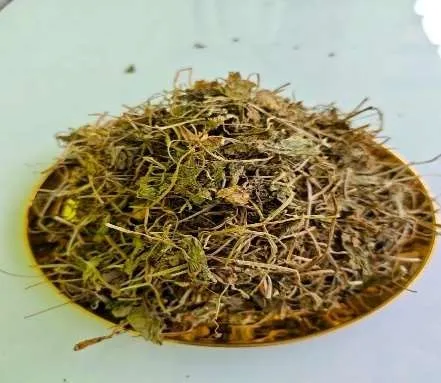
|
|
Jatamansi |
Valerianaceae |
Plantae |
Sedative, stimulant, antipyretic, antispasmodic |
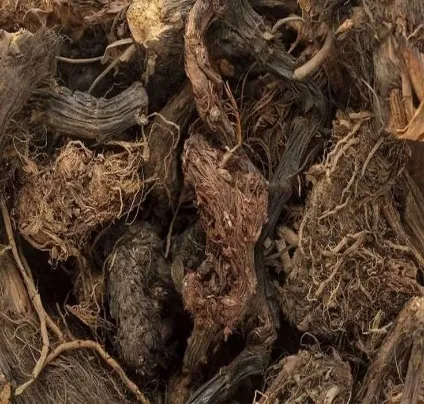
|
|
Shankpusphi |
Convolvulaceae |
Plantae |
Relieffrom anxiety, stress and mental fatigue |
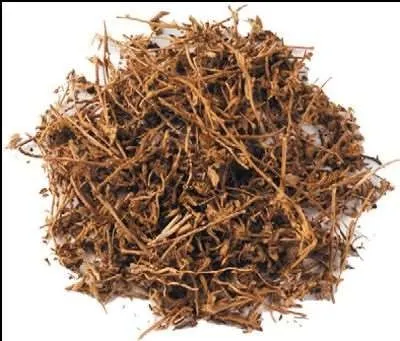
|
Table No. 1: Short information of ingredients used in herbal powder[5]
Method of Preparation of Polyherbal Nutraceutical Powder
Step 1: Collection of Ingredients
The herbal ingredients used in the formulation were Ashwagandha (Withania somnifera), Brahmi (Bacopa monnieri), Jatamansi (Nardostachys jatamansi), and Shankhpushpi (Convolvulus prostratus) powders. Lactose and magnesium stearate were used as excipients.[6]
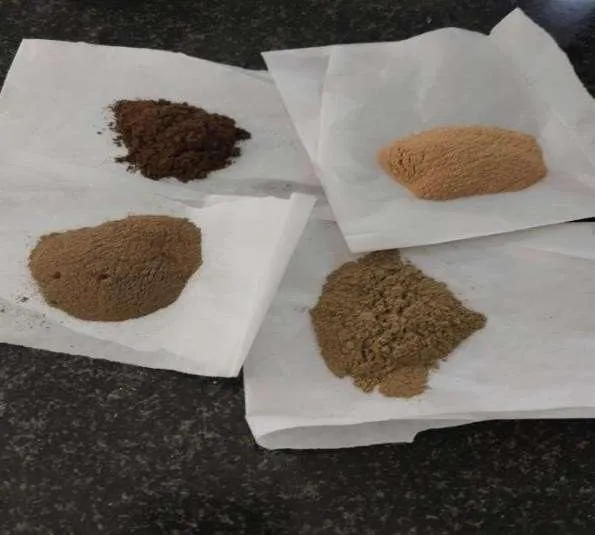
Figure 1: Collection of all ingredients.
Step 2: Weighing of Ingredients
All ingredients were accurately weighed according to the quantities specified in Table 2.
Step 3: Blending (Geometric Dilution Method)
Step 4: Sieving and Homogenization
Step 5: Packaging
FORMULATION AND EVALUATION
|
Sr. No. |
Ingredients |
Quantity (50gm) |
|
1 |
Ashwagandha (Withania somnifera) |
22.75 gm |
|
2 |
Brahmi (Bacopa monnieri) |
4.55 gm |
|
3 |
Jatamansi (Nardostachys jatamansi) |
9.1 gm |
|
4 |
Shankhapushpi (Convolvulus prostrates) |
13.65 gm |
|
5 |
Magnesium stearate |
0.25 gm |
|
6 |
Lactose |
q.s |
Table No. 2: Formulation of stress relief powder
EVALUATION PARAMETERS
Organoleptic Evaluation
Organoleptic evaluation was carried out using sensory observations to assess the acceptability of the formulation. Parameters such as appearance, colour, odour, taste, and texture were examined and recorded.[10]
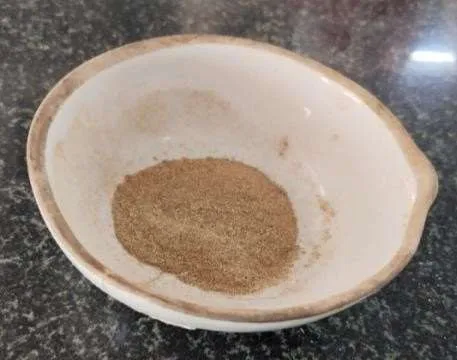
Figure 2: Herbal Powder
pH Determination
The pH of the formulation was determined to evaluate its acidity or alkalinity, which influences stability and physiological compatibility.[11]
Procedure
Moisture Content (Loss on Drying)[12]
Moisture content was determined to assess the amount of water present in the formulation, which may affect stability and microbial growth.
Procedure[18]
Formula
Moisture Content (%) = ((Wâ‚ − Wâ‚‚) / Wâ‚) × 100
Where:
Significance
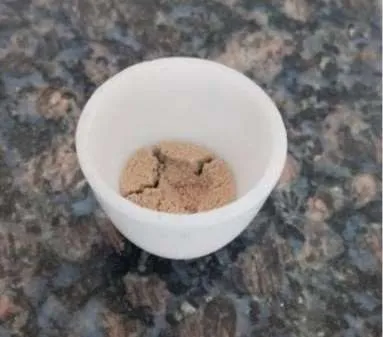
Figure 3: Moisture Content Determination
Ash Value [13]
Ash value determination was performed to estimate the total inorganic residue remaining after incineration and to evaluate the purity of the formulation.
Procedure
Formula
Ash Value (%) = (Weight of Ash / Weight of Sample) × 100
Significance
|
Sr. No. |
Phytochemical Constituent |
Test Performed |
Positive Observation |
Inference |
Figure No. |
|
1 |
Carbohydrates |
Benedict's Test |
Brick-red precipitate |
Present (+) |

|
|
2 |
Proteins |
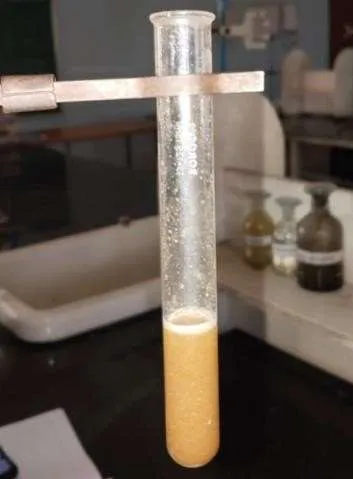
Biuret Test |
Violet colour |
Present (+) |
|
|
3 |
Alkaloids |
Dragendorff's Test |
Orange precipitate |
Present (+) |
|
|
4 |
Flavonoids |
Shinoda Test |
Pink/Red colour |
Present (+) |
|
|
5 |
Tannins |
Lead Acetate Test |
White precipitate |
Present (+) |
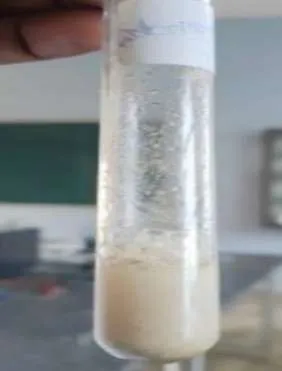
|
|
6 |
Saponins |
Foam Test |
Persistent foam formation |
Present (+) |
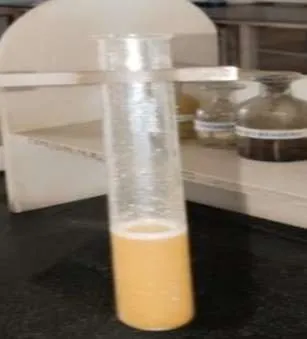
|
Table 3 Phytochemical Evaluation of Polyherbal Nutraceutical Powder[14,15,16]
RESULT:
|
Sr. No. |
Test |
Parameter |
Observation/Result |
|
1 |
Organoleptic Evaluation |
Colour |
Light Brown |
|
Odour |
Characteristic, earthy, slightly aromatic |
||
|
Taste |
Bitter and slightly astringent |
||
|
Texture |
Fine, smooth powder |
||
|
Appearance |
Uniform, free-flowing powder |
||
|
2 |
pH Determination |
pH |
6.86 |
|
3 |
Moisture Content (Loss on Drying) |
Moisture (%) |
Wâ‚ (Weight of empty Petri plate) = 73.530 g |
|
Wâ‚‚ (Weight of Petri plate + sample before drying) = 75.5209 g |
|||
|
W₃ (Weight of Petri plate + dried sample) = 75.390 g |
|||
|
Initial weight of sample (Wâ‚‚ − Wâ‚) = 1.9909 g |
|||
|
Final weight of sample (W₃ − Wâ‚) = 1.860 g |
|||
|
Moisture Content (%) = [(1.9909 − 1.860) / 1.9909] × 100 |
|||
|
Moisture Content = 6.57% |
Table 4: Evaluation Results of Polyherbal Nutraceutical Powder
|
Sr. No. |
Evaluation Parameter |
Result |
|
1 |
Colour |
Light Brown |
|
2 |
Odour |
Characteristic, earthy, slightly aromatic |
|
3 |
Taste |
Bitter and slightly astringent |
|
4 |
Texture |
Fine, smooth powder |
|
5 |
Appearance |
Uniform, free-flowing powder |
|
6 |
pH |
6.86 |
|
7 |
Moisture Content (%) |
6.57% |
Table 5: Physicochemical Evaluation of Polyherbal Nutraceutical Powder
CONCLUSION
A polyherbal nutraceutical powder for stress management was successfully formulated using Ashwagandha, Brahmi, Jatamansi, and Shankhapushpi. The formulation was prepared by the geometric dilution method and produced a homogeneous, stable, and free-flowing powder. Evaluation studies revealed satisfactory organoleptic properties, a near-neutral pH (6.86), moisture content of 6.57%, and ash value of 14%, indicating good quality, stability, and purity of the formulation.Phytochemical screening confirmed the presence of important bioactive constituents, including alkaloids, flavonoids, tannins, proteins, carbohydrates, and saponins, which are known to possess adaptogenic, neuroprotective, anxiolytic, and antioxidant activities. The synergistic action of these herbal ingredients may help in reducing stress, enhancing cognitive function, and promoting mental well-being.The results suggest that the formulated polyherbal nutraceutical powder is a safe and promising natural alternative for stress management. Further pharmacological and clinical studies are recommended to establish its therapeutic efficacy, safety, and potential for large-scale commercialization.
REFERENCES

Tanvi Gopalrao Chuke*, Samruddhi Keshav Ganvir, K. R. Jaiswal, H. S. Sawarkar, Formulation And Evaluation Of A Polyherbal Nutraceutical Powder For Stress Management, Int. J. Sci. R. Tech., 2026, 3 (6), 212-219. https://doi.org/10.5281/zenodo.20526544
 10.5281/zenodo.20526544