View Article

  • From Molecules to Global Impact: Chemistry’s Integral Role in the UN Sustainable Development Agenda

  • 1Department of Chemistry, Govt. College Una, Una, Himachal Pradesh
    2Department of Chemistry, Siddharth Govt. College Nadaun, Hamirpur, Himachal Pradesh
    3Department of Chemistry, NSCBM Govt. College Hamirpur, Hamirpur, Himachal Pradesh

Abstract

The intersection of chemistry and the United Nations Sustainable Development Goals (SDGs) represent a formidable catalyst for positive transformation in the quest for global sustainable development. This abstract examines the diverse functions of chemistry in promoting the SDGs, cultivating a synergistic connection between scientific innovation and sustainable development. Chemistry is very important for reaching the SDGs in many areas. Chemistry is the basis for technologies that solve the most important problems of our time, from clean water and sanitation (SDG 6) to cheap and clean energy (SDG 7). Finding and making new materials, catalysts, and processes is a big step toward stopping climate change (SDG 13). This shows how important chemistry is in moving toward a more sustainable energy future. The abstract talks about health and well-being (SDG 3), where chemistry is essential for finding new drugs, making vaccines, and creating diagnostic tools. It looks at how the ideas behind green chemistry are helping the pharmaceutical industry become more sustainable, which is in line with the larger goals of responsible consumption and production (SDG 12). Chemistry plays a role in urban planning, waste management, and pollution control, which helps make cities and communities more sustainable (SDG 11). Innovations in construction materials, renewable energy integration, and smart technologies that are based on chemistry help make cities more resilient and sustainable. The abstract also emphasizes how important chemistry is for life on land (SDG 15) and life under the sea (SDG 14). Chemistry offers solutions that help ecosystems and promote conservation efforts, such as sustainable forestry, soil conservation, and protecting biodiversity. The abstract also talks about the moral side of chemistry when it comes to reaching goals related to equality, education, and partnerships (SDGs 4, 5, and 17). Teaching chemistry can help different communities feel more powerful and make scientific progress more open to everyone. This abstract shows how chemistry is linked to the SDGs and how scientific progress, responsible business practices, and educational programs all work together to create a fair and sustainable future. By understanding how chemistry and the SDGs work together, stakeholders can use this relationship to solve tough global problems and move humanity toward a more sustainable and inclusive future.

Keywords

SDGs, Chemistry, Sustainability, Green-Chemistry, Climate Change Mitigation, Sustainable Innovation.

Introduction

× Popup Image

In today's world, we are all surrounded by chemicals. They are used to make the chair you're sitting in, the cleaning products in your home, and even the parts of the car you're driving. Chemicals are changing our lives every day. We are coming up with new ways to meet the needs of our customers and consumers by making products while trying to have as little effect on the environment as possible.

Sustainable Chemistry

It is a scientific idea that aims to make better use of natural resources to meet human needs for chemical goods and services. Sustainable chemistry includes making, using, and designing chemical products that are safe, effective, efficient, and better for the environment.

Sustainable development is a way to promote growth while making the most of resources. It thinks about how it will affect people and the environment in the short and long term. The three pillars of sustainable development in business are:

Economic: Using resources wisely and efficiently leads to long-term profits and the ability to stay in business.

Environmental: Reducing waste and carbon footprints while making the most of energy efficiency can help to undo the damage that pollution and global warming have done to the environment.

Social: Focusing on things like employee safety, health, and diversity and inclusion helps build communities that are healthier and can take care of themselves.
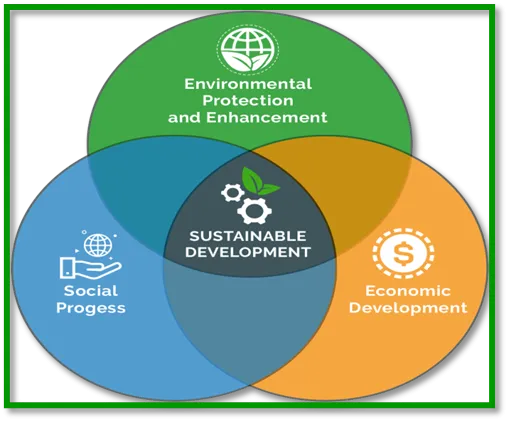
The main goal of sustainable development is to protect the environment and make sure that everyone has the same opportunities and resources. The four ideas that make up sustainable development are social, human, economic, and environmental. Climate change, lack of water, inequality, and hunger are just a few of the problems that need to be solved around the world. Sustainable development is an effort to make progress in society, the environment, and the economy at the same time. The four pillars of sustainability are a way to make sure that the capitals of the human, social, economic, and ecological systems are all in the right balance for long-term sustainable development. At the historic Sustainable Development Summit in September 2015, world leaders agreed on the 17 Sustainable Development Goals (SDGs). The Goals cover a wide range of issues, including health, gender equality, and education. They are getting people all over the world to work together to end all forms of poverty, fight inequality, and deal with climate change by 2030, making sure that no one is left behind. Governments, businesses, and many other groups around the world are using this framework, which has 17 goals called the Sustainable Development Goals.

SDG Goals: Transform Our World

Table 1 lists the 17 Sustainable Development Goals. These goals call on all countries, regardless of wealth, to work together to protect the planet while also promoting prosperity. They know that strategies to end poverty must also include those that promote economic growth and meet a variety of social needs, such as education, health care, social protection, and job opportunities, all while fighting climate change and protecting the environment.

Goal 1: End poverty in all its forms

Goal 10: Inequality

Goal 2: Zero Hunger

Goal 11: Cities

Goal 3: Health

Goal 12: Sustainable consumption and production

Goal 4: Education

Goal 13: Climate Action

Goal 5: Gender equality and women’s empowerment

Goal 14: Oceans

Goal 6: Water and Sanitation

Goal 15: Biodiversity, forests, desertification

Goal 7: Energy

Goal 16: Peace, justice and strong institutions

Goal 8: Economic Growth

Goal 17: Partnerships

Goal 9: Infrastructure, industrialization


Table 1. Sustainable Development Goals

If we want a better tomorrow, we need to live in a way that meets our current needs without hurting the chances of future generations to meet their needs. A more sustainable world is necessary for the survival of our societies and the planet we all share. It's a little bit of a balancing act. We need to keep three different balls in the air at the same time: protecting the environment, growing the economy, and including everyone in society. The act is over if one or two fall. For example, an economy might grow quickly, but only for a short time if most people stay poor and all the natural resources are used up. Everyone has access to good jobs, good health care, and good schools when development is sustainable. Using natural resources in a responsible way keeps pollution and long-term damage to the environment from happening. Public policy choices make sure that no one is left behind because of their disadvantages or discrimination.

Choosing the Right Things: If you want to know why sustainable development is so important in the real world, just look around. People around the world live longer and make more money on average. But a lot of growth can't last. It has led us to climate change, destruction of the environment, wars, poverty, and hunger. huge gaps in wealth and social instability. When people chase short-term rewards without thinking about how they might hurt other people or the planet, they are engaging in unsustainable development. Short-term benefits are often less important than long-term costs. This is what happens when someone cuts down an entire forest to make a quick buck, even if it means the ecosystem falls apart, endangered species die out, and local communities are always at risk of terrible floods.

  1. Role of Chemistry in Sustainable Business Management 

Chemists who want to help businesses become more environmentally friendly should work on a mix of technical, managerial, and soft skills. These are some important skills that can help a chemist do a better job of managing a business in a way that is good for the environment.

  1. Learn about green chemistry: Get a good grasp of the ideas behind green chemistry, which include making products and processes that have less of an effect on the environment. This includes knowing about safer chemicals, processes that use less energy, and ways to cut down on waste.
  2. Life Cycle Assessment (LCA): Learn how to do life cycle assessments to find out how chemical processes and products affect the environment. This skill is very important for finding ways to make things better and making smart choices that will help the environment.
  3. Renewable Energy and Resource Management: Keep up with the latest news about renewable energy sources and ways to manage resources in a way that is good for the environment. This includes learning how to make the most of energy in chemical processes and looking into using renewable feedstock.
  4. Waste Reduction and Circular Economy: Find out how to reduce the amount of waste you make and encourage circular economy ideas in the chemical industry. This means making products that can be recycled, looking into ways to reuse things, and coming up with ways to make processes that make less waste.
  5. Following the Rules: Keep up with the chemical industry's environmental rules and standards. To run a business in a way that is good for the environment and lowers risk, you need to know and follow the rules.
  6. Supply Chain Sustainability: Learn about how to source goods responsibly and the moral issues that come up in the supply chain. This means knowing how extracting, moving, and managing raw materials affects people and the environment.
  7. Product Stewardship: Learn how to be a product steward, which means being in charge of the whole life cycle of chemical products. This includes giving people information on how to safely handle, store, and get rid of things, as well as setting up take-back programs.
  8. Innovation and Research Skills: Encourage a way of thinking that values new ideas and constant improvement. Keep doing research and development to find new, more eco-friendly materials, processes, and technologies in the field of chemistry.
  9. Communication and Stakeholder Engagement: Improve your communication skills so that you can clearly explain complicated scientific information to a wide range of people, even those who aren't technical. This means being open about efforts to be more sustainable with customers, investors, and the public.
  10. Working together and across disciplines: Learn how to work with people from different fields, such as scientists, engineers, businesspeople, and policymakers. To solve difficult sustainability problems, people from different fields often need to work together.
  11. Project Management: Learn how to manage projects so you can lead or help with sustainability efforts in your organization. This includes making plans, setting goals, and working together to put sustainable practices into action.
  12. Making ethical decisions: Learn how to make strong ethical decisions. This means thinking about how decisions will affect people, the environment, and the economy, and making choices that are in line with sustainable business practices.

Chemists can help the chemical industry move toward more sustainable business practices by using their technical skills along with these other skills. This all-encompassing method is necessary to make the industry more environmentally friendly, socially responsible, and economically sound. Chemists can help with sustainable business management even more if they keep learning and stay up to date on new trends and best practices.

Chemistry is very important for helping the United Nations reach many of its Sustainable Development Goals (SDGs). The SDGs are a group of 17 goals that are all connected and meant to solve problems around the world and encourage long-term growth by 2030. Here are some ways that chemistry relates to some of the SDGs and helps them:

SDG 2: Zero Hunger: Chemistry is very important for making fertilizers and pesticides that help farms grow more food. This helps keep food safe. Many of the new ways to preserve, package, and store food are based on chemical processes. These methods help cut down on food waste.

SDG 3: Good Health and Well-being: Chemistry is very important for making medicines, vaccines, and medical technologies that help people stay healthy and fight diseases. Chemical purification and other ways to treat water make sure that everyone has access to safe, clean drinking water.

SDG 6: Clean Water and Sanitation: Chemicals are an important part of making sure that communities have clean water by cleaning and treating it. Sustainable water management strategies, like making technologies that use less water, are based on chemical principles.

SDG 7: Clean and Affordable Energy: Chemistry helps make materials that use less energy, renewable energy technologies, and batteries that last longer. Chemistry research helps scientists find new materials that can store and change energy in better ways.

SDG 9: Industry, Innovation, and Infrastructure: Chemistry is a big part of making new materials, processes, and technologies that help businesses grow and make infrastructure better. Green chemistry principles tell businesses to be more eco-friendly, which makes their effects on the environment less harmful.

SDG 11: Sustainable Cities and Communities: Chemistry is important for making building materials that last, technologies that use less energy, and ways to deal with trash in cities. Technologies that help control pollution, including those that use chemicals, make cities better places to live.

SDG 12: Responsible Consumption and Production: Green chemistry principles help make products and processes that don't hurt the environment as much as possible. This helps people use and make things in a responsible way. Chemistry helps make materials and technologies that are better for the environment by using fewer resources and making less waste.

SDG 13: Climate Action: Chemistry is important for making technologies that can store and capture carbon. Many long-term energy solutions, like those that use renewable resources, are based on chemical breakthroughs.

SDG 14: Life Below Water: Chemistry helps keep an eye on and lower water pollution, which is good for marine ecosystems. Using materials that break down naturally in eco-friendly packaging is one way to help keep the ocean clean.

SDG 15: Life on Land: Chemistry is important for making agrochemicals that help protect biodiversity and support sustainable farming. Soil remediation technologies, which are often based on chemical processes, help to restore land.

SDG 17: Working together to reach the goals: To solve global problems and move toward long-term development, scientists, researchers, businesses, and policymakers in the field of chemistry need to work together.

Chemistry is a key part of solving many of the problems listed in the SDGs because of how it works and what it can do. Chemists can help us reach these goals and make the world and its people healthier by promoting eco-friendly and responsible behavior.

  1. Role of Chemistry in Marketing Sustainable Development Goals

Chemistry lies at the heart of many of the United Nations Sustainable Development Goals (SDGs) as shown in figure 1 including SDG 3 (Good Health and Well-being), SDG 6 (Clean Water and Sanitation), SDG 13 (Climate Action), SDG 14 (Life Below Water) and SDG 15 (Life on Land). Chemistry provides sustainable solutions to enhance human health, conserve natural resources, reduce climate change, and protect terrestrial and aquatic ecosystems by means of advances in pharmaceuticals, water purification, renewable energy, pollution control, green chemistry, and environmental monitoring.

Figure 1. Chemistry & 5 Sustainable Development Goals

Figure 2 shows a multi-impact Life Cycle Assessment (LCA)-based comparison of the environmental implications of CHEMZERO and CHEMZERO-BAU (Business-as-Usual) scenarios in different environmental impact categories linked to the United Nations Sustainable Development Goals (SDGs). The vertical axis shows the percentage contribution (transgression) to various environmental indicators, and the horizontal axis shows impact categories such as ionizing radiation, photochemical ozone formation, particulate matter, human toxicity, freshwater ecotoxicity, water scarcity, resource depletion, climate change, eutrophication, acidification, land use and mineral resource depletion. The coloured sections represent contributions from different sources, such as electricity generation, heat production, cooling water, direct greenhouse gas emissions, particulate matter, nitrogen oxides and other industrial operations. Importantly, the CHEMZERO scenario exhibits large reductions in climate change impacts as indicated by the negative contribution signifying net carbon mitigation by low-carbon electricity and bioenergy with carbon capture and storage (BECCS). Similar improvements are seen in various categories relating to SDG 3 (Good Health and Well-being), SDG 6 (Clean Water and Sanitation), SDG 13 (Climate Action), SDG 14 (Life Below Water) and SDG 15 (Life on Land). Nevertheless, energy generation and resource extraction continue to exert pressure on the environment, for example through water scarcity, eutrophication and mineral resource depletion, which highlights the necessity of integrated resource management. Cleaner energy systems and advanced decarbonisation technologies can help the chemical sector achieve substantial environmental impact reductions and contribute to numerous Sustainable Development Goals.

Figure 2. A Multi-impact Life Cycle Assessment (LCA)-based comparison of the environmental implications

3.1. Goal 3: Make sure that everyone, no matter how old they are, lives a healthy life.
In the last few years, a lot of progress has been made in making people healthier. 146 of the 200 countries or areas have already met or are on track to meet the SDG goal for reducing deaths among children under 5. Since 2010, effective HIV treatment has cut AIDS-related deaths around the world by 52%. In 47 countries, at least one neglected tropical disease has been wiped out. But there are still differences in how easy it is to get health care. The COVID-19 pandemic and other ongoing crises have made it harder to reach Goal 3. There has been the biggest drop in childhood vaccinations in 30 years, and deaths from tuberculosis and malaria have gone up since before the pandemic.

Chemistry is very important for keeping people of all ages healthy and happy. In this context, chemistry plays an important role in the following ways:

  1. Drug Discovery and Development: Chemistry is very important for finding and making new drugs. Medicinal chemists create and make compounds that could be used to treat diseases. Knowing what chemicals cause diseases makes it possible to make drugs that can treat or manage different health problems.
  2. Vaccines and Immunization: Chemistry is important for making and testing vaccines. To make vaccines, you need to know a lot about the chemical properties of antigens and adjuvants. Chemistry is also important for making sure that vaccines stay stable and work well while they are being stored and moved.
  3. Diagnostic Tools: Chemistry helps create diagnostic tools and methods, like medical imaging agents and lab tests. Chemical tests and imaging technologies help find diseases early and make sure they are diagnosed correctly, which makes treatment quick and effective.
  4. Food and Water Safety: Analytical chemistry is very important for keeping an eye on and making sure that food and water supplies are safe. This includes finding out about contaminants, pathogens, and additives. Knowing what chemicals are in food and water helps set safety rules and standards.
  5. Environmental Monitoring: Chemistry is important for figuring out how pollutants affect the environment and how to lessen their effects. Analytical methods are used to keep an eye on things like soil contamination, air and water quality, and other environmental factors. Using green and sustainable chemistry in industry helps reduce the impact of industrial processes on the environment.
  6. Personal Care Products: Chemistry is used to make personal care products like cosmetics, skin care products, and hygiene products. Knowing how the chemicals in a product work together makes sure it is safe and works.
  7. Nutrition and Dietary Health: Chemistry helps us understand what foods are made of and how good they are for us. Food chemistry research helps improve diets and make nutritional supplements that fix deficiencies and improve health in general.
  8. Materials for Medical Devices: Chemistry is very important for making and designing materials for medical devices. For implants, prosthetics, and other medical tools to work, they need to be made of materials that are biocompatible and long-lasting.
  9. Research and Innovation: Chemistry research that never stops leads to the discovery of new compounds, materials, and technologies that can improve medical treatments and overall health.

Target by 2030 for SDG3: We need to lower the global maternal mortality rate to less than 70 per 100,000 live births and stop newborns and children under 5 years old from dying from things that could have been avoided. All countries should also work to lower neonatal mortality to at least 12 per 1,000 live births and under-5 mortality to at least 25 per 1,000 live births. We need to fight hepatitis, water-borne diseases, and other communicable diseases, as well as reduce the spread of AIDS, tuberculosis, malaria, and neglected tropical diseases. We need to cut premature deaths from non-communicable diseases by a third through prevention and treatment, and we need to promote mental health and well-being. We need to improve the ways we stop and treat drug and alcohol abuse, including the use of illegal drugs and drinking too much alcohol. We need to cut the number of deaths and injuries from road traffic accidents in half around the world. We also need to make sure that everyone has access to sexual and reproductive health care services, such as family planning, information and education, and the integration of reproductive health into national strategies and programs. We need to make sure that everyone has access to quality essential health care, safe, effective, quality, and affordable essential medicines and vaccines, and financial protection against health risks. We also need to cut down on the number of deaths and illnesses caused by dangerous chemicals and pollution in the air, water, and soil. We need to make the World Health Organization's Framework Convention on Tobacco Control stronger in all countries, as needed, and help with the research and development of vaccines and medicines for communicable and non-communicable diseases that mostly affect developing countries. We also need to make sure that everyone can get affordable essential medicines and vaccines, in line with the Doha Declaration on the TRIPS Agreement and Public Health, which says that developing countries have the right to fully use the provisions in the Agreement on Trade Related Aspects of Intellectual Property Rights regarding flexibilities to protect public health. Finally, we need to strengthen the capacity of all countries, especially developing ones, to give early warning, reduce risks, and manage national and global health risks. We need to put a lot more money into health care and hire, train, and keep health workers in developing countries, especially in the least developed countries and Small Island developing States.

3.2. Goal 6: Ensure access to water and sanitation for all.

Chemistry plays a crucial role in ensuring access to water and sanitation for all through various processes related to water treatment, purification, and sanitation technologies. Here are several ways in which chemistry contributes to this important goal:

  1. Water Treatment: Coagulation and Flocculation: Chemicals like alum or ferric chloride are used to make particles in water less stable and group them together. This makes it easier to remove them during the next step of filtration. Disinfection: Chlorine and other disinfectants are added to water to kill or stop harmful microorganisms from growing, making sure that the water is safe to drink.
  2. Desalination: Chemistry is involved in desalination processes, such as reverse osmosis, where membranes only let water molecules through and keep salts and other impurities out.
  3. Water Purification Technologies: Ion exchange, adsorption, and advanced oxidation are all chemical processes that are very important for getting rid of contaminants in water so that it is safe for people to drink.
  4. Polymer Chemistry in Water Treatment: Polymers help water treatment processes by flocculating, which means they make bigger particles that are easy to remove during sedimentation or filtration.
  5. Monitoring and Analysis: To make sure that drinking water meets and stays within standards, analytical chemistry methods are used to keep an eye on its quality.
  6. Sanitation and Wastewater Treatment: Chemistry is very important for treating wastewater. It uses processes like coagulation, biological treatment, and chemical oxidation to get rid of pollutants before they are released or reused.
  7. New Ideas for Water Filtration: Ongoing research in chemistry is leading to the creation of new materials for water filtration, such as nanomaterials and advanced membranes that make water treatment processes work better.
  8. Point-of-Use Water Purification: Chemistry helps make water filters and disinfection tablets that are cheap and easy to carry, so people can use them at home to make their water better.
  9. Corrosion Control: To stop harmful metals from getting into drinking water, chemical additives are used to keep corrosion from happening in water distribution systems.
  10. Safe Storage: Chemistry helps make materials that can be used to store and move water safely without getting dirty.
  11. Green Chemistry for Sustainable Solutions: To protect the environment, water treatment processes use sustainable and green chemistry methods. This helps keep the ecosystem in balance over the long term.

By 2030, we need to make sure that everyone has clean, safe drinking water and good sanitation and hygiene. We also need to stop people from going to the bathroom outside, especially women, girls, and people who are in a weak position. We need to stop dumping, cut down on pollution, and limit the release of harmful chemicals and materials to make water cleaner. We also need to cut the amount of untreated wastewater in half and make recycling and safe reuse much more common around the world. We need to make sure that all sectors use water more efficiently and that freshwater is taken and supplied in a way that is sustainable in order to solve the problem of water scarcity and reduce the number of people who are affected by it. At all levels, we need to use integrated water resources management. When it's necessary, we also need to work together across borders. We need to take care of and restore ecosystems that have to do with water, like lakes, rivers, aquifers, mountains, forests, and wetlands. We need to give developing countries more international support and training so they can improve their water and sanitation programs and activities. This includes technologies for recycling, reusing, and cleaning up wastewater, as well as collecting rainwater and removing salt from water. We should help and encourage local communities to take a bigger role in improving how we manage water and sanitation.

    1. Goal 13: Take urgent action to combat climate change and its impacts

Sustainable Development Goal 13 (SDG 13) is all about taking quick action to fight climate change and its effects. Chemistry is very important for reaching this goal because it can help with different ways of dealing with climate change, such as reducing its effects and adapting to it. Here are some ways that chemistry helps fight climate change in line with SDG 13:

  1. Renewable Energy: Chemistry is important for making renewable energy technologies like solar cells, wind turbines, and batteries better and more useful. Research in materials chemistry improves the efficiency and long-term viability of energy storage systems, which makes renewable energy sources more practical.
  2. Carbon Capture and Storage (CCS): Chemical processes are used to collect carbon dioxide (CO2) emissions from power plants and industrial processes. Chemistry research helps make materials and methods that can safely store or use CO2 and capture it efficiently.
  3. Energy Efficiency: Chemistry helps make materials and processes that make different industries use less energy and release fewer greenhouse gases.
  4. Green Chemistry Practices: The goal of green chemistry is to make chemical processes less harmful to the environment. Green chemistry helps lower the carbon footprint of chemical manufacturing by encouraging practices that are good for the environment and last a long time.
  5. Alternative Fuels: Chemistry plays a role in the creation of alternative fuels like biofuels and hydrogen, which are better for the environment and last longer.
  6. Climate-Resilient Agriculture: Chemistry helps make agrochemicals and fertilizers that make crops more resistant to the effects of climate change, which helps make sure there is enough food.
  7. Monitoring and Measurement: Analytical chemistry methods are very important for keeping track of greenhouse gas levels in the air. This information helps climate scientists and policymakers figure out how human activities are affecting the climate.
  8. Protecting the Ozone Layer: Chemistry was very important in the global efforts to get rid of substances that harm the ozone layer, which helped it get better. This success shows how working together around the world can have a positive effect when it is based on scientific knowledge.
  9. Materials for Sustainable Construction: Chemistry helps make building materials that are good for the environment and use less energy, which encourages building practices that are better for the environment.
  10. Carbon-Neutral Processes: Chemistry helps create processes that try to be carbon-neutral, which means that they don't release greenhouse gases during industrial activities or reduce the amount of them that are released.
  11. Chemistry Education and Advocacy: Teaching people about chemistry and getting them involved in it can help people understand climate change and how chemistry can help fix it. It is important for scientists to support sustainable practices.

SDG 13 goal for 2030: We need to make all countries more resilient and able to adapt to climate-related hazards and natural disasters. Include steps to deal with climate change in national policies, strategies, and plans. We need to improve education, awareness, and the ability of people and organizations to deal with climate change by reducing its effects, adapting to it, and giving early warning. We should follow through on the promise made by developed countries that they would work together to raise $100 billion a year by 2020 from all sources to help developing countries meet their needs. This should be done in the context of meaningful mitigation actions and transparency on implementation. The Green Climate Fund should also be fully operationalized as soon as possible through its capitalization. We should work to improve the ability of least developed countries and small island developing states to plan and manage climate change by focusing on women, youth, and local and marginalized communities.

    1. Goal 14: Conserve and sustainably use the oceans, seas and marine resources

The ocean is in a state of emergency because more eutrophication, acidification, ocean warming, and plastic pollution are making it less healthy. Overfishing is still a worrying trend, which is causing more than a third of the world's fish stocks to run out. Some progress has been made in expanding marine protected areas, fighting illegal, unreported, and unregulated fishing, ending fishing subsidies, and helping small-scale fishers. However, action is not moving quickly or on a large enough scale to meet Goal 14. To stop these trends, the world needs to act quickly and together. This means giving more money to ocean science, working harder to protect the environment, promoting solutions that are based on nature and ecosystems, looking at how human activities affect ecosystems and the environment, and quickly reversing climate change to protect the largest ecosystem on Earth. Chemistry is very important for long-term efforts to protect the oceans, seas, and marine resources. Chemistry helps with the long-term care and protection of marine ecosystems in a number of ways:

  1. Preventing Marine Pollution: Chemistry is important for making materials and technologies that stop and lessen marine pollution. This includes making chemicals that break up oil spills, absorb oil, and clean up dirty water.
  2. Wastewater Treatment: Chemistry is used to make better technologies for treating wastewater, making sure that chemicals and pollutants from industrial and urban runoff are removed before they get into the ocean.
  3. Ocean Acidification Monitoring: Chemistry is used to keep an eye on and learn about ocean acidification, which happens when the oceans absorb more carbon dioxide. To figure out how the chemical changes in seawater affect marine life and ecosystems, you need to know what they are.
  4. Coral Reef Conservation: Chemistry helps us understand the chemical conditions that coral reefs need to grow and stay alive. This information is very important for protecting and restoring these important marine ecosystems.
  5. Marine Biotechnology for Sustainable Products: Chemistry is a part of marine biotechnology that helps extract compounds from marine organisms in a way that is good for the environment. This includes making drugs, nutraceuticals, and other useful products without harming marine ecosystems.
  6. Sustainable Aquaculture Practices: Chemistry helps create sustainable aquaculture practices by giving us ways to keep an eye on water quality, control diseases, and make aqua-feed that is good for the environment.
  7. Marine Spatial Planning: Chemistry helps us figure out how pollutants and nutrients move through the ocean, which helps us make marine spatial planning that works to reduce the effects of human activities on marine ecosystems.
  8. Green Chemistry for Marine Industries: Marine industries use green chemistry principles to make their processes less harmful to the environment by using fewer dangerous chemicals and encouraging long-lasting production.
  9. Chemistry is used to make sensors and analytical methods that can find and keep an eye on harmful algal blooms, which can be bad for marine life and human health.
  10. Anti-Fouling Technologies: Chemistry is used to make eco-friendly anti-fouling coatings for ship hulls that keep harmful chemicals from getting into the oceans.
  11. Managing Plastic Waste: Chemistry helps make biodegradable plastics and find ways to recycle plastic waste so that marine plastic pollution has less of an effect.
  12. Climate Change Mitigation in Oceans: Chemistry helps us understand how climate change affects oceans and helps us come up with ways to lessen these effects, like cutting down on greenhouse gas emissions.
  13. Education and Advocacy: Teaching chemistry and doing outreach work help people understand how important it is to protect the ocean. It is important to support sustainable practices in both industries and communities.

SDG 14 goal for 2030: By 2030, we must stop and greatly lower all types of marine pollution, especially pollution from land-based activities, such as marine debris and nutrient pollution. We need to protect and manage marine and coastal ecosystems in a way that is sustainable so that they don't have major negative effects. This includes making them more resilient and taking steps to restore them. This will help us have healthy and productive oceans. We should lessen and deal with the effects of ocean acidification, including by improving scientific cooperation at all levels. To restore fish stocks as quickly as possible, at least to levels that can produce maximum sustainable yield based on their biological characteristics, we need to effectively regulate harvesting, stop overfishing, illegal, unreported, and unregulated fishing, and destructive fishing practices, and put science-based management plans into action. Based on the best scientific evidence and in line with national and international law, protect at least 10% of coastal and marine areas. Prohibit certain types of fisheries subsidies that lead to overcapacity and overfishing, get rid of subsidies that lead to illegal, unreported, and unregulated fishing, and don't add any new subsidies of this kind. Recognize that appropriate and effective special and differential treatment for developing and least developed countries should be an important part of the World Trade Organization's negotiations on fisheries subsidies. We must increase the economic benefits to Small Island developing States and least developed countries from the sustainable use of marine resources, including through sustainable management of fisheries, aquaculture and tourism and also increase scientific knowledge, develop research capacity and transfer marine technology, taking into account the Intergovernmental Oceanographic Commission Criteria and Guidelines on the Transfer of Marine Technology, in order to improve ocean health and to enhance the contribution of marine biodiversity to the development of developing countries, in particular small island developing States and least developed countries. We need to work to give small-scale artisanal fishers access to marine resources and markets. We also need to improve the protection and sustainable use of oceans and their resources by following international law, as outlined in UNCLOS, which is the legal framework for protecting and using oceans and their resources sustainably, as stated in paragraph 158 of "The Future We Want."

    1. Goal 15: Sustainably manage forests, combat desertification, halt and reverse land degradation, halt biodiversity loss

Chemistry is very important for managing forests in a way that is good for the environment, stopping desertification, stopping and reversing land degradation, and stopping the loss of biodiversity. Here are some specific ways that chemistry helps with these efforts:

  1. Wood Preservation and Sustainable Forestry: Chemists work to make wood preservatives that are good for the environment and protect wood from rot and bugs. This makes wood products last longer and cuts down on the need to cut down trees all the time. Sustainable forestry practices, based on chemical tests of soil and tree health, make sure that timber is cut down in a way that keeps forests healthy and productive over time.
  2. Soil Conservation and Land Restoration: Chemistry helps protect soil by making soil amendments and erosion control measures that make the soil stronger, more fertile, and better able to hold water. Plants and microorganisms work together in a chemical process called phytoremediation to clean up polluted soils and help restore land that has been damaged by industrial activities.
  3. Agrochemicals for Sustainable Agriculture: Chemistry is involved in making fertilizers and pesticides that are good for the environment and last a long time. These chemicals are made to improve soil fertility and protect crops without hurting the environment. Precision agriculture, which uses chemical analysis of soil and plant conditions, helps farmers get the most out of their resources while having the least effect on the environment.
  4. Biodiversity Conservation and Bioprospecting: Chemistry helps us learn more about biodiversity, which can lead to the discovery of new compounds that could be useful in medicine, farming, and business. Bioprospecting is the responsible search for valuable compounds in biodiversity. It gives people a reason to protect natural habitats because it can be good for business.
  5. Restoration Ecology: Chemistry is used in strategies for cleaning up soil and water to bring back ecosystems that have been harmed by land degradation. This includes using chemicals to make the soil better and help plants grow in areas that have been damaged. We use chemical analysis to keep an eye on how well restoration efforts are going and change our plans as needed.
  6. Carbon Sequestration and Climate Change Mitigation: Chemistry helps us understand and use ways to store carbon, such as planting new trees and restoring old ones. Forests help fight climate change by taking in and storing carbon dioxide from the air. Bioenergy with carbon capture and storage (BECCS) is a chemical process that is being looked into as a way to capture and store carbon emissions from bio-energy production.
  7. Conservation Genetics: Chemistry plays a role in genetic research to evaluate and protect the genetic diversity of animal and plant species. Genetic information is important for making good conservation plans that will help endangered species live for a long time.
  8. Monitoring and Analytics: Analytical chemistry techniques are used to check the quality of soil and water, see how healthy ecosystems are, and find possible contaminants. This information helps people manage land in a way that is good for the environment.
    Terrestrial ecosystems are important for human life because they support it and make up more than half of the world's GDP. They also have a wide range of cultural, spiritual, and economic values. But the world is going through three big problems: climate change, pollution, and loss of biodiversity. The increasing loss of forests, degradation of land, and extinction of species are serious threats to both people and the planet. Even though there has been some progress in protected areas, sustainable forest management, and the use of national biodiversity values and natural capital accounting, most of the changes have been small.

For SDG 15, the goal is to reach by 2030: The new Kunming-Montreal Global Biodiversity Framework gives Goal 15 a new boost. It sets four outcome-oriented goals to be met by 2050 and 23 targets to be met by 2030. We need to fight desertification, fix land and soil that has been damaged, including land that has been affected by desertification, drought, and floods, and work toward a world where land degradation is not a problem. To improve their ability to provide benefits that are necessary for sustainable development, we need to make sure that mountain ecosystems, including their biodiversity, are protected. We need to act quickly and strongly to stop the loss of biodiversity, protect threatened species, and stop the degradation of natural habitats. We need to make sure that everyone has fair and equal access to the benefits that come from using genetic resources, as agreed upon by the international community. We need to act quickly to stop the illegal trade and poaching of protected plants and animals and deal with both the supply and demand for illegal wildlife products. By now, we should have put in place steps to stop the introduction of invasive alien species and greatly lessen their effects on land and water ecosystems. We should also have controlled or gotten rid of the most important species and included ecosystem and biodiversity values into national and local planning, development, poverty reduction strategies, and budgets. We have already mobilized and significantly increased financial resources from all sources to conserve and sustainably use biodiversity and ecosystems. We need to get a lot of money from all sources and at all levels to pay for sustainable forest management and give developing countries enough reasons to support such management, such as for conservation and reforestation. We need to get more people around the world to help fight poaching and trafficking of protected species. One way to do this is to give local communities more tools to find ways to make a living that are good for the environment.

  1. Remedial Measures for the Sustainable Development
    1. Sustainability in Chemicals: There are chemicals all around us. They are used to make the chair you are sitting in, the cleaning products you use at home, and even the parts of the car you are driving. Chemicals shape our daily lives, so we are coming up with new ways to meet the needs of our customers and consumers by making products while trying to have the least effect on the environment. Change is necessary for sustainable leadership to ddevelop sustainable solutions together with shell chemicals as shown in figure 3. Shell Chemicals makes custom solutions that help our customers reach their sustainability goals at their own pace. We can all work together to change the way things are done every day and help meet sustainability goals.

Figure 3. Develop sustainable solutions together with Shell Chemicals

  1. Meet customer needs: Make end products with certified sustainable materials to give customers the answers they need.
  2. Scalable solutions in global markets: Use current infrastructure to offer solutions that are affordable.
  3. Certifiable practices: Independent third-party organizations use mass balance accounting to certify products and processes, which makes sustainability claims more open and trustworthy.
    1. Sustainable Solutions include:
  1. Bio-based solutions: To meet consumer demand for sustainability, add more bio-based feedstock to your products. Mass-balanced bio-based products have the same physical and performance qualities as those made from regular feedstock. An independent third-party organization certifies the process, which gives customers peace of mind.
  • Use the infrastructure, manufacturing equipment, and supply chains that are already in place.
  • Offers solutions that can be scaled and tailored to meet your business needs.
    Add bio-based feedstock to lower the carbon footprint of your products.
  1. Solutions with less carbon: There are many ways to make your products less harmful to the environment. Learn how using carbon-efficient technologies and cutting down on carbon emissions can help your business reach net zero.
  • A growing and changing set of solutions to meet your needs
  • Faster, more flexible, and less expensive ways to cut emissions than processing in separate facilities
  • Combine our solutions with your other low-carbon options to make your product even more environmentally friendly.
  1. Circular Solutions: Use more recycled materials and move toward a circular economy. Customers can help make a circular economy by using post-waste plastics.

Product specifications, quality, and performance that are on par with those of new or virgin alternatives. Certified circular feedstock makes things clear. It can be used in regulated and sensitive product applications like food grade and healthcare.

    1. Bio-Based Solutions
    1. Lower Carbon Solutions
    1. Circular Solutions
    1. Choice of Green Solvents

Figure 4. Sustainable solutions

    1. Green Solvents as sustainable Solutions:

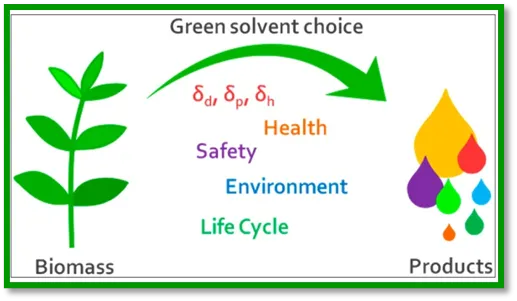
Green solvents, which are also called environmentally friendly or sustainable solvents, are very important for promoting sustainable development in many fields. These solvents are made to have less of an effect on the environment and people's health than regular solvents. Here are some ways that green solvents help with sustainable development:
  1. Less harm to the environment: Green solvents are often made from renewable resources, like biomass or agricultural by-products, which means we don't have to rely on fossil fuels as much. They usually have lower volatility and lower emissions of volatile organic compounds (VOCs), which helps the air quality and keeps ground-level ozone from forming.
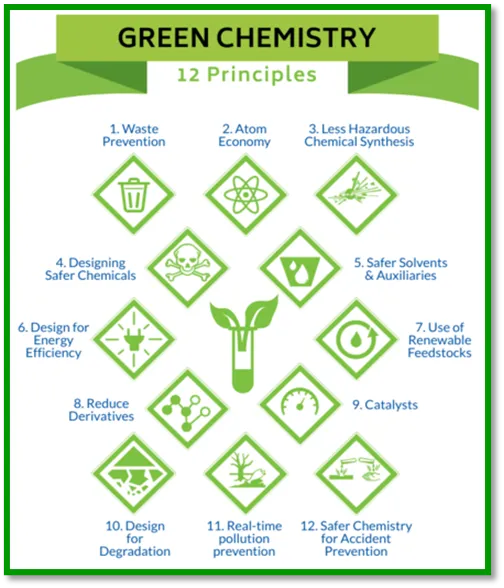
  2. Health and Safety Benefits: Green solvents are usually less toxic and dangerous to people than regular solvents, which lowers the risks for workers and people who live nearby. Using solvents that aren't harmful to people is in line with the ideas of green chemistry, which puts safety first when making chemicals as shown in figure 5a.
  3. Biodegradability and Eco-Friendliness: A lot of green solvents can break down into safe parts through natural processes. This makes chemicals less likely to stay in the environment for a long time and less likely to hurt ecosystems. Eco-friendly solvents help cut down on pollution in the environment, especially when it comes to water and soil contamination.
  4. Energy Efficiency: Some green solvents need less energy to make than traditional solvents, which makes the whole manufacturing process more energy efficient. Using solvents with lower boiling points or less harsh reaction conditions can save energy during distillation or other separation processes.
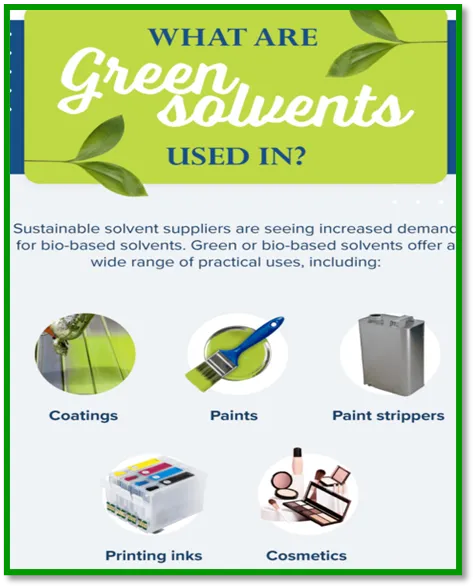
  5. Uses in Different Fields: Green solvents are used in a lot of different fields, such as cleaning products, agriculture, pharmaceuticals, and coatings. Because they can be used in many ways, they are a useful tool for reaching sustainability goals in many fields. They are especially important in fields where solvents are used a lot, like making paints, adhesives, and personal care products.
  6. Following the rules: Using green solvents is in line with stricter environmental rules and standards for sustainability. Following these rules not only makes sure that businesses are following the law, but it also makes them look better as environmentally responsible.
  7. Innovation and Research: The creation and use of green solvents push the fields of chemistry and materials science to come up with new ideas. Researchers are always looking for new and better ways to use solvents that are better for the environment. The need for green solvents drives funding for research and development, which leads to the discovery of new, eco-friendly solutions.
  8. Consumer Preferences and Market Demand: As people become more aware of environmental issues, they are looking for products that are made in ways that are good for the environment, such as using green solvents. Businesses that use green solvents in response to what customers want can get ahead of the competition.

Figure 5a. 12 Principles of Green Chemistry

Figure 5b. Green Solvents: Sustainable Solutions

  1. Initiatives for the Sustainable Development

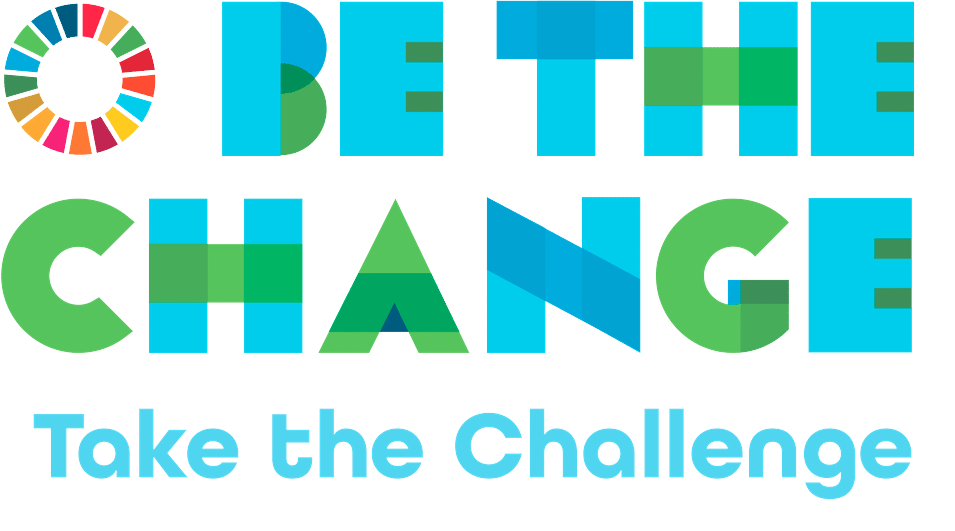
The "Be the Change" initiative is a real-world way to put the ideas behind the Sustainable Development Goals (SDGs) into action by encouraging people to live more sustainably. The initiative promotes public involvement and shared responsibility for sustainability by celebrating important days that raise awareness of social and environmental issues. Focusing on screening and getting rid of harmful substances from everyday use helps lower health risks and pollution in the environment. Using the right waste bins and properly disposing of hazardous materials in the environment are both important parts of safe and responsible waste management. The program also encourages the 4R strategy—Refuse, Reuse, Reduce, and Recycle—as a basic way to cut down on waste and save resources. The idea of "Too Much and Not Enough" encourages mindful consumption and suggests that living with less can lead to freedom and sustainability. In the end, this project connects people's actions to the bigger picture of the 17 SDGs, which is a plan for creating a fair, strong, and long-lasting future for everyone.

Celebrating important international and national observance days is a meaningful and organized way to meet the 17 Sustainable Development Goals (SDGs) set by the United Nations. It turns global promises into local action.

https://www.un.org/sustainabledevelopment/wp-content/uploads/2018/07/be_the_change_955x531.png

Celebrate the Important Days

3rd March - World Wildlife Day

22nd March - World Water Day

30th  March - Earth Hour

22nd April –Earth Day

5th June - World Environment Day

8th June - World Oceans Day

23rd June - UN Public Service Day

16th September- World Ozone Day

7th October - World Habitat Day

16th October - World Food Day

22nd October - World Energy Day

31st October - World Cities Day

14th December- National Energy Conservation Day

World Wildlife Day (March 3) focuses on protecting ecosystems and preserving biodiversity (SDGs 14 and 15). World Water Day (March 22) focuses on the importance of clean water, sanitation, and sustainable water management (SDG 6). Earth Hour (March 30) and Earth Day (April 22) help people learn about climate action, saving energy, and responsible consumption (SDGs 7, 12, and 13). World Environment Day (June 5) and World Oceans Day (June 8) encourage people to take care of the environment, keep pollution under control, and protect marine and terrestrial ecosystems. UN Public Service Day (June 23) stresses the importance of good governance, accountability, and institutions that are open to everyone (SDG 16). World Ozone Day, which is on September 16, reminds people of their promises to protect the climate and the health of the atmosphere. World Habitat Day (October 7) and World Cities Day (October 31) are both about sustainable urban development (SDG 11). World Food Day (October 16) is about food security and sustainable farming (SDG 2). World Energy Day (October 22) and National Energy Conservation Day (December 14) are about using clean energy and being more efficient (SDG 7). Celebrating these days together helps raise awareness, get people involved in their communities, and take responsible action, which is in line with the big picture of sustainable development.

The United Nations set up a framework of 17 aspirational goals called the Sustainable Development Goals (SDGs) in 2015 as a universal call to action to end poverty, protect the planet and ensure well-being and prosperity for all by the year 2030. Governments, companies and other organizations around the world are adopting this framework. Chemistry has a key role in many aspects of health care, such as medication development and environmental monitoring and so greatly contributes to the achievement of the goal of ensuring health and fostering well-being for all at all ages. By applying chemistry in this way we can supply safe and clean water to communities and play a key part in the worldwide effort to provide water and sanitation for all. The cross-disciplinary strategy brings together chemists, engineers and environmental scientists to tackle the complex problems around water management. The principles and practices of chemistry enable scientists and researchers to discover new solutions to meet SDG 13 and to battle climate change and its repercussions worldwide. Interdisciplinary collaboration and international cooperation are the only ways to achieve the aims of SDG 13. The chemistry of marine conservation involves several aspects, from pollution reduction to sustainable resource management. Scientists, biologists, oceanographers, and policymakers must work together to create comprehensive solutions to solve the complex problems of the oceans and seas. The application of chemical concepts to various fields enables researchers, conservationists, and policymakers to develop sustainable, effective approaches to natural resource management, biodiversity conservation, and environmental problem solving. Interdisciplinary cooperation across chemistry, biology, ecology and other disciplines is necessary to have a holistic and efficient conservation effort. Green solvents are important for sustainable development because they reduce environmental, health and safety hazards related to traditional solvents. Their adoption promotes a more sustainable and responsible way of carrying out chemical operations in various sectors, therefore leading to a greener and more ecologically aware future.

CONCLUSION

Sustainable development is development that meets the requirements of the present without compromising the ability of future generations to meet their own needs. Finally, it can be said that everyone can act, it is not only our international leaders who are responsible. We all have something to gain from a richer, more inclusive and more resilient world. Everyone has a role to play, regardless of their position in government, civil society, business or education. Governments create regulations to steer sustainable development, and both public and private sectors must finance the major changes required, but individual choices quickly add up. Your decisions about work, movement, relationships, and standing up for justice may all make a difference. Want to learn more? Find out what you can do today for our future together. Embrace the possible.

REFERENCES

  1. https://www.un.org/sustainabledevelopment/
  2. https://www.shell.com/sustainability/environment/water.html
  3. https://www.cps.bureauveritas.com/needs/sustainable-chemical-management/
  4. European Environment Agency: http://www.eea.europa.euu
  5. Intergovernmental Panel on Climate Change (IPCC): http://www.ipcc.ch
  6. United Nations Environment Programme: http://www.unep.org/
  7. Horvath, I. T., Introduction: Sustainable Chemistry. Chem. Rev. 2018, 118, 2, 369–371. https://doi.org/10.1021/acs.chemrev.7b00721
  8. Sjöström, J. and Talanquer, V. Humanizing chemistry education: from simple contextualization to multifaceted problematization. J. Chem. Educ. 2014 91(8), 1125-1131.  https://doi.org/10.1021/ed5000718
  9. Ramm, J.G., Dorscheid, G.L., Passos, C.G. and Sirtori, C. Development of a Waste Management Program in Technical Chemistry Teaching. J. Chem. Educ. 2018 95 (4), 570-576. https://doi.org/10.1021/acs.jchemed.7b00590.
  10. Timothy, A., Akande, A.A., Odoh, C., Philip, M., Fidelis, T., Amos, P. and Banjoko, O. Efficient synthesis of bio-based activated carbon (AC) for catalytic systems: A green and sustainable approach. J. Ind. Engg. Chem. 2021, 96 , 59-75.  https://doi.org/10.1016/j.jiec.2021.01.044
  11. Martinez-Guerra, E. and Gude, V.G. Assessment of Sustainability Indicators for Biodiesel Production. Appl. Sci. 2017, 7, 869. https://doi.org/10.3390/app7090869
  12. Eilks, I. and Raush, F. Sustainable development and green chemistry in chemistry education Chem. Educ. Res. Pract., 2012, 13, 57-58.
  13. Imai, I., Tsuchiya, Y., Ogino, K., Ueno, K., Tomita, H., Makide, K. and Tominaga, K. Development of teaching material for green and sustainable chemistry in Japan. Chemistry Teacher International, 2022, 4(2), 191-202. https://doi.org/10.1515/cti-2021-0029
  14. Karpudewan, M., Ismail, Z., and Roth, W. M. Ensuring sustainability of tomorrow through green chemistry integrated with sustainable development concepts (SDCs). Chemistry Education Research and Practice, 2012, 13(2), 120–127.  https://doi.org/10.1039/c1rp9006
  15. Shamuganathan, S. and Karpudewan, M. Science writing heuristics embedded in green chemistry: A tool to nurture environmental literacy among pre-university students. Chemistry Education Research and Practice, 2017, 18(2), 386–396. https://doi.org/10.1039/c7rp00013h.
  16. Stark, A., Ott, D., Kralisch, D., Kreisel, G., & Ondruschka, B. Ionic liquids and green chemistry: A lab experiment. Journal of Chemical Education, 2010, 87(2), 196–201. https://doi.org/10.1021/ed8000396.
  17. Medina Valderrama, C.J.; Morales Huamán, H.I.; Valencia-Arias, A.; Vasquez Coronado, M.H.; Cardona-Acevedo, S.; Delgado-Caramutti, J. Trends in Green Chemistry Research between 2012 and 2022: Current Trends and Research Agenda. Sustainability 2023, 15, 13946. https://doi.org/10.3390/su151813946
  18. Saxe, J.K.; Hoffman, L.; Labib, R. Method to incorporate green chemistry principles in early-stage product design for sustainability: Case studies with personal care products. Green Chem. 2022, 24, 4969–4980. https://doi.org/10.1039/d2gc00842d.
  19. Ahmad, C.; Yahaya, A.; Yahaya, R.; Taha, H.; Ibrahim, M. Establishment of green chemistry awareness instrument for secondary school students. Int. J. Eval. Res. Educ. 2022, 11, 1833–1844. http://doi.org/10.11591/ijere.v11i4.23406
  20. Rosales-Martínez, A.; Rodríguez-García, I.; López-Martínez, J.L. Green reductive regioselective opening of epoxides: A green chemistry laboratory experiment. J. Chem. Educ. 2022, 99, 2710–2714. https://doi.org/10.1021/acs.jchemed.2c00409
  21. Parker, A., Noronha, E. and Bongers, A. Beyond the Deficit Model: Organic Chemistry Educators’ Beliefs and Practices about Teaching Green and Sustainable Chemistry. J. Chem. Ed. 2023 100 (5), 1728-1738. https://doi.org/10.1021/acs.jchemed.2c00780
  22. Ause, R. (2019). 10. Green chemistry in secondary school. In Benvenuto, Mark Anthony & L. Kolopajlo (Ed.), Green Chemistry Education: Recent Developments (pp. 185-196). Berlin, Boston: De Gruyter. https://doi.org/10.1515/9783110566499-010
  23. Song, J. and Han, B. Green chemistry: a tool for the sustainable development of the chemical industry, Nat. Sc. Rev., 2015, 2(3), 255–256. https://doi.org/10.1093/nsr/nwu076
  24. Eccles, R. G., and Serafeim, G. The Performance Frontier: Innovating for a Sustainable Strategy. Harvard Business Review 2013, 91(5), 50–60.  ISSN 0017-8012
  25. Porter, M. and Kramer, M. Creating Shared Value. Harvard Business Review 2011 (Vol. 17, pp. 114-134). Boston, MA: FSG.
  26. Amatuni, L., Ottelin, J., Steubing, B., and Mogollón, J. M. Does car sharing reduce greenhouse gas emissions? Assessing the modal shift and lifetime shift rebound effects from a life cycle perspective. 2020, J. C. Produc., 266, 121869. 10.1016/j.jclepro.2020.121869
  27. Baldassarre, B., Schepers, M., Bocken, N., Cuppen, E., Korevaar, G., and Calabretta, G. Industrial symbiosis: Towards a design process for eco-industrial clusters by integrating circular economy and industrial ecology perspectives. J. C. Produc., 2019, 216, 446–460. https://doi.org/10.1016/j.jclepro.2019.01.091
  28. Bocken, N., Boons, F., and Baldassarre, B. Sustainable business model experimentation by understanding ecologies of business models. J. C. Produc., 2019, 208, 1498–1512. https://doi.org/10.1016/j.jclepro.2018.10.159
  29. Piscicelli, L., Ludden, G. D. S., and Cooper, T. What makes a sustainable business model successful? An empirical comparison of two peer-to-peer goods-sharing platforms. J. C. Produc., 2018, 172, 4580–4591. https://doi.org/10.1016/j.jclepro.2017.08.170
  30. Foss, N. J., and Saebi, T. Fifteen years of research on business model innovation: how far have we come, and where should we go? J. Manag., 2017, 43(1), 200–227.
  31. Agrawal, V. V., and Bellos, I. The potential of servicizing as a green business model. Manag. Sc., 2017, 63(5), 1545–1562. https://doi.org/10.1287/mnsc.2015.2399
  32. Al-Saleh, Y., and Mahroum, S. A critical review of the interplay between policy instruments and business models: greening the built environment a case in point. J. C. Produc., 2015, 109, 260–270. https://doi.org/10.1016/j.jclepro.2014.08.0422
  33. Angeli, F., and Jaiswal, A. K. Business model innovation for inclusive health care delivery at the bottom of the pyramid. Org. & Env., 2015, 29(4), 486–507.
  34. Melo, E.F.R.Q., Menegaes, J.F., Melo, R.H.R.Q. (2020). Green Chemistry for Sustainable Production and Consumption Patterns. In: Leal Filho, W., Azul, A.M., Brandli, L., özuyar, P.G., Wall, T. (eds) Responsible Consumption and Production. Encyclopedia of the UN Sustainable Development Goals. Springer, Cham. https://doi.org/10.1007/978-3-319-95726-5_94

Reference

  1. https://www.un.org/sustainabledevelopment/
  2. https://www.shell.com/sustainability/environment/water.html
  3. https://www.cps.bureauveritas.com/needs/sustainable-chemical-management/
  4. European Environment Agency: http://www.eea.europa.euu
  5. Intergovernmental Panel on Climate Change (IPCC): http://www.ipcc.ch
  6. United Nations Environment Programme: http://www.unep.org/
  7. Horvath, I. T., Introduction: Sustainable Chemistry. Chem. Rev. 2018, 118, 2, 369–371. https://doi.org/10.1021/acs.chemrev.7b00721
  8. Sjöström, J. and Talanquer, V. Humanizing chemistry education: from simple contextualization to multifaceted problematization. J. Chem. Educ. 2014 91(8), 1125-1131.  https://doi.org/10.1021/ed5000718
  9. Ramm, J.G., Dorscheid, G.L., Passos, C.G. and Sirtori, C. Development of a Waste Management Program in Technical Chemistry Teaching. J. Chem. Educ. 2018 95 (4), 570-576. https://doi.org/10.1021/acs.jchemed.7b00590.
  10. Timothy, A., Akande, A.A., Odoh, C., Philip, M., Fidelis, T., Amos, P. and Banjoko, O. Efficient synthesis of bio-based activated carbon (AC) for catalytic systems: A green and sustainable approach. J. Ind. Engg. Chem. 2021, 96 , 59-75.  https://doi.org/10.1016/j.jiec.2021.01.044
  11. Martinez-Guerra, E. and Gude, V.G. Assessment of Sustainability Indicators for Biodiesel Production. Appl. Sci. 2017, 7, 869. https://doi.org/10.3390/app7090869
  12. Eilks, I. and Raush, F. Sustainable development and green chemistry in chemistry education Chem. Educ. Res. Pract., 2012, 13, 57-58.
  13. Imai, I., Tsuchiya, Y., Ogino, K., Ueno, K., Tomita, H., Makide, K. and Tominaga, K. Development of teaching material for green and sustainable chemistry in Japan. Chemistry Teacher International, 2022, 4(2), 191-202. https://doi.org/10.1515/cti-2021-0029
  14. Karpudewan, M., Ismail, Z., and Roth, W. M. Ensuring sustainability of tomorrow through green chemistry integrated with sustainable development concepts (SDCs). Chemistry Education Research and Practice, 2012, 13(2), 120–127.  https://doi.org/10.1039/c1rp9006
  15. Shamuganathan, S. and Karpudewan, M. Science writing heuristics embedded in green chemistry: A tool to nurture environmental literacy among pre-university students. Chemistry Education Research and Practice, 2017, 18(2), 386–396. https://doi.org/10.1039/c7rp00013h.
  16. Stark, A., Ott, D., Kralisch, D., Kreisel, G., & Ondruschka, B. Ionic liquids and green chemistry: A lab experiment. Journal of Chemical Education, 2010, 87(2), 196–201. https://doi.org/10.1021/ed8000396.
  17. Medina Valderrama, C.J.; Morales Huamán, H.I.; Valencia-Arias, A.; Vasquez Coronado, M.H.; Cardona-Acevedo, S.; Delgado-Caramutti, J. Trends in Green Chemistry Research between 2012 and 2022: Current Trends and Research Agenda. Sustainability 2023, 15, 13946. https://doi.org/10.3390/su151813946
  18. Saxe, J.K.; Hoffman, L.; Labib, R. Method to incorporate green chemistry principles in early-stage product design for sustainability: Case studies with personal care products. Green Chem. 2022, 24, 4969–4980. https://doi.org/10.1039/d2gc00842d.
  19. Ahmad, C.; Yahaya, A.; Yahaya, R.; Taha, H.; Ibrahim, M. Establishment of green chemistry awareness instrument for secondary school students. Int. J. Eval. Res. Educ. 2022, 11, 1833–1844. http://doi.org/10.11591/ijere.v11i4.23406
  20. Rosales-Martínez, A.; Rodríguez-García, I.; López-Martínez, J.L. Green reductive regioselective opening of epoxides: A green chemistry laboratory experiment. J. Chem. Educ. 2022, 99, 2710–2714. https://doi.org/10.1021/acs.jchemed.2c00409
  21. Parker, A., Noronha, E. and Bongers, A. Beyond the Deficit Model: Organic Chemistry Educators’ Beliefs and Practices about Teaching Green and Sustainable Chemistry. J. Chem. Ed. 2023 100 (5), 1728-1738. https://doi.org/10.1021/acs.jchemed.2c00780
  22. Ause, R. (2019). 10. Green chemistry in secondary school. In Benvenuto, Mark Anthony & L. Kolopajlo (Ed.), Green Chemistry Education: Recent Developments (pp. 185-196). Berlin, Boston: De Gruyter. https://doi.org/10.1515/9783110566499-010
  23. Song, J. and Han, B. Green chemistry: a tool for the sustainable development of the chemical industry, Nat. Sc. Rev., 2015, 2(3), 255–256. https://doi.org/10.1093/nsr/nwu076
  24. Eccles, R. G., and Serafeim, G. The Performance Frontier: Innovating for a Sustainable Strategy. Harvard Business Review 2013, 91(5), 50–60.  ISSN 0017-8012
  25. Porter, M. and Kramer, M. Creating Shared Value. Harvard Business Review 2011 (Vol. 17, pp. 114-134). Boston, MA: FSG.
  26. Amatuni, L., Ottelin, J., Steubing, B., and Mogollón, J. M. Does car sharing reduce greenhouse gas emissions? Assessing the modal shift and lifetime shift rebound effects from a life cycle perspective. 2020, J. C. Produc., 266, 121869. 10.1016/j.jclepro.2020.121869
  27. Baldassarre, B., Schepers, M., Bocken, N., Cuppen, E., Korevaar, G., and Calabretta, G. Industrial symbiosis: Towards a design process for eco-industrial clusters by integrating circular economy and industrial ecology perspectives. J. C. Produc., 2019, 216, 446–460. https://doi.org/10.1016/j.jclepro.2019.01.091
  28. Bocken, N., Boons, F., and Baldassarre, B. Sustainable business model experimentation by understanding ecologies of business models. J. C. Produc., 2019, 208, 1498–1512. https://doi.org/10.1016/j.jclepro.2018.10.159
  29. Piscicelli, L., Ludden, G. D. S., and Cooper, T. What makes a sustainable business model successful? An empirical comparison of two peer-to-peer goods-sharing platforms. J. C. Produc., 2018, 172, 4580–4591. https://doi.org/10.1016/j.jclepro.2017.08.170
  30. Foss, N. J., and Saebi, T. Fifteen years of research on business model innovation: how far have we come, and where should we go? J. Manag., 2017, 43(1), 200–227.
  31. Agrawal, V. V., and Bellos, I. The potential of servicizing as a green business model. Manag. Sc., 2017, 63(5), 1545–1562. https://doi.org/10.1287/mnsc.2015.2399
  32. Al-Saleh, Y., and Mahroum, S. A critical review of the interplay between policy instruments and business models: greening the built environment a case in point. J. C. Produc., 2015, 109, 260–270. https://doi.org/10.1016/j.jclepro.2014.08.0422
  33. Angeli, F., and Jaiswal, A. K. Business model innovation for inclusive health care delivery at the bottom of the pyramid. Org. & Env., 2015, 29(4), 486–507.
  34. Melo, E.F.R.Q., Menegaes, J.F., Melo, R.H.R.Q. (2020). Green Chemistry for Sustainable Production and Consumption Patterns. In: Leal Filho, W., Azul, A.M., Brandli, L., özuyar, P.G., Wall, T. (eds) Responsible Consumption and Production. Encyclopedia of the UN Sustainable Development Goals. Springer, Cham. https://doi.org/10.1007/978-3-319-95726-5_94

Photo
Samjeet Singh Thakur
Corresponding author

Department of Chemistry, NSCBM Govt. College Hamirpur, Hamirpur, Himachal Pradesh

Photo
Ravinder Dogra
Co-author

Department of Chemistry, Govt. College Una, Una, Himachal Pradesh

Photo
Ravi Kant
Co-author

Department of Chemistry, Siddharth Govt. College Nadaun, Hamirpur, Himachal Pradesh

Ravinder Dogra1, Ravi Kant2, Samjeet Singh Thakur3*, From Molecules To Global Impact: Chemistry’s Integral Role In The UN Sustainable Development Agenda, Int. J. Sci. R. Tech., 2026, 3 (7), 896-915. https://doi.org/10.5281/zenodo.21556398

More related articles
In Silico Design, Molecular Docking And ADME-Toxic...
Rutuja Purushottam Bhojane, Manoj Gangadhar Shinde, Tejal Hari Ba...
Organic Chemistry In The 21st Century: Design, Rea...
TANZEER AHMAD DAR, Mallikarjuna Allam, Biradavolu Sowjanya, Sunee...
Artificial Intelligence in Sustainable Water Resou...
Aditya Girothia, Brajesh Mandrai, Pradumanrao Kadam...
More related articles
In Silico Design, Molecular Docking And ADME-Toxicity Evaluation of Substituted ...
Rutuja Purushottam Bhojane, Manoj Gangadhar Shinde, Tejal Hari Bare, Janhavi Harish Bhalerao , Aksha...
Organic Chemistry In The 21st Century: Design, Reactivity, And Function...
TANZEER AHMAD DAR, Mallikarjuna Allam, Biradavolu Sowjanya, Suneetha Jarugumalli, Khande Madhavi, G ...
In Silico Design, Molecular Docking And ADME-Toxicity Evaluation of Substituted ...
Rutuja Purushottam Bhojane, Manoj Gangadhar Shinde, Tejal Hari Bare, Janhavi Harish Bhalerao , Aksha...
Organic Chemistry In The 21st Century: Design, Reactivity, And Function...
TANZEER AHMAD DAR, Mallikarjuna Allam, Biradavolu Sowjanya, Suneetha Jarugumalli, Khande Madhavi, G ...