

We use cookies to ensure our website works properly and to personalise your experience. Cookies policy
Department of Child Health Nursing, Adichunchanagiri College of Nursing, Adichunchanagiri University, B G Nagara, Nagamangala Taluk, Mandya District, Karnataka, India.
Pediatric obstructive sleep apnea (OSA) is a common sleep-related breathing disorder characterized by recurrent partial or complete obstruction of the upper airway during sleep, resulting in intermittent hypoxemia, hypercapnia, sleep fragmentation, and disturbances in normal sleep architecture. Unlike adults, children with OSA frequently present with behavioral disturbances, learning difficulties, impaired attention, and developmental complications rather than prominent daytime sleepiness. Adenotonsillar hypertrophy, obesity, craniofacial abnormalities, and neuromuscular disorders are among the major contributing factors. The consequences of untreated pediatric OSA extend beyond disturbed nocturnal breathing and may affect multiple aspects of childhood development. Repeated arousals and intermittent oxygen deprivation can interfere with restorative sleep, memory consolidation, emotional regulation, and neurocognitive functioning. Behavioral manifestations include hyperactivity, irritability, impulsivity, aggression, and attention-related difficulties, which may resemble attention-deficit/hyperactivity disorder. Furthermore, increased metabolic demands, altered growth hormone secretion, feeding difficulties, and systemic inflammation may contribute to impaired physical growth in affected children. Academic performance may also deteriorate because of reduced concentration, executive dysfunction, memory impairment, and daytime functional disturbances. Early recognition and appropriate management are therefore essential to minimize potential developmental consequences. Polysomnography remains the standard diagnostic investigation, while adenotonsillectomy is commonly recommended for appropriately selected children with adenotonsillar hypertrophy. Continuous positive airway pressure, weight management, and selected medical interventions may be considered in specific clinical circumstances. This review examines the pathophysiology, clinical manifestations, diagnostic approaches, and therapeutic strategies of pediatric OSA, emphasizing its interconnected effects on sleep quality, behavior, physical growth, cognitive development, and academic achievement. It also discusses current evidence, treatment outcomes, and the importance of multidisciplinary management to improve long-term pediatric health and developmental outcomes.
Pediatric OSA occurs across infancy, childhood, and adolescence, although its clinical phenotype and underlying mechanisms vary with age. The prevalence estimates reported in epidemiological studies are influenced by the definition of habitual snoring, the use of caregiver questionnaires, the availability of polysomnography, and the threshold selected for the apnea-hypopnea index (AHI). The American Academy of Pediatrics guideline summarizes prevalence estimates of approximately 1.2% to 5.7% for childhood OSA, while habitual snoring is substantially more frequent [1]. A population-based study of school-aged children by Bixler and colleagues also demonstrated that OSA is present in a measurable proportion of otherwise community-dwelling children and that obesity and upper-airway characteristics influence risk [2]. The highest frequency of adenotonsillar-associated disease is commonly observed in preschool and early school-aged children, particularly between approximately 2 and 8 years of age. This period corresponds to substantial lymphoid tissue development relative to the dimensions of the upper airway. In younger children, adenotonsillar hypertrophy is a major anatomical contributor, whereas obesity becomes increasingly important in older children and adolescents. However, these mechanisms overlap, and an individual child may have several anatomical and physiological risk factors simultaneously [3].
The epidemiology of pediatric OSA is also affected by population characteristics and social determinants of health. Access to specialist assessment, diagnostic sleep studies, and treatment differs across geographical regions. Studies using parent-reported symptoms may identify a broader group with sleep-disordered breathing than studies requiring polysomnographic confirmation [4]. Therefore, prevalence estimates should not be compared without considering the age of participants, referral setting, diagnostic threshold, and measurement technique. A systematic review and meta-analysis of pediatric risk factors identified associations with tonsillar hypertrophy, adenoid hypertrophy, obesity, respiratory tract infection, and family history, supporting the multifactorial nature of disease susceptibility [5].
The clinical burden extends beyond the number of children meeting a formal OSA threshold. Habitual snoring, increased respiratory effort, restless sleep, and recurrent upper-airway obstruction may occur along a continuum. Children with mild sleep-disordered breathing may experience symptoms and quality-of-life effects even when their AHI is low. The PATS trial specifically examined children with habitual snoring and mild obstructive events, demonstrating that clinically meaningful symptoms and secondary outcomes can be present below conventional thresholds for more severe OSA [6]. This reinforces the importance of clinical assessment rather than relying on a single numerical measure in isolation.
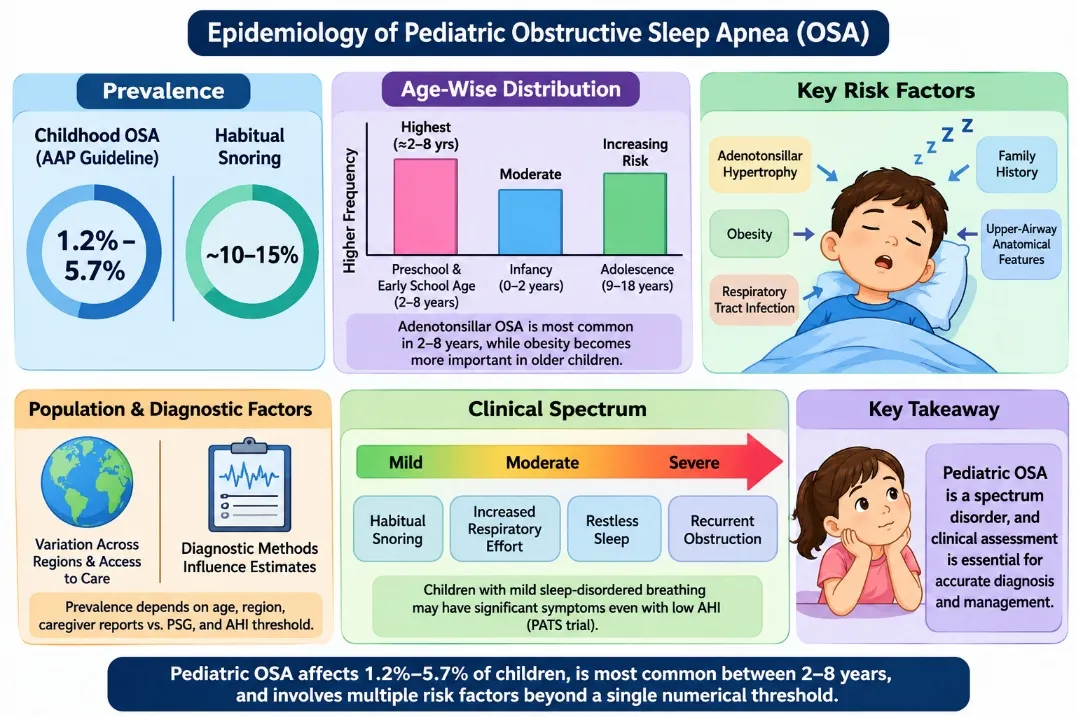
Figure 1: Epidemiology of Pediatric OSA, Illustrating Prevalence, Age-Wise Distribution, Risk Factors, and Clinical Spectrum.
2. PATHOPHYSIOLOGY OF PEDIATRIC OSA
The pathophysiology of pediatric OSA involves anatomical vulnerability, sleep-dependent changes in upper-airway muscle tone, ventilatory control, and arousal responses. During inspiration, negative intraluminal pressure tends to narrow the pharyngeal airway. In children with a structurally narrow or collapsible airway, this pressure may produce partial obstruction, flow limitation, snoring, or complete obstructive apnea. Respiratory effort continues despite reduced or absent airflow. Obstructive hypopneas and apneas may terminate with cortical or subcortical arousal, increased muscle activity, and restoration of airflow [7].Repeated obstruction produces intermittent hypoxemia and, in some cases, hypercapnia. The magnitude and duration of oxygen desaturation vary with event frequency, event duration, baseline oxygenation, and the child's physiological reserve [8]. Reoxygenation after each event may contribute to oxidative stress, while recurrent arousals activate sympathetic pathways and disturb normal autonomic regulation. Inflammation, endothelial dysfunction, and altered cardiovascular regulation have been proposed as mechanisms linking OSA to systemic consequences. The relative contribution of each pathway differs among children and cannot be inferred from AHI alone [9].
Sleep fragmentation is a central mechanism connecting nocturnal airway obstruction with daytime symptoms. Repeated arousals interrupt the continuity of non-rapid eye movement and rapid eye movement sleep and may reduce the restorative value of sleep even when total sleep duration appears adequate [10]. A child may spend sufficient time in bed but experience repeated transitions between sleep stages, increased wake after sleep onset, and reduced sleep efficiency. Recent polysomnographic work has described altered sleep-stage distribution, greater arousal burden, and reduced sleep continuity among children with OSA, although findings across studies are not completely uniform [11].
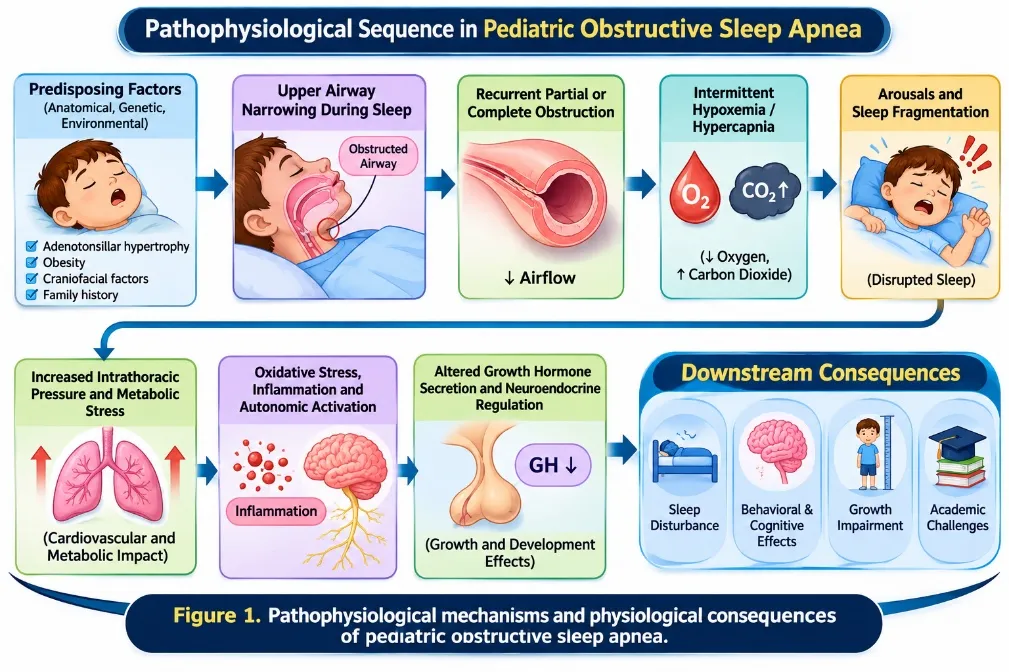
Figure 2: Pathophysiological mechanisms and downstream effects of pediatric obstructive sleep apnea.
3. EFFECTS ON SLEEP QUALITY AND SLEEP ARCHITECTURE
Sleep disturbance is the defining physiological feature of pediatric OSA. Parents may report loud habitual snoring, pauses in breathing, gasping, choking, restless sleep, unusual sleeping positions, sweating, and frequent awakenings. Some children sleep with the neck extended or adopt unusual postures in an attempt to maintain airway patency. Younger children may not be able to describe nocturnal symptoms, making caregiver observation particularly important. Morning headaches, difficult awakening, and daytime fatigue may occur, although excessive sleepiness is less consistently reported in children than in adults [12].
Normal sleep architecture consists of recurring cycles of non-rapid eye movement sleep and rapid eye movement sleep. Slow-wave sleep contributes to physical restoration and is associated with growth hormone secretion, while rapid eye movement sleep is involved in memory processing and aspects of emotional regulation. Obstructive events can occur during different sleep stages, but their frequency and severity may vary across the night. Reduced muscle tone during rapid eye movement sleep may increase airway collapsibility in susceptible children. Frequent respiratory arousals can interrupt the continuity of these cycles and reduce the opportunity for uninterrupted restorative sleep [13].
Polysomnographic findings may include an elevated obstructive AHI, respiratory arousal index, oxygen desaturation index, carbon dioxide retention, and evidence of increased respiratory effort. Sleep efficiency may be reduced, and wake after sleep onset may be increased. However, the relationship between conventional PSG indices and daytime morbidity is imperfect[14]. Some children with relatively mild AHI values demonstrate substantial symptoms, whereas others with higher indices may have fewer reported behavioral difficulties. This discrepancy reflects differences in event duration, hypoxic burden, arousal threshold, individual vulnerability, age, and the sensitivity of outcome measurements [15].
4. BEHAVIORAL CONSEQUENCES
Behavioral manifestations are among the most frequently recognized daytime consequences of pediatric OSA. Affected children may exhibit hyperactivity, impulsivity, irritability, aggression, mood instability, emotional dysregulation, and difficulty following instructions. These symptoms can be interpreted as oppositional behavior or attention-deficit/hyperactivity disorder (ADHD), particularly when the relationship between nocturnal breathing and daytime functioning is not recognized [16]. The clinical presentation may differ according to age, severity, sleep duration, and neurodevelopmental background [17].
Sleep fragmentation and intermittent hypoxia may influence neural networks responsible for inhibition, sustained attention, emotional control, and adaptive behavior. Children may have difficulty waiting, shifting between tasks, controlling impulses, or regulating frustration. Behavioral symptoms can affect relationships with parents, siblings, teachers, and peers. Caregivers may describe a child as excessively active rather than sleepy, reflecting a possible compensatory response to impaired alertness [18]. Such presentations are important because conventional screening focused only on daytime somnolence may fail to identify affected children [19].
Observational studies have identified associations between sleep-disordered breathing and parent- or teacher-reported behavioral problems. O'Brien and colleagues reported neurobehavioral correlates of sleep-disordered breathing in children, supporting relationships between respiratory disturbance during sleep and daytime functioning [20]. Beebe's comprehensive review similarly described associations with behavior, emotional regulation, attention, and scholastic performance [21]. However, observational associations do not prove that OSA is the sole cause of a behavioral disorder. Family environment, socioeconomic circumstances, developmental disorders, insufficient sleep, and coexisting medical conditions may contribute to the observed phenotype [22].
5. EFFECTS ON COGNITION AND NEURODEVELOPMENT
Cognitive development depends on adequate sleep, oxygen delivery, stable metabolic function, and repeated opportunities for learning and memory consolidation. Pediatric OSA may affect cognitive performance through both sleep fragmentation and intermittent hypoxemia. The cognitive domains most frequently investigated include attention, working memory, verbal learning, visual-spatial processing, executive function, processing speed, and general intellectual performance. Results vary between studies, partly because of differences in participant selection, diagnostic criteria, age, comorbidity, and neuropsychological testing methods [23].
Attention is necessary for the acquisition of new information and successful participation in classroom activities. Children with disrupted sleep may have difficulty sustaining attention, filtering irrelevant stimuli, and maintaining task performance over time. Working memory, which allows information to be temporarily retained and manipulated, is important for following multistep instructions, mental arithmetic, reading comprehension, and problem solving. Executive functions include planning, inhibition, cognitive flexibility, and self-monitoring. These abilities develop gradually and may be vulnerable to chronic sleep disruption during critical developmental periods [24].
Halbower and colleagues reported neuropsychological morbidity associated with childhood sleep-disordered breathing, while subsequent work has investigated associations between OSA and brain injury-related biomarkers and neuroimaging findings [25]. These studies support biological plausibility but do not establish that every child with OSA develops permanent neuronal injury. The degree of vulnerability may depend on the timing of exposure, duration of disease, hypoxic burden, genetic factors, and baseline neurodevelopment. The possibility of recovery after treatment is also likely to vary among individuals [26].
6. EFFECTS ON PHYSICAL GROWTH AND METABOLIC HEALTH
Normal childhood growth is influenced by genetic potential, nutrition, endocrine function, sleep, physical activity, and general health. OSA may affect growth through increased respiratory energy expenditure, disturbed sleep architecture, altered endocrine signalling, feeding difficulties, and systemic inflammation. Some children with severe upper-airway obstruction demonstrate poor weight gain or reduced linear growth, while others are overweight or obese. Therefore, growth-related manifestations are heterogeneous and should be evaluated using longitudinal height, weight, and body mass index percentiles rather than a single measurement [27].
Growth hormone secretion is closely related to sleep, particularly slow-wave sleep. Repeated arousals and disruption of slow-wave sleep may alter the normal temporal pattern of growth hormone release. IGF-I, which mediates many growth-promoting effects of growth hormone, has been studied in children with OSA. Bar and colleagues reported that adenotonsillectomy was associated with changes in serum IGF-I and growth-related parameters, suggesting that the IGF-I axis may be affected in some children with OSA [28]. These findings provide a possible endocrine mechanism but should not be generalized to every child with sleep-disordered breathing.
Increased work of breathing may raise energy requirements during sleep. Children with severe obstruction may expend additional energy to overcome airway resistance, and some may experience feeding difficulty or poor appetite. Recurrent illness and associated inflammation may further influence nutritional status. After successful treatment, reduced respiratory effort and improved sleep may support catch-up growth in children who were previously underweight. However, postoperative changes in appetite and weight can also result in excessive weight gain, especially in children who already have overweight or obesity [29].
Table 1: Major Clinical Domains Affected by Pediatric Obstructive Sleep Apnea and Representative Manifestations.
| Clinical domain | Potential manifestations | Proposed mechanisms |
|---|---|---|
| Sleep | Snoring, arousals, restless sleep, reduced sleep efficiency | Upper-airway obstruction, respiratory effort, sleep-stage disruption |
| Behavior | Hyperactivity, irritability, impulsivity, emotional dysregulation | Sleep fragmentation, intermittent hypoxemia, altered prefrontal regulation |
| Cognition | Attention, working-memory and executive-function difficulties | Disrupted restorative sleep, hypoxic burden, altered neural functioning |
| Growth | Poor weight gain in some children; altered weight trajectory | Increased energy expenditure, feeding difficulty, altered GH/IGF-I signalling |
| Academic functioning | Reduced concentration, task completion and learning efficiency | Daytime functional impairment, memory and attention difficulties |
| Cardiometabolic health | Elevated blood pressure and metabolic risk in selected children | Sympathetic activation, oxidative stress, inflammation |
7. ACADEMIC PERFORMANCE AND SCHOOL FUNCTIONING
Academic performance is a complex outcome influenced by cognitive ability, sleep duration, attendance, classroom environment, socioeconomic conditions, emotional health, teaching quality, and family support. Pediatric OSA may contribute to learning difficulties by disrupting attention, working memory, executive function, and behavioral regulation. Children may struggle to remain engaged during lessons, follow instructions, complete assignments, remember newly learned material, and regulate behavior in group settings [30].
Gozal's prospective study of first-grade children with poor academic performance identified sleep-associated gas-exchange abnormalities in a subset of participants. Children who underwent adenotonsillectomy demonstrated improvement in school grades, whereas those who did not receive intervention did not show comparable improvement [31]. This landmark study highlighted the possibility that sleep-disordered breathing may be an under-recognized contributor to poor school performance. However, the study was not a randomized controlled trial, and selection effects and other confounding factors should be considered when interpreting its findings [32].
Subsequent research has examined associations between sleep-disordered breathing and school performance across larger populations. Chervin and colleagues investigated school performance and correlates of sleep-disordered breathing, reporting associations between sleep-related symptoms and educational outcomes [33]. A later meta-analysis found that sleep-disordered breathing was associated with poorer performance in language arts, mathematics, and science, although the magnitude of associations was generally small to moderate and varied across studies [34]. Differences in how academic performance and sleep-disordered breathing were defined contributed to heterogeneity.
Academic difficulties may occur even when general intelligence remains within the normal range. A child may have adequate intellectual potential but struggle to apply knowledge efficiently because of reduced attention, poor working memory, slow processing, or behavioral dysregulation [35]. These functional difficulties may be more apparent in demanding classroom tasks than in brief clinical assessments. Therefore, academic impact should be evaluated through school reports, standardized achievement measures, attendance records, and caregiver observations rather than relying exclusively on global IQ testing [36].
Treatment may improve school functioning in some children, particularly when sleep symptoms and behavioral problems are prominent. Nevertheless, evidence that adenotonsillectomy consistently improves standardized academic achievement is less definitive than evidence for improvements in snoring, symptoms, quality of life, and PSG parameters [37]. CHAT did not establish a significant advantage in its primary objective attention and executive-function outcome, and PATS similarly found no significant improvement in primary attention and executive-function measures [38]. The findings caution against promising academic recovery as a guaranteed result of treatment.
Schools can contribute to early recognition by communicating persistent concerns about daytime behavior, attention, fatigue, and learning. Teachers may observe symptoms that are not apparent during short clinical visits. When a child has habitual snoring together with learning or behavioral difficulties, clinicians should ask about sleep quality and consider referral for further evaluation. Educational support should continue during medical assessment and treatment, because sleep-related intervention may not immediately reverse accumulated learning gaps [39].
Table 2: Selected Landmark Clinical Investigations Informing the Understanding of Pediatric OSA Outcomes [40,41].
| Study | Design / population | Outcome focus | Main interpretation |
|---|---|---|---|
| Gozal, 1998 [12] | Prospective school-based study; 297 first-grade children with low academic ranking | School grades and sleep-related gas-exchange abnormalities | OSA-related gas-exchange abnormalities were identified in a subset; treated children showed grade improvement |
| CHAT, 2013 [20] | Randomized trial; 464 children aged 5–9 years | Attention, executive function, behavior, symptoms and PSG | No significant primary attention/executive-function difference; behavior, symptoms, quality of life and PSG improved after surgery |
| Growth analysis, 2014 [18] | Randomized trial cohort; 464 children with OSA | Anthropometric change after adenotonsillectomy | Postoperative weight gain requires growth monitoring |
| PATS, 2023 [21] | Randomized trial; 459 children with mild SDB | Executive function, attention, behavior, symptoms, BP | No significant primary cognitive difference; several secondary outcomes favored surgery |
| Academic meta-analysis, 2015 [41] | Meta-analysis of 16 studies | Language arts, mathematics, science and school progress | SDB associated with small-to-moderate decrements in selected academic domains |
8. CLINICAL PRESENTATION AND ASSESSMENT
The clinical assessment begins with a detailed sleep history. Habitual snoring, especially on three or more nights per week, witnessed pauses in breathing, gasping, labored breathing, restless sleep, unusual sleeping positions, sweating, and nocturnal enuresis may raise suspicion. Morning headaches, difficult awakening, irritability, hyperactivity, poor concentration, and learning difficulties are relevant daytime symptoms. The absence of reported daytime sleepiness does not exclude pediatric OSA [42].
Physical examination should evaluate growth, body mass index percentile, tonsillar size, nasal patency, craniofacial features, palate, mandibular position, and signs of associated syndromes or neuromuscular disease. Blood pressure should be measured using age-, sex-, and height-appropriate standards. Examination findings alone cannot reliably confirm or exclude OSA because the size of the tonsils does not consistently predict the severity of sleep-related obstruction. A normal daytime airway examination does not guarantee normal airway function during sleep [43].
Polysomnography is the standard diagnostic investigation for pediatric OSA. It records sleep stages, airflow, respiratory effort, oxygen saturation, carbon dioxide, electrocardiographic activity, and other physiological parameters [44].
9. MANAGEMENT AND THERAPEUTIC APPROACHES
Management should be individualized according to OSA severity, age, anatomical findings, comorbidities, obesity, symptoms, and family preferences. Adenotonsillectomy is commonly recommended as first-line treatment for children with OSA and adenotonsillar hypertrophy when there are no contraindications [45]. The procedure removes the principal anatomical obstruction in many otherwise healthy young children and can improve snoring, respiratory events, symptoms, and quality of life [46].
The CHAT trial provided high-quality evidence comparing early adenotonsillectomy with watchful waiting and supportive care in school-aged children. Surgery improved polysomnographic findings, symptoms, behavior, and quality of life, and PSG normalization occurred more frequently in the surgical group. However, the primary attention and executive-function outcome did not differ significantly between groups after seven months [47]. These findings demonstrate that improvement in sleep physiology and caregiver-observed functioning does not necessarily translate into a measurable change in every neuropsychological domain over a relatively short follow-up period [48].
The PATS trial investigated children with habitual snoring and mild sleep-disordered breathing. Early adenotonsillectomy did not significantly improve its primary executive-function and attention outcomes compared with watchful waiting, but it improved several secondary outcomes, including behavior, symptoms, quality of life, blood pressure, and the likelihood of progression to higher AHI values [49]. These results are particularly important when discussing treatment for mild disease, where symptom burden, family preferences, and the balance of benefits and surgical risks require careful consideration [50].
10. LONG-TERM OUTCOMES AND FOLLOW-UP
Long-term outcomes depend on the severity and duration of OSA, age at onset, underlying risk factors, treatment effectiveness, and persistence of residual disease [51]. Early recognition may reduce the duration of exposure to sleep fragmentation and intermittent hypoxemia, but evidence regarding the prevention of all long-term neurodevelopmental consequences remains incomplete. Follow-up should evaluate symptoms, sleep quality, growth, blood pressure, behavior, and school functioning rather than focusing exclusively on the postoperative appearance of the tonsillar bed [52].
Clinical reassessment after treatment is important because residual symptoms may reflect persistent OSA, recurrent obstruction, obesity, nasal disease, inadequate sleep duration, or a separate sleep or developmental condition [53]. The AAP guideline recommends reassessment after therapy and further evaluation when symptoms persist. Objective postoperative testing is particularly important in children with severe baseline disease, obesity, craniofacial abnormalities, neuromuscular disorders, or persistent symptoms [54].
11. EVIDENCE GAPS AND FUTURE RESEARCH DIRECTIONS
Although research into pediatric OSA has advanced considerably, important uncertainties remain. There is no single PSG parameter that fully captures the biological burden of disease or predicts every neurobehavioral outcome [55]. Future research should investigate measures of hypoxic burden, event duration, arousal intensity, autonomic activation, and individual susceptibility. Standardized outcome measures would improve comparison across studies and support more precise clinical risk stratification [56].
Longitudinal studies are needed to clarify whether early childhood OSA produces persistent effects on cognitive development, emotional regulation, academic achievement, and cardiometabolic health [57]. Studies should include diverse populations and account for socioeconomic conditions, access to treatment, sleep duration, obesity, neurodevelopmental diagnoses, and environmental exposures. More research is also required to understand which children benefit most from adenotonsillectomy, CPAP, weight interventions, and medical therapies [58].
12. INTEGRATED CLINICAL IMPLICATIONS
The effects of pediatric OSA are interconnected rather than isolated. Recurrent airway obstruction disrupts sleep continuity, and disturbed sleep may influence behavior, attention, emotional regulation, growth-related physiology, and school participation. A child presenting with poor academic performance may have an underlying sleep disorder, while a child referred for snoring may also have unrecognized learning or behavioral difficulties. Recognition of these overlapping domains is essential for comprehensive care [59].
Healthcare professionals should incorporate questions about snoring and sleep quality into routine pediatric assessment. Parents should be encouraged to describe observed breathing pauses, restless sleep, unusual sleeping positions, and daytime changes [60]. Teachers may provide useful information about attention, activity level, and classroom functioning. When symptoms suggest OSA, appropriate diagnostic evaluation should be arranged rather than relying solely on tonsil size or caregiver impressions [61].
Management should include clear communication about expected benefits and limitations. Adenotonsillectomy often improves respiratory symptoms and sleep-related quality of life in appropriately selected children, but residual OSA may occur [62]. Behavioral improvement is possible, but objective cognitive and academic recovery is not guaranteed. Weight, growth, blood pressure, and symptoms should be monitored after treatment. Persistent concerns require reassessment and consideration of additional medical, developmental, or educational interventions [63].
CONCLUSION
Pediatric obstructive sleep apnea is a clinically important disorder with consequences that may extend beyond nocturnal breathing disturbances. Recurrent upper-airway obstruction, intermittent hypoxemia, and sleep fragmentation can affect sleep quality, behavior, neurocognitive functioning, growth-related physiology, and academic participation. Adenotonsillar hypertrophy and obesity are major contributing factors, although craniofacial, neuromuscular, and genetic conditions also increase susceptibility. The available evidence supports early recognition through careful sleep history, clinical assessment, and polysomnography when indicated. Adenotonsillectomy improves symptoms, sleep-related quality of life, and several physiological and behavioral outcomes in appropriately selected children; however, improvements in objective attention, executive function, and academic achievement are not consistent across randomized trials. Residual OSA may occur, particularly in children with obesity or complex medical conditions, making postoperative reassessment essential. Growth and weight trajectories should also be monitored because both catch-up growth and undesirable weight gain may occur. A multidisciplinary approach integrating pediatric, respiratory, otolaryngological, nutritional, psychological, and educational support offers the most comprehensive strategy. Further long-term research is required to identify children at greatest developmental risk and determine which interventions provide sustained benefits across childhood and adolescence.
REFERENCES

Chethan J., P. M. Shilpa, Arathi T. V., Pediatric Obstructive Sleep Apnea: Impact on Sleep, Behavior, Growth and Academic Performance, Int. J. Sci. R. Tech., 2026, 3 (11), 234-245. https://doi.org/10.5281/zenodo.23967761
 10.5281/zenodo.23967761