View Article

  • Pharmacovigilance of Biological Therapies in Age-Related Diseases: Current Challenges and Future Perspectives

  • Department of Pharmacology, JES's SND College of Pharmacy, Babhulgaon (Yeola), India

Abstract

Ageing is associated with an increased risk of chronic diseases requiring advanced therapeutic approaches, including biological therapies. Monoclonal antibodies, recombinant proteins, cytokines, and emerging cell- and gene-based therapies have improved the management of several age-related diseases, including rheumatoid arthritis, osteoporosis, Alzheimer’s disease, age-related macular degeneration, and cancer. However, older adults are more vulnerable to adverse drug reactions due to multimorbidity, polypharmacy, immunosenescence, and age-related physiological changes. This review highlights the importance of pharmacovigilance in monitoring the safety of biological therapies, with emphasis on adverse drug reactions, immunogenicity, signal detection, risk management, and post-marketing surveillance. Major challenges such as under-reporting, long-term safety concerns, medication errors, and biosimilar interchangeability are discussed. Recent advances in digital pharmacovigilance, artificial intelligence, real-world evidence, and global safety databases offer new opportunities for improving adverse-event detection. Future approaches should focus on personalized pharmacovigilance, improved reporting systems, healthcare professional involvement, and evolving regulatory strategies to ensure safer and more effective use of biological therapies in ageing populations.

Keywords

Biological therapies, Pharmacovigilance, Age-related diseases, Older adults, Adverse drug reactions, Immunogenicity, Biosimilars, Real-world evidence, Artificial intelligence, Drug safety

Introduction

× Popup Image

1.1. Overview of ageing and age-related diseases

Ageing is a natural, gradual, and irreversible decline in physiological homeostasis and organismal fitness that occurs due to progressive changes in cells, tissues, and organs, and is associated with an increased risk of chronic and noncommunicable diseases (NCDs), reduced quality of life, increased healthcare costs, and premature mortality worldwide [1]. Increased life expectancy resulting from improvements in medical care, vaccination, and hygiene has also contributed to a higher prevalence of age-related NCDs [2]. These diseases include cardiovascular diseases, neurodegenerative disorders, cancer, immune-system disorders, eye diseases, and musculoskeletal conditions, with common examples being coronary artery disease, hypertension, heart failure, type II diabetes mellitus, cancer, Alzheimer’s disease, Parkinson’s disease, dementia, chronic obstructive pulmonary disease, osteoporosis, osteoarthritis, glaucoma, and age-related macular degeneration [3]. In older and particularly frail individuals, responses to medicines and adverse drug reactions can vary considerably, while some adverse effects may be mistaken for normal age-related changes, potentially increasing the risk of further complications [4–6]. At the cellular level, ageing is associated with immunosenescence, characterized by thymic involution, accumulation of memory or exhausted T cells, reduced T-cell receptor diversity, and chronic low-grade inflammation known as inflammaging [8]. Ageing is therefore considered a multidimensional process involving biological, psychological, social, emotional, and cultural aspects, with quality of life and wellbeing being important considerations in healthy ageing [10–12]. Furthermore, molecular processes involving oxysterols and advanced glycation end products may contribute to age-related disease development. Oxysterols such as 7-ketocholesterol (7KC) and 7β-hydroxycholesterol can promote inflammation, reactive oxygen species production, apoptosis, and damage to cellular organelles, thereby contributing to the pathophysiology associated with ageing [13].

1.2. Biological Therapies for Age-Related Diseases

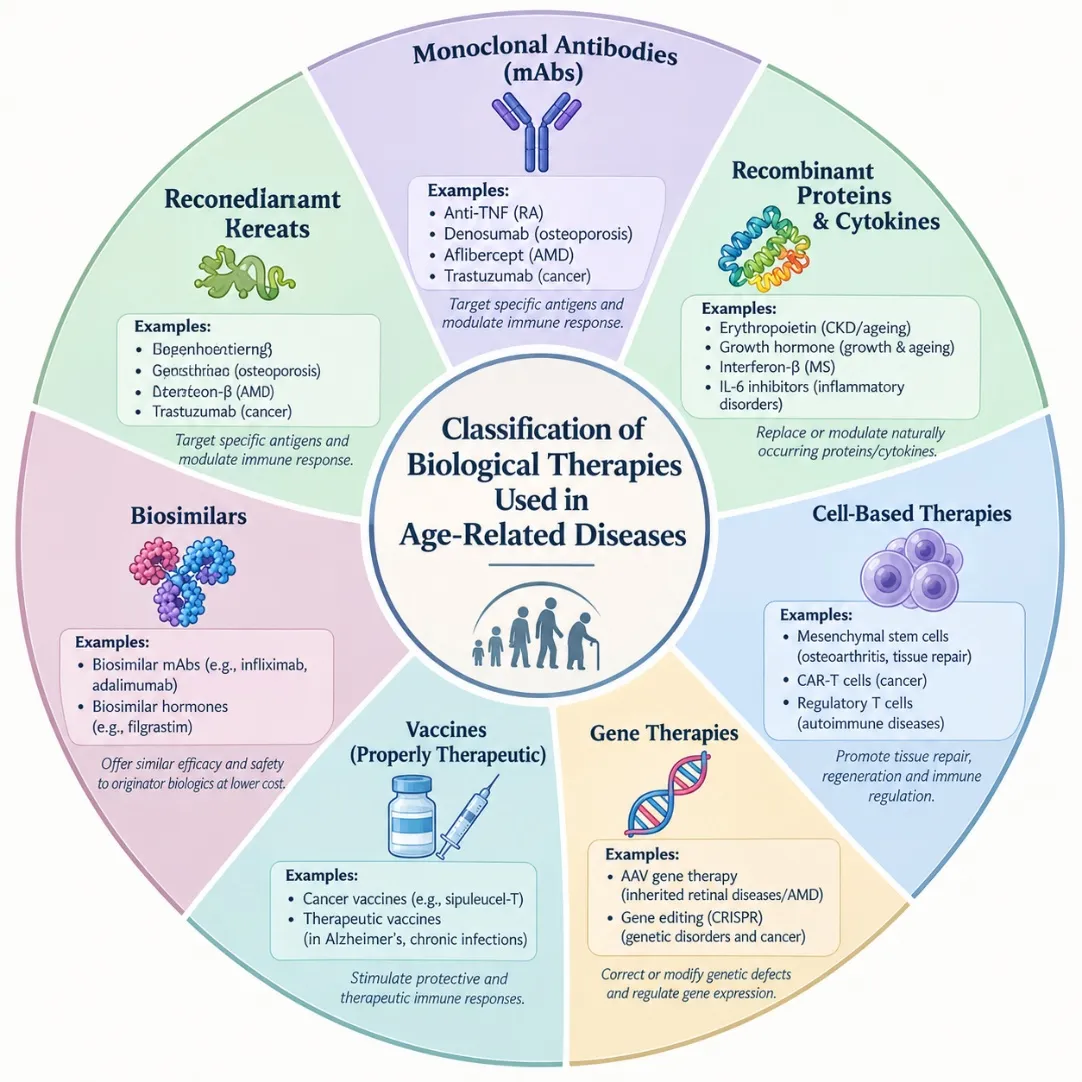
Biological therapies have emerged as important approaches for managing age-related diseases because they can target specific molecular, cellular, and tissue-level mechanisms underlying ageing. Unlike conventional small-molecule therapies, biological interventions can modulate immune responses, replace or repair damaged cells, alter disease-associated signaling pathways, or promote tissue regeneration. These approaches are particularly relevant to age-associated disorders such as neurodegenerative diseases, cardiovascular diseases, osteoarthritis, diabetes, fibrosis, and age-related immune dysfunction. Current research includes monoclonal antibodies, gene and cell therapies, cytokine-based interventions, tissue engineering, and therapeutic vaccines, although many approaches remain under preclinical or early clinical investigation.

Monoclonal antibodies represent a targeted biological approach in which antibodies are designed to recognize specific proteins, receptors, or pathological molecules. In age-related diseases, antibody-based strategies can potentially interfere with disease-associated pathways, pathological protein accumulation, chronic inflammation, or cellular senescence. Their high target specificity makes them attractive for precision treatment, although factors such as immunogenicity, tissue penetration, cost, and long-term safety remain important considerations. Advances in antibody engineering, including humanized and fully human antibodies, have further improved their therapeutic potential [14].

Gene therapy aims to modify genetic information or cellular gene expression to correct disease-associated abnormalities or enhance protective and regenerative pathways. In age-related disorders, gene-based approaches are being investigated for conditions involving neurodegeneration, tissue degeneration, metabolic dysfunction, and impaired regeneration. Gene therapy may involve replacing defective genetic material, regulating pathogenic genes, or introducing genes encoding therapeutic proteins. However, the complexity of ageing, tissue-specific delivery requirements, immune responses, and the need for precise long-term control remain important barriers to clinical translation [15].

Stem cell and cell therapies provide another regenerative strategy by replacing damaged cells or modifying the tissue environment through paracrine and immunomodulatory effects. Ageing is associated with reduced stem-cell regenerative capacity and alterations in stem-cell niches, which contribute to impaired tissue maintenance and repair. Consequently, stem-cell-based interventions are being investigated for regeneration of neural, muscular, cardiovascular, and other tissues affected by ageing. Induced pluripotent stem cells (iPSCs) have also enabled patient-derived models of diseases such as Parkinson’s and Alzheimer’s disease and may provide opportunities for future cell-replacement approaches. Nevertheless, challenges involving differentiation, engraftment, immune compatibility, genomic stability, and potential abnormal tissue formation must be addressed [16].

Cytokine therapy seeks to modulate cellular communication and immune responses by using cytokines or engineered cytokine-based therapeutics. Because ageing is accompanied by chronic low-grade inflammation, immune dysfunction, and altered cytokine signaling, targeted manipulation of these pathways may help restore immune balance and tissue homeostasis. Engineering approaches are being developed to improve cytokine stability, targeting, biodistribution, and therapeutic specificity while reducing systemic adverse effects. Such strategies may be particularly relevant to inflammageing and age-associated immune dysfunction, although achieving selective activity in aged tissues remains a major challenge [17].

Tissue engineering approaches combine cells, biomaterials, extracellular-matrix components, and bioactive signals to restore or reconstruct damaged tissues. These approaches are particularly relevant to age-related loss of tissue integrity because ageing alters extracellular-matrix composition, mechanical properties, vascularization, cellular function, and regenerative capacity. Advanced biomaterials, engineered extracellular matrices, organoids, and microphysiological systems can provide controlled environments for studying aged tissues and developing regenerative therapies. Recent bioengineering approaches also emphasize the use of ECM-mimicking materials and engineered tissue environments to investigate and potentially modulate age-associated tissue dysfunction [18].
figure

Figure 1: Classification of Biological Therapies Used in Age- Related Disease

Therapeutic vaccines represent an emerging biological strategy for targeting disease-associated molecules or senescent cells rather than simply preventing infection. Vaccine-based approaches have been investigated for several age-related conditions, including Alzheimer’s disease, atherosclerosis, osteoarthritis, fibrosis, metabolic disease, and cancer. Of particular interest are vaccines designed to recognize antigens associated with senescent cells, potentially facilitating their immune-mediated clearance and reducing the pathological effects of cellular senescence. However, the efficacy, specificity, durability, and long-term safety of these approaches require further validation, particularly in human clinical studies [18].

1.3. Importance of Pharmacovigilance for Biologics

Pharmacovigilance is particularly important for biological therapies because biologics are complex, structurally heterogeneous products whose safety profiles may be influenced by their manufacturing processes, formulation, route of administration, immunogenicity, and patient-specific factors [21]. Unlike many conventional small-molecule medicines, biologics can induce immune-mediated reactions, including anti-drug antibody formation, hypersensitivity reactions, cytokine-mediated effects, and loss of therapeutic response. These adverse events may be uncommon or may become evident only after widespread clinical use. Therefore, continuous monitoring throughout the product life cycle is essential to identify rare or delayed adverse events, evaluate benefit–risk profiles, and detect safety signals. Pharmacovigilance is also important for biosimilars because even highly similar products may require continued post-marketing monitoring to characterize their safety in real-world populations. Effective pharmacovigilance consequently supports safer use of biologics and helps healthcare professionals make informed therapeutic decisions [20].

1.4. Aim and Scope of the Review

The aim of this review is to provide a comprehensive overview of the pharmacovigilance of biological therapies, with emphasis on their safety monitoring, adverse drug reactions, immunogenicity, risk-management strategies, and post-marketing surveillance. The review covers major biological therapeutic classes, including monoclonal antibodies, gene therapies, stem-cell and other cell-based therapies, cytokine therapies, tissue-engineered products, and therapeutic vaccines. It further discusses the unique safety challenges associated with biologics, methods for detecting and evaluating safety signals, the role of spontaneous reporting and real-world evidence, and regulatory approaches for monitoring biological products. Particular attention is given to emerging biological therapies used in age-related diseases and the challenges of long-term safety monitoring in ageing populations. The review also highlights current gaps and future opportunities for strengthening pharmacovigilance through advanced surveillance systems, data integration, and innovative approaches to benefit–risk assessment.

2. Age-Related Diseases and Biological Therapies

Ageing is associated with progressive changes in immune function, cellular repair, tissue regeneration, metabolism, and inflammatory signaling, which increase the risk of several chronic diseases. Rheumatoid arthritis, osteoporosis, Alzheimer’s disease, age-related macular degeneration (AMD), cancer, and other inflammatory and autoimmune disorders are particularly important health conditions in older adults (Table 1). Biological therapies have introduced targeted approaches for managing these diseases by acting on specific molecular pathways, immune mediators, pathological proteins, or cellular processes. Monoclonal antibodies, immune-modulating agents, anti-VEGF therapies, bone-targeted biologics, and emerging cell- and gene-based therapies can provide disease-specific therapeutic effects. However, age-related immune alterations, multiple comorbidities, polypharmacy, and increased susceptibility to infections and adverse reactions make the safety and monitoring of biological therapies especially important in older populations. This section discusses the major age-related diseases and the biological therapies currently used or being investigated for their management.

2.1 Rheumatoid Arthritis

Rheumatoid arthritis (RA) is a chronic autoimmune inflammatory disease whose management becomes particularly complex in older adults because of immunosenescence, multimorbidity, polypharmacy, and increased susceptibility to infections. Biological disease-modifying antirheumatic drugs (bDMARDs), including tumor necrosis factor (TNF) inhibitors, interleukin-6 (IL-6) receptor inhibitors, B-cell-depleting agents, and T-cell co-stimulation modulators, provide targeted suppression of pathogenic inflammatory pathways [21-22]. Evidence from studies in older patients indicates that biological therapies can provide meaningful control of disease activity, although treatment selection and monitoring require consideration of comorbidities and infection risk [23–24].

2.2 Osteoporosis

Osteoporosis is a major age-associated skeletal disorder characterized by reduced bone strength and increased susceptibility to fractures [25-27]. Biological therapies have expanded treatment options beyond conventional antiresorptive drugs. Denosumab, a fully human monoclonal antibody against receptor activator of nuclear factor-κB ligand (RANKL), inhibits osteoclast formation and activity and improves bone mineral density while reducing fracture risk. Osteoanabolic biological approaches, including teriparatide, abaloparatide, and romosozumab, stimulate bone formation and are particularly investigated for individuals at very high fracture risk [28-31]. In older populations, these therapies require individualized assessment because comorbidities, treatment duration, cardiovascular considerations, and appropriate sequential therapy can influence their use [32–34].

2.3 Alzheimer's Disease

Alzheimer's disease (AD) is a progressive neurodegenerative disorder predominantly affecting older adults and is associated with accumulation of amyloid-β and pathological changes involving tau [35-38]. Recent biological therapies have focused particularly on monoclonal antibodies directed against amyloid-β, including lecanemab and donanemab. These agents promote removal of amyloid pathology and have demonstrated statistically significant slowing of cognitive and functional decline in selected patients with early symptomatic AD. However, their clinical use requires careful patient selection and monitoring because treatment-associated amyloid-related imaging abnormalities (ARIA) and other adverse events can occur. Consequently, biomarker confirmation, imaging surveillance, and assessment of individual risk factors are important components of treatment with these biological agents [39–40]

2.4 Age-Related Macular Degeneration

Age-related macular degeneration (AMD) is a common age-associated retinal disorder and an important cause of visual impairment in older adults. Biological therapy has substantially changed the management of neovascular AMD, particularly through intravitreal administration of anti-vascular endothelial growth factor (anti-VEGF) agents such as ranibizumab, aflibercept, and related therapies [41-43]. By inhibiting VEGF-mediated vascular leakage and abnormal choroidal neovascularization, these agents can preserve or improve vision in many patients. Biological approaches are also expanding toward complement-system modulation and gene- and cell-based therapies, particularly for geographic atrophy [44]. Despite these advances, repeated administration, variable treatment response, retinal complications, and the need for long-term monitoring remain important considerations [45–48].

2.5 Cancer in Older Adults

Cancer represents a major health burden in older adults, while ageing-associated changes in immunity, organ function, comorbidities, and frailty can influence treatment tolerance [49-51]. Biological therapies have become an important component of modern cancer treatment and include monoclonal antibodies, immune checkpoint inhibitors, cytokine-based therapies, cancer vaccines, oncolytic viruses, and cellular therapies such as CAR-T-cell therapy [52]. Immune checkpoint inhibitors targeting pathways such as PD-1/PD-L1 and CTLA-4 can restore antitumor immune responses and are used across several malignancies [53]. In older adults, available evidence suggests that age alone does not necessarily preclude immunotherapy; however, frailty, comorbidities, immune ageing, and immune-related adverse events require careful assessment [54].

2.6 Other Inflammatory and Autoimmune Disorders

Other inflammatory and autoimmune disorders that become clinically important in older adults include psoriasis, psoriatic arthritis, inflammatory bowel disease, systemic lupus erythematosus, vasculitis, and several immune-mediated dermatological and rheumatological conditions [55-57]. Biological therapies provide targeted modulation of disease-associated immune pathways, including TNF, IL-6, IL-17, IL-23, B-cell, and T-cell signaling. B-cell-directed therapies, for example, have become important in several autoimmune diseases because B cells contribute to autoantibody production, antigen presentation, and inflammatory signaling [58,59]. However, biological treatment in older patients requires careful consideration of infection susceptibility, vaccination status, comorbidities, polypharmacy, and age-related changes in immune function [60].

Table 1: Age-Related Diseases and Biological Therapies

Sr. No. Age-related disease Biological therapy Examples Main target/mechanism Major therapeutic role
1 Rheumatoid arthritis Monoclonal antibodies Adalimumab, Tocilizumab TNF-α, IL-6 inhibition Reduces inflammation
2 Osteoporosis Monoclonal/biologic agents Denosumab, Romosozumab RANKL inhibition, sclerostin inhibition Reduces bone loss/fractures
3 Alzheimer’s disease Monoclonal antibodies Lecanemab, Donanemab Amyloid-β clearance Slows disease progression
4 AMD Anti-VEGF therapy Ranibizumab, Aflibercept VEGF inhibition Reduces abnormal angiogenesis
5 Cancer Immunotherapy/antibodies Pembrolizumab, Nivolumab PD-1/PD-L1 blockade Enhances antitumor immunity
6 Autoimmune disorders Biologic DMARDs Rituximab, Infliximab B-cell/TNF-α inhibition Controls autoimmune inflammation

Abbreviations:

AMD, age-related macular degeneration; TNF, tumor necrosis factor; IL, interleukin; RANKL, receptor activator of nuclear factor-κB ligand; VEGF, vascular endothelial growth factor; PD-1, programmed cell death protein-1.

3. Pharmacovigilance of Biological Therapies

3.1 Definition and Objectives of Pharmacovigilance

Pharmacovigilance refers to the science and activities concerned with the detection, assessment, understanding, and prevention of adverse effects or other medicine-related problems. For biological therapies, pharmacovigilance is particularly important because biologics are complex products whose safety can be influenced by molecular structure, manufacturing processes, immunogenicity, formulation, and patient characteristics. The major objectives include identifying previously unrecognized adverse reactions, evaluating the benefit–risk balance, characterizing safety signals, preventing avoidable harm, and supporting regulatory and clinical decision-making. Continuous safety monitoring is especially important for biologics used in older adults because ageing, comorbidities, polypharmacy, and altered immune responses may influence treatment safety.

3.2 Adverse Drug Reaction (ADR) Monitoring

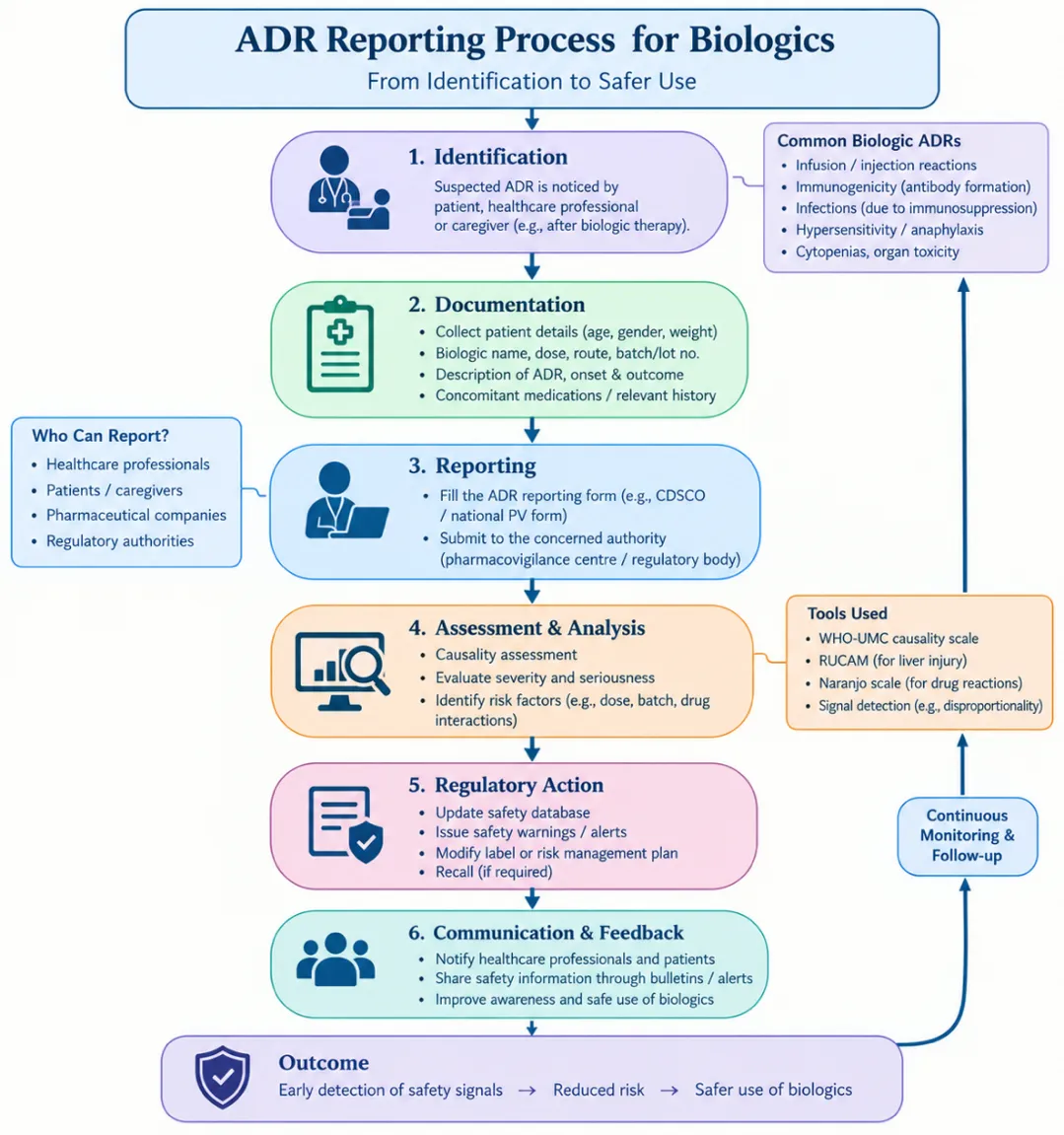
ADR monitoring is a fundamental component of pharmacovigilance and involves systematic collection, assessment, documentation, and evaluation of suspected adverse reactions associated with biological therapies. Biologic-related adverse reactions may include infusion or injection-site reactions, hypersensitivity, infections, organ-specific toxicity, cardiovascular events, neurological effects, and immune-mediated reactions. Monitoring can involve spontaneous ADR reporting, clinical studies, patient registries, electronic health records, and real-world evidence. Early recognition and evaluation of serious or unexpected reactions can facilitate appropriate clinical intervention and contribute to regulatory actions such as updated prescribing information, additional monitoring requirements, or risk-minimization measures (Table 2).

Table 2: Major Components of ADR Monitoring

Sr. No. Components Short description
1 ADR Detection Identification of suspected ADRs through reports, clinical practice, and surveillance systems [68].
2 ADR Documentation Recording patient details, biologic, dose, reaction, and relevant clinical information.
3 Causality Assessment Evaluating the likelihood that the biologic caused the ADR.
4 Severity & Seriousness Determining the intensity and clinical significance of the reaction.
5 ADR Reporting Reporting suspected ADRs to pharmacovigilance systems and regulatory authorities.
6 Signal Detection Identifying new or unexpected patterns of adverse events.
7 Follow-up & Risk Management Monitoring outcomes and implementing measures to reduce identified risks.

3.2.1. Methods of ADR Monitoring

1. Spontaneous Reporting: Spontaneous reporting is one of the most widely used methods of post-marketing ADR surveillance. Healthcare professionals and patients voluntarily report suspected adverse reactions to pharmacovigilance systems. This approach is particularly useful for identifying rare, unexpected, and previously unrecognized adverse reactions associated with biological therapies [61].

2. Active Surveillance: Active surveillance systematically seeks information about adverse events rather than relying only on voluntary reports. It involves regular follow-up of patients receiving biological therapies and may include cohort event monitoring, targeted clinical surveillance, and systematic data collection [62].

3. Electronic Health-Record Monitoring: Electronic health records (EHRs) and other routinely collected healthcare data can be analyzed to identify suspected ADRs and evaluate the safety of biological therapies in large patient populations. This approach can facilitate the detection of safety patterns that may not be apparent from individual reports [62].

4. Prescription-Event Monitoring: Prescription-event monitoring follows patients who receive a particular biological therapy and collects information about clinical events occurring during treatment. It can provide useful information on the safety profile of medicines under routine clinical conditions [61].

5. Registries and Sentinel Surveillance: Disease-specific or medicine-specific registries collect structured information about patients, treatments, and adverse events over time. Sentinel surveillance uses selected healthcare centers or sites to monitor specific safety concerns and can support early identification of important ADRs associated with biological therapies [63].
figure

Figure 2: ADR Reporting Process for Biologics

3.2.2. Importance of ADR Monitoring in Elderly Patients

ADR monitoring is particularly important in elderly patients because ageing is associated with physiological changes that can alter the pharmacokinetics, pharmacodynamics, and immune response to biological therapies. Older adults commonly have multiple chronic diseases and may receive several medicines simultaneously, increasing the possibility of drug interactions and adverse events. In addition, age-related changes in renal and hepatic function may affect drug exposure, while immunosenescence can influence susceptibility to infections and immune-mediated reactions. ADRs may also present atypically in elderly patients and can be difficult to distinguish from symptoms of existing diseases (Table 3).

For biological therapies, careful ADR monitoring is therefore essential for early detection of serious or unexpected reactions, assessment of immunogenicity, prevention of complications, and optimization of treatment. Regular clinical follow-up, medication review, laboratory investigations, patient/caregiver reporting, and appropriate documentation can improve the recognition and management of ADRs. Pharmacovigilance in elderly populations ultimately supports individualized treatment decisions and helps maintain an appropriate benefit–risk balance during long-term biological therapy.

Table 3: Common Adverse Drug Reactions Associated with Biological Therapies

Biological Therapy/Class Common Adverse Drug Reactions Important/Serious Reactions
Monoclonal antibodies Injection-site reactions, headache, fatigue, fever Severe hypersensitivity, infections, cytokine-release reactions
Anti-TNF agents Injection-site reactions, headache, nausea Serious infections, tuberculosis reactivation, heart failure exacerbation
Anti-IL-6 agents Headache, infusion reactions, hypertension Serious infections, liver abnormalities, gastrointestinal complications
Anti-CD20 antibodies Infusion reactions, fever, chills, fatigue Severe infections, hepatitis B reactivation, progressive multifocal leukoencephalopathy
Recombinant proteins Flu-like symptoms, fatigue, headache Hypersensitivity reactions, antibody formation
Cytokines and growth factors Fever, chills, muscle pain, injection-site reactions Severe inflammatory reactions, cardiovascular complications
Bone-modifying biologics Musculoskeletal pain, fatigue, injection-site reactions Hypocalcemia, osteonecrosis of the jaw, atypical fractures
Anti-VEGF therapies Eye irritation, headache, hypertension Thromboembolic events, severe hypertension, cardiovascular events
Cell-based therapies Fever, fatigue, local reactions Immune reactions, infections, cytokine-related toxicity
Gene-based therapies Fever, headache, fatigue, inflammatory reactions Immune-mediated reactions, organ toxicity, serious inflammatory responses

3.3 Immunogenicity of Biologics

Immunogenicity refers to the ability of a biological product to induce an immune response in the recipient. Patients receiving biologics may develop anti-drug antibodies (ADAs), which can alter drug pharmacokinetics, reduce therapeutic effectiveness, or contribute to hypersensitivity and other immune-mediated adverse reactions [64]. The degree of immunogenicity varies according to the structure and characteristics of the biologic, route and duration of administration, impurities or aggregates, manufacturing processes, and patient-related factors. Therefore, assessment of immunogenicity is an important part of biological-product safety evaluation and may involve monitoring ADA development as well as its potential effect on efficacy and safety [65-68].

3.4 Signal Detection and Risk Management

Signal detection involves identifying information suggesting a possible new causal association between a biological therapy and an adverse event that requires further investigation. Pharmacovigilance databases, spontaneous reports, clinical data, registries, and real-world evidence can be analyzed to identify patterns or increases in specific adverse events [69]. Once a potential safety signal is identified, it is evaluated using clinical, epidemiological, and pharmacological evidence to determine its significance. Risk management then involves strategies designed to minimize identified risks while maintaining therapeutic benefits. These may include additional warnings, contraindications, monitoring recommendations, restricted-use programs, healthcare-professional education, and patient information [70,71].

3.5 Post-Marketing Surveillance

Post-marketing surveillance (PMS) refers to the systematic monitoring of biological therapies after regulatory approval and their introduction into routine clinical practice [72-73]. It complements pre-marketing clinical trials, which may not detect very rare, delayed, or population-specific adverse reactions because of limited sample sizes, restricted study populations, and relatively short follow-up periods. PMS is particularly important for biologics because of their complex structures, potential immunogenicity, and possibility of long-term or immune-mediated adverse effects [74].

After approval, biological therapies are used in larger and more diverse populations, including elderly patients with multiple comorbidities and concomitant medications [75]. This provides an opportunity to identify safety issues that may not have been evident during clinical development. Post-marketing monitoring can provide information on long-term safety, treatment effectiveness, immunogenicity, rare ADRs, and changes in the benefit–risk profile [76]. Table 4 describes various methods of Post-Marketing Surveillance for Biological Therapies.

3.5.1. Major Components of Post-Marketing Surveillance [77-80]

1. Spontaneous ADR Reporting: Collection of suspected adverse reactions from healthcare professionals, patients, and manufacturers.

2. Active Surveillance: Systematic follow-up of patients receiving specific biological therapies to identify adverse events.

3. Electronic Health Records and Real-World Data: Analysis of routinely collected healthcare data to detect safety patterns in large populations.

4. Patient and Product Registries: Long-term monitoring of treatment outcomes, adverse events, and immunogenicity.

5. Signal Detection: Identification and evaluation of new or unexpected safety patterns.

6. Biosimilar Surveillance: Continuous assessment of the safety and immunogenicity of biosimilars during routine use.

7. Risk Management: Implementation of appropriate measures such as additional monitoring, warnings, contraindications, or treatment modifications.

8. Long-Term Follow-up: Particularly important for biological therapies such as gene therapy and cell-based therapies, where adverse effects may occur months or years after treatment.

3.5.2. Importance in Elderly Patients

PMS is especially important in elderly patients because polypharmacy, multimorbidity, altered renal and hepatic function, immunosenescence, and increased susceptibility to infections can influence the safety of biological therapies. Real-world surveillance helps identify adverse reactions in older populations who may be underrepresented in clinical trials and supports individualized treatment and risk-minimization strategies.

Table 4: Methods of Post-Marketing Surveillance for Biological Therapies [81-83]

Sr. No. PMS Method Application in Biological Therapies
1 Spontaneous ADR Reporting Collection of suspected ADRs from healthcare professionals, patients, and manufacturers.
2 Individual Case Safety Reports (ICSRs) Detailed assessment and documentation of individual adverse-event cases.
3 Signal Detection Identification of new, unexpected, or changing safety risks.
4 Periodic Safety Reports Continuous evaluation of accumulated safety information.
5 Post-Authorization Safety Studies (PASS) Investigation of specific safety concerns in real-world populations.
6 Patient Registries Long-term monitoring of patients receiving biological therapies.
7 Electronic Health Records Identification and evaluation of safety outcomes during routine clinical practice.

3.5.3. Workflow of Pharmacovigilance for Biological Therapies

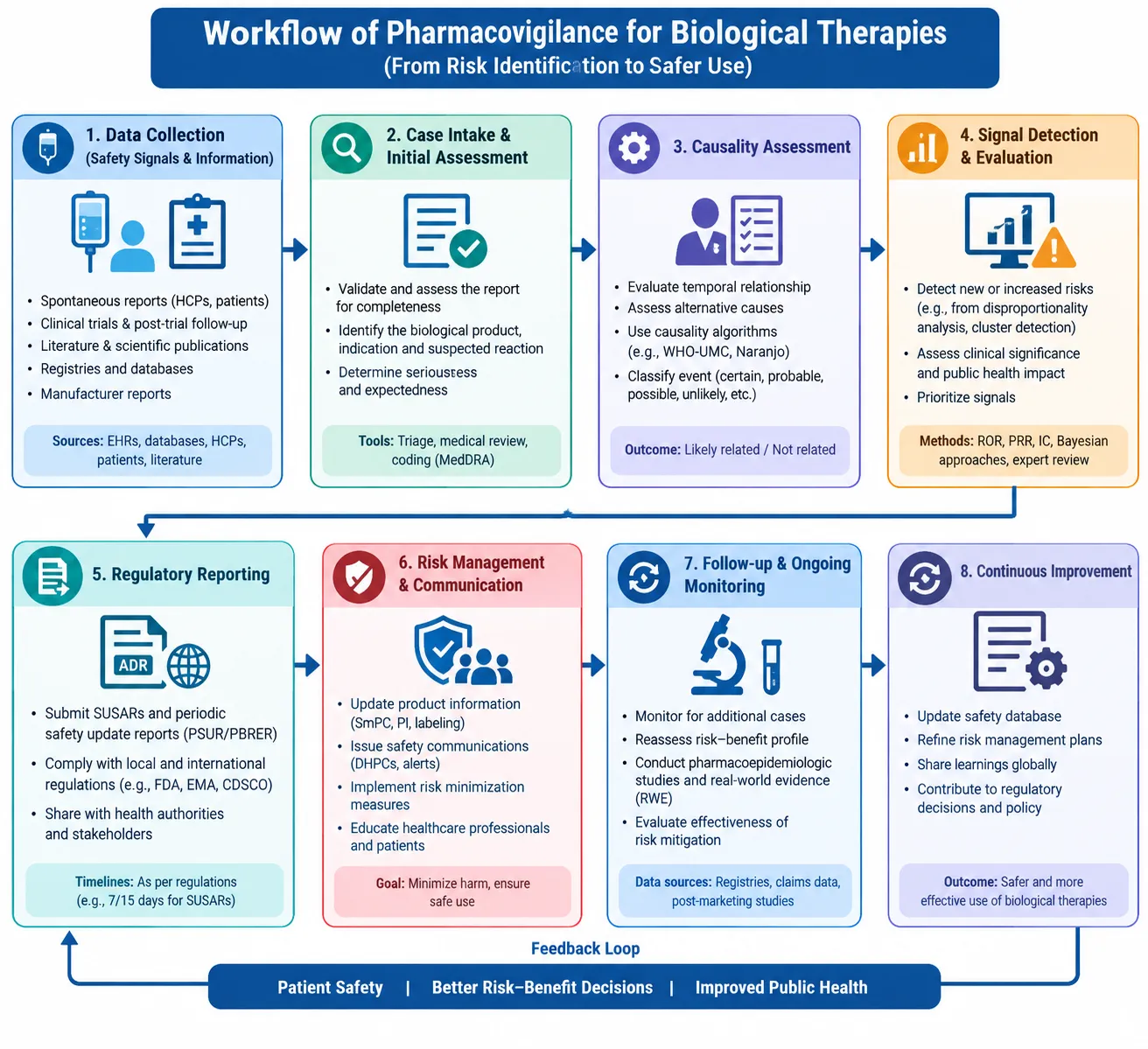
1. Data Collection: Pharmacovigilance begins with the collection of safety information related to biological therapies. Data are obtained from spontaneous adverse drug reaction (ADR) reports from healthcare professionals and patients, clinical trials, post-marketing studies, scientific literature, patient registries, electronic health records, and manufacturer safety databases. These sources help identify possible adverse events associated with biological products.

2. Case Intake and Initial Assessment: The collected safety reports are reviewed to determine whether the case contains sufficient information for further evaluation. Important details such as the biological product, indication, suspected adverse reaction, patient information, seriousness, and expectedness of the event are assessed. Standardized medical terminology such as MedDRA may be used for coding and classification.

3. Causality Assessment: Causality assessment determines whether the adverse event is likely to be related to the biological therapy. Factors such as the time relationship between treatment and the event, patient medical history, alternative causes, and information from dechallenge or rechallenge are considered. The event may subsequently be classified as certain, probable, possible, or unlikely to be related to the therapy.

4. Signal Detection and Evaluation: Safety databases are continuously analyzed to identify new or increasing safety signals. Statistical methods such as Reporting Odds Ratio (ROR), Proportional Reporting Ratio (PRR), and Bayesian approaches may be used. Identified signals are further evaluated by medical and pharmacovigilance experts to determine their clinical significance and potential impact on patients.

5. Regulatory Reporting: Important safety information is reported to the appropriate regulatory authorities according to applicable regulations. This may include Individual Case Safety Reports (ICSRs), serious adverse event reports, and periodic safety reports such as PSURs or PBRERs. Regulatory reporting ensures that authorities receive timely information about potential risks associated with biological therapies.

6. Risk Management and Communication: When a significant safety risk is identified, appropriate risk-management measures are implemented. These may include updating product labeling or prescribing information, issuing safety communications, introducing risk-minimization measures, and educating healthcare professionals and patients. The main objective is to minimize potential harm while maintaining the therapeutic benefits of the biological therapy.

7. Follow-up and Ongoing Monitoring: Pharmacovigilance continues throughout the lifecycle of a biological therapy. Additional cases are collected and followed up, while patient registries, post-marketing studies, pharmacoepidemiological studies, and real-world evidence are used to monitor long-term safety. The benefit–risk profile of the therapy is reassessed as new information becomes available.

8. Continuous Improvement: The final stage involves incorporating new safety information into the pharmacovigilance system. Safety databases, risk-management plans, monitoring strategies, and product information may be updated when necessary. The information obtained through continuous monitoring contributes to regulatory decisions and helps improve the safe and effective use of biological therapies (Figure 3).
figure

Figure 3: Workflow of Pharmacovigilance for Biological Therapies

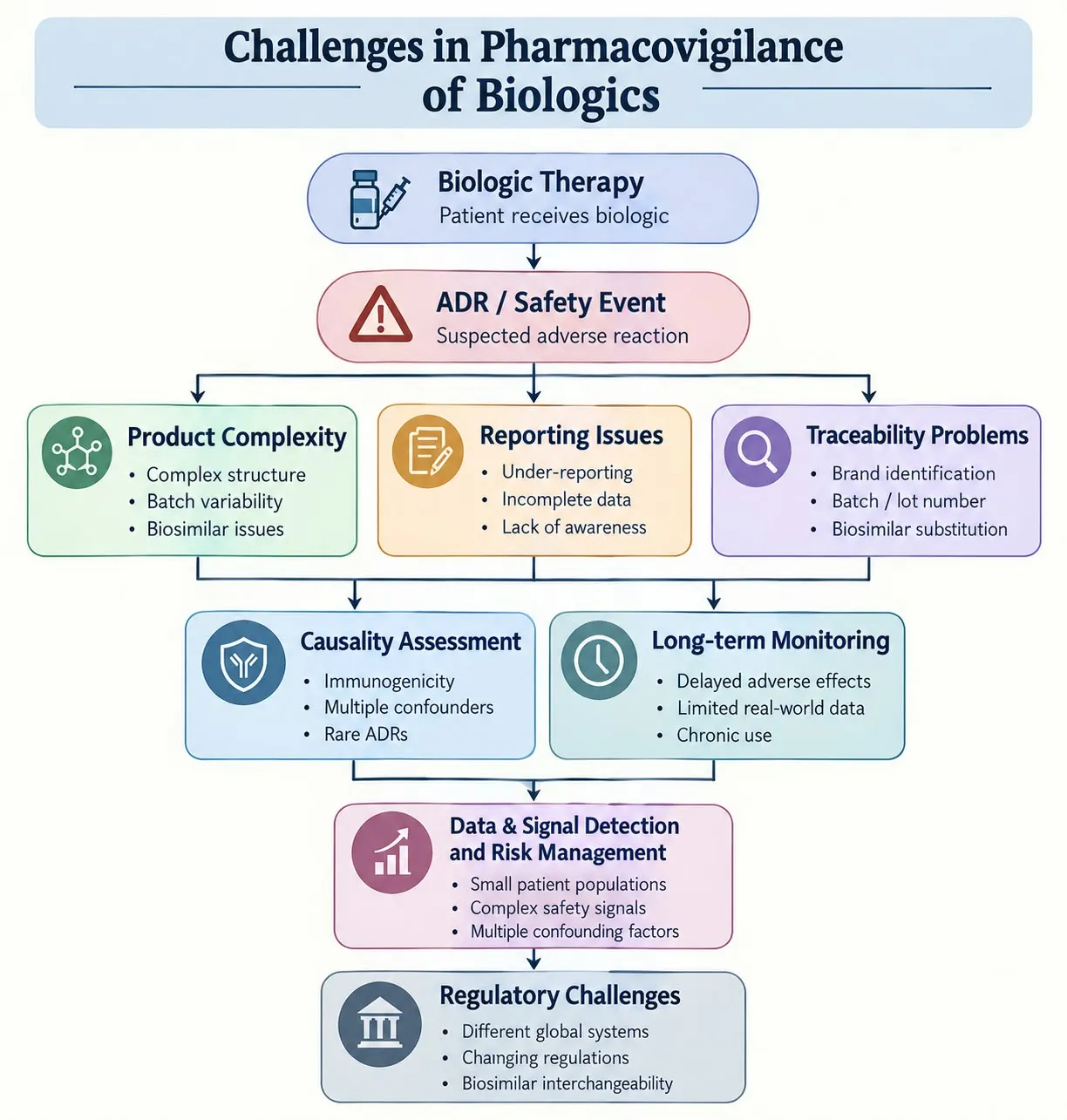
4. Challenges in Pharmacovigilance of Biologics

4.1 Under-reporting of ADRs

Under-reporting remains a major challenge in biological-therapy pharmacovigilance. Healthcare professionals and patients may fail to report suspected adverse reactions because of lack of awareness, uncertainty about causality, time constraints, or incomplete knowledge of reporting procedures. Under-reporting can delay the recognition of important safety signals, particularly for rare or delayed reactions [84].

4.2 Long-term Safety Concerns

Many biological therapies require prolonged treatment, while some newer products have limited long-term safety data. Delayed adverse events, persistent immunogenicity, secondary infections, malignancy-related concerns, or other effects may become apparent only after extended exposure. Long-term follow-up is therefore important for establishing the complete safety profile of biologics [85].

4.3 Polypharmacy in Elderly Patients

Polypharmacy is common among elderly patients because of multiple chronic diseases. The concurrent use of biological therapies with conventional medicines can complicate ADR identification and may increase the risk of drug–drug interactions or additive adverse effects. Differentiating an ADR from symptoms caused by underlying diseases can also be difficult in this population [86].

4.4 Medication Errors

Medication errors involving biologics may occur during prescribing, dispensing, preparation, administration, storage, or monitoring. Errors in product selection, dosage, route, administration schedule, or handling can lead to treatment failure or adverse outcomes. Accurate product identification, appropriate documentation, healthcare-professional training, and clear administration protocols are important for minimizing these errors [87].

4.5 Biosimilars and Interchangeability

The increasing use of biosimilars creates additional pharmacovigilance requirements because biologics are complex products and minor differences in manufacturing can potentially influence their characteristics. Accurate identification of the specific biological product is important when reporting ADRs so that safety signals can be appropriately attributed. Monitoring is also required when patients are switched between reference biologics and biosimilars or between different biosimilars [88].
figure

Figure 4: Challenges in Pharmacovigilance of Biologics

5. Recent Advances in Pharmacovigilance

5.1 Digital Pharmacovigilance

  • Digital technologies are increasingly being used to improve the speed, accessibility, and efficiency of ADR reporting.
  • Mobile applications, electronic reporting platforms, automated case processing, and digital health records facilitate rapid collection of safety information.
  • Digital systems can reduce manual data entry and improve communication between healthcare professionals, patients, and pharmacovigilance centers [89].

5.2 Artificial Intelligence in ADR Monitoring

  • Artificial intelligence (AI) and machine-learning techniques can analyze large volumes of clinical and pharmacovigilance data to identify potential safety signals.
  • Natural-language processing can extract ADR information from electronic health records, scientific literature, and clinical narratives.
  • AI-based approaches may assist in case classification, duplicate detection, causality assessment, and signal prioritization.
  • Human review remains important for validating clinically relevant signals [90].

5.3 Real-World Evidence

  • Real-world evidence (RWE) is obtained from electronic health records, insurance claims, patient registries, observational studies, and other routine healthcare data.
  • RWE enables assessment of biological therapies in broader populations, including elderly patients, individuals with multiple comorbidities, and patients receiving multiple medicines.
  • It can complement clinical-trial evidence by providing information on long-term safety, effectiveness, treatment patterns, and uncommon adverse events [91].

5.4 Global Pharmacovigilance Databases

  • International databases allow adverse-event information to be collected and analyzed across different countries and healthcare systems.
  • Global data increase the ability to identify rare and unexpected safety signals that may not be detectable within an individual country.
  • Collaboration among regulatory authorities, healthcare professionals, pharmaceutical manufacturers, and international pharmacovigilance organizations strengthens safety monitoring.
  • Global databases also support signal detection, risk assessment, regulatory decision-making, and continuous monitoring of biological therapies [92].

6. Future Perspectives

6.1 Personalized Pharmacovigilance

  • Pharmacovigilance is moving toward patient-specific safety monitoring based on age, genetics, comorbidities, immune status, and concomitant medicines.
  • Biomarkers and pharmacogenomic information may help identify patients at increased risk of ADRs.
  • This approach may be particularly useful in elderly patients with polypharmacy [93].

6.2 Improved Reporting Systems

  • Future reporting systems should be simple, rapid, and user-friendly.
  • Electronic reporting, mobile applications, and integration with electronic health records can improve ADR reporting.
  • Standardized reporting can increase the accuracy and completeness of safety information [94].

6.3 Role of Healthcare Professionals and Pharmacists

  • Healthcare professionals and pharmacists are essential for ADR identification, documentation, reporting, and patient education.
  • Pharmacists can assist with medication review, interaction detection, and monitoring of biological therapies.
  • Effective collaboration among healthcare professionals can improve patient safety [95].

6.4 Regulatory Developments

  • Regulatory systems are evolving to address the safety of biosimilars, gene therapies, and cell-based therapies.
  • Greater emphasis is being placed on long-term monitoring, product traceability, immunogenicity, and real-world evidence.
  • International harmonization of pharmacovigilance standards can strengthen global biological-therapy safety monitoring [96].

CONCLUSION

Biological therapies have significantly expanded the therapeutic options for age-related diseases, including rheumatoid arthritis, osteoporosis, Alzheimer’s disease, age-related macular degeneration, cancer, and other inflammatory disorders. Monoclonal antibodies, cell and gene therapies, cytokine-based therapies, tissue-engineering approaches, and therapeutic vaccines provide targeted mechanisms for managing complex diseases in ageing populations. However, their biological complexity, immunogenicity, potential for rare or delayed adverse reactions, and the presence of comorbidities and polypharmacy in elderly patients highlight the need for effective pharmacovigilance.

Continuous safety monitoring throughout the biological product life cycle is essential for early detection of ADRs, identification of safety signals, assessment of immunogenicity, and maintenance of an appropriate benefit–risk balance. Future pharmacovigilance is expected to increasingly incorporate personalized monitoring, digital technologies, artificial intelligence, real-world evidence, improved reporting systems, and advanced regulatory frameworks. These developments can strengthen the long-term safety assessment of biologic therapies and support their appropriate use in ageing populations.

REFERENCES

  1. López-Otín C, Blasco MA, Partridge L, Serrano M, Kroemer G (201 3). The hallmarks of aging. Cell, 1 53 (6):1 1 94-21 7. [DOI] [PMC free article] [PubMed]
  2. Rappuoli R, Pizza M, Del Giudice G, De Gregorio E (201 4). Vaccines new opportunities for a new society. Proc Natl Acad Sci USA, 1 1 1 :1 2288-93. [DOI] [PMC free article] [PubMed] [Google Scholar]
  3. Roth G (201 8). Global Burden of Disease Collaborative Network. Global Burden of Disease Study 201 7 (GBD 201 7) Results. Seattle, United States: Institute for Health Metrics and Evaluation (IHME). Lancet, 392:1 736-88.304961 03 [Google Scholar]
  4. Hilmer S, Gnjidic D, Le Couteur D. Thinking through the medication list. Appropriate prescribing and deprescribing in robust and frail older patients. Aust Fam Physician. 201 2;41 (1 2):924-928.
  5. Kasar GN, Rasal PB, & Upaganlawar AB. mTOR signaling in aging and longevity: therapeutic opportunities. Aging Pathobiol Ther, 2026, 8 (2): 113-126. doi: 10.31491/APT.2026.06.216
  6. Roughead E, Pratt N, Parfitt G, et al. Effect of an ongoing pharmacist service to reduce medicine-induced deterioration and adverse reactions in aged-care facilities (nursing homes): a multicentre, randomised con trolled trial (the ReMInDAR trial). Age Ageing. 2022;51 :1 -9.
  7. Yadav SC, Mahale SV, Nishad SM, Bankar BD, & Rasal PB. Accelerated biological aging in type 2 diabetes mellitus: mechanistic, cellular, and systemic perspectives. Aging Pathobiol Ther, 2026, 8 (1):03-16. doi: 10.31491/APT.2026.03.203
  8. Franceschi C, Bonafe M, Valensin S, Olivieri F, De Luca M, Ottaviani E, et al. Inflamm-aging. An evolutionary perspective on immunosenescence. Ann N Y Acad Sci. 2000;908:244–54.
  9. Ding Y, Zuo Y, Zhang B, Fan Y, Xu G, Cheng Z, et al. Comprehensive human proteome profiles across a 50-year lifespan reveal aging trajectories and signatures. Cell. 2025;1 88:5763-5784 e5726.
  10. Kasar GN, Rasal PB, Patil CD, Mahajan SK, & Upaganlawar AB. Proteostasis in aging: mechanistic insights and therapeutic opportunities. Aging Pathobiol Ther, 2025, 7 (1): 25-43. doi: 10.31491/ APT.2025.03.165 .
  11. Lachman, M.E. Development in Midlife. Annu. Rev. Psychol. 2004, 55, 305–331 [CrossRef] [PubMed].
  12. Dato, S.; Rose, G.; Crocco, P.; Monti, D.; Garagnani, P.; Franceschi, C.; Passarino, G. The genetics human longevity: An intricacy of genes, environment, culture and microbiome. Mech. Ageing Dev. 201 7, 1 65, 1 47–1 55. [CrossRef] [PubMed]
  13. Anderson A, Campo A, Fulton E, Corwin A, Jerome WG 3rd, O'Connor MS (2020). 7-Ketocholesterol in disease and aging. Redox Biol, 29:1 01 380. [DOI] [PMC free article] [PubMed] [Google Scholar]
  14. Rasal PB, Kasar GN, Pagar DS, Upaganlawar AB, & Mahajan SK. Resilience in the depths: anemones as models for aging and regeneration research. Aging Pathobiol Ther, 2025, 7 (3): 144-155. doi: 10.31491/APT.2025.09.179.
  15. Alberts, B., Johnson, A., Lewis, J., et al. (2022). Molecular Biology of the Cell (7th edition). Garland Science.
  16. Langer, R., & Peppas, N. A. (2003). Advances in biomaterials, drug delivery, and bionanotechnology. AIChE Journal, 49 (1 2), 2990–3006.
  17. López-Otín, C., Blasco, M. A., Partridge, L., Serrano, M., & Kroemer, G. (201 3). The hallmarks of aging. Cell, 1 53 (6), 1 1 94–1 21 7.
  18. World Health Organization (WHO). Safety monitoring of medicinal products: guidelines for setting up and running a pharmacovigilance centre. Geneva: WHO; 2000.
  19. Rutuja Anil Sonawane, Omkar Kiran Gulave, Priya Appasaheb Kale, Pooja Balkrishna Rasal, Tirzepatide: A Paradigm Shift in the Management of Type 2 Diabetes and Obesity. J Bio-X Res. 2026;9:0092.DOI:10.34133/jbioxresearch.0092
  20. Aletaha D, Smolen J. Diagnosis and management of rheumatoid arthritis: a review. JAMA. 201 8;320 (1 3):1 360–1 372. doi: 1 0.1 001 /jama.201 8.1 31 03 [DOI] [PubMed] [Google Scholar]
  21. Torres J, et al. ECCO Guidelines on Therapeutics in Crohn's Disease: Medical Treatment. J Crohns Colitis. 2020;1 4:4–22.2.Crowson CS, Rollefstad.
  22. Smolen J, Aaletaha D, Barton A, et al. Rheumatoid arthritis. Nat Rev Dis Primers. 201 8;4:1 8001 . doi: 1 0.1 038/nrdp.201 8.1 [DOI] [PubMed] [Google Scholar].
  23. Brennan FM, Maini RN, Feldmann M. TNF alpha – a pivotal role in rheumatoid arthritis? Br J Rheumtol. 1 992;31 (5):293. doi:1 0.1 093/ rheumatology/31 .5.29
  24. Keystone E, Genovese M, Klareskog L, et al. Golimumab, a human antibody to tumour necrosis factor {alpha} given by monthly subcutaneous injections, in active rheumatoid arthritis despite methotrex-ate therapy: theGO-FORWARD Study.
  25. Lorentzon M., Cummings S.R. Osteoporosis: The evolution of a diagnosis. J. Intern. Med. 201 5;277:650–661 . doi: 1 0.1 1 1 1 /joim.1 2369. [DOI] [PubMed] [Google Scholar].
  26. Alswat K.A. Gender Disparities in Osteoporosis. J. Clin. Med. Res. 201 7;9:382–387. doi: 1 0.1 4740/jocmr2970w. [DOI] [PMC free article] [PubMed] [Google Scholar].
  27. Mitchell P.J., Chan D.D., Lee J.K., Tabu I., Alpuerto B.B. The global burden of fragility fractures—what are the differences, and where are the gaps. Best Pract. Res. Clin. Rheumatol. 2022:1 01 777. doi: 1 0.1 01 6/j.berh.2022.1 01 777. [DOI] [PubMed] [Google Scholar].
  28. Ma Q., Liang M., Wu Y., Luo F., Ma Z., Dong S., Xu J., Dou C. Osteoclast-derived apoptotic bodies couple bone resorption and formation in bone remodeling. Bone Res. 2021 ;9:5. doi:10.1 038/s41 41 3-020-001 21 -1 . [DOI] [PMC free article] [PubMed] [Google Scholar].
  29. Kotake S, Yago T, Nanke Y (2009) Effects of biologic therapies on systemic osteoporosis in patients with rheumatoid arthritis. Nihon Rinsho 67: 996-1 002.
  30. Rosman Z, Shoenfeld Y, Zandman-Goddard G (201 3) Biologic therapy for autoimmune diseases: An Update. BMC Med 1 1 : 88.
  31. Betts AM, Clark TH, Yang J, Treadway JL, Li M, et al. (201 0) The application of target information and zfor osteoporosis. J Pharmacol Exp Ther 333: 2-1 3.
  32. Tobeiha M., Moghadasian M.H., Amin N., Jafarnejad S. RANKL/RANK/OPG Pathway: A Mechanism Involved in Exercise-Induced Bone Remodeling. Biomed. Res. Int. 2020;2020:691 031 2. doi: 1 0.1 1 55/2020/691 031 2. [DOI] [PMC free article] [PubMed] [Google Scholar]
  33. Chin K.Y., Ekeuku S.O., Pang K.L. Sclerostin in the development of osteoarthritis: A mini review. Malays J. Pathol. 2022;44:1 –1 8. [PubMed] [Google Scholar]
  34. Siddiqui J.A., Partridge N.C. Physiological Bone Remodeling: Systemic Regulation and Growth Factor Involvement. Physiology. 201 6;31 :233–245. doi: 1 0.1 1 52/physiol.00061 .201 4. [DOI] [PMC free article] [PubMed] [Google Scholar]
  35. Meghana G. S., Gowda D. V., Chidambaram S. B., and Osmani R. A., Amyloid–β Pathology in Alzheimer’s Disease: A Nano Delivery Approach, Vibrational Spectroscopy. (2023) 1 26, 1 0351 0, 1 0.1 01 6/j.vibspec.2023.1 0351 0. [DOI] [Google Scholar].
  36. Bhatti J. S., Khullar N., Mishra J., Kaur S., Sehrawat A., Sharma E., Bhatti G. K., Selman A., and Reddy P. H., Stem Cells in the Treatment of Alzheimer′s Disease—Promises and Pitfalls, Biochimica et Biophysica Acta - Molecular Basis of Disease. (2023) 1 869, no. 6, 1 6671 2, 1 0.1 01 6/j.bbadis.2023.1 6671 2, 37030521 . [DOI] [PubMed] [Google Scholar].
  37. Brown A., Salo S. K., and Savage G., Frontal Variant Alzheimer′s Disease: A Systematic Narrative Synthesis, Cortex. (2023) 1 66, 1 21 –1 53, 1 0.1 01 6/j.cortex.2023.05.007, 373561 1 3. [DOI] [PubMed] [Google Scholar].
  38. Nady D. S., Bakowsky U., and Fahmy S. A., Recent Advances in Brain Delivery of Synthetic and Natural Nano Therapeutics: Reviving Hope for Alzheimer′s Disease Patients, Journal of Drug Delivery Science and Technology. (2023) 89, 1 05047, 1 0.1 01 6/j.jddst.2023.1 05047. [DOI] [Google Scholar].
  39. Ali R., Gupta G. D., and Chawla P. A., Aducanumab: A New Hope in Alzheimer′s Disease, Health Sciences Review. (2022) 4. [Google Scholar].
  40. Boese A. C., Hamblin M. H., and Lee J. P., Neural Stem Cell Therapy for Neurovascular Injury in Alzheimer′s Disease, Experimental Neurology. (2020) 324, 1 1 31 1 2, 1 0.1 01 6/j.expneurol.201 9.1 1 31 1 2, 31 730762. [DOI] [PubMed] [Google Scholar].
  41. Wong W.L., Su X., Li X., Cheung C.M., Klein R., Cheng C.Y., Wong T.Y. Global prevalence of age-related macular degeneration and disease burden projection for 2020 and 2040: A systematic review and meta-analysis. Lancet Glob. Health. 201 4;2:e1 06–e1 1 6. doi: 1 0.1 01 6/S221 4-1 09X (13)701 45-1 . [DOI] [PubMed] [Google Scholar].
  42. World Health Organization Word Report on Vision. [(accessed on 1 6 February 2022)]. Available online: https://apps.who.int/iris/rest/bitstreams/1 257940/retrieve.
  43. Hadziahmetovic M., Malek G. Age-Related Macular Degeneration Revisited: From Pathology and Cellular Stress to Potential Therapies. Front. Cell Dev. Biol. 2020;8:61 281 2. doi: 1 0.3389/fcell.2020.61 281 2. [DOI] [PMC free article] [PubMed] [Google Scholar].
  44. Cholkar K., Dasari R.S., Pal D., Mitra A.K. Eye: Anatomy, physiology and barriers to drug delivery. Ocul. Transp. Recept. 201 3:1 –36. doi: 1 0.1 533/9781 90881 831 7.1 . [DOI] [Google Scholar].
  45. Age-Related Eye Disease Study Research Group A randomized, placebo-controlled, clinical trial of high-dose supplementation with vitamins C and E, beta carotene, and zinc for age-related macular degeneration and vision loss: AREDS report no. 8. Arch. Ophthalmol. 2001 ;1 1 9:1 41 7–1 436. doi: 1 0.1 001 /archopht.1 1 9.1 0.1 41 7. [DOI] [PMC free article] [PubMed] [Google Scholar]
  46. Age-Related Eye Disease Study Research Group A randomized, placebo-controlled, clinical trial of high-dose supplementation with vitamins C and E, beta carotene, and zinc for age-related macular degeneration and vision loss: AREDS report no. 8. Arch. Ophthalmol. 2001 ;1 1 9:1 41 7–1 436. doi: 1 0.1 001 /archopht.1 1 9.1 0.1 41 7. [DOI] [PMC free article] [PubMed] [Google Scholar].
  47. Schmidt-Erfurth U., Chong V., Loewenstein A., Larsen M., Souied E., Schlingemann R., Eldem B., Mones J., Richard G., Bandello F., et al. Guidelines for the management of neovascular age-related macular degeneration by the European Society of Retina Specialists (EURETINA) Br. J. Ophthalmol. 201 4;98:1 1 44–1 1 67. doi: 1 0.1 1 36/bjophthalmol-201 4-305702. [DOI] [PMC free article] [PubMed] [Google Scholar]
  48. Presley CJ, Gomes F, Burd CE, Kanesvaran R, Wong ML. Immunotherapy in Older Adults With Cancer.Journal of Clinical Oncology. 2021 ;39 (1 9):21 1 5–21 27.
  49. Champiat S, et al. The development of immunotherapy in older adults: New treatments, new toxicities? Journal of Geriatric Oncology. 201 6. doi:1 0.1 01 6/j.jgo.201 6.06.005.
  50. Kanesvaran R, Cordoba R, Maggiore R. Immunotherapy in Older Adults With Advanced Cancers: Implications for Clinical Decision-Making and Future Research. ASCO Educational Book. 201 8;38:400–41 4.
  51. Pooja Rasal*, Saurabh Tribhuvan, Suraj Pathak, Prashant Pawar, Nikhil Sandhan, Om Pawar, Effect of Adaptogens on the Central Nervous System and The Molecular Mechanism Associated with Their Stress (Protective Activity), Int. J. Sci. R. Tech., 2025, 2 (11), 232-244. https://doi.org/10.5281/zenodo.17560236
  52. Guégan M, Bichon M, Chaput N, Houot R, Lemoine J. Cancer immunotherapy in elderly patients: The concept of immune senescence challenged by clinical experience. European Journal of Cancer. 2024. doi:1 0.1 01 6/j.ejca.2024.1 1 51 45.
  53. Mac Eochagain C, et al. Management of immune checkpoint inhibitor-associated toxicities in older adults with cancer: recommendations from the International Society of Geriatric Oncology (SIOG). The Lancet Oncology. 2025;26 (2):e90–e1 02. doi:1 0.1 01 6/S1 470-2045 (24)00404-2.
  54. Kasar G, Rasal P, Mahajan M, Upaganlawar A, Thakare A, et al. (2024) Protective Effect of Lycopene and Coenzyme Q10 Combination in Streptozotocin Induced Diabetic Nephropathy in Wistar Strain Rats. J Pharm Drug Res, 7 (2): 817-826.
  55. Ramiro S, et al. ASAS-EULAR recommendations for the management of axial spondyloarthritis: 2022 update. Ann Rheum Dis Torres J, et al. ECCO Guidelines on Therapeutics in Crohn's Disease: Medical Treatment. J Crohns Colitis. 2020;1 4:4–22.
  56. Granthali Shape, Pooja Rasal*, Poonam Yadav, Aphaisia: A Comprehensive Language Disorder, Clinical Treatments and Clinical Contexts, Int. J. Sci. R. Tech., 2025, 2 (10), 351-363. https://doi.org/10.5281/zenodo.17374075
  57. Denton CP, et al. 2024 British Society for Rheumatology guideline for management of systemic sclerosis. Rheumatology. 2024;63:2956–2990.
  58. Domsic RT. European expert recommendations for managing systemic sclerosis and its complications. Nat Rev Rheumatol. 2025;21 :1 33–1 34.
  59. Kasar GN, Rasal PB, Upaganlawar AB, Pagar DS, Surana KR, Mahajan SK, Sonawane DD. Navigating dysbiosis: Insights into gut microbiota disruption and health outcomes Gaurav. Community Acquir Infect. 2025;12. doi:10.54844/cai.2024.0778
  60. Gaurav Kasar, Pooja Rasal, Ritesh Khairnar, Revati Khairnar, Shubham Khaire, Yunus Ansari, Manoj Mahajan, Aman Upaganlawar, Amol Thakare, Chandrashekhar Upasani, Hepatoprotective Effect of Curcumin Microsponges against ParacetamolInduced Liver Toxicity in Rats, Int. J. of Pharm. Sci., 2024, Vol 2, Issue 1, 841-856. https://doi.org/10.5281/zenodo.10590649.
  61. Kasar GN, Rasal PB, Patil CD, Mahajan SK, & Upaganlawar AB. Proteostasis in aging: mechanistic insights and therapeutic opportunities. Aging Pathobiol Ther, 2025, 7 (1): 25-43. doi: 10.31491/ APT.2025.03.165
  62. Meta-analysis of the effects of denosumab and romosozumab on bone mineral density and turnover markers in patients with osteoporosis. 2023. PMID: 3752961 3.
  63. Kasar GN, Rasal PB, Jagtap MN, Surana KR, Mahajan SK, Sonawane DD, Ahire ED. CAR T-cell structure, manufacturing, applications, and challenges in the management of communityacquired diseases and disorders. Community Acquir Infect. 2025;12. doi:10.54844/cai.2024.0780.
  64. Influence of patient characteristics on efficacy and safety of anti-amyloid monoclonal antibodies in Alzheimer's disease: A systematic review and meta-analysis. 2025. PMID: 41 352683.
  65. Review of Donanemab and Lecanemab in Mild Dementia Stage of Alzheimer's Disease: Progress and Challenges. Senior Care Pharmacist. 2026. PMID: 41 966037.
  66. World Health Organization. The Importance of Pharmacovigilance: Safety Monitoring of Medicinal Products. Geneva: World Health Organization; 2002.
  67. Aniket Thul*, Pooja Rasal, Shruti Naik, Sneha Nishad, Onkar Shepal, Dissolve Discomfort Instantly: Herbal Sublingual Films as A Natural Cure for Acidity, Int. J. Sci. R. Tech., 2025, 2 (10), 33-45. https://doi.org/10.5281/zenodo.17263993
  68. World Health Organization. Safety Monitoring of Medicinal Products: Guidelines for Setting Up and Running a Pharmacovigilance Centre. Geneva: World Health Organization; 2000.
  69. Routledge PA, O'Mahony MS, Woodhouse KW. Adverse drug reactions in elderly patients. Br J Clin Pharmacol. 2004;57 (2):1 21 –1 26. doi:1 0.1 046/j.1 365-21 25.2003.01 875.x.
  70. U.S. FDA. Immunogenicity Assessment for Therapeutic Protein Products. 201 4.
  71. U.S. FDA. Immunogenicity Testing of Therapeutic Protein Products—Developing and Validating Assays for Anti-Drug Antibody Detection. 201 9.
  72. Shraddha Shinde, Pooja Rasal, Pranav Sonawane, Pranav Taskar, Shubham Adhav, CRISPREngineered Smart Probiotics: A Novel Approach to Targeted Gut Therapeutics, Int. J. of Pharm. Sci., 2025, Vol 3, Issue 11, https://doi.org/10.5281/zenodo.17651329
  73. Kiran Kambale, Ashlesha Chavhan*, Vishal Bhoye, Sani Gaikwad, Prachi Gaikwad, Pooja Rasal, Screening and Early Diagnosis of Ovarian Cancer: An Updated Review, Int. J. Sci. R. Tech., 2026, 3 (1), 97-110. https://doi.org/10.5281/zenodo.18169465
  74. Sohail Shaikh*, Pooja Rasal, Huzaifa Patel, Parth Khandelwal, Sanabil Shaikh, Saniya Shaikh, Herbal Plants in the Management of Dysbiosis: A Review of Mechanisms, Efficacy, and Therapeutic Potential, Int. J. Sci. R. Tech., 2025, 2 (11), 410-431. https://doi.org/10.5281/zenodo.17627134
  75. European Medicines Agency (EMA). Guideline on Good Pharmacovigilance Practices (GVP): Module IX – Signal Management (Rev. 1). EMA/827661 /201 1 Rev. 1 . 201 7.
  76. International Council for Harmonisation (ICH). E2E Pharmacovigilance Planning. ICH Harmonised Tripartite Guideline E2E. 2004/2005.
  77. European Medicines Agency (EMA). Guideline on Good Pharmacovigilance Practices (GVP): Module XVI – Risk Minimisation Measures (Rev. 3). EMA/20471 5/201 2. 2024.
  78. Sunita Kode*, Tejswini Gaikwad, Rashee Shahu, Shivcharan Kamble, Pooja Rasal, Marine-Derived Products in Oncology: From Ocean Biodiversity to Cancer Therapeutics, Int. J. Sci. R. Tech., 2026, 3 (1), 191-206. https://doi.org/10.5281/zenodo.18291225
  79. U.S. Food and Drug Administration. Postmarketing Surveillance Programs. FDA.
  80. International Council for Harmonisation. ICH E2E: Pharmacovigilance Planning. ICH.
  81. Shivcharan Kamble*, Rashee Shahu, Sunita Kode, Tejaswini Gaikwad, Pooja Rasal, SGLT2 Inhibitors: Pharmacology and Expanding Role Beyond Diabetes, Int. J. Sci. R. Tech., 2026, 3 (1), 261-268. https://doi.org/10.5281/zenodo.18322823
  82. European Medicines Agency. Guideline on Good Pharmacovigilance Practices (GVP): Product- or Population-Specific Considerations II – Biological Medicinal Products. EMA.
  83. Giezen TJ, Mantel-Teeuwisse AK, Straus SMJM, et al. Pharmacovigilance of biopharmaceuticals: challenges remain. Drug Safety. 2009;32:81 1 –81 7. doi:1 0.21 65/1 1 31 6550-000000000-00000.
  84. Tandon VR, Mahajan V, Khajuria V, Gillani Z. Under-reporting of adverse drug reactions: a challenge for pharmacovigilance in India. Indian Journal of Pharmacology. 201 5;47 (1):65–71 . doi:1 0.41 03/0253-761 3.1 50344.
  85. Mulchandani R, Kakkar AK. Reporting of adverse drug reactions in India: a review of the current scenario, obstacles and possible solutions. International Journal of Risk & Safety in Medicine. 201 9;30 (1):33–44. doi:1 0.3233/JRS-1 80025.
  86. European Medicines Agency. Better monitoring of biological medicines. EMA.
  87. European Medicines Agency. Pharmacovigilance: Overview. EMA.
  88. European Medicines Agency. Use of Artificial Intelligence (AI) in the medicinal product lifecycle. EMA; a. 2024.
  89. European Medicines Agency. Artificial Intelligence. EMA; 2026.
  90. U.S. Food and Drug Administration. Real-World Evidence. FDA; 2026.
  91. Tejswini Gaikwad*, Rashee Shahu, Sunita Kode, Shivcharan Kamble, Pooja Rasal, Reinventing Medicines: Drug Repurposing as A New Frontier in Cancer Therapy, Int. J. Sci. R. Tech., 2025, 2 (12), 437-456. https://doi.org/10.5281/zenodo.18064187
  92. Uppsala Monitoring Centre. VigiBase: WHO global database of individual case safety reports.
  93. International Council for Harmonisation. ICH E2D (R1): Post-Approval Safety Data: Definitions and Standards for Individual Case Safety Reports. 2025.
  94. Onkar Shepal, Pooja Rasal*, Om Pawar, Nikhil Sandhan, Aniket Thul, Colon Targeted Drug Delivery System: An Overview on Current Approaches, Int. J. Sci. R. Tech., 2025, 2 (9), 198-208. https://doi.org/10.5281/zenodo.17164445
  95. Gaurav N. Kasar, Pooja B. Rasal, Khemchand R. Surana, Chandrashekhar D. Patil, Aman B. Upaganlawar, Sunil K. Mahajan. Unraveling Neonatal Neurology: Diagnosis, Management, and Lifelong Impact. J Bio-X Res. 2025;8:0067.DOI:10.34133/jbioxresearch.0067
  96. Pawar , S. S. ., Rasal , P. B. ., Kulkarni , K. H. ., & Pawar , S. B. . (2025). Semaglutide: A Comprehensive Review of its Pharmacology, Clinical Applications, and Future Therapeutic Potential. Journal of Drug Delivery and Therapeutics, 15(12), 103-114. https://doi.org/10.22270/jddt.v15i12.7452

Reference

  1. López-Otín C, Blasco MA, Partridge L, Serrano M, Kroemer G (201 3). The hallmarks of aging. Cell, 1 53 (6):1 1 94-21 7. [DOI] [PMC free article] [PubMed]
  2. Rappuoli R, Pizza M, Del Giudice G, De Gregorio E (201 4). Vaccines new opportunities for a new society. Proc Natl Acad Sci USA, 1 1 1 :1 2288-93. [DOI] [PMC free article] [PubMed] [Google Scholar]
  3. Roth G (201 8). Global Burden of Disease Collaborative Network. Global Burden of Disease Study 201 7 (GBD 201 7) Results. Seattle, United States: Institute for Health Metrics and Evaluation (IHME). Lancet, 392:1 736-88.304961 03 [Google Scholar]
  4. Hilmer S, Gnjidic D, Le Couteur D. Thinking through the medication list. Appropriate prescribing and deprescribing in robust and frail older patients. Aust Fam Physician. 201 2;41 (1 2):924-928.
  5. Kasar GN, Rasal PB, & Upaganlawar AB. mTOR signaling in aging and longevity: therapeutic opportunities. Aging Pathobiol Ther, 2026, 8 (2): 113-126. doi: 10.31491/APT.2026.06.216
  6. Roughead E, Pratt N, Parfitt G, et al. Effect of an ongoing pharmacist service to reduce medicine-induced deterioration and adverse reactions in aged-care facilities (nursing homes): a multicentre, randomised con trolled trial (the ReMInDAR trial). Age Ageing. 2022;51 :1 -9.
  7. Yadav SC, Mahale SV, Nishad SM, Bankar BD, & Rasal PB. Accelerated biological aging in type 2 diabetes mellitus: mechanistic, cellular, and systemic perspectives. Aging Pathobiol Ther, 2026, 8 (1):03-16. doi: 10.31491/APT.2026.03.203
  8. Franceschi C, Bonafe M, Valensin S, Olivieri F, De Luca M, Ottaviani E, et al. Inflamm-aging. An evolutionary perspective on immunosenescence. Ann N Y Acad Sci. 2000;908:244–54.
  9. Ding Y, Zuo Y, Zhang B, Fan Y, Xu G, Cheng Z, et al. Comprehensive human proteome profiles across a 50-year lifespan reveal aging trajectories and signatures. Cell. 2025;1 88:5763-5784 e5726.
  10. Kasar GN, Rasal PB, Patil CD, Mahajan SK, & Upaganlawar AB. Proteostasis in aging: mechanistic insights and therapeutic opportunities. Aging Pathobiol Ther, 2025, 7 (1): 25-43. doi: 10.31491/ APT.2025.03.165 .
  11. Lachman, M.E. Development in Midlife. Annu. Rev. Psychol. 2004, 55, 305–331 [CrossRef] [PubMed].
  12. Dato, S.; Rose, G.; Crocco, P.; Monti, D.; Garagnani, P.; Franceschi, C.; Passarino, G. The genetics human longevity: An intricacy of genes, environment, culture and microbiome. Mech. Ageing Dev. 201 7, 1 65, 1 47–1 55. [CrossRef] [PubMed]
  13. Anderson A, Campo A, Fulton E, Corwin A, Jerome WG 3rd, O'Connor MS (2020). 7-Ketocholesterol in disease and aging. Redox Biol, 29:1 01 380. [DOI] [PMC free article] [PubMed] [Google Scholar]
  14. Rasal PB, Kasar GN, Pagar DS, Upaganlawar AB, & Mahajan SK. Resilience in the depths: anemones as models for aging and regeneration research. Aging Pathobiol Ther, 2025, 7 (3): 144-155. doi: 10.31491/APT.2025.09.179.
  15. Alberts, B., Johnson, A., Lewis, J., et al. (2022). Molecular Biology of the Cell (7th edition). Garland Science.
  16. Langer, R., & Peppas, N. A. (2003). Advances in biomaterials, drug delivery, and bionanotechnology. AIChE Journal, 49 (1 2), 2990–3006.
  17. López-Otín, C., Blasco, M. A., Partridge, L., Serrano, M., & Kroemer, G. (201 3). The hallmarks of aging. Cell, 1 53 (6), 1 1 94–1 21 7.
  18. World Health Organization (WHO). Safety monitoring of medicinal products: guidelines for setting up and running a pharmacovigilance centre. Geneva: WHO; 2000.
  19. Rutuja Anil Sonawane, Omkar Kiran Gulave, Priya Appasaheb Kale, Pooja Balkrishna Rasal, Tirzepatide: A Paradigm Shift in the Management of Type 2 Diabetes and Obesity. J Bio-X Res. 2026;9:0092.DOI:10.34133/jbioxresearch.0092
  20. Aletaha D, Smolen J. Diagnosis and management of rheumatoid arthritis: a review. JAMA. 201 8;320 (1 3):1 360–1 372. doi: 1 0.1 001 /jama.201 8.1 31 03 [DOI] [PubMed] [Google Scholar]
  21. Torres J, et al. ECCO Guidelines on Therapeutics in Crohn's Disease: Medical Treatment. J Crohns Colitis. 2020;1 4:4–22.2.Crowson CS, Rollefstad.
  22. Smolen J, Aaletaha D, Barton A, et al. Rheumatoid arthritis. Nat Rev Dis Primers. 201 8;4:1 8001 . doi: 1 0.1 038/nrdp.201 8.1 [DOI] [PubMed] [Google Scholar].
  23. Brennan FM, Maini RN, Feldmann M. TNF alpha – a pivotal role in rheumatoid arthritis? Br J Rheumtol. 1 992;31 (5):293. doi:1 0.1 093/ rheumatology/31 .5.29
  24. Keystone E, Genovese M, Klareskog L, et al. Golimumab, a human antibody to tumour necrosis factor {alpha} given by monthly subcutaneous injections, in active rheumatoid arthritis despite methotrex-ate therapy: theGO-FORWARD Study.
  25. Lorentzon M., Cummings S.R. Osteoporosis: The evolution of a diagnosis. J. Intern. Med. 201 5;277:650–661 . doi: 1 0.1 1 1 1 /joim.1 2369. [DOI] [PubMed] [Google Scholar].
  26. Alswat K.A. Gender Disparities in Osteoporosis. J. Clin. Med. Res. 201 7;9:382–387. doi: 1 0.1 4740/jocmr2970w. [DOI] [PMC free article] [PubMed] [Google Scholar].
  27. Mitchell P.J., Chan D.D., Lee J.K., Tabu I., Alpuerto B.B. The global burden of fragility fractures—what are the differences, and where are the gaps. Best Pract. Res. Clin. Rheumatol. 2022:1 01 777. doi: 1 0.1 01 6/j.berh.2022.1 01 777. [DOI] [PubMed] [Google Scholar].
  28. Ma Q., Liang M., Wu Y., Luo F., Ma Z., Dong S., Xu J., Dou C. Osteoclast-derived apoptotic bodies couple bone resorption and formation in bone remodeling. Bone Res. 2021 ;9:5. doi:10.1 038/s41 41 3-020-001 21 -1 . [DOI] [PMC free article] [PubMed] [Google Scholar].
  29. Kotake S, Yago T, Nanke Y (2009) Effects of biologic therapies on systemic osteoporosis in patients with rheumatoid arthritis. Nihon Rinsho 67: 996-1 002.
  30. Rosman Z, Shoenfeld Y, Zandman-Goddard G (201 3) Biologic therapy for autoimmune diseases: An Update. BMC Med 1 1 : 88.
  31. Betts AM, Clark TH, Yang J, Treadway JL, Li M, et al. (201 0) The application of target information and zfor osteoporosis. J Pharmacol Exp Ther 333: 2-1 3.
  32. Tobeiha M., Moghadasian M.H., Amin N., Jafarnejad S. RANKL/RANK/OPG Pathway: A Mechanism Involved in Exercise-Induced Bone Remodeling. Biomed. Res. Int. 2020;2020:691 031 2. doi: 1 0.1 1 55/2020/691 031 2. [DOI] [PMC free article] [PubMed] [Google Scholar]
  33. Chin K.Y., Ekeuku S.O., Pang K.L. Sclerostin in the development of osteoarthritis: A mini review. Malays J. Pathol. 2022;44:1 –1 8. [PubMed] [Google Scholar]
  34. Siddiqui J.A., Partridge N.C. Physiological Bone Remodeling: Systemic Regulation and Growth Factor Involvement. Physiology. 201 6;31 :233–245. doi: 1 0.1 1 52/physiol.00061 .201 4. [DOI] [PMC free article] [PubMed] [Google Scholar]
  35. Meghana G. S., Gowda D. V., Chidambaram S. B., and Osmani R. A., Amyloid–β Pathology in Alzheimer’s Disease: A Nano Delivery Approach, Vibrational Spectroscopy. (2023) 1 26, 1 0351 0, 1 0.1 01 6/j.vibspec.2023.1 0351 0. [DOI] [Google Scholar].
  36. Bhatti J. S., Khullar N., Mishra J., Kaur S., Sehrawat A., Sharma E., Bhatti G. K., Selman A., and Reddy P. H., Stem Cells in the Treatment of Alzheimer′s Disease—Promises and Pitfalls, Biochimica et Biophysica Acta - Molecular Basis of Disease. (2023) 1 869, no. 6, 1 6671 2, 1 0.1 01 6/j.bbadis.2023.1 6671 2, 37030521 . [DOI] [PubMed] [Google Scholar].
  37. Brown A., Salo S. K., and Savage G., Frontal Variant Alzheimer′s Disease: A Systematic Narrative Synthesis, Cortex. (2023) 1 66, 1 21 –1 53, 1 0.1 01 6/j.cortex.2023.05.007, 373561 1 3. [DOI] [PubMed] [Google Scholar].
  38. Nady D. S., Bakowsky U., and Fahmy S. A., Recent Advances in Brain Delivery of Synthetic and Natural Nano Therapeutics: Reviving Hope for Alzheimer′s Disease Patients, Journal of Drug Delivery Science and Technology. (2023) 89, 1 05047, 1 0.1 01 6/j.jddst.2023.1 05047. [DOI] [Google Scholar].
  39. Ali R., Gupta G. D., and Chawla P. A., Aducanumab: A New Hope in Alzheimer′s Disease, Health Sciences Review. (2022) 4. [Google Scholar].
  40. Boese A. C., Hamblin M. H., and Lee J. P., Neural Stem Cell Therapy for Neurovascular Injury in Alzheimer′s Disease, Experimental Neurology. (2020) 324, 1 1 31 1 2, 1 0.1 01 6/j.expneurol.201 9.1 1 31 1 2, 31 730762. [DOI] [PubMed] [Google Scholar].
  41. Wong W.L., Su X., Li X., Cheung C.M., Klein R., Cheng C.Y., Wong T.Y. Global prevalence of age-related macular degeneration and disease burden projection for 2020 and 2040: A systematic review and meta-analysis. Lancet Glob. Health. 201 4;2:e1 06–e1 1 6. doi: 1 0.1 01 6/S221 4-1 09X (13)701 45-1 . [DOI] [PubMed] [Google Scholar].
  42. World Health Organization Word Report on Vision. [(accessed on 1 6 February 2022)]. Available online: https://apps.who.int/iris/rest/bitstreams/1 257940/retrieve.
  43. Hadziahmetovic M., Malek G. Age-Related Macular Degeneration Revisited: From Pathology and Cellular Stress to Potential Therapies. Front. Cell Dev. Biol. 2020;8:61 281 2. doi: 1 0.3389/fcell.2020.61 281 2. [DOI] [PMC free article] [PubMed] [Google Scholar].
  44. Cholkar K., Dasari R.S., Pal D., Mitra A.K. Eye: Anatomy, physiology and barriers to drug delivery. Ocul. Transp. Recept. 201 3:1 –36. doi: 1 0.1 533/9781 90881 831 7.1 . [DOI] [Google Scholar].
  45. Age-Related Eye Disease Study Research Group A randomized, placebo-controlled, clinical trial of high-dose supplementation with vitamins C and E, beta carotene, and zinc for age-related macular degeneration and vision loss: AREDS report no. 8. Arch. Ophthalmol. 2001 ;1 1 9:1 41 7–1 436. doi: 1 0.1 001 /archopht.1 1 9.1 0.1 41 7. [DOI] [PMC free article] [PubMed] [Google Scholar]
  46. Age-Related Eye Disease Study Research Group A randomized, placebo-controlled, clinical trial of high-dose supplementation with vitamins C and E, beta carotene, and zinc for age-related macular degeneration and vision loss: AREDS report no. 8. Arch. Ophthalmol. 2001 ;1 1 9:1 41 7–1 436. doi: 1 0.1 001 /archopht.1 1 9.1 0.1 41 7. [DOI] [PMC free article] [PubMed] [Google Scholar].
  47. Schmidt-Erfurth U., Chong V., Loewenstein A., Larsen M., Souied E., Schlingemann R., Eldem B., Mones J., Richard G., Bandello F., et al. Guidelines for the management of neovascular age-related macular degeneration by the European Society of Retina Specialists (EURETINA) Br. J. Ophthalmol. 201 4;98:1 1 44–1 1 67. doi: 1 0.1 1 36/bjophthalmol-201 4-305702. [DOI] [PMC free article] [PubMed] [Google Scholar]
  48. Presley CJ, Gomes F, Burd CE, Kanesvaran R, Wong ML. Immunotherapy in Older Adults With Cancer.Journal of Clinical Oncology. 2021 ;39 (1 9):21 1 5–21 27.
  49. Champiat S, et al. The development of immunotherapy in older adults: New treatments, new toxicities? Journal of Geriatric Oncology. 201 6. doi:1 0.1 01 6/j.jgo.201 6.06.005.
  50. Kanesvaran R, Cordoba R, Maggiore R. Immunotherapy in Older Adults With Advanced Cancers: Implications for Clinical Decision-Making and Future Research. ASCO Educational Book. 201 8;38:400–41 4.
  51. Pooja Rasal*, Saurabh Tribhuvan, Suraj Pathak, Prashant Pawar, Nikhil Sandhan, Om Pawar, Effect of Adaptogens on the Central Nervous System and The Molecular Mechanism Associated with Their Stress (Protective Activity), Int. J. Sci. R. Tech., 2025, 2 (11), 232-244. https://doi.org/10.5281/zenodo.17560236
  52. Guégan M, Bichon M, Chaput N, Houot R, Lemoine J. Cancer immunotherapy in elderly patients: The concept of immune senescence challenged by clinical experience. European Journal of Cancer. 2024. doi:1 0.1 01 6/j.ejca.2024.1 1 51 45.
  53. Mac Eochagain C, et al. Management of immune checkpoint inhibitor-associated toxicities in older adults with cancer: recommendations from the International Society of Geriatric Oncology (SIOG). The Lancet Oncology. 2025;26 (2):e90–e1 02. doi:1 0.1 01 6/S1 470-2045 (24)00404-2.
  54. Kasar G, Rasal P, Mahajan M, Upaganlawar A, Thakare A, et al. (2024) Protective Effect of Lycopene and Coenzyme Q10 Combination in Streptozotocin Induced Diabetic Nephropathy in Wistar Strain Rats. J Pharm Drug Res, 7 (2): 817-826.
  55. Ramiro S, et al. ASAS-EULAR recommendations for the management of axial spondyloarthritis: 2022 update. Ann Rheum Dis Torres J, et al. ECCO Guidelines on Therapeutics in Crohn's Disease: Medical Treatment. J Crohns Colitis. 2020;1 4:4–22.
  56. Granthali Shape, Pooja Rasal*, Poonam Yadav, Aphaisia: A Comprehensive Language Disorder, Clinical Treatments and Clinical Contexts, Int. J. Sci. R. Tech., 2025, 2 (10), 351-363. https://doi.org/10.5281/zenodo.17374075
  57. Denton CP, et al. 2024 British Society for Rheumatology guideline for management of systemic sclerosis. Rheumatology. 2024;63:2956–2990.
  58. Domsic RT. European expert recommendations for managing systemic sclerosis and its complications. Nat Rev Rheumatol. 2025;21 :1 33–1 34.
  59. Kasar GN, Rasal PB, Upaganlawar AB, Pagar DS, Surana KR, Mahajan SK, Sonawane DD. Navigating dysbiosis: Insights into gut microbiota disruption and health outcomes Gaurav. Community Acquir Infect. 2025;12. doi:10.54844/cai.2024.0778
  60. Gaurav Kasar, Pooja Rasal, Ritesh Khairnar, Revati Khairnar, Shubham Khaire, Yunus Ansari, Manoj Mahajan, Aman Upaganlawar, Amol Thakare, Chandrashekhar Upasani, Hepatoprotective Effect of Curcumin Microsponges against ParacetamolInduced Liver Toxicity in Rats, Int. J. of Pharm. Sci., 2024, Vol 2, Issue 1, 841-856. https://doi.org/10.5281/zenodo.10590649.
  61. Kasar GN, Rasal PB, Patil CD, Mahajan SK, & Upaganlawar AB. Proteostasis in aging: mechanistic insights and therapeutic opportunities. Aging Pathobiol Ther, 2025, 7 (1): 25-43. doi: 10.31491/ APT.2025.03.165
  62. Meta-analysis of the effects of denosumab and romosozumab on bone mineral density and turnover markers in patients with osteoporosis. 2023. PMID: 3752961 3.
  63. Kasar GN, Rasal PB, Jagtap MN, Surana KR, Mahajan SK, Sonawane DD, Ahire ED. CAR T-cell structure, manufacturing, applications, and challenges in the management of communityacquired diseases and disorders. Community Acquir Infect. 2025;12. doi:10.54844/cai.2024.0780.
  64. Influence of patient characteristics on efficacy and safety of anti-amyloid monoclonal antibodies in Alzheimer's disease: A systematic review and meta-analysis. 2025. PMID: 41 352683.
  65. Review of Donanemab and Lecanemab in Mild Dementia Stage of Alzheimer's Disease: Progress and Challenges. Senior Care Pharmacist. 2026. PMID: 41 966037.
  66. World Health Organization. The Importance of Pharmacovigilance: Safety Monitoring of Medicinal Products. Geneva: World Health Organization; 2002.
  67. Aniket Thul*, Pooja Rasal, Shruti Naik, Sneha Nishad, Onkar Shepal, Dissolve Discomfort Instantly: Herbal Sublingual Films as A Natural Cure for Acidity, Int. J. Sci. R. Tech., 2025, 2 (10), 33-45. https://doi.org/10.5281/zenodo.17263993
  68. World Health Organization. Safety Monitoring of Medicinal Products: Guidelines for Setting Up and Running a Pharmacovigilance Centre. Geneva: World Health Organization; 2000.
  69. Routledge PA, O'Mahony MS, Woodhouse KW. Adverse drug reactions in elderly patients. Br J Clin Pharmacol. 2004;57 (2):1 21 –1 26. doi:1 0.1 046/j.1 365-21 25.2003.01 875.x.
  70. U.S. FDA. Immunogenicity Assessment for Therapeutic Protein Products. 201 4.
  71. U.S. FDA. Immunogenicity Testing of Therapeutic Protein Products—Developing and Validating Assays for Anti-Drug Antibody Detection. 201 9.
  72. Shraddha Shinde, Pooja Rasal, Pranav Sonawane, Pranav Taskar, Shubham Adhav, CRISPREngineered Smart Probiotics: A Novel Approach to Targeted Gut Therapeutics, Int. J. of Pharm. Sci., 2025, Vol 3, Issue 11, https://doi.org/10.5281/zenodo.17651329
  73. Kiran Kambale, Ashlesha Chavhan*, Vishal Bhoye, Sani Gaikwad, Prachi Gaikwad, Pooja Rasal, Screening and Early Diagnosis of Ovarian Cancer: An Updated Review, Int. J. Sci. R. Tech., 2026, 3 (1), 97-110. https://doi.org/10.5281/zenodo.18169465
  74. Sohail Shaikh*, Pooja Rasal, Huzaifa Patel, Parth Khandelwal, Sanabil Shaikh, Saniya Shaikh, Herbal Plants in the Management of Dysbiosis: A Review of Mechanisms, Efficacy, and Therapeutic Potential, Int. J. Sci. R. Tech., 2025, 2 (11), 410-431. https://doi.org/10.5281/zenodo.17627134
  75. European Medicines Agency (EMA). Guideline on Good Pharmacovigilance Practices (GVP): Module IX – Signal Management (Rev. 1). EMA/827661 /201 1 Rev. 1 . 201 7.
  76. International Council for Harmonisation (ICH). E2E Pharmacovigilance Planning. ICH Harmonised Tripartite Guideline E2E. 2004/2005.
  77. European Medicines Agency (EMA). Guideline on Good Pharmacovigilance Practices (GVP): Module XVI – Risk Minimisation Measures (Rev. 3). EMA/20471 5/201 2. 2024.
  78. Sunita Kode*, Tejswini Gaikwad, Rashee Shahu, Shivcharan Kamble, Pooja Rasal, Marine-Derived Products in Oncology: From Ocean Biodiversity to Cancer Therapeutics, Int. J. Sci. R. Tech., 2026, 3 (1), 191-206. https://doi.org/10.5281/zenodo.18291225
  79. U.S. Food and Drug Administration. Postmarketing Surveillance Programs. FDA.
  80. International Council for Harmonisation. ICH E2E: Pharmacovigilance Planning. ICH.
  81. Shivcharan Kamble*, Rashee Shahu, Sunita Kode, Tejaswini Gaikwad, Pooja Rasal, SGLT2 Inhibitors: Pharmacology and Expanding Role Beyond Diabetes, Int. J. Sci. R. Tech., 2026, 3 (1), 261-268. https://doi.org/10.5281/zenodo.18322823
  82. European Medicines Agency. Guideline on Good Pharmacovigilance Practices (GVP): Product- or Population-Specific Considerations II – Biological Medicinal Products. EMA.
  83. Giezen TJ, Mantel-Teeuwisse AK, Straus SMJM, et al. Pharmacovigilance of biopharmaceuticals: challenges remain. Drug Safety. 2009;32:81 1 –81 7. doi:1 0.21 65/1 1 31 6550-000000000-00000.
  84. Tandon VR, Mahajan V, Khajuria V, Gillani Z. Under-reporting of adverse drug reactions: a challenge for pharmacovigilance in India. Indian Journal of Pharmacology. 201 5;47 (1):65–71 . doi:1 0.41 03/0253-761 3.1 50344.
  85. Mulchandani R, Kakkar AK. Reporting of adverse drug reactions in India: a review of the current scenario, obstacles and possible solutions. International Journal of Risk & Safety in Medicine. 201 9;30 (1):33–44. doi:1 0.3233/JRS-1 80025.
  86. European Medicines Agency. Better monitoring of biological medicines. EMA.
  87. European Medicines Agency. Pharmacovigilance: Overview. EMA.
  88. European Medicines Agency. Use of Artificial Intelligence (AI) in the medicinal product lifecycle. EMA; a. 2024.
  89. European Medicines Agency. Artificial Intelligence. EMA; 2026.
  90. U.S. Food and Drug Administration. Real-World Evidence. FDA; 2026.
  91. Tejswini Gaikwad*, Rashee Shahu, Sunita Kode, Shivcharan Kamble, Pooja Rasal, Reinventing Medicines: Drug Repurposing as A New Frontier in Cancer Therapy, Int. J. Sci. R. Tech., 2025, 2 (12), 437-456. https://doi.org/10.5281/zenodo.18064187
  92. Uppsala Monitoring Centre. VigiBase: WHO global database of individual case safety reports.
  93. International Council for Harmonisation. ICH E2D (R1): Post-Approval Safety Data: Definitions and Standards for Individual Case Safety Reports. 2025.
  94. Onkar Shepal, Pooja Rasal*, Om Pawar, Nikhil Sandhan, Aniket Thul, Colon Targeted Drug Delivery System: An Overview on Current Approaches, Int. J. Sci. R. Tech., 2025, 2 (9), 198-208. https://doi.org/10.5281/zenodo.17164445
  95. Gaurav N. Kasar, Pooja B. Rasal, Khemchand R. Surana, Chandrashekhar D. Patil, Aman B. Upaganlawar, Sunil K. Mahajan. Unraveling Neonatal Neurology: Diagnosis, Management, and Lifelong Impact. J Bio-X Res. 2025;8:0067.DOI:10.34133/jbioxresearch.0067
  96. Pawar , S. S. ., Rasal , P. B. ., Kulkarni , K. H. ., & Pawar , S. B. . (2025). Semaglutide: A Comprehensive Review of its Pharmacology, Clinical Applications, and Future Therapeutic Potential. Journal of Drug Delivery and Therapeutics, 15(12), 103-114. https://doi.org/10.22270/jddt.v15i12.7452

Photo
Pooja B. Rasal
Corresponding author

Department of Pharmacology, JES's SND College of Pharmacy, Babhulgaon (Yeola), India

Photo
Dhanashree Gagare
Co-author

Department of Pharmacology, JES's SND College of Pharmacy, Babhulgaon (Yeola), India

Dhanashree Gagare, Pooja B. Rasal, Pharmacovigilance of Biological Therapies in Age-Related Diseases: Current Challenges and Future Perspectives, Int. J. Sci. R. Tech., 2026, 3 (10), 501-519. https://doi.org/10.5281/zenodo.23219858

More related articles
Importance in Ensuring Patient Safety...
Yogita Chaudhari, Komal Kute, Harshada Bangar, Manoj Garad...
Pharmacovigilance In Practice: Analysis Of Multipl...
Kartiki Vijay Deshmukh, Kanchan Jagtap, Diksha Shankar Gangurde, ...
A Review on: - Losartan in Hypertension and Heart ...
Huzaifa Patel, Appa Saheb B. Kuhile, Sohail Shaikh, Parth Khandel...
Related Articles
Medication Safety And Pharmacovigilance In Children And Older Adults: A Comprehe...
Ganesh Chavan , Vijay R. Pawar, Vitthal R. Gawade, Komal Jadhav , Rushikesh Gadekar ...
The Role of Pharmacovigilance in Drug Safety...
Akanksha Punekar, Onkar Shepal, Dnyaneshwar Mogare, Saurabh Tribhuvan, Suraj Pathak, Om Pawar, Nikhi...
AI-Driven Approaches to Enhance Pharmacovigilance...
Khairnar Hrutuja , Pansare Shwetali, Kotame Vikrant, Ippar Ashwini, Kherud Rohan, Lahare Chaitali...
Pharmacovigilance in Methotrexate Therapy: A Review...
Akanksha Punekar, Prashant Pawar, Onkar Shepal, Saurabh Tribhuvan, Suraj Pathak, Nikhil Sandhan, Om ...
Importance in Ensuring Patient Safety...
Yogita Chaudhari, Komal Kute, Harshada Bangar, Manoj Garad...
More related articles
Importance in Ensuring Patient Safety...
Yogita Chaudhari, Komal Kute, Harshada Bangar, Manoj Garad...
Pharmacovigilance In Practice: Analysis Of Multiple ADR Case Studies...
Kartiki Vijay Deshmukh, Kanchan Jagtap, Diksha Shankar Gangurde, Rutuja Tatyasaheb Ghotekar...
A Review on: - Losartan in Hypertension and Heart Failure: Pharmacovigilance and...
Huzaifa Patel, Appa Saheb B. Kuhile, Sohail Shaikh, Parth Khandelwal, Nishant Gite, Maaz Aaquil...
Importance in Ensuring Patient Safety...
Yogita Chaudhari, Komal Kute, Harshada Bangar, Manoj Garad...
Pharmacovigilance In Practice: Analysis Of Multiple ADR Case Studies...
Kartiki Vijay Deshmukh, Kanchan Jagtap, Diksha Shankar Gangurde, Rutuja Tatyasaheb Ghotekar...
A Review on: - Losartan in Hypertension and Heart Failure: Pharmacovigilance and...
Huzaifa Patel, Appa Saheb B. Kuhile, Sohail Shaikh, Parth Khandelwal, Nishant Gite, Maaz Aaquil...