

We use cookies to ensure our website works properly and to personalise your experience. Cookies policy
Department of Pharmacy, Genba Sopanrao Moze College of Pharmacy, City- Pune, country- India
Herbal medicines have been widely used for the management of various health conditions and dermatological disorders; however, their therapeutic effectiveness can be limited by poor aqueous solubility, low skin permeability, instability of phytoconstituents, inadequate bioavailability, and variability in therapeutic response. Nanogel-based drug delivery systems have emerged as a promising approach for improving the topical delivery of plant-derived bioactive compounds. Nanogels are nanosized, three-dimensional, cross-linked polymeric networks capable of incorporating both hydrophilic and hydrophobic therapeutic agents. Their swelling ability, high drug-loading capacity, tunable physicochemical properties, and potential for controlled and sustained drug release make them attractive carriers for topical applications. This review focuses on recent advances in herbal nanogel formulations for topical drug delivery, with particular emphasis on the major classes of herbal bioactive compounds, including polyphenols, flavonoids, terpenoids, alkaloids, phenolic compounds, essential oils, and plant extracts. Different formulation strategies, including electrostatic interactions, ionic gelation, emulsion polymerization, nanoprecipitation, cross-linking, self-assembly, and emulsification–solvent evaporation, are discussed.
Drugs, whether herbal or not, are applied topically with a range of intended effects, such as targeting deeper tissues, targeting local tissues for a dermatological effect, or searching for a wider systemic effect. Records of the use of salves and ointments in Egyptian and Babylonian traditional medical systems go back thousands of years, demonstrating the history of topical application of plant-based remedies [1].
However, there are some restrictions with regard to herbal remedies. For instance, orthodox medicine is better equipped to handle unexpected, life-threatening illnesses and mishaps. Additionally, self-medication with herbal remedies carries some risk factors, such as the possibility of overdosing in the absence of well-defined dosage guidelines, the risk of toxicity and poisoning due to incorrect plant identification or ignorance of the proper plant part or preparation techniques. Additionally, because herbal medications are not strictly regulated, there are dangers related to low-quality plant material, inconsistent batches and manufacturers, and the possibility of botanical material adulteration [2].
The biological activity and composition of a number of therapeutic plant products have already been determined by phytochemical and phytopharmacological studies. The majority of the biologically active components of extracts, including flavonoids, tannins, and terpenoids, are highly soluble in water but exhibit poor absorption due to their large molecular sizes, inability to pass through lipid membranes, and poor absorption, which reduces their bioavailability and effectiveness. According to certain research, herbal remedies exhibit good effectiveness in in vitro testing that are not repeatable in in vivo experiments. Additionally, some critical ingredients are infrequently used because they have unfavorable qualities or are incompatible with other formulation ingredients [3, 4].
Significant progress has been made in nanogel technology in recent years, including the creation of nanomaterials with multifunctional imaging capabilities and the delivery of treatments for a range of illnesses. In this context, micro/nanogels cross-linked hydrogel particles made of polymeric chains that resemble soft tissue have attracted a lot of interest [5]. These nanocarriers are perfect medication delivery vehicles because of their special, improved properties. Nanogels are non-toxic to the tissue microenvironment and exhibit extremely high stability in physiological fluids. They can withstand shear stresses and the presence of serum proteins in the bloodstream because of their great strength and similarity to human tissues [6].
Table 1: Herbal Bioactive Compounds Used in Topical Delivery [7]
| Phytoconstituent | Examples | Potential topical application |
|---|---|---|
| Polyphenols | Curcumin, resveratrol | Anti-inflammatory, antioxidant |
| Flavonoids | Quercetin, catechin | Antioxidant, wound healing |
| Terpenoids | Terpinen-4-ol, limonene | Antimicrobial |
| Alkaloids | Berberine | Antimicrobial, anti-inflammatory |
| Phenolic compounds | Eugenol, thymol | Antimicrobial |
| Plant extracts | Aloe vera, neem, turmeric | Wound healing, antimicrobial, skin disorders |
Nanogels: Concept and classification
Drug distribution and localized drug action have been shown to be best achieved through dermal treatment [8]. Since the skin can be a convenient entry point for chemicals, this approach is better for treating skin conditions. This is primarily because of the benefits, which include sustained release kinetics, controlled bioactive delivery, ease of self-administration, avoidance of first-pass metabolism, elimination of GIT degradations, bowel distress, which facilitates easy selective targeting of the damaged area, limited drug spread, and lower dosage, which will reduce the likelihood of toxic side effects. However, topical application therapy has been limited by penetration because of the barrier created by the makeup of the stratum corneum (SC) [8].
Functional monomers are polymerized and then chemically or physically cross-linked to create nanogels. Hydrophobic, electrostatic, or hydrogen bonding interactions between the macromolecules can result in physical cross-linking [9]. The most flexible method for creating nanogels is chemical cross-linking, which includes emulsion polymerization, controlled/living radical polymerization, click chemistry, and photo-induced cross-linking. Another way to create nanogels is to start with polymer chains as substrates and use a chemical cross-linker like glutaraldehyde to induce intramolecular cross-linking. Ionizing radiation is another method of creating nanogels that only needs the polymer and the solvent, which is primarily water. Radicals created along the chain by ionizing radiation action undergo intramolecular recombination to create nanogels. The ability of radiation synthesis to both produce and sterilize the nanogel at the same time is crucial since nanogels could potentially be toxic [10].
Classification of nanogels
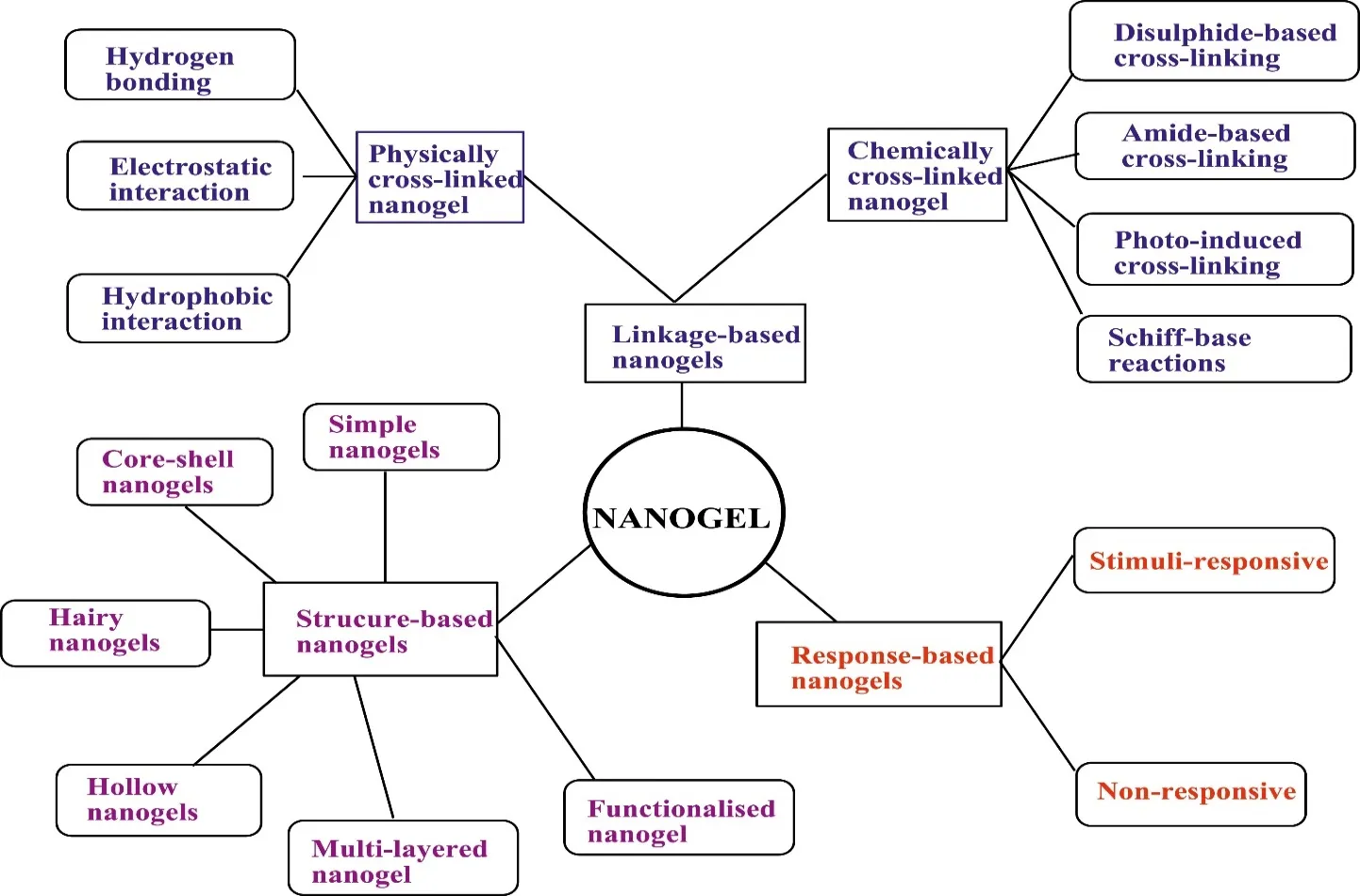
Figure 1: Nanogels Classified into Linkage, Responsive and Structural Nanogels [11].
Nanogels are generally classified into three major groups namely the linkage type, the responsive type as well as structural type (figure1).
PROERTIES OF NANOGELS
Nanogel is composed of synthetic or natural polymers. They prevent it from building up in the organs because they are very biocompatible and biodegradable. The Nanogel can be made using chitosan, ethyl cellulose, methyl cellulose, and several polysaccharide-based polymers like pullulan, dextran, and dextrin. Glycosidic linkages connect repeated monosaccharide units to produce polysaccharides, which are mostly carbohydrate-based polymers. These polymers are hydrophilic, stable, non-toxic, and biodegradable [12].
Nanogels can swell in the presence of an aqueous media since they are small, soft materials. It is thought to be the primary characteristic affecting the drug delivery system's mode of action. It is dependent upon:
• The structure of Nanogels:
This comprises the chemical makeup of the polymer chain, the degree of cross-linking, and, in the case of polyelectrolyte gels, the charge density. environmental factors that are connected to the aqueous medium's characteristics. For example, pH, ionic strength, and the chemical makeup of ions are important variables in polyelectrolyte gels. Similarly, in the case of thermoresponsive gels, temperature is a trigger for swelling [13].
• Higher Drug Loading Capacity
Nanogels are anticipated to have a higher loading capacity than traditional dosage forms, just like any other nano delivery technology. This is mostly because the formulation's swelling feature enables it to absorb a lot of water. As a result, the water will offer enough cargo space to hold biomaterial and salts after incorporation and loading. Three methods are used for loading: Physical entrapment can relate to the dissolution of hydrophobic molecules in hydrophilic vehicles or the connection between hydrophilic chains and hydrophobic areas of the polymer. bioactive molecules' covalent bonding, which results in the creation of a dense, drug-loaded core [14].
controlled self-assembly, which is typically found in nanogels based on polyelectrolytes. The interaction between oppositely charged electrolytes is responsible for the great loading efficiency. The composition, molecular weight, potential interactions between the drug and the used polymer, and the many functional groups in each polymeric unit are additional elements that contribute to the high loading capacity.
• Permeability and Particle Size
The capacity to significantly increase permeability through minute adjustments to particle size, surface charge, and hydrophobicity is what sets apart nano delivery systems. Nanoparticles made it difficult to cross the blood-brain barrier (BBB), despite the fact that they can diffuse through tissues or damaged endothelium and, in certain situations, through a specific transport system. Nanogels were therefore created with a diameter of 20–200 nm in order to get around this problem. It is sufficiently tiny to evade fast clearance processes while also passing through the BBB [15].
ADVANTAGES OF NANOGELS
• Enhanced skin barrier removal and dermal/topical penetration.
• Poorly soluble actives can become more soluble thanks to nanogels.
•Nanogels do not trigger any immunological reactions in the body since they are inert in the bloodstream and the internal watery environment.
• Extremely tiny size, which has several impacts, including:
• Improved permeability.
• Preventing quick renal exclusion. A longer serum half-life results from evading renal clearance.
• The reticuloendothelial system's uptake and phagocytic cells' avoidance of clearance allow for both passive and active medication targeting.
• The ability to pass through the blood-brain barrier.
• Increased endothelium penetration in diseased regions such as infected areas, inflammatory tissue, and solid tumors. Due to the increased capillary permeability of tumor tissues, more nanoparticles enter and aggregate there, increasing both the quantity and selectivity of drug delivery.
• Better access to regions that hydrogels cannot reach after intravenous delivery.
• Nanogel particles are perfect for intracellular drug delivery because they transfer drugs safely into the cytoplasm of target cells.
• Quick reaction to temperature and pH variations in the environment [15].
Incorporation of Herbal Phytoconstituents into Nanogels
Herbal phytoconstituents are biologically active compounds obtained from medicinal plants and include polyphenols, flavonoids, terpenoids, alkaloids, phenolic acids, and other bioactive molecules. Despite their considerable pharmacological potential, many phytoconstituents exhibit poor aqueous solubility, chemical instability, rapid degradation, low skin permeability and inadequate bioavailability, which can limit their therapeutic effectiveness when administered through conventional topical formulations. Nanogels have therefore emerged as a promising carrier system for improving the topical delivery of these plant-derived bioactives [16].
In a nanogel-based system, the phytoconstituent may be incorporated directly into the polymeric nanogel network or may first be entrapped within a nanocarrier such as a lipid nanoparticle, nanoemulsion, phytosome or nanosuspension, followed by incorporation of the nanocarrier into a gel matrix. This approach combines the high drug-loading and protection capabilities of nanosystems with the prolonged residence time and convenient application properties of a gel [17].
1. Selection of phytoconstituent
The first step in developing a herbal nanogel is the selection and characterization of the phytoconstituent. The selection depends on its therapeutic activity, physicochemical properties, dose, stability and intended topical application.
2. Direct incorporation of phytoconstituents into the nanogel matrix
In the simplest approach, the phytoconstituent is incorporated directly into a nanosized polymeric gel network.
Hydrophilic phytoconstituents can generally be dissolved or dispersed in the aqueous phase containing the polymer, whereas poorly water-soluble phytoconstituents require cosolvents, surfactants, lipid phases or other solubilization strategies before incorporation.
Common polymers used in nanogel preparation include chitosan, alginate, carbopol, poloxamers, polyethylene glycol (PEG), polyvinyl alcohol (PVA), hyaluronic acid and other biodegradable or biocompatible polymers.
The polymer forms a three-dimensional network capable of retaining the phytoconstituent and controlling its release. The nanoscale dimensions can additionally improve contact with the skin and facilitate delivery into superficial or deeper skin layers.
Important point: The objective is not simply to “put the herbal compound into a gel.” Rather, the formulation is designed to protect the phytoconstituent, improve its dispersion/solubility, control its release and increase its residence and/or penetration at the target site [17].
3. Incorporation through a nanocarrier followed by gelation
A more sophisticated strategy involves two-step incorporation:
Phytoconstituent → Nanocarrier → Nanocarrier-loaded gel → Herbal nanogel
Here, the phytoconstituent is first incorporated into a nanosystem and the resulting nanoparticles are subsequently dispersed in a suitable gel matrix.
This strategy is particularly advantageous for lipophilic phytoconstituents, because the nanocarrier can improve their apparent solubility and protect them from degradation before the formulation is incorporated into the gel. Nanoemulgel systems, for example, consist of an oil-in-water nanoemulsion incorporated into a hydrogel matrix and are particularly useful for poorly water-soluble phytopharmaceuticals [17].
4. Lipid-based incorporation
Lipid-based nanocarriers such as solid lipid nanoparticles (SLNs), nanostructured lipid carriers (NLCs), liposomes and nanoemulsions can be used as intermediate carriers for herbal phytoconstituents.
These systems are particularly useful for lipophilic compounds such as curcumin, quercetin and resveratrol.
The phytoconstituent is incorporated into the lipid phase and stabilized using suitable surfactants. The resulting nanoparticles can then be dispersed into a gel-forming polymer.
Example: Curcumin
A particularly relevant example is curcumin-loaded nanostructured lipid carriers incorporated into a nanogel. Kesharwani et al. developed curcumin-loaded NLCs for topical application. The optimized NLCs had a particle size of approximately 189 nm and an encapsulation efficiency of about 86.7%. Following incorporation into a nanogel, the formulation demonstrated sustained drug release and improved skin retention/permeation, indicating the potential of this approach for topical treatment of psoriasis [18].
5. Nanoemulsion-based incorporation
Another important approach is incorporation of phytoconstituents into a nanoemulgel. A nanoemulsion consists of nanosized oil droplets containing the lipophilic phytoconstituent. These droplets are subsequently incorporated into a suitable hydrogel base. This approach provides two complementary functions:
Nanoemulsion → improves solubilization and skin permeation
Gel matrix → improves viscosity, residence time and controlled release
Therefore: Phytoconstituent + nanoemulsion + hydrogel = nanoemulgel
Nanoemulgels have been reported to improve the permeation behavior of phytopharmaceuticals across the skin while allowing controlled and sustained delivery [17].
FORMULATION STATERGIES FOR HERBAL NANOGELS
Physical Methods
In order to create rationalized, self-assembled, and self-organized supramolecular structures devoid of covalent connections, physical approaches for the synthesis of gels and NGs rely on spontaneous interactions and arrangements of their constituent parts. The physically formed NGs can be favored since they don't need extra cross-linking agents or polymerization initiators, which increases their safety and biocompatibility even though their mechanical strength is lower than that of covalently bonded systems. Hydrogen bonds, electrostatic contacts, van der Waals forces, π−π stacking (interactions among aromatic rings), and hydrophobic interactions are some of the main mechanisms that drive the development of these entangled polymeric materials, which are commonly referred to as host–guest interactions [19].
• Electrostatic Interactions
The synthesis of NGs by physical cross-linking is a straightforward and effective process that is typically carried out in an aqueous environment where the polymer chains are completely solvated and initially not strongly interacting. NGs based on electrostatic interactions are created by the attraction between molecules with opposite charges, which drives their self-assembly and stability. These structures are typically constructed using polymers containing ionizable or ionic functional groups, such as carboxylates, amines, or quaternary ammonium ions. Changes in temperature, pH, or ionic strength, for example, cause the polymer chains to interact and create crosslinks. For instance, certain polymer functional groups can be protonated or deprotonated by pH changes, which can lead to their attraction to one another and the formation of ionic crosslinks. Ionic gelation is another electrostatic interaction-based synthesis method that uses polyelectrolytes to form crosslinks in the presence of ions. It is a straightforward and quick synthesis, but it is challenging to control due to the extremely quick assembly of polymers and crosslinkers, which results in inter-batch variations in physicochemical properties like particle size, polydispersity, surface charge, and drug release profiles [19].
• Emulsion Polymerization
Monodisperse, kinetically stable droplets are formed in a continuous phase during emulsion-based polymerization. The idea behind this procedure is to keep the polymerization in a small area (the droplets), whose size would influence the eventual product's dimensions. Direct emulsion polymerization is typically defined as the dispersion of organic droplets containing reactive monomers or polymers in aqueous solution (oil-in-water, O/W emulsion); inverse emulsification polymerization is defined as the dispersion of aqueous droplets in an organic medium (water-in-oil, W/O emulsion). Monomers, initiators, catalysts, and cross-linking agents are used in the formulation of NG. Nucleation, precursor nanoparticle development, and polymerization are typically the three stages of the process [20].
There are two primary methods that can be recognized. In the first, photo-initiators are favored to initiate the reaction mechanism through homolytic degradation, and all of the reagents are dissolved in the dispersion phase. The second method allows for the dissolution of various monomers in the continuous and scattered phases, respectively. Typically, the droplets include a catalyst and a crosslinker, and the continuous phase is supplemented with an initiator. Here, water-radiolysis-degradable reactives and thermal initiators are frequently selected.
This pathway is facilitated by the use of surfactants, which lower the interface energy between the organic and aqueous phases, or by the hydrophilic-lipophilic balance of the radical's chemical structure. The resulting first radicals react with the monomers to generate monomer radicals, which enter the droplets via diffusion to react with the other components and form the nanonetwork. Using hydroxylethylacrylamide and cysteine diacrylamide with the surfactant Brij-L4, Raghupathi et al. [21] proposed the design of redox-responsive NGs through the inverse emulsification method; the resulting nanoscaffolds were intended to encapsulate proteins as a hydrophilic cargo and tune their release under specific stimulus triggers (Figure 2). Using sodium dodecyl sulfate (SDS) as a surfactant and methylenebis (acrylamide) as a crosslinker, Peres and colleagues [22] created glutamic acid-based NGs and showed the impact of NG swelling behavior under pH changes in a drug delivery application.
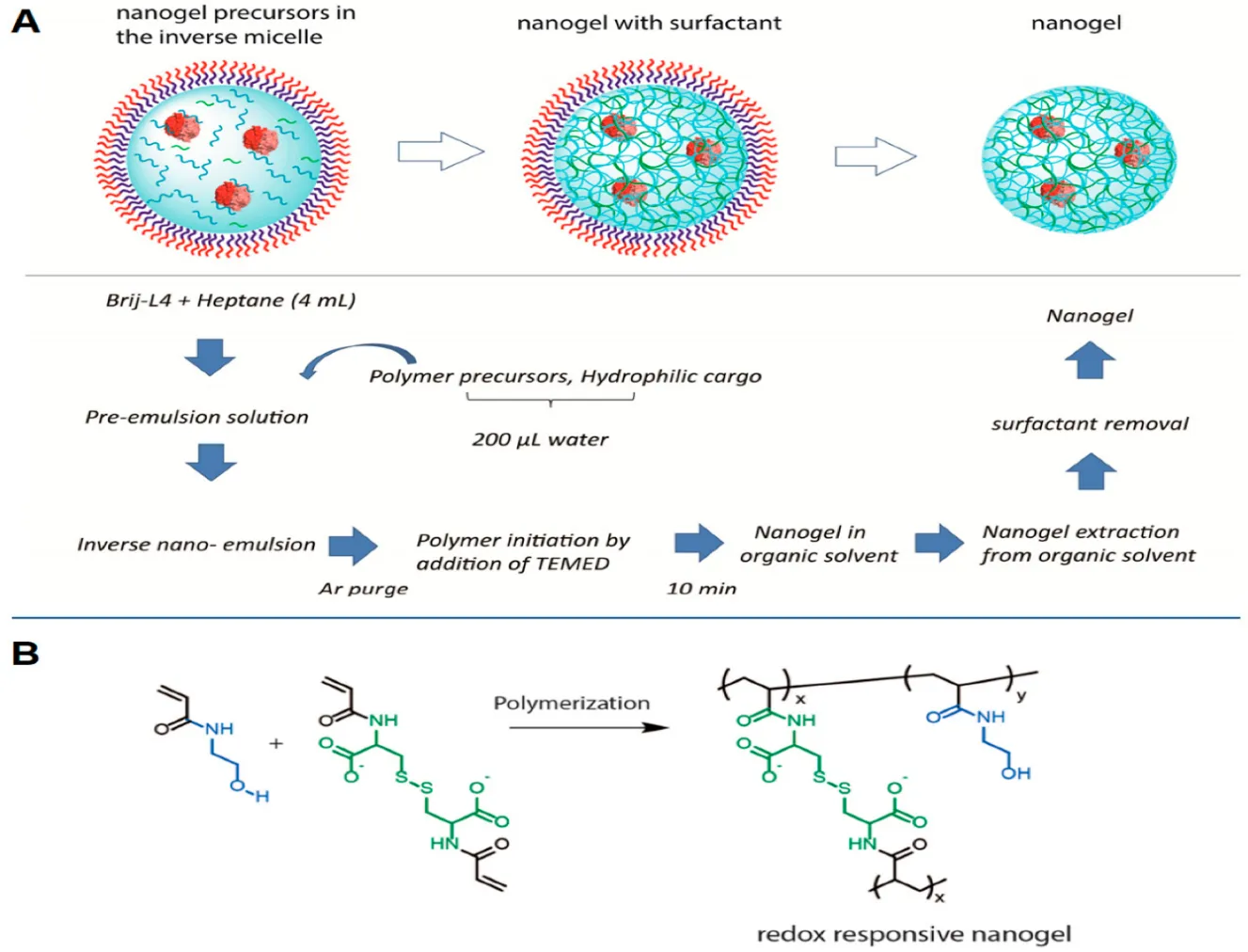
Figure 2: ng Synthesis by Inverse Emulsification in the Presence of Brij-L4 Surfactant. (a) Protocol Used in ng Formation; (B) Polymerization Between Hydroxylethylacrylamide and Cystine Diacrylamide Giving Rise to the Nanonetwork. Reprinted with Permission from Raghupathi Et Al. [21]. Copyright (2017) American Chemical Society.
• NANOPRECIPITATION
Colloidal suspension is created when polymers dissolve in organic solvents like acetone and diffuse into the aqueous phase. The approach, sometimes known as the solvent displacement technique, was developed by Nagavarma et al. The aqueous medium utilized should be soluble in the solvent and insoluble in the polymer, and the suspension can be produced with or without surfactant [23].
• Crosslinked Nanogels
Pure organic nanogels and inorganic nanoparticles coated with crosslinked organic shells are the two main types of crosslinked nanogel (Figure 1). Functional macromolecules, which are created by adding functional groups to macromolecules, can be crosslinked to create pure organic nanogels (Figure 1a). The nanogels can be crosslinked by covalent bonding, supramolecular interactions, π–π stacking, and electrostatic interactions. The crosslinkers may have bi-functional or multifunctional groups. Furthermore, disulfide linkages and other environmentally responsive moieties found in some crosslinkers give nanogels their responsiveness. It makes sense to coat the surface of pure inorganic nanoparticles with biocompatible organic macromolecules to improve their stability and biocompatibility because they may be unstable under physiological conditions and have poor biocompatibility (Figure 1b). Inorganic nanoparticle-embedded crosslinked nanogels can be created by cross-linking the coated shell, which further stabilizes the nanoparticles. These nanogels are more stable and have better biodistribution than pure inorganic nanoparticles [24].
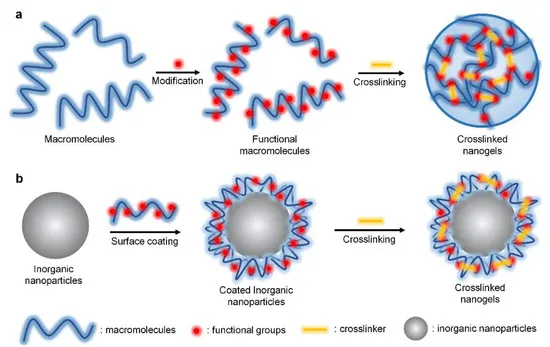
Figure 3: Schematic Illustration for Preparation of Crosslinked Nanogels. (a) Preparation of Macromolecules-Based Crosslinked Nanogels. (B) Preparation of Inorganic Nanoparticles-Based Crosslinked Nanogels [24].
• Emulsification/solvent evaporation
A common method for the preparation of NPs is the emulsification/solvent evaporation technique which consists of dissolving the polymer in an organic solvent such as dichloromethane, chloroform or ethyl acetate followed by emulsification in water and subsequent evaporation of the organic solvent to obtain an aqueous particle suspension [25]. In order to stabilize oil-in-water emulsions, the emulsification step typically calls for the application of shear stress (homogenization or ultrasonication) and the addition of a surfactant, such as gelatin, polysorbate, or poloxamers. Inverse emulsion conditions are frequently required to create NGs from water-soluble prepolymers. Moya-Ortega et al., for instance, made NGs from aqueous solutions of the proper cyclodextrin with a polysaccharide and the crosslinker ethylene glycol diglycidyl ether. The cross-linking was started by stirring the solutions at 60 °C, and then the mixture was emulsified in dichloromethane containing Span80.
After heating the resultant water-in-oil emulsion to accomplish cross-linking and dichloromethane evaporation, water was added, shattering the emulsion. A modified version of the process for creating polyethyleneimine-based NGs was described by Vinogradov et al. [26]. It involved dispersing a dichloromethane solution of activated PEG polymers in an aqueous solution of high molecular weight polyethyleneimine while vigorously mixing and sonicating the mixture. In order to achieve NG formation, the dispersion was immediately concentrated in vacuo to remove the dichloromethane, and the solution was left to agitate.
EVALUTION OF HERBAL NANOGELS
Physical appearance, pH determination, practical yield estimation, homogeneity determination, drug content uniformity estimation, spreadability determination, viscosity determination, in-vitro drug release study, Zeta potential and particle size analysis, FTIR study of nanogel, SEM (Scanning Electron Microscope), etc. were all used to evaluate the nanogel.
• Physical appearance:
One of the most crucial aspects of nanogel compositions' physical appearance is their clarity. By visually comparing the generated nanogels to a black and white texture, their clarity was assessed.
• Determination of (%) Percentage yield:
Percentage of practical yield calculated by using the formulation,
% Yield = Actual Yield/Theoretical Yield *100%
• Determination of pH:
One of the most crucial aspects of nanogel compositions' physical appearance is their clarity. By visually comparing the generated nanogels to a black and white texture, their clarity was assessed.
• Homogeneity:
All of the batches of nanogel that had set in the beaker were examined visually to ensure homogeneity. The nanogel was also examined for physical characteristics and particle presence.
• Spreadibility:
The spreadibility was calculated by using following formula:
S=M.L/T
Where, S = Spreadability, M = Wt. of the pan (to the upper slide), L= Length moved by the glass slide and T= time in sec [27].
Characterization of Nanogels
Before being used, nanogels should be thoroughly characterized, and the following techniques are usually thought to be appropriate for this.
1.Dynamic Light Scattering
The size distribution properties of nanoparticles in liquids are ascertained via dynamic light scattering (DLS). Light scattering is recorded on a microsecond time frame throughout different investigations. The impact of the cross-linker and the charges of the polymer chains on the size of the resulting nanogel can be measured using an effective hydrodynamic particle radius. The amount that nanogels swell in different media can also be measured using DLS. It is important to note that the population of smaller polymer particles might not be included in the DLS data [28]. A variety of analytical techniques are often needed to completely understand an object's characteristics. The polydispersity index and the average particle diameter were also examined using DLS.
2. Scanning Electron Microscopy
The size and surface characteristics of the particle can be ascertained using electron microscopy. Additionally, it can be used to detect particles between 50 and 80 nm in size and evaluate the morphological properties of nanogels.
3. Size-Exclusion Chromatography
Over the past fifty years, SEC has been recognized as the gold standard for figuring out the distributions and molar mass averages of both synthetic and natural macromolecules [29]. SEC can aid in our comprehension of the physicochemical characteristics of polymers when combined with a range of detection techniques [30].
Recent herbal nanogel formulations
Table 2: Representative Examples of Some Bioactive Loaded Nanogels.
| Nanogel/Herb | Condition | Reference |
|---|---|---|
| Eupatorium adenophorum | Antibacterial | [31] |
| Cleodendron infortunatum | Bronchitis, asthma, fever, skin ailments, and epilepsy | [31] |
| Sesbania grandiflora | Anti-acne, anti-peroxidase, analgesic, reducing fever, anti-bacterial, anticancer, thrombolytic, and hepato-immune response | [32] |
| Withania somnifera | Anti-inflammatory | [32] |
| Albizia lebbeck | Anti-inflammatory and analgesic | [32] |
| Tridax procumbens | Anti-bacterial | [33] |
| Akkalkara. | Pain reliever | [33] |
| Mannose | To boost fibroblast activity and collagen production | [33] |
| Aloe barbadensis | Wound reduction | [33] |
| Cynodon dactylon Pers. and Cassia tora linn. Cassia alata Linn | Anti-cancer | [33] |
Future Prospective:
According to the various studies covered in this review, nanogel has emerged as the best option for topical drug administration during the development of several innovative drug delivery systems. Nanogel was created to improve pharmacodynamics and pharmacokinetics as well as the low bioavailability of countless medications. Many lipophilic medications with improved therapeutic characteristics from a range of therapeutic areas are currently being developed as nanogels. Numerous acute and chronic illnesses, such as inflammation, fungal diseases, psoriasis, cardiovascular issues, alopecia, etc., are treated using nanogel in the healthcare system. With all these benefits of drug delivery, nanogel's future prospects appear promising, and it may be expected that using nanogel as a delivery system will be encouraging for a variety of drug categories that have been dropped from the development pipeline for a variety of reasons, such as poor bioavailability, clinical potential, etc. Therefore, for better skin care, the main emphasis should be on increasing and boosting target potency. Therefore, researchers should focus on creating or discovering new nanomaterials that are biocompatible, biodegradable, and capable of fixing every stage of the skin care procedure [34].
Therapeutic applications of herbal nanogels for topical application
1. Wound healing
Wound care is one of the most promising uses of herbal nanogels. Curcumin, flavonoids, polyphenols, essential oils, and organosulfur compounds are examples of herbal phytoconstituents that have antibacterial, anti-inflammatory, and antioxidant properties. Nanogels can promote the bioactive's contact with injured tissue and help preserve it at the wound site. Additionally, their nanoscale structure can enhance distribution into the outer layers of the skin. Among the therapeutic benefits are:
• A decrease in microbial infection • A decrease in oxidative stress • Management of excessive inflammation • Fibroblast proliferation promotion • Increased production of collagen • Re-epithelialization accelerated • A shorter time to wound closure [35].
2.Antibacterial and antimicrobial therapy
Bacterial skin infections and infected wounds can be treated topically with herbal nanogels. Allicin/alliin, neem components, tea tree oil, curcumin, and polyphenols are examples of plant-derived chemicals with antibacterial qualities. By adding these substances to nanogels, their transport and residence time at the infected site may be enhanced. Among the possible uses are:
• Wounds that are infected • Mild infections of the skin • Burns Folliculitis • Bacterial infection linked to acne • The avoidance of wound microbial invasion [36].
3.Antifungal therapy
Because a number of chemicals originating from plants have antifungal properties, herbal nanogels may be useful in treating superficial fungal infections. Among the possible phytoconstituents are:
Tea tree oil Thymol Carvacrol Curcumin • Components of neem • Essential oils • A variety of polyphenols [37].
4.Acne management
Because a number of plant components include antibacterial, antioxidant, and anti-inflammatory properties, herbal nanogels may be helpful in treating acne vulgaris. Among the possible herbal compounds are:
• The antibacterial and anti-inflammatory properties of tea tree oil • Curcumin: antioxidant and anti-inflammatory properties • Neem's antibacterial properties • Aloe vera's calming and wound-supporting properties • Green tea polyphenols: their anti-inflammatory and antioxidant properties.
While lowering some of the drawbacks of traditional herbal treatments, nanogel administration may enhance the localization of these chemicals in the skin [38].
CONCLUSION
Herbal nanogels have emerged as a promising nanocarrier system for improving the topical delivery of plant-derived bioactive compounds. Conventional herbal formulations often face limitations such as poor aqueous solubility, low skin permeability, instability, inadequate bioavailability and variability in therapeutic response. Nanogel-based delivery systems can potentially overcome some of these limitations by providing improved solubilization, protection of sensitive phytoconstituents, controlled release, prolonged residence time and enhanced localization of bioactive compounds within the skin.
The application of herbal nanogels has been investigated for several dermatological conditions, including wound healing, microbial and fungal infections, acne, inflammatory skin disorders and other skin-related conditions. Phytoconstituents such as curcumin, flavonoids, polyphenols, essential oils, thymol, carvacrol, tea tree oil and various plant extracts possess antioxidant, antimicrobial and anti-inflammatory properties that may contribute to their therapeutic potential. Incorporating these bioactive compounds into nanogel systems may further improve their topical performance and provide a multifunctional approach to skin therapy.
Despite these promising advantages, most evidence concerning herbal nanogels remains at the in vitro and preclinical stages. Variations in plant sources, phytochemical composition, extraction methods, polymeric materials, particle characteristics and manufacturing processes can affect the reproducibility and therapeutic performance of these formulations. Moreover, the assumption that herbal ingredients are inherently safe should be avoided, as appropriate evaluation of toxicity, irritation, sensitization, stability, pharmacokinetics and potential interactions is essential.
Therefore, future research should focus on the development of standardized, biocompatible and biodegradable herbal nanogels with reproducible physicochemical characteristics and predictable drug-release profiles. Well-designed in vivo studies and clinical trials are required to establish their long-term safety, efficacy and therapeutic advantages over conventional topical formulations. With continued advances in nanotechnology, phytochemistry and formulation science, herbal nanogels may become a valuable platform for the targeted and controlled topical delivery of plant-derived therapeutics.
REFERENCES



Ashish A. Kalambate, Sakshi R. Kakade, Janvi S. Kakde, Sushma T. Nakhate, Tushar Shelke, Recent Advances in Herbal Nanogel Formulations for Topical Drug Delivery, Int. J. Sci. R. Tech., 2026, 3 (10), 942-954. https://doi.org/10.5281/zenodo.23411424
 10.5281/zenodo.23411424