

We use cookies to ensure our website works properly and to personalise your experience. Cookies policy
Department of Biotechnology, Deogiri College, Chhatrapati Sambhajinagar 431001, Maharashtra
The excessive and continuous use of chemical fertilizers in modern agriculture has increased crop yield temporarily but has created serious long-term problems for soil health, the environment, crop quality, and human health. Chemical fertilizers mainly supply nitrogen, phosphorus, and potassium, while ignoring soil micronutrients and biological balance. Their repeated application leads to soil nutrient imbalance, increased acidity and salinity, loss of organic matter, and destruction of beneficial soil microorganisms such as Rhizobium, Azotobacter, and phosphate-solubilizing bacteria. As a result, soil fertility gradually declines and crops become more dependent on external chemical inputs. To address these challenges, the present study emphasizes the importance of Smart Biochar as a sustainable and eco-friendly alternative to chemical fertilizers. The biochar was produced from crops residues, agricultural waste via controlled pyrolysis method and subsequently inoculated with the selected beneficial microbes such as multiple plant growth–promoting bacterial strains Pseudomonas fluorescens, Bacillus subtilis, Azotobacter spp., and Rhizobium spp. In this paper the bridges the gap between traditional farming and modern science. By turning agricultural leftovers into a stable, porous biochar, we’ve created a sanctuary for beneficial bacteria. This isn't just charcoal; it’s an inoculated "smart-carrier" packed with natural microbes that fix nitrogen and unlock nutrients in the soil. By returning this bio-activated material to the earth, we are restoring soil health, cutting the need for chemicals, and fighting climate change one field at a time.
Biochar is a carbon-rich material produced by the high-temperature pyrolysis of biomass, such as agricultural and forestry wastes, under anaerobic or hypoxic conditions [1]. Biochar has the potential to counter climate change because the inherent fixed carbon in raw biomass that would otherwise degrade to greenhouse gases is sequestered in soil for years. In recent years the use of surplus organic matter to create biochar has yielded promising results in sequestration of carbon. One of the strategies used called soil amendments. Soil amendments are materials and organisms that are applied to the soil to improve its ability to promote plant development and survival. Compost, ferrous sludge, animal slurry, green manure, biochar, microorganism, liquid manure, and other organic soil additions have all been investigated as methods to boost soil fertility and crop productivity. . Soil organic amendments can improve soil texture, increase soil fertility, maintain soil health over time, and, most importantly, increase crop yields [2]. The use of biochar combined with PGPR is a promising strategy for enhancing plant growth and stress tolerance [3]. In the plant-soil underground ecosystem, soil microorganisms mainly establish connections with plants in the following three ways[4]: (1) plant residues, including roots, leaves, and other secretions, are the primary source of soil carbon to supply microbes in the soil [5]; (2) soil microorganisms release nutrients through metabolic activities, supporting soil development, promoting plant growth, and maintaining the stability of soil carbon cycling; (3) through mycorrhizal symbiosis [6], releasing hormones, and stress signals [7], microorganisms can directly affect plant growth and development.
Rhizobacteria are naturally found in the soil, and they can live symbiotically with the plant in the root zone and form spores, play an encouraging role for the seedlings to synthesize plant growth hormones such as auxin, cytokinin, gibberellin during the vegetative period, and they are critical importance for plant development [8]. PGPR bacteria create a suitable habitat for plant growth by improving some physical properties of soils [9]. Due to these properties, in this study, 4 bacterial isolates from PGPR bacteria (Rhizobium, Azotobacter, Pseudomonas fluorescence, Bacillus subtilis) were studied and were carried out to investigate the effects of bacterial inoculation on course, medium and fine-textured soil physical properties under different incubation periods. Rhizobacteria are different types of bacteria whose growth is strongly influenced by root exudate and exchange, making them the dominant group of microorganisms in the rhizosphere. Within the rhizobacteria, a group known as plant growth-promoting rhizobacteria (PGPR) provides beneficial impacts on plant growth and yield. PGPR can help plants through multiple mechanisms, such as (1) nutrient acquisition via biological nitrogen fixation (BNF) and the solubilization of minerals like phosphorus (P), potassium (K), and zinc (Zn); (2) phytohormone modulation by producing growth promoters (e.g., auxins, cytokinin’s) and regulating stress hormones like ethylene; and (3) the production of siderophores to improve iron uptake and inhibit pathogen growth [9]. Azotobacter is a group of Gram negative, free-living, nitrogen fixing aerobic bacteria inhabiting in the soil. They are oval or spherical in shape and form thick-walled cysts (dormant cells resistant to deleterious conditions) under unfavourable environmental conditions. These bacteria are known to exploit atmospheric nitrogen for their cellular protein synthesis which is mineralized in the soil, imparting the crop plants a considerable part of nitrogen available from the soil source. Azotobacter spp. is sensitive to acidic pH, high salt concentration and temperature [10]. They pose advantageous impacts on the crop growth and yield through the biosynthesis of biologically active substances, instigation of rhizospheric microbes, production of phytopathogenic inhibitors, alteration of nutrient uptake and eventually magnifying the biological nitrogen fixation [11]. P. fluorescens are the Gram-negative bacteria that produce hydrogen cyanide (HCN), a secondary metabolite involved in disease inhibition [12]. The antagonistic potential of P. fluorescens is exacerbated by the formation of HCN, which is promoted by iron availability in wet, O2-depleted soils. Iron is found in an abundant form but is not available to the plants [13] and microbes. To get iron for growth and development, some bacteria manufacture low-molecular-weight iron complexes known as siderophores,[14] which are helpful in limiting the phytopathogens.[15] Bacillus subtilis is in the Firmicutes phylum. It can make bacillomycin, organic acids, and antibacterial proteins that stop pathogens from spreading and growing [16]. The overall mechanism is the biochar pores act as protective shelters for bacterial survival. Microbes colonize the rhizosphere, fixing nitrogen and secreting growth-promoting compounds. Bacillus and Pseudomonas defend roots against pathogens. Azotobacter and Rhizobium enrich soil nitrogen levels.
MATERIALS AND METHOD
1. Bacterial Strains and Culture Media
Four plant growth-promoting rhizobacteria (PGPR) and a nitrogen-fixing bacterium were used in this study: Rhizobium spp., Pseudomonas fluorescence, Bacillus subtilis, Azotobacter spp. Nitrogen-fixing bacterial strains were isolated from root nodules of healthy leguminous plants, including Lentil (Lens culinaris), Groundnuts (Arachis hypogaea) and soybean (Glycine max), as well as from associated soil samples which Soil samples which were collected from the rhizosphere of leguminous plants at different locations. Sampling sites included agricultural fields cultivated with the given leguminous plants. near CHH. Sambhajinagar: sawangi, satara parisar, daulatabad, paithan. All isolates were purified and maintained on appropriate selective media for further characterization.
Culture Media Preparation: Rhizobium Culture Medium: Yeast Extract Mannitol (YEM) medium was prepared according to standard protocols. The composition included:Yeast extract: 1.0 g/L, Mannitol: 10.0 g/L, Dipotassium phosphate (Kâ‚‚HPOâ‚„): 0.5 g/L, Magnesium sulphate (MgSOâ‚„): 0.2 g/L, Sodium chloride (NaCl): 0.1 g/L, Calcium carbonate (CaCO₃): 2.0 g/L (optional, for pH buffering) Agar: 15.0 g/L (for solid medium). The medium was dissolved in 1 liter of distilled water, pH adjusted to 6.8-7.0, and sterilized by autoclaving at 121°C, 15 psi for 15 minutes. After cooling to 50°C, the medium was poured into sterile Petri plates (for solid medium) or dispensed into sterile test tubes (for broth culture).
Pseudomonas fluorescence Culture Medium (Pikovskaya's Medium): Pikovskaya's medium for phosphate-solubilizing bacteria cultivation was
prepared as follows:Glucose: 10.0 g/L,Ammonium sulfate [(NHâ‚„) â‚‚SOâ‚„]: 0.5 g/L, Dipotassium phosphate (Kâ‚‚HPOâ‚„): 0.4 g/L, Potassium chloride (KCl): 0.2 g/L, Magnesium sulfate (MgSOâ‚„·7Hâ‚‚O): 0.1 g/L, Manganese sulfate (MnSOâ‚„): 0.001 g/L, Ferrous sulfate (FeSOâ‚„): 0.001 g/L, Calcium carbonate (CaCO₃): 5.0 g/L, Agar: 15.0 g/L (for solid medium). The medium was prepared in 1 litre of distilled water, adjusted to pH 7.0, and sterilized by autoclaving at 121°C, 15 psi for 15 minutes.
Bacillus subtilis Culture Medium: Standard Nutrient Agar (NA) medium was used for cultivation: Peptone: 5.0 g/L, Beef extract: 3.0 g/L, Sodium chloride (NaCl): 5.0 g/L, Agar: 15.0 g/L. The medium was prepared in 1 litre of distilled water, pH adjusted to 7.0±0.2, sterilized by autoclaving at 121°C, 15 psi for 15 minutes, and poured into sterile Petri plates.
Azotobacter Culture Medium: Ashby's nitrogen-free medium was prepared for nitrogen-fixing Azotobacter cultivation:Mannitol: 20.0 g/L, Dipotassium phosphate (Kâ‚‚HPOâ‚„): 0.8 g/L
Potassium dihydrogen phosphate (KHâ‚‚POâ‚„): 0.2 g/L, Magnesium sulfate (MgSOâ‚„·7Hâ‚‚O): 0.2 g/L Calcium sulfate (CaSOâ‚„): 0.1 g/L, Sodium molybdate (Naâ‚‚MoOâ‚„): 0.005 g/L, Agar: 15.0 g/L (for solid medium). The medium was dissolved in 1 litre of distilled water, pH adjusted to 7.0, sterilized by autoclaving at 121°C, 15 psi for 15 minutes, and plates were incubated in inverted position.
2. Bacterial Culture and Preparation of Inoculum
2.1 Isolation and Pure Culture Maintenance: Pure cultures of all four bacterial strains were maintained on appropriate selective media as described in Section 2.2. Bacterial strains were streaked from stock cultures onto fresh selective media plates and incubated at 28±2°C for 5-7 days. Single isolated colonies were selected and sub cultured to obtain pure cultures. Fresh cultures were prepared 48 hours before inoculum preparation.
2.2 Liquid Culture Preparation for Inoculation: Individual bacterial strains were cultured in liquid medium (broth without agar) using the respective selective media compositions. Single colonies from fresh plate cultures were inoculated into 150 mL sterile conical flasks containing 50 mL of appropriate liquid medium: Rhizobium sp.: YEM broth, 150 rpm on orbital shaker at 28±2°C for 7 days. Pseudomonas fluorescence: Pikovskaya's broth, 150 rpm on orbital shaker at 28±2°C for 7 days. Bacillus subtilis: Nutrient broth, 150 rpm on orbital shaker at 30±2°C for 48 hours. Azotobacter sp.: Ashby's broth, static incubation at 28±2°C for 7 days. All cultures were incubated under specified conditions to allow maximum growth.
3. Biochar Production
Feedstock Preparation and Pyrolysis: Agricultural biomass (rice straw, wheat straw, or sawdust) was collected and air-dried at room temperature (25±2°C) for 72 hours to achieve uniform moisture content. The biomass was then ground to a particle size of 5-10 mm and passed through a 5 mm sieve. Prior to pyrolysis, biomass samples were dried in a hot air oven at 105°C for 24 hours to reduce initial moisture content to less than 5%.Biochar was produced through slow pyrolysis in an Pyrolysis reactor (Kiln chamber). Approximately 500 g of dried biomass was placed in a stainless-steel Pyrolysis reactor vessel and heated at a heating rate of 5°C/min to a final temperature of 500-550°C, which was maintained for 15-30 minutes. The pyrolysis process was conducted under oxygen-limited (low oxygen) conditions to prevent combustion. After cooling to room temperature, the resulting biochar was collected, weighed, and stored in airtight containers at 4°C until further use.
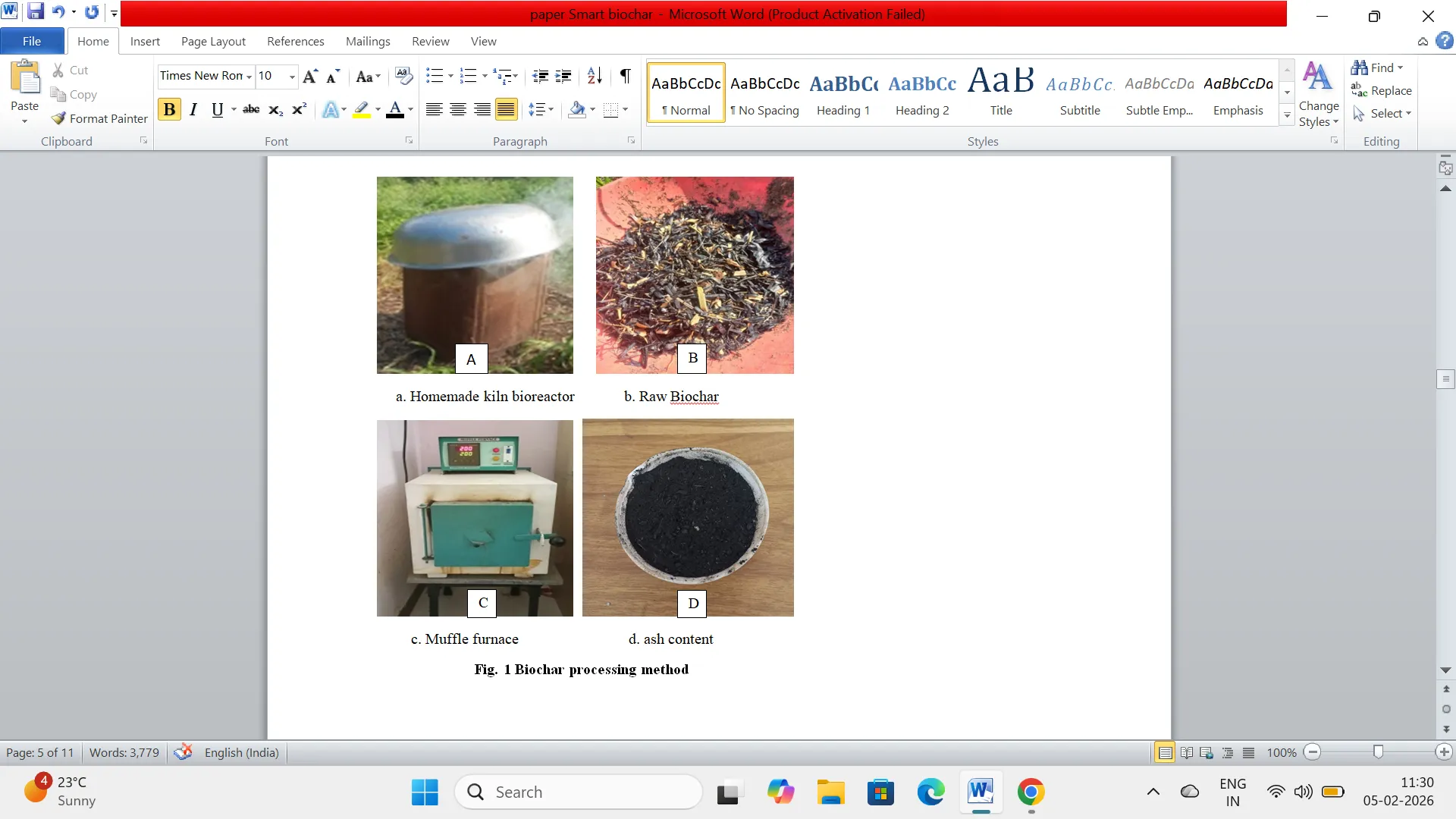
Biochar yield was calculated using the formula [16]:
Biochar Yield (%) = (Weight of biochar produced / Weight of initial dry biomass) × 100
Biochar Characterization and Preparation as Carrier
The produced biochar was crushed and sieved to obtain particles with size range of 1-2 mm, which provides optimal surface area for microbial colonization.
The biochar particles were then sterilized by autoclaving at 121°C, 15 psi pressure for 15 minutes to eliminate any contaminating microorganisms and ensure a sterile carrier for inoculation. Sterilized biochar was stored in sterile glass containers at room temperature until microbial inoculation.
Biochar Inoculation with Bacterial Consortium
Preparation of Biochar-Based Inoculant: Sterilized biochar particles (100 g) were weighed into sterile conical flasks. Equal volumes (10 mL each) of four bacterial cultures adjusted to 10⸠CFU/mL were mixed to prepare a bacterial consortium suspension. This consortium suspension was aseptically distributed onto the biochar by spraying using a sterile syringe, ensuring thorough distribution and approximately 40% moisture content. The inoculated biochar was mixed thoroughly using a sterile glass rod to facilitate uniform bacterial colonization and then incubated at 28±2°C for 72 hours in anaerobic conditions (sealed, oxygen-limited containers) to promote bacterial adhesion to biochar surface.
Incubation and Microbial Colonization: The inoculated biochar was maintained at room temperature (25±2°C) with periodic moisture adjustment (30-40% water holding capacity) for 7-10 days to allow complete microbial colonization. Sterile distilled water was added aseptically as required to maintain moisture levels. The biochar samples were stored in sealed glass containers at 4°C until use.
Microbial Count Estimation on Biochar: To verify successful bacterial colonization of biochar, microbial counts were estimated. Biochar samples (1.0 g) were suspended in 10 mL of sterile 0.85% saline solution and vigorously vortexed for 2 minutes to dislodge bacteria from the biochar surface. Serial dilutions (10â»â· to 10⻹â°) were prepared, and 100 μL of appropriate dilutions were plated on respective selective media. Plates were incubated under conditions specific to each bacterium, and colony-forming units (CFU/g biochar) were calculated after 5-7 days of incubation.
Bacterial Identification Test:
Biochemical Characterization: IMViC Test
The IMViC test is a series of four biochemical tests used to identify and characterize bacterial strains. These tests include: Indole (I), Methyl Red (M), Voges-Proskauer (V), and Citrate utilization (C) tests.
Indole Test: This test detects the ability of bacteria to produce indole from the amino acid tryptophan through the action of the enzyme tryptophanase. Methyl Red (MR) Test: This test detects the ability of bacteria to ferment glucose via the mixed acid fermentation pathway, producing significant amounts of acid that lower the pH of the culture medium to 4.4 or below. Voges-Proskauer (VP) Test: This test detects the production of acetoin (acetylmethylcarbinol) as an intermediate in the butanediol fermentation pathway. In the presence of KOH and α-naphthol, acetoin is oxidized to diacetyl, which reacts with peptone to form a pink-red coloured compound. Citrate Utilization Test: This test detects the ability of bacteria to utilize sodium citrate as the sole source of carbon and energy. Bacteria capable of utilizing citrate produce citrase enzyme, which breaks down citrate [17]. The resulting alkaline byproducts (sodium carbonate from released COâ‚‚ and ammonia from ammonium salt metabolism) increase the pH, causing the bromothymol blue pH indicator to change from green to blue [18].
Results:
Smart biochar exhibited a porous structure, near-neutral pH, and high water-holding capacity, indicating suitability for microbial immobilization and soil application. Beneficial bacterial isolates identified through morphological and biochemical characterization included Azotobacter sp., Rhizobium sp., Bacillus subtilis, and Pseudomonas fluorescens. All bacterial isolates showed good survivability on smart biochar, with the highest stability observed in Bacillus subtilis, followed by Pseudomonas fluorescens, Azotobacter sp., and Rhizobium sp. Soil treated with smart biochar exhibited increased microbial activity and improved nutrient retention compared to control soil. Plant growth parameters were significantly enhanced in smart biochar–amended soil. Shoot length increased by 20–35%, root length by 30–45%, and improvements in chlorophyll content, root architecture, and biomass were observed. Enhanced root nodulation was recorded in plants treated with Rhizobium-inoculated smart biochar. Overall, smart biochar enriched with beneficial bacteria significantly improved soil health, nutrient availability, and plant growth compared to untreated and chemical fertilizer–treated.
Biochemical tests confirmed key enzyme activities in the isolates, including catalase and amylase in Azotobacter and gelatinase and caseinase in Bacillus subtilis. Rhizobium showed acid production, Rhizobium and Pseudomonas were urease-negative, and Gram staining determined bacterial morphology show in (Table no.1)
|
TESTS /BACTERIA |
Rhizobium spp. |
Azotobacter spp. |
Bacillus spp. |
Pseudomonas spp. |
|
Gram staining |
Negative rods |
Negative rods |
Positive rods |
Negative rods |
|
Catalase |
Positive (+) |
Positive (+) |
Negative (−) |
Positive (+) |
|
Starch hydrolysis |
Positive (+) |
Positive (+) |
Negative (−) |
Negative (−) |
|
Citrate utilisation |
Positive (+) |
Negative (−) |
Positive (+) |
Positive (+) |
|
Urease test |
Positive (+) |
Positive (+) |
Negative (−) |
Positive (+) |
|
Gelatin hydrolysis |
Negative (−) |
Negative (−) |
Positive (+) |
Positive (+) |
|
Casein hydrolysis |
Negative (−) |
Negative (−) |
Positive (+) |
Positive (+) |
|
Bromothymol blue |
Negative (−) |
Positive (+) |
Positive (+) |
Positive (+) |
Table no. 1: Bacterial Identification Test
To confirm the identity of the PGPR strains used in the biochar, we performed IMViC tests (Indole, Methyl Red, Voges-Proskauer, and Citrate), a standard biochemical battery that differentiates between key bacterial groups based on their unique metabolic signatures show in (Table no.2) The combination of the four test results (I/M/V/C) provides a profile for bacterial identification [19].
|
Bacterial Isolate |
Indole Test (I) |
Methyl Red Test (M) |
Voges–Proskauer Test (V) |
Citrate Utilization Test (C) |
|
Rhizobium spp. |
Negative (−) |
Negative (−) |
Negative (−) |
Positive (+) |
|
Azotobacter spp. |
Negative (−) |
Negative (−) |
Negative (−) |
Positive (+) |
|
Bacillus spp. |
Negative (−) |
Positive (+) |
Positive (+) |
Positive (+) |
|
Pseudomonas spp. |
Negative (−) |
Negative (−) |
Negative (−) |
Positive (+) |
Table no.2: Bacterial culture identification using IMVIC TEST
A pot assay was performed to observe plant growth with or without biochar (fig 2& 3). The results showed stem and root elongation, indicating better growth and healthy plant development.
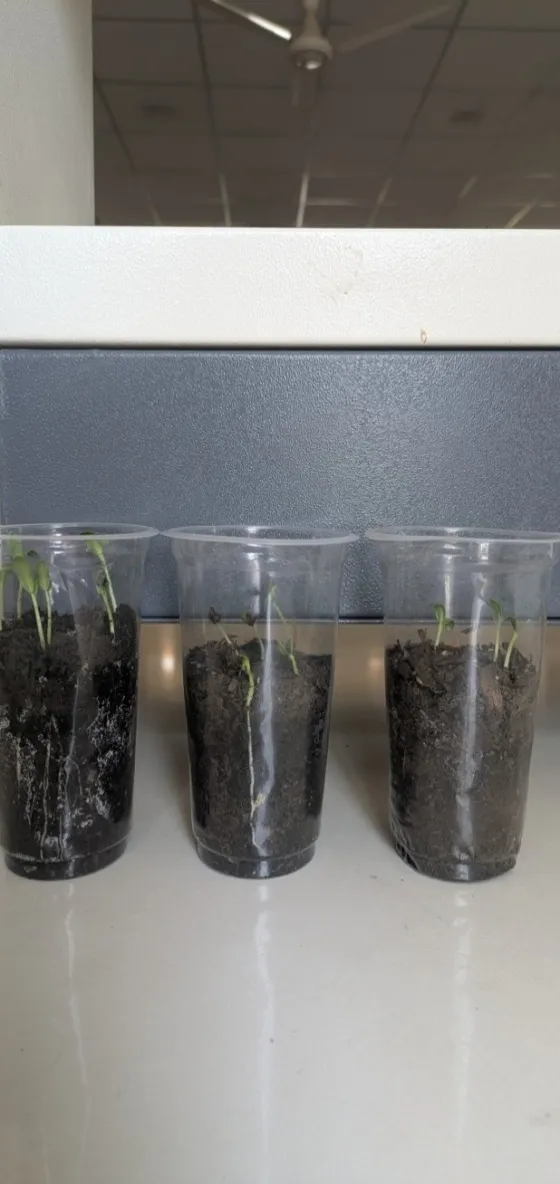
Fig. 2 Pot assay
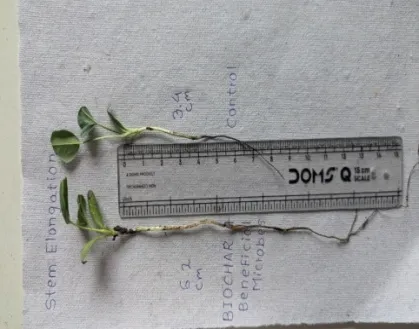
A
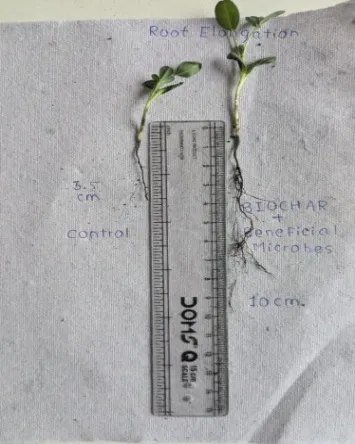
B
Fig. 3 Plant germination with or without biochar
a.Stem elongation b. Root elongation
DISCUSSION
The results of this study show that smart biochar significantly improved plant growth and soil health compared to control and raw biochar treatments. Increased shoot and root length, chlorophyll content, and biomass indicate better nutrient availability and enhanced photosynthesis. The porous structure of smart biochar improved soil aeration, water retention, and nutrient holding capacity, creating a favorable environment for root development and beneficial microbes. Higher microbial biomass and enzyme activity further support improved nutrient cycling in treated soils. Compared to raw biochar, smart biochar performed better due to microbial enrichment, which enhanced phosphorus solubilization and nitrogen availability, reducing the need for chemical fertilizers. Additionally, smart biochar improved soil structure and contributed to carbon sequestration, supporting sustainable agriculture.
CONCLUSION
Smart biochar enriched with beneficial bacteria significantly improved soil microbial population, nutrient availability, and plant growth compared to chemical fertilizer and control treatments. The bacterial consortium showed a synergistic effect, resulting in maximum root and shoot development. Overall, smart biochar proves to be an effective, eco-friendly alternative to chemical fertilizers for sustainable agriculture.
REFERENCES



Madhav Jadhav, Devkirani Pawar, Sahil Naik*, Dipal Raut, Smart Biochar: A Sustainable Alternative To Chemical Fertilizer, Int. J. Sci. R. Tech., 2026, 3 (7), 1034-1042. https://doi.org/10.5281/zenodo.21675680
 10.5281/zenodo.21675680