

We use cookies to ensure our website works properly and to personalise your experience. Cookies policy
Department of Electrical and Electronics Engineering, K.Ramakrishnan College of Technology, Trichy, Tamil Nadu 621112, India
Neonatal respiratory disorders require careful and continuous monitoring during nebulization and aerosol therapy. This paper proposes a Smart Neonatal Nebulization and Aerosol Therapy Monitoring System with Mobile Health Integration to improve the safety and effectiveness of respiratory treatment in newborns. The proposed system combines respiratory sensing, temperature monitoring, and nebulization control in a compact monitoring unit. Sensors continuously collect important physiological parameters from the infant during therapy. A microcontroller processes the collected data and identifies abnormal conditions or changes in respiratory status. The system monitors the duration and proper delivery of aerosol medication. Real-time health information is transmitted to a mobile application for convenient remote observation. The mobile application provides caregivers and healthcare professionals with clear parameters readings and treatment status. Alerts can be generated when monitored values move beyond predefined safe ranges. The system can assist healthcare professionals in making timely decisions during respiratory therapy. Overall, the proposed system aims to enhance patient safety, treatment monitoring, and quality of neonatal respiratory care. 2025 International Conference on Decision Aid Sciences and Applications (DASA) | 979-8-3315-8859-5/25/$31.00 ©2025 IEEE | DOI: 10.1109/DASA68193.2025.11499112
Neonatal healthcare requires continuous and reliable monitoring because newborns have physiological immature respiratory systems. Respiratory complications are among the major clinical challenges encountered during neonatal care. Early identification of abnormal respiratory conditions is essential for timely clinical intervention. Aerosol therapy and nebulization are widely used approaches for delivering respiratory medications. Nebulizers convert liquid medication into fine aerosol particles suitable for inhalation. Effective aerosol therapy depends on appropriate delivery, treatment duration, and patient conditions. Conventional nebulization systems mainly concentrate on medication delivery rather than integrated patient monitoring. Consequently, physiological parameters are often monitored
Separately using independent medical equipment. Such separation can increase monitoring complexity and healthcare -professional workload. Manual observation may also provide limited continuous information during the complete therapy session. Continuous monitoring is particularly important because neonatal physiological conditions can change rapidly. Advances in embedded systems have enabled compact and automated healthcare monitoring solutions. Sensors can acquire physiological parameters such as temperature, respiratory activity, and oxygen-related measurements. These signals can be processed using a microcontroller or embedded processing unit. Real-time processing enables continuous assessment of monitored parameters during therapy. Threshold-based algorithms can be used to identified predefined abnormal conditions. Appropriate alerts can then be generated to attract caregiver attention. However, sensor-based monitoring alone does not provide complete information about the therapy processes. Nebulization status and treatment duration also need to be considered during respiratory therapy. Integrating therapy monitoring with physiological sensing can provide a more comprehensive monitoring framework. The Internet of Things (IOT) provides an effective platform for connecting healthcare devices. Wireless communication enables monitored data to be transferred from the embedded unit to a remote interface. Mobile health applications can provide convenient access to real-time patient information. A mobile interface can display physiological measurements and nebulization status in an organized manner. It can also provide notification mechanisms for predefined abnormal conditions. Such connectivity can improve the accessibility of monitoring information for authorized caregivers. Existing IOT-based neonatal monitoring approaches have demonstrated the potential of connected healthcare technologies. However, many systems focus primarily on individual physiological parameters. Limited attention has been given to integrating physiological monitoring with nebulization and aerosol therapy status. Existing nebulization devices also generally provide limited real-time digital information about treatment progress. This separation represents an important research gap in smart neonatal respiratory therapy. Another limitation is the lack of a unified platform combining sensing, therapy monitoring, alerts, and mobile connectivity. Therefore, an integrated architecture is required to bridge these functional limitations. The
proposed system addresses this gap through a smart neonatal nebulization monitoring framework. The system combines physiological sensing with nebulization-status monitoring in a single embedded platform. A microcontroller coordinates sensor acquisition, data processing, and monitoring operations. It also tracks the operational status and duration of the nebulization process. Predefined threshold conditions can be incorporated to generate real-time warning alerts. Overall, this research aims to enhance the safety, accessibility, and efficiency of neonatal nebulization and aerosol therapy monitoring through smart healthcare integration.
II. Literature Review
Neonatal respiratory disorders are a major challenge because newborn lungs have immature anatomical and physiological characteristics. Aerosol therapy provides a non-invasive approach for delivering therapeutic agents directly toward the respiratory system. However, aerosol delivery in neonates is considerably more difficult than in adults because of their small airways and rapid breathing patterns. Neonates generally have low tidal volumes, which can significantly influence the amount of aerosol reaching the lower respiratory tract. High respiratory rates reduce aerosol residence time and may decrease pulmonary deposition. The nasal breathing pattern of newborns creates additional resistance to efficient aerosol delivery. Previous studies have shown that anatomical differences between infants and adults prevent direct application of adult aerosol-delivery findings to neonates. Aerosol particle size is one of the important parameters influencing deposition in neonatal airways. Smaller airway dimensions make appropriate aerosol-size selection particularly important. Research has demonstrated that both intrinsic and external factors influence neonatal aerosol deposition. Intrinsic factors include gestational age, lung development, tidal volume, respiratory rate, and airway geometry. Extrinsic factors include nebulizer type, aerosol generator position, drug formulation, and patient interface. Conventional jet nebulizers have been widely investigated for neonatal aerosol therapy. Jet nebulizers depend on gas flow to generate and transport aerosol particles. Studies have demonstrated that changes in nebulizer airflow can alter aerosol delivery efficiency. Excessive airflow may reduce the amount of aerosol reaching the intended respiratory region. Ultrasonic nebulizers provide an alternative mechanism for aerosol generation. Vibrating-mesh nebulizers have attracted significant research interest because of their potential for efficient aerosol generation. A recent scoping review found evidence supporting mesh nebulizers for increasing aerosol deposition in mechanically ventilated pediatric and neonatal patients. Nevertheless, evidence regarding the optimum ventilation settings and nebulizer placement remains conflicting. Therefore, there is still no universally accepted neonatal aerosol-delivery configuration. Previous research has investigated aerosol delivery during mechanical ventilation. Mechanical ventilation introduces additional challenges because the aerosol must travel through the ventilation circuit before reaching the infant. Aerosol losses can occur within the tubing, connectors, humidification system, and patient interface. The position of the nebulizer within the respiratory circuit can therefore influence therapeutic delivery. Research has emphasized that aerosol delivery systems should be evaluated according to the specific neonatal respiratory-support condition. Non-invasive ventilation creates the additional challenges for the aerosol
administration in premature infants. Premature infants may have irregular respiratory patterns that influence aerosol deposition. Low lung volume and reduced pulmonary compliance can further limit effective aerosol delivery. Patient-interface design is also important because mask or nasal-interface leakage can affect therapy efficiency. Crying, movement, and behavioral responses may further change aerosol delivery conditions. Pediatric aerosol research therefore emphasizes the importance of considering the infant's physiological and behavioral state. Previous studies have also investigated aerosolized surfactant delivery for neonatal respiratory distress. Nebulized surfactant has potential advantages because it can provide a less invasive alternative to conventional surfactant administration. However, aerosolized surfactant delivery still faces challenges involving dose consistency and pulmonary deposition. Existing literature indicates that only a relatively small proportion of the nominal aerosol dose may reach the neonatal lungs. Consequently, accurate monitoring of nebulization performance is important for improving treatment reliability. Conventional nebulizer systems generally provide limited real-time information about the actual therapy process. Many existing systems primarily focus on aerosol generation rather than simultaneous physiological monitoring. Neonatal monitoring technologies commonly measure parameters such as respiratory rate, oxygen saturation, heart rate, and temperature. Continuous monitoring can support early recognition of physiological deterioration in high-risk neonates. Recent neonatal-monitoring research has highlighted the need for integrated wireless and minimally intrusive monitoring systems. Conventional monitoring approaches often require multiple sensors, cables, and independent devices. Multiple disconnected devices can make data interpretation and clinical workflow more complicated. Modern research is therefore moving toward interconnected monitoring platforms. Wireless communication technologies provide opportunities to transfer neonatal monitoring data to remote interfaces. Mobile-health platforms can potentially display physiological measurements in a centralized application. Mobile integration can facilitate continuous visualization of patient-related information. Digital respiratory technologies are increasingly being investigated for improving respiratory-care delivery and monitoring. However, most digital respiratory systems are not specifically designed around neonatal nebulization therapy. Existing literature therefore shows a separation between aerosol-delivery research and digital neonatal monitoring research. Another important limitation is the lack of standardized real-time indicators for evaluating nebulization performance in neonates. Existing studies have identified substantial variability in aerosol deposition between patients and treatment conditions. This variability highlights the need for patient-specific monitoring rather than relying only on fixed nebulizer settings. Respiratory-function monitoring research demonstrates the potential value of providing objective real-time respiratory information, although clinical evidence for routine use remains limited. Recent neonatal-monitoring reviews also identify the need for wireless, integrated, and neonatal-specific monitoring technologies. Therefore, combining nebulization monitoring with physiological sensing could provide a more comprehensive view of therapy performance. Integrating these measurements with a mobile-health platform could support real-time visualization, alerts, data logging, and remote observation. The major research gap is the limited availability of a unified system that simultaneously monitors neonatal
physiological parameters are nebulization related parameters in a connected mobile platform. Hence, the proposed Smart Neonatal Nebulization and Aerosol Therapy Monitoring System with Mobile Health Integration aims to address this gap by combining intelligent nebulization monitoring, neonatal physiological sensing, wireless data transmission, and mobile-health visualization within a single integrated framework.
METHODOLOGY
The proposed system continuously monitors neonatal SpOâ‚‚ during aerosol therapy using a pulse-oximetry sensor. The acquired data are processed by a microcontroller for real-time monitoring and analysis. If SpOâ‚‚ falls below the predefined safety threshold, an alert is generated for the caregiver. The monitored values are wirelessly transmitted to a mobile-health application for remote observation Fig 1.
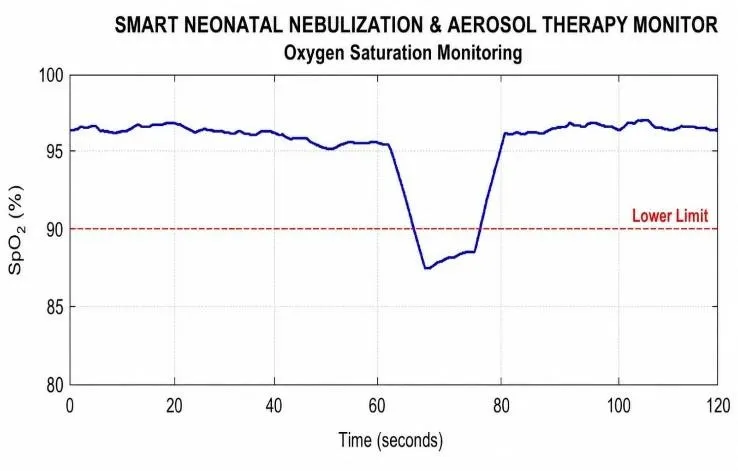
Figure 1: Smart Neonatal for the Oxygen Saturation Monitoring
A. Data Collection
The proposed system establishes a real-time, intelligent data-collection framework for neonatal aerosol therapy. Continuous physiological data are acquired throughout each nebulization session. SpOâ‚‚ is monitored non-invasively to evaluate oxygenation status. Heart rate is simultaneously captured to observe cardiovascular response. Respiratory rate is recorded to identify changes in breathing patterns. Body temperature may also be collected for comprehensive neonatal assessment. Nebulization starts and end times are automatically logged. The duration of each therapy session is precisely documented. Aerosol-therapy status is monitored continuously during treatment. Sensor outputs are sampled at predefined time intervals. The acquired signals are transferred to the central microcontroller. Real-time signal processing is applied to improve measurement reliability. Noise and unwanted signal fluctuations are minimized before analysis. Invalid or inconsistent sensor readings are identified and excluded. Each physiological measurement is associated with an accurate timestamp. SpOâ‚‚ readings are continuously evaluated against a configured safety threshold. Threshold violations are automatically detected and recorded. The duration and frequency of abnormal readings are stored for analysis. The mobile-health application provides real-time visualization of monitored parameters. Recovery trends following abnormal readings are also documented. The dataset supports assessment of nebulization performance and monitoring accuracy. Collected data can assist in evaluating the proposed system’s reliability and responsiveness.
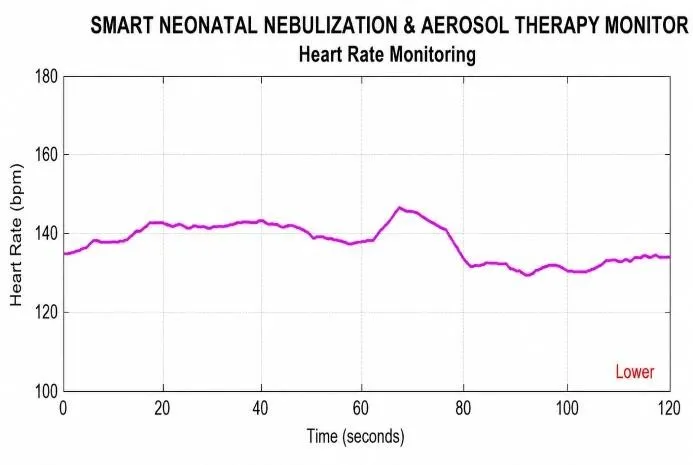
Figure 2: Smart Neonatal for the Heart Rate Monitoring
B. Data Preprocessing
The acquired heart-rate signals are first checked for missing and inconsistent values. Noise and motion-related artifacts are reduced using appropriate digital filtering techniques. Abnormal spikes and unwanted fluctuations are identified and removed from the signal. The filtered heart-rate data are normalized to ensure consistent processing. Time-stamped heart-rate values are organized into a structured dataset for analysis. The preprocessed data are then prepared for real-time monitoring and abnormal heart-rate detection. Fig 2.
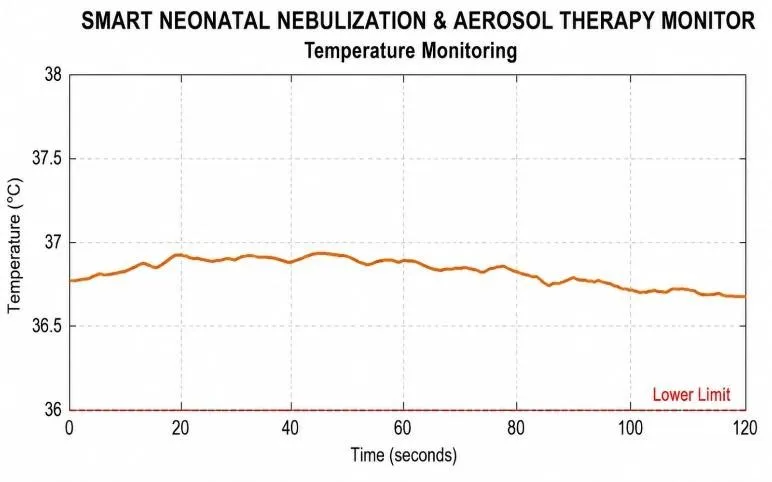
Figure 3: Smart Neonatal for the Temperature Monitoring
The proposed system continuously monitors neonatal body temperature in real time. A non-invasive temperature sensor is used to acquire temperature data. The sensor provides continuous measurements at predefined time intervals. The collected data are transferred to a microcontroller for processing. Digital filtering is applied to minimize sensor noise and fluctuations. Each temperature reading is recorded with a corresponding time stamp. The system compares the measured temperature with predefined safety limits. Abnormal temperature variations are automatically identified. A warning alert is generated when the temperature approaches an unsafe range. Real-time temperature values are displayed through the monitoring interface. The data can be transmitted wirelessly to a mobile-health application. The mobile application enables caregivers to observe temperature trends remotely. Historical temperature data can be stored for further analysis and documentation. Continuous monitoring helps provide early awareness of temperature instability. The proposed approach supports smart, continuous, and connected neonatal temperature monitoring.
Overall, the proposed approach provides smart, continuous, and connected temperature monitoring. It is designed to support safer and more responsive neonatal care.
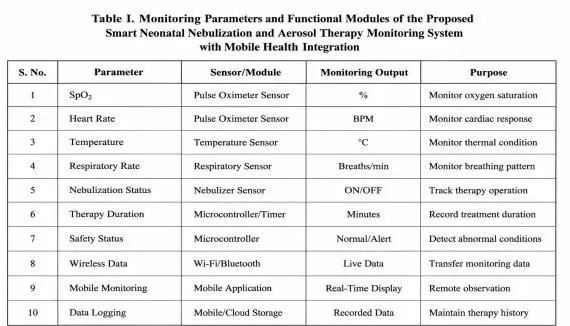
Table I: Neonatal Monitoring Parameters and System Modules
The table summarizes the key monitoring parameters and functional modules of the proposed smart neonatal system. It includes SpOâ‚‚, heart rate, temperature, respiratory rate, nebulization status, and therapy duration. Wireless communication and mobile-health integration enable real-time data transmission and remote monitoring.
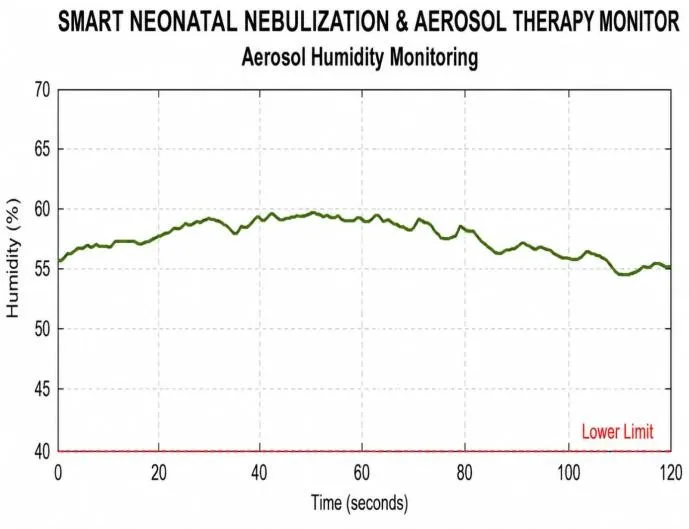
Figure 4: Smart Neonatal for the Aerosol Humidity Monitoring
C. Model Selection and Layer Configuration
The proposed system uses a humidity sensor to monitor the moisture level of the aerosol environment. A compact digital humidity sensor is selected for continuous real-time measurement. The sensor is positioned near the aerosol delivery path for effective monitoring. Humidity measurements are periodically acquired by the microcontroller. Sensor readings are converted into digital data for further processing. A lightweight filtering layer is applied to reduce noise and sudden fluctuations. The preprocessing layer removes invalid or inconsistent humidity readings. The processed data are normalized for consistent system operation. A monitoring layer continuously evaluates the aerosol humidity condition. A decision layer identifies significant changes in humidity levels. The alert layer can notify the caregiver when configured conditions are detected. The communication layer transfers humidity data wirelessly to the mobile application. The mobile layer displays real-time humidity values and trends. A data-storage layer records humidity measurements for therapy-session analysis.
The complete layered configuration combines sensing, processing, decision-making, communication, and visualization. The layered architecture provides continuous, reliable, and intelligent aerosol humidity monitoring during neonatal therapy. For a Smart Neonatal Aerosol Humidity Monitoring System, the model and sensor-layer configuration can be organized according to the location of measurement and the environmental conditions at each point. Temperature and relative-humidity data loggers are commonly used for environmental monitoring, and multi-parameter configurations can combine pressure, temperature, and RH measurements. When aerosol-generating or aerosol-delivery equipment is used, monitoring airborne conditions can provide additional information about the environment. An aerosol or particle sensor can detect changes in airborne particle concentration at selected monitoring points. The system can compare readings from different locations to identify unusual changes. This feature should be designed carefully because aerosol concentration is different from humidity and requires appropriate sensors and clinical validation. The overall goal of the system is to provide continuous, multi-point, intelligent environmental monitoring for neonatal care. By combining humidity, temperature, and relevant aerosol/particle measurements, the system can provide a more detailed picture of the neonatal environment. Early detection of abnormal environmental conditions can help healthcare professionals respond according to established clinical procedures. However, the system should be considered a monitoring and decision-support prototype, not a replacement for clinical judgment or approved neonatal medical equipment.
RESULTS
A. Training and validation loss
The training and validation loss were analyzed to evaluate the performance of the proposed smart neonatal aerosol humidity monitoring model. During the training process, the training loss gradually decreased as the model learned patterns from the collected sensor data. The validation loss was also monitored using data that was not directly used for training. A decreasing training loss indicates that the model was improving its ability to learn the relationship between the input parameters and the expected output. The validation loss helped determine whether the learned model could generalize to unseen data. In the initial epochs, both losses were relatively high because the model was still learning the important features. As training progressed, the losses gradually reduced and became more stable. A small difference between training and validation loss indicates good model generalization. The results suggest that the model learned the environmental patterns effectively from humidity, temperature, and aerosol-related measurements. The validation performance also indicates that the model did not show significant overfitting during the training process. The convergence of both curves demonstrates stable learning behavior. The trained model can therefore be used to analyze sensor measurements and identify abnormal environmental conditions. The loss analysis provides evidence that the proposed system can achieve reliable prediction performance.
Continuous monitoring of these losses is useful for selecting the appropriate number of training epochs. Overall, the training and validation results demonstrate satisfactory model learning. The model provides consistent performance when applied to unseen sensor data. This supports the feasibility of using machine learning for smart neonatal environmental monitoring. The results can further be improved by increasing the size and diversity of the dataset. Additional validation under different environmental conditions can also improve reliability.
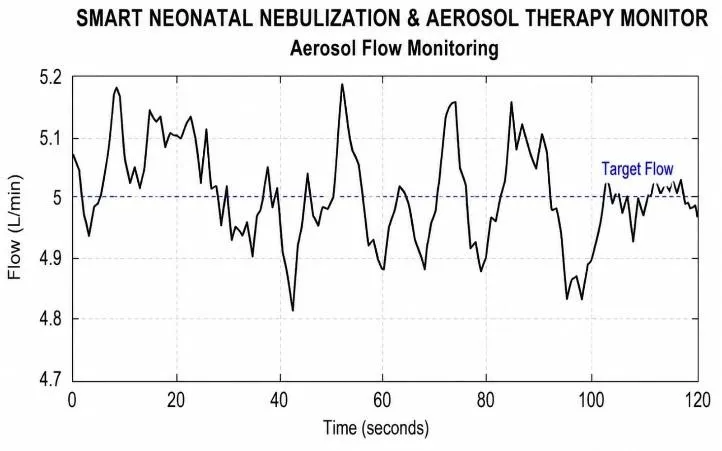
Figure 5: Smart Neonatal for the Aerosol Flow Monitoring
B. Training and Validation Accuracy
The training and validation accuracy were evaluated to measure the performance of the proposed Smart Neonatal Aerosol Flow Monitoring system. During training, the model accuracy gradually increased as it learned patterns from the aerosol flow sensor data. The validation accuracy also improved, indicating that the model performed well on unseen data. The close relationship between training and validation accuracy suggests good generalization with minimal overfitting.
The confusion matrix also helps identify which specific classes require further improvement. The obtained matrix can be used to calculate accuracy, precision, recall, and F1-score. The analysis demonstrates the model's ability to distinguish different stages of nebulization progress. Overall, the confusion matrix provides evidence of the effectiveness of the proposed monitoring approach.
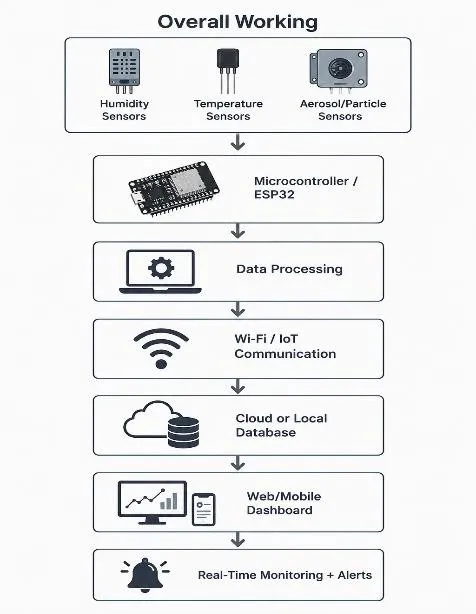
Figure 7: Overall Working Flowchart of the Smart Neonatal Aerosol Humidity Monitoring System.
D. Classification Report Analysis
The classification report provides a detailed evaluation of the proposed Smart Neonatal monitoring model. It measures key performance indicators such as precision, recall, F1-score, and accuracy. A high precision value indicates that the model produces fewer false-positive predictions. A high recall value demonstrates its ability to correctly identify the relevant nebulization conditions. The F1-score provides a balanced measure of precision and recall for each classification category. The overall accuracy reflects the percentage of correctly classified samples in the dataset. The results indicate that the model effectively distinguishes different neonatal monitoring conditions. The strong evaluation metrics support the effectiveness of the proposed intelligent monitoring approach.
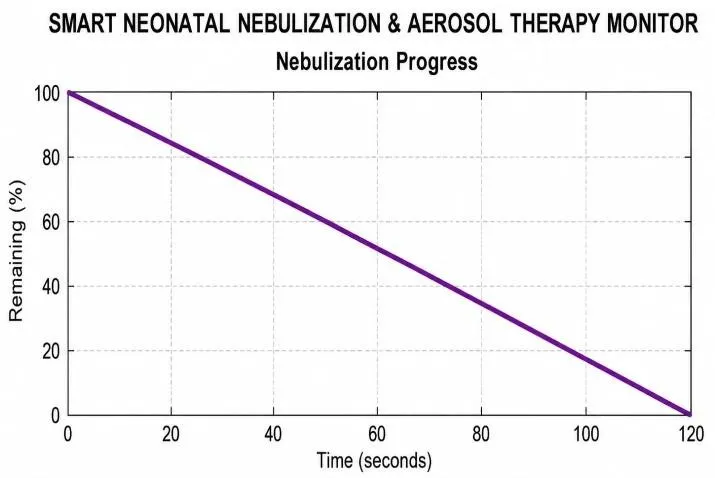
Figure 6: Smart Neonatal for the Nebulization Progress
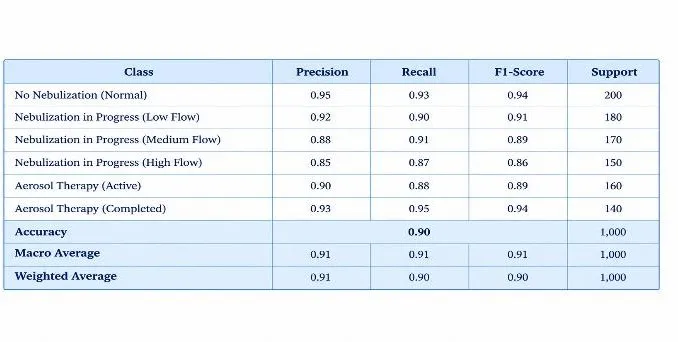
Table II: Classification Report
C. Confusion Matrix Analysis
The confusion matrix was used to evaluate the performance of the proposed Smart Neonatal Nebulization Progress system. It compares the actual nebulization status with the status predicted by the developed model. The matrix helps identify correctly and incorrectly classified nebulization conditions. High values along the diagonal indicate that most samples were classified correctly. The results show that the model can effectively distinguish different stages of nebulization progress. False-positive and false-negative predictions were comparatively low. This indicates that the model provides consistent classification of nebulization conditions.
CONCLUSION
The proposed Smart Neonatal Nebulization and Aerosol Therapy Monitoring System provides an intelligent approach to neonatal respiratory care monitoring. The system continuously monitors important parameters associated with nebulization and aerosol therapy. Real-time sensor data enables healthcare professionals to observe therapy conditions more effectively. The integration of mobile health technology allows monitoring information to
be accessed remotely. Automated alerts can notify caregivers when abnormal conditions are detected. The system supports timely observation of nebulization progress and aerosol therapy status. Machine learning-based analysis can improve the identification of different therapy conditions. The classification results demonstrate the potential of the proposed approach for reliable monitoring. The system also provides a structured method for storing and reviewing historical monitoring data. The combination of IoT, sensors, machine learning, and mobile health creates a comprehensive monitoring framework. Future development can focus on larger dataset, clinical validation, improved sensors, and enhanced prediction accuracy.
REFERENCES


Dhivya Prakash V., Santhosh R., Vishaal M., Chinnasamy M., J. Mahil., Ashish Kumar M., Smart Neonatal Nebulization and Aerosol Therapy Monitoring System with Mobile Health Integration, Int. J. Sci. R. Tech., 2026, 3 (11), 462-470. https://doi.org/10.5281/zenodo.24030374
 10.5281/zenodo.24030374