

We use cookies to ensure our website works properly and to personalise your experience. Cookies policy
Department of Chemistry, Saraswati Mahavidyalaya Subhasnagar Ambikapur, & Affiliated to Sant Gahira Guru Vishwavidyalaya Sarguja, Ambikapur (C.G.) India 497001
Agriculture is the cornerstone of the Indian economy, yet excessive and imbalanced application of high-yielding crop varieties, chemical fertilizers and pesticides has severely degraded soil health, leading to stagnation and decline in crop yields. Soil is a dynamic and complex natural body composed of minerals, organic matter, soil water, soil air and a vast diversity of living organisms that collectively support plant growth and maintain ecosystem functions. The productivity and fertility of soil are determined by three major groups of properties: physical properties including soil texture, structure, bulk density, porosity, water holding capacity and temperature; chemical properties such as soil pH, electrical conductivity (EC), cation exchange capacity (CEC), organic carbon content and availability of essential macro and micronutrients like as N, P, K, Ca, Mg, S, Fe, Zn, Mn, Cu and biological properties comprising soil microflora such as bacteria, fungi, actinomycetes and macrofauna (earthworms) that play a pivotal role in decomposition of organic matter, nutrient cycling and improvement of soil structure. Soil testing is considered the most reliable and scientific method to evaluate nutrient status, identify deficiencies, toxicities and heavy metal contamination. Comprehensive analysis of these physicochemical and biological parameters facilitates site-specific and balanced fertilizer recommendations, reduces input costs, enhances nutrient use efficiency and prevents environmental pollution. A healthy soil is characterized by good tilth, adequate depth, proper drainage, balanced nutrient supply, optimal pH, high organic matter and robust biological activity, making it resilient to erosion, salinization and degradation. The present review highlights the importance of integrated soil analysis for sustainable soil management, enhanced crop productivity and ensuring food security. Strengthening soil testing laboratories and effective implementation of farmer-oriented schemes like the Soil Health Card Scheme can promote awareness among farmers for judicious use of fertilizers and ensure long-term agricultural sustainability in India.
Agriculture forms the backbone of the Indian economy. Advancements in agricultural technology, including high-yielding varieties, fertilizers, and pesticides, have made the nation self-sufficient in food grain production. However, indiscriminate use of agrochemicals has adversely affected the environment and resulted in stagnation or decline in crop productivity. Soil is a natural body composed of mineral and organic constituents, differentiated into horizons that vary in morphology, physical, chemical, and biological characteristics. It is a vital abiotic component that provides habitat for flora and fauna, retains water, and serves as a reservoir of nutrients for plants. Soil formation is governed by climatic factors such as water, light, temperature, and biotic factors including microorganisms, plants, and animals. The nutrient content of soil is influenced by various edaphic and environmental factors [1-2]. Soil is a complex mixture of inorganic and organic materials, living organisms, water, and air, whose proportions depend on soil type and environmental conditions. Physically, it comprises mineral particles of varying sizes. The key physico-chemical parameters used for soil analysis include bulk density, water holding capacity (WHC), pH, electrical conductivity (EC), organic carbon, calcium carbonate, nitrogen, phosphorus, potassium, sodium, calcium, magnesium, iron, sulphur, manganese, zinc, and copper [3-4][. Plant growth is influenced by external factors such as air, temperature, light, mechanical support, nutrients, and water. Essential elements required for completing the life cycle of plants include carbon, hydrogen, oxygen, nitrogen, phosphorus, and potassium (Gupta et al., 2000). Soil fertility is primarily determined by the concentration of N, P, K, and organic matter.[5]Analysis of physico-chemical parameters is crucial for agriculturists and soil chemists in crop management and soil health assessment. Soil testing is the most reliable method to evaluate the available nutrient status and to formulate specific fertilizer recommendations. The analytical data provides information regarding the nutrient-supplying capacity of soil [6]. This information assists farmers in optimizing fertilizer application to enhance productivity. Since expansion of cultivable land is limited, increased food production depends on improving yield per unit area, which is directly linked to soil health.[6-7]. Soil quality is governed by nutrient cycling, filtering and buffering capacity, structural support, biodiversity, production potential, and water and solute transport. Soil health refers to its ability to sustain biological productivity, maintain environmental quality, and support plant and animal health. [8]. The present review aims to summarize the role of physicochemical properties, biological indicators and nutrient availability in soil health assessment and to highlight sustainable management practices for improving soil fertility in India.
MATERIALS AND METHODS
2.1 Selection of Sampling Sites and Collection of Samples
The suitability of soil for agricultural use is governed by its physical and chemical characteristics. To obtain reliable and representative data on soil quality, the methodology adopted included systematic selection of sampling sites, collection of soil samples, and standardized analytical procedures.
2.2 Sampling Procedure
Surface soils were collected from a depth of 0-15 cm. Prior to sampling, grasses, litter, and other plant residues were removed from the soil surface. Samples were collected using standard soil sampling tools. At each sampling site, a triangular block was marked and composite soil samples were collected in clean polythene bags, sealed, labeled, and transported to the laboratory for analysis. In the laboratory, the samples were air-dried, homogenized, and passed through a 2 mm sieve to ensure uniformity. The processed samples were stored in clean, sealed polythene bags until further analysis.
.3.3 Soil Quality Parameters and Methodology
For physico-chemical analysis, soil suspensions were prepared in distilled water at a ratio of 1:4 (w/v) and allowed to settle. The study focused on soil quality parameters that influence water movement, retention, and nutrient storage and supply. Selected physical and chemical parameters were analyzed as per standard methods [9] (Table 1). Physical Parameters: Temperature, Texture, Bulk Density, Moisture Content. Chemical Parameters: pH, Organic Matter, Available Nitrogen, Available Phosphorus, Potassium, Electrical Conductivity, Chloride, and Fluoride.
Table 1: Soil Properties Under Study with Their Method of Measurement
| S.N. | Soil property | Analysis Method | Unit |
|---|---|---|---|
| 1. | Bulk density | Core sampling method | Gm/cm3 |
| 2. | Texture | Robinson pipette method | - |
| 3. | Temperature | Soil thermometer | - |
| 4 | Moisture Content | Oven drying method | In percentage |
| 5. | PH | PH meter | - |
| 6. | Organic matter | Titrametric method | In percentage |
| 7. | Available Nitrogen | Micro Kjelhdal Method | Kg/ha |
| 8. | Available Phosphorus | Spectrophotometric method | Kg/ha |
| 9. | Available Potassium | Flame photometer method | Kg/ha |
| 10. | EC | Digital portable water analyzer Kit | m mhos |
| 11. | Chloride | Volumetric titration | mg/100gm |
| 12. | Fluoride | Selective Ion meter | ppm |
2.3 Analysis of Soil Sample Parameters
Soil is a heterogeneous mixture of minerals, organic matter, water, and air, whose properties determine its fertility and agricultural potential. Its physical properties such as texture, structure, density, and porosity influence water movement and root growth, while chemical properties including pH, cation exchange capacity (CEC), and nutrient content govern nutrient availability [10].
(i) Physical Properties of Soil
Physical properties define the mechanical behaviour and structural organization of soil:
a) Soil Texture: Texture refers to the relative proportion of sand, silt, and clay particles, which determines water-holding capacity and drainage. The textural class is determined using the textural triangle (Fig. 1). For example, a soil containing 15% clay, 20% silt, and 65% sand is classified as sandy loam, while soil with equal proportions of sand, silt, and clay is clay loam. Loamy textures are generally considered most suitable for plant growth (fig 1) [11].
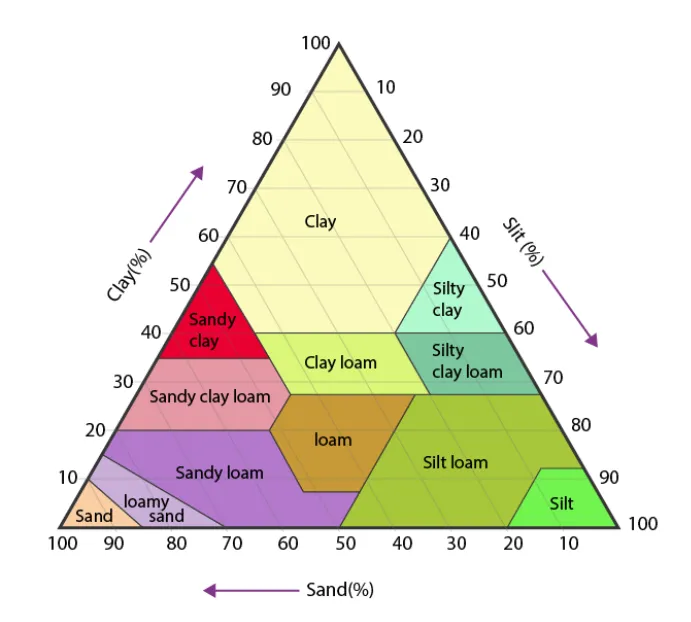
Figure 1: Soil Textural Triangle
b) Soil Structure: Structure denotes the arrangement of primary particles into stable aggregates or peds. Good aggregation enhances resistance to erosion, maintains porosity, regulates water movement, and improves fertility and carbon sequestration [12].
c) Bulk Density: Defined as the mass of dry soil per unit total volume (including solids and pores), bulk density reflects soil porosity and compaction. Loose, porous soils exhibit lower bulk density than compacted soils.
d) Soil Porosity: Porosity represents the volume of voids occupied by air and water. It depends on texture and structure and is inversely related to bulk density. Adequate porosity is essential for aeration, drainage, and root penetration [13].
e) Soil Colour: Soil colour indicates mineralogical composition and organic matter status. Soils rich in iron are reddish-brown to yellowish-brown, while those high in organic matter are dark brown to black. Colour also reflects drainage and aeration; red/yellow indicates well-drained conditions, whereas grey indicates poor drainage.
f) Soil Moisture: Moisture content is a critical property influencing soil consistence, which is described under three conditions [14]:
(i) Wet soil - non-sticky to very sticky and non-plastic to very plastic;
(ii) Moist soil - loose to extremely firm; and
(iii) Dry soil - loose to extremely hard.
g) Soil Temperature: Soil temperature ranges from -20 to 60°C and governs chemical, physical, and biological processes affecting vegetation. It influences microbial activity, nutrient uptake, seed germination, and organic matter decomposition. The optimum temperature for nitrification, root growth, and nutrient uptake is 30-35°C [15].
h) Soil Permeability: Permeability measures the ease with which air and water move through the soil. Good permeability ensures consistent water supply, proper drainage, deep root growth, and better aeration, all essential for healthy plant development.
(ii) Chemical Properties of Soil
Chemical properties reflect the interaction between soil solution and exchange sites (clay and organic matter), and govern plant nutrition, soil health, and contaminant availability [15].
a) Soil pH: Soil pH is the most fundamental parameter of soil chemistry and controls nutrient reactions. It measures the concentration of H⺠and OHâ» ions in soil solution. The pH scale ranges from 0-14; pH 7 is neutral, <7 acidic and >7 alkaline. pH influences nutrient solubility and microbial activity, expressed as pH = -log [Hâº] [16-17].
b) Cation Exchange Capacity (CEC): CEC is the capacity of soil to retain and exchange cations such as Ca²âº, Mg²âº, Kâº, Naâº, Hâº, NHâ‚„âº, and Al³âº on clay and organic matter surfaces. It is expressed as cmol/kg, equivalent to meq/100g, and indicates the nutrient-holding ability of soil. [18-19].
c) Organic Matter: Organic matter consists of decomposed plant and animal residues (humus). It acts as a nutrient reservoir, releasing macro- and micronutrients like N, P, Fe, Cu, and Zn over time, and improves soil structure and water retention [20].
d) Electrical Conductivity (EC): EC measures total soluble salt concentration or salinity. Common salts include NaCl, bicarbonates, sulphates, and carbonates of Ca, K, and Mg. High EC indicates high salinity, expressed as µmhos/cm, mmhos/cm or dS/m.
e) Salinity : High soluble salt concentration adversely affects plant growth [21].
f) Sodium Adsorption Ratio (SAR): SAR expresses the relative proportion of sodium ion (Naâº) to calcium (Ca²âº) and magnesium (Mg²âº) ions in soil solution. It is calculated from the extractable concentrations of Naâº, Ca²âº, and Mg²âº (in meq/L) and indicates the sodicity hazard of soil [22].
The formula for SAR is:
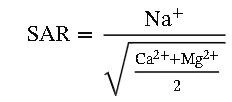
Where concentrations of Naâº, Ca²âº, and Mg²âº are expressed in milliequivalents per litre (meq/L).
SAR < 3.0: Low or no sodicity problem. SAR 3.0 - 9.0: Slight to moderate hazard; watch for permeability issues on sensitive crops. SAR > 9.0 to 15.0 : Severe sodicity hazard; causes clay dispersion, crusting, and reduced water infiltration.
Soils with an SAR of 13 or higher are typically classified as sodicity.
g) Exchangeable Sodium Percentage (ESP): Sodium status of soil is evaluated on the basis of ESP, which represents the percentage of cation exchange sites occupied by Na⺠[23].
It is calculated as: ESP = (Exchangeable Na⺠/ CEC) × 100
Where exchangeable Na⺠and CEC are expressed in meq/100g of soil.
iii. Nutrient Content: Refers to essential macro- and micronutrients available to plants [24].
(a) Macronutrients: Primary macronutrients (N, P, K) are required in large amounts, while secondary macronutrients (S, Ca, Mg) are needed in moderate amounts.
(i) Nitrogen (N): The most critical growth-limiting element, comprising ∼78% of atmospheric nitrogen. It is fixed by blue-green algae and bacteria into ammonia and other plant-available forms.
(ii) Phosphorus (P): An essential component of every cell, involved in energy storage and nucleic acid synthesis, often limiting plant growth.
(iii) Potassium (K): Vital for photosynthesis, sugar translocation, lignin and cellulose formation, and regulation of physiological processes.[25-26].
(b) Micronutrients: Includes Fe, Mn, Cu, B, Zn, Ni, Cl, and Mo, required in small quantities. Their availability is strongly pH-dependent; at high pH, Mn and Zn become unavailable, while at low pH, B and Zn deficiencies are common [27].
(iv) Biological Properties of Soil
Soil hosts an enormous diversity of living organisms forming the soil food web, from microscopic bacteria, fungi, algae and protozoa to nematodes, micro-arthropods, earthworms and insects. While a few cause plant diseases, most are beneficial. They improve soil structure, control erosion, regulate water availability, suppress pests, and drive decomposition and nutrient cycling. Hence, maintaining soil biodiversity is essential for healthy soil. Soil organisms are divided into flora and fauna. Macroflora includes plant roots, while microflora includes bacteria, fungi and actinomycetes. Macrofauna includes earthworms, ants and moles, and microfauna includes protozoa and nematodes. They help in nutrient fixation, organic matter decomposition, aggregate formation and natural bio-control. Microbial activity and earthworm movement create macro-aggregates (>250 µm), which break into micro-aggregates (< 250 µm) when biological activity decreases or due to tillage [28 -30].
a) Bacteria: Bacteria are the most abundant soil organisms, with more than a million cells per gram of soil. They play a key role in making nutrients available to plants through decomposition and nutrient transformations
b) Fungi: Soil fungi exhibit diverse forms, from filamentous colonies to unicellular yeasts. They decompose organic matter, release nutrients from minerals, and colonize large organic residues. Arbuscular mycorrhizal fungi (AMF) form symbiotic associations with plant roots, enhancing phosphorus uptake, which is otherwise immobile in soil.
c) Nematodes: Most nematodes are non-pathogenic and feed on decaying litter, bacteria, fungi, algae, and protozoa. As predators, they accelerate nutrient cycling, while few species are harmful to plants.
d) Arthropods: Visible soil organisms such as sowbugs, millipedes, centipedes, slugs, snails, and springtails act as primary decomposers, shredding and burying plant and animal residues and facilitating further decomposition by microorganisms.
e) Earthworms: Earthworm burrows improve water infiltration and aeration. Soils bioturbated by earthworms can absorb water 4-10 times faster than soils without them, thereby reducing runoff, enhancing groundwater recharge, and conserving soil moisture for dry periods.
3. IMPORTANT FACTORS DETERMINING BIOLOGICAL BEHAVIOUR OF SOIL
The biological activity of soil can be assessed by the following key indicators:
(i) Respiration Rate: Measurement of COâ‚‚ evolution under standard laboratory or field conditions, indicating microbial activity.
(ii) Potential N/C Mineralization: Increase in mineral nitrogen or carbon content under controlled conditions, reflecting nutrient cycling capacity.
(iii) Earthworm Density: Population density of earthworms, indicating soil health and structural condition.
(iv) Bacterial Biomass: Total bacterial biomass per unit mass of soil.
(v) Bacterial Diversity: Assessed through functional groups or genetic diversity profiling.
(vi) Presence of Pathogens: Detected using pathological techniques ranging from culture methods to DNA profiling.
These physical, chemical, and biological parameters collectively determine the overall quality of soil and its ability to sustain plant growth.
4. CHARACTERISTICS OF A HEALTHY SOIL
Healthy soil functions as the fundamental biological system that sustains plant productivity and maintains environmental quality [31-33].
The key characteristics of a healthy soil are as follows:
1. Good Soil Tilth: Soil tilth denotes the overall physical condition of soil in relation to its suitability for crop production. Soil with optimal tilth is characterized as friable, well-structured, rich in organic matter, dark in colour, and devoid of large compact clods.
2. Adequate Soil Depth: Adequate profile depth facilitates extensive root development and efficient acquisition of water and nutrients. Shallow soils, often a consequence of erosion or compaction, exhibit increased vulnerability to climatic extremes and biotic stresses.
3. Efficient Water Retention and Drainage: Healthy soil exhibits a well-distributed pore size distribution. Macropores facilitate rapid water infiltration during intense rainfall and ensure adequate aeration through gravitational drainage, while meso- and micropores retain plant-available water for utilization during dry periods.
4. Balanced Nutrient Availability: A sufficient and balanced supply of essential nutrients is imperative for optimal plant growth and sustained nutrient cycling. However, excessive nutrient concentrations may induce phytotoxicity, groundwater contamination via leaching, surface runoff, and greenhouse gas emissions.
5. Low Incidence of Pathogens and Pests: The population of soil-borne pathogens and insect pests remains suppressed in healthy soils, primarily through competitive exclusion, parasitism, and antagonistic interactions mediated by beneficial microbiota. Additionally, plants grown in healthy soils exhibit enhanced resistance to pest and disease incidence.
6. Abundant Beneficial Biota: A diverse and abundant population of beneficial soil organisms is essential for organic matter decomposition, nutrient mineralization, soil structural maintenance, and biological control of pests.
7. Minimal Weed Pressure: Healthy soils are associated with low weed infestation. Weeds compete with crops for essential resources such as water, nutrients, and solar radiation, impede agronomic operations, and serve as alternate hosts for pests and pathogens.
8. Absence of Phytotoxic Chemicals: Healthy soils are either free from harmful chemical contaminants or possess the capacity to detoxify and immobilize such substances through organic matter stabilization and microbial degradation, thereby limiting their bioavailability to plants.
9. Resistance to Degradation: Well-aggregated soils with high biological activity demonstrate enhanced resistance to degradative processes, including wind and water erosion, compaction, drought, and other environmental stresses.
10. Resilience to Adverse Conditions: Healthy soils exhibit greater resilience and recovery capacity following unfavourable events, such as field operations under wet conditions or disruptions in crop rotations due to land constraints.
5. SOIL DEGRADATION
Although soil degradation is not classified under soil properties, its discussion is essential to comprehend soil health. Soil degradation encompasses all processes that adversely affect soil fertility and productivity, including erosion, nutrient depletion, waterlogging, desertification, acidification, organic matter loss, salinization, and accumulation of toxicants [34]. In India, approximately 45% of the total geographical area is affected by various forms of soil degradation, with more than 65% attributed to water and wind erosion. Water erosion, affecting about 148 Mha, results in topsoil loss and terrain deformation, while wind erosion, dominant in western regions and covering 13.5 Mha, has contributed to desert expansion. Sheet and rill erosion can be mitigated through agronomic practices; however, unchecked erosion leads to ravine and badland formation. Conventional clean cultivation not only increases susceptibility to erosion but also depletes soil organic matter. [35- 36].
Water logging and salinization exhibit a cause-and-effect relationship, where excess irrigation, proximity to canals, or low-lying topography promotes salt accumulation. Indiscriminate fertilizer application further aggravates salinity and acidity. Toxicant accumulation has emerged as a major concern due to agricultural commercialization and rapid urbanization. Fertilizer and agrochemical use has led to pollution of soil, surface water, and groundwater. For instance, atrazine has revolutionized weed management in maize and millets but persists as a long-residual herbicide. Application of untreated sewage, though enriching soil with organic carbon, N, P, and K, leads to accumulation of micronutrients (Zn, Cu, Fe, Mn) and potentially toxic elements such as cadmium. This risk is more pronounced in leafy vegetables like spinach compared to cereal crops, due to higher Cd accumulation. Prolonged sewage irrigation results in loss of soil aeration, a condition termed soil sickness. Industrial effluents from distilleries and paper mills are characterized by low pH, high biological oxygen demand (BOD), and significant N, P, K, Ca, and S content, and their application tends to increase soil pH, organic carbon, and nutrient status. Conversely, tannery and textile effluents with high BOD and elevated sodium content cause structural deterioration of soil [37-39].
RESULTS AND DISCUSSION
A review of published studies shows that soil texture is the most consistent physical indicator. Loamy soils, having a balanced mixture of sand, silt and clay, maintained ideal bulk density (1.1-1.4 g/cm³), higher porosity (>50%) and improved water holding capacity. On the other hand, compacted and sandy soils exhibited poor nutrient retention and reduced productivity. Soil structure, sustained by organic matter and biological activity, enhanced water infiltration, aeration and resistance to erosion.
Soil pH was identified as the key factor controlling nutrient availability. Maximum availability of N, P, K, Ca and Mg was recorded in soils with pH 6.0-7.5. Acidic soils (<5.5) showed aluminium toxicity and phosphorus fixation, whereas alkaline soils (>8.5) suffered from deficiency of Fe, Zn, Mn and B. EC values above 4 dS/m indicated salinity stress and decline in crop growth. Organic carbon below 0.5% was linked with low cation exchange capacity, weak structure and declining fertility. Balanced NPK was found essential for sustained yield, while micronutrient deficiency was more common in intensively cultivated soils.
Biological indicators were found to be the most sensitive to soil degradation. Soils enriched with organic matter showed greater microbial biomass, fungal diversity, earthworm population and enzyme activity, which accelerated decomposition and nutrient mineralization. Long-term application of chemical fertilizers and pesticides considerably reduced microbial diversity and earthworm density.
The integrated analysis confirms that soil health cannot be judged by a single indicator. Adoption of the Soil Health Card Scheme, site-specific nutrient management, organic manures, bio-fertilizers and conservation tillage can rehabilitate degraded soils and promote sustainable agriculture in India.
7. IMPLICATION OF SOIL ANALYSIS
The evaluation of physicochemical parameters of soil is vital for agricultural chemists, agronomists, and soil management. Soil testing remains the only reliable method to assess available nutrient status and to formulate site-specific fertilizer recommendations. The anticipated outcomes of the present soil analysis are:
(i) Comprehensive analysis of physico-chemical parameters will provide insights into soil characteristics, fertility status, and inherent limitations.
(ii) Soil analysis will enable detection of nutrient imbalances, facilitating precise fertilizer application and improved nutrient management.
(iii) Evaluation of heavy metals and other pollutants will aid in devising strategies for remediation and ensuring environmental sustainability.
(iv) Findings will contribute to the formulation of effective and sustainable land management practices for maintaining soil health and productivity.
(v) Optimization of soil conditions and nutrient management is expected to improve crop growth, yield, and quality.
(vi) The research outcomes will provide valuable information to policymakers, farmers, and stakeholders for informed decision-making regarding soil conservation and sustainable agriculture.
8. RESEARCH GAPS AND FUTURE SCOPE
Research Gaps: Current soil research lacks farm-specific data, routinely ignores biological indicators, and has limited documentation on heavy metals and microplastics. Fertility models often exclude climate factors, and digital soil maps lack adequate field validation.
Future Opportunities:
(i) Affordable, ML-integrated field sensors for instant N, P, K, pH, and moisture analysis to reduce lab dependency.
(ii) A unified index combining physical, chemical, and biological parameters with yield data into a simple farmer-friendly score.
(iii) Use of nano-fertilizers and microbial consortia for pollutant detoxification and efficient nutrient delivery.
(iv) Long-term trials on conservation tillage, biochar, and cover cropping across agro-climatic zones for carbon sequestration.
(v) Linking Soil Health Card data with subsidies, insurance, and credit via DBT to promote test-based fertilizer use.
(vi) Rapid field kits for microbial and enzyme activity to enable routine biological monitoring.
Bridging these gaps through collaboration among scientists, data experts, and policymakers is vital to achieve SDG 2 and SDG 15, with a focus on scalable, farmer-centric technologies.
CONCLUSION
Soil health is fundamental for nutrient supply, root growth, beneficial biota, and sustainable crop production. Its significance must extend beyond academia to policymaking. Recent Government of India initiatives such as nutrient-based subsidy and the Soil Health Card Scheme are expected to positively impact soil health, though field-level farmer awareness through extension services remains crucial. Improved soil health will ensure food, nutritional, and environmental security for future generations.
Maintaining soil quality is central to the sustainability of soil ecosystems. However, establishing a universal standard for soil quality is challenging, as soil functions and ecosystem services vary spatially and temporally, depending on interactions among physical, chemical, and biological properties. Consequently, selection of a uniform set of indicators is difficult and may differ across soil systems. Review of literature indicates that numerous metrics can assess soil quality, with most values falling within or outside permissible limits.
CONFLICT OF INTEREST:
The author declares no conflict of interest.
REFERENCES

Suresh Kumar Yadav, Rohit Kumar Bargah, Mamta Divya, Soil Health Assessment Through Analysis of Physicochemical Properties, Biological Indicators and Nutrient Availability for Sustainable Agriculture, Int. J. Sci. R. Tech., 2026, 3 (11), 805-813. https://doi.org/10.5281/zenodo.24279400
 10.5281/zenodo.24279400