

We use cookies to ensure our website works properly and to personalise your experience. Cookies policy
1Department of Agada Tantra, SDM College of Ayurveda and Hospital
2Department of Manasa Roga, SDM College of Ayurveda and Hospital
Skin (Tvak) is considered the largest organ of human body and acts as a barrier from external environment. It reflects the internal health and is susceptible to various disorders, which are classified in Ayurveda as Kushta. Dadru is one among the Kshudra Kushta, which is mainly caused by Kapha–Pitta vitiation and presents with circular reddish lesions and severe itching. The present study shows a case report of a 67-year-old female, who was admitted with multiple circular reddish lesions over the axillae, groins, inner thighs, waist, and buttocks, associated with burning sensation and severe itching for six months. She was diagnosed with Dadru based on clinical features. Ayurvedic management involving Shamana & Shodhana chikitsa, incorporating Krimighna line of management and appropriate external applications, along with dietary measures were administered. Significant improvement was observed in itching, redness, and size of the lesions. Hence, this case highlights the effectiveness of Ayurvedic treatment in Dadru.
Skin (Tvak) is an essential organ serving as a protective barrier and thereby reflecting the internal health. Disturbance in Tridosha with involvement of Rakta, Mamsa, and Lasika leads to Kushta disorders¹. Dadru is a Kshudra Kushta, resulting from predominant Kapha–Pitta vitiation and is characterized by circular reddish lesions and itching². Factors such as improper diet, sweating, and poor hygiene can worsen the condition.3 Ayurvedic management emphasizing Nidana Parivarjana, Shodhana, Shamana oushadhi, and external applications aims at restoring doshic balance.
CASE REPORT
A 67-year-old female reported to the Vishachikitsa OPD at SDM College of Ayurveda & Hospital, Hassan, presenting with multiple circular reddish lesions along with severe itching and burning sensation in the axillae, groins, inner thighs, waist and buttocks, persisting for the last six months. The patient does not have any history of chronic illness.
General Examination
Local Examination
Ashta sthana pareeksha
Dashavidha pareeksha
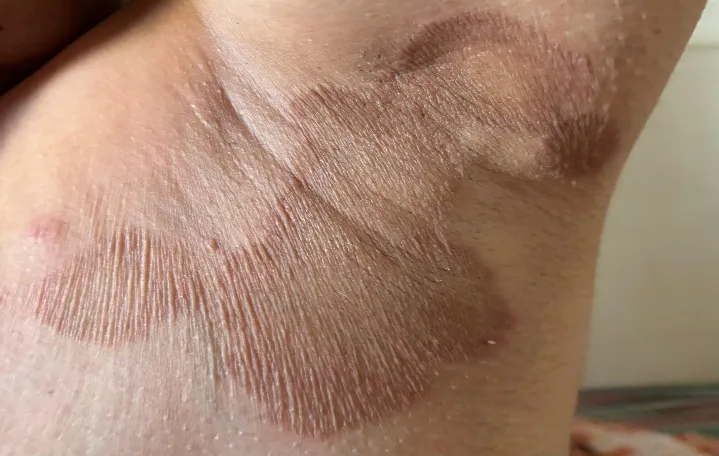
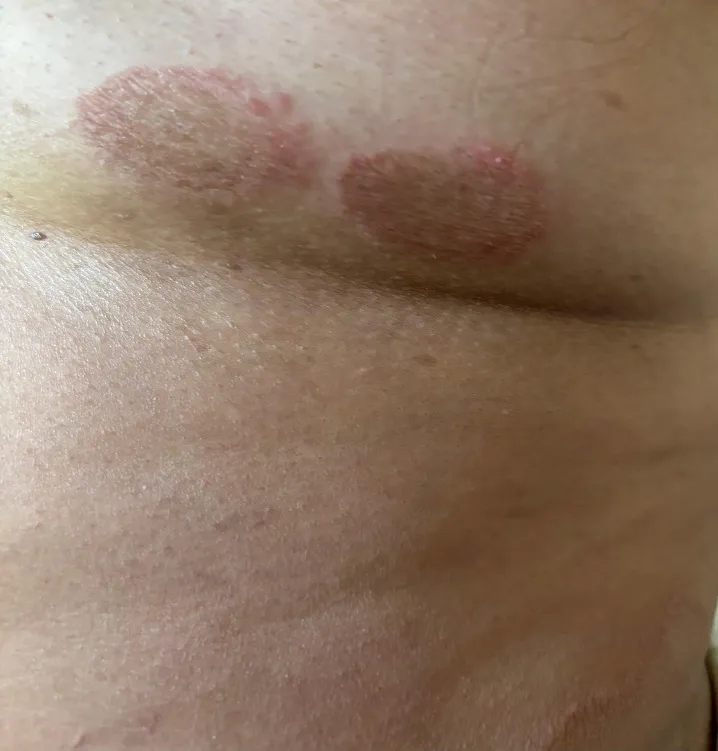
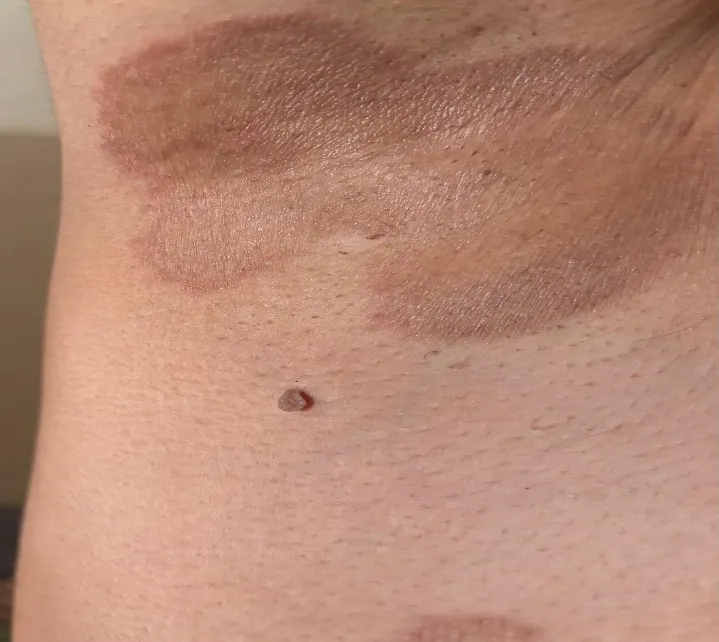
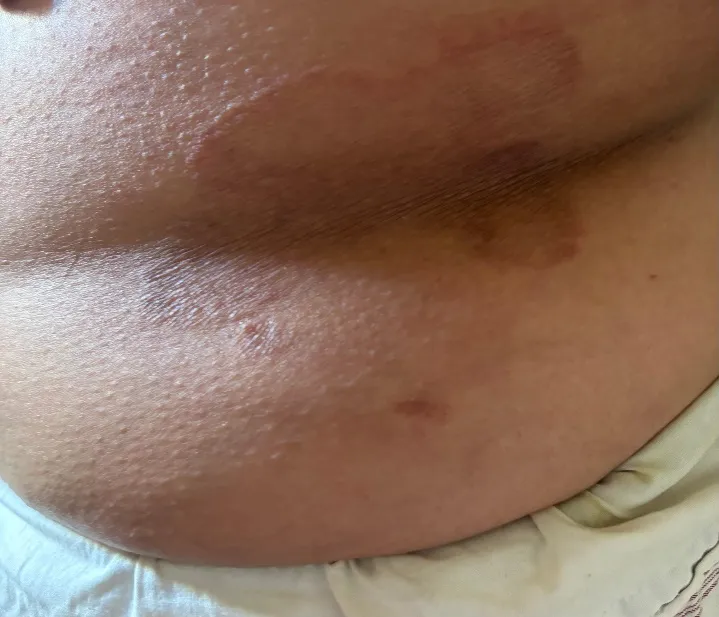
Figures 1 to 4: Showing clinical presentation on day 1 of admission
MANAGEMENT
|
SL.NO |
SHAMANA OUSHADHI |
DOSE |
TIME |
|
1. |
Krimikutara rasa |
1-1-1 |
After food |
|
2. |
Gandhaka rasayana DS |
1-0-1 |
After food |
|
3. |
Arogyavardhini vati |
2-0-2 |
Before food |
|
4. |
Sootasekara rasa |
2-2-2 |
Before food |
|
5. |
Nimbadi kashaya |
15ml-0-15ml |
Before food |
|
6. |
Tulasi bathing powder |
once |
for external application & wash |
|
7. |
Pinda taila |
once |
for external application at night |
|
8. |
Gandha karpura |
once |
for external application at morning |
Table 1: Showing Shamana Oushadhi (for 7 days)
|
SL.NO |
PROCEDURES |
DAYS |
|
1. |
Sarvanga Utsadana with Daruharidra+Kushta+Lodhra choorna+Pinda taila |
11 days |
|
2. |
Sarvanga Parisheka with Dashamoola kwatha |
11 days |
|
3. |
Sadyovirechana with Avipattikara choorna 15grams with honey at 11am on 04/09/2025 (2 Vegas) |
1 day |
|
4. |
Sadyovirechana with Nimbamruthadi eranda taila 50ml at 5.30am on 05/09/2025 (5 Vegas) |
1 day |
|
5. |
Anuvasana Basti with Nimbamruthadi eranda taila 50ml |
3 days |
|
6. |
Anuvasana Basti with Balaguduchyadi taila 60ml |
3 days |
|
7. |
Niruha Basti - Manjishtadi niruha basti Madhu - 50ml Saindhava - 5g Sneha - Balaguduchyadi taila 50ml Kalka - Daruharidra choorna, Lodhra choorna, Manjishta choorna, Kushta choorna (5g each), Arogyavardhini vati (2 tabs) Kwatha - Manjishtadi kashaya 100ml |
4 days |
|
8. |
Virechana with Trivrut lehya 100grams with Triphala kashaya 100ml with honey on 12/09/2025 (9 vegas) |
1 day |
Table 2: Showing treatment procedures
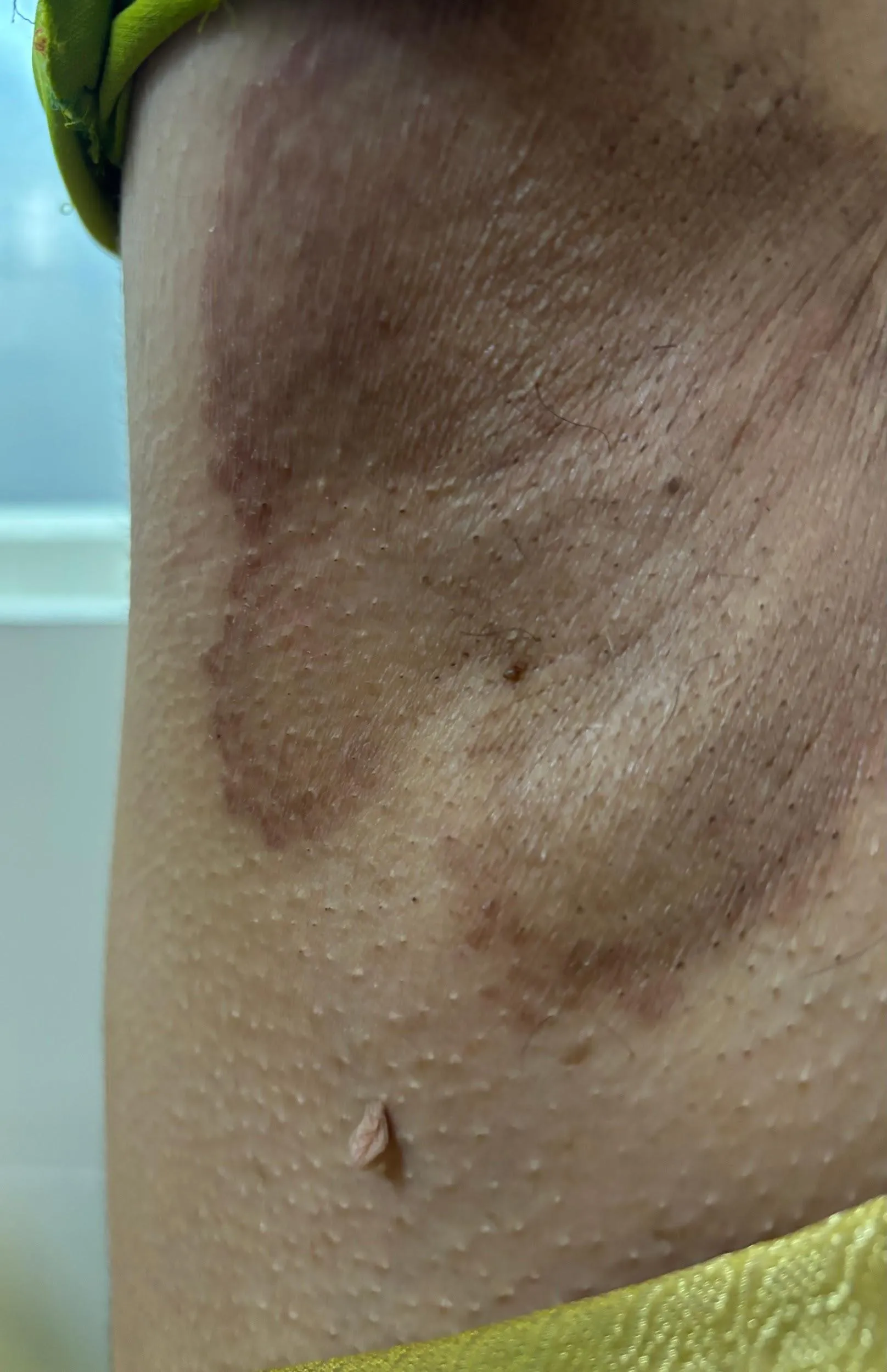
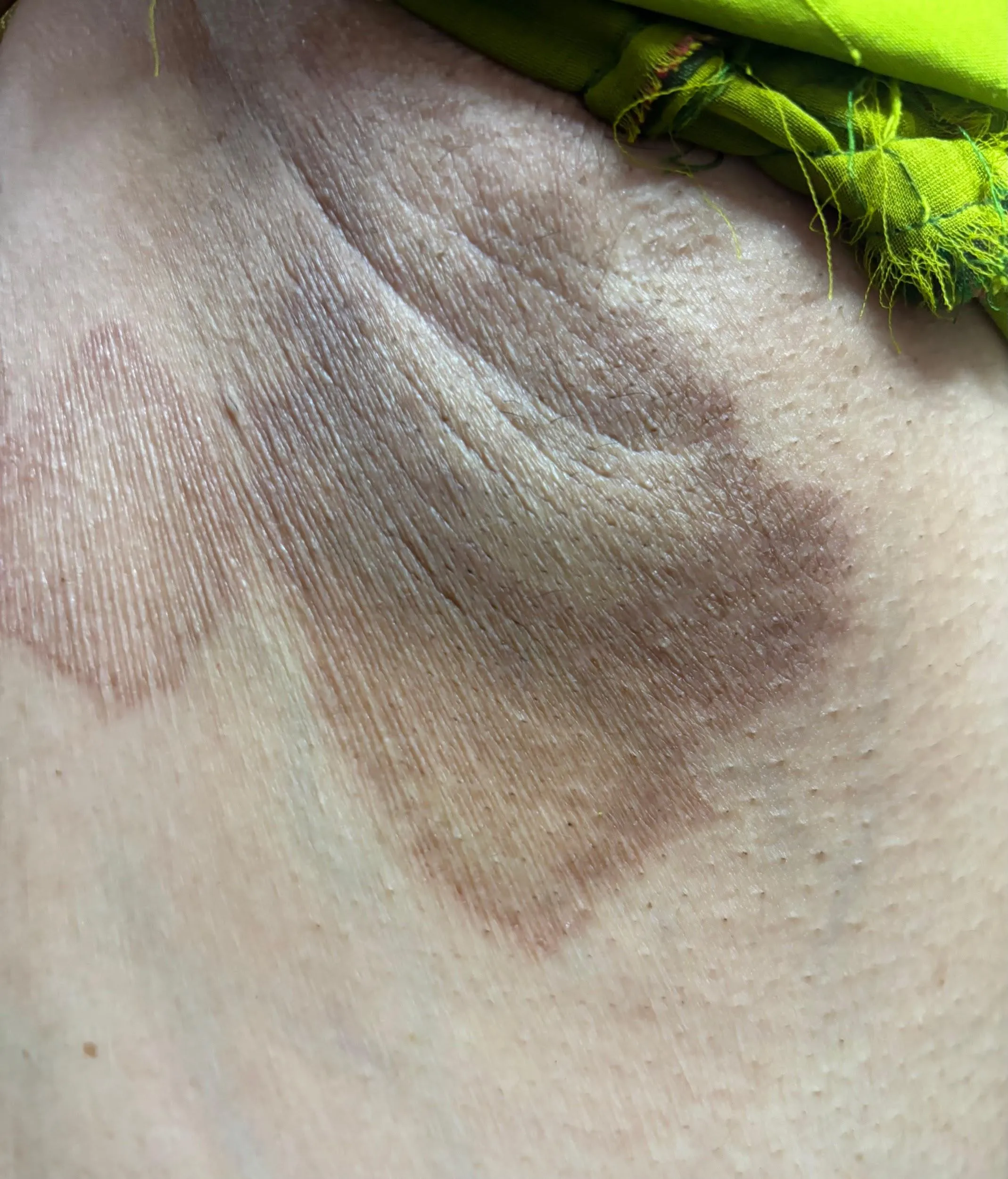
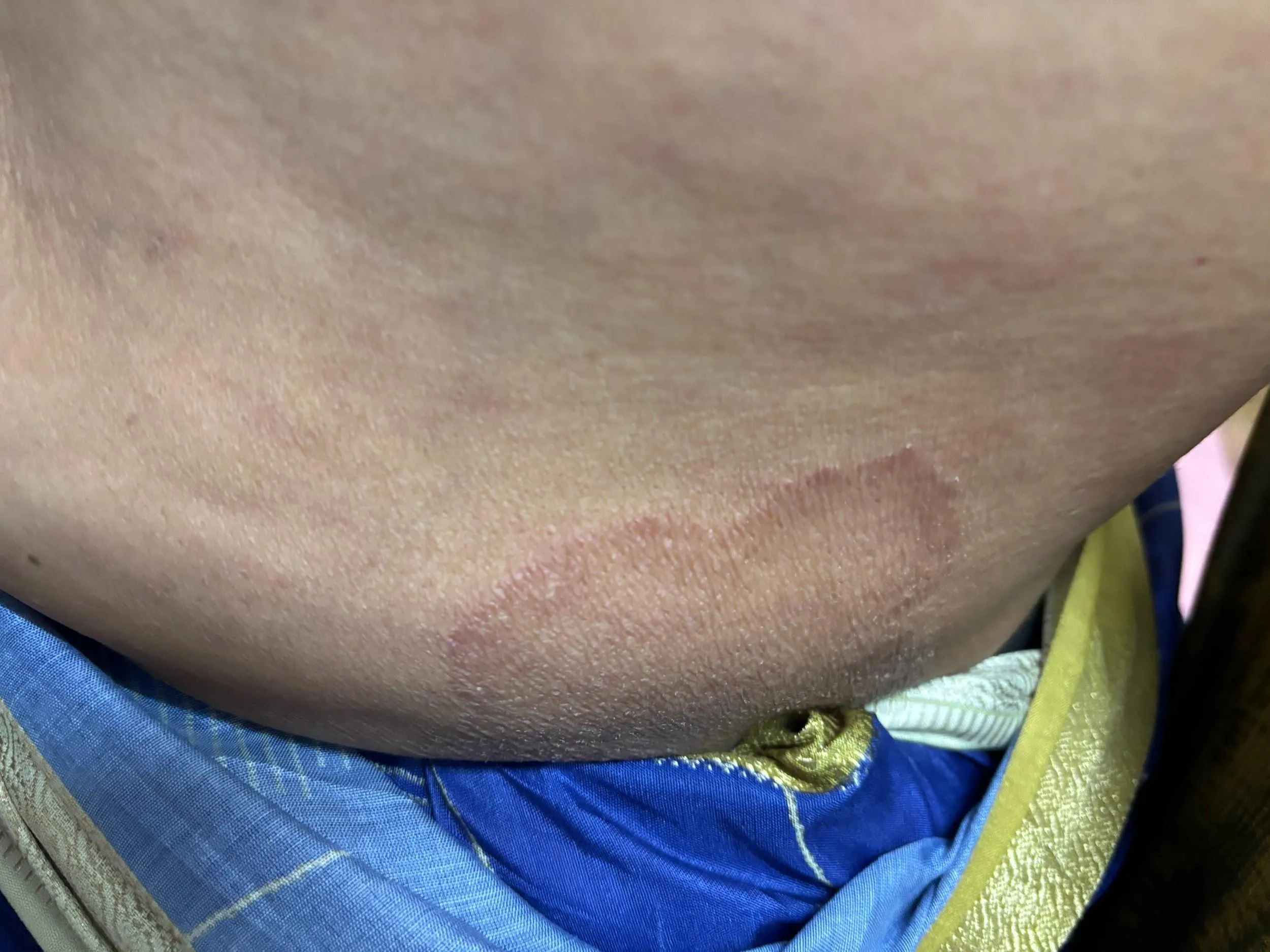
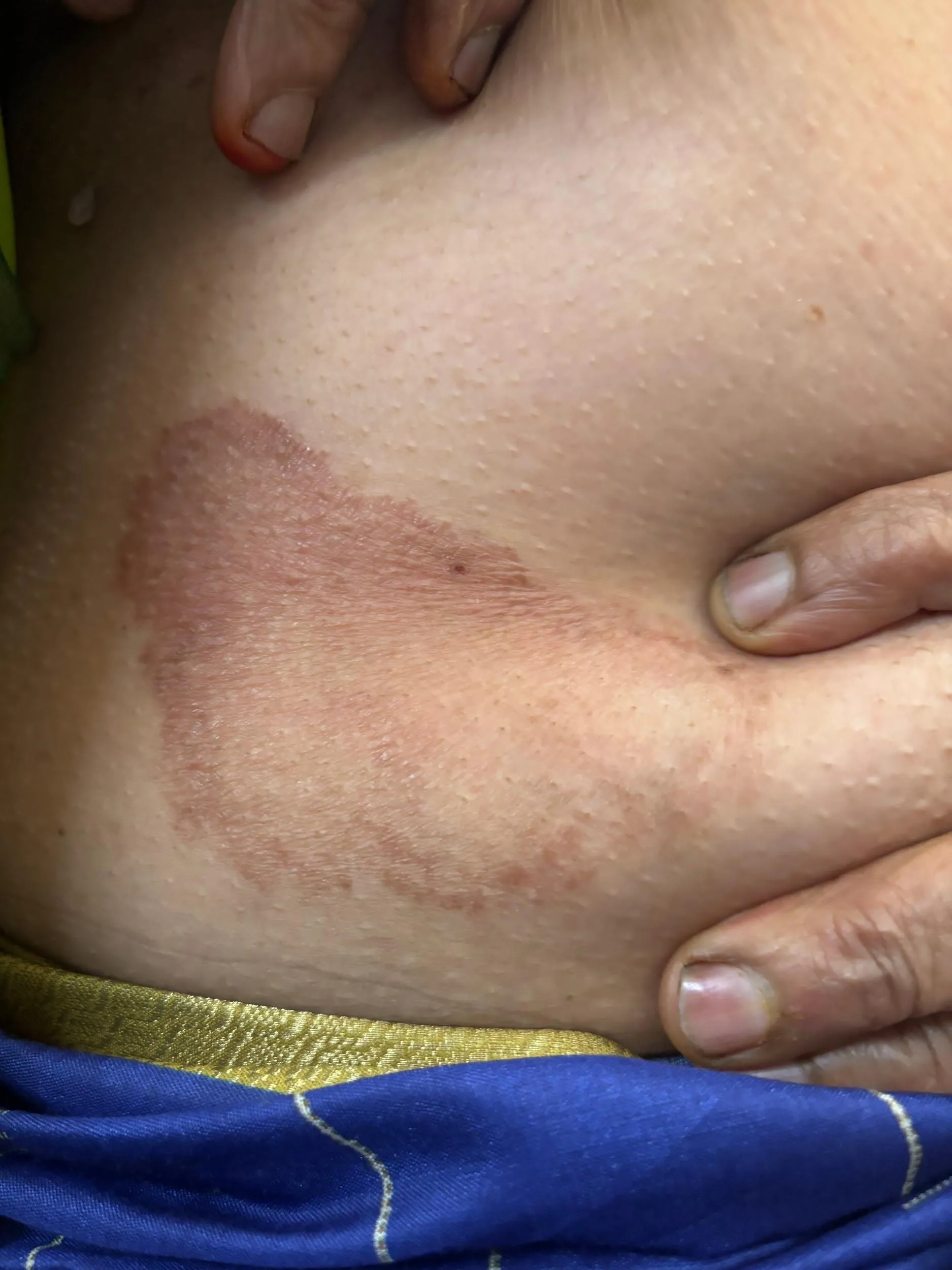
Figures 5 to 8: On the day of discharge - redness and itching reduced
|
SL.NO |
SHAMANA OUSHADHI |
DOSE |
TIME |
|
1. |
Gandhaka rasayana DS |
1-0-1 |
After food |
|
2. |
Arogyavardhini vati |
1-1-1 |
Before food |
|
3. |
Patolakaturohinyadi kashaya |
15ml-0-15ml |
Before food |
|
5. |
Aragwadhadi kwatha |
once |
for external wash |
|
6. |
Pinda taila |
once |
for external application at night |
|
7. |
D sora lotion |
once |
for external application at morning |
Table 3: Discharge medications
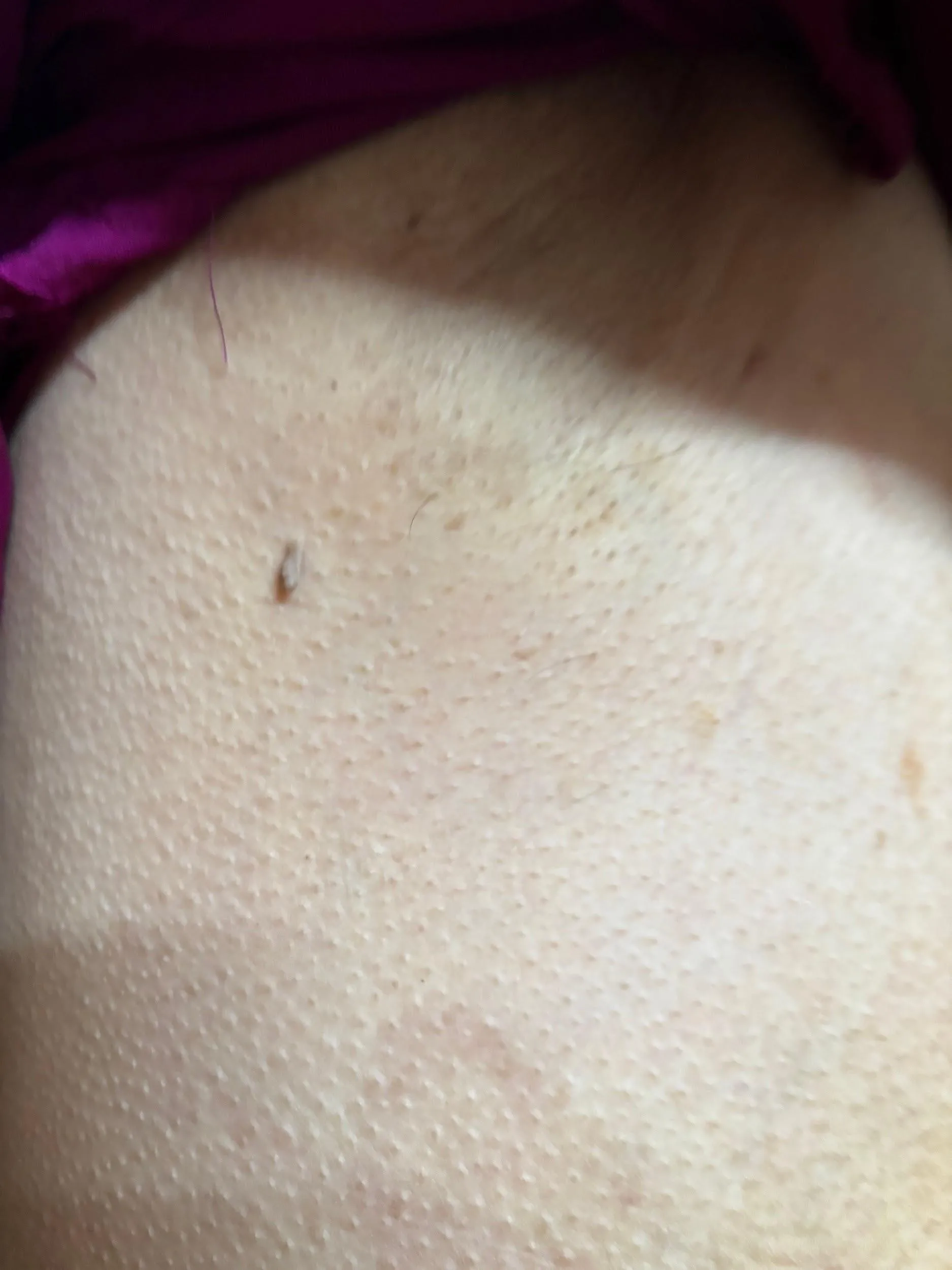
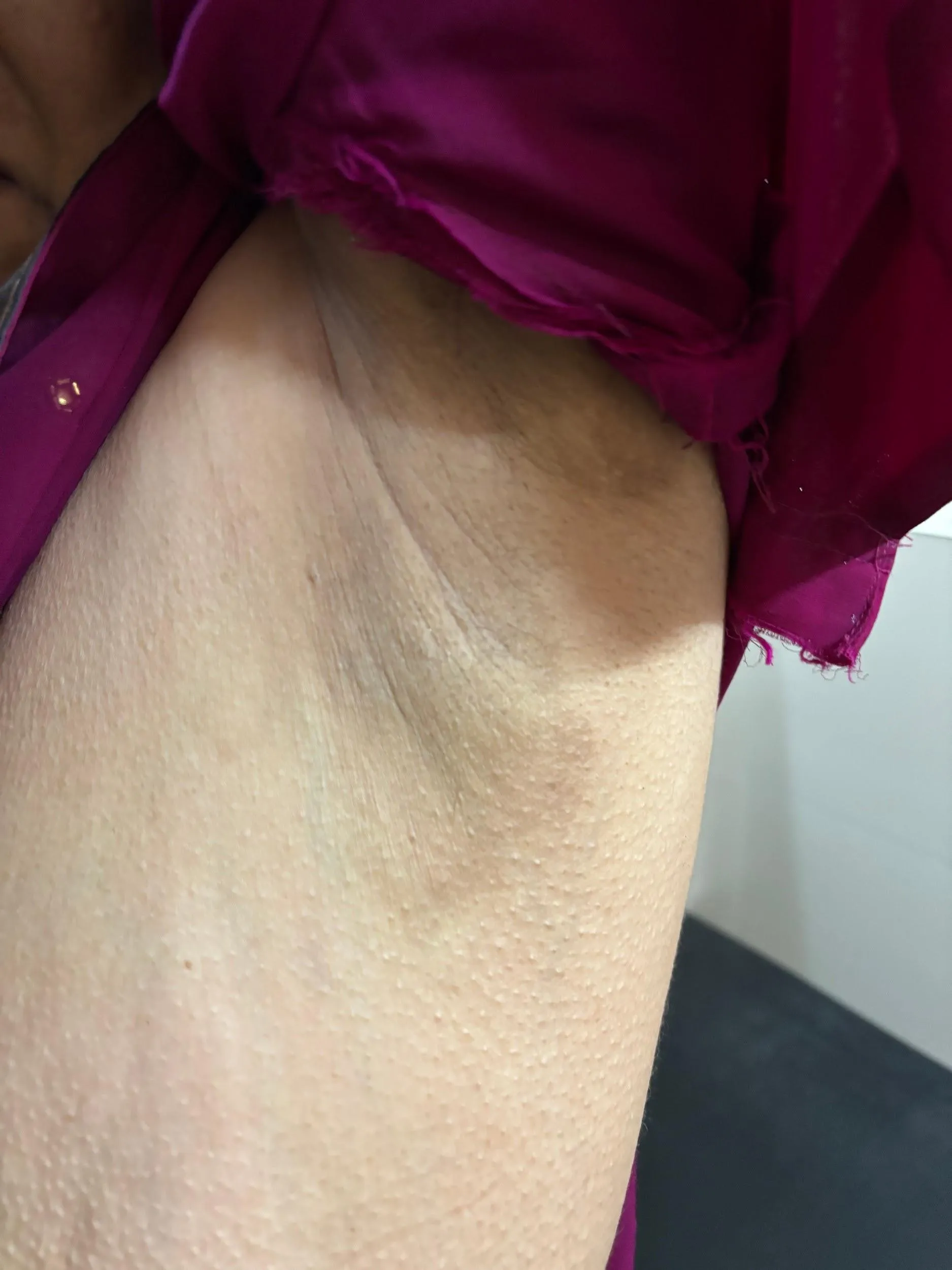
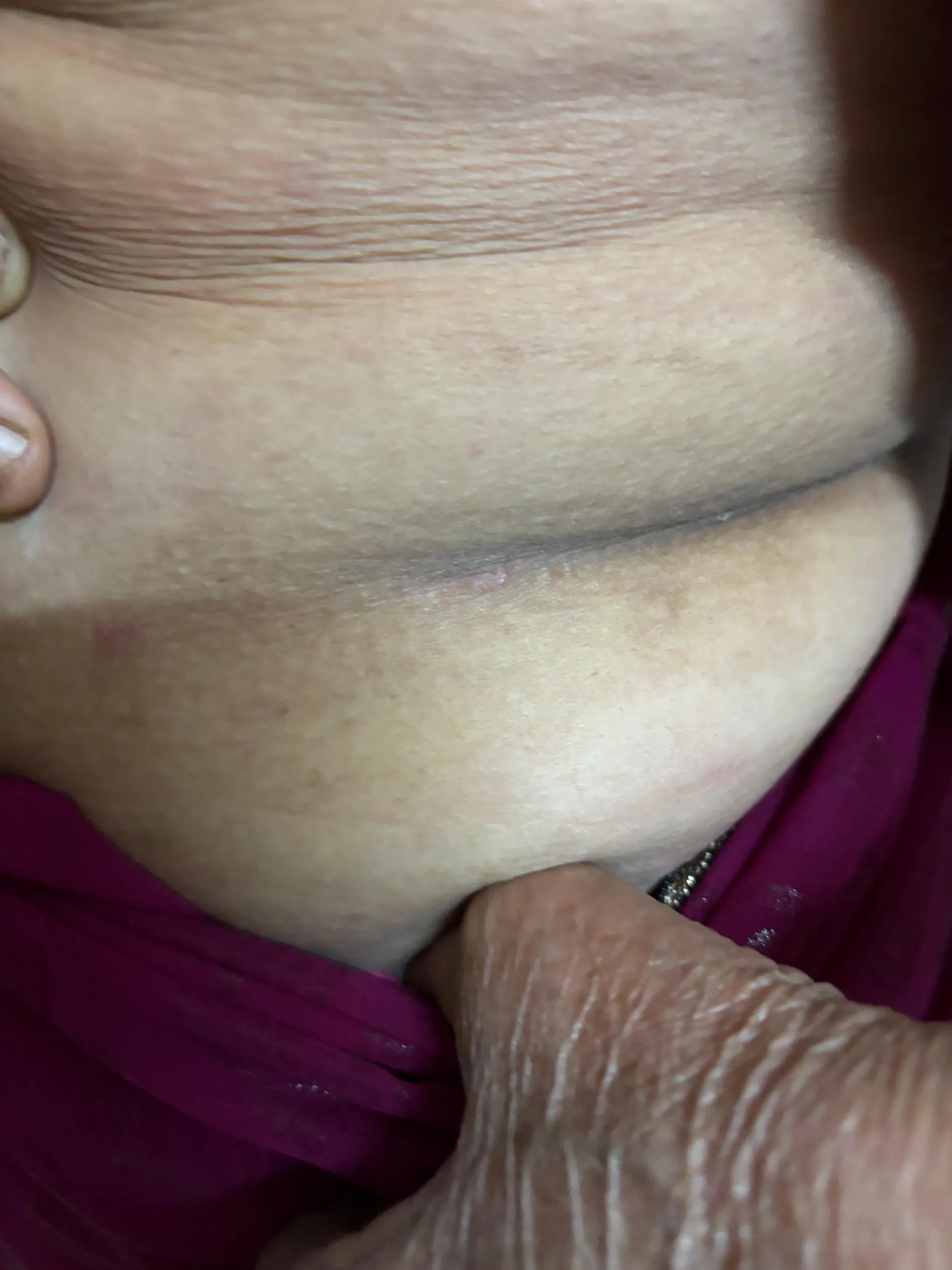
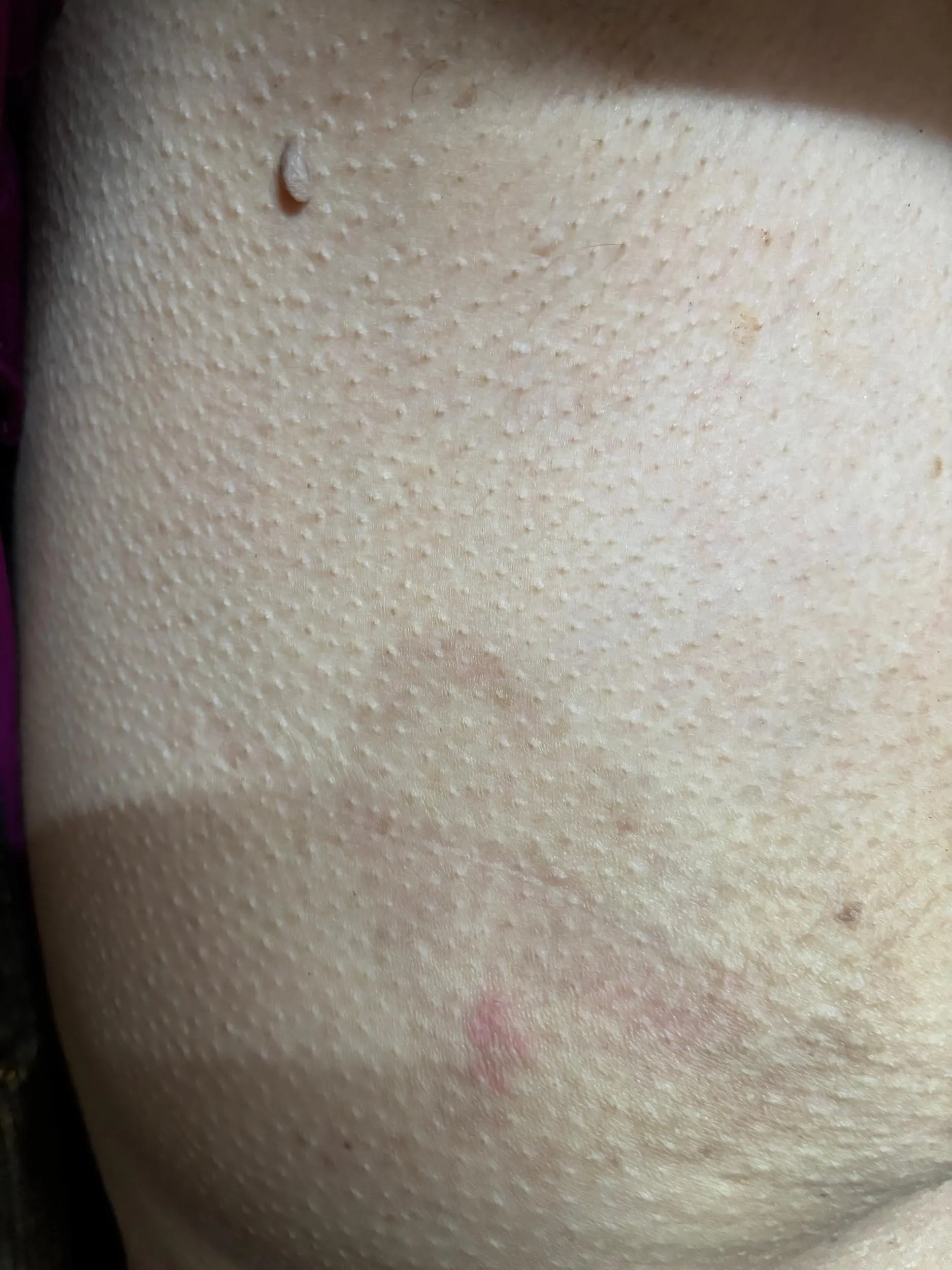
Figures 9 to 12: Follow up after 15 days - lesions subsided, patient free of symptoms
OBSERVATION & RESULTS
|
DAY |
KANDU |
RAGA |
DAHA |
|
1st |
++++ |
++++ |
+++ |
|
14th |
++ |
++ |
+ |
|
30th |
+ |
- |
- |
Table 4: Observation and symptoms
DISCUSSION
Dadru involves Kapha–Pitta vitiation affecting Tvak, Rakta, Mamsa, Ambu and Lasika4. The patient presented with chronic circular reddish lesions, severe itching, and burning sensation, indicating deeper dosha dushti². Krimikutara rasa was prescribed in the intention of eliminating Krimi from the body. Shamana oushadhi such as Gandhaka rasayana, Arogyavardhini vati, Sootasekara rasa, and Nimbadi Kashaya are indicated for Kushta, Pitta–Kapha disorders, and skin purification³â»âµ,â¸â»â¹. External medicaments like Pinda taila, Gandha karpura, and Tulasi bathing powder are documented for reducing inflammation and itchingâ¹â»¹â°. Pinda taila has specific indications for vata pittaja vikaras, as mentioned in Vatarakta adhikara. As the present case shows predominant vitiation of Pitta dosha, Pinda taila was advised.
Shodhana was planned in accordance with classical guidelines²â»â´. Utsadana helps in kapha vilayana and Parisheka prepare the body for purification, by eliminating the toxins via sweat. Sadyovirechana was administered for elimination of Krimi from the body and also for immediate and quick relief of symptoms. Anuvasana, and Niruha basti were prescribed, and curated in such a way targetting Kapha and Pitta doshas¹¹â»¹²; and also to relieve the symptoms present in adho-shareera. Virechana was again administered to ensure complete shuddhi and thereby providing systemic cleansing and enhanced therapeutic outcome.
Marked symptomatic improvement reflects successful Samprapti vighatana and validates Ayurvedic principles in managing chronic Dadru.
CONCLUSION
This case demonstrates the effectiveness of combined Shodhana and Shamana therapy along with Krimighna chikitsa in treating Dadru. Internal medications, external applications, and purificatory therapies addressed both symptoms and underlying doshic imbalance³â»â¶. Significant relief in itching, burning, redness, and lesion size confirms Ayurveda’s role as an effective modality for managing Kshudra Kushta like Dadru.
REFERENCES

Dhivya Kaviarassane1*, Tapas Brata Tripaty2, Ambika Gotagi1, Shakthi Rani S. N.1, A Case Report On Ayurvedic Management Of Dadru, Int. J. Sci. R. Tech., 2026, 3 (8), 272-281. https://doi.org/10.5281/zenodo.21850518
 10.5281/zenodo.21850518