

We use cookies to ensure our website works properly and to personalise your experience. Cookies policy
Rohilkhand College of Nursing, Bareilly, (U.P.)
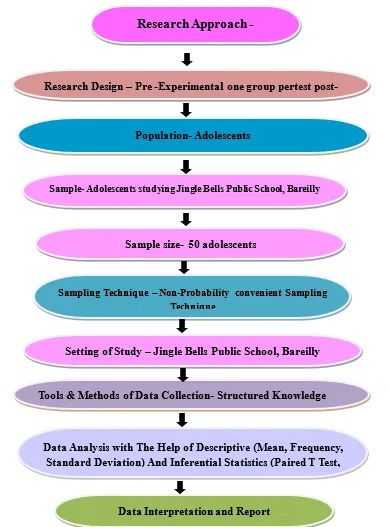
Objectives of the study:-To evaluate the effectiveness of the structured teaching programme on the ill effects of screen time and its management. To find the association between pre-test knowledge scores and selected demographic variables.The study was pre-experimental in nature, the sampling technique used was non-probability sampling technique and sample size was 50 adolescents in selected school (Jingle Bells Public School) Bareilly, U.P. a structured knowledge questionnaire was used for data collection. Major findings of study As per the study objectives, a set of questionnaire has been developed to find out the level of knowledge regarding ill effects of screen time and its management among adolescents. In pre test 26 adolescents have inadequate knowledge, 14 adolescents have moderate knowledge, 10 adolescents have adequate knowledge. In post test 5 adolescents have inadequate knowledge, 12 adolescents have moderate knowledge, 33 adolescents have adequate knowledge. Hence, it inferred that the majority of adolescents had inadequate knowledge in pre test. After structured teaching programme there was an increase in knowledge of the adolescents who was exposed to structured teaching programme. The data presented in depicts that the mean post test knowledge score 22.12 was higher than the mean pre-test knowledge score 12.38 with the obtained mean difference 9.74 was found to be statistically significant as evident from the calculated t-value of 1.69 which is greater than the df 49 and p-value 0.05 the level of significance. This shows that obtained mean between pre-test and post test knowledge scores was a true differences and not by chance. Hence, research hypothesis H1, is accepted, thus indicated that structure teaching programme regarding sample collection was effective in increasing the knowledge of adolescents. The findings revealed that demographic variables such as age (chi square=18.490), class (chi square =27.004), type of device used (chi square =19.545), and previous knowledge regarding screen time (chi square=14.708) showed a statistically significant association with the level of knowledge regarding screen time among adolescents, whereas gender (chi square =1.230), area of residence (chi square=0.335), and duration of daily screen time (chi square =7.399) showed no statistically significant association at the 0.05 level of significance.
Adolescence represents a crucial transitional stage of human development marked by rapid physical growth, emotional maturation, cognitive expansion, and evolving social roles. During this phase, individuals are highly receptive to environmental influences, including technological advancements that shape their lifestyle and behavior patterns. In recent years, the proliferation of digital technology has significantly transformed the daily lives of adolescents, making screen-based devices such as smartphones, tablets, computers, and televisions integral to education, communication, entertainment, and social interaction. The concept of “screen time” encompasses the total duration spent engaging with these electronic devices, whether for academic purposes or recreational activities. While technology has undeniably enhanced access to information and connectivity, excessive screen time has emerged as a growing public health concern due to its potential negative impact on the holistic development of adolescents. Increased exposure to screens has been linked with sedentary lifestyles, reduced physical activity, disrupted sleep patterns, and altered psychosocial functioning. Moreover, adolescents often lack the awareness, self-regulation skills, and guidance required to manage their screen usage effectively, leading to excessive dependence on digital media. The phenomenon of technology addiction, characterized by compulsive and uncontrolled use of digital devices despite adverse consequences, further complicates this issue. It not only affects physical health but also interferes with academic performance, interpersonal relationships, and emotional well-being. In the contemporary educational and healthcare context, there is a growing emphasis on preventive strategies and health education to address emerging behavioral risks among adolescents. Structured teaching programmes serve as an organized and systematic approach to impart knowledge, develop awareness, and promote healthy behavioral practices. Such programmes are particularly effective in school settings, where adolescents can be reached collectively and influenced positively through guided learning experiences. Therefore, understanding the dynamics of screen time, its associated risks, and the role of educational interventions becomes essential in fostering healthy digital habits among adolescents and ensuring their overall well-being.1
Recent global trends indicate a dramatic rise in screen time among adolescents, driven by increased accessibility to digital devices and internet connectivity. National-level studies indicate that nearly sixty to eighty percent of adolescents engage in excessive screen time, with a significant proportion demonstrating signs of dependency or addictive behavior. Furthermore, research conducted in school settings has revealed that more than sixty percent of adolescents experience at least one adverse health effect related to prolonged screen use, including eye strain, headaches, sleep disturbances, and reduced physical activity. Studies evaluating such programmes have demonstrated a significant improvement in knowledge scores, often ranging between twenty to forty percent, indicating their effectiveness in promoting behavioral change. These findings collectively underscore the magnitude of the problem and emphasize the need for targeted interventions to address excessive screen time among adolescents.2
NEED FOR STUDY
The rapid expansion of digital technology has significantly reshaped the lifestyle, behavior, and daily routines of adolescents across the globe. In the modern era, digital devices such as smartphones, tablets, computers, and televisions have become an indispensable part of everyday life, influencing education, communication, entertainment, and social interaction. Adolescents, being in a critical developmental phase characterized by physical, psychological, and social transitions, are particularly vulnerable to the influence of digital media. While technology has undoubtedly provided numerous benefits, including improved access to information and enhanced learning opportunities, excessive screen time has emerged as a growing public health concern worldwide. The increasing dependence on digital devices has led to a significant shift toward sedentary lifestyles, raising serious concerns regarding the overall health and well-being of adolescents.3
Globally, recent research evidence indicates that adolescents are spending an increasingly large proportion of their daily time engaging with screen-based activities. Studies conducted in the past five years suggest that adolescents spend an average of four to seven hours per day on screens, which is substantially higher than the recommended limit of less than two hours of recreational screen time per day. Excessive screen exposure has been associated with multiple adverse outcomes, including reduced physical activity, poor sleep quality, obesity, visual problems, and psychological disturbances. Emerging evidence also highlights a strong association between prolonged screen time and mental health issues such as anxiety, depression, stress, and behavioral problems. A large-scale study involving adolescents reported that individuals with higher levels of screen addiction were significantly more likely to experience emotional distress and even suicidal behaviors, emphasizing the seriousness of this issue.4
In the Asian context, the issue of excessive screen time has become even more pronounced due to rapid technological advancements, urbanization, and widespread availability of affordable internet services. Countries in Asia have reported a significant increase in digital device usage among adolescents, with many exceeding recommended screen time limits. The growing popularity of social media platforms, online gaming, and streaming services has further contributed to increased screen exposure and the development of addictive behaviors. Adolescents in this region often use digital devices not only for academic purposes but also for entertainment and social interaction, leading to prolonged and uncontrolled usage patterns.5
India, being one of the fastest-growing digital economies in the world, has witnessed a dramatic rise in screen time among adolescents over the past decade. The widespread availability of low-cost smartphones and affordable internet services has made digital devices easily accessible to a large segment of the population, including school-going adolescents. Recent national reports and surveys indicate that excessive screen time has become highly prevalent among Indian adolescents. According to recent findings, adolescents in India spend an average of four to five hours per day on digital screens. Moreover, a substantial proportion of adolescents exceed the recommended screen time limits, with studies reporting that nearly 68% of adolescents have screen time greater than two hours per day.6
Recent data from India further highlights the seriousness of the issue. A large-scale survey involving school students revealed that approximately 74% of students spend more than two hours daily on screens for non-academic purposes, with a significant proportion exceeding four hours per day. Additionally, teachers reported behavioral issues such as reduced concentration, irritability, and social withdrawal among students with high screen usage. These findings clearly indicate that excessive screen time is not only a health issue but also a major educational and behavioral concern.7
Furthermore, it is essential to evaluate the effectiveness of structured teaching programmes to ensure that they achieve their intended outcomes. Assessing changes in knowledge before and after the intervention can provide valuable insights into the impact of educational strategies. Additionally, identifying the association between knowledge levels and demographic variables can help in understanding the factors influencing awareness and behavior among adolescents. This information can be used to design more targeted and effective interventions in the future.8
Therefore, the present study is undertaken to assess the effectiveness of a structured teaching programme on knowledge regarding the ill effects of screen time and its management among adolescents in selected schools at Bareilly, Uttar Pradesh. The study aims to address the existing gap in knowledge and awareness among adolescents and to evaluate the impact of educational interventions in promoting healthy screen habits. The findings of this study are expected to contribute to the development of effective health education strategies and provide evidence for policymakers, educators, and healthcare professionals to address the growing challenge of excessive screen time among adolescents.
OBJECTIVE:
1. To evaluate the effectiveness of the structured teaching programme on the ill effects of screen time and its management.
2. To find the association between pre-test knowledge scores and selected demographic variables.
HYPOTHESES
H1: There will be a significant difference between pre-test and post-test knowledge scores regarding the ill effects of screen time and its management among adolescents after the structured teaching programme.
H2: There will be a significant association between pre-test knowledge scores and with their selected demographic variables.
MATERIALS & METHODS:
ANALYSIS AND INTERPRETATION:
Table 1: Frequency and Percentage Distribution of Adolescents According to Their Demographic Data N=50
| S.No. | Demographic Variables | Frequency | Percentage |
|---|---|---|---|
| 1. | Age 13-14 yrs 15-16 yrs 17-18 yrs |
22 16 12 |
44.00 32.00 24.00 |
| 2. | Gender Male Female |
33 17 |
66.00 34.00 |
| 3. | Class 8th 9th 10th 11th |
14 19 5 12 |
28.00 38.00 10.00 24.00 |
| 4. | Area of Residence Urban Rural |
35 15 |
70.00 30.00 |
| 5. | Duration of Daily Screen Time Less than 1 hour 1–2 hours 3–4 hours More than 4 hours |
9 12 22 7 |
18.00 24.00 44.00 14.00 |
| 6. | Type of Device Used Smartphone Television Laptop/Computer Tablet Multiple devices |
14 5 10 17 4 |
28.00 10.00 20.00 34.00 8.00 |
| 7. | Previous Knowledge Regarding Screen Time Yes No |
37 13 |
74.00 26.00 |
N=50
Table 2: Mean and Standard Deviation of Pre-test and Post-test Knowledge Regarding Ill Effects of Screen Time and Its Management
| Test | Mean | S D | Mena difference | T value |
|---|---|---|---|---|
| Pre test | 12.38 | 5.66 | 9.74 | 1.69 |
| Post test | 22.12 | 6.16 |
Significant at p value 0.01 as H1 is accepted.
Table 3: Association Between Pre-Test Knowledge Scores and Selected Demographic Variables N=50
| Demographic variables | Adequate | Moderate | Inadequate | Total | Chi square | p value |
|---|---|---|---|---|---|---|
| AGE | ||||||
| 13-14 yrs | 1 | 3 | 18 | 22 | 18.490 | significant At p<0.05 |
| 15-16 yrs | 3 | 7 | 6 | 16 | ||
| 17-18 yrs | 6 | 4 | 2 | 12 | ||
| GENDER | ||||||
| Male | 6 | 8 | 19 | 33 | 1.230 | Not significant At p<0.05 |
| Female | 4 | 6 | 7 | 17 | ||
| CALSS | ||||||
| 8th | 0 | 2 | 12 | 14 | 27.004 | significant At p<0.05 |
| 9th | 3 | 4 | 12 | 19 | ||
| 10th | 3 | 0 | 2 | 5 | ||
| 11th | 4 | 8 | 0 | 12 | ||
| AREA OF RESIDENT | ||||||
| Urban | 7 | 9 | 19 | 35 | 0.335 | Not significant At p<0.05 |
| Rural | 3 | 5 | 7 | 15 | ||
| DURATION OF DAILY SCREEN TIME | ||||||
| Less than 1 hour | 2 | 3 | 4 | 9 | 7.399 | Not significant At p<0.05 |
| 1–2 hours | 3 | 5 | 4 | 12 | ||
| 3–4 hours | 3 | 3 | 16 | 22 | ||
| More than 4 hours | 2 | 3 | 2 | 7 | ||
| TYPE OF DEVICE USED | ||||||
| Smartphone | 2 | 3 | 9 | 14 | 19.545 | significant At p<0.05 |
| Television | 2 | 2 | 1 | 5 | ||
| Laptop/Computer | 3 | 5 | 2 | 10 | ||
| Tablet | 0 | 3 | 14 | 17 | ||
| Multiple devices | 3 | 1 | 1 | 5 | ||
| PREVIOUS KNOWLEDGE REGARDING SCREEN TIME | ||||||
| Yes | 4 | 8 | 25 | 37 | 14.708 | significant At p<0.05 |
| No | 6 | 6 | 1 | 13 | ||
* significant at 0.05
The findings revealed that demographic variables such as age (chi square=18.490), class (chi square =27.004), type of device used (chi square =19.545), and previous knowledge regarding screen time (chi square=14.708) showed a statistically significant association with the level of knowledge regarding screen time among adolescents, whereas gender (chi square =1.230), area of residence (chi square=0.335), and duration of daily screen time (chi square =7.399) showed no statistically significant association at the 0.05 level of significance. as Research hypothesis (H2) is accepted.
REFERENCES






Sanjay Kumar, Saloni Bharti, Satyaprakash, Shivam, Sikha Singh, Anurag Sharma, “A Study to Assess the Effectiveness of a Structured Teaching Programme on Knowledge Regarding the Ill Effects of Screen Time and ITS Management Among Adolescents in Selected Schools at Bareilly, Uttar Pradesh”, Int. J. Sci. R. Tech., 2026, 3 (10), 1301-1306. https://doi.org/10.5281/zenodo.23683244
 10.5281/zenodo.23683244