

We use cookies to ensure our website works properly and to personalise your experience. Cookies policy
1Department of Science and Humanities, Tripura Institute of Technology, Agartala, Tripura, India
2SRM college, KTR Campus
Integrated Duck–Fish Farming (IDFF) is an eco-friendly and economically viable integrated farming system that synergizes aquaculture with duck rearing to enhance productivity, nutrient recycling, and sustainability. In the northeastern Indian state of Tripura, characterized by smallholder agriculture, high rainfall, and abundant freshwater resources, IDFF offers a practical solution for income diversification and ecological intensification. This study evaluates the system design, nutrient dynamics, productivity performance, economic viability, and environmental benefits of IDFF with specific reference to Tripura and its scalability across India. Field-based observations, secondary data from ICAR and NFDB, and documented pilot studies indicate that IDFF can increase fish yield by 20–35%, reduce external feed and fertilizer inputs by 25–40%, and improve farm profitability while maintaining environmental integrity. The study concludes that IDFF is a resilient farming model aligned with sustainable agriculture and climate-smart farming objectives in India.
Indian agriculture faces mounting pressure from land fragmentation, rising input costs, climate variability, and environmental degradation. Sustainable intensification through Integrated Farming Systems (IFS) has emerged as a key strategy to enhance farm productivity while minimizing ecological footprints [1]. Integrated Duck–Fish Farming (IDFF) is a traditional yet scientifically validated IFS model that integrates duck rearing directly with freshwater fish culture, enabling efficient nutrient cycling and biological synergy.
Tripura, a northeastern state of India, possesses over 0.95 lakh hectares of water bodies, high annual rainfall (2000–2500 mm), and a predominantly smallholder farming structure [2]. Despite these advantages, fish productivity remains below potential due to limited input use and poor integration with livestock systems. IDFF offers a low-cost, low-risk solution well suited to the agro-ecological and socio-economic conditions of Tripura.
This paper aims to analyze the technical, economic, and environmental feasibility of IDFF in Tripura and explore its broader relevance for sustainable agriculture in India.
II. Literature Review
A. Integrated Farming Systems in India
Integrated farming systems combine crops, livestock, fisheries, and allied activities to maximize resource use efficiency [3]. Studies by ICAR indicate that IFS can increase farm income by 2–3 times compared to monocropping systems [4].
B. Principles of Duck–Fish Integration
IDFF is based on mutually beneficial interactions:
C. Global and Indian Experiences
China and Southeast Asian countries have long practiced IDFF, reporting yield increases of 25–50% over conventional fish farming [6]. In India, ICAR-CIFA trials in Assam, West Bengal, and Odisha have demonstrated significant productivity and income gains [7].
MATERIALS AND METHODS
A. Study Area: Tripura
The study focuses on West Tripura, Sepahijala, and Gomati districts, where pond-based aquaculture and backyard duck rearing are common. The region’s warm climate (average temperature 22–32°C) supports year-round aquaculture.
B. System Design
A typical IDFF unit consists of:
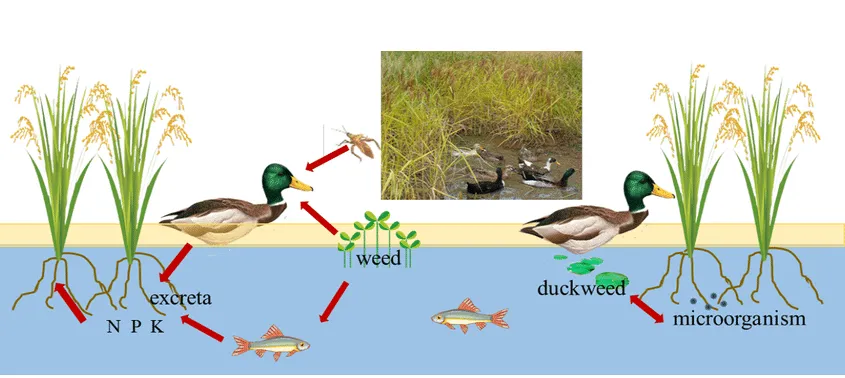
Figure 1: Schematic Diagram of Integrated Duck–Fish Farming System (pond, ducks, nutrient flow, fish species)
C. Stocking Pattern
Table I: Recommended Stocking Density
| Component | Species | Density |
|---|---|---|
| Ducks | Khaki Campbell / Indian Runner | 200–300 ducks/ha |
| Fish | Catla, Rohu, Mrigal, Common Carp | 6000–8000 fingerlings/ha |
D. Nutrient Cycling Mechanism
Duck excreta (~125–150 g/day/duck) provides nitrogen and phosphorus to pond water, stimulating phytoplankton growth.
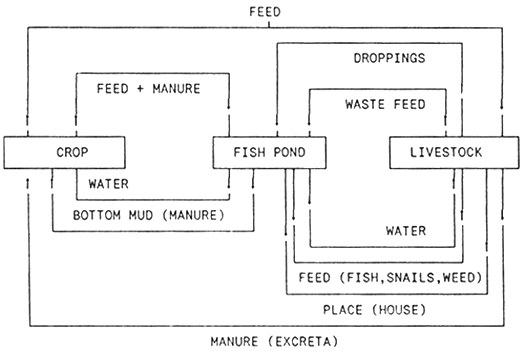
Figure 2: Nutrient Cycling Pathway in IDFF
E. Data Collection
Parameters analyzed:
RESULTS AND DISCUSSION
A. Productivity Performance
Fish yield under IDFF ranged from 3.5–4.5 t/ha/year, compared to 2.5–3.0 t/ha/year in non-integrated ponds.
Duck egg production averaged 180–220 eggs/duck/year, providing regular cash income.
B. Water and Soil Quality
Water quality parameters remained within optimal limits:
Organic nutrient loading reduced the need for chemical fertilizers by ~35%.
C. Economic Analysis
Table II: Cost–Benefit Comparison
| Parameter | Fish Only | Duck–Fish |
|---|---|---|
| Net Return (₹/ha/year) | 1.2–1.5 lakh | 2.5–3.2 lakh |
| Benefit–Cost Ratio | 1.6 | 2.4 |
D. Environmental and Social Benefits
E. Constraints
V. Case Study: Tripura
Pilot demonstrations supported by the Department of Fisheries, Tripura, showed high farmer acceptance. Women self-help groups actively participated in duck management, enhancing gender inclusion.
VI. Policy Implications and Recommendations
1. Integration of IDFF under NFDB and PMMSY schemes
2. Training through Krishi Vigyan Kendras (KVKs)
3. Credit support for smallholders
4. Promotion in wetland-rich northeastern states
CONCLUSION
Integrated Duck–Fish Farming is a technically sound, economically profitable, and environmentally sustainable farming model for Tripura and India. Its adoption can significantly contribute to income diversification, food security, and climate resilience. Strategic policy support and extension efforts can accelerate its large-scale adoption.
REFERENCES




Dhananjoy Dey, Rajib Debbarma, Swarnima Banik, Ananya Mukherjee, Subhendu Banik, Agro Physics of Integrated Duck–Fish Farming for Sustainable Agriculture in Tripura and India, Int. J. Sci. R. Tech., 2026, 3 (11), 703-706. https://doi.org/10.5281/zenodo.24217081
 10.5281/zenodo.24217081