

We use cookies to ensure our website works properly and to personalise your experience. Cookies policy
DEPARTMENT OF COMPUTER TECHNOLOGY, BACHELOR OF SCIENCE (INFORMATON SYSTEMS), KONGU ENGINEERING COLLEGE, PERUNDURAI, ERODE, TAMILNADU, 638060
Medication non-adherence can be a problem for patients or patients with cognitive diseases like Alzheimer, Diabetes or Hypertension. Also people who are busy with work might delay taking their medicine. The voice-based medicine reminder system is an app and Internet of Things-based system that can use voice alarms to remind patients to take their medicines and supports medicine schedules. The proposed research uses an ESP32 microcontroller, a Real-Time Clock module, a speaker, an LED, a resistor and a push button. This work provides a voice reminder five minutes before the medicine is due and at the scheduled time. It turns on the speaker and Led at the time. The patient presses the button after taking the medicine. The software system has dashboards, for the Doctor, the Patient and the Family Member. It has features, like managing prescriptions, setting medicine schedules and tracking whether the medicine is taken by the patient. The Doctor can add medicines with the dosages and times. The Family Member can change the times of the medicine within a limit. The Patient dashboard has an Artificial Intelligence (AI)-based system that checks the pills using OpenCV Adaptive Thresholding and Contour Detection. It keeps track of missed doses. The family members can mark the dose as taken if the patient forget to press the button. The devised work uses the Random Forest algorithm to suggest personalized medicine schedules based on the patients health history and medicine taking time.
The voice based medicine reminder system based on Internet of Things is made up of both hardware and software to help patients take their medicines on time. As for the hardware part it includes an ESP32 microcontroller real time clock module speaker LED resistor and push button. The system will support than one medicine schedule. It will give a voice reminder five minutes before the scheduled time. At the scheduled time it will say the medicine name and light up the LED. Once the patient has taken the medicine he or she can press the push button to show that the medicine has been taken. As for the system’s software part there are dashboards for doctors, family members or caregivers, patients. The dashboard offers features such as prescription management, medicine schedule management and patient compliance monitoring. The system also has pill verification intelligence using adaptive thresholding and contour detection. It uses a Random forest algorithm to give reminders. It also sends missed dose alerts tracks. Reports the patients’ compliance level creates a risk score gives a monthly PDF printable report for the patient and has some simple games as memory boosters and, for entertainment. In overall, the proposed hybrid system advocates medicine reminder support in terms of both mobile and web based application.
Medication monitoring is a major problem among old people and those who have memory difficulties and have to take multiple medicines. Patients often forget to take their medicines on correct time or they often missed a medicine because of memory problems, work load or they depend on other people to remind them to take medicines. This leads to have additional medication support. Some people cannot able to follow traditional reminder methods like written notes, alarms using clock or using mobile phones because they can manually able to off the alarm and written notes needs a manual correction. A user-friendly medication voice reminder is required for the people and patients which provides voice alert and doctors and family members can manages patients medication schedule through the web or mobile application and can monitor the medication status of the patients. The proposed system have the features such as Voice alerts to remind patients, Push button for physical confirmation and a web or mobile application dashboards for monitoring the medication status of the patients.
The main goal of the proposed Voice-Based Medicine Reminder System is to design a system that reminds patients to take medications at the correct time with voice alerts. The system will use an ESP32 and DS3231 RTC to set medication times, give a voice reminder five minutes before the scheduled dose and include a push button for patients to confirm that they have taken the medicine. The system also offers dashboards for doctors, patients and family members to manage prescriptions, schedule medication and monitor adherence. The system further uses Artificial Intelligence to check pills with OpenCV and send reminders with Random Forest algorithm to patients who may forget to take medicine, then for missed doses calculate a risk score, provide a chatbot, produce monthly PDF reports of schedules and add simple memory and fun games. The goal is to blend Internet of Things, voice technology, image processing, machine learning and web tools so patients can take medicine on time and improve adherence.
II. RELATED WORK
Pondeppa B., Sowmyadevi T. And Sowndarya S. (2025) devised a medicine reminder app that uses voice commands. They used speech recognition and natural language processing to help people remember to take their medicine. The app was made with ReactJS and Firebase. The app allows users to set reminders for their medicine record when they take it. The app includes voice commands. The developers also added real-time tracking for when the medicines taken games to make it fun and support languages. In a test with 150 people the app helped users to take their medicine than usual reminder systems [1]. Shade M. Y., Rector K., Soumana R. And Kupzyk K. (2020) the study had 15 people who have long-term health problems. These people used a voice assistant for four weeks to help them remember two tasks for managing their pain. The study found that the voice assistant was easy to use. It got a score of 78 out of 100 which is, above average. The people who used the voice assistant said it was a way to remember. They found it consistent not distracting and easy to use. The voice assistant helped them manage their pain better by keeping them involved [2].
Paul L. C. Et al. (2024) have developed a smart medicine reminder kit. This kit provides phone calls and health monitoring services to senior citizens. The system uses an ESP32, an Arduino Nano microcontroller, an RTC, a GSM module, a speaker, some LED indicators and medicine chambers. The practical evaluation of the prototype lasted one month. The trial confirmed that the system worked well and performed successfully [3]. Hunegnaw M. T. Et al. (2025) have conducted an experimental study. The study assessed the effect of a voice assistant intervention on adherence to anti-osteoporosis drugs among postmenopausal osteoporosis patients. The results showed that the digital voice assistant was used well. This was seen through a high intervention adherence level of 79.5%. Still the intervention did not lead to an improvement in medication adherence knowledge about osteoporosis or medication attitudes in the intervention group compared to the control group [4].
Sadi S. Et al. (2024) have proposed an IoT-based medicine reminder and dispenser robot for patients. This system is designed to help older adults manage their medication efficiently. The prototype uses Wi-Fi, an RTC, a speaker, an LCD, a servo motor and some buttons. These components help deliver medication reminders send notifications and automatically dispense drugs to the patient [5]. Liang F. Et al. (2023) have introduced a Medication Adherence Management System (MAMS). This system uses a companion robot and a wearable device to assist adults with their medication regimen. MAMS offers medication reminders, confirmation features and a history record function. A preliminary user trial with 35 participants showed that the system was convenient and useful. The system also had a level of adoptability for improving medication adherence in the elderly [6].
Pratiwi H. Et al. (2023) have conducted a review. The review explored technologybased medication adherence interventions for adults. The goal was to identify the effective strategies and methods to improve medication adherence in the elderly. The results showed that electronic reminders, text messages, smartphone applications and electronic pill boxes could be interventions. However the studies included used adherence technologies. This makes it difficult to determine which one is the effective [7]. Fang M. Et al. (2023) have suggested a QFD-based approach. The approach aims to prioritize requirements for medication reminder applications. The study used the KANO model, AHP, QFD and the PUGH decision matrix. These tools help determine the requirements and prioritize them based on user needs. The results of the study can help in developing medication reminder apps for older adults [8].
Kapse S. Et al. (2025) have developed an IoT-based medication management system. The system includes deep learning algorithms, biometric authentication, a mobile application and real-time notifications. It is made to help older adults manage their medication process. The results showed that the prototype had accuracy, in training, testing and validation [9].Causing W. Et al. (2024) created a health application called OASapp to help people who had a stroke take their medicine properly. This app included managing medicine information, health information, communication and managing risk factors. The study got an UMUX usability score of 71.4 percent. This is a score that shows the app was well received by the group it was designed for [10].
Oliver-Hamilton G. Et al. (2025) did a study to see if using mobile device alarms could help people, who were 60 years or older take their medicine on time. The study looked at how people took their medicine before and after using the alarms. The study compared the group that used the alarms with a group that did not. The study found that using the alarms helped people to take their medicine better [11]. Apte A. Et al. (2025) designed a model to assess the efficacy of pill organizers and medicine reminder apps in patients with long-term health problems who took many different medicines. The study wanted to see how the treatment affected how well people took their medicine and their health. The article gives a way to do a study on medicine reminder tools to help older people take their medicine better [12].
Selcuk A. Et al. (2025) wanted to find out what features a mobile app should have to help older people take their medicine. They used a Delphi survey to ask experts what functions should be in such an app. The study found that some important functions for a medicine reminder app are medicine alerts, when to take the medicine how to take it refilling the medicine information, about a missed dose and confirming the medicine was taken. The study gives an idea of how to build an app to help older people take their medicine better [13].
The related work highlights the significance of medical intake monitoring of elderly people and timely alarming system. The introduction of the suggested research work is discussed in section I. The relevant works are highlighted in section II. The proposed research framework is outlined in section III. The experimental results are discussed in section IV. The section V summarises the conclusion and future enhancement of the an iot-enabled intelligent multi-role healthcare framework.
III. THE PROPOSED IOT-ENABLED INTELLIGENT MULTI-ROLE HEALTHCARE FRAMEWORK
The framework shown in figure 1 uses data obtained from medication records that are stored by the Voice Based Medicine Reminder System. The medication name, the time that this medication should be taken the dosage regime, the time the medication was taken and whether the medication was taken all of these are used to manage scheduling, monitor adherence and predict when a patient may miss medication. This data is fed into a Random Forest classifier so that the classifier learns how patients take their medication and how likely they are to miss their medication. The classifier then makes predictions and those predictions are turned into risk alerts for the users. Because the data is updated each time a patient takes or acknowledges taking their medication the dashboard for doctors and family members will always display the recent adherence data, about medication.
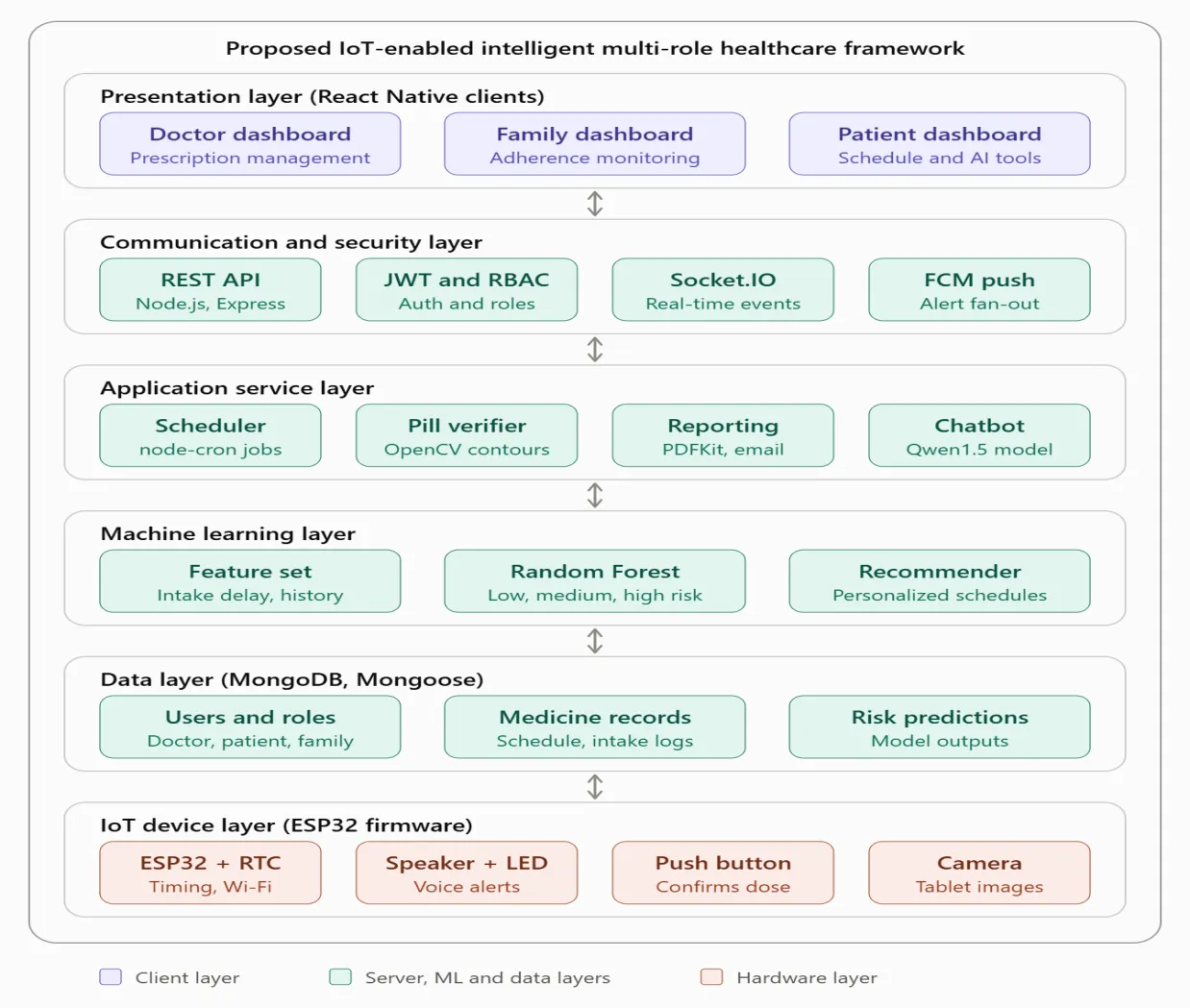
Figure 1: Proposed IoT- Enabled Intelligent Multi-Role Healthcare Framework
As shown in Figure 1, the framework has six layers. I have noticed that there are three role based clients within the presentation layer. The communication and security layer provides the REST API, an authentication layer, with role based access control and a Socket. The I/O layer gives the ability to get real time updates. Inside the application service layer there is scheduling, verifying pills generating reports and the chatbot. The machine learning layer contains feature engineering, a risk classifier using Random Forest and a schedule recommender. MongoDB is used to store user roles, medicine data and risk predictions. The IoT device layer holds an ESP32 microcontroller, a time clock, an LED, a speaker to give visual and audio alerts, a push button to administer doses and a camera to take pictures of the tablets.
The dataset used for the Voice-Based Medicine Reminder System, containing related information includes details about medicines needed for scheduling, monitoring adherence and missed-dose risk prediction. The data contains the name of the medicine, scheduled time, dosage frequency, actual intake time and status of the medicine. All the collected medication records are provided to the Random Forest learning algorithm to predict the nature of the medication being taken by the patient. The predicted results are to provide risk alerts to the respective users. The data is continuously updated according to the medication schedules and acknowledgment records done by the system. The stored information also allows the Doctor and Family Member dashboards to monitor patient medication adherence. The proposed healthcare framework consists of the following three modules namely : i) Doctor Dashboard, ii) Family Member Dashboard and iii) Patient Dashboard.
The Doctor Dashboard is created to allow the doctor to manage and monitor the medication details of the registered patients. The doctor will be able to pick a patient and see their medication information in the dashboard’s My Patient view. It will show name, all the prescription medications the patient is taking and information such as medicine name, dosage, duration and if the medicine is being taken or not currently. This will provide the doctor a picture of the patients medication routine. Another section of the dashboard is the Doctor Profile, which allows the doctors professional information and consulting hours to be displayed.
The doctor has access to the patients prescribed medicines list. Keep track of the status of the medications. The proposed system helps to organize the information about medicines in a table, which will be easy for the doctor to review the current treatment of the patient and know which medicines need to be continued or monitored. In addition to medication capabilities the Doctor Dashboard also gives patient related health information and monitoring capabilities. The proposed system can show health information and the medication adherence of the selected patient. The features will allow the doctor to know the patients medication history and track updates to the patients history within the system.
The Family Member Dashboard has been created to allow family members or caregivers to keep track of the patients medication schedule. The Current Active Regimen is displayed in the dashboard that contains the medicines a patient is currently taking, their dosages and the scheduled intake information. The family member will have access to the medication schedules. They can check if medicines are taken or missed without having to control the doctors prescription. There is also an Activity Feed in the dashboard which shows recent medication-related activity, including medication actions and their status.
The dashboard shows medication adherence by the taken and missed status indicators, which assist family members to know when the medication has been missed and assists them to provide the needed support. Family member can mark the medication as taken if the patient forgets to press the button. The dashboard also offers missed dose alerts and the patients risk score to facilitate medicine monitoring. In this regard Family Member Dashboard serves as a monitoring platform between the patient, family member and doctor helping caregivers to stay informed about the patients adherence to medication when not physically present.
The Patient Dashboard provides the patient an access to their daily medication schedule and related healthcare information. The main dashboard displays the medication schedule along with the medicine name, dosage, scheduled time and the upcoming activities of the medication. It also provides information about adherence to medications allowing the patient to view what medications they have taken and their medication status. The dashboard holds modules like Health, Management, Health Metrics, Calendar, Daily Mind Exercises and Artificial Intelligence (AI) Memory Assistant for additional patient assistance.
The Artificial Intelligence (AI) Pill Verification verifies the tablet, before medication is taken by using a camera image with OpenCV Adaptive Thresholding and Contour Detection. Voice reminders of the medications and a physical button is provided for the patient to press after the medication is administered to record the medication status. The dashboard also includes the Artificial Intelligence (AI) Memory Assistant chatbot, monthly medication reports, simple memory and fun games to keep the brain stimulated. The Calendar enables the patient to see medication activities and adherence over a period of time. Overall the Patient Dashboard is all one needs to view medication schedules have voice reminders, verify tablets check medication history and manage their healthcare routine. The working model of the proposed framework is shown in figure 2.
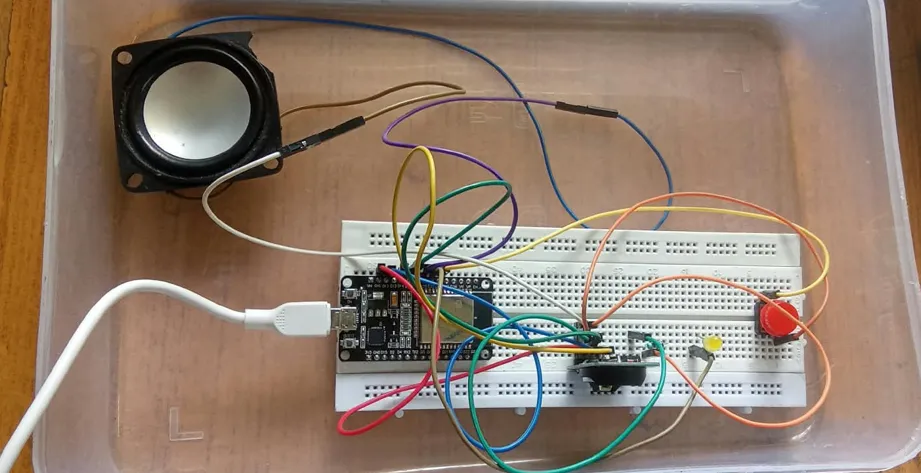
Figure 2: Hardware Prototype of the Smart Voice-Based Medicine Reminder System
RESULTS AND DISCUSSIONS
The Smart Voice-Based Medicine Reminder System is a medication management system that includes the hardware reminder unit, web application, database, machine learning model and chatbot. The medicine reminder timing is handled by the ESP32 and DS3231 RTC while the voice reminder is provided by the speaker. The web interface has the Doctor and Family Members Dashboard and the Patient Dashboard for managing medication schedules, tracking medication activities and accessing health-related information. In addition the proposed system uses the Random Forest algorithm for medication pattern analysis and interactive help through the Qwen 1.5 chatbot. The performance and functionality of the system components are described in the tables.
Table 1: Performance Analysis of Random Forest Algorithm
| Model | Accuracy (%) | Precision (%) | Recall (%) | F1-Score (%) | AUC-ROC |
|---|---|---|---|---|---|
| Random Forest | 92.00% | 91.50 | 90.80 | 91.15 | 0.94 |
The accuracy, precision, recall, F1 score and AUC-ROC were used to assess the performance of the Random Forest algorithm as shown in table 1. The result shows that the model has a level of accuracy in analyzing the medication pattern of the patient as described by the dataset used. The precision and recall also show a representation of medication intake patterns and the F1-score shows the balance between precision and recall. In addition the AUC-ROC also shows the ability of the model to distinguish between medication intake patterns in the data set used. Therefore with the accuracy, precision and recall the proposed model is sufficient to provide analytical support for medication management in the proposed system.
Table 2: Performance Analysis of Qwen 1.5 Chatbot
| Model | Accuracy (%) | Precision (%) | Recall (%) | F1-Score (%) | AUC-ROC |
|---|---|---|---|---|---|
| Random Forest | 90.00% | 89.50 | 88.70 | 89.10 | 0.92 |
The evaluation of the chatbot Qwen 1.5 is based on the response mechanism for medication-related health-related and general queries as shown in table 2. The evaluation focuses on the correctness and relevance of the responses delivered by the model. The outcome of the performance analysis indicates that the chatbot can offer responses to medication- and health-related queries to support the application in its intended purpose. Additionally the model can also engage users in conversations on general topics. Therefore the chatbot’s integration into the application will offer a conversational interface to deliver medication reminders and monitoring services.
The AI Pill Verification involves the use of image processing techniques such as Adaptive Thresholding and Contour Detection to analyze the image captured by the camera and verify the existence of the medication before the patient confirms medication intake. The camera image processing involves analyzing the image data captured by the camera to identify the tablet region based on the shape of the tablet. The image processing technique works based on the image pixels and/or geometric shape and size, therefore the image does not have to be trained using the machine learning model. Therefore if the image captured satisfies the verification requirements that indicates the medication has been detected and verified by the system. Hence the Performance Analysis for Artificial Intelligence Pill verification is described in the Table 3.
Table 3: Performance Analysis of AI Pill Verification
| Component | Technique / Metric | Result |
|---|---|---|
| OpenCV Pill Verification | Adaptive Thresholding | Working |
| Tablet Detection | Contour Detection | Working |
| Shape Analysis | Tablet shape and contour identification | Verified |
| Live Camera Input | Real-time tablet image processing | Working |
| Pill Verification | Tablet detection and verification feature | Pass |
Hardware, software and application functions were tested under their operating conditions to establish the performance of the developed system. The tests involved medication schedule handling, RTC-based medicine reminder, voice and LED reminder, push-button acknowledgment, dashboard operations, record medication status, handling the database, machine learning analysis and chatbot interaction. Each component was tested independently using the intended function. The experimental are depicted in Table 4 indicating the actual performance of the features.
Table 4: Functional Test Summary
| Test Case | Expected Behaviour | Result |
|---|---|---|
| Medication Schedule | Correctly store and display medication name and dosage and correct time of intake | Pass |
| DS3231 RTC Timing | Identify the time of the reminder as per the medication timings | Pass |
| ESP32 Voice Reminder | Ensure the medicine reminder is played via the connected speaker | Pass |
| LED Reminder | LED should show this medication reminder | Pass |
| Push Button | Acknowledge the reminder and end an alert | Pass |
| Doctor Dashboard | Display and manage patient medication information | Pass |
| Family Member Dashboard | Display the patient's active medication routine and activity | Pass |
| Patient Dashboard | Display the patient medication schedule and health-related information | Pass |
| Medication Status | Record the patient's medication acknowledgement/status correctly | Pass |
| Random Forest Model | Analyze intake patterns and identify possible delayed or missed doses | Pass |
| Qwen 1.5 Chatbot | Provide responses to medication, health and general user queries | Pass |
| MongoDB Data Handling | Store and retrieve user, medication and schedule information correctly | Pass |
The overall experimental results provide an insight into the performance capabilities of the proposed system components used in the proposed medication management system. The hardware components can manage medication timing. Remind the patient of medication intake while enabling the user to acknowledge the reminder. The three dashboards for the doctor, family member and patient enable medication monitoring functions to offer medication management services. The Random Forest model can analyze medication intake patterns to identify missed or delayed medication intake. The Qwen 1.5 chatbot can provide responses, to medication, health-related queries and general inquiries. The database component can retrieve application data as needed. Therefore the combination of the components can enable the proposed medication management system to achieve its purpose. The overall experimental outcome of entire components is shown in Table 5.
Table 5: Overall Experimental Outcome
| Component | Metric | Result |
|---|---|---|
| ESP32 + DS3231 RTC | Medication timing | Working |
| Voice & LED Reminder | Reminder alert | Working |
| Push Button | Reminder acknowledgement | Working |
| Doctor Dashboard | Medication monitoring | Operational |
| Family Member Dashboard | Medication activity monitoring | Operational |
| Patient Dashboard | Schedule and health information | Operational |
| Random Forest | Medication intake pattern analysis | 92% Accuracy |
| Qwen 1.5 Chatbot | Response evaluation | 90% Accuracy |
| MongoDB | Data storage and retrieval | Working |
V. CONCLUSION AND FUTURE ENHANCEMENT
The proposed voice-based medicine reminder system is a solution designed to help people take their medicine on time and follow the schedule given by their doctor. The suggested healthcare system uses components like ESP32, DS3231 RTC, speaker, LED and buttons to create three dashboards one for doctors, one for family members and one for patients. These dashboards help manage medicine in a way. This IoT enabled system gives a voice reminder of five minutes duration before the time and at the scheduled time the patient has to press a button to show they took the medicine. The proposed system also checks if the pill is correct using a camera and AI methods like OpenCV Adaptive Thresholding and Contour Detection. The doctor and family dashboards show details like prescriptions medicine taken missed doses and updates. The devised system also provides the risk score by tracking the patient medicine taking status. This framework provides a personalized reminder based on patient’s medicine taking habits which is analyzed by using Random Forest algorithm. It also includes a Qwen1.5 chatbot to ask queries, medicine reports are generated in PDF format and provide simple fun games to improve patients memory. This healthcare system combines IoT devices for voice alert with mobile and web application that contains machine learning model for prediction, and provide user friendly system for patient medications.
In the future, the proposed system could be improved by adding more features like wearable devices for health monitoring and multilingual voice support which is used to make medication reminder system even better.
REFERENCES



Dr. S. Anitha, S. R. Aruna, S. Kokula Arthi, G. Sri Hari Priya, An Iot-Enabled Intelligent Multi-Role Healthcare Framework for Personalized Medication Schedule Recommendation, Int. J. Sci. R. Tech., 2026, 3 (11), 1041-1049. https://doi.org/10.5281/zenodo.24464052
 10.5281/zenodo.24464052