

We use cookies to ensure our website works properly and to personalise your experience. Cookies policy
Valley Oak Junior College, Sai, beside Prerana Hospital, Sri Ram Nagar Colony, Puppalguda, Manikonda, Telangana 500089
Artificial intelligence (AI) and Data Science have become the principal technological drivers of the Fourth Industrial Revolution, transforming organizational processes, business models, and employment patterns across the global economy. Rapid advances in machine learning, deep learning, natural language processing, computer vision, robotics, and generative AI have accelerated automation while simultaneously creating new opportunities for innovation and economic growth. These technological developments are fundamentally changing workforce requirements by increasing demand for advanced digital competencies and interdisciplinary expertise. The objective of this research is to critically examine the influence of AI and Data Science on present and future employment, evaluate the opportunities and challenges associated with intelligent automation, identify emerging careers, and propose strategies that enable workforce adaptation in the digital era. The study adopts a narrative research methodology by synthesizing findings from peer-reviewed scientific literature, reports published by international organizations, and recent evidence regarding AI adoption across multiple industrial sectors. The research demonstrates that AI is reshaping employment through both automation and augmentation rather than complete workforce replacement. Although repetitive and routine occupations remain vulnerable to automation, AI simultaneously generates demand for highly skilled professionals in artificial intelligence, machine learning, data analytics, cybersecurity, cloud computing, and AI governance. Successful workforce transformation depends on continuous learning, interdisciplinary education, ethical AI implementation, and collaborative policymaking among governments, industries, and academic institutions. In conclusion, AI and Data Science represent transformative technologies that will redefine the future of employment. Sustainable economic growth requires responsible AI deployment, workforce reskilling, robust regulatory frameworks, and human-centered innovation that enhances productivity while preserving social equity.
Artificial Intelligence (AI) has evolved from a theoretical concept into one of the most influential technologies driving modern economic and social transformation. The discipline originated from the pioneering work of Alan Turing, John McCarthy, Marvin Minsky, Allen Newell, and Herbert Simon during the 1950s, when research ers first proposed that machines could simulate aspects of human intelligence. Since then, advances in computational power, algorithm development, cloud computing, and large-scale data availability have significantly accelerated AI research and industrial implementation [1–4]. The emergence of Data Science has complemented AI by providing systematic methodologies for collecting, processing, analyzing, and interpreting large volumes of structured and unstructured data. Data Science integrates statistics, mathematics, computer science, machine learning, and domain-specific knowledge to extract meaningful information from complex datasets. The rapid growth of digital technologies, Internet of Things (IoT) devices, cloud platforms, and high-speed communication networks has generated unprecedented quantities of data, making Data Science indispensable for evidence-based decision making across industries [2,5]. AI and Data Science now constitute the technological foundation of the Fourth Industrial Revolution (Industry 4.0), characterized by cyber-physical systems, intelligent automation, digital twins, autonomous systems, and interconnected production environments. Organizations increasingly rely on predictive analytics, intelligent decision-support systems, robotic process automation, and generative AI to improve operational efficiency, reduce costs, and enhance customer experiences. Consequently, employment structures are undergoing profound transformation as intelligent technologies redefine traditional occupations while creating new professional roles requiring advanced digital competencies [2,6].
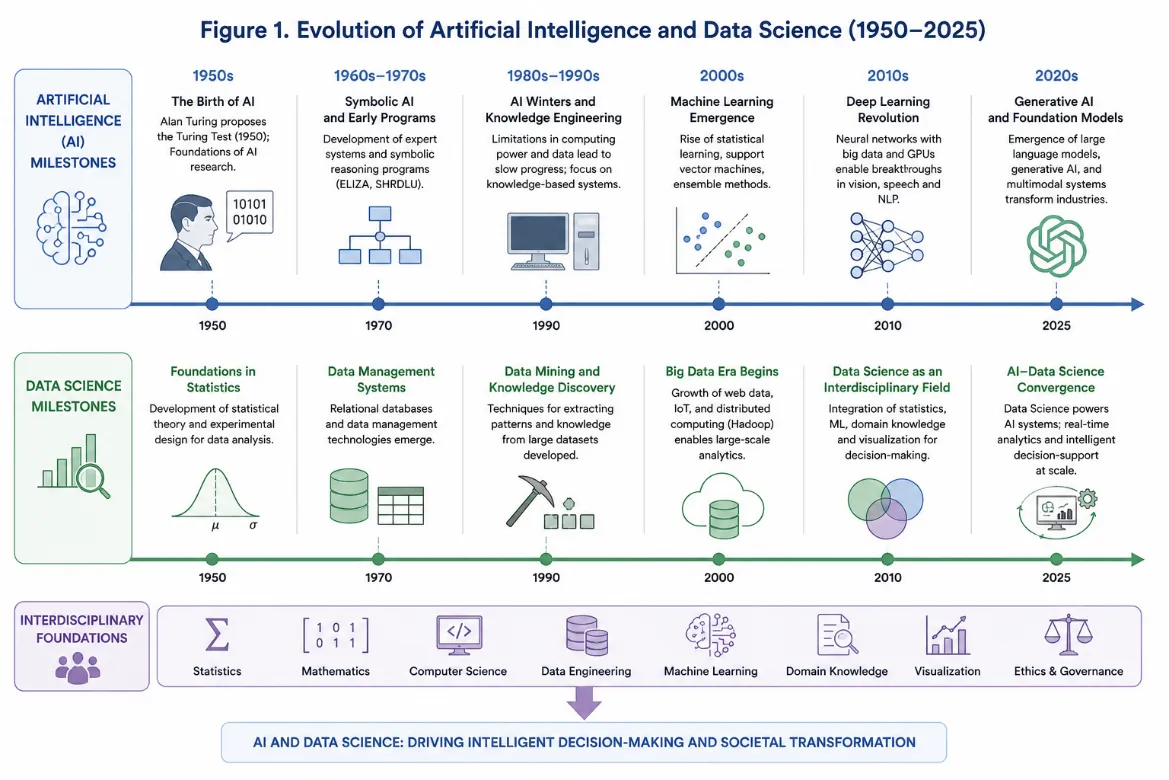
Figure 1. Evolution of Artificial Intelligence and Data Science (1950–2025).
Figure 1,shows that the historical milestones illustrating the development of Artificial Intelligence from symbolic AI to generative AI and the parallel emergence of Data Science as an interdisciplinary field supporting intelligent decision-making.
1.1 Need for the Study
The rapid adoption of AI across healthcare, manufacturing, finance, education, transportation, agriculture, pharmaceutical research , and public administration has fundamentally altered labor market dynamics. Intelligent automation increasingly performs repetitive, predictable, and data-intensive tasks that were traditionally executed by human workers. While this transformation improves productivity and organizational efficiency, it simultaneously raises concerns regarding workforce displacement and widening skill gaps [2,7]. Recent international reports indicate that AI is expected to substantially modify occupational structures over the coming decade, with many existing jobs being transformed rather than eliminated. Organizations increasingly prioritize employees capable of collaborating with intelligent systems, interpreting data, and making strategic decisions supported by AI technologies. Consequently, educational institutions and governments face growing pressure to redesign curricula, strengthen digital literacy, and promote lifelong learning initiatives that prepare workers for AI-enabled workplaces.
1.2 Problem Statement
Despite the remarkable benefits associated with AI and Data Science, several significant challenges continue to impede sustainable workforce transformation. Automation threatens occupations involving routine cognitive and manual tasks, potentially displacing vulnerable segments of the workforce. Simultaneously, organizations experience shortages of professionals possessing expertise in machine learning, artificial intelligence, cloud computing, cybersecurity, and advanced data analytics. Furthermore, AI implementation introduces ethical concerns regarding algorithmic bias, transparency, explainability, accountability, privacy protection, intellectual property, and regulatory compliance. The absence of harmonized governance frameworks increases uncertainty regarding responsible AI adoption, thereby emphasizing the necessity for multidisciplinary research addressing technological, economic, legal, and societal dimensions of employment transformation [3,7].
1.3 Objectives
The primary objective of this research is to examine the impact of Artificial Intelligence and Data Science on employment and workforce transformation. The specific objectives are to evaluate how AI influences employment opportunities and occupational structures, identify emerging careers created by AI-driven technological advancement, examine challenges associated with automation and workforce adaptation, investigate future employment trends in intelligent industries, and propose evidence-based strategies that support workforce resilience, lifelong learning, and responsible AI implementation.
1.4 Scope of the Study
This research focuses on the influence of Artificial Intelligence and Data Science on global employment across major economic sectors, including healthcare, manufacturing, banking and finance, education, retail, agriculture, transportation, pharmaceutical industries, and public administration. The study synthesizes recent scientific literature concerning AI technologies, industrial applications, workforce transformation, emerging occupations, ethical considerations, regulatory frameworks, and future trends influencing employment in the digital economy.
2. FUNDAMENTALS OF ARTIFICIAL INTELLIGENCE AND DATA SCIENCE
2.1 Artificial Intelligence
Artificial Intelligence (AI) is a multidisciplinary field of computer science concerned with the development of intelligent systems capable of performing tasks that traditionally require human cognitive abilities, including learning, reasoning, perception, language understanding, decision-making, and problem solving. John McCarthy originally defined AI as "the science and engineering of making intelligent machines," a definition that continues to underpin contemporary AI research despite the significant evolution of computational techniques over recent decades [8]. AI has progressed from rule-based symbolic systems to data-driven learning algorithms capable of extracting complex patterns from massive datasets, thereby enabling intelligent behavior across numerous real-world applications.
Modern AI systems rely on the integration of advanced algorithms, high-performance computing, cloud infrastructure, and large-scale data repositories. Unlike traditional software that follows explicitly programmed instructions, AI systems continuously improve their performance through exposure to data and iterative optimization. This capability enables intelligent systems to recognize images, understand speech, generate human-like text, detect anomalies, recommend personalized content, and support complex decision-making processes across diverse industrial environments [9]. Artificial Intelligence is generally classified into three categories according to its functional capability. Artificial Narrow Intelligence (ANI), often referred to as Weak AI, performs specialized tasks within predefined domains such as medical image analysis, fraud detection, recommendation systems, and autonomous navigation. Artificial General Intelligence (AGI) represents a hypothetical form of intelligence capable of performing any intellectual task that humans can accomplish, while Artificial Superintelligence (ASI) describes a theoretical future state in which machine intelligence surpasses human cognitive abilities across all domains. Although current commercial systems remain within the ANI category, rapid advances in large language models and multimodal AI have significantly expanded the capabilities of intelligent systems [10].
The fundamental components of AI include knowledge representation, machine learning, reasoning, search algorithms, natural language processing, computer vision, robotics, planning, and expert systems. Machine learning has emerged as the dominant paradigm because it enables algorithms to learn directly from data rather than relying exclusively on manually encoded knowledge. Deep neural networks, reinforcement learning, probabilistic reasoning, and transformer architectures have substantially improved the accuracy and adaptability of AI systems, leading to widespread industrial adoption.
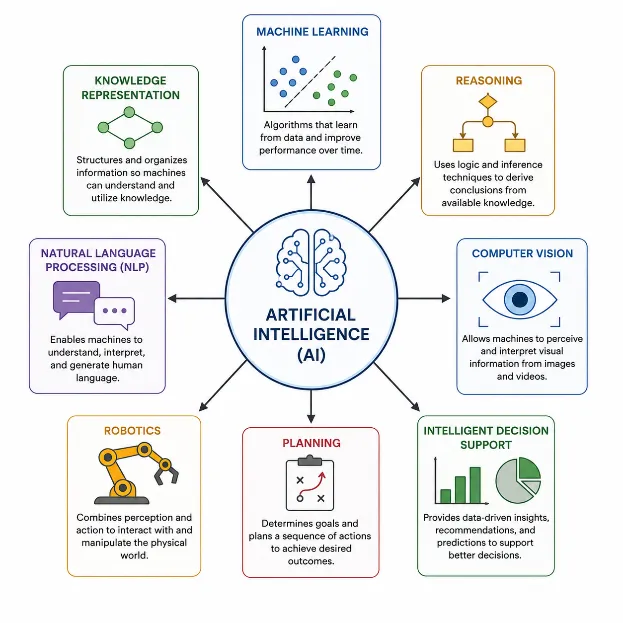
Figure 2. Fundamental components of Artificial Intelligence.
The figure 2 , shows that the conceptual illustration showing the major components of AI, including machine learning, knowledge representation, reasoning, natural language processing, computer vision, robotics, planning, and intelligent decision support.
2.2 Data Science
Data Science is an interdisciplinary field that combines statistics, mathematics, computer science, domain expertise, and information technology to extract meaningful knowledge from structured, semi-structured, and unstructured datasets. The increasing digitalization of society has produced unprecedented volumes of information from social media platforms, electronic health records, financial transactions, industrial sensors, satellite imagery, and Internet of Things (IoT) devices. Data Science provides systematic methodologies for transforming these raw datasets into actionable knowledge that supports evidence-based decision-making [11.].
The Data Science lifecycle consists of several interconnected stages beginning with problem identification and data acquisition. Collected data undergo cleaning, integration, transformation, and preprocessing before exploratory data analysis is conducted to identify patterns, trends, and anomalies. Feature engineering and model development subsequently enable predictive or prescriptive analytics using statistical models and machine learning algorithms. Model evaluation, deployment, continuous monitoring, and periodic retraining ensure sustained performance in real-world environments [12].The technological ecosystem supporting Data Science includes programming languages such as Python and R, relational and non-relational databases, cloud computing platforms, distributed computing frameworks including Apache Spark and Hadoop, visualization software, machine learning libraries, and MLOps pipelines for model deployment. These technologies collectively enable organizations to analyze datasets containing billions of observations while maintaining scalability, reproducibility, and operational efficiency [13].
2.3 Relationship Between Artificial Intelligence and Data Science
Although Artificial Intelligence and Data Science are frequently used interchangeably, they represent distinct yet highly complementary disciplines. Data Science primarily focuses on acquiring, managing, analyzing, and interpreting data, whereas Artificial Intelligence emphasizes the development of computational systems capable of intelligent behavior. Data Science generates the high-quality datasets and analytical insights necessary for training AI algorithms, while AI provides sophisticated computational methods that enhance predictive modeling, automation, and decision support. Machine learning forms the principal intersection between these disciplines. Data scientists prepare and engineer datasets before selecting appropriate machine learning algorithms for predictive analysis. AI engineers subsequently optimize these models, integrate them into software systems, and deploy intelligent applications capable of autonomous operation. Consequently, modern AI systems depend heavily upon robust Data Science methodologies for acquiring representative training datasets, minimizing bias, improving model accuracy, and ensuring reproducibility.
The integration of AI and Data Science has significantly transformed numerous industries. Healthcare organizations employ predictive analytics and AI-assisted diagnostics to improve patient outcomes. Financial institutions combine Data Science with AI-driven fraud detection and algorithmic trading systems. Manufacturing industries integrate predictive maintenance, industrial robotics, and intelligent quality control systems, while educational institutions increasingly adopt personalized learning platforms supported by learning analytics and generative AI technologies.
|
Parameter |
Artificial Intelligence |
Data Science |
|
Primary objective |
Develop intelligent systems |
Extract knowledge from data |
|
Core focus |
Learning, reasoning and automation |
Data collection, processing and analysis |
|
Major techniques |
Machine learning, deep learning, NLP, robotics |
Statistics, data mining, visualization, predictive analytics |
|
Typical outputs |
Intelligent decision systems |
Analytical insights and predictive models |
|
Industrial role |
Automation and intelligent decision-making |
Data-driven business intelligence |
Table 2. Comparison between Artificial Intelligence and Data Science
2.4 Evolution of Artificial Intelligence and Data Science
The historical evolution of Artificial Intelligence has been characterized by alternating periods of rapid innovation and reduced research activity. Following the Dartmouth Conference in 1956, symbolic reasoning and expert systems dominated AI research for several decades. Limited computational resources and insufficient data subsequently contributed to periods commonly referred to as "AI winters," during which industrial investment declined substantially. The emergence of powerful graphics processing units (GPUs), cloud computing, big data technologies, and deep learning algorithms during the last fifteen years fundamentally transformed AI into one of the fastest-growing scientific disciplines. In parallel, Data Science evolved from classical statistics, operations research , and database management into a comprehensive discipline capable of handling petabyte-scale datasets. Advances in distributed computing, cloud infrastructure, and big data analytics enabled organizations to process information generated from increasingly connected digital ecosystems. The convergence of AI, Data Science, Internet of Things technologies, cloud computing, blockchain, and edge computing has created intelligent cyber-physical systems that define the technological foundation of Industry 4.0 and increasingly support the transition toward Industry 5.0. Recent developments in foundation models, transformer architectures, and generative AI have further strengthened the relationship between Artificial Intelligence and Data Science. Large language models are now capable of generating text, software code, scientific summaries, images, and multimodal content with remarkable accuracy, fundamentally transforming knowledge-intensive occupations and expanding opportunities for human-AI collaboration across research , education, healthcare, engineering, finance, and public administration [14].
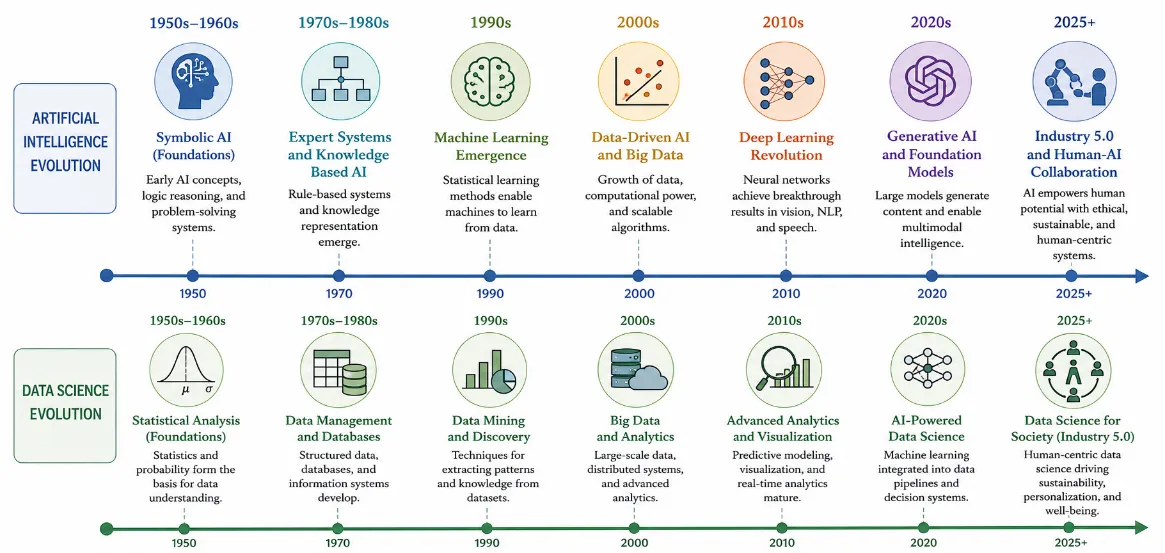
Figure 4. Evolution of Artificial Intelligence and Data Science.
Timeline illustrating the evolution from symbolic AI and statistical analysis to machine learning, deep learning, big data analytics, generative AI, and Industry 5.0.
3. AI TECHNOLOGIES TRANSFORMING EMPLOYMENT
Artificial Intelligence technologies have become the principal drivers of workforce transformation in the digital economy. Recent advances in computational intelligence have enabled organizations to automate repetitive tasks, augment human decision-making, improve operational efficiency, and create entirely new categories of employment. Rather than functioning as isolated technologies, machine learning, deep learning, natural language processing, computer vision, robotics, and generative AI collectively form an integrated technological ecosystem that is reshaping occupational structures across healthcare, finance, manufacturing, education, agriculture, transportation, and public administration. Current evidence suggests that AI adoption primarily changes the composition of work by automating specific tasks while simultaneously increasing demand for workers capable of supervising, interpreting, and improving AI systems [15].
3.1 Machine Learning
Machine Learning (ML) is a branch of Artificial Intelligence that enables computer systems to learn patterns from data and improve predictive performance without explicit programming. ML algorithms construct mathematical models from historical observations and apply these learned relationships to classify, predict, or optimize future outcomes. Supervised learning, unsupervised learning, semi-supervised learning, and reinforcement learning represent the four major paradigms that currently dominate industrial AI applications. Machine learning has transformed employment by enabling predictive maintenance, intelligent recommendation systems, fraud detection, demand forecasting, customer segmentation, supply chain optimization, and predictive healthcare analytics. Financial institutions employ supervised learning algorithms to identify fraudulent transactions within milliseconds, while manufacturing industries utilize predictive maintenance models that reduce equipment downtime and maintenance costs. Healthcare organizations increasingly apply ML algorithms to disease prediction, diagnostic support, and personalized treatment planning, thereby improving both efficiency and clinical outcomes [16].
3.2 Deep Learning
Deep Learning (DL) represents an advanced subset of machine learning based on multilayer artificial neural networks capable of automatically learning hierarchical feature representations from large datasets. Unlike conventional machine learning algorithms that often require manual feature engineering, deep learning models autonomously identify increasingly complex data patterns through multiple computational layers. The remarkable success of deep learning has revolutionized speech recognition, medical image interpretation, autonomous vehicles, financial forecasting, industrial inspection, and scientific discovery. Convolutional Neural Networks (CNNs) dominate image analysis applications, while Recurrent Neural Networks (RNNs), Long Short-Term Memory (LSTM) networks, and Transformer architectures have transformed sequential data processing and language understanding [17].
3.3 Robotics and Intelligent Automation
Robotics and Intelligent Automation combine artificial intelligence, sensor technologies, computer vision, machine learning, and robotic control systems to perform physical and cognitive tasks with minimal human intervention. Robotic Process Automation (RPA) extends these capabilities to digital workflows by automating repetitive administrative processes such as invoice processing, payroll management, document verification, and customer onboarding. Manufacturing industries have experienced particularly significant workforce transformation through collaborative robots (cobots), autonomous mobile robots, and intelligent production systems. Rather than replacing entire occupations, collaborative robotics increasingly redistributes responsibilities, allowing workers to concentrate on supervision, maintenance, quality improvement, and process optimization. In logistics and warehousing, autonomous guided vehicles, robotic picking systems, and AI-powered inventory management improve operational efficiency while creating demand for robotics technicians, automation engineers, industrial AI specialists, and systems integration professionals. Consequently, employment shifts from repetitive manual activities toward higher-value technical and supervisory roles [18].
3.6 Generative Artificial Intelligence
Generative Artificial Intelligence represents one of the most significant technological developments in recent decades. Unlike conventional AI systems that primarily classify or predict outcomes, generative AI models create new content including text, images, software code, audio, video, scientific summaries, and engineering designs. Foundation models based on transformer architectures have enabled unprecedented improvements in reasoning, communication, and creative problem-solving.
Generative AI is transforming employment by augmenting rather than completely replacing professional work. Software developers use AI-assisted programming tools to accelerate code generation and debugging, research ers employ generative AI for literature synthesis, educators create personalized learning materials, and healthcare professionals automate clinical documentation. Evidence from workplace studies indicates that AI assistance can significantly improve productivity, particularly among less experienced employees, while enabling knowledge transfer and faster task completion [19].
Despite these benefits, generative AI introduces challenges related to hallucinated outputs, intellectual property, misinformation, cybersecurity, algorithmic bias, and overreliance on automated decision-making. Organizations increasingly recognize the importance of maintaining human oversight, rigorous validation procedures, and responsible AI governance to ensure safe deployment of generative systems.
Recent systematic reviews conclude that generative AI is unlikely to produce uniform job displacement across all occupations. Instead, its effects vary considerably according to task complexity, industry characteristics, worker expertise, and organizational readiness. Knowledge-intensive professions are expected to experience substantial task redesign, while new occupations involving AI governance, prompt engineering, model evaluation, AI safety, and human-AI collaboration continue to emerge [20].
4. APPLICATIONS OF AI AND DATA SCIENCE ACROSS INDUSTRIES
Artificial Intelligence (AI) and Data Science have become indispensable technologies across virtually every economic sector. Organizations increasingly integrate intelligent algorithms, predictive analytics, cloud computing, and big data platforms into routine operations to improve productivity, reduce operational costs, enhance customer satisfaction, and support evidence-based decision-making. The convergence of AI with advanced analytics has accelerated digital transformation and significantly altered workforce requirements by creating demand for highly skilled professionals capable of designing, implementing, and managing intelligent systems [21].
4.1 Healthcare
Healthcare has emerged as one of the most influential sectors benefiting from AI and Data Science. AI-assisted clinical decision support systems improve diagnostic accuracy by analyzing medical images, laboratory reports, genomic data, and electronic health records. Deep learning algorithms have demonstrated remarkable performance in detecting diseases such as breast cancer, diabetic retinopathy, pneumonia, cardiovascular disorders, and neurological conditions. Predictive analytics also enables healthcare providers to identify patients at risk of complications, thereby facilitating early intervention and personalized treatment planning .Natural Language Processing (NLP) has transformed clinical documentation by automatically extracting information from physician notes and generating structured medical records. Virtual assistants and AI-powered chatbots provide preliminary patient support, appointment scheduling, medication reminders, and health education, reducing administrative burdens on healthcare professionals [22].
4.2 Manufacturing
Manufacturing industries have experienced one of the most significant transformations through AI-enabled automation and Industry 4.0 technologies. Machine learning algorithms optimize production scheduling, predictive maintenance, inventory management, energy consumption, and quality control. Computer vision systems continuously inspect manufactured products for defects, significantly improving production accuracy while reducing waste and operational costs [23].Industrial robots equipped with AI increasingly perform repetitive assembly, welding, packaging, and material handling operations. Collaborative robots (cobots) safely operate alongside human workers, improving productivity while allowing employees to focus on supervisory, maintenance, and quality assurance activities. The adoption of intelligent manufacturing systems has generated demand for automation engineers, robotics specialists, industrial data scientists, digital manufacturing experts, and AI maintenance engineers. As production facilities become increasingly data-driven, manufacturing organizations require professionals capable of integrating operational technology with information technology and AI platforms [24].
4.3 Banking and Finance
The banking and financial services sector extensively employs AI for fraud detection, algorithmic trading, credit scoring, risk management, customer relationship management, and regulatory compliance. Machine learning algorithms continuously analyze millions of financial transactions to identify suspicious behavior that may indicate fraud or money laundering.Financial institutions also utilize predictive analytics to evaluate creditworthiness, optimize investment portfolios, forecast market trends, and personalize financial services according to customer preferences. AI-powered virtual assistants improve customer service by providing instant responses to routine banking inquiries while reducing operational costs.
The increasing adoption of AI has created employment opportunities for quantitative analysts, AI engineers, financial data scientists, cybersecurity specialists, and regulatory technology professionals. Simultaneously, routine administrative activities such as manual document verification and transaction processing are progressively automated, allowing employees to concentrate on advisory and strategic functions [25].
4.4 Education
Artificial Intelligence is transforming education through intelligent tutoring systems, adaptive learning platforms, automated assessment, learning analytics, and personalized educational content. AI systems analyze student learning behavior to identify knowledge gaps and recommend individualized instructional materials that accommodate different learning styles and academic performance levels. Automated grading systems reduce educators' administrative workload while enabling instructors to dedicate additional time to mentoring, curriculum development, and student engagement. Generative AI further supports education by assisting with lesson preparation, content generation, programming instruction, language learning, and research activities.
Educational institutions increasingly require instructional designers, educational data analysts, AI curriculum specialists, and digital learning technologists capable of integrating intelligent technologies into teaching environments. Rather than replacing educators, AI functions as an instructional support system that enhances teaching effectiveness and student outcomes [26].
4.5 Retail and E-commerce
Retail organizations employ AI to optimize inventory management, demand forecasting, recommendation systems, dynamic pricing, customer segmentation, and supply chain operations. Recommendation algorithms analyze customer purchasing behavior to provide personalized product suggestions, increasing customer satisfaction and sales performance [27]. Computer vision technologies enable cashier-less retail environments, automated inventory monitoring, and customer behavior analysis. AI-powered chatbots provide continuous customer support while predictive analytics assists retailers in anticipating market demand and minimizing inventory shortages.
The expansion of AI-driven retail has increased employment opportunities in digital marketing, customer analytics, supply chain optimization, e-commerce management, and AI product development [28].
4.6 Agriculture
Agriculture increasingly relies on AI and Data Science to improve productivity, sustainability, and resource utilization. Precision agriculture integrates satellite imagery, drones, weather forecasting, IoT sensors, and machine learning algorithms to monitor crop health, detect plant diseases, optimize irrigation, and estimate crop yields. AI-assisted decision support systems help farmers determine optimal planting schedules, fertilizer application rates, and pest management strategies while reducing environmental impacts. These technologies contribute to sustainable food production and climate-resilient agriculture [29].
5. IMPACT OF AI AND DATA SCIENCE ON EMPLOYMENT
The rapid advancement of Artificial Intelligence (AI) and Data Science has significantly transformed the global employment landscape by changing the relationship between human labour, technology, and organizational processes. Unlike earlier technological revolutions that primarily replaced manual and repetitive physical tasks, modern AI systems are increasingly capable of performing cognitive activities such as decision-making, pattern recognition, language processing, predictive analysis, and complex problem-solving. These developments have created a dual impact on employment by introducing both opportunities and challenges. AI-driven technologies have contributed to job displacement in some sectors while simultaneously improving human capabilities, increasing productivity, and generating new categories of employment requiring advanced digital skills [30].
5.1 Job Automation
Job automation represents one of the most discussed consequences of AI and Data Science adoption. AI-based automation involves the use of algorithms, machine learning models, robotics, and intelligent software systems to perform tasks that were previously dependent on human labour. The primary objective of automation is to increase efficiency, reduce operational costs, improve accuracy, and minimize errors in repetitive activities. However, automation has raised concerns regarding employment displacement, particularly in occupations involving routine cognitive and physical tasks.Traditional automation technologies were mainly restricted to industrial environments where machines replaced manual labour in manufacturing processes. In contrast, AI-powered automation has expanded into knowledge-based occupations because modern systems can process large datasets, recognize patterns, generate predictions, and support complex decision-making. Industries such as banking, healthcare administration, transportation, retail, and customer service have increasingly implemented AI systems to automate workflow processes [31].
5.2 Job Augmentation
Job augmentation refers to the process through which AI and Data Science technologies enhance human capabilities rather than replace human workers. In augmented work environments, AI systems function as intelligent assistants that provide recommendations, analyze information, automate routine components of tasks, and support improved decision-making. This approach represents a collaborative relationship between humans and machines where technological systems increase worker effectiveness and productivity. Unlike automation, which focuses on substituting human activities, augmentation emphasizes improving the quality and efficiency of human performance. For example, healthcare professionals use AI-based diagnostic systems to analyze medical images and identify potential diseases, allowing doctors to make more accurate decisions. Similarly, financial analysts use machine learning models to identify market trends and assess risks more effectively. The integration of AI augmentation has significantly influenced professional occupations by expanding human capabilities. Lawyers can use AI systems for document analysis, engineers can apply predictive models for design optimization, and educators can use intelligent learning platforms to personalize instruction. These applications demonstrate that AI can enhance expertise rather than eliminate professional roles [32].
6. EMERGING CAREERS IN AI AND DATA SCIENCE
The rapid development of Artificial Intelligence (AI), Machine Learning (ML), and Data Science has created a new employment ecosystem characterized by specialized technical, analytical, and managerial roles. Unlike traditional occupations where technology primarily acted as a supporting tool, AI-driven industries require professionals who can design intelligent systems, manage complex data infrastructures, interpret algorithmic outputs, and ensure responsible implementation of automated technologies. The increasing adoption of AI across healthcare, finance, manufacturing, education, transportation, and business sectors has accelerated demand for professionals with expertise in computational methods, statistical modelling, data management, and ethical AI practices [33]. The emergence of AI-related careers reflects the transition from a traditional labour market toward a knowledge-based digital economy. Organizations are no longer dependent only on software developers or information technology specialists but require multidisciplinary professionals capable of combining programming, mathematics, domain expertise, and strategic decision-making. According to global workforce studies, AI and Data Science occupations represent some of the fastest-growing employment categories due to increased organizational dependence on data-driven decision-making and intelligent automation [34].
6.1 AI Engineer
AI Engineers represent one of the most important emerging professional roles in the artificial intelligence ecosystem. These professionals are responsible for designing, developing, implementing, and maintaining AI-based systems that allow machines to perform tasks requiring human-like intelligence [35]. Their responsibilities include developing machine learning models, integrating AI algorithms into software applications, optimizing system performance, and ensuring that AI solutions operate efficiently within real-world environments [30].The role of AI Engineers extends beyond programming because successful AI implementation requires knowledge of mathematics, statistics, computer architecture, and domain-specific requirements. AI Engineers often collaborate with data scientists, software developers, and business specialists to transform experimental AI models into scalable applications. Their expertise is particularly important in areas such as natural language processing, computer vision, autonomous systems, and intelligent automation [36].
6.2 Data Scientist
Data Scientists play a central role in converting large volumes of raw data into meaningful knowledge that supports organizational decision-making. Their primary responsibility involves collecting, cleaning, analysing, and interpreting complex datasets using statistical methods, machine learning techniques, and computational tools. Data Scientists enable organizations to identify patterns, predict future trends, and develop evidence-based strategies [37]. The importance of Data Scientists has increased because modern organizations generate enormous quantities of data from digital platforms, sensors, customer interactions, and operational systems. However, raw data alone does not provide value unless professionals can transform it into actionable insights. Data Scientists therefore combine programming knowledge, statistical expertise, and business understanding to solve complex problems. The profession has expanded beyond traditional data analysis by incorporating artificial intelligence methods. Modern Data Scientists frequently develop predictive models, recommendation systems, forecasting algorithms, and automated analytical solutions. Their work supports applications ranging from personalized healthcare and financial risk assessment to marketing optimization and industrial forecasting [38].
7. SKILLS REQUIRED FOR FUTURE EMPLOYMENT
The transformation of employment due to Artificial Intelligence (AI) and Data Science has created a strong demand for new skill sets that combine technical expertise, analytical capabilities, and human-centred competencies. Future employment opportunities will increasingly depend on the ability of individuals to collaborate with intelligent technologies rather than compete against them. While AI systems can automate repetitive tasks and process large volumes of information, human skills such as creativity, critical thinking, communication, and adaptability remain essential for solving complex problems and making responsible decisions [39]. The future workforce requires a balanced combination of technical and non-technical skills. Technical skills enable professionals to develop, operate, and utilize AI-driven systems, whereas soft skills allow individuals to interpret information, collaborate effectively, and adapt to continuously changing technological environments. Therefore, successful participation in the AI-driven economy depends on interdisciplinary competence rather than specialization in a single domain [40].
7.1 Technical Skills
Technical skills form the foundation of careers in Artificial Intelligence (AI) and Data Science by enabling professionals to develop, analyze, and manage intelligent technology-driven solutions. As organizations increasingly adopt AI, predictive analytics, and automation, expertise in programming, data management, cloud platforms, and analytical tools has become essential. Key technical skills include:
Python: The primary programming language for AI and Data Science due to its simplicity, flexibility, and extensive libraries such as TensorFlow, PyTorch, Scikit-learn, NumPy, and Pandas, which support machine learning, data analysis, and AI application development [41].
R Programming: Widely used for statistical analysis, predictive modelling, data visualization, and scientific research , particularly in healthcare, economics, biotechnology, and social sciences, supporting evidence-based decision-making [42].
SQL (Structured Query Language): Essential for retrieving, managing, cleaning, and transforming data stored in relational databases, ensuring high-quality data preparation for AI and machine learning applications [43].
7.2 Soft Skills
Soft skills are equally important as technical skills in AI-supported workplaces because they enable professionals to work effectively with intelligent technologies while applying human judgement, creativity, communication, and leadership. Although AI can automate routine tasks, analyse large datasets, and generate predictions, it cannot replace essential human capabilities such as critical thinking, problem-solving, innovation, emotional intelligence, and ethical decision-making. As organizations increasingly integrate AI into their operations, professionals must possess a balanced combination of technical expertise and interpersonal skills to ensure successful collaboration between humans and intelligent systems. Critical thinking enables professionals to evaluate AI-generated information, question assumptions, identify potential biases, and make informed decisions rather than relying solely on automated outputs. Problem-solving skills are essential for identifying challenges, selecting appropriate technological approaches, and implementing effective solutions in complex AI-driven environments. Creativity complements AI by allowing individuals to generate innovative ideas, design new products and services, and use AI as a collaborative tool for strategic thinking and innovation. Effective communication ensures that complex technical concepts and analytical findings can be clearly explained to managers, colleagues, and end users, thereby improving teamwork and the successful implementation of AI solutions. Leadership skills are increasingly important for managing digital transformation, guiding multidisciplinary teams, promoting ethical AI practices, and aligning technological initiatives with organizational objectives. Finally, adaptability enables professionals to continuously learn emerging technologies, adjust to changing workplace requirements, and remain competitive in an environment where AI and digital innovations are evolving rapidly. Together, these soft skills enhance organizational performance and prepare the workforce to effectively collaborate with AI technologies while addressing future workplace challenges [44].
8. CHALLENGES AND RISKS ASSOCIATED WITH AI AND DATA SCIENCE ADOPTION
The rapid integration of Artificial Intelligence (AI) and Data Science into economic and social systems has created significant opportunities for innovation, productivity improvement, and employment transformation. However, alongside these benefits, AI adoption introduces several challenges related to employment stability, workforce preparedness, data management, cybersecurity, ethical responsibility, regulatory control, and social equality. The impact of AI is not determined only by technological capability but also by how societies, organizations, and governments manage its implementation. Therefore, understanding and addressing these challenges is essential for ensuring that AI development contributes to sustainable and inclusive economic growth [45]. AI-driven transformation is fundamentally changing the nature of work by shifting employment requirements from routine task execution toward advanced cognitive, analytical, and digital capabilities. While AI technologies create new professional opportunities, they may also increase inequality between workers who possess relevant digital skills and those unable to adapt to technological changes. Effective workforce strategies, ethical governance frameworks, and inclusive policies are required to maximize the benefits of AI while reducing potential negative consequences [46].
9. ETHICAL AND LEGAL CONSIDERATIONS
The rapid advancement of Artificial Intelligence (AI) and Data Science has created significant ethical and legal challenges that require responsible development, transparent decision-making, and effective regulatory frameworks. AI systems increasingly influence important areas such as employment, healthcare, finance, education, and public services; therefore, ensuring fairness, accountability, privacy, and human control is essential. Ethical and legal considerations provide a foundation for developing AI technologies that are safe, trustworthy, and beneficial to society. Responsible AI focuses on designing and deploying AI systems that operate fairly, transparently, securely, and without causing harm [47]. It emphasizes principles such as fairness, accountability, privacy protection, and avoidance of discrimination. Explainable AI (XAI) aims to improve transparency by enabling users and stakeholders to understand how AI systems generate decisions, particularly in high-impact applications where trust and accountability are required. AI governance provides organizational and regulatory structures for managing AI development, including risk assessment, ethical standards, compliance monitoring, and responsible implementation [48].
10. FUTURE TRENDS IN AI AND DATA SCIENCE
The future development of Artificial Intelligence (AI) and Data Science is expected to transform employment, industries, and social systems through advanced automation, intelligent decision-making, and increased human–machine interaction. Emerging trends indicate that AI will move beyond task automation toward collaborative systems that enhance human capabilities, improve productivity, and support sustainable development. However, successful adoption of future AI technologies will depend on responsible innovation, workforce preparation, and equitable access to advanced digital solutions. Human-AI collaboration represents a major future direction where intelligent systems and humans work together to achieve better outcomes. Instead of replacing human workers completely, AI will increasingly support professionals by improving analysis, creativity, decision-making, and problem-solving capabilities. AI-powered decision-making will become more common as organizations use predictive analytics and machine learning models to support strategic planning, risk assessment, and operational optimization [49].
11. STRATEGIES FOR WORKFORCE READINESS
The successful transition toward an AI-driven economy requires effective workforce preparation strategies that enable individuals, organizations, and governments to adapt to technological changes [50]. Workforce readiness depends on developing relevant skills, improving access to learning opportunities, and creating supportive policies that promote inclusive participation in the digital economy. A coordinated approach involving educational institutions, industries, governments, and employees is essential to ensure that AI adoption creates sustainable employment opportunities rather than increasing workforce inequality. Educational reforms are necessary to update traditional learning systems according to the requirements of AI and Data Science-based employment. Educational institutions must integrate programming, data literacy, artificial intelligence concepts, analytical thinking, and interdisciplinary learning into curricula to prepare students for future careers. Industry–academia collaboration can strengthen workforce development by connecting academic knowledge with practical industry requirements through internships, research partnerships, skill-based training, and technology innovation programs [51].
12. GLOBAL CASE STUDIES
The global adoption of Artificial Intelligence (AI) and Data Science varies across countries depending on technological capabilities, workforce readiness, research infrastructure, and government policies. These differences highlight how AI is transforming employment while creating new challenges related to workforce skills, regulation, and ethical implementation. The United States remains a global leader in AI innovation due to its strong technology ecosystem, research institutions, and investment in AI, creating significant demand for AI engineers, data scientists, and machine learning specialists while also emphasizing responsible AI development and workforce reskilling [52]. The European Union (EU) has adopted a human-centred approach by promoting trustworthy AI, digital skill development, data protection, and ethical governance to ensure that technological advancement benefits both organizations and employees [53]. China has accelerated AI adoption through government-supported initiatives and industrial automation, driving growth across manufacturing, healthcare, transportation, and e-commerce while increasing the need for workforce reskilling as automation replaces traditional roles [54]. India has strengthened its digital economy by investing in AI education, digital literacy, cloud computing, and information technology, generating new employment opportunities despite continuing challenges in advanced skill development across regions [55]. In the healthcare and pharmaceutical sectors, AI has enhanced drug discovery, disease prediction, medical imaging, and personalized medicine, improving research and patient care while requiring strong ethical standards, data privacy, and human oversight to ensure safe and reliable healthcare delivery [56].
13. FUTURE RESEARCH DIRECTIONS
Future research on AI and employment should focus on developing technologies and policies that support human-centred, sustainable, and inclusive workforce transformation. Research on human-centred AI systems is needed to improve collaboration between humans and intelligent technologies while maintaining human decision-making authority. AI governance research should continue developing effective frameworks for transparency, accountability, fairness, and responsible AI deployment. Workforce resilience models represent another important research area because future employees require strategies for adapting to continuous technological change. Sustainable AI-driven employment research should examine how AI can create long-term economic opportunities while minimizing negative effects on workers and society. The relationship between AI and mental well-being in workplaces requires further investigation because increased automation, digital monitoring, and changing job structures may influence employee stress and work satisfaction. The rapid growth of Generative AI has created new research challenges regarding its impact on knowledge-based professions such as education, law, research , software development, and creative industries. Future studies should evaluate how generative AI changes professional roles, productivity, creativity, and human expertise [57].
15. FUTURE SCOPE
The future development of Artificial Intelligence (AI) and Data Science is expected to significantly influence workforce evolution by creating more adaptive, intelligent, and human-centred employment systems. Future AI applications will focus not only on automation but also on improving career growth, education, workplace flexibility, ethical technology adoption, and collaboration between humans and intelligent systems [58]. The successful integration of AI into employment environments will depend on balancing technological innovation with human skills, responsible governance, and inclusive access. AI-enabled personalized career development is expected to become an important approach for supporting lifelong employability [59]. AI-based platforms can analyse individual skills, professional experiences, learning patterns, and labour market trends to recommend suitable career pathways, training programs, and skill development opportunities. These systems can help workers continuously adapt to changing job requirements and improve career decision-making [60]. The integration of AI into higher education curricula will play a crucial role in preparing future professionals. Universities and educational institutions are expected to incorporate AI literacy, machine learning concepts, data analytics, programming skills, and ethical AI principles into academic programs. AI-supported learning platforms may also provide personalized education experiences by adapting content according to student needs and performance [61].
CONCLUSION
Artificial Intelligence (AI) and Data Science are transforming the global employment landscape by reshaping industries, redefining workforce requirements, and creating new opportunities for innovation and economic growth. This review demonstrates that AI is not merely replacing human labour but increasingly augmenting human capabilities through intelligent automation, predictive analytics, and data-driven decision-making. While routine and repetitive tasks remain vulnerable to automation, emerging occupations in artificial intelligence, machine learning, data science, cybersecurity, cloud computing, and AI governance are generating significant demand for highly skilled professionals. The study further highlights that successful adaptation to AI-driven workplaces requires continuous upskilling, interdisciplinary education, digital literacy, and lifelong learning initiatives. Ethical AI implementation, transparency, data privacy, fairness, and robust regulatory frameworks are equally essential to ensure responsible and sustainable technological advancement. Global case studies indicate that countries investing in AI research, workforce development, and supportive public policies are better positioned to maximize economic and societal benefits while minimizing workforce displacement. Looking ahead, the future of employment will increasingly depend on effective collaboration between humans and intelligent systems rather than competition between them. Therefore, governments, industries, educational institutions, and policymakers must work collectively to develop human-centred AI ecosystems that promote innovation, resilience, inclusiveness, and sustainable workforce transformation in the rapidly evolving digital economy.
REFERENCES

Sri Harsha Borra*, Artificial Intelligence And Data Science In The Future Of Employment: Opportunities, Challenges, And Workforce Transformation, Int. J. Sci. R. Tech., 2026, 3 (8), 506-522. https://doi.org/10.5281/zenodo.21933432
 10.5281/zenodo.21933432