

We use cookies to ensure our website works properly and to personalise your experience. Cookies policy
SND College of Pharmacy, Babhulgaon
Biosimilars have emerged as an important component of modern biopharmaceutical development, offering potentially more affordable alternatives to reference biological products while maintaining comparable quality, safety and efficacy. Unlike conventional small-molecule generics, biosimilars are produced using living cells and complex manufacturing processes, and therefore cannot be considered identical copies of their reference products. The demonstration of biosimilarity requires a comprehensive, stepwise and evidence-based comparison involving analytical characterization, functional assessment, pharmacokinetic/pharmacodynamic evaluation, immunogenicity assessment and, where scientifically justified, clinical studies. India has developed substantial expertise in the development and manufacture of biosimilars and has become an important contributor to the global biopharmaceutical landscape. However, developers continue to encounter scientific, technical, regulatory and clinical challenges. These include molecular heterogeneity, post-translational modifications, glycosylation variability, protein aggregation, process-related impurities, analytical comparability, immunogenicity, manufacturing consistency, extrapolation of indications, interchangeability and post-marketing pharmacovigilance. The Indian regulatory framework has evolved considerably since the introduction of the Similar Biologics Guidelines in 2012. The 2016 framework established a more structured stepwise approach, while the revised 2025 guidelines incorporate newer scientific and international developments. The revised framework places greater emphasis on advanced orthogonal analytical techniques, in-vitro functional characterization, reference standards and a scientifically justified approach to non-clinical studies. This review discusses the scientific basis of biosimilarity, major biological and manufacturing challenges, the evolution of India's regulatory framework, clinical and pharmacovigilance considerations, and the future opportunities for Indian biosimilar development. Particular attention is given to the transition toward a more analytical and evidence-driven regulatory paradigm and to areas requiring continued harmonization with international practices.
Biological medicines have transformed the management of numerous chronic, autoimmune, oncological, metabolic and inflammatory disorders. Therapeutic proteins, monoclonal antibodies, hormones, cytokines and other biologically derived products have provided treatment options for conditions that previously had limited therapeutic alternatives.[1]
However, biological medicines are generally more complex to manufacture than conventional small-molecule medicines. Their structural characteristics are strongly influenced by the expression system, cell line, culture conditions, purification process, formulation and storage conditions. Consequently, even relatively small changes in manufacturing processes may influence product quality attributes.[2]
Biosimilars have been developed to provide highly similar alternatives to already approved reference biological products. The World Health Organization (WHO) describes biosimilar evaluation as a comparative exercise in which similarity to a licensed reference product is established through a comprehensive assessment.[3] The WHO's revised 2022 framework emphasizes scientific principles and allows regulatory pathways to be adapted according to the characteristics of the product and the residual uncertainty after analytical and functional assessment.[4]
India has been an early participant in biosimilar development. The country's regulatory pathway began with the 2012 Similar Biologics Guidelines, followed by the 2016 revision. The latest revision in 2025 reflects advances in analytical science and international regulatory approaches. [5]
The scientific challenge is therefore not simply to manufacture a biological product containing the same active ingredient. Rather, the developer must establish that differences between the proposed biosimilar and reference product do not result in clinically meaningful differences in quality, safety or efficacy.[6]
2. Biosimilars versus Conventional Generics
A conventional generic drug normally contains the same active pharmaceutical ingredient as its reference small-molecule drug and can generally be characterized by chemical identity and bioequivalence.[7]
Biosimilars are fundamentally different.
Table 1: Biosimilar vs Innovator vs Generic
| Feature | Conventional Generic | Biosimilar |
|---|---|---|
| Molecular complexity | Relatively low | High |
| Manufacturing | Chemical synthesis | Living cells/biological systems |
| Molecular structure | Usually well defined | Complex and heterogeneous |
| Manufacturing variability | Comparatively limited | Potentially substantial |
| Analytical characterization | Relatively straightforward | Extensive orthogonal characterization |
| Regulatory demonstration | Bioequivalence | Totality/evidence-based similarity |
| Immunogenicity | Usually limited | Important consideration |
| Manufacturing process | Generally independent of molecular structure |
Closely linked to product attributes |
Thus, the concept of biosimilarity is based on comparability rather than molecular identity.[8]
3. Scientific Basis of Biosimilarity
The development of a biosimilar generally follows a stepwise evidence-generation strategy.
Major stages
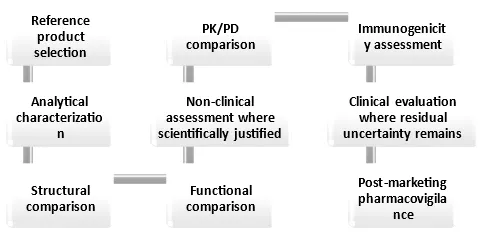
Figure 1: Biosimilar development pathway
This approach is consistent with the scientific principles described by WHO and reflected in India's revised regulatory framework. [9,10]
4. Major Biological Challenges
4.1 Molecular heterogeneity
Biological molecules are not necessarily single molecular entities. They may exist as populations of closely related molecular variants.
Examples include differences in:
The challenge is to determine whether observed differences are inherent variability or whether they could influence biological activity or clinical performance.[11]
4.2 Post-translational modifications
Post-translational modifications (PTMs) are particularly important for recombinant proteins and monoclonal antibodies.[12]
Common PTMs include:
Differences in PTMs may influence:
Recent analytical literature continues to identify PTM characterization and higher-order structure as important challenges in biosimilarity assessment. [13]
5. Glycosylation: A Critical Challenge
Glycosylation represents one of the most important differences that can arise between biologics manufactured using different cell systems or processes.
Important characteristics include:
For monoclonal antibodies, glycosylation may influence Fc receptor interactions and effector functions such as antibody-dependent cellular cytotoxicity.[14,15]
Therefore:
Different cell line → different processing environment → altered glycosylation → potentially altered biological properties
Advanced methods such as mass spectrometry, chromatography and electrophoretic techniques are increasingly important for characterization. [16]
6. Protein Aggregation
Protein aggregation is another important quality concern.
Aggregates may develop during:
Aggregation can potentially affect:
Consequently, aggregate characterization and control are important components of biosimilar development. [17,18]
7. Analytical Characterization
Analytical characterization forms the foundation of modern biosimilar development.[19]
Important analytical attributes include:
Primary structure
Higher-order structure
Purity
Charge characteristics
Glycosylation
Biological activity
Common analytical technologies include:
Recent scientific reviews emphasize the importance of combining orthogonal analytical methods because no single analytical platform can fully characterize a complex biological molecule. [20,21,22]
8. Manufacturing Challenges in India
Biosimilar manufacturing requires highly controlled biological production systems.
Important manufacturing stages include:
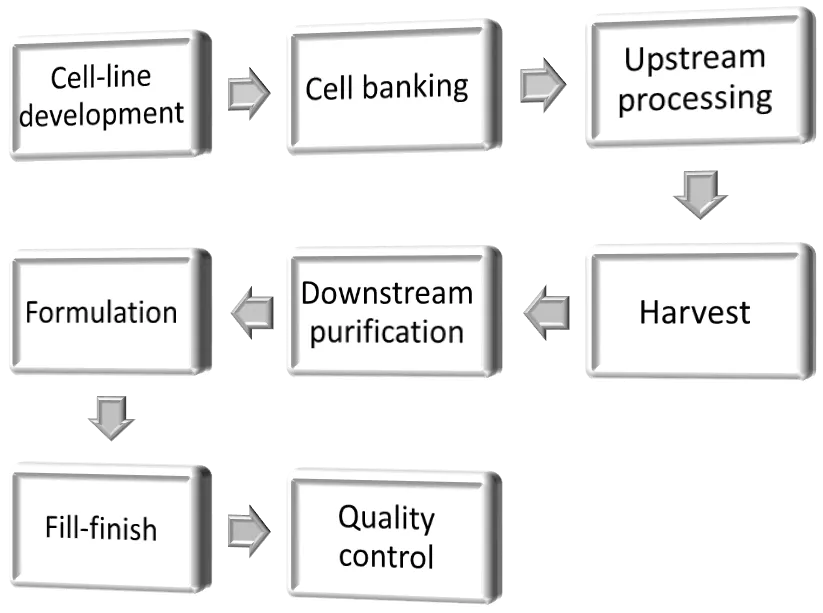
Figure 2: Major biological challenges
A major challenge is maintaining consistency between batches.
Small changes in:
Therefore, “process consistency” is a central requirement for biosimilar quality.
Previous Indian literature has identified batch-to-batch consistency, skilled manpower, validated procedures and manufacturing controls as important practical challenges. [23]
9. Regulatory Evolution in India
India's biosimilar regulatory framework has undergone several stages.
Table 2: 2012 vs 2016 vs 2025 Indian regulatory framework
| Year | Development |
|---|---|
| 2012 | Initial Similar Biologics regulatory framework |
| 2016 | Revised guidelines with stronger scientific/stepwise approach |
| 2022 | WHO revised global biosimilar principles |
| 2025 | Revised Indian Similar Biologics framework reflecting newer scientific developments |
The 2025 CDSCO document explicitly states that it replaces the 2016 guideline and incorporates current scientific evidence and international developments, particularly WHO TRS 1043. [24]
10. Important Features of the 2025 Indian Framework
The revised framework introduces or strengthens several areas.
10.1 Advanced analytical methodologies
Greater emphasis is placed on modern analytical technologies and orthogonal approaches for demonstrating analytical similarity.
10.2 In-vitro studies
The revised framework provides a more elaborate consideration of in-vitro studies.
10.3 Reference standards
The guideline provides additional considerations regarding reference standards and the development/use of in-house reference standards.
10.4 Non-clinical studies
The need for animal studies is considered in a more scientifically justified manner.
The framework also refers to the 3Rs principle: Replace → Reduce → Refine with the objective of minimizing unnecessary animal testing. [25,26]
11. Clinical Development Challenges
Clinical development remains an important component of biosimilar evaluation.
Major considerations include:
Pharmacokinetics
Parameters may include:
Pharmacodynamics
PD biomarkers can provide evidence of biological similarity where a sensitive and clinically relevant marker is available.
Immunogenicity
Anti-drug antibodies and neutralizing antibodies may be assessed.
Clinical efficacy and safety
The extent of clinical evaluation depends on the product, available analytical evidence and remaining uncertainty.
The modern regulatory philosophy increasingly emphasizes resolving uncertainty early through analytical and functional characterization rather than automatically relying on large clinical efficacy trials. India's 2025 revision reflects this movement toward stronger analytical and in-vitro evidence. [27,28]
12. Immunogenicity
Immunogenicity refers to the ability of a biological product to stimulate an immune response.
Potential consequences include:
Potential determinants include:
Importantly, immunogenicity cannot be predicted solely from one analytical test. It requires an integrated assessment extending from product characterization to clinical and post-marketing monitoring.[29,30]
13. Interchangeability and Switching Interchangeability is distinct from biosimilarity.
Biosimilarity:
The product has been demonstrated to be highly similar to its reference product with no clinically meaningful differences in relevant characteristics.
Interchangeability:
Concerns the regulatory and clinical conditions under which one product can be substituted for another.
Different jurisdictions use different approaches.
The FDA maintains a separate regulatory concept for interchangeable biosimilars, whereas regulatory approaches in other jurisdictions may differ.
For India, interchangeability and substitution remain important areas for continued regulatory clarification and clinical-policy development. Earlier Indian analyses have specifically identified interchangeability, nomenclature and labelling as areas requiring attention. [31,32]
14. Extrapolation of Indications
One of the major advantages of biosimilar development is the possibility of using scientific justification to support multiple indications of the reference product.
However, extrapolation requires consideration of:
Therefore, extrapolation should be based on scientific evidence rather than simply assuming that similarity in one indication automatically proves equivalence in every disease.[33]
15. Pharmacovigilance
Post-marketing surveillance is particularly important for biological products.
A pharmacovigilance system should be capable of identifying:
Accurate product identification is essential for traceability.
A robust pharmacovigilance system should therefore integrate:
Product identification → adverse-event reporting → batch identification → signal detection → regulatory action. [34]
16. India-Specific Challenges India has several advantages:
However, challenges remain.
Table 3: Major biological challenges and analytical solutions
| Challenge | Potential consequence |
|---|---|
| Complex molecular characterization | Difficulty demonstrating similarity |
| Manufacturing variability | Batch-to-batch differences |
| High analytical cost | Increased development expenditure |
| Skilled manpower requirements | Development bottlenecks |
| Clinical development costs | Delayed commercialization |
| Immunogenicity uncertainty | Safety concerns |
| Pharmacovigilance limitations | Difficulty identifying rare signals |
| Physician awareness | Variable adoption |
| Interchangeability uncertainty | Switching concerns |
| International regulatory differences | Export barriers |
Indian literature has previously identified industry-academia collaboration, regulatory complexity, physician awareness, manufacturing consistency and pharmacovigilance as relevant barriers. [36]
17. India versus International Regulatory Approaches
Table 4: India vs FDA vs EMA vs WHO
| Parameter | India | WHO | United States |
European Union |
|||||
|---|---|---|---|---|---|---|---|---|---|
| Regulatory authority/framework |
CDSCO/Indian framework |
WHO principles |
FDA | EMA/EU framework |
|||||
| Basic concept | Similarity | Similarity | Biosimilarity | Biosimilarity | |||||
| Analytical characterization |
Central | Central | Central | Central | |||||
| Functional studies | Important | Important | Important | Important | |||||
| Clinical evidence | Risk- based/evolving |
Stepwise | Risk-based | Stepwise | |||||
| Interchangeability | Developing framework |
Not a national substitution policy |
Separate designation |
National/EU policy considerations |
|||||
| Pharmacovigilance | Required | Recommended principle |
Required | Required | |||||
| Animal studies | Scientifically justified under revised framework |
Flexible | Productdependent | Productdependent |
WHO explicitly provides globally acceptable scientific principles that national regulatory authorities can adapt to their own regulatory systems.
The FDA also maintains specific guidance covering biosimilarity, interchangeability and comparative analytical assessment. In September 2025, FDA finalized updated guidance on comparative analytical assessment for therapeutic protein biosimilars.[37]
18. Recent Regulatory Direction
An important global trend is movement from clinical-heavy biosimilar development toward analytical and functional evidence-driven development.
The rationale is straightforward:
If a biosimilar can be demonstrated to be highly similar through sensitive analytical and functional methods, the residual uncertainty requiring additional clinical testing may be reduced.
This concept is reflected in the WHO's revised framework and India's 2025 regulatory revision.
Recent FDA guidance has similarly strengthened the focus on comparative analytical assessment and quality-related considerations. [38]
19. Future Perspectives
Future biosimilar development in India is likely to be influenced by several scientific and technological advances.
Artificial intelligence and machine learning
Potential applications include:
Advanced analytical platforms
Future development will increasingly rely on:
Digital manufacturing
Process analytical technology and real-time monitoring may improve:
Reduced animal testing
The increasing adoption of the 3Rs principle and better in-vitro approaches may reduce unnecessary animal studies. India's revised 2025 guideline explicitly addresses this direction.
Global regulatory harmonization
Greater alignment between India, WHO, FDA and EMA principles could potentially reduce duplication and facilitate international development.[39,40]
20. Key Research Gaps
Despite considerable progress, several areas deserve further investigation:
21. Proposed Conceptual Framework
“Biosimilar Development in India – From Cell to Patient”
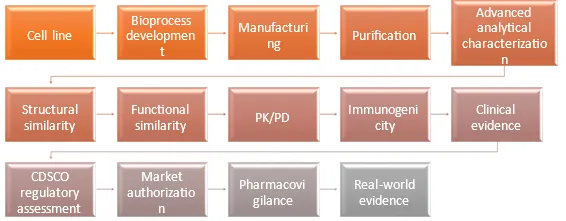
Figure 3: Indian regulatory pathway
This framework can form the basis of Figure 1 in the final manuscript.
CONCLUSION
Biosimilars represent an important opportunity to expand access to biological therapies while maintaining rigorous standards of quality, safety and efficacy. However, the development of a biosimilar is considerably more complex than the development of a conventional generic drug because biological products are structurally complex and sensitive to manufacturing conditions.
For India, the evolution from the 2012 framework to the 2016 guideline and subsequently the revised 2025 framework represents an important progression toward a more scientifically integrated regulatory approach. The 2025 revision strengthens the role of advanced analytical characterization, in-vitro functional studies, reference standards and scientifically justified non-clinical testing.
The future success of India's biosimilar sector will depend not only on manufacturing capability but also on sophisticated analytical science, process control, skilled human resources, robust pharmacovigilance and greater regulatory harmonization. Continued development of sensitive analytical and functional methods may reduce residual uncertainty and enable more efficient biosimilar development without compromising patient safety.
Ultimately, the advancement of biosimilars in India requires a balance between scientific rigor, regulatory efficiency, manufacturing quality, affordability and patient confidence.
REFERENCES


Valavi Monika Mangesh, Chaudhari Prachi Kashiram, Dare Akanksha, Rothe Pragati, Sonal Dumada, Nikam Pranoti, Biosimilars in India: An Overview of Biological Challenges, Regulatory Evolution, Manufacturing Barriers and Future Perspectives, Int. J. Sci. R. Tech., 2026, 3 (10), 1088-1099. https://doi.org/10.5281/zenodo.23527860
 10.5281/zenodo.23527860