View Article

Abstract

Bohring–Opitz syndrome (BOS) is a rare congenital disorder of unknown etiology diagnosed on the basis of distinctive clinical features, facial features, growth and feeding difficulties, severe developmental delay or intellectual disability, seizures, and a recognizable upper-limb posture with elbow flexion, ulnar deviation, and flexion of the wrists and metacarpophalangeal joints. Other manifestations may include microcephaly or trigonocephaly, hypertrichosis, palatal abnormalities, visual problems, congenital cardiac anomalies, recurrent respiratory infections, sleep apnea, renal abnormalities, scoliosis, and gastrointestinal dysmotility. Most molecularly confirmed cases are associated with heterozygous pathogenic variants in ASXL1. The condition may involve neurological, respiratory, gastrointestinal, cardiovascular, ophthalmologic, musculoskeletal and genitourinary systems. There is no curative treatment; care focuses on nutrition, prevention of complications, developmental intervention and multidisciplinary follow-up. Care is primarily supportive and requires coordinated nursing care and the nurses play a important role in this.

Keywords

Genetic disorder, developmental delay, intellectual disability, microcephaly, trigonocephaly, hypertrichosis, palatal abnormalities, feeding difficulties, intellectual disability, seizures

Introduction

× Popup Image

Bohring- Opitz syndrome (BOS) first described by Bohring et al in 1999, it is a ultra-rare congenital disorder of unknown etiology. Bohring–Opitz syndrome is a rare multiple-congenital-anomalies and neurodevelopmental disorder with antenatal or neonatal onset. It is recognized by growth restriction, severe feeding problems, microcephaly or trigonocephaly, characteristic facial appearance, typical upper-limb posture and severe developmental delay. Orphanet reports a prevalence below 1 in 1,000,000. Classic BOS is usually caused by a heterozygous pathogenic variant in ASXL1. In 2011, de novo truncating variants in ASXL1 were identified in affected individuals, establishing the major molecular basis. Most affected children have a de novo variant and are the first affected person in their family.1

2. Literature review

ASXL1-related Bohring-Opitz syndrome (BOS) is a rare autosomal dominant disorder characterized by distinctive craniofacial features, a recognizable early-childhood posture, growth failure, severe intellectual disability, and variable congenital anomalies. Clinical manifestations include microcephaly or trigonocephaly with a prominent metopic ridge, hypotonic facies with full cheeks, synophrys, nevus simplex, prominent and widely spaced eyes, palate anomalies, and micrognathia. The BOS posture, marked by flexion at the elbows with ulnar deviation and flexion of wrists and fingers, is most evident in early childhood. Feeding difficulties, cyclic vomiting, seizures responsive to standard therapy, recurrent infections, and minor cardiac anomalies are common, though many improve with age. Rare reports suggest increased risk for Wilms tumor and hepatoblastoma. Diagnosis is confirmed by identifying a heterozygous pathogenic variant in ASXL1. Management is multidisciplinary, addressing feeding issues, sleep apnea, craniofacial anomalies, seizures, and other systemic complications, with gastrostomy or tracheostomy considered in severe cases. Surveillance includes growth and developmental monitoring, systemic assessments, regular vision checks, and tumor screening with abdominal ultrasound and AFP levels in early childhood. Genetic counselling is essential, as most cases arise de novo, though parental mosaicism has been reported, and prenatal or preimplantation genetic testing is possible once the familial variant is known. This comprehensive approach underscores the complexity of BOS and the importance of coordinated care and vigilant surveillance in affected individuals.2

3. Etiology

The most causes that lead to Bohring-optiz syndrome , toe vast majority of cases occur sporadically as de novo mutations during early embryonic development. The other causes are included:

  • Mostly causes are idiopathy
  • Heterozygous mutations in the ASXL1 gene.
  • Most pathogenic variant are de novo truncating mutation (such a nonsense or frameshift mutation).
  • Microdeletion at chromosome 20q11.21
  • Microduplications at chromosome 20q11.21 (overlapping that disrupt the normal function of ASXL1)
  • Genetic overlap with related “ASXL1” family genes
  • Some time it may caused by unidentified genes in the ASXL1

4. Incidence

Bohring–Opitz Syndrome (BOS) is a rare, sporadic genetic disorder characterized by severe developmental challenges including feeding difficulties, intrauterine growth retardation, microcephaly, craniofacial anomalies, and a distinctive posture. Around half of the reported cases are linked to de-novo truncating mutations in the ASXL1 gene. The condition is often fatal in early childhood due to complications such as obstructive apnea and unexplained bradycardia. With only about 31 cases documented worldwide, every new study or report contributes significantly to advancing medical understanding of this devastating syndrome.3
figure

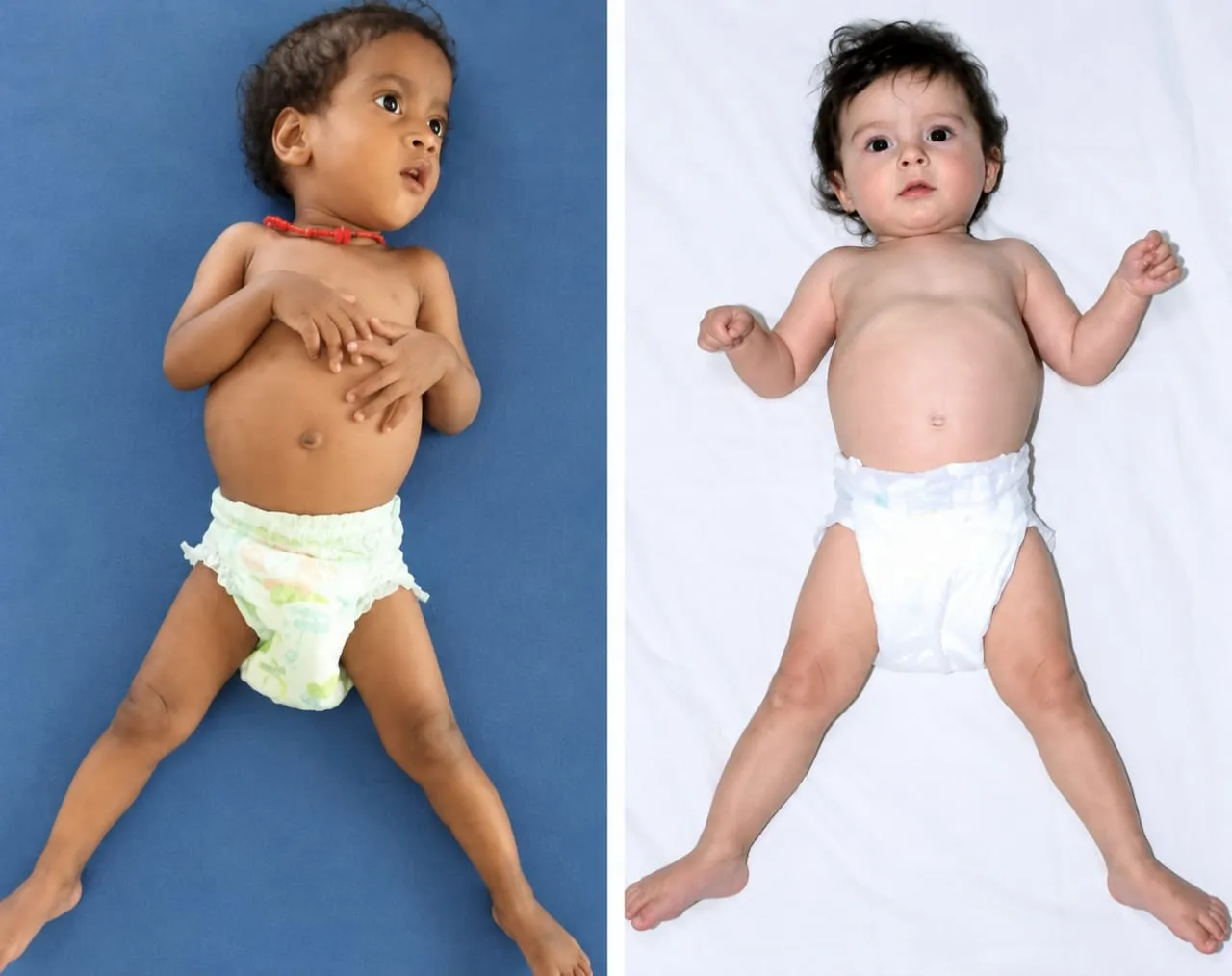
Figure 1: Child with Distinctive Posture

5. Pathophysiology

Mutation in the ASXL1 gene

↓

Abnormal regulation of gene expression

↓

Disruption of normal embryonic development

↓

Abnormal development of multiple organs and tissues

↓

Four major pathways of clinical manifestation

↓

Impaired growth ,abnormal skeletal development ,brain,and other organ

↓

Prenatal -postnatal

↓

Result BOS

6. Clinical manifestations
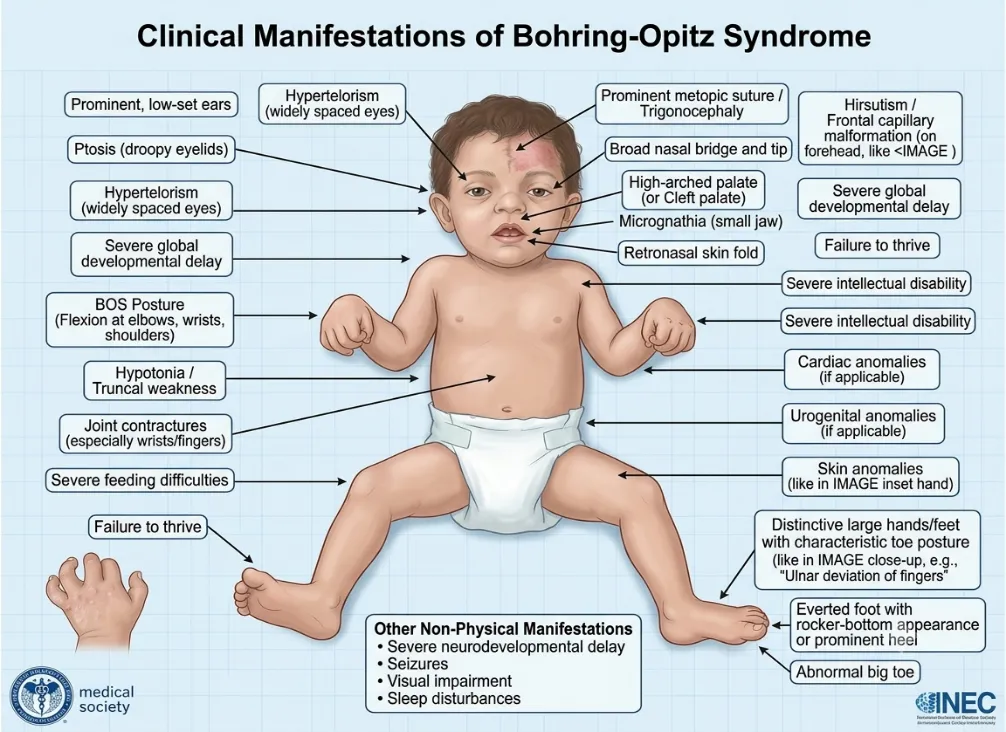
  • Growth: intrauterine growth restriction, poor postnatal weight gain, short stature and microcephaly.
  • Craniofacial: prominent/proptotic eyes, synophrys, glabellar or eyelid nevus simplex, full cheeks, micrognathia/retrognathia and palate abnormalities.
  • Characteristic posture: flexed elbows, ulnar deviation, flexed wrists and metacarpophalangeal joints, often with central hypotonia.
  • Neurological: severe developmental delay/intellectual disability, limited language, hypotonia and seizures.
  • Feeding/GI: severe feeding difficulty, chronic or cyclic vomiting, reflux, dysmotility, constipation and aspiration risk.
  • Respiratory/sleep: recurrent respiratory infections and obstructive or central sleep apnea.
  • Eyes: high myopia, retinal/optic nerve abnormalities and strabismus.
  • Cardiac/renal: congenital heart and renal abnormalities may occur.
  • Musculoskeletal: scoliosis, contractures and hip or other skeletal abnormalities.

figure

  • Other: recurrent infections and reported tumor predisposition. 4,5

7. Diagnosis and investigation

Diagnosis combines clinical recognition with molecular genetic confirmation. Broad baseline assessment is recommended because BOS can involve several organ systems

A. Clinical Assessment

  • Detailed growth, feeding, developmental, neurological, respiratory, sleep, visual, cardiac, renal and musculoskeletal assessment.
  • Recognition of characteristic facial features and BOS posture.
  • Review of seizure history, vomiting, aspiration, recurrent infection and sleep symptoms.

B. Laboratory and Imaging Investigations

  • Genetic testing: molecular analysis for pathogenic ASXL1 variants.
  • Growth/nutrition: serial weight, height and head circumference, nutritional assessment and swallowing evaluation.
  • Neurology: EEG when seizures are suspected and brain MRI when clinically indicated.
  • Cardiac: baseline echocardiogram and ECG, especially when congenital heart disease or bradycardia is suspected.
  • Respiratory/sleep: assessment for aspiration, pulmonary infection and apnea; polysomnography when indicated.
  • Ophthalmology: assessment for high myopia, retinal/optic nerve abnormalities and strabismus.
  • Renal/abdominal: ultrasound for renal structure and age-appropriate tumor surveillance.
  • Musculoskeletal: orthopedic assessment for scoliosis, hip dysplasia and contractures

8. Management

There is no curative treatment for ASXL1-related BOS. Management is supportive and individualized to improve nutrition, reduce aspiration and respiratory complications, support development and maximize quality of life and focused on nutrition, aspiration prevention, seizure control, respiratory health, development, vision, mobility and surveillance for associated complications.

  • Nutrition: feeding therapy, dietitian support, texture modification/thickened feeds when appropriate, and gastrostomy/gastrojejunostomy in selected children.
  • Vomiting: identify triggers and provide early treatment; maintenance therapy may be used when clinically indicated.
  • Respiratory: evaluate and treat sleep apnea, aspiration and recurrent pulmonary problems. Neurology: standard treatment for seizures when present.
  • Musculoskeletal: physiotherapy, occupational therapy, stretching, positioning and mobility devices.
  • Vision/hearing: regular specialist assessment and corrective/assistive measures.
  • Cardiac/renal: follow-up according to identified abnormalities.
  • Development: early intervention and individualized education.
  • Genetic counselling: explain diagnosis and family implications6

9. Nursing management

a. Growth and Development

  • Assess milestones and functional abilities regularly.
  • Provide age-appropriate stimulation and structured play.
  • Collaborate with PT, OT and developmental specialists.

b. Nutrition and Feeding

  • Assess feeding, swallowing safety, vomiting and weight gain.
  • Maintain safe positioning during and after feeds.
  • Observe for choking, coughing, desaturation or aspiration signs.
  • Coordinate with dietitian and feeding/swallowing specialists.

c. Respiratory and Sleep Care

  • Monitor respiratory rate, work of breathing and oxygen saturation.
  • Observe for apnea and respiratory distress.
  • Reinforce prescribed respiratory support and sleep follow-up.

d. Infection Prevention

  • Maintain hand hygiene and standard infection-prevention measures.
  • Monitor for fever and respiratory infection.
  • Reinforce vaccination and early recognition of illness

e. Mobility and Musculoskeletal Support

  • Assess posture, tone, range of motion and mobility.
  • Use safe positioning and prescribed stretching/physiotherapy.
  • Prevent falls and injuries.

f. Neurological and Seizure Care

  • Observe for abnormal movements or seizure activity.
  • Maintain seizure precautions when indicated.
  • Administer prescribed medicines and monitor response.

I. Communication and Developmental Support

  • Use simple, consistent communication and allow response time.
  • Encourage gestures, pictures or assistive communication.
  • Collaborate with speech-language specialists.

J. Caregiver Education and Psychosocial Support

  • Explain the condition and care needs in understandable language.
  • Teach safe feeding, medication, positioning and warning signs.
  • Assess caregiver stress and connect with support services

10. Prognosis

Bohring-optiz syndrome (BOS) carries a highly guarded prognosis, characterized by a significant infant mortality rate alongside severe, lifelong neurodevelopmental challenges for survivors. Studies and clinical registries indicate that approximately 40% to 50% of childhood, with many passing away before the age of five or seven within the first two years of life.

11. Nursing diagnosis

  • Risk for injury related to impaired balance and seizure activity.
  • Impaired physical mobility related to neuromuscular and coordination difficulties as evidenced by unsteady gait.
  • Imbalanced nutrition: less than body requirements related to feeding difficulties as evidenced by inadequate nutritional intake or poor weight gain
  • Ineffective breathing pattern / risk for impaired gas exchange
  • Caregiver role strain related to the long-term care requirements of a child with a chronic neurodevelopmental disorder

12. NURSING CARE PLAN

Assessment Nursing diagnosis Goals Nursing intervention Evaluation
Feeding difficulty; poor weight gain Imbalanced nutrition: less than body requirements related to feeding difficulty Child will maintain adequate nutritional intake and appropriate weight gain Monitor intake and weight;
Provide appropriate feeding assistance
Maintain upright position during feeding
Refer to dietitian when needed
Child maintains adequate intake and weight
Child demonstrates difficulty walking and maintaining balance Impaired physical mobility related to neuromuscular impairment Impaired physical mobility related to neuromuscular impairment Assist with prescribed physiotherapy
Encourage safe movement
Provide mobility aids if required
Use appropriate positioning
Mobility and balance improve according to baseline
Child has unsteady gait and poor balance Risk for injury related to impaired coordination and seizures Child will remain free from injury Maintain safe environment
Remove obstacles
Provide supervision during walking
Implement seizure precaution
Child remains free from injury Parents show concern regarding long-term care
Parents show concern regarding long-term care Caregiver role strain related to increased caregiving demands Parents will verbalize understanding and demonstrate effective coping Provide emotional support
Educate parents
Involve parents in care
Provide information regarding available support services
Parents demonstrate understanding and confidence in care3

13. Important Multidisciplinary care

Care may involve paediatricians, clinical geneticists, developmental specialists, nutrition/feeding teams, pulmonology or sleep specialists, neurologists, cardiologists, ophthalmologists, orthopedic specialists, physiotherapists, occupational therapists, speech-language therapists, nurses and social-support services. Gene Reviews recommends surveillance tailored to the child's manifestations.

Nursing coordination is important because feeding, respiratory, neurological, developmental and caregiver needs may occur simultaneously.

CONCLUSION

Bohring-Opitz syndrome is an exceptionally rare genetic disorder most commonly associated with pathogenic variants in ASXL1. Distinctive facial features, severe feeding difficulty, poor growth, developmental impairment, seizures and the characteristic upper-limb posture should prompt consideration of BOS and genetic evaluation. Molecular confirmation supports appropriate counselling and surveillance. Nursing care has a central role in safe feeding, aspiration prevention, respiratory monitoring, seizure safety, developmental stimulation, mobility support, communication, infection prevention and caregiver education. Early multidisciplinary intervention can reduce complications and support the child's functional potential and quality of life

REFERENCES

  1. Hoischen A, van Bon BWM, Rodríguez-Santiago B, et al. De novo nonsense mutations in ASXL1 cause Bohring-Opitz syndrome. Nature Genetics. 2011;43 (8):729-731. doi:10.1038/ng.868.
  2. Hastings R, Cobben JM, Gillessen-Kaesbach G, et al. Bohring-Opitz (Oberklaid-Danks) syndrome: clinical study, review of the literature, and discussion of possible pathogenesis. European Journal of Human Genetics. 2011;19:513-519. doi:10.1038/ejhg.2010.234.
  3. Russell BE, Johnston JJ, Biesecker LG, et al. Clinical management of patients with ASXL1 mutations and Bohring-Opitz syndrome, emphasizing the need for Wilms tumor surveillance. American Journal of Medical Genetics Part A. 2015;167A (9):2122-2131. doi:10.1002/ajmg.a.37131.
  4. Russell BE, Johnson A, Tan WH. ASXL1-Related Bohring-Opitz Syndrome. In: GeneReviews. University of Washington, Seattle. 2018; updated June 30, 2026.
  5. Dangiolo SB, Wilson A, Jobanputra V, Anyane-Yeboa K. Bohring-Opitz syndrome with a new ASXL1 pathogenic variant: review of prevalent molecular and phenotypic features. American Journal of Medical Genetics Part A. 2015.
  6. Magini P, Della Monica M, Uzielli ML, et al. Two novel patients with Bohring-Opitz syndrome caused by de novo ASXL1 mutations. American Journal of Medical Genetics Part A. 2012;158A (4):917-921. doi:10.1002/ajmg.a.35265.
  7. Russell BE, Johnson A, Tan WH. ASXL1-related Bohring–Opitz syndrome. In: Adam MP, Bick S, Mirzaa GM, Pagon RA, Wallace SE, Amemiya A, editors. GeneReviews® [Internet]. Seattle (WA): University of Washington, Seattle; 1993–2026 [updated 2026 Jun 30]. Available from: https://www.ncbi.nlm.nih.gov/books/NBK481833/

Reference

  1. Hoischen A, van Bon BWM, Rodríguez-Santiago B, et al. De novo nonsense mutations in ASXL1 cause Bohring-Opitz syndrome. Nature Genetics. 2011;43 (8):729-731. doi:10.1038/ng.868.
  2. Hastings R, Cobben JM, Gillessen-Kaesbach G, et al. Bohring-Opitz (Oberklaid-Danks) syndrome: clinical study, review of the literature, and discussion of possible pathogenesis. European Journal of Human Genetics. 2011;19:513-519. doi:10.1038/ejhg.2010.234.
  3. Russell BE, Johnston JJ, Biesecker LG, et al. Clinical management of patients with ASXL1 mutations and Bohring-Opitz syndrome, emphasizing the need for Wilms tumor surveillance. American Journal of Medical Genetics Part A. 2015;167A (9):2122-2131. doi:10.1002/ajmg.a.37131.
  4. Russell BE, Johnson A, Tan WH. ASXL1-Related Bohring-Opitz Syndrome. In: GeneReviews. University of Washington, Seattle. 2018; updated June 30, 2026.
  5. Dangiolo SB, Wilson A, Jobanputra V, Anyane-Yeboa K. Bohring-Opitz syndrome with a new ASXL1 pathogenic variant: review of prevalent molecular and phenotypic features. American Journal of Medical Genetics Part A. 2015.
  6. Magini P, Della Monica M, Uzielli ML, et al. Two novel patients with Bohring-Opitz syndrome caused by de novo ASXL1 mutations. American Journal of Medical Genetics Part A. 2012;158A (4):917-921. doi:10.1002/ajmg.a.35265.
  7. Russell BE, Johnson A, Tan WH. ASXL1-related Bohring–Opitz syndrome. In: Adam MP, Bick S, Mirzaa GM, Pagon RA, Wallace SE, Amemiya A, editors. GeneReviews® [Internet]. Seattle (WA): University of Washington, Seattle; 1993–2026 [updated 2026 Jun 30]. Available from: https://www.ncbi.nlm.nih.gov/books/NBK481833/

Photo
Sheeba Anitha Rani
Corresponding author

Child Health Nursing Department, Driems University, Tangi, Kataka, Odisha

Photo
Amisha Malakar
Co-author

Child Health Nursing Department, Driems University, Tangi, Kataka, Odisha

Photo
Prathima Prakasam
Co-author

Child Health Nursing Department, Driems University, Tangi, Kataka, Odisha

Photo
Yerni Jyothi Kolli
Co-author

Child Health Nursing Department, Driems University, Tangi, Kataka, Odisha

Amisha Malakar, Sheeba Anitha Rani, Yerni Jyothi Kolli, Prathima Prakasam, Bohring Opitz Syndrome: A Path Towards Hope and Care, Navigating the Complexities of Rare Genetic Disorder Understanding Developmental Dynamics, Clinical Advancement and Management– A Case Report, Int. J. Sci. R. Tech., 2026, 3 (10), 1419-1425. https://doi.org/10.5281/zenodo.23761976

More related articles
The Courage to Live with Shwachman–Diamond Syndr...
Sheeba Anitha Rani, Yerni Jyothi Kolli, Prathima Prakasam, Ananya...
An Integrative Ayurvedic–Physiotherapy–IoT Mod...
Niraj Kumar, Vikash Kumar, Sarvesh Kumar, Arvind Kumar Mishra...
Related Articles
Obstacle Aware Clustering-Based Energy Efficient Data Collection Scheme Using UA...
Nilabh Kumar, Smriti Bakshi, Rupali Kumari, Nishant Bharti, Amit Kumar...
Association of Serum Uric Acid with Glycemic Status and Metabolic Syndrome...
Dr. Kohinoor Acharya, Dr. Sushree Swasati , Dr. Sonali Priyadarshini Sahu, Dr. Shree Mishra, Dr. Mal...
The Courage to Live with Shwachman–Diamond Syndrome: Understanding and Caring ...
Sheeba Anitha Rani, Yerni Jyothi Kolli, Prathima Prakasam, Ananya Nath...