

We use cookies to ensure our website works properly and to personalise your experience. Cookies policy
1Shri Shankaracharya Institute of Pharmaceutical Sciences and Research, SSPU, Bhilai, Chhattisgarh 490020, India.
2Shri Rawatpura Sarkar Institute of Pharmacy, Near Power Grid, Kumhari, Durg Chhattisgarh 490042, India.
Objective: The present study aimed to design, synthesize, and evaluate novel pteridine derivatives containing sulfonamide and Schiff base moieties as potential antiarthritic agents targeting human dihydroorotate dehydrogenase (DHODH), and additionally evaluate for antioxidant activity. Materials and Methods: A series of pteridine derivatives (6a-e) was synthesized through a multistep synthetic pathway and characterized by using FTIR, 1H NMR,13C NMR, and mass spectroscopy. Data analysis of molecular docking with DHODH (PDB ID: 1D3H) was performed to assess binding interaction. DPPH radical scavenging assay was used to evaluate antioxidant activity, and measurement of paw edema over 28 days in CFA induced arthritic rats was used to investigate antiarthritic potential. Inflammation and tissue injury were assessed by serum biochemical markers (ALP, AST, ALT, and CRP) through the automated biochemical analyzer. Results and Discussion: The synthesized derivatives were successfully obtained and confirmed by spectral analyses. Docking studies showed strong DHODH binding affinity, with compound 6b exhibiting the highest MolDock score -138.754 kcal/mol as compared to the Leflunomide,with significant antiarthritic activity, causing a remarkable 49.54% reduction on day 28 in the paw edema induced by arthritis. The elevated ALP, AST, ALT, and CRP levels were also normalized in arthritic rats when compared to controls, suggesting that there was a decrease in inflammation and tissue damage. Favorable DHODH interactions and electron-donating substituents were correlated with the increased activity. Conclusion: The results suggest that synthesized pteridine derivatives, particularly compound 6b, possess noteworthy antioxidant, antiarthritic, and DHODH inhibitory potential, indicating their promise as lead candidates for developing novel therapeutic agents against rheumatoid arthritis.
Rheumatoid arthritis (RA) is a chronic, progressive systemic autoimmune disease with persistent synovial inflammation, pannus, cartilage erosion, and irreversible bone erosion leading to joint deformity and functional disability [1]. The disease primarily involves small joints of the hands and feet and is associated with infiltration of activated immune cells(T lymphocytes, B lymphocytes, macrophages, and fibroblast-like synoviocytes (FLSs) that release pro-inflammatory mediators, including tumor necrosis factor-alpha (TNF-α), interleukins (IL-1, IL-6, IL-17), prostaglandins, leukotrienes, and reactive oxygen species (ROS). These inflammatory mediators are important in both the onset and development of RA pathogenesis [2.3]. Current treatments for RA include non-steroidal anti-inflammatory drugs (NSAIDs), disease-modifying antirheumatic drugs (DMARDs), and biological agents, as well as corticosteroids (steroids). While these agents can slow disease progression, there are adverse effects, toxicity, and a lack of adequate patient response with chronic use. Thus, the design of new antiarthritic drugs with increased efficacy and less toxicity is still a challenge in medicinal chemistry [4,5].
Dihydroorotate dehydrogenase (DHODH) has been recently identified as a target for autoimmune disease therapy, including RA. DHODH is a mitochondrial, flavin-dependent enzyme that is involved in the oxidation of dihydroorotate to orotate, the rate-limiting step of de novo pyrimidine biosynthesis. De novo pyrimidine biosynthesis plays a critical role in the proliferation and survival of activated lymphocytes involved in auto-immune responses. Therefore, inhibiting DHODH downregulates lymphocyte activation, downregulates inflammatory response, and its inhibition would slow the RA pathway [6]. Drugs clinically used for arthritis treatment (Leflunomide) inhibit DHODH, which makes this enzyme a promising target for the development of new anti-RA drugs. Some members of this class of N-containing heterocyclic compounds, like pteridine derivatives, have certain biological activities like anti-inflammatory, antimicrobial, anticancer, antioxidant, and enzyme inhibitory properties [7, 8]. The structural similarity of pteridine analogues to pyrimidine-based pharmacophores suggests that they may be scaffolds for development as inhibitors of enzymes involved in nucleotide biosynthesis and immune regulation. Furthermore, it has been reported that the incorporation of sulfonamide and Schiff base in the structure of the heterocyclic systems imparts add-on pharmacological activity by the additional hydrogen bonding and binding to the enzyme in the system.
In rational drug design, molecular docking has emerged as an invaluable computer-based tool for predicting the interaction of a ligand with a protein and in calculating its binding affinity towards the protein. Docking analysis with the human DHODH enzyme elucidates the orientation, molecular recognition, and stabilization inside the catalytic pocket that supports the design of potential antiarthritic agents before biological testing. Computational screening helps discover compounds that have desirable interactions similar to the compounds in common use, such as Leflunomide [9]. Based on these considerations, the present study was planned to design and synthesize a series of novel pteridine analogues with sulfonamide and Schiff base functions by a multistep synthetic procedure. Also, Molecular docking studies were conducted against the DHODH enzyme with a view that they are binding affinity and types of interaction, and inhibition potential studies were conducted. The synthesized derivatives were also tested for their antiarthritic activity, which revealed their potential as future therapeutic agents for rheumatoid arthritis. In this context, in the present work, rational drug design, synthetic chemistry, spectral characterization, molecular docking analysis, and biological evaluation were integrated to evolve some pteridine derivatives with attractive antiarthritic potential.
2. MATERIALS AND METHODS
2.1 Materials and Equipment
All the chemicals and reagents used in the present study were of analytical grade and were procured from Alpha Chemika (Bhatia Complex, Andheri West, Mumbai, India) and Kasliwal Brothers, Raipur, Chhattisgarh, India. Reaction progress and purity of the synthesized compounds were followed by thin-layer chromatography (TLC) on silica gel G plates (E. Merck) with the mobile phase of acetonitrile/carbon tetrachloride (60:40, v/v). The melting points of the synthesized compounds were obtained by the open capillary method and were not corrected. FTIR spectra were recorded in KBr pellet form using a JASCO FTIR spectrophotometer. The 1H NMR spectra were obtained by a Bruker Advance 400 MHz NMR spectrometer with the internal reference standard tetramethyl silane (TMS) in DMSO-d6. A 13C NMR spectrum was obtained at 100 MHz in DMSO-d6. The synthesized compounds were confirmed in terms of structure by mass spectral analysis using Mass spectrometer on a mass spectrometer, SHIMADZU-2010. All instrumental analysis methods were used to analyze the synthesized derivatives and to confirm their chemical structure and purity.
2.2 Synthesis and Characterization
2.2.1 General procedure for the synthesis of 2,6-diamino-5-nitrosopyrimidin-4-ol (1)
Guanidine hydrochloride (0.02 mol) was dissolved in 50% aqueous NaOH and stirred continuously. Ethyl cyanoacetate (0.02 mol, 500 mL) was added dropwise to the reaction mixture, keeping the reaction temperature below 40 °C. The reaction mixture was subsequently heated gradually to 160 °C with constant stirring till white precipitate formed. The mixture was then cooled at room temperature, diluted with water, and acidified with concentrated HCl. An equimolar quantity of sodium nitrite (NaNO2) was added under stirring, then a further dropwise addition of concentrated HCl till precipitate was obtained. The precipitate obtained was filtered, washed with water, dried, and recrystallized from ethanol to give 2,6-diamino-5-nitrosopyrimidin-4-ol (1) [10,21].
Color: Deep pink-red powder; % Yield: 78-85%; M.P.: 278-284 °C; IR (KBr, cm⻹): 3420-3300 (O-H), 3180 (Ar C–H), 1665 (C=N), 1605 (N=O), 1560 (C=C), 1345 (C-N), 1240 (C-O), 1105 (N-O); 1H NMR (400 MHz, DMSO-d6) δ ppm: 5.40 (s, OH), 6.80-7.20 (NHâ‚‚), 8.10 (s, NH), 8.45 (s, heterocyclic proton); 13C NMR (100 MHz, DMSO-d6) δ ppm: 108.5, 126.4, 138.2, 145.6, 151.8, 156.4, 161.2.
2.2.2 General procedure for the synthesis of 2-amino-6-methyl-7-phenylpteridin-4-ol (2)
Nitroso pyrimidine (0.02 mol) was dissolved in DMSO by ultrasonication, and then an equimolar alcoholic solution of potassium acetate was added and stirred. Then, propiophenone (0.02 mol) was added dropwise, and the reaction mixture was refluxed for 3-4 h. TLC monitored the completion of the reaction. The mixture was then cooled, diluted with a 4% NaOH solution, neutralized with acetic acid, and poured into crushed ice to get the product precipitated. The precipitate was filtered, washed, dried, and recrystallized from ethanol to obtain the desired compound 2-amino-6-methyl-7-phenylpteridin-4-ol (2) [11].
Color: Light pink rose powder; % Yield: 82.40; M.P.: 238–243 °C; IR (KBr, cm⻹): 3418.62 (O-H), 3328.45 (N-H), 3058.73 (Ar C-H), 2924.38 (CH3), 1662.84 (C=O), 1615.27 (C=N), 1568.14 (Ar C=C), 1328.56 (C-N); 1H NMR (400 MHz, DMSO-d6) δ ppm: 2.31 (s, 3H, CH3), 7.12-7.58 (m, 5H, Ar-H), 8.05 (s, 1H, NH), 8.62 (s, 1H, NH), 10.84 (s, 1H, OH); 13C NMR (100 MHz, DMSO-d6) δ ppm: 18.6, 116.8, 123.5, 126.2, 128.4, 130.7, 136.9, 145.2, 151.8, 156.4, 160.7, 164.3;
2.2.3 General procedure for the synthesis of 3,4,5-trihydroxy-N-(4-hydroxy-6-methyl-7-phenylpteridin-2-yl) benzamide (3)
An equimolar mixture of compound 2, boric acid, and gallic acid was prepared in ethanol and refluxed with continuous stirring for 16 h. The reaction mixture was cooled after the reaction to room temperature, and n-hexane was added and poured onto crushed ice to produce precipitation. The precipitate formed was filtered and washed with cold ethanol, recrystallized from ethanol, and dried at 50-60 °C to yield the desired final product [12].
Color: brownish yellow powder; % Yield: 79.65; M.P.: 243-248 °C; IR (KBr, cm⻹): 3435.84 (O-H), 3322.71 (N-H), 3065.48 (Ar C-H), 2931.62 (CH3), 1712.45 (CONH), 1658.73 (C=N), 1608.26 (Ar C=C), 1542.81 (N-H), 1368.35 (C-N), 1246.74 (C-O); 1H NMR (400 MHz, DMSO-d6) δ ppm: 2.28 (s, 3H, CH3), 6.15-6.82 (m, 3H, Ar-OH), 7.10-7.64 (m, 5H, Ar-H), 8.18 (s, 1H, NH), 8.74 (s, 1H, NH), 9.45-10.26 (s, 3H, OH), 11.12 (s, 1H, CONH); 13C NMR (100 MHz, DMSO-d6) δ ppm: 18.9, 102.8, 108.6, 114.2, 118.5, 123.8, 126.4, 128.1, 130.6, 136.8, 145.3, 148.6, 151.2, 156.7, 160.4, 164.8, 169.5;
2.2.4 General procedure for the synthesis of 4-(4-hydroxy-6-methyl-2-(3,4,5-trihydroxybenzamido) pteridin-7-yl) benzene sulfonyl chloride (4)
A compound 3 (0.02 mol) was stirred with the equimolar quantity of chlorosulfonic acid in a round bottom flask in ice-bath for 30 min, 1 h at room temperature, and 4 h at 40°C. After completion of the reaction which was checked by TLC, the solution was poured into crushed ice carefully and stirred for 15 min. The solid was filtered, washed with water, and dried in the oven at 70°C.. The precipitate thus formed was filtered, washed with distilled water, and then dried to get compound (4) [13].
Color: Pale brown powder; % Yield: 81.72; M.P.: 198-202 °C; IR (KBr, cm⻹): 3442.36 (O-H), 3335.84 (N-H), 3062.18 (Ar C-H), 2928.47 (CH3), 1710.65 (CONH), 1652.84 (C=N), 1604.72 (Ar C=C), 1546.18 (N-H), 1378.35 (S=O), 1324.67 (C-N), 1242.56 (C-O), 1168.48 (S=O), 758.31 (S-Cl); 1H NMR (400 MHz, DMSO-d6) δ ppm: 2.34 (s, 3H, CH3), 6.22-6.88 (m, 3H, Ar OH), 7.18-7.95 (m, 4H, Ar-H), 8.24 (s, 1H, NH), 8.82 (s, 1H, NH), 9.58-10.38 (s, 3H, OH), 11.26 (s, 1H, CONH); 13C NMR (100 MHz, DMSO-d6) δ ppm: 18.7, 103.2, 108.4, 114.8, 119.2, 124.6, 127.3, 129.8, 133.6, 138.2, 145.8, 149.4, 152.1, 156.8, 160.6, 165.2, 170.1.
2.2.5 General procedure for the synthesis of 3,4,5-trihydroxy-N-(4-hydroxy-6-methyl-7-(4-sulfamoylphenyl) pteridin-2-yl) benzamide (5)
Compound 4 (0.01 mol) was dissolved in dry ethanol (20 mL) under stirring. The reaction mixture was cooled, and an excess of aqueous ammonia solution (30%) was added dropwise. This mixture was stirred at room temperature for 5 h and refluxed at 50-60 °C for 3 h. The progress of the reaction was followed using TLC. The solvent was then evaporated under reduced pressure, and the reaction mixture was poured onto crushed ice to precipitate the product. The resulting precipitate was filtered, washed with cold water, and then washed with ethanol to remove excess ammonia and impurities, followed by drying [14].
Color: pale yellow powder; % Yield: 83.45%; M.P.: 114-118 °C; IR (KBr, cm⻹): 3438.32 (O-H), 3326.83 (N-H), 3192.43 (SO2NH2), 3068.14 (Ar C-H), 2924.31 (CH3), 1714.61 (CONH), 1657.31 (C=N), 1605.74 (Ar C=C), 1542.21 (N-H), 1376.51 (SO2), 1321.41 (C-N), 1246.37 (C-O);1H NMR (400 MHz, DMSO-d6) δ ppm: 2.31 (s, 3H, CH3), 6.18-6.85 (m, 3H, Ar-H of trihydroxy phenyl), 7.21-7.96 (m, 4H, Ar-H), 8.19 (s, 1H, NH), 8.73 (s, 1H, NH-SO2), 9.42-10.26 (s, 4H, OH), 11.17 (s, 1H, CONH); 13C NMR (100 MHz, DMSO-d6) δ ppm: 18.4, 102.7, 107.1, 113.6, 118.9, 123.7, 126.8, 129.4, 132.7, 137.6, 144.9, 148.6, 151.2, 155.9, 159.7, 164.3, 169.7.
2.2.6 General procedure for the synthesis of (E)-3,4,5-trihydroxy-N-(4-hydroxy-6-methyl-7-(4-(N-(substituted) sulfamoyl) phenyl) pteridin-2-yl) benzamide (6a-e)
The equimolar mixture of compound 5 (0.01 mol) and substituted aromatic aldehyde (0.01 mol) was dissolved in absolute ethanol (20-30 mL) with the addition of 2-3 drops of glacial acetic acid. After stirring continuously, the reaction mixture was refluxed at 60-70 °C for 3-4 h, and TLC was used to monitor the progress of the reaction. The mixture was cooled after completion and poured onto crushed ice to precipitate the product. The precipitate was isolated, washed with cold ethanol, dried, and recrystallized from ethanol to yield the desired products [15].
2.2.6.1 (E)-3,4,5-trihydroxy-N-(4-hydroxy-7-(4-(N-(3-methoxybenzylidene) sulfamoyl) phe-nyl)-6-methylpteridin-2-yl) benzamide (6a)
Color: yellow crystalline solid; % Yield: 78%; M.P.: 222-225 °C; IR (KBr, cm⻹): 3342.32 (O-H), 3215.52 (N-H), 3024.21 (Ar C-H), 2830.42 (CH3), 1669.46 (C=O), 1609.45 (C=N), 1515.54 (Ar C=C), 1388.46 (C-N), 1317.45 and 1150.23 (SO2), 1224.55 (C-O), 1094.56 (C-O); 1H NMR (400 MHz, DMSO-d6) δ ppm: 2.27 (s, 3H, CH3), 3.77 (s, 3H, OCH3), 6.16-6.89 (m, 3H, -OCH3), 7.01-8.13 (m, 8H, Ar-H), 8.33 (s, 1H, CH=N), 8.81 (s, 1H, NH), 9.42-10.47 (s, 4H, OH), 10.93 (s, 1H, SO2NH), and 11.23 (s, 1H, CONH); 13C NMR (100 MHz, DMSO-d6) δ ppm: 55.43 (1C, OCH3), 109.29 (1C, Ar-CH), 111.63 (1C, Ar-CH), 113.08 (1C, Ar-CH), 114.81 (1C, Ar-CH), 115.77 (1C, Ar-CH), 119.35 (1C, Ar-CH), 121.89 (1C, Ar-CH), 123.64 (1C, Ar-CH), 125.91 (1C, Ar-CH), 128.15 (1C), 129.84 (1C), 131.26 (1C, ), 132.55 (1C, ), 133.77 (1C, ), 141.19 (1C, Ar-C-O), 143.61 (1C, Ar-C-SO2), 145.23 (1C), 146.81 (1C), 149.37 (1C, C=N), 151.26 (1C, C=N), 152.73 (1C, ArC-O), 153.88 (1C, Ar C-O), 154.95 (1C, C=N), 155.84 (1C, C=N), 159.22 (1C), 160.78 (1C), 162.36 (1C), 167.54 (1C, CONH); MS: calculated [M+] m/z Found: 602.06.
2.2.6.2 (E)-3,4,5-trihydroxy-N-(4-hydroxy-6-methyl-7-(4-(N-(4-methylbenzylidene) sulfa-moyl) phenyl) pteridin-2-yl) benzamide (6b)
Color: pale yellow crystalline solid; % Yield: 75%; M.P.: 228-230 °C;IR (KBr, cm⻹): 3438.27 (O-H), 3298.43 (N-H), 3048.38 (Ar C-H), 2926.62 (CH3), 1682.72 (C=O), 1612.49 (C=N), 1538.64 (Ar C=C), 1378.28 (C-N), 1322.64 (SO2), 1236.43 (C-O), 1088.57 (C-O); 1H NMR (400 MHz, DMSO-d6) δ ppm: 2.27 (s, 3H, CH3), 2.37 (s, 3H, Ar-CH3), 6.17-6.85 (m, 3H, -OCH3), 7.05-8.08 (m, 8H, Ar-H), 8.31 (s, 1H, CH=N), 8.77 (s, 1H, NH), 9.41-10.45 (s, 4H, OH), 10.91 (s, 1H, SO2NH), and 11.21 (s, 1H, CONH); 13C NMR (100 MHz, DMSO-d6) δ ppm: 21.36 (1C, Ar-CH3), 108.41 (1C, Ar-CH), 110.19 (1C, Ar-CH), 112.53 (1C, Ar-CH), 114.26 (1C, Ar-CH), 116.02 (1C), 119.85 (1C, Ar-CH), 122.14 (1C, Ar-CH), 124.67 (1C, Ar-CH), 126.35 (1C, Ar-CH), 128.41 (1C), 129.75 (1C), 131.24 (1C, CH3), 132.57 (1C), 134.05 (1C), 141.71 (1C, Ar-C-SO2), 144.37 (1C), 146.15 (1C, Ar C-OH), 149.63 (1C, C=N), 151.26 (1C, C=N), 152.85 (1C, Ar C-OH), 154.11 (1C, Ar C-OH), 155.46 (1C, C=N), 156.83 (1C), 159.36 (1C), 161.53 (1C), 163.19 (1C),167.85 (1C, CONH); MS: calculated [M+] m/z Found: 586.04.
2.2.6.3 (E)-3,4,5-trihydroxy-N-(4-hydroxy-6-methyl-7-(4-(N-(2-nitrobenzylidene) sulfamoyl) phenyl) pteridin-2-yl) benzamide (6c)
Color: orange-yellow crystalline solid; % Yield: 72%; M.P.: 220-225 °C;IR (KBr, cm⻹): 3445.14 (OH), 3307.49 (CONH), 3062.35 (Ar C-H), 2928.54 (CH3), 1685.73 (C=O), 1615.27 (C=N), 1542.62 (Ar C=C), 1518.34 (NO2), 1382.42 (C-N), 1328.70 (SO2), 1242.53 (C-O), 1092.41 (C-O); 1H NMR (400 MHz, DMSO-d6) δ ppm: 2.27 (s, 3H, CH3), 6.18-6.85 (m, 3H, Ar -OCH3), 7.12-8.35 (m, 8H, Ar-H), 8.43 (s, 1H, CH=N), 8.81 (s, 1H, NH), 9.42-10.56 (s, 4H, OH), 10.93 (s, 1H, SO2NH), and 11.25 (s, 1H, CONH); 13C NMR (100 MHz, DMSO-d6) δ ppm: 109.23 (1C, Ar-CH), 111.06 (1C, Ar-CH), 113.43 (1C, Ar-CH), 115.15 (1C, Ar-CH), 117.38 (1C), 120.83 (1C, Ar-CH), 122.97 (1C, Ar-CH), 124.47 (1C), 126.21 (1C, Ar-CH), 128.33 (1C), 130.18 (1C, ), 132.65 (1C), 134.05 (1C), 141.71 (1C, Ar-C-SO2), 145.26 (1C, Ar C-NO2), 147.16 (1C, Ar C-OH), 149.83 (1C, C=N), 151.43 (1C, C=N), 152.75 (1C, Ar C-OH), 154.37 (1C, Ar C-OH), 155.86 (1C, C=N), 157.24 (1C), 159.66 (1C), 161.38 (1C), 163.53 (1C), and 168.13 (1C, CONH); MS: calculated [M+] m/z Found: 617.02.
2.2.6.4 (E)-3,4,5-trihydroxy-N-(4-hydroxy-7-(4-(N-(4-hydroxybenzylidene) sulfamoyl) phe-nyl)-6-methylpteridin-2-yl) benzamide (6d)
Color: bright yellow crystalline solid; % Yield: 76%; M.P.: 216-219 °C;IR (KBr, cm⻹): 3442.38 (O-H), 3312.53 (N-H), 3055.20 (Ar C-H), 2924.45 (CH3), 1683.64 (C=O), 1616.70 (C=N), 1536.85 (Ar C=C), 1380.25 (C-N), 1325.47 (SO2), 1240.64 (C-O), 1089.42 (C-O); 1H NMR (400 MHz, DMSO-d6) δ ppm: 2.26 (s, 3H, CH3), 6.14-6.93 (m, 7H, Ar-OCH3), 7.08-8.05 (m, 8H, Ar-H), 8.31 (s, 1H, CH=N), 8.82 (s, 1H, NH), 9.36-10.59 (s, 5H, OH), 10.89 (s, 1H, SO2NH), and 11.25 (s, 1H, CONH); 13C NMR (100 MHz, DMSO-d6) δ ppm: 108.87 (1C, Ar-CH), 110.43 (1C, Ar-CH), 112.16 (1C, Ar-CH), 114.37 (1C, Ar-CH), 116.21 (1C, Ar-OH), 118.72 (1C, Ar-CH), 121.54 (1C, Ar-CH), 123.87 (1C, Ar-CH), 126.18 (1C, Ar-CH), 128.44 (1C), 130.05 (1C), 132.43 (1C), 134.18 (1C), 141.37 (1C, Ar-C-SO2), 145.22 (1C, Ar C-OH), 147.54 (1C, Ar C-OH), 149.68 (1C, C=N), 151.23 (1C, C=N), 152.83 (1C, Ar C-OH), 154.15 (1C, Ar C-OH), 155.71 (1C, C=N), 157.07 (1C),159.42 (1C), 161.25 (1C), 163.07 (1C), 167.95 (1C, CONH); MS: calculated [M+] m/z Found: 588.03.
2.2.6.5 (E)-N-(7-(4-(N-(3-chlorobenzylidene) sulfamoyl) phenyl)-4-hydroxy-6-methylpteri-din-2-yl)-3,4,5-trihydroxybenzamide (6e)
Color: light yellow crystalline solid; % Yield: 74%; M.P.: 221-226 °C;IR (KBr, cm⻹): 3250.41 (O-H), 3315.43 (CONH), 3060.26 (Ar C-H), 2925.32 (CH3), 1685.52 (C=O), 1620.41 (C=N 1540.26 (Ar C=C),1385.39 (C-N), 1330.62 (SO2), 1245.52 (C-O), 1092.38 (C-O);1H NMR (400 MHz, DMSO-d6) δ ppm: 2.28 (s, 3H, CH3), 6.18-6.86 (m, 3H, Ar-OCH3), 7.14-8.18 (m, 8H, Ar-H), 8.39 (s, 1H, CH=N), 8.83 (s, 1H, NH), 9.42-10.51 (s, 4H, OH), 10.93 (s, 1H, SO2NH), and 11.27 (s, 1H, CONH); 13C NMR (100 MHz, DMSO-d6) δ ppm: 108.75 (1C, Ar-CH), 110.37 (1C, Ar-CH), 112.07 (1C, Ar-CH), 114.21 (1C, Ar-CH), 116.17 (1C, Ar-OH), 119.05 (1C, Ar-CH), 121.85 (1C, Ar-CH), 124.17 (1C, Ar-CH), 126.43 (1C, Ar-CH), 128.28 (1C), 129.82 (1C), 131.46 (1C, Cl), 132.74 (1C), 134.12 (1C), 141.58 (1C, Ar-C-SO2), 145.35 (1C, Ar C-OH), 147.07 (1C, Ar C-OH), 149.83 (1C, C=N), 151.37 (1C, C=N), 152.68 (1C, Ar C-OH), 154.24 (1C, Ar C-OH), 155.88 (1C, C=N), 157.16 (1C), 159.55 (1C), 161.44 (1C), 163.28 (1C), and 168.06 (1C, CONH);MS: calculated [M+] m/z Found:605.95.
2.3 Biological Activity
2.3.1 Antioxidant Activity
The antioxidant activity of the synthesized compound was evaluated using the DPPH (2,2-diphenyl-1-picrylhydrazyl) free radical scavenging assay. Different concentrations (20, 40, 60, 80, and 100 µg/mL) of the test compound were added to a 0.1 mM DPPH solution in methanol. The reactions were incubated for 30 minutes in the dark at room temperature, and absorbance was measured at 517 nm in a UV-Visible spectrophotometer[16].
2.3.2 Experimental Animals
Albino Wistar rats of either sex (150-200 g, 15-18 weeks old) were used for the in vivo study. Animals were purchased from the Central Animal Facility and kept under standard laboratory conditions (25 ± 2 °C, 60-70% relative humidity, 12 h light/dark cycle) with free access to pellet diet and water ad libitum. The experimental protocol was as per the guidelines of the CCSEA approved by the Institutional Animal Ethics Committee (IAEC), Shri Rawatpura Sarkar Institute of Pharmacy (Approval No.: SRIP/IAEC/2024/25/B/11).
2.3.3 In-vivo Anti-arthritic Activity
The anti-arthritic activity was assessed in Wistar rats using a Complete Freund's Adjuvant (CFA)- induced arthritis model. The animals were divided into four groups (n = 6): Group I was the normal control group, which received saline; Group II served as the arthritic control and received a single intraplanar injection of CFA (0.1 mL) into the left hind paw;Group III was given the standard drug (Leflunomide); Group IV was given the test compound (6b) after arthritis induction. Topical treatments were applied once daily for 28 days. To evaluate disease progression and the effectiveness of the treatment, paw edema was measured on days 0, 7, 14, 21, and 28 [17].
2.3.4 Analysis of Biochemical Parameters
Blood samples were collected from experimental animals at the end of the treatment period and allowed to clot at room temperature. Serum was separated from blood after centrifugation at 3000 rpm for 10 min, and used for biochemical analysis. Serum biochemical markers,including alkaline phosphatase (ALP), aspartate aminotransferase (AST), alanine aminotransferase (ALT), and C-reactive protein (CRP), were measured by commercially available diagnostic kits following the respective companies' procedures. The analyses were performed using a fully automated ERBA biochemical analyzer.
2.4 Computational Study
2.4.1 Molecular Docking Study
Molecular docking analysis was performed to investigate the binding affinity and interaction profile of synthesized pteridine derivatives (6a-e) and the standard drug Leflunomide against the target protein, human dihydroorotate dehydrogenase complexed with antiproliferative agent (PDB ID: 1D3H; resolution: 1.80 Å) [18]. The three-dimensional structure of the protein was downloaded from the Protein Data Bank (PDB). The 2D structure of these ligands was optimized in 2D using ChemDraw 22.2.0 and then optimized in 3D using the minimum energy (MM2) method in Chem3D 22.2.0. The minimized structures of ligands were saved as a .pdb file for the docking study. Inside the cavity space of the target protein, Molecular docking simulation is performed using Molegro Virtual Docker (MVD) ver.6.0. The docking parameters were set as follows: search radius 15.0 Å, grid resolution 0.30 Å, population size of 50, iterations of 1500, and several independent runs per ligand of 10 [19]. The characteristics of the docked complexes have been analyzed for binding energy, hydrogen bonding, steric interactions, and by the pattern of ligand–protein interaction. Discovery Studio Visualizer (BIOVIA) was used for visualization of docking poses and interaction profiles. The binding affinity and stability of ligand-protein interaction in the active site were interpreted from the docking results [20].
3. RESULTS AND DISCUSSION
3.1 Chemistry
The synthesis of the target pteridines (6a-e) was successfully performed by multistep synthesis (Scheme 1) and was confirmed by FTIR, 1H NMR, 13C NMR, and mass spectral analyses. The synthesized compounds were found to be pure, as shown by their good yields and purity, and their melting points were distinct. FTIR showed the presence of O-H stretching at 3245.42 cm⻹, C–N stretching at 1664.56 cm⻹ of the pyrimidine ring, and N-O stretching at 1602.45 cm⻹, suggesting the nitroso substitution was successfully formed to give intermediate 2,6-diamino-5-nitrosopyrimidin-4-ol (1). A 1H NMR spectrum showed signals consistent with NH2, NH, and hydroxyl protons, and a 13C NMR had peaks that proved the maturity of the heterocyclic pyrimidine nucleus. Compound 1 was cyclized to 2-amino-6-methyl-7-phenylpteridin-4-ol (2) by heating it with propiophenone. FTIR spectra showed characteristic peaks at 3328.45 cm⻹ (N–H), 1662.84 cm⻹ (C=O), and 1615.27 cm⻹ (C=N), confirming pteridine ring formation. The successful incorporation of methyl and phenyl substituents was confirmed by the appearance of the aromatic protons in the 1H NMR spectrum at δ 7.12-7.58 ppm and the appearance of a methyl proton signal at δ 2.31 ppm. Additionally, δ 13C 18.6 ppm appeared on the 13C NMR spectrum, which confirmed the presence of the methyl carbon joined to the pteridine scaffold. The amide carbonyl band at 1712.45cm-1 (CONH), and the absence of free hydroxyl bands, indicate the successful synthesis of 3,4,5-trihydroxy-N-(4-hydroxy-6-methyl-7-phenylpteridin-2-yl) benzamide (3). The 1H NMR spectrum showed the presence of several hydroxyl proton signals in the region δ 9.45-10.26 ppm and an amide proton signal at δ 11.12 ppm, consistent with the formation of amide linkages. An amide carbonyl carbon appeared as another NMR resonance at δ 169.5 ppm. The formation of the sulfonyl chloride derivative (4) was confirmed by the appearance of the S=O stretching bands at 1378.35 and by the appearance of the S-Cl absorption peak at 758.31 cm⻹in the FTIR spectrum. The 1H NMR spectra showed the presence of aromatic proton signals, along with the amide and hydroxyl proton signals, suggesting that the parent structure was not destroyed during the sulfonylation. Then, the resulting hydroxylsulfate (4) was converted to sulfonamide intermediate (5) and subsequently condensed with substituted aromatic aldehydes to afford the dyes (6a-e). FTIR spectrum of the representative compound 6a exhibited characteristic bands at 1669.46 cm-1 (C=O), 1609.45 cm-1 (C=N), and 1150.23 cm-1 (SO2), establishing the presence of amide, azomethine, and sulfonamide functionality. The success of Schiff base formation was confirmed by the presence of a distinct singlet at δ 8.33 ppm in the 1H NMR spectrum, which can be attributed to (CH=N). The 3.77 ppm OCH3, 10.93 ppm SO2NH, and 11.23 ppm CONH signals gave further confirmation of the proposed structure. The peaks of amide carbonyl carbon were assigned to 13C NMR at δ 167.54 ppm, and pteridine. The molecular ion peak (m/z 602.06) was observed by mass spectral analysis, which matched the calculated molecular weight of compound 6a. In general, spectral characterization data collected from FTIR, 1H NMR, 13C NMR, and mass spectroscopy proved successful towards the synthesis of the designed pteridine-based Schiff base derivatives. Properly, the secondary changes in functions and typical shifts of the chemical groups confirmed the assignment of each synthetic step, thereby substantiating the proposed chemical structure of each final product.
Scheme 1. Synthetic strategies for newly designed pteridine derivatives (6a-e).
3.2 Biological Activities
3.2.1 Antioxidant Activity (DPPH assay)
The antioxidant potential of the synthesized pteridine derivatives (6a-e) was evaluated using the DPPH free radical scavenging assay and compared with that of ascorbic acid. The results expressed as µg/mL values are presented in Table 1 and Figure 1. In the present study, antioxidant activity was noticed best in compound 6b with an IC50 value of 28.51 ± 0.51 µg/mL, which showed superior antioxidant activity compared to the standard drug ascorbic acid (IC01 = 33.67 ± 0.79 µg/mL) among all the synthesized derivatives. In addition, Compound 6a exhibited astonishing antioxidant activity (IC50=30.58 ± 0.96 µg/mL), followed by 6d (31.58 ± 0.46 µg/mL) with better potency than the standard antioxidant. Compounds 6c (41.01 ± 1.22 µg/mL) and 6e (48.67 ± 0.99 µg/mL) showed relatively moderate antioxidant activity.
Compounds 6b, 6a, and 6d were found to have an increased antioxidant activity due to the presence of electron-donating substituents on the aromatic framework. Electron-releasing groups (-NH, -OH, -OCH3) release electrons into the conjugated system, reducing the electron density of the conjugated system and consequently reducing the ability of the group to donate a hydrogen ion/electron to neutralize the DPPH free radical. In addition, these substituents can help stabilize radical intermediates that are formed, potentially enhancing the ability of the radical to act as a scavenger. The compound 6b with the lowest IC50 value probably forms an ideal combination that facilitates a better ability to scavenge against ROS with an optimal geometry of electron-releasing groups. By increasing the conjugation in the pteridine structure, there will be better electron mobility and radical stabilization, as a result of which better antioxidant activity will be observed. Interestingly, this is the case for the two compounds 6c and 6e, which are less active, possibly due to the presence of electron-withdrawing groups on these molecules or to a steric hindrance effect which makes less electron available to be donated for efficient free radical neutralization. Electron-withdrawing groups usually have a lower hydrogen-donating ability and weaken the resonance stabilization of the antioxidant intermediate, which makes it to have a lower antioxidant efficiency. The overall conclusion is that electron-donating groups on the pteridine nucleus greatly increase the antioxidant activity, while electron-withdrawing groups decrease the radical scavenging potential. These results suggest a high degree of antioxidant activity for compound 6b, with 6a and 6d in the following rank, and that strategic substitutions to the pteridine scaffold may be a good strategy to obtain a potent antioxidant agent.
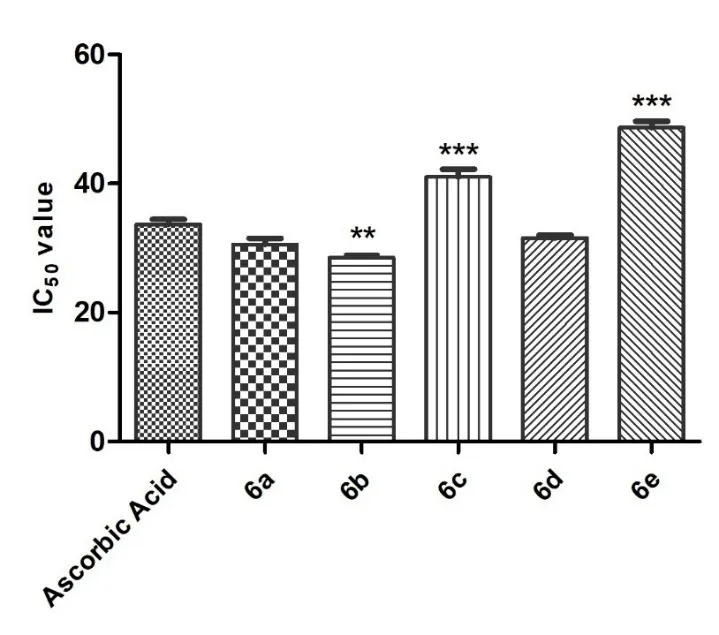
Figure 1. Antioxidant activity of pteridine derivatives (6a-e).
|
S. N. |
Compound ID |
IC50 value (µg/mL) |
|
1. |
Ascorbic acid |
33.67 ± 0.79 |
|
2. |
6a |
30.58 ± 0.96 |
|
3. |
6b |
28.51 ± 0.51 |
|
4. |
6c |
41.01 ± 1.22 |
|
5. |
6d |
31.58 ± 0.46 |
|
6. |
6e |
48.67 ± 0.99 |
Table 1. Antioxidant activity (DPPH assay) of the pteridine derivatives (6a-e).
3.2.2 Anti-arthritic Activity
To assess the antiarthritic activity of synthesized compound 6b, a Complete Freund's Adjuvant (CFA) induced arthritis model was used, and the effect of compound 6b was compared with the control and standard treated group for 28 days by measuring changes in paw volume (Table 2). The paw volume of the control group showed a gradual increase over the time of the experiment: it increased from 0.72 ± 0.01 cm at day 0 to 1.45 ± 0.03 cm on day 28, reflecting an 179.48% improvement in paw oedema, which confirmed the induction of arthritis and its progressive development throughout the experiment. By contrast, administration of compound 6b brought about a progressive and persistent decrease in paw swelling, which was associated with marked suppression of arthritic development. The percentages of paw oedema reduction obtained by compound 6b indicated that the efficacy was time dependent, with the values as recorded at 0, 7, 14, 21, and 28 days as 7.47%, 39.46%, 44.68%, 48.92%, and 49.54%, respectively. The highest inhibition at day 28 (49.54%) indicated that compound 6b might be a long-term drug that can effectively ameliorate the severity of arthritis and the health of the joints. Comparatively, compound 6b was more inhibitory against arthritis progression as the standard-treated group had 30.04% reduction in paw oedema on day 28 (Figure 2). Paw volume continuously decreased throughout the treatment period, suggesting that compound 6b could be effective in preventing of prevention of synovial hyperplasia, joint swelling, and tissue damage associated with chronic arthritic conditions. Its increased activity in rats with arthritis may be due to its structure, which can interact better with molecular targets in the process of arthritis, potentially helping to decrease disease progression. In conclusion, the present invention showed that compound 6b has considerable antiarthritic activity that could be compared to or superior to the antiarthritic activity of the standard drug and could be a candidate to be further investigated for preventing arthritis-induced paw oedema and the development of arthritis symptoms for 28 days.
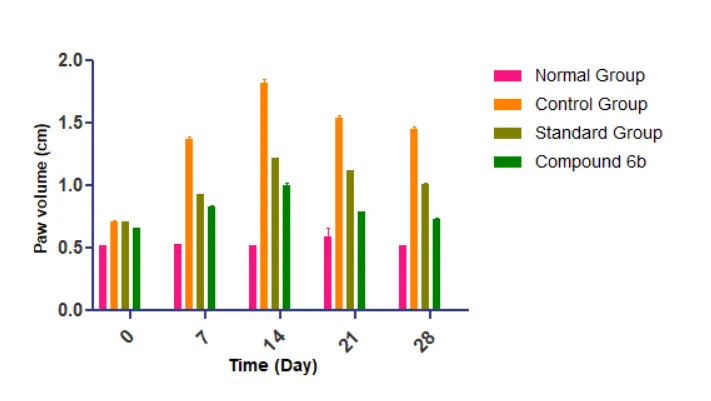
Figure 2. Effect of compound 6b on paw volume in CFA-induced arthritic rats.
|
S. No. |
Time (h) |
% Changes in paw volume |
||
|
Control group |
Standard group |
Compound 6b |
||
|
1 |
0 day |
+ 37.17 |
- 0.46 |
- 7.47 |
|
2 |
7 days |
+ 159.74 |
- 32.68 |
- 39.46 |
|
3 |
14 days |
+ 250.01 |
- 33.15 |
- 44.68 |
|
4 |
21 days |
+ 162.14 |
- 27.80 |
- 48.92 |
|
5 |
28 days |
+ 179.48 |
- 30.04 |
- 49.54 |
Table 2. Percentage change in paw oedema of CFA-induced arthritic rats following treatment with standard drug and compound 6b.
3.2.3 Analysis of Biochemical Parameters
The biochemical parameters showed that Group II (Arthritic control) had significantly elevatedlevels of ALP, AST, ALT, and CRP as compared to Group I (Normal control), which pointed to high inflammation and tissue damage, as well as aggravation of arthritis. These raised biomarkers were significantly decreased by using the standard treatment (Group III) and restored to near normal range, indicating anti-inflammatory activity and protection effects (Table 3). Group IV also exhibited the same decline in ALP, AST, ALT, and CRP when compared with a control group, confirming moderate improvement in arthritis-associated biochemical changes. The decrease of CRP, a key inflammatory marker, contributes to the possible anti-arthritic actions of the treatment used by reducing inflammation and tissue damage.
|
Groups |
IC50 value(µg/mL) |
|||
|
ALP (U/L) |
AST (U/L) |
ALT (U/L) |
CRP (mg/L) |
|
|
Group I |
151.2 ± 0.01 |
60.08 ± 0.18 |
69.11 ± 0.25 |
106.2 ± 0.19 |
|
Group II |
273.4 ± 1.40* |
116.5 ± 0.11* |
100.1 ± 0.07* |
136.8 ± 0.14* |
|
Group III |
148.8 ± 0.46# |
71.05 ± 0.20# |
81.14 ± 0.16# |
111.1 ± 0.28# |
|
Group IV |
198.6 ± 0.87$ |
93.72 ± 2.01$ |
87.95 ± 0.14$ |
121.6 ± 0.13$ |
ALP: Alkaline phosphatase; AST: Aspartate aminotransferase; ALT: Alanine aminotransferase; CRP: C-reactive protein. *p < 0.05 vs normal group, #p < 0.05 vs control group, and $p < 0.05 vs reference drug.
Table 3. Biochemical assessment of antiarthritic activity in experimental animals
3.3 Computational Study
3.3.1 Molecular Docking Analysis
Molecular docking results were used to examine the binding affinity, interaction pattern, and molecular recognition behavior of the synthesized pteridine derivatives (6a-e) towards the active site of human dihydroorotate dehydrogenase (DHODH) complexed with an antiproliferative agent (PDB ID: 1D3H). The DHODH is an important enzyme in the mitochondria for the de novo pyrimidine biosynthesis pathway and plays a crucial role in the growth of activated lymphocytes. So, inhibition of DHODH is a potential target for therapeutic approaches in inflammatory or autoimmune-related diseases like rheumatoid arthritis. The docking results showed that the binding affinity of all the synthesized derivatives was favorable towards DHODH, ranging between -113.332 kcal/mol and -138.754 kcal/mol, indicating good interactions between the ligand and target protein (Table 1). As regards binding affinity, 6b, with the lowest MolDock score of -138.754 kcal/mol, was the most potent compound, as shown in Table 4. The MolDock score of the standard drug (Leflunomide) is -122.456 kcal/mol. The Leflunomide formed six hydrogen bonds with important amino acid residues, including Thr212, Asn382, Thr383, and His388. These residues make extensive hydrogen bonding and polar contacts with the bound ligand and are part of the catalytic binding pocket. Specifically, Thr212 and Thr383 are involved in as many as hydrogen bond formations. From the synthesized compounds, 6d was the compound with the highest binding affinity (MolDock score) equal to -135.111 kcal/mol, which showed the highest score with strong association with proteins. There are four hydrogen bonds with Thr212, Asn382, and His388. The MolDock for compound 6c was -127.081 kcal/mol, which shows that the compound makes five hydrogen bonds with Tyr385, Thr212, Thr383, and Ser455. The Tyr385 interaction might be related to further π-π stacking or hydrophobic stabilization, while the interaction with Thr212 and Thr383 can be attributed to the hydrogen bonding for anchoring. Overall, it was found that most of the synthesized pteridine derivatives docked with essential structural residues in the catalytic site of the protein, such as Thr212, Asn382, Thr383, and His388, which were found in the standard drug Leflunomide. Based on these conserved interactions, the designed molecules are candidates to inhibit DHODH. The compounds 6b and 6d were the compounds with the greatest binding affinity and interaction energies, suggesting better stabilization within the active site and thus better biological activity. The 3D molecular visualization also validated the favorable binding conformation of compound 6b that was observed in the docking study in the catalytic pocket of the receptor protein (Figure 3).
|
Compound ID |
MolDock Score (kcal/mol) |
Interaction (kcal/mol) |
H-Bond (kcal/mol) |
No. of H-bonds |
H-bonds Interaction |
|
Lefluonamide |
-122.456 |
-46.852 |
-10.85 |
6 |
Thr212, Asn382, Thr383, His388 |
|
6a |
-129.721 |
-49.8388 |
-12.01 |
5 |
Thr212, Asn382, Thr383, Ser455 |
|
6b |
-138.754 |
-55.9664 |
-13.26 |
4 |
Thr212, Asn382, His388 |
|
6c |
-127.081 |
-42.0311 |
-3.53 |
5 |
Tyr385, Thr212, Thr383, Ser455 |
|
6d |
-135.111 |
-58.2573 |
-7.57 |
3 |
Thr212, Thr206, His388 |
|
6e |
-113.332 |
-44.1573 |
-6.90 |
3 |
Gln203, His388, Thr206 |
Table 3. Binding affinity and molecular interaction of synthesized pteridine derivatives (6a-e) and the standard drug Leflunomide against the target protein (PDB ID:1D3H).
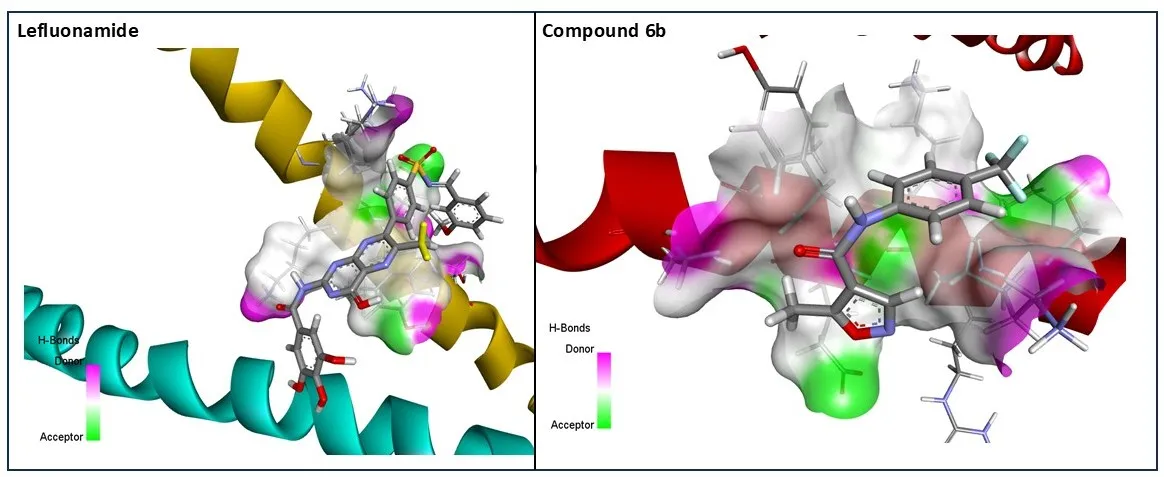
Figure 3. 3D docking poses of leflunomide and compound 6b in the active site of the target protein, exhibiting ligand-protein interactions and binding orientation.
CONCLUSION
The present investigation successfully designed and synthesized new pteridine derivatives with sulfonamide and Schiff base units, and confirmed with spectral characterization techniques. The antioxidant and antiarthritic activities were found to be promising in the biological evaluation, which was followed by molecular docking studies against the DHODH enzyme. Among the synthesized compounds, compound 6b showed better activity with high efficacy on reducing paw oedema and positive binding interactions with DHODH. Moreover, treatment brought biochemical markers (ALP, AST, ALT, and CRP) back to normal levels in arthritic rats, suggesting decreased inflammatory status and protection against the damage of tissue caused by arthritis. The increased activity can be explained by the effect of the replacement of electron-donating groups and strong interactions in the active site of DHODH. Overall, the results indicate considerable antioxidant, antiarthritic, and DHODH inhibitory activity of pteridine-based derivatives, including compound 6b, which are potential leads for the treatment of RA.
REFERENCES

Nitypal Singh Chouhan1*, Hemant Badwaik2, Design And Synthesis Of Schiff Bases Containing New Pteridine Analogues For The Treatment Of Rheumatoid Arthritis, Int. J. Sci. R. Tech., 2026, 3 (10), 334-347. https://doi.org/10.5281/zenodo.23162533
 10.5281/zenodo.23162533