View Article

  • Sustainable Advances In The Synthesis And Antimicrobial Effectiveness Of Benzothiazole And Its Derivatives: A Mini-Review

  • 1Department of Chemistry, NKSPT’S Arts Science and Commerce College, Badnapur, Dist. Jalna 
    2Department of Microbiology, NKSPT’S Arts Science and Commerce College, Badnapur, Dist. Jalna

Abstract

Benzothiazole derivatives were Nitrogen (N) and Sulfur (S) containing pharmacologically important heterocyclic scaffolds. In recent years they have becoming more prominent as they found to be useful to treat various diseases. In that regard, they have demonstrated different pharmacological activities including anticancer, antibacterial, antibiotic, antiviral, antifungal, anti-inflammatory and anti-diabetic. Hence, synthesis of benzothiazole derivatives becomes a hotspot to researchers, and there are different conventional and non-conventional methods have been accomplished to their synthesis. Present study gives overview of their different reaction methods associated with synthesis and its antimicrobial activities.

Keywords

Benzothiazole derivatives, antimicrobial activities, green approach, Medicinal chemistry.

Introduction

× Popup Image

The heterocyclic organic compounds are having ring structure with at least one heteroatom other than carbon. The most commonly Nitrogen (N), Oxygen (O) and Sulphur (S) they were performs as the functions of heteroatoms [1]. These compounds were effectively highlighted its impact as they are building blocks of various biologically active drug molecules. The benzothiazole is a Nitrogen (N) and Sulphur (S) embedded heterocyclic scaffolds [2]. The presence of these heteroatoms makes them important for pharmaceutical effectiveness such as anticancer agents, antibacterial agents, antibiotic agents, antiviral agents, antifungal agents, anti-inflammatory agents and anti-diabetic agents Fig.1 [3-9].

In these considerations, a few years ago conventional methods were utilized to synthesize different benzothiazole derivatives. These conventional methods have several disadvantages like they are time consuming, requires high operation cost and responsible for environmental concerns [10]. Hence in recent years researchers have been developed various sustainable approaches to synthesize benzothiazole derivatives. This sustainable approach includes solvent free synthesis, one pot multicomponent synthesis, use of green solvent systems and use of different catalyst systems etc. [11-12].

The humans, animals and plants were suddenly affected with different types of diseases. Different type’s microorganisms were responsible for these conditions. These microorganisms may be fungi, bacteria, and viruses. Researchers were introduced various medicines to control, cure the diseases and infections among living things [13]. Antimicrobial agents are compounds that eliminates the microorganisms or inhibits the growth of organisms. The benzothiazole derivatives were exhibits different antimicrobial activities towards various microorganisms [14].

In the present review, we have considered various sustainable methods to synthesize benzothiazole derivatives with their antimicrobial importance.
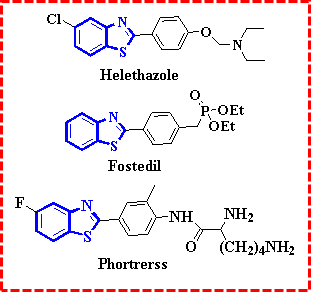
Fig.1 Examples of benzothiazoles based bioactive molecules.

Sustainable approaches for the synthesis of benzothiazole derivatives.

Wagay et al., 2022 and co-workers [15], represented sustainable method to synthesize 2-substituted benzothiazoles (3) by using efficient low melting mixture. The reaction involved condensation of 2-aminobenzenethiol or o-phenylenediamine (1) and aliphatic aldehyde or aromatic aldehyde (2) in the occupancy of low melting mixture (Scheme 1). A characteristic feature of this protocol is that there is no any use of external catalyst and organic solvents. The method initially optimized with various deep eutectic mixtures and shows best results with N, N-dimethyl urea (DMU) with L-(+)-tartaric acid (TA) and citric acid (CA) with DMU with 7:3 ratio and 4:6 ratio respectively. They were synthesized different benzothiazoles derivatives with the help of optimized conditions product yield were ranged from 84% to 97%.
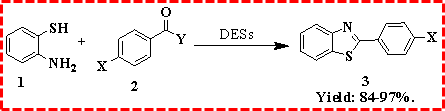
Scheme 1. Synthesis of 2-substituted benzothiazoles catalysed by DESs.

Nguyen et al., 2019 [16], communicate the use of ionic liquid gel (BAIL gel) as reusable Bronsted acid heterogeneous catalyst to preparation of substituted benzimidazoles (6) (Scheme 2). In this development, ionic liquid gel was gained with treating 1-methyl-3-(4-sulfobutyl)-1H-imidazolium hydrogen sulphate with tetraethyl orthosilicate (TEOS). At the beginning, the catalysed screened with different catalyst, it shows that BAIL gel gives product yield with 98%. To check out scope of ionic liquid variety of substituted aromatic aldehydes were tested under optimized conditions. The results represent that 83% to 91% product yield were obtained.
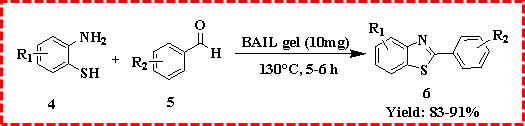
Scheme 2. Synthesis of benzothiazoles using a BAIL GEL under solvent free conditions.

Vlocsko et al., 2024 [17], developed efficient green method without using any catalyst and solvents for the synthesis of nitrogen and sulphur containg heterocyclic compounds (benzothiazoles). The catalyst free approach facilitates efficient synthesis of various aryl- substituted benzothiazoles derivatives. These compounds were synthesized with 2-aminophenols (7) and corresponding substituted aromatic aldehydes (8), to gives excellent yield of up to 85% to 99% (Scheme 3). This method has a characteristic properties like’s sustainable, simple workup procedure etc.
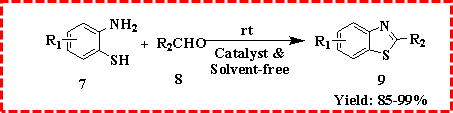
Scheme 3. Synthesis of benzothiazoles using 2-aminothiophenols under solvent free and catalyst free conditions.

Nguyen et al., 2021 [18], examined the use of   imidazolium chlorozincate (II) ionic liquid supported into Fe3O4 nanoparticles (LAIL@MNP) as an efficient catalyst for the synthesis of pharmaceutically active heterocyclic compounds (Scheme 4). They were developed systematic protocol via condensation of aminophenol and aromatic aldehydes in ultra-sonication, under solvent-free conditions. In this method, LAIL@MNP provide as an environment friendly, magnetic nanocatalyst that promotes efficient conversion. This work has an important property such as simple, efficient, and easy workup etc.
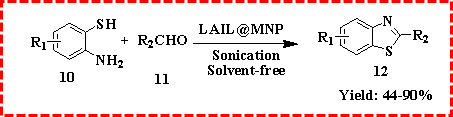
Scheme 4. The condensation of aminothiophenol with different aldehydes.

Fattahi et al., 2023 [19], reported the synthesis of CS@CA-Me-CA@Cu nanocatalyst by immobilizing Cu(II) nanoparticles and cross-linked chitosan by G1 dendrimer from melamine terminated by citric acid groups. This catalytic method was exhibiting a condensation process of 2-bromoaniline, sodium thiocyanate and CS@CA-Me-CA@Cu catalyst resulting in the formation of 2-aminobenzothiazole derivatives (Scheme 5).
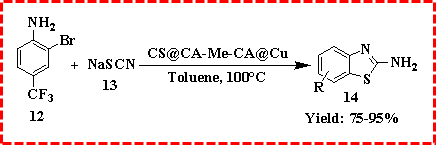
Scheme 5. Synthesis of 2-amino benzothiazoles derivatives in presences of CS@CA-Me-CA@Cu catalyst

Benzothiazole Derivatives and its Antimicrobial Activities

Benzothiozole analogs were studied for antibacterial activity by Singh et al., 2013 [20], they used two strains of Gram +ve bacteria Staphylococcus aureus (ATCC 25323) and clinical isolates of Enterococcus faecalis, while five Gm -ve bacterial strains of Escherichia coli (ATCC 35218), Salmonella typhi (MTCC 3216), Pseudomonas aeruginosa (ATCC 27893) and clinical isolates of Klebsiella pneumoniae and Shigella boydii for study. The result of the study revealed that, benzothiazole compound containing 2,4-dichlorosubstituted benzene ring, shows moderate antibacterial activity, with MIC 50 to 100 mg/ml, comparably weak as showed by standard drug ciprofloxacin with MIC 6.25 mg/ml against all test strains of bacteria except P. aeruginosa

Benzothiazole derivative containing 3-chloro, 4-fluoro and 4-chloro substitutes on benzene ring, were reported most potent against E. faecalis with MIC 3.12 mg/ml, while against S. aureus and Sal. typhi MIC reported 6.25 mg/ml. the compound also showed a strong potency MIC 3.12 mg/ml against P. aeruginosa, while MIC value of (3b) 25 mg/ml and (3c)12.5 mg/ ml was reported against E. coli. An exceptional antibacterial activity of MIC value 3.12 mg/ml against all the six test organisms was reported with a derivative containing 2,4-difluorosubstituted benzene ring, except for Shigella boydii.

CONCLUSION

The benzothiazole based derivatives were exhibits antimicrobial efficacy. They were synthesized with simple and productive approaches with applications of different catalyst and reactions conditions. With this review paper deep eutectic mixtures, ionic liquid gel (BAIL gel), of   imidazolium chlorozincate (II) ionic liquid supported into Fe3O4 (LAIL@MNP), immobilizing Cu(II) nanoparticles and cross-linked chitosan by G1 dendrimer from melamine terminated by citric acid groups CS@CA-Me-CA@Cu were function as catalyst for the synthesis of benzothiazole derivatives under environmentally sound conditions. Now a days greener approach for chemical synthesis is a best choice due to it focuses on reducing waste. Scientists were considered that synthesis of benzothiazoles derivatives using greener approach over traditional methods is an essential.  This review constitutes useful foundation for the researchers practicing in the field of organic synthesis and drug discovery development.

REFERENCES

  1. Gill, R.K., Rawal, R.K. and Bariwal, J., 2015. Recent advances in the chemistry and biology of benzothiazoles. Archiv der Pharmazie, 348(3), 155-178.
  2. Asif, M. and Imran, M., 2021. A mini-review on pharmacological importance of benzothiazole scaffold. Mini-Reviews in Organic Chemistry, 18(8), 1086-1097.
  3. Irfan, A., Batool, F., Zahra Naqvi, S.A., Islam, A., Osman, S.M., Nocentini, A., Alissa, S.A. and Supuran, C.T., 2020. Benzothiazole derivatives as anticancer agents. Journal of enzyme inhibition and medicinal chemistry, 35(1), 265-279.
  4. Haroun, M., 2022. Review on the developments of benzothiazole-containing antimicrobial agents. Current Topics in Medicinal Chemistry, 22(32), 2630-2659.
  5. Soni, B., Ranawat, M.S., Sharma, R., Bhandari, A. and Sharma, S., 2010. Synthesis and evaluation of some new benzothiazole derivatives as potential antimicrobial agents. European Journal of Medicinal Chemistry, 45(7), 2938-2942.
  6. Asiri, Y.I., Alsayari, A., Muhsinah, A.B., Mabkhot, Y.N. and Hassan, M.Z., 2020. Benzothiazoles as potential antiviral agents. Journal of Pharmacy and Pharmacology, 72(11), 1459-1480.
  7. Tratrat, C., 2023. Benzothiazole as a promising scaffold for the development of antifungal agents. Current Topics in Medicinal Chemistry, 23(7), 491-519.
  8. Gupta, K., Sirbaiya, A.K., Kumar, V. and Rahman, M.A., 2022. Current perspective of synthesis of medicinally relevant benzothiazole based molecules: Potential for antimicrobial and anti-inflammatory activities. Mini Reviews in Medicinal Chemistry, 22(14), 1895-1935.
  9. Kumar, S.U.N.I.L., Rathore, D.S., Garg, G.O.P.A.L., Khatri, K.A.P.I.L., Saxena, R.A.H.U.L. and Sahu, S.K., 2017. Synthesis and evaluation of some benzothiazole derivatives as antidiabetic agents. Int. J. Pharm. Pharm. Sci, 9(2), 60.
  10. Obst, M. and König, B., 2018. Organic synthesis without conventional solvents. European Journal of Organic Chemistry, 2018(31), 4213-4232.
  11. Candeias, N.R., Branco, L.C., Gois, P.M., Afonso, C.A. and Trindade, A.F., 2009. More sustainable approaches for the synthesis of N-based heterocycles. Chemical reviews, 109(6), 2703-2802.
  12. Karmakar, R. and Mukhopadhyay, C., 2023. Green synthetic approach: A well-organized eco-friendly tool for synthesis of bio-active fused heterocyclic compounds. Current Green Chemistry, 10(1), 5-24.
  13. Wierup, M., 2000. The control of microbial diseases in animals: alternatives to the use of antibiotics. International Journal of Antimicrobial Agents, 14(4), 315-319.
  14. Singh, M.K., Tilak, R., Nath, G., Awasthi, S.K. and Agarwal, A., 2013. Design, synthesis and antimicrobial activity of novel benzothiazole analogs. European journal of medicinal chemistry, 63, 635-644.
  15. Wagay, S. A., Hasan, A., & Ali, R. 2022. An efficient low melting mixture mediated green approach for the synthesis of 2-substituted benzothiazoles and benzimidazoles. Results in chemistry, 4, 100338.
  16.  Nguyen, T. T., Nguyen, X. T. T., Nguyen, T. L. H., & Tran, P. H. (2019). Synthesis of benzoxazoles, benzimidazoles, and benzothiazoles using a Brønsted acidic ionic liquid gel as an efficient heterogeneous catalyst under a solvent-free condition. ACS omega, 4(1), 368-373.
  17. Vlocskó, R. B., Mishra, M., Stoica, A. I., Gustin, L., & Török, B. (2024). Catalyst-free synthesis of substituted benzimidazoles and benzothiazoles in a sustainable solvent. Tetrahedron Green Chem, 3, 100035.
  18. Nguyen, H. T., Nguyen, T. H., Pham, D. D., Nguyen, C. T., & Tran, P. H. (2021). A green approach for the synthesis of 2-substituted benzoxazoles and benzothiazoles via coupling/cyclization reactions. Heliyon, 7(11).
  19. Fattahi, B., & Dekamin, M. G. (2023). Cu (II)/citric acid grafted to chitosan by dendritic units of melamine as a novel and highly efficient heterogeneous catalyst for the synthesis of 2-aminobenzothiazole derivatives. Colloid and Interface Science Communications, 54, 100711.
  20. Singh, M. K., Tilak, R., Nath, G., Awasthi, S. K., & Agarwal, A. (2013). Design, synthesis and antimicrobial activity of novel benzothiazole analogs. European journal of medicinal chemistry, 63, 635-644.

Reference

  1. Gill, R.K., Rawal, R.K. and Bariwal, J., 2015. Recent advances in the chemistry and biology of benzothiazoles. Archiv der Pharmazie, 348(3), 155-178.
  2. Asif, M. and Imran, M., 2021. A mini-review on pharmacological importance of benzothiazole scaffold. Mini-Reviews in Organic Chemistry, 18(8), 1086-1097.
  3. Irfan, A., Batool, F., Zahra Naqvi, S.A., Islam, A., Osman, S.M., Nocentini, A., Alissa, S.A. and Supuran, C.T., 2020. Benzothiazole derivatives as anticancer agents. Journal of enzyme inhibition and medicinal chemistry, 35(1), 265-279.
  4. Haroun, M., 2022. Review on the developments of benzothiazole-containing antimicrobial agents. Current Topics in Medicinal Chemistry, 22(32), 2630-2659.
  5. Soni, B., Ranawat, M.S., Sharma, R., Bhandari, A. and Sharma, S., 2010. Synthesis and evaluation of some new benzothiazole derivatives as potential antimicrobial agents. European Journal of Medicinal Chemistry, 45(7), 2938-2942.
  6. Asiri, Y.I., Alsayari, A., Muhsinah, A.B., Mabkhot, Y.N. and Hassan, M.Z., 2020. Benzothiazoles as potential antiviral agents. Journal of Pharmacy and Pharmacology, 72(11), 1459-1480.
  7. Tratrat, C., 2023. Benzothiazole as a promising scaffold for the development of antifungal agents. Current Topics in Medicinal Chemistry, 23(7), 491-519.
  8. Gupta, K., Sirbaiya, A.K., Kumar, V. and Rahman, M.A., 2022. Current perspective of synthesis of medicinally relevant benzothiazole based molecules: Potential for antimicrobial and anti-inflammatory activities. Mini Reviews in Medicinal Chemistry, 22(14), 1895-1935.
  9. Kumar, S.U.N.I.L., Rathore, D.S., Garg, G.O.P.A.L., Khatri, K.A.P.I.L., Saxena, R.A.H.U.L. and Sahu, S.K., 2017. Synthesis and evaluation of some benzothiazole derivatives as antidiabetic agents. Int. J. Pharm. Pharm. Sci, 9(2), 60.
  10. Obst, M. and König, B., 2018. Organic synthesis without conventional solvents. European Journal of Organic Chemistry, 2018(31), 4213-4232.
  11. Candeias, N.R., Branco, L.C., Gois, P.M., Afonso, C.A. and Trindade, A.F., 2009. More sustainable approaches for the synthesis of N-based heterocycles. Chemical reviews, 109(6), 2703-2802.
  12. Karmakar, R. and Mukhopadhyay, C., 2023. Green synthetic approach: A well-organized eco-friendly tool for synthesis of bio-active fused heterocyclic compounds. Current Green Chemistry, 10(1), 5-24.
  13. Wierup, M., 2000. The control of microbial diseases in animals: alternatives to the use of antibiotics. International Journal of Antimicrobial Agents, 14(4), 315-319.
  14. Singh, M.K., Tilak, R., Nath, G., Awasthi, S.K. and Agarwal, A., 2013. Design, synthesis and antimicrobial activity of novel benzothiazole analogs. European journal of medicinal chemistry, 63, 635-644.
  15. Wagay, S. A., Hasan, A., & Ali, R. 2022. An efficient low melting mixture mediated green approach for the synthesis of 2-substituted benzothiazoles and benzimidazoles. Results in chemistry, 4, 100338.
  16.  Nguyen, T. T., Nguyen, X. T. T., Nguyen, T. L. H., & Tran, P. H. (2019). Synthesis of benzoxazoles, benzimidazoles, and benzothiazoles using a Brønsted acidic ionic liquid gel as an efficient heterogeneous catalyst under a solvent-free condition. ACS omega, 4(1), 368-373.
  17. Vlocskó, R. B., Mishra, M., Stoica, A. I., Gustin, L., & Török, B. (2024). Catalyst-free synthesis of substituted benzimidazoles and benzothiazoles in a sustainable solvent. Tetrahedron Green Chem, 3, 100035.
  18. Nguyen, H. T., Nguyen, T. H., Pham, D. D., Nguyen, C. T., & Tran, P. H. (2021). A green approach for the synthesis of 2-substituted benzoxazoles and benzothiazoles via coupling/cyclization reactions. Heliyon, 7(11).
  19. Fattahi, B., & Dekamin, M. G. (2023). Cu (II)/citric acid grafted to chitosan by dendritic units of melamine as a novel and highly efficient heterogeneous catalyst for the synthesis of 2-aminobenzothiazole derivatives. Colloid and Interface Science Communications, 54, 100711.
  20. Singh, M. K., Tilak, R., Nath, G., Awasthi, S. K., & Agarwal, A. (2013). Design, synthesis and antimicrobial activity of novel benzothiazole analogs. European journal of medicinal chemistry, 63, 635-644.

Photo
Gadakk P. V.
Corresponding author

Department of Chemistry, NKSPT’S Arts Science and Commerce College, Badnapur, Dist. Jalna

Photo
Fuse S. A.
Co-author

Department of Microbiology, NKSPT’S Arts Science and Commerce College, Badnapur, Dist. Jalna

Fuse S. A.1, Gadakk P. V.2*, Sustainable Advances In The Synthesis And Antimicrobial Effectiveness Of Benzothiazole And Its Derivatives: A Mini-Review, Int. J. Sci. R. Tech., 2026, 3 (10), 395-399. https://doi.org/10.5281/zenodo.23163726

More related articles
Insilico Studies and Synthesis of New 2-Cyclopropl...
Soheila Azim Patrawala, Amankumar Vaghasiya, Dr. Bhavini Gharia...
Esterification of Metronidazole and its Complexati...
Rahul Patil, Harpalsing Girase, Gaurav Gupta, Sandip Patil...
Design And Synthesis Of Schiff Bases Containing Ne...
Nitypal Singh Chouhan, Hemant Badwaik...
In Silico Molecular Docking And ADMET Evaluation Of Coumarin Derivatives As Pote...
Vivekanand Ekanath Teli, Dipali Vijay Patil, Bhumika Bhairu Mohite, Rutuja Ashok Vyawahare...
Design, Synthesis, Characterization And In Vitro Antileishmanial Evaluation Of 2...
Dipraj Kochak, Dishant Gupta, Shikha Nagle, Archana Tiwari...
More related articles
Insilico Studies and Synthesis of New 2-Cycloproply Quinazoline Derivatives as P...
Soheila Azim Patrawala, Amankumar Vaghasiya, Dr. Bhavini Gharia...
Esterification of Metronidazole and its Complexation with ? -Cyclodextrin: A Str...
Rahul Patil, Harpalsing Girase, Gaurav Gupta, Sandip Patil...