

We use cookies to ensure our website works properly and to personalise your experience. Cookies policy
Department of Pharmacy JES’s S.N.D.College of pharmacy Babhulgoan,Yeola
Drug repurposing, also known as drug repositioning, is an emerging strategy that involves identifying new therapeutic applications for existing drugs originally developed or approved for other diseases. In oncology, drug repurposing has gained considerable interest because conventional anticancer drug development is associated with high cost, long development timelines, treatment-related toxicity, and a high risk of failure. Existing drugs have established pharmacological, pharmacokinetic, safety, and manufacturing information, which may facilitate their evaluation for new cancer indications. Repurposed drugs may exert anticancer effects through multiple mechanisms, including inhibition of cancer-cell proliferation, induction of apoptosis, modulation of cancer metabolism, inhibition of autophagy and angiogenesis, immune modulation, alteration of the tumor microenvironment, and inhibition of invasion and metastasis. Several drugs, including metformin, statins, aspirin, propranolol, doxycycline, hydroxychloroquine, and antimalarial agents, have been investigated for potential anticancer applications. Drug repurposing may also support combination therapy with chemotherapy, targeted therapy, hormonal therapy, immunotherapy, or radiotherapy, as well as precision oncology approaches based on molecular characteristics of individual tumors. Computational approaches, network pharmacology, molecular docking, multi-omics, artificial intelligence, and machine learning can further assist in identifying and prioritizing promising candidates. However, challenges such as appropriate anticancer dosing, toxicity, tumor heterogeneity, drug interactions, limited clinical evidence, and inconsistent clinical outcomes remain. Therefore, well-designed preclinical studies and clinical trials are essential to establish efficacy, safety, optimal dosing, and appropriate patient selection. Overall, drug repurposing represents a complementary and potentially cost-effective approach to conventional cancer drug discovery and may contribute to the development of more personalized and combination-based cancer therapies.
Cancer is one of the major causes of morbidity and mortality worldwide and remains a significant challenge to modern healthcare. Despite substantial advances in cancer biology, molecular diagnostics, targeted therapies, immunotherapy, and precision medicine, many patients continue to experience treatment failure, disease progression, drug resistance, and treatment-related toxicity. The development of new anticancer drugs is a complex and expensive process that generally requires many years of research and clinical evaluation. Therefore, identifying alternative strategies for developing effective and affordable anticancer therapies has become an important area of researchDrug repurposing, also known as drug repositioning, refers to the identification and development of new therapeutic applications for drugs that have already been approved or investigated for another medical indication. In oncology, this approach involves evaluating non-cancer drugs for potential anticancer activity, either as single agents or in combination with established cancer treatments. Unlike conventional drug discovery, repurposing can make use of previously generated information regarding pharmacokinetics, pharmacodynamics, safety, formulation, and clinical use, potentially reducing the time, cost, and uncertainty associated with drug development.The concept of drug repurposing has gained considerable attention because drugs developed for non-oncological conditions may influence biological pathways that are also important in cancer. These include cellular metabolism, apoptosis, angiogenesis, inflammation, autophagy, epigenetic regulation, oxidative stress, tumor–microenvironment interactions, and immune signaling. Consequently, several established drugs, including metformin, statins, aspirin, propranolol, doxycycline, hydroxychloroquine, and disulfiram, have been investigated for possible anticancer applications. However, evidence varies considerably among these candidates, and promising laboratory findings do not necessarily translate into clinical benefit Advances in genomics, transcriptomics, proteomics, network pharmacology, molecular docking, artificial intelligence, and machine learning have further expanded the potential of drug repurposing. These approaches can identify relationships between existing drugs, molecular targets, signaling pathways, and cancer-specific molecular signatures, thereby facilitating the selection of promising candidates for experimental and clinical evaluation Despite its potential advantages, oncology drug repurposing faces several challenges, including appropriate dose selection, achievable drug concentrations, tumor heterogeneity, drug interactions, toxicity, patient selection, biomarker identification, and limited high-quality clinical evidence. Therefore, systematic evaluation through well-designed preclinical studies and clinical trials remains essential.
This review discusses the biological rationale, strategies, computational approaches, important examples, clinical evidence, challenges, and future perspectives of drug repurposing in oncology, with particular emphasis on its potential role in precision and combination cancer therapy.
2. Definition
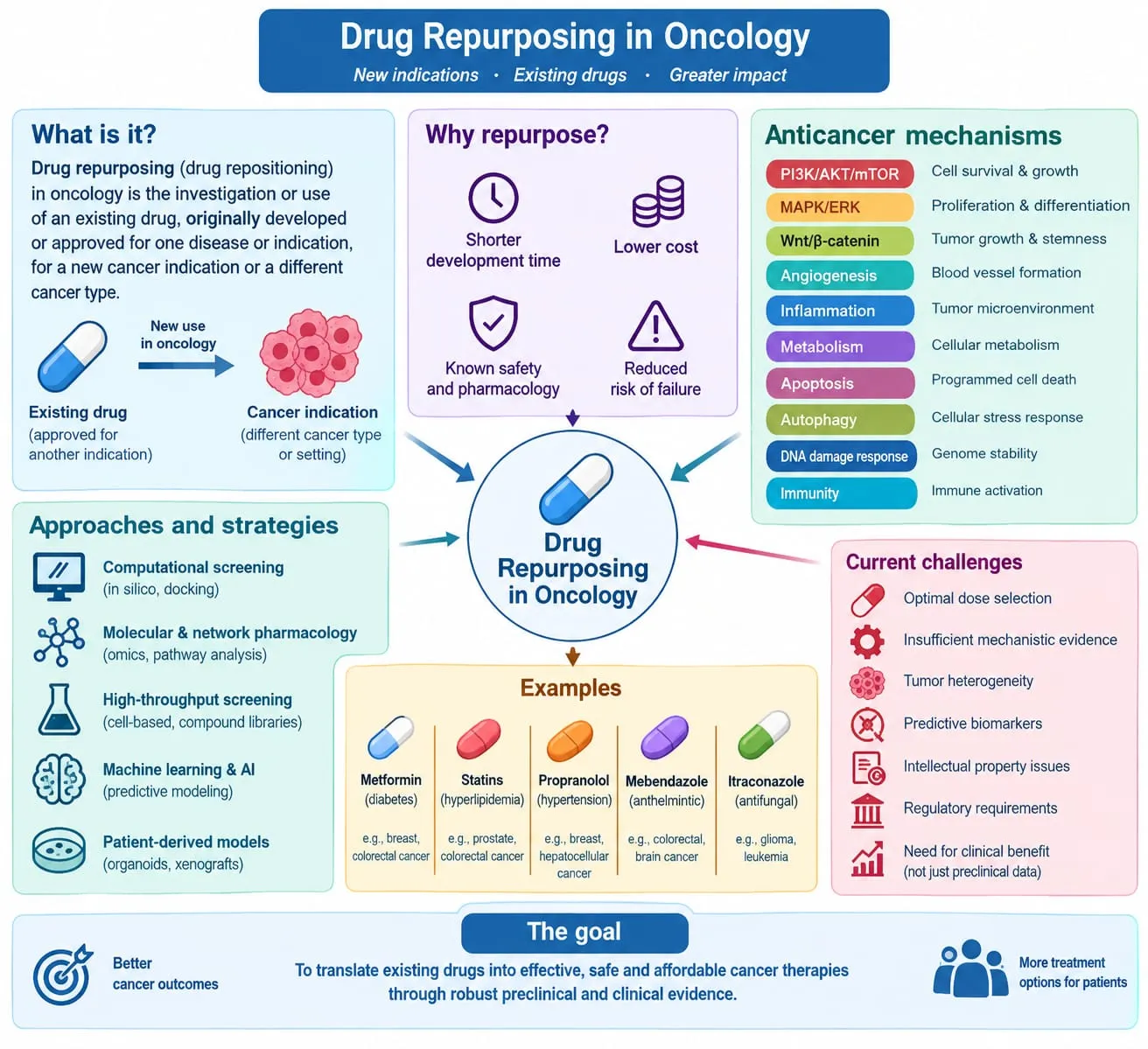
Drug repurposing (drug repositioning) in oncology is the use of an existing drug, originally developed or approved for one disease or indication, to treat cancer or a different cancer-related indication.
3. Key features –
1.Uses a pre-existing drug with known pharmacology and safety information.
2.Identifies a new anticancer indication or a new use in a different cancer type.
3.Can potentially reduce drug-development time, cost, and risk compared with developing a completely new drug.
• Drug Repurposing in Oncology:
Drug repurposing, also known as drug repositioning, is an emerging strategy in oncology that involves identifying new therapeutic applications for existing drugs that were originally developed or approved for another disease or clinical indication. Unlike conventional de novo drug discovery, drug repurposing takes advantage of the previously established pharmacological, pharmacokinetic, toxicological, and manufacturing information of existing drugs, potentially reducing the time, cost, and risk associated with development of new anticancer therapies.
• Importance in Oncology:
Cancer treatment is associated with several major challenges, including drug resistance, tumor heterogeneity, treatment-related toxicity, and the high cost and long duration of developing new anticancer drugs. Drug repurposing provides an alternative strategy in which existing or previously investigated medicines are evaluated for new anticancer applications.
Because repurposed drugs may already have information regarding their pharmacology, pharmacokinetics, formulation, and safety, their investigation for oncology indications may be more efficient than developing completely new compounds. Repurposing may also help identify drugs capable of targeting cancer-associated pathways and molecular abnormalities.
However, promising laboratory or preclinical findings do not automatically establish clinical efficacy. Appropriate clinical trials are necessary to determine the effectiveness, optimal dose, safety, and patient population for each repurposed drug.
2. Major Mechanisms of Action:
i. Repurposed drugs can produce anticancer effects through multiple molecular and cellular mechanisms, including:
ii. Inhibition of cancer-cell proliferation
iii. Induction of apoptosis
iv. Inhibition of angiogenesis
v. Modulation of cancer metabolism
vi. Inhibition or modulation of autophagy
vii. Modification of tumor-microenvironment signaling
viii. Immune-system modulation
ix. Inhibition of invasion and metastasis
x. Overcoming or delaying drug resistance
xi. Modulation of inflammatory signaling
xii. Alteration of DNA-damage and repair pathways
xiii. Regulation of oncogenic signaling pathways, including Wnt/β-catenin and Hedgehog pathways
3. Rationale for Drug Repurposing:
The development of new anticancer drugs generally requires long development timelines, substantial financial investment, extensive preclinical testing, and clinical trials, with a considerable risk of failure.
Drug repurposing offers an alternative approach by utilizing medicines for which substantial information may already be available regarding pharmacology, toxicity, pharmacokinetics, formulation, manufacturing, and clinical use. This may facilitate their evaluation for new cancer indications and potentially accelerate the transition from preclinical investigation to clinical studies.
Advantages of Drug Repurposing in Oncology:
i. Reduced development time compared with de novo drug discovery
ii. Potentially lower development costs
iii. Availability of previous pharmacological and safety information
iv. Established manufacturing and formulation processes
v. Possibility of identifying new molecular targets
vi. Potential for use in combination therapy
vii. Possibility of targeting multiple cancer pathways
viii. Potential to address drug resistance
ix. Opportunity to investigate relatively inexpensive, established medicines
Important Applications in Oncology:
1.Drug–target prediction
AI models can predict whether an existing drug may interact with a protein involved in cancer progression.
2.Drug sensitivity prediction
Machine-learning models can combine cancer-cell genomic characteristics with drug-response datasets to predict which tumors may respond to particular drugs.
3.Combination therapy discovery
Computational approaches can identify potentially useful drug combinations and predict synergistic or antagonistic interactions.
Advantages:
I. Reduces time and cost of early-stage drug discovery
II. Can screen thousands of existing drugs rapidly
III. Integrates multiple biological datasets
IV. Helps identify new molecular targets
V. Supports biomarker-based and precision oncolog
VI. Can generate hypotheses for laboratory and clinical studies
VII. Limitations:
VIII. Predictions require experimental and clinical validation
IX. Quality of results depends on the quality of available datasets
X. Biological systems are highly complex
XI. AI models can suffer from bias and limited interpretability
XII. Computational prediction does not guarantee clinical efficacy
Rationale and Advantages:
Mechanisms of Anticancer Activity:
Approaches for Identification of Repurposable Drugs:
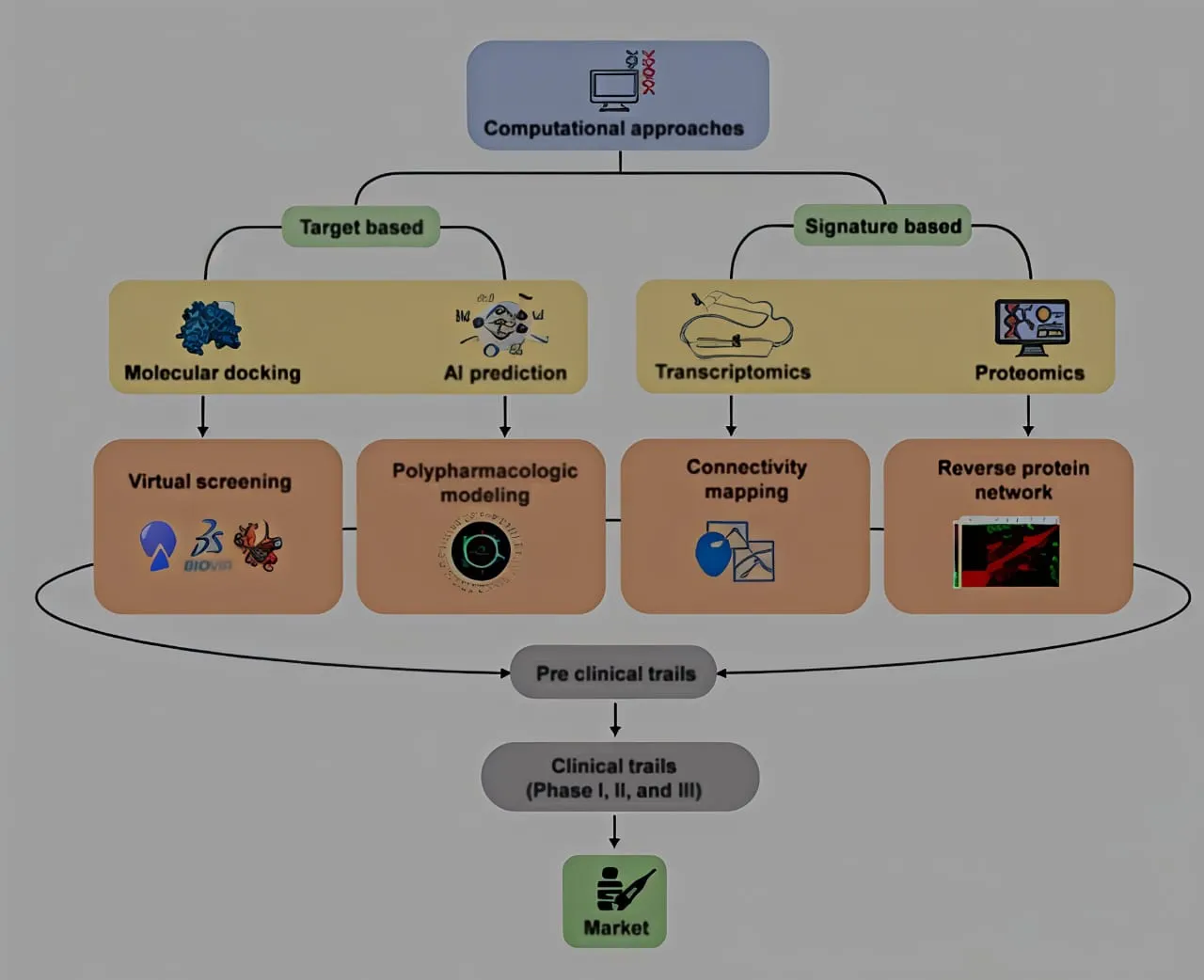
Several experimental and computational approaches are currently used to identify candidate drugs for oncology repurposing. In silico approaches include molecular docking, molecular dynamics, network pharmacology, transcriptomic-signature analysis, multi-omics integration, and machine-learning/artificial-intelligence-based prediction. High-throughput phenotypic screening and biochemical assays can subsequently be used to validate candidate compounds. More advanced models, including patient-derived organoids and xenografts, can provide additional evidence before clinical investigation. Recent reviews indicate that computational approaches are increasingly important for prioritizing candidates, although experimental and clinical validation remains necessary.
• Examples of Repurposed Drugs in Oncology:
Repurposed drugs may also be investigated as adjuvant or combination therapies rather than as standalone anticancer agents. Combining a repurposed drug with chemotherapy, radiotherapy, targeted therapy, or immunotherapy may potentially modify tumor metabolism, angiogenesis, inflammation, drug resistance, or treatment sensitivity. Such strategies are particularly relevant when the repurposed drug affects a pathway that contributes to resistance to standard anticancer treatment.
Current Challenge And Limision:
Despite its potential, drug repurposing in oncology faces several challenges. These include uncertainty regarding the optimal anticancer dose differences between the dose required for the original indication and the dose required for antitumor activity, tumor heterogeneity, inadequate understanding of mechanisms, absence of predictive biomarkers, intellectual-property limitations, regulatory requirements, and difficulties in obtaining funding for large clinical trials. Furthermore, promising preclinical activity does not necessarily translate into clinical benefit. Therefore, systematic validation through well-designed clinical trials is essential before a repurposed drug can be established as an effective cancer therapy.
Future Perspectives
The integration of artificial intelligence, machine learning, multi-omics analysis, network pharmacology, CRISPR-based functional screening, patient-derived organoids, and real-world clinical data is expected to improve the identification of cancer-specific repurposing opportunities. These approaches may help identify molecularly defined patient populations that are most likely to respond to a repurposed drug and facilitate more rational combination therapies. Thus, the future of oncology drug repurposing is likely to depend on the integration of computational prediction with experimental validation and biomarker-driven clinical trials.Overall, drug repurposing represents a complementary strategy to conventional oncology drug discovery. Its major potential lies in exploiting established pharmacological knowledge to identify new anticancer applications while reducing some of the barriers associated with de novo drug development. Nevertheless, clinical efficacy, appropriate dosing, mechanism of action, and patient selection must be established through rigorous evidence before routine clinical adoption.
1. Definition
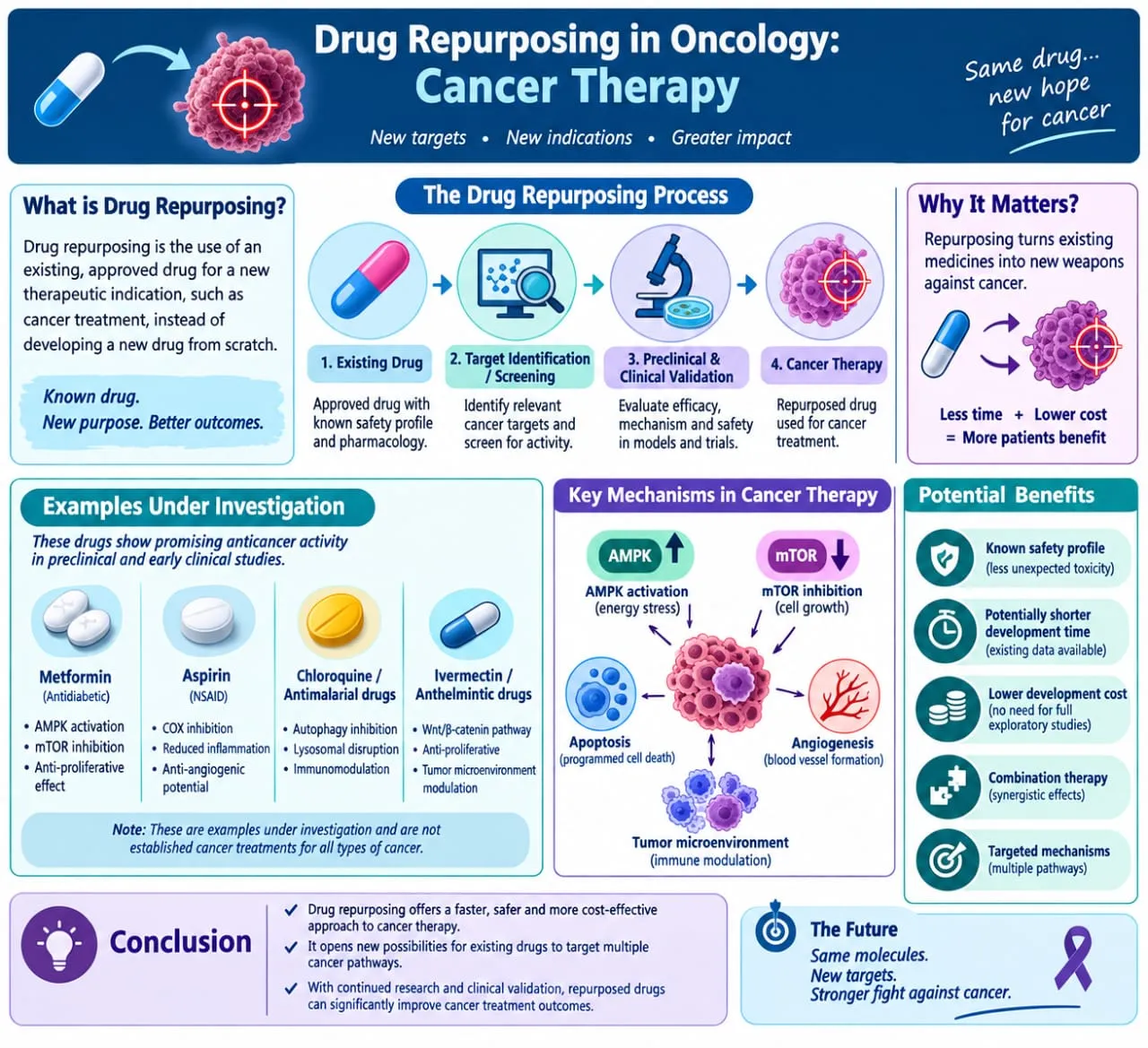
Drug repurposing (drug repositioning) is the process of finding a new therapeutic use for an existing drug that was originally developed or approved for another disease. In cancer therapy, previously used medicines are investigated for their ability to prevent tumor growth, kill cancer cells, or improve the response to existing anticancer treatments.
2. Importance in Cancer Therapy
Reduces development time because pharmacological and safety information may already be available.
Lower development cost compared with discovering a completely new drug.
Provides opportunities to identify new anticancer mechanisms.
May help overcome drug resistance when combined with standard therapy.
Can support combination therapy with chemotherapy, targeted therapy, or immunotherapy.
May provide potential treatment options for rare or difficult-to-treat cancers.
3. Major Mechanisms
i. Repurposed drugs may act against cancer through:
ii. Inhibition of cancer cell proliferation
iii. Induction of apoptosis
iv. Inhibition of angiogenesis
v. Modification of cancer metabolism
vi. Inhibition of PI3K/AKT/mTOR or other signaling pathways
vii. Modulation of autophagy
viii. Reduction of inflammation
ix. Modification of the tumor microenvironment
x. Immune-system modulation
xi. Inhibition of invasion and metastasis
xii. Overcoming or delaying drug resistance
cancer-cell death, inhibit metastasis, or enhance the effects of anticancer drugs.
Advantages
Reduced development time – Existing drugs have already undergone many safety and pharmacological studies.
Lower cost – Development can be cheaper than discovering and developing a completely new drug.
Known safety profile – Previous clinical use provides information about adverse effects and dosing.
Drug repurposing, also called drug repositioning, is the process of discovering new
uses outside the scope of the original medical indication for existing drugs [1]. It offers
important advantages in comparison with traditional drug development procedures.
While de novo drug discovery and development may require a 10- to 17-year procedure with a
low overall probability of success, drug repurposing may reduce time and risk, as several
questions and issues regarding drug discovery and development have been previously addressed [1–3].
In addition, pharmacovigilance systems continuously collect data regarding
the safety profile of the marketed drugs in the real-world setting; this is vital considering
multimorbidity (i.e., the coexistence of multiple chronic conditions) and polypharmacy in
an aging population with, consequently, well-established and yet-to-discover drug-drug,
drug-disease, and disease-disease interactions and relationships.
After the identification of a potential new indication and compound identification
and acquisition, drug development may start in preclinical Phase I or Phase II stages,
saving time, risk, and costs. In drug repurposing, one of the major objectives during
drug development is to study the efficacy of the drug in the new indication under investigation [1]. Randomized, controlled clinical trials can offer high-quality evidence in this
regard. Placebo-controlled or no intervention-controlled studies can generate evidence
on the efficacy of the drug in the new indication, assess risk/benefit, and compare with
well-established standards of care. Dose-escalation studies help identify the optimal dose
for treatment.
Chronic diseases and multimorbidity challenge public health systems worldwide
and constitute a global health research priority [4].
Approximately seven in ten deathsare attributed to chronic conditions; cardiovascular diseases, cancers, chronic respiratorydiseases, and diabetes account for over 80% of all premature deaths related to chronic diseases [5,6]. The World Health Organization’s global action plan for the prevention and control of noncommunicable diseases 2013–2020, extended till 2030, includes an important reduction in the risk of premature death and an 80% availability of the affordable basic technologies and essential medicines required to treat these major chronic diseases [7,8].
In this systematic review, we focus on cancer, the second leading cause of death globally,
accounting for one in six deaths [9].
Cancer is one of the most lethal diseases, with a significantly high mortality rate.
Prevention mechanisms and research on the human genome offer the possibility of improving cancer diagnosis and treatment [10,11]. Since the 1950s, 5-fluorouracil has been
increasingly used and has remained the backbone of most chemotherapy regimens
Several methods related to the function of non-coding transcripts in the modulation of cells can
help in the therapeutic effect of 5-fluorouracil [12]. Currently, there are many therapeutic
options, including surgery, chemotherapy, radiation therapy, immunotherapy, and biologic
agents [13]. In recent years, many studies have been carried out to find new therap
Rational and advantages
The development of new anticancer drugs is generally associated with prolonged development timelines, substantial financial investment, and high attrition rates. Drug repurposing provides an alternative approach by utilizing compounds for which considerable information regarding safety, pharmacology, formulation, and clinical use may already be available. This can facilitate their evaluation for new oncological indications and may accelerate translation from preclinical research to clinical studies. However, the availability of previous safety data does not guarantee efficacy or safety at the doses required for anticancer activity, and therefore appropriate clinical evaluation remains essential
Drug repurposing is important in cancer :-
Shorter development pathway: Existing drugs may already have pharmacokinetic, toxicity, and safety information.
Reduced development cost: Some early-stage development work has already been completed.
Known pharmacology: Existing mechanisms, doses, and adverse effects provide a starting point.
Multiple mechanisms: Repurposed drugs may affect cancer metabolism, angiogenesis, inflammation, apoptosis, autophagy, or immune responses.
Combination therapy: They can be investigated alongside standard anticancer drugs or immunotherapiesDrug repurposing and combination therapy
Combining a repurposed drug with chemotherapy, radiotherapy, targeted therapy, or immunotherapy may potentially modify tumor metabolism, angiogenesis, inflammation, drug resistance, or treatment sensitivity. Such strategies are particularly relevant when the repurposed drug affects a pathway that contributes to resistance to standard anticancer treatment.
Target multiple pathways: Repurposed drugs can act on pathways different from those targeted by standard anticancer drugs.
Synergistic effects: Two drugs may produce a greater effect when combined than either drug alone.
Overcome drug resistance: Combination therapy can target alternative pathways that cancer cells use to survive.
Reduce toxicity: In some combinations, lower doses of individual drugs may achieve therapeutic effects, although this must be established clinically
Role of Drug Repurposing.
Repurposed drugs may offer:
i. Established pharmacokinetic and safety information
ii. Reduced development time and cost
iii. Potentially faster movement into clinical investigation
iv. New mechanisms for targeting cancer cell2. Combination Therapy
v. Repurposed drugs can be combined with:
vi. Standard chemotherapy
vii. Targeted anticancer drugs
viii. Hormonal therapy
ix. Immunotherapy
x. Radiotherapy
Disadvantages / Challenges:
Different dose requirements – The dose needed for anticancer activity may differ from the dose used for the original disease.
Insufficient cancer-specific evidence – Laboratory results do not always translate into clinical benefit.
Adverse effects – Long-term or high-dose use may produce unacceptable toxicity.
Mechanisms of anticancer action
Repurposed drugs can affect cancer through multiple pathways:
Apoptosis: promotes programmed death of cancer cells.
Cell-cycle inhibition: prevents uncontrolled cancer-cell proliferation.
Anti-angiogenesis: interferes with formation of blood vessels supplying tumors.
Metabolic reprogramming: interferes with altered metabolism of cancer cells.
Autophagy modulation: alters cellular recycling pathways.
Immune modulation: influences antitumor immune responses.
Mechanisms in Cancer Therapy:
| Mechanism | Effect / Role in Cancer |
|---|---|
| AMPK Activation | Associated with cellular energy stress and can influence cancer-cell metabolism and growth. |
| mTOR Inhibition | Can inhibit pathways involved in cell growth and proliferation. |
| Apoptosis | Promotes programmed cell death of cancer cells. |
| Angiogenesis Modulation | May affect blood-vessel formation that supports tumor growth. |
| Tumor Microenvironment Modulation | Can influence the immune environment and interactions surrounding the tumor. |
Examples
Metformin – diabetes drug investigated for anticancer effects.
Aspirin-Pain/inflammation and cardiovascular prevention
Statins-Hypercholesterolemia
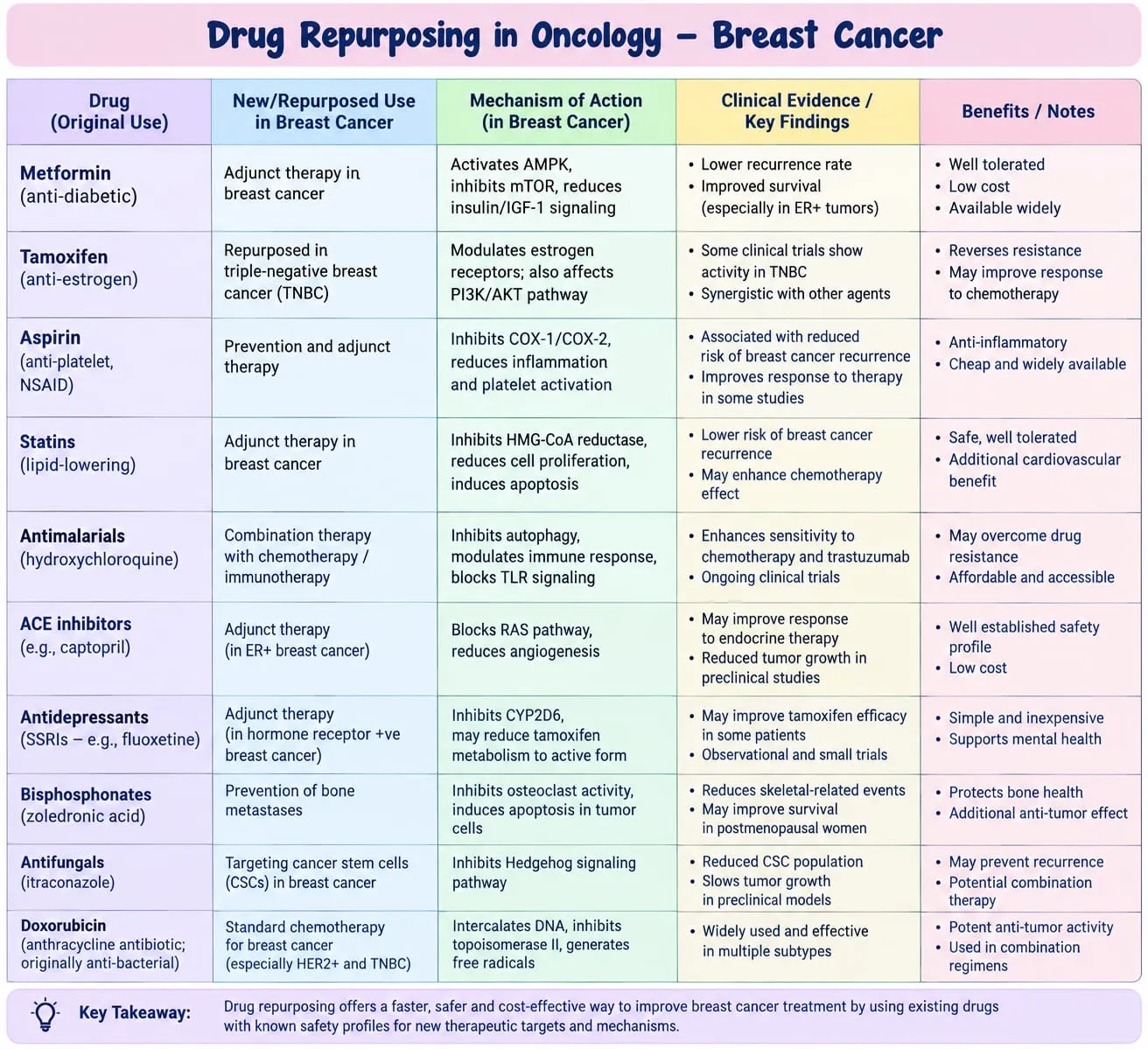
Drug Repurposing in Breast Cancer
Drug repurposing in breast cancer means investigating medicines that were originally developed or approved for non-cancer conditions for their potential to prevent breast-cancer progression, inhibit tumor growth, reduce recurrence, or improve response to standard treatment
Metformin:
Breast cancer, particularly metabolic/diabetes-associated settings
Aspirin:
Breast cancer prevention and treatment research
Mainly investigational
Breast Cancer Treatment
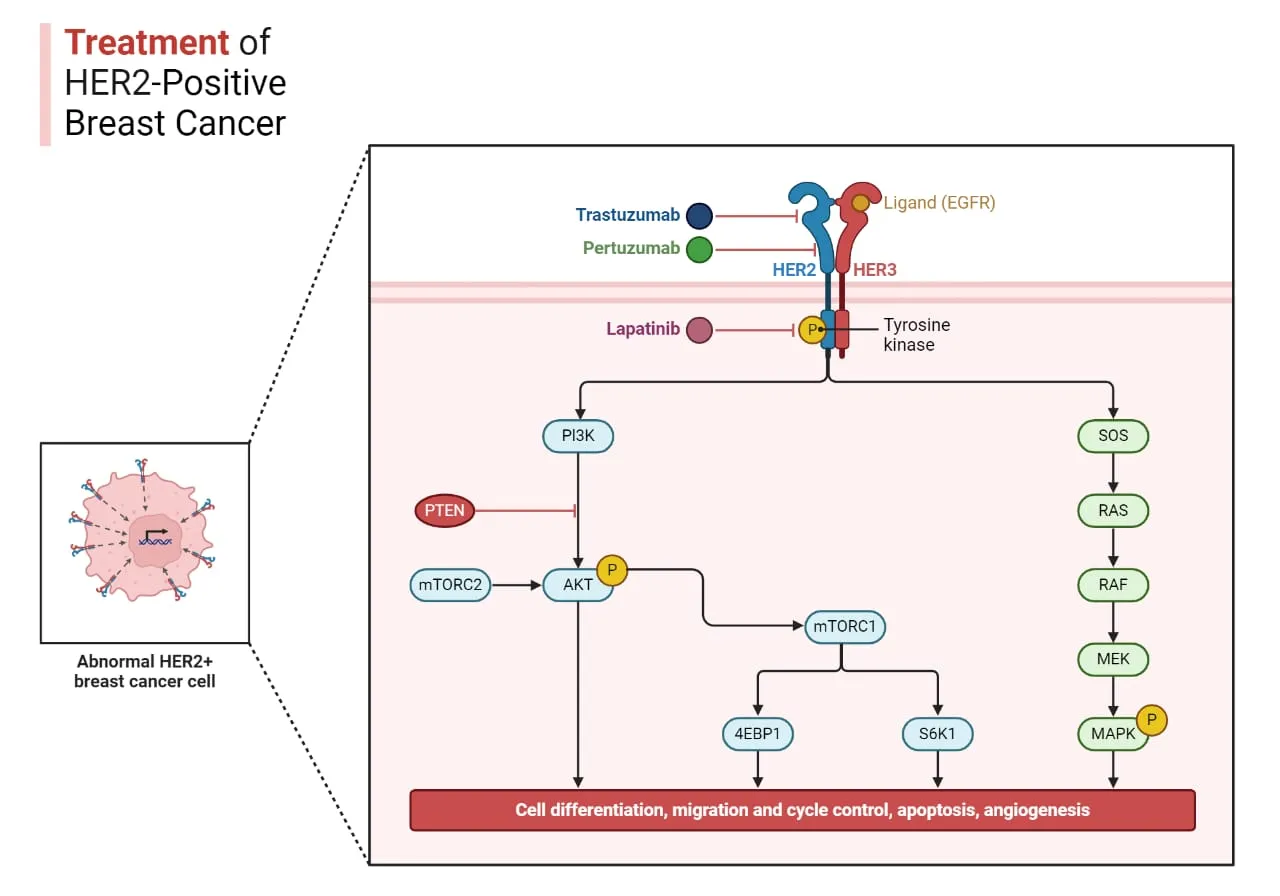
Breast cancer treatment depends on the stage of cancer, tumor characteristics, hormone-receptor status, HER2 status, biomarkers, and the patient’s overall health. Often, more than one treatment is combined
Treatment:
| Surgery | Removes the tumor; may involve lumpectomy or mastectomy, with lymph-node evaluation when appropriate |
|---|---|
| Radiation therapy | Uses high-energy radiation to destroy remaining cancer cells, commonly after breast-conserving surgery |
| Chemotherapy | Uses anticancer drugs to kill or inhibit rapidly dividing cancer cells; may be given before or after surgery or for advanced disease. |
| Hormone therapy | Used mainly for ER/PR-positive (hormone-receptor-positive) breast cancer to block hormonal stimulation of tumor growth. |
| Targeted therapy | Targets specific cancer-related proteins or pathways, such as HER2 |
Simple treatment pathway:
Drug Repurposing of Antimalarial Drugs in Oncology
• Definition
Drug repurposing means investigating an already approved drug for a new therapeutic indication. Antimalarial drugs are being studied as potential anticancer agents because some possess mechanisms that can interfere with cancer-cell survival, metabolism, autophagy, oxidative stress, angiogenesis, and tumor–microenvironment interactions.
Advantages of repurposing antimalarial drugs:-
i. Existing pharmacological and safety information
ii. Established manufacturing processes
iii. Limitations and challenges
iv. Anticancer doses may differ from conventional antimalarial doses.
v. CQ/HCQ may have dose-related toxicities.
vi. Evidence from cell and animal studies does not necessarily translate into clinical benefit.
Major mechanisms
1. Autophagy inhibition
Chloroquine and hydroxychloroquine accumulate in lysosomes and interfere with the late stages of autophagy. Because some cancer cells use autophagy to survive metabolic and therapeutic stress, this pathway has been investigated as a potential anticancer target.
2. Lysosomal disruption
Some antimalarial drugs alter lysosomal function and acidity, potentially leading to accumulation of cellular waste and cancer-cell stress.
3. Oxidative stress
Artemisinin derivatives such as artesunate have been investigated for their ability to increase oxidative stress in susceptible cancer cells.
4. Apoptosis and cell-cycle effects
Preclinical studies suggest that some antimalarials can influence apoptosis and other pathways involved in cancer-cell survival and proliferation.
5. Combination therapy
Antimalarial drugs have also been studied in combination with conventional anticancer treatments, with the aim of increasing tumor-cell sensitivity to therapy.
Drug repurposing in precision oncology:-
Drug repurposing is the investigation of an existing drug for a new therapeutic indication. In oncology, combining drug repurposing with precision medicine can help identify existing drugs that may be useful for tumors carrying particular molecular alterations or biological characteristic
Importance of precision oncology
Biomarker testing can help identify molecular features of a tumor and guide selection of targeted or other systemic therapies. Targeted therapy is a major component of precision medicine. �
I. Advantages
II. Existing pharmacological information is available for many repurposed drugs.
III. Development may be faster than discovering an entirely new drug.
IV. Existing drugs can provide additional options for cancers with limited treatments.
V. Repurposing Antidiabetic Drugs for Cancer Therapy
VI. Drug repurposing means using an already approved drug for a new therapeutic indication. Antidiabetic drugs are being investigated in oncology because diabetes and cancer
Major antidiabetic drugs investigate
1. Metformin
2. SGLT2 inhibitors – dapagliflozin, empagliflozin, canagliflozin
3. DPP-4 inhibitors – sitagliptin, linagliptin
4. Preliminary/preclinical evidence
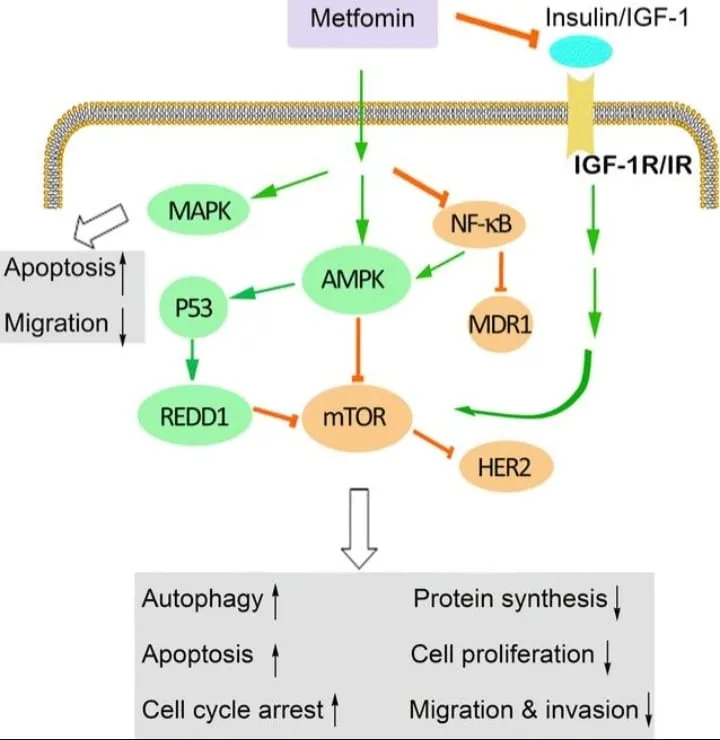
5. Metformin: the major repurposing candidate
6. Molecular mechanisms
7. Metformin → mitochondrial complex-I inhibition → ↓ ATP → ↑ AMP/ATP
8. ratio → AMPK activation → ↓ mTORC1
9. This can produce:-
10. ↓ protein synthesis
11. ↓ cancer-cell proliferatio
12. ↓ cellular growth
13. metabolic stress
14. increased apoptosis under some conditions
15. Molecular pathways
• Major limitations
1. Preclinical success does not always translate into patient benefit.
2. Effective anticancer concentrations may differ from conventional diabetes doses.
3. Cancer is biologically heterogeneous.
4. Many retrospective studies have confounding factors.
5. Randomized clinical trials have produced inconsistent results.
6. Targeting Cancer Metabolism Through Drug Repurposing: Emerging Therapeutic Approaches
7. Cancer metabolic reprogramming is a major hallmark of cancer. Tumor cells alter glucose, lipid, amino- acid and mitochondrial metabolism to support rapid proliferation, survival and adaptation to hypoxia and nutrient limitation. This creates metabolic vulnerabilities that can potentially be exploited using repurposed drugs originally developed for non-cancer diseases
• Example:
1. Metformin
2. Statine
3. Leflunomide
4. Hydroxychloroquin
5. Advantages
6. Existing safety and pharmacological information
7. Potentially lower development cost
8. Faster progression to clinical investigation
9. Availability of drugs with established manufacturing processes
10. Possibility of combination therapy
11. Computational Approaches and Artificial Intelligence in Cancer Drug Repurposing
12. Cancer drug repurposing is the identification of new anticancer uses for existing drugs.
13. Traditional repurposing can be accelerated using computational methods and artificial intelligence (AI), which analyze large datasets to identify relationships between drugs, cancer-associated targets, pathways, genes, and patient characteristics.
CONCLUSION:
Drug repurposing represents a promising complementary strategy for the development of new cancer therapies by identifying new anticancer applications for existing drugs. The approach can potentially reduce development time, cost, and some risks by utilizing established pharmacological, pharmacokinetic, safety, and manufacturing information. Repurposed drugs may act through multiple mechanisms, including inhibition of cancer-cell proliferation, induction of apoptosis, modulation of cancer metabolism, inhibition of autophagy and angiogenesis, immune modulation, and inhibition of invasion and metastasis. Several existing drugs, including metformin, statins, aspirin, propranolol, hydroxychloroquine, and antimalarial and antidiabetic agents, have been investigated for potential applications in oncology
The integration of drug repurposing with combination therapy and precision oncology may provide opportunities to target specific molecular alterations and overcome treatment resistance. Computational approaches, artificial intelligence, machine learning, network pharmacology, and multi-omics analysis can further improve the identification and prioritization of potential repurposed drugs. However, important challenges remain, including appropriate anticancer dosing, toxicity, tumor heterogeneity, drug interactions, limited clinical evidence, and inconsistent clinical outcomes. Therefore, promising laboratory or computational findings cannot be considered sufficient evidence of clinical effectiveness.
REFERENCES

Tejaswini Bulhe, Amol Gayke, Vikas Shinde, Drug Repurposing in Oncology:Opportunities,Challenges and Future Perspectives, Int. J. Sci. R. Tech., 2026, 3 (11), 23-37. https://doi.org/10.5281/zenodo.23908634
 10.5281/zenodo.23908634