

We use cookies to ensure our website works properly and to personalise your experience. Cookies policy
Department of Artificial Intelligence and Data Science, Dr. D. Y. Patil Technical Campus, Varale, Talegaon Dabhade, Pune, Maharashtra, India
Driver drowsiness can reduce attention and reaction capability, making driver-state monitoring an important road-safety research area. This paper presents a proposed design for a low-complexity embedded driver-warning system using an infrared (IR) eye-related sensor, a controller, and visual and audible alerts. It outlines the problem context, relevant sensing approaches, functional architecture, general decision flow, and a controlled evaluation protocol to be used after implementation. The paper also distinguishes rule-based embedded processing from Edge AI: a system should be described as Edge AI only when an AI model is deployed and executed locally on or near the data source. The present manuscript is a design-stage study; the physical model, exact circuit, source-code behaviour, and controlled measurements are not presented as completed or verified. Accordingly, no accuracy, latency, power-consumption, or reliability results are claimed. The proposed evaluation will examine sensor response, alert behaviour, false warnings, missed detections, recovery, and repeatability in a stationary controlled environment. The work provides a transparent design framework that can be refined after the hardware and software are implemented and tested. The proposed device is intended as an educational prototype and not as a certified automotive safety system.
Driver drowsiness is a road-safety concern because fatigue and reduced alertness can affect concentration, reaction time, and responses to unexpected events. Road-safety resources identify drowsy driving as a preventable risk, while global road-safety reports place driver behaviour within the wider context of injury prevention 9,10. Research on driver-state monitoring has explored vehicle-based, behavioural, physiological, wearable, and non-wearable sensing approaches. The choice of method depends on the signal being measured, sensor placement, environmental conditions, computational resources, and the intended application 1,2.
Camera-based systems can analyse eye closure, blinking, facial behaviour, and head pose. For example, facial-landmark approaches have been used to detect eye blinks from images 3, while classical computer-vision techniques such as the Viola–Jones cascade and histogram-of-oriented-gradient features provide background methods for visual recognition 4,5. Such approaches can provide richer behavioural information, but they require image acquisition and processing and may be affected by lighting, occlusion, and computational constraints.
A simpler sensor-and-alert design can be useful as an educational embedded-system project. In the proposed approach, an IR eye-related sensor supplies a signal to a controller. Programmed logic interprets the signal and can activate a visual warning and an audible alarm when a defined condition is met. A sensor signal alone does not establish a reliable diagnosis of drowsiness; sensor behaviour, calibration, decision rules, and validation must be documented.
The objectives of this paper are: (i) to describe a conceptual architecture for a low-complexity embedded warning system; (ii) to place the proposed approach in the context of existing driver-monitoring research; (iii) to define a repeatable, stationary test protocol for later implementation; and (iv) to explain how a future version could move toward Edge AI if a suitable model is trained and deployed locally. This is a design-stage manuscript, not a report of completed experimental validation.
2. RELATED WORK
2.1 Sensor-Based Driver-State Monitoring
Sahayadhas, Sundaraj, and Murugappan reviewed driver-drowsiness detection approaches based on vehicle, behavioural, and physiological measures 1. Their review shows that no single sensing modality captures every aspect of driver state. A later systematic review by Al-Quraishi and colleagues examined technologies used to detect and monitor drivers’ states and discussed the advantages and limitations of different sensor approaches 2. These reviews support evaluating a proposed device according to its sensing modality and test conditions rather than assuming direct comparability across systems.
2.2 Visual Eye-Blink Detection
Visual approaches use image features to estimate eye state and blinking. Soukupová and ÄŒech described a real-time eye-blink detection approach based on facial landmarks 3. The Viola–Jones framework is a foundational method for object detection 4, while Dalal and Triggs introduced histogram-of-oriented-gradient features for human detection 5. These works illustrate visual processing techniques that may inform a future camera-based system; they are not evidence that the proposed IR-sensor design uses computer vision.
2.3 Embedded Ai And Tinyml
Deploying machine-learning models on small devices is constrained by memory, compute capacity, and energy. MCUNet combines efficient neural-network design with a compact inference engine for microcontrollers 6. MLPerf Tiny provides benchmarks for evaluating machine-learning workloads on resource-constrained devices 7. These studies are relevant to a possible future AI-enabled version, but they do not imply that the design described here currently executes an AI model.
2.4 Research Gap And Positioning
Driver-state monitoring is an established research area, so using an IR sensor and an alarm alone is not presented as a novel scientific discovery. The proposed contribution at this stage is a clearly documented system-design framework and a reproducible evaluation plan for a low-complexity sensor-to-alert chain. A stronger technical contribution would require verified implementation details, comparison with closely related systems, and measurements collected using a defined protocol. The E-BTS study demonstrates a more advanced event-driven blink-tracking design with dedicated hardware and reported experiments; its results apply to that study and must not be transferred to the present proposal 8.
3. PROPOSED SYSTEM DESIGN AND METHODOLOGY
3.1 Functional Architecture
The proposed system contains four functional stages: (i) an IR eye-related sensing unit; (ii) an embedded controller that reads the sensor output; (iii) programmed decision logic; and (iv) visual and audible warning outputs. A power-supply and wiring arrangement supports the modules. After component selection, the relevant manufacturer and platform documentation should be consulted for wiring, electrical limits, and controller-specific implementation details 11,12. The architecture is conceptual and must be updated to match the final circuit and code once those are implemented.
IR eye-related sensor → Embedded controller → Programmed decision logic → Visual warning + audible alarm
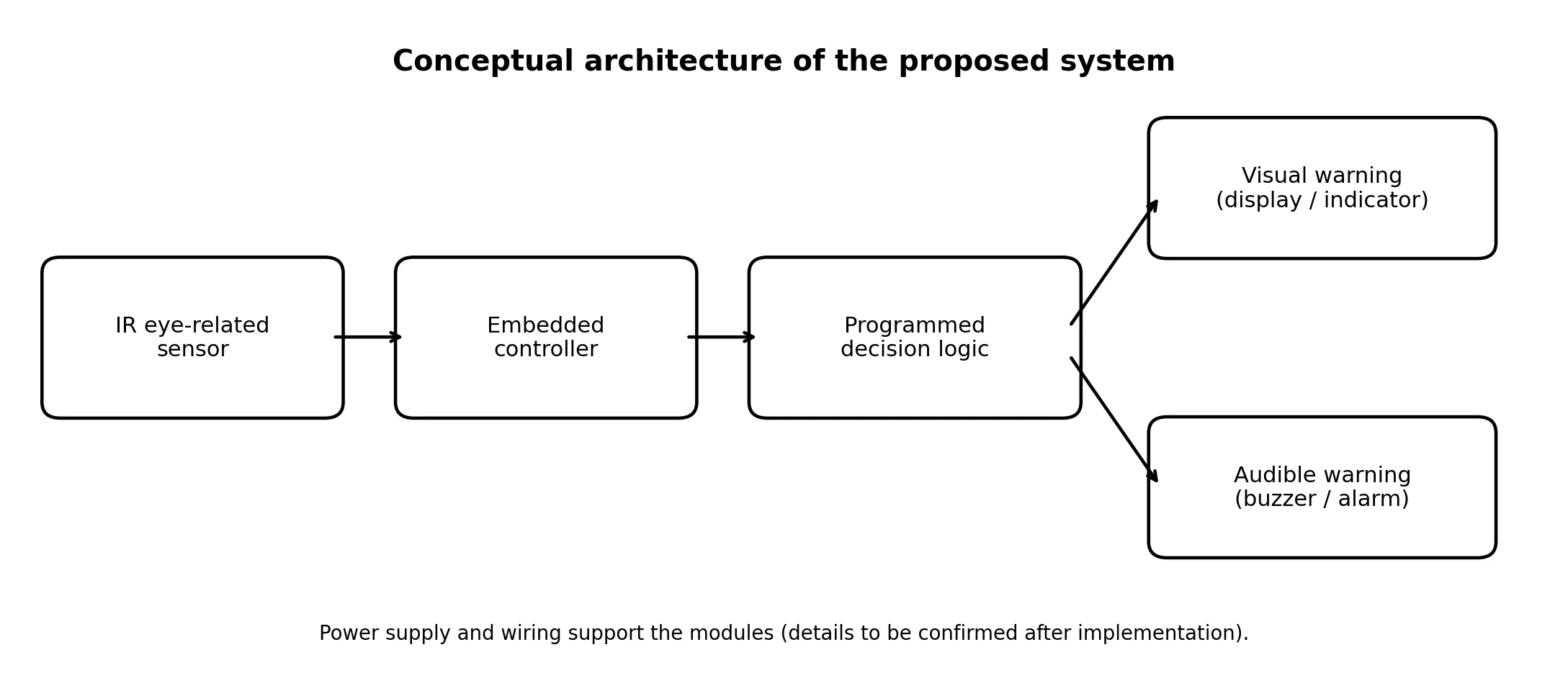
Figure 1: Conceptual Functional Architecture of the Proposed Sensor-Based Warning System.
3.2 Sensor Input And Decision Flow
The planned workflow is: (1) initialise the sensor and output devices; (2) read the sensor signal; (3) interpret the signal according to the selected sensor module’s output convention; (4) apply the decision rule defined in the program; (5) activate the warning outputs if the rule is satisfied; and (6) continue monitoring and reset the warning state when the defined recovery condition occurs. The actual signal polarity, threshold, timing interval, and reset behaviour must be specified from the implemented hardware and source code. No particular threshold or timing value is assumed in this proposal.
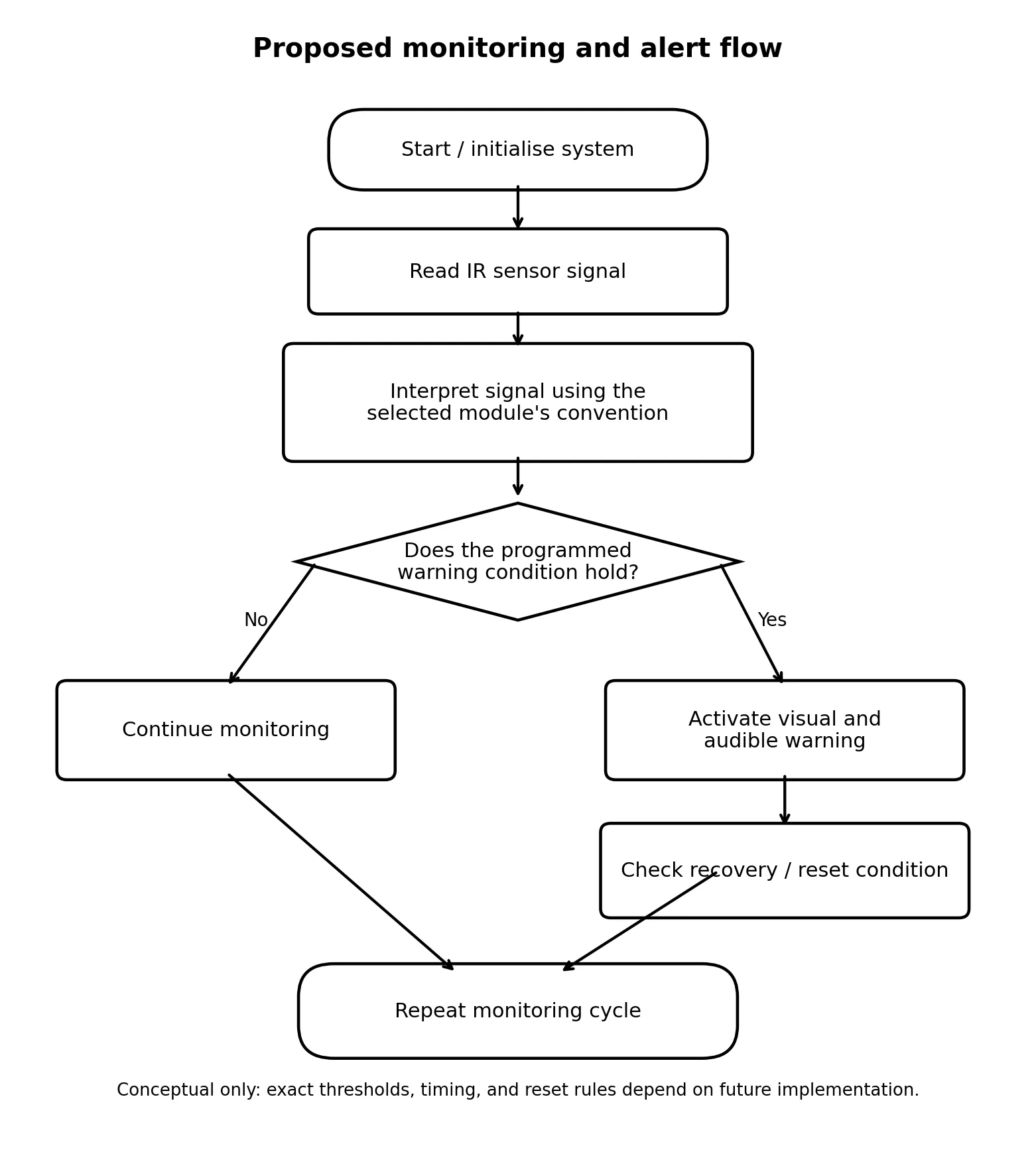
Figure 2: Proposed Monitoring and Alert Decision Flow. the Flow Is Conceptual and Must Be Aligned
3.3 Proposed Hardware And Software Elements
Table 1: Proposed components and implementation details requiring confirmation.
| Element | Intended role | Status in this manuscript |
|---|---|---|
| IR eye-related sensor | Provides a signal associated with eye state or proximity, depending on the module. | Proposed; exact model and behaviour to confirm. |
| Embedded controller | Reads sensor data and executes the programmed rule. | Controller selection and code to be documented. |
| Decision logic | Determines when the warning condition is met. | Proposed; exact logic not yet validated. |
| Visual indicator/display | Communicates a warning state. | Proposed output; component to confirm. |
| Audible alarm | Provides an audible warning. | Proposed output; component to confirm. |
| Power and wiring | Connects and powers system components. | Circuit details to document after assembly. |
3.4 Embedded Processing And Edge Ai
A rule-based embedded system executes predefined conditions on a controller. Edge AI specifically involves running an AI model on or near the device that collects the data. A future camera-based version could process eye images using a trained model deployed locally, but this would be an additional implementation requiring a model, dataset, deployment details, and evaluation. Until such evidence exists, the proposed system should be described as an embedded sensor-based warning design rather than a completed Edge AI implementation.
3.5 Safety, Privacy, And Scope
The proposed device is an educational design and must not be treated as a certified vehicle safety system. Sensor errors, false alerts, and missed detections are possible. Any initial tests should be conducted in a stationary, controlled setting; the protocol must not involve driving while sleepy or testing on public roads. If a future version captures images or transmits data, privacy, data minimisation, secure handling, and appropriate consent should be considered.
4. PROPOSED IMPLEMENTATION AND EVALUATION PLAN
4.1 Design-Stage Status
This manuscript documents the planned system and evaluation approach before completion of the physical model. It does not claim that the full hardware arrangement, program logic, or performance has been verified. After implementation, the authors should record the actual controller and sensor model, circuit connections, output components, decision rule, and relevant software details. These details should be added before presenting the work as an implemented prototype.
4.2 Controlled Test Protocol
Evaluation should take place in a stationary and controlled setting. Test conditions should be defined in advance, repeated consistently, and recorded. The following protocol is proposed for use after the model is assembled; it is not a report of completed tests.
Table 2: Proposed test protocol for a future implementation.
| Test case | Procedure | Measure to record |
|---|---|---|
| Startup | Power on the assembled prototype. | Initial state and any unintended alerts. |
| Normal sensor activity | Observe the sensor under ordinary, safe conditions. | Signal behaviour and false alerts. |
| Brief eye closure / simulated input | Use a safe, stationary test procedure appropriate to the sensor. | Whether an alert activates. |
| Longer closure / simulated input | Apply a predefined longer input condition while stationary. | Alert activation and response time. |
| Output operation | Check the visual and audible outputs independently and together. | Correct output activation. |
| Recovery/reset | Return the input to its normal state. | Whether monitoring resumes correctly. |
| Repeatability | Repeat each condition using the same procedure. | Consistency across trials. |
4.3 Evaluation Metrics
After testing, useful measures may include the number of trials, correctly detected positive cases, false-positive alerts, missed alerts, response time, and recovery behaviour. If each trial has a clearly defined ground-truth label, precision, recall, and F1-score may be calculated. Response time should use a consistent definition of start and end events. The number of trials, test conditions, sensor placement, and relevant environmental conditions should be reported. No numerical results are included in this design-stage paper because no verified measurements have been supplied.
DISCUSSION
A low-complexity sensor-and-alert design can support learning about sensor inputs, embedded decision logic, and output integration. Local processing may permit operation without continuous cloud connectivity, depending on the final hardware and software. However, a single eye-related sensor signal provides limited context and may not reliably distinguish ordinary blinking from drowsiness without suitable calibration and validated decision logic.
The literature shows that driver-state monitoring includes a wide range of behavioural and physiological signals 1,2. Camera-based approaches can provide multiple visual features but introduce image-processing and environmental challenges [3–5]. Embedded AI research demonstrates that model inference on constrained devices is possible, but it requires careful model selection, deployment, and evaluation 6,7. These are potential directions for future work rather than implemented features of the present proposal.
The main limitation is that the physical model and its quantitative behaviour have not yet been verified. Consequently, this paper cannot establish accuracy, reliability, power consumption, or a technical improvement over existing systems. The next research stage should document the actual hardware and code, complete the controlled test protocol, report measured results, and compare the outcome with relevant published approaches.
6. CONCLUSION AND FUTURE WORK
This paper has presented a conceptual design and methodology for an embedded driver-warning system based on an IR eye-related sensor, a controller, and visual and audible warning outputs. It has reviewed relevant driver-monitoring, blink-detection, and embedded-AI literature and proposed a controlled test protocol for evaluating sensor response, alert behaviour, false warnings, missed detections, and recovery after implementation.
No experimental performance claims are made because the physical model and measurements are not yet available. Future work should complete the prototype, document its circuit and decision logic, conduct repeatable stationary tests, and report measured results. A separate Edge AI extension could be explored by training and deploying a suitable model locally, then evaluating model performance and resource requirements. The device should remain an educational prototype unless and until appropriate safety validation and certification are completed.
ACKNOWLEDGEMENT
The author acknowledges the academic guidance and learning environment provided by the Department of Artificial Intelligence and Data Science, Dr. D. Y. Patil Technical Campus. This statement should be edited or removed if it does not accurately reflect the support received.
CONFLICT OF INTEREST
The author declares no known competing financial interests or personal relationships that could have appeared to influence the work described in this manuscript. Please confirm this declaration before submission.
REFERENCES



Srushti Joshi, Rohini Chipade, Suvarna Amale, EdgeAI - Bringing AI to Smart Devices (Drowsiness Detection System), Int. J. Sci. R. Tech., 2026, 3 (10), 1558-1563. https://doi.org/10.5281/zenodo.23835825
 10.5281/zenodo.23835825