

We use cookies to ensure our website works properly and to personalise your experience. Cookies policy
S.N.D. College of Pharmacy , Babhulgaon ,Yeola ,Nashik .
Euphorbia Hirta Linn. is an herbal drug which belongs to the family Euphorbiaceae and is used for the treatment of different disorders. The plant is rich in biologically active phytoconstituents which include alkaloids, flavonoids, tannins, terpenoids, saponins, steroids, phenolic compounds, glycosides and coumarins. There are a number of studies demonstrating diverse pharmacological properties of E. hirta such as antioxidant, antimicrobial, anti-inflammatory, antipyretic, analgesic, antiasthmatic, antidiabetic, anxiolytic, sedative, hepatoprotective, gastroprotective and immunostimulant properties. Experimental studies in fish have shown that extracts of E. hirta are able to increase specific and nonspecific immune responses, antioxidant levels and promote growth performance following infection. The solvent used in the process of plant material extraction can affect its biological activity. This paper provides the review of main phytoconstituents, uses, pharmacological actions and possible medical applications of Euphorbia hirta. The attention is paid mainly to the antioxidant, antimicrobial, anti-inflammatory, anxiolytic, immunostimulant and other properties of the plant. The data presented in the review indicate that E. hirta is a prospective source of pharmacologically active components; nevertheless, it is necessary to carry out additional studies such as toxicity, standardization and clinical trials to prove safety and effectiveness of the plant.
Medicinal plants have been used in traditional medical practices throughout the ages and have continued to be used as a valuable source of drugs. According to the World Health Organization, a good number of people depend on traditional medicine for their basic healthcare, especially in developing countries. Medicinal plants contain numerous biological secondary metabolites such as flavonoids, alkaloids, tannins, terpenoids, steroids, saponins, coumarins and phenolic compounds. The components of these plants play various roles in pharmacology and have been given much attention in the development of medicines.
Euphorbia hirta Linn. comes under the category of Euphorbiaceae family and is popularly known by the names asthma weed, milkweed, and garden spurge. It is an annual herb with hairy stems, leaves, and inflorescence, growing in the tropics and sub-tropical parts of the globe. It can be seen in fields, roadsides, gardens, wastelands, and other disturbed areas. It is especially renowned in the field of medicine due to its various uses.
Historically, various parts of E. hirta such as leaves, stems, roots, and whole plant have been utilized for the treatment of various ailments. This plant has particularly been linked to the treatment of respiratory diseases like asthma, bronchitis, cough, cold, and disorders of the throat. Moreover, its historical applications include the management of various diseases of the gastrointestinal tract such as diarrhea, dysentery, disorders of the intestines and amoebiasis. Its ethnomedicinal uses further include the treatment of various diseases such as fever, inflammation, disorders of the skin, wounds, abscesses, menstrual disorders, diabetes, hypertension, and some infectious diseases.
There has been much phytochemical research which has established that E. hirta is rich in several bioactive components such as flavonoids, alkaloids, tannins, terpenoids, steroids, saponins, coumarins, and polyphenolic compounds. It is worth noting that flavonoids and phenolics are well known for their antioxidant and anti-inflammatory properties, but other bioactive components may be responsible for antimicrobial, antidiarrhoeal, and antidiabetic properties among others.
Biological activities observed in pharmacological investigations done on various extracts and compounds of E. hirta include: anti-asthmatic, anti-inflammatory, antioxidant, antimicrobial, antibacterial, antidiarrhoeal, antidiabetic, analgesic, antipyretic, sedative, anxiolytic, antitumor, and wound healing properties. All these activities help to scientifically validate some uses of the plant. However, due to differences in various aspects of each study including models used, methods of extraction, dosages, and chemical constituents, direct comparisons become hard.
However, despite the widespread ethno-pharmacological applications and scientific investigations on the biological effects of E. hirta, there are many other aspects that need to be scientifically assessed. Standardization of the plant material, characterization of the chemical components, elucidation of the mechanism of action, pharmacokinetics, toxicity and clinical investigations are needed in order to assess its medicinal efficacy. Hence, this review article attempts to give an extensive account of the botanical aspects, ethno-medicinal application, phytoconstituents and pharmacological actions of Euphorbia hirta Linn. [11,12,13,14,15,16,17]
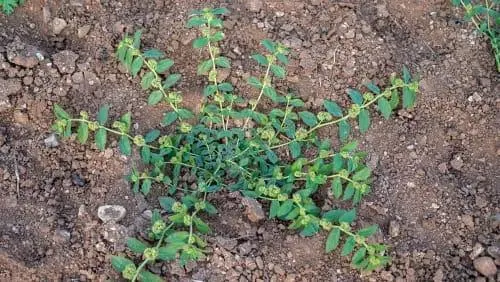
Fig.plant
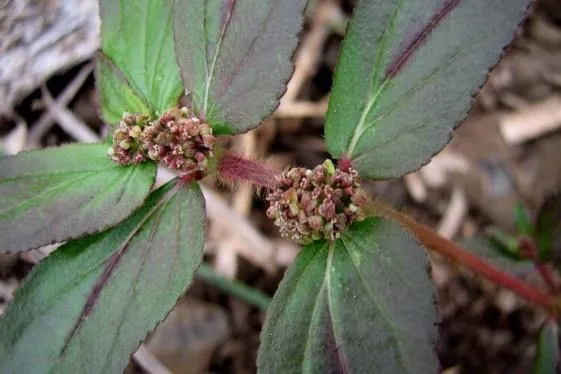
Fig.plant
Euphorbia hirta L. plant profile
| CATEGORY | PLANT PROFILE |
|---|---|
| Kingdom | Plantae |
| Phylum | Tracheophyta |
| Class | Magnoliopsida |
| Order | Malpighiales |
| Family | Euphorbia |
| Genus | Euphorbia |
| Species | Euphorbia hirta |
| Plant type | Annual,hairy herb |
| Native distribution | Tropical and subtropical regions; Native to part of tropical America and now widely distributed throughout tropical regions |
| Synonyms | Asthama weed, Garden Spurge & pill-bearing spurge |
2.Morphology of Euphorbia hirta
Habit: Euphorbia hirta is an erect to prostrate annual herb with yellow-brown trichomes.
Root: It has an extensive taproot system where there is one cylindrical primary root which gives rise to the secondary and tertiary roots. No specific modifications are made to the root. A white milky liquid is secreted by the root when it is cut.

Fig.Root of Ephorbia hirta L.
Stem: The stem is cylindrical in shape, erect to ascending-decumbent, green to reddish-green in coloration and grows up to a height of 10-75 cm. The stem is densely pubescent with yellow-brown trichomes that are unicellular in nature. The branching pattern of the plant is sparse monopodial.
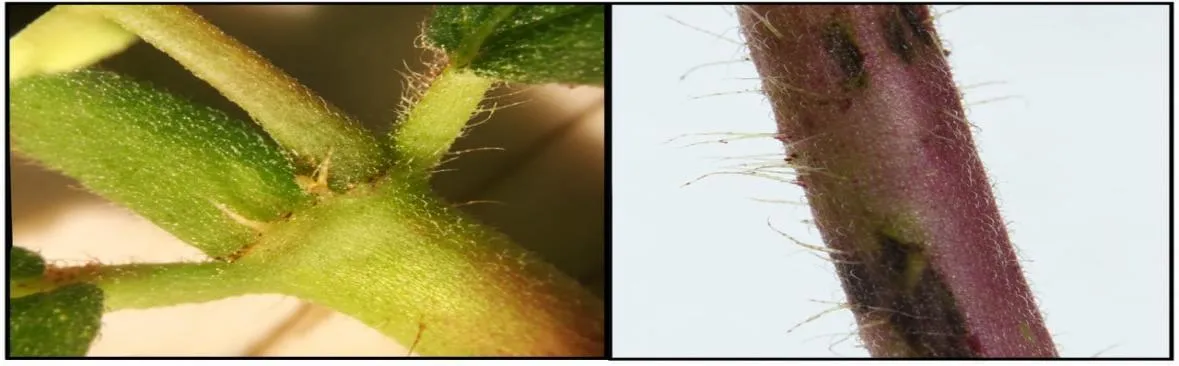
Fig.Morphological feature of stem Euphorbia hirta
Leaves: Simple, opposite and distichous leaves with very short petioles. The color of the leaf may be either green or reddish, sometimes having a purple spot. The shape of the leaf is lanceolate-oblong, long elliptic, or ovate-lanceolate. Base is unequal; the tip is pointed and margin is serrate to serrulate. Venation is trinerved, 3-5 pairs of lateral veins. Average dimensions are 3.32 × 1.14 cm.
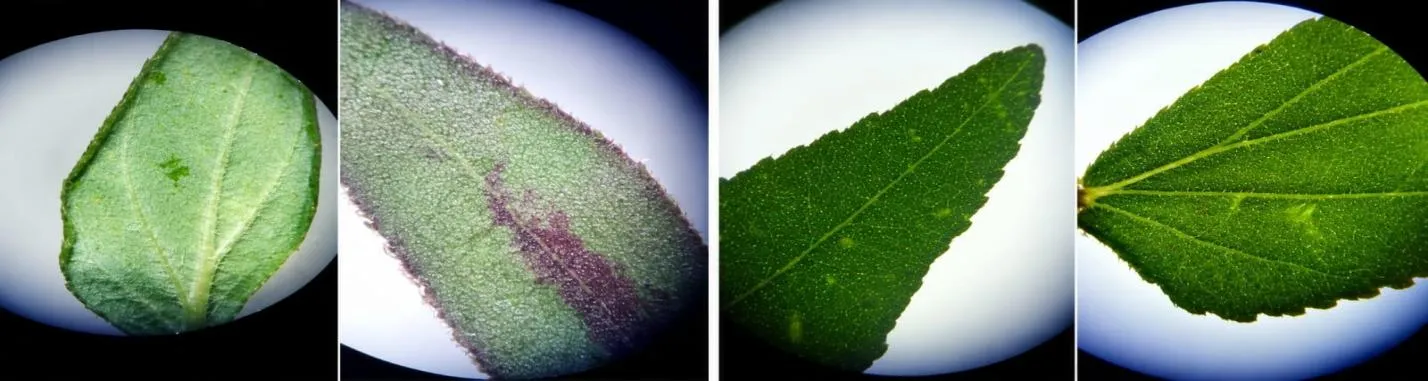
Fig.Morphological characteristic of Leaf Euphorbia hirta
Flower Type or Inflorescence: The flower is of the type called cyathium. These flowers occur in dense clusters in the terminal and upper axillary regions of the plant. This inflorescence type is monoecious in nature and the male and female florets occur together within an involucre.
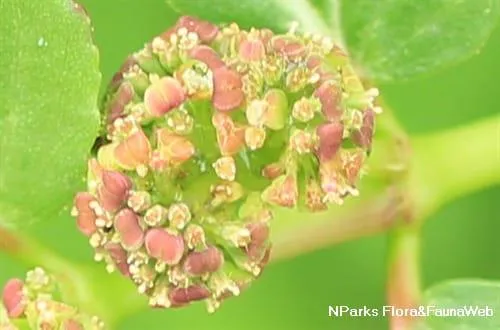
Fig.Inflorescence of Euphorbia hirta L.
Flowers: Four to five male florets appear in one cyathium. Male florets have subglobose anthers but no perianth. Female flowers are exserted with a superior and trilocular ovary, with three deeply bifurcated styles and capitate stigmas.
Fruit: Fruit is a three-angled, pubescent and dehiscent capsule that consists of three compartments each bearing one seed.
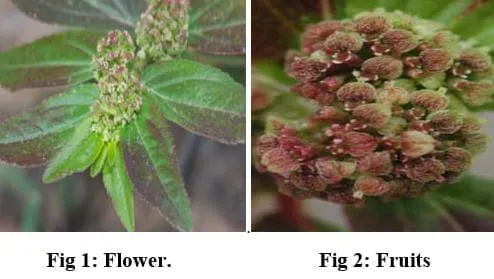
Fig.Flower and fruits of Euphorbia hirta L.
Seed: Reddish-brown in color, oblong and tetragonal with an obtuse apex, transversely grooved surface, and subtruncate base. Caruncle is not present.
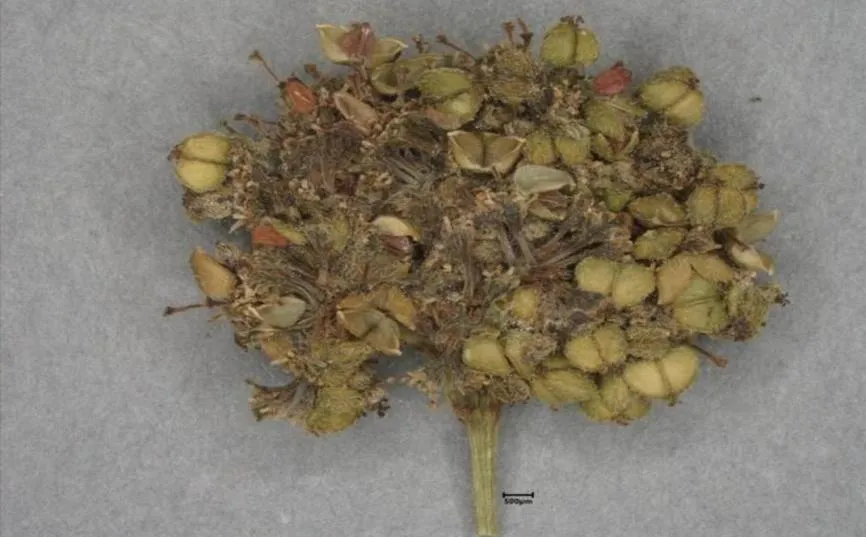
Fig. Seeds of Euphorbia hirta L.
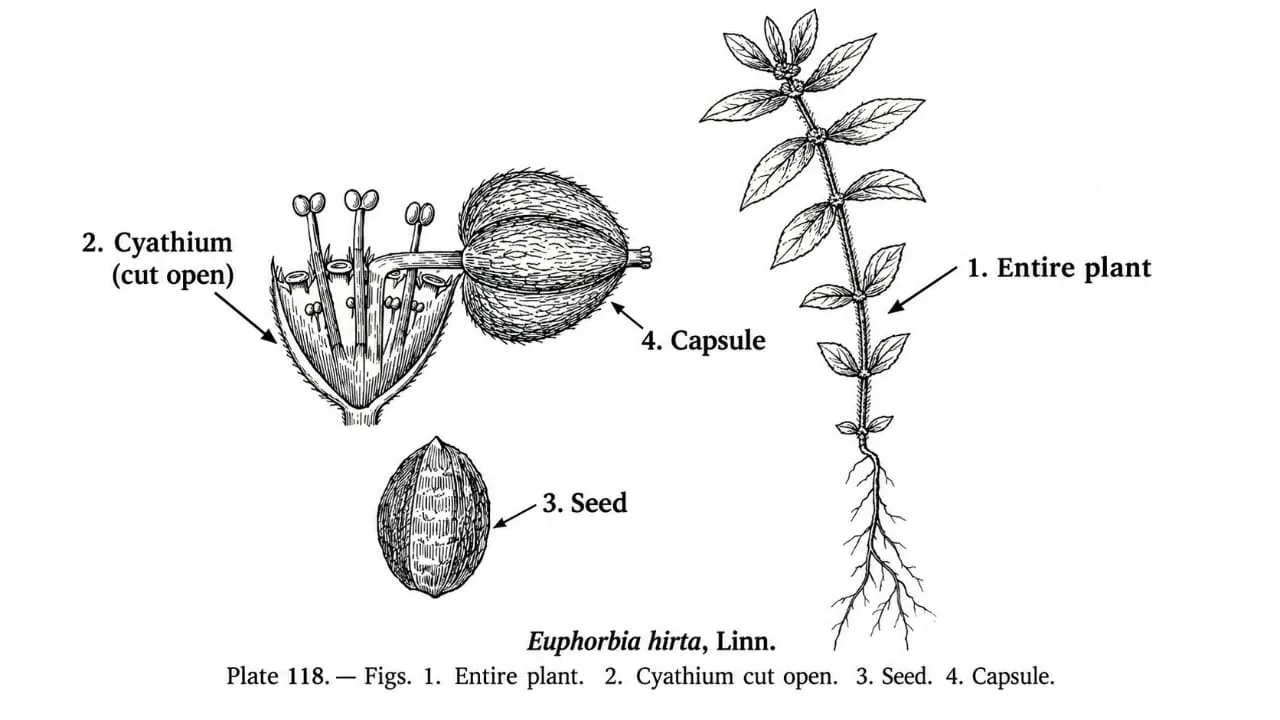
Fig. Euphorbia hirta L.
3.Geographical Distribution of Euphorbia hirta Linn.
Euphorbia hirta is a common herb found mainly in tropical and subtropical regions. It is believed to be native to tropical America but is now widely distributed in many parts of the world.
Asia: Common in India, Sri Lanka, Bangladesh, Nepal, Thailand, Malaysia, Indonesia, Philippines and southern China.
Africa: Found widely in tropical Africa, including Nigeria, Ghana, Kenya, Tanzania and South Africa.
America: Occurs in Mexico, Central America, the Caribbean and many parts of South America.
Australia & Pacific: Found in tropical and subtropical Australia and several Pacific islands.
India: Widely distributed in Maharashtra, Gujarat, Karnataka, Tamil Nadu, Kerala, Andhra Pradesh, Telangana, Uttar Pradesh, West Bengal and other warm regions.
The plant commonly grows in roadsides, agricultural fields, gardens, wastelands, grasslands and other disturbed areas. It prefers warm climates and open sunny places and can grow in different types of soil. [18,19,20]
4.Chemical Constituents:
Euphorbia hirta primarily consists of flavonoids, terpenoids, phenolics, tannins, essential oils, sterols, alkaloids, saponins, amino acids and minerals. Some of the most common flavonoids found in Euphorbia hirta include quercetin, quercitrin, quercitol, rutin, leucocyanidin, leucocyanidol, myricitrin, cyanidin 3, 5-diglucoside, pelargonium 3, 5-diglucoside, camphol, quercetin-rhamnoside and flavonol glycoside xanthorhamnin. Afzelin is another flavonol glycoside isolated from Euphorbia hirta. Hentriacontane and myricyl alcohol are present in the stem and inositol, taraxerol, friedelin, β-sitosterol, ellagic acid, kaempferol, quercitol and quercitrin are present in the latex of the plant.
E. hirta contains the following triterpenes in its terpenoids: α-amyrin, β-amyrin, friedelin, taraxerol, taraxerone, 11α,12α-oxidotaraxerol, cycloartenol, 24-methylene-cycloartenol and euphorbol hexacosanoate. Its aerial parts and roots also contain diterpene esters belonging to the phorbol and ingenol series, such as 12-deoxyphorbol-13-dodecanoate-20-acetate, 12-deoxyphorbol-13-phenylacetate-20-acetate and ingenol triacetate. Tinyatoxin, a very toxic resiniferonol analog, was also isolated from E. hirta. E. hirta’s ethanol extract contains three kaurane diterpenoids as follows: 2β,16α,19-trihydroxy-ent-kaurane, 2β,16α-dihydroxy-ent-kaurane and 16α,19-dihydroxy-ent-kaurane. Among the sterols, the following have been characterized: β-sitosterol, campesterol, cholesterol and stigmasterol.
Phenolic components include dehydroellagitannins such as euphorbins A, B, C, and E, terchebin, geraniin, 2,4,6-tri-O-galloyl-β-D-glucose, and 1,2,3,4,6-penta-O-galloyl-β-D-glucose. Other phenolic substances include 5-O-caffeoylquinic acid, also known as neochlorogenic acid, 3,4-di-O-galloylquinic acid, and benzyl gallate. Acids isolated from the plant include ellagic acid, gallic acid, tannic acid, maleic acid, and tartaric acid.
E. hirta essential oil has various major constituents such as 3,7,11,15-tetramethyl-2-hexadecen-1-ol, 6,10,14-trimethyl-2-pentadecanone, hexadecanal, phytol and n-hexadecanoic acid that constitute 61.01% of the total reported essential oil. Other minor constituents include 2-butoxyethanol, tetradecane, phthalic acid butyl tetradecyl ester, oleic acid, 13-heptadecyn-1-ol, 2-methyl-1-hexadecanol and 1,2-benzenedicarboxylic acid diisooctyl ester. It is also rich in alkaloids, saponins and amino acids. The mineral content of dried leaves include calcium, phosphorus, iron, magnesium, manganese, zinc and copper, while fresh leaves are known to contain manganese, copper, zinc and nitrate in addition to other trace elements of iron, magnesium, potassium, calcium and sodium. Two new butanol rhamnopyranosides have been isolated and characterized as n-butyl-1-O-L-rhamnopyranosides. [1,11]
5.Traditional Uses by Plant Part :
Leaves and Stems (Above-Ground Parts): These are the parts that are used most often, and they usually require boiling.
Respiratory Therapy: Historically employed for treating conditions such as asthma, bronchitis, persistent cough, and chest congestion because of the supposed bronchodilating properties.
Gastrointestinal Problems: Given in cases of diarrhea, dysentery, amoebiasis, and stomach pain.
Milky Latex (Sap): The plant produces white and milky sap if bruised or damaged.
Skin Uses: Applied on the skin to remedy such conditions as acne, pimple, cuts and other skin disorders.
Lactation: In accordance with the folklore Doctrine of Signatures, because the plant exudes a milky sap, it was used as a galactagogue for lactating women.
Uses: Decoctions or extracts from the roots have been used traditionally to treat problems with the IV or urinary tract, snakebites, or children’s worms.
6.Ethnopharmacology :
Euphorbia hirta is a well-known medicinal plant used in the treatment of different stomach disorders, respiratory infections, and problems of the eyes. The aqueous extract of the plant treats different stomach problems including diarrhea, dysentery, parasitic infection of the intestine, and abdominal cramps owing to quercitrin.
This herb is also beneficial in treating breathing disorders caused by asthma, bronchitis, and hay fever through the relaxation of the breathing system. Furthermore, it has anti-inflammatory, analgesic, antipyretic, anti-anxiety effects, and is effective in reducing blood pressure and increasing body energ
The plant is commonly applied to the skin for external purposes. The sap or latex from its stem is usually used around the eyelids in treating styes and eye ulcers, whereas the paste from its leaves is used to treat swellings or boils.
The roots of the plant Euphorbia hirta have special medicinal properties as well. The decoction from the roots encourages mothers who are breastfeeding to produce more milk, provides relief to the urinary tract, and has been traditionally used to treat snakebites. The alcohol extracts of the complete plant are said to have effective properties in lowering blood sugar levels.
Moreover, the herb is impressive in the area of fighting cancer, infections, fungi, and parasites according to scientific studies. Its extracts also show promise in preventing harmful molds from contaminating food like rice, wheat, corn, or mustard due to the nature of its roots that fight against pests that attack crops. [2]
The roots of Euphorbia hirta are also medicinally valuable as a decoction of the roots stimulates milk flow in nursing mothers, acts as a soothing agent for the urinary tract and is used in the treatment of snakebites. Alcohol extracts of the whole plant have been reported to lower blood sugar levels in laboratory studies.
Apart from its medicinal value to humans, the herb also demonstrated anti-cancer, antibacterial, antifungal, and anti-parasitic properties in scientific research and can be useful in agriculture as its liquid extracts prevent harmful mold toxins from contaminating stored grains like rice, wheat, corn and mustard, while its roots naturally destroy destructive soil worms that damage crops. [2]
7.Pharmacological Activities:
ASTHAMA
The whole plant has been reported to possess bronchiolar-relaxing activity. The researchers investigated its bronchodilator effect using histamine-induced bronchoconstriction in guinea pigs.
The main role investigated was its ability to protect the airways against histamine-induced narrowing and improve the animals’ resistance to bronchospasm.
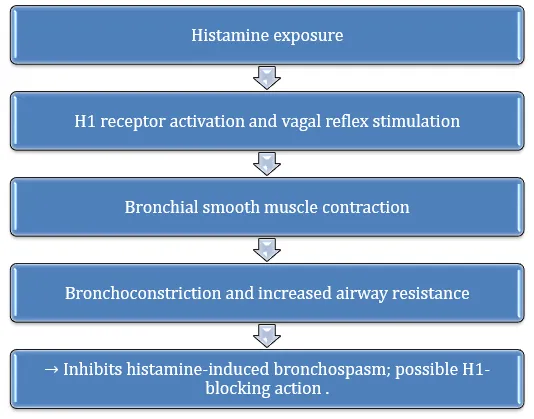
Mechanism of action in asthma
Inhibition of histamine-induced bronchospasm
Histamine is one of the important chemical mediators involved in asthma. The paper explains that histamine produces bronchoconstriction through two mechanisms:
1. Direct activation of H1 receptors in the airways.
2. Stimulation of intrapulmonary vagal afferent nerves, producing a reflex bronchoconstrictor response.
These mechanisms produce contraction of bronchial smooth muscular, resulting in narrowing of the airways.
The alcoholic extract of Euphorbia hirta significantly inhibited histamine-induced bronchospasm in guinea pigs. The authors suggested that the extract might possess an H1-receptor blocking effect.
Significance in asthma treatment
The findings suggest that Euphorbia hirta may contain compounds with potential bronchodilator or antihistaminic activity. Its traditional use in asthma and bronchitis is supported by the experimental observation of protection against histamine-induced bronchospasm.
However, the study was conducted in guinea pigs, not human asthma patients. The active chemical constituents responsible for the effect were not identified, and the exact mechanism requires further investigation
Proposed Mechanism:-
2.ANTIDIABETIC :
The anti-diabetic properties of Euphorbia hirta have been investigated using both in vitro and in vivo experimental models. Ethanolic and ethyl acetate extracts of the plant were evaluated using the α-glucosidase inhibition assay, followed by oral glucose tolerance tests using different glucose-loading methods. The possible mechanisms responsible for the anti-diabetic activity including antioxidant activity, inhibition of the α-glucosidase enzyme and stimulation of insulin release from the β-cells of the islets of Langerhans. Inhibition of α-glucosidase may reduce the breakdown and absorption of carbohydrates, thereby helping to control the rise in blood glucose levels after meals.
Studies conducted using ethanol extracts of the leaves, flowers and stems of Euphorbia hirta in streptozotocin-induced diabetic mice showed a significant reduction in blood glucose levels. Similarly, ethanol and petroleum ether decoctions prepared from the flowers showed potential anti-diabetic activity in alloxan-induced diabetic animals. The ethanol extract also produced a significant reduction in blood glucose levels in alloxan-induced diabetic rats. In vitro studies showed that the ethanol extract and ethyl acetate fractions exhibited α-glucosidase inhibitory activity, whereas the n-hexane, chloroform, butanol and aqueous fractions did not show significant α-glucosidase inhibition. The in vivo experiments produced findings consistent with the in vitro results. These findings suggest that Euphorbia hirta possesses potential anti-diabetic activity through mechanisms involving α-glucosidase inhibition, antioxidant effects and possible enhancement of insulin secretion. However, these findings are mainly based on laboratory and animal studies, and further research is required to establish its safety and effectiveness in humans.[9,11]
3.ANTI KIDNEY-STONE :
Antiurolithiatic Activity of Euphorbia hirta
Urolithiasis is a urinary tract disorder characterized by the formation of stones in the kidneys, ureters or urinary bladder due to the crystallization and deposition of minerals and salts present in urine. Calcium oxalate is one of the most common components of kidney stones. Euphorbia hirta L., belonging to the family Euphorbiaceae, is a medicinal plant traditionally used for various disorders. Research studies have investigated its antiurolithiatic activity, particularly its ability to inhibit calcium oxalate crystal formation and aggregation.
The antiurolithiatic activity of Euphorbia hirta is mainly associated with the inhibition of calcium oxalate nucleation and aggregation. Nucleation is the initial stage of kidney stone formation, in which calcium and oxalate ions combine to form small crystals. The extracts of Euphorbia hirta may interfere with the formation of these crystal nuclei, thereby reducing the initial stage of stone development. In the 2021 study, the ethanolic leaf extract showed 55.81% inhibition of calcium oxalate nucleation at a concentration of 1000 µg/ml.
Another important mechanism is the inhibition of calcium oxalate crystal aggregation. Aggregation is the process by which small crystals combine to form larger crystal clusters, which may become trapped in the urinary tract and contribute to kidney stone formation. The plant extract may interfere with crystal interactions and prevent the formation of larger aggregates. The 2021 study reported 73.17% inhibition of calcium oxalate aggregation by the ethanolic leaf extract at 1000 µg/ml. Similarly, the 2019 study reported that the hexane extract showed 95.78% inhibition of calcium oxalate aggregation, compared with 92.63% for the standard drug Cystone under the experimental conditions.
The phytochemical constituents of Euphorbia hirta, including flavonoids, phenolic compounds, tannins, alkaloids and terpenoids, may contribute to its antiurolithiatic activity. These compounds may collectively influence calcium oxalate crystal formation and aggregation. However, the individual contribution of each phytochemical has not been conclusively established in the studies. The activity of the plant also varies according to the solvent used for extraction, indicating that different solvents extract different chemical constituents.
In addition, the plant has been reported to possess diuretic activity, particularly in previous studies involving aqueous extracts. Diuretic activity increases urine output and may help flush small crystals and other urinary substances from the urinary tract, potentially reducing their accumulation. However, the in-vitro studies on crystal inhibition do not directly establish the diuretic effect in humans.
In conclusion, Euphorbia hirta L. exhibits promising in-vitro antiurolithiatic activity by inhibiting calcium oxalate nucleation and aggregation. Its phytochemical constituents and reported diuretic activity may contribute to its potential role in urinary stone management. These findings suggest that the plant could be investigated further as a herbal antiurolithiatic agent. However, animal studies, toxicity studies and clinical trials are required to establish its safety, effective dosage and therapeutic efficacy in humans. [26]
4.IMMUNOMODULATORY ACTIVITY :
(family Euphorbiaceae) has been investigated for its immunomodulatory properties in different experimental models. The available studies indicate that the plant can influence both innate and adaptive immune responses, with effects ranging from immunostimulation to immunosuppression depending on the extract, concentration, experimental model and immune condition. A review of medicinal plants reported that the ethanol extract of the aerial parts of E. hirta increased phagocytic activity, while another study demonstrated immunostimulatory effects in infected fish.
A. Immunostimulant activity:
The immunostimulatory potential of E. hirta was investigated using an ethanolic extract of the aerial parts through macrophage activity, carbon-clearance and mast-cell degranulation assays. The extract increased the phagocytic index at tested concentrations, with maximum phagocytic activity reported at 62.5 μg/mL. However, cytotoxicity was reported at 1000 μg/mL, indicating that the biological response was concentration dependent.
A detailed in-vivo study by Pratheepa and Sukumaran (2014) evaluated E. hirta leaf extract as an immunostimulant in common carp (Cyprinus carpio) infected with Aeromonas hydrophila. Fish were provided feed containing different concentrations of leaf extract (0, 5, 10, 20, 25 and 50 g/kg feed). The study assessed hematological parameters, antibody production, phagocytic activity, NBT-positive cells, lysozyme activity, pathogen clearance and survival.
The extract enhanced several immune parameters, particularly at the higher concentrations. RBC, WBC and haemoglobin levels increased, while the antibody titre, phagocytic ratio, NBT activity and lysozyme activity were enhanced. The maximum antibody titre was observed with the 50 g/kg feed treatment. However, the increase in antibody production was most evident during the early period after infection and subsequently declined.
The extract also enhanced phagocytic activity. A maximum phagocytic ratio of approximately 62.67% was observed in fish receiving 50 g/kg feed before infection-related changes, while the peak value after infection reached approximately 73.67% on day 15.
Importantly, the 50 g/kg treatment enhanced pathogen clearance from the blood and kidney and was associated with increased survival following A. hydrophila infection. The authors proposed that improved survival was associated with increased phagocytosis, neutrophil activity and lysozyme activity.
B. Immunosuppressive activity:
In contrast to the immunostimulatory studies, Ahmad et al. (2012) investigated the immunosuppressive activity of an ethanolic extract of E. hirta in experimental animals. The study used female BALB/c mice and evaluated humoral immunity, cell-mediated immunity, T-lymphocyte populations and Th1 cytokines. The extract was administered orally at 25, 50, 100 and 200 mg/kg for seven days.
The ethanolic extract produced a dose-related reduction in primary antibody response. The strongest suppression was observed at 100 and 200 mg/kg. The extract also delayed skin allograft rejection, with rejection time increasing from approximately 17.5 days at 25 mg/kg to 22.12 days at 200 mg/kg.
The study further demonstrated suppression of cell-mediated immunity. Treatment with E. hirta ethanol extract significantly decreased the populations of CD3+, CD4+ and CD8+ T lymphocytes compared with sensitized controls.
The extract also affected important Th1-associated cytokines. At 100 and 200 mg/kg, levels of IL-2, TNF-α and IFN-γ were significantly reduced.
Overall, the findings indicate that E. hirta possesses dose-, extract- and model-dependent immunomodulatory activity, with potential for both immune stimulation and immune suppression. Further studies are needed to establish its mechanism and clinical applicability. [10]
5.Anti-Dengue Properties of Euphorbia hirta:
Euphorbia hirta, commonly known as asthma weed, is a medicinal plant traditionally used in the management of dengue fever. According to the provided studies, the plant possesses potential antiviral, platelet-enhancing and immunomodulatory properties that may help in managing dengue symptoms. Laboratory studies have shown that extracts of Euphorbia hirta exhibit antiviral activity against dengue virus. An ethyl acetate extract of the whole plant showed an approximately 85% reduction in dengue virus type 1 plaque formation, while an ethanol extract of the leaves showed inhibitory activity against dengue virus type 2. The plant has also demonstrated platelet-enhancing effects in animal studies, where its extracts increased platelet counts and reduced bleeding time, suggesting a possible role in managing dengue-associated thrombocytopenia. A clinical study involving 125 confirmed dengue patients reported that the administration of herbal water prepared from Euphorbia hirta was associated with improvements in platelet counts, total leukocyte counts and flu-like symptoms. More than 70% of patients showed improvement in symptoms such as fever and body discomfort, although some changes in blood parameters were not statistically significant. The plant contains various bioactive phytochemicals, including flavonoids, tannins, polyphenols, quercetin, rutin, kaempferol and gallic acid, which may contribute to its biological activity. Certain compounds have also shown potential interactions with dengue viral proteins in molecular docking studies. These findings suggest that Euphorbia hirta may have potential as a supportive herbal remedy for dengue management. However, the available clinical evidence is limited, and its exact mechanism of action, effectiveness, dosage and safety require further investigation through well-controlled clinical trials. It should not replace standard medical care for dengue. [21,22,23]
6.Antivenom Properties of Euphorbia hirta
Euphorbia hirta (family: Euphorbiaceae), commonly known as asthma weed or spurge, is a medicinal plant traditionally used to treat snakebites in certain regions. Recent experimental studies have investigated its potential antivenom properties, particularly its ability to neutralize snake venom toxins, reduce inflammation and protect tissues from venom-induced damage. Gopi et al. (2015) evaluated the methanolic extract of E. hirta against Indian cobra (Naja naja) venom using in vitro, ex vivo and animal experiments. The study reported that the extract inhibited important venom enzymes, including proteases and phospholipase Aâ‚‚, and reduced venom-induced haemolytic activity and swelling. It also increased the survival time of mice exposed to cobra venom and reduced pathological changes in vital organs. These effects were associated with the presence of bioactive phytochemicals, particularly phenolic compounds such as ellagic acid, gallic acid, quinic acid, quercetin and luteolin. The extract also contained pyrogallol, a major volatile component that showed dose-dependent inhibition of venom protease activity, although it had limited inhibitory activity against phospholipase Aâ‚‚ when tested separately. These findings suggest that the antivenom activity may be due to the combined effects of several phytochemicals that interfere with venom enzymes and reduce tissue damage.
Odin et al. (2023) further investigated the antivenom activity of the ethanolic leaf extract of E. hirta against the West African carpet viper (Echis ocellatus) using Sprague Dawley rats. The study examined the effects of different extract doses of 200, 400 and 600 mg/kg following venom administration. The results showed dose-dependent protection, with survival increasing as the extract dose increased. At 200 mg/kg, the extract provided 55.56% survival, while at 400 mg/kg survival increased to 88.89%. At 600 mg/kg, 100% survival was reported in the experimental group. The extract was also associated with reduced pain-related writhing movements and inflammatory responses in the treated animals. These findings indicate that E. hirta may have protective effects against certain toxic effects of carpet viper venom in this animal model.
Overall, the two studies provide preliminary experimental evidence that Euphorbia hirta has potential antivenom properties. The 2015 study focused on enzyme inhibition and tissue protection against Indian cobra venom, while the 2023 study reported dose-dependent survival and reductions in pain-related and inflammatory responses following carpet viper envenomation. The reported activity may be linked to phenolic compounds, flavonoids, tannins and other secondary metabolites present in the plant. However, the studies used different plant extracts, venom species and experimental methods, so their results cannot be directly compared or generalized to all snakebites. Further research, including standardized extract testing, toxicity studies and well-designed clinical trials, is necessary to establish its safety, effective dosage and potential therapeutic value in humans. Euphorbia hirta is not a proven substitute for medical antivenom, and anyone bitten by a snake requires immediate hospital treatment. [4]
7.Anticancer Properties of Euphorbia hirta:
Euphorbia hirta (family: Euphorbiaceae) is a medicinal plant that contains several bioactive compounds, including flavonoids, tannins, phenolic compounds, terpenoids and alkaloids. Recent studies have investigated its potential anticancer properties using laboratory experiments and computer-based analysis. The findings suggest that the plant may contain compounds capable of inhibiting cancer cell growth, although further research is needed to establish its effectiveness and safety in humans.
Anitha et al. (2014) investigated the anticancer activity of the ethanolic leaf extract of E. hirta against Dalton’s lymphoma ascites (DLA) and Ehrlich ascites carcinoma (EAC) cell lines. The researchers used Trypan Blue and MTT assays to examine the effects of the extract on cancer cell viability. The results showed that the extract reduced cancer cell growth in a dose-dependent manner, meaning that cytotoxic activity increased as the extract concentration increased. In the MTT assay, the extract produced 43.93% cytotoxicity against DLA cells and 59.67% against EAC cells at a concentration of 500 µg/mL. The reported ICâ‚…â‚€ values were 560.83 µg/mL for DLA cells and 384.7 µg/mL for EAC cells. The study also suggested that the extract may promote apoptosis, a natural process of programmed cell death. Phytochemical analysis identified several groups of compounds, including flavonoids, tannins, saponins, steroids and coumarins, which may contribute to the observed activity. These results provide preliminary laboratory evidence of the cytotoxic potential of E. hirta leaf extract.
Widyananda et al. (2023) studied the potential of E. hirta against breast cancer using computational methods. The researchers screened bioactive compounds from the plant and identified kaempferol, a flavonoid, as a promising candidate. Their analysis predicted that kaempferol could interact with two proteins associated with breast cancer progression: AKT1, which is involved in cell growth and survival, and estrogen receptor alpha (ERα), which plays a role in the growth of certain breast cancer cells. Molecular docking showed binding affinities of −9.2 kcal/mol for AKT1 and −8.2 kcal/mol for ERα. Molecular dynamics simulations further suggested that these interactions remained stable during the 100-nanosecond simulations. The findings indicate that kaempferol may influence pathways involved in cancer cell growth and survival. However, this study was based on computer simulations and predictions, rather than experiments in cancer cells or humans.
Overall, these studies suggest that E. hirta has potential anticancer activity. The 2014 study demonstrated cytotoxic effects of the ethanolic leaf extract against two cancer cell lines in laboratory conditions, while the 2023 study identified kaempferol as a possible compound for targeting proteins involved in breast cancer progression. The presence of flavonoids and other phytochemicals may contribute to these effects, but the exact mechanisms require further investigation. Since the available findings are based on cell-based experiments and computational predictions, they do not establish that E. hirta can treat cancer in humans. Further studies involving isolated compounds, animal models, toxicity testing and clinical trials are required to determine its safety, effective dosage and therapeutic value.[24,25]
8.Anti anxiolytic :
The anxiolytic activity of Euphorbia hirta was investigated by Rahman et al. (2019) to evaluate its potential to reduce anxiety. The study used a methanolic extract of Euphorbia hirta leaves in Swiss albino mice at doses of 100, 200 and 300 mg/kg. The anxiolytic activity was evaluated using the elevated plus maze and hole board tests, with diazepam used as a standard drug. In the elevated plus maze test, the extract increased the number of entries into the open arms and the time spent in the open arms compared with the control group, indicating anxiolytic-like activity. The 300 mg/kg dose showed greater activity than the 100 and 200 mg/kg doses, although the effect was lower than that of diazepam. In the hole board test, the extract reduced the number of head dips, with significant reductions observed at 200 and 300 mg/kg. The authors suggested that the anxiolytic-like activity of Euphorbia hirta may be associated with its phytochemical constituents, particularly flavonoids such as quercetin, quercitrin and rutin, which may influence GABA-mediated neurotransmission. The study concluded that the methanolic leaf extract of Euphorbia hirta possesses potential
9.Anti-diarrheal Activity of Euphorbia hirta:
has traditionally been used for the management of diarrhoea and other gastrointestinal disorders. Different extracts of the plant, including aqueous and aqueous-methanol extracts, have demonstrated antidiarrhoeal activity. The plant contains several bioactive constituents such as flavonoids, tannins, saponins, phenolic compounds and alkaloids. Flavonoids such as quercetin and quercitrin may contribute to its gastrointestinal effects. The plant has also been reported to possess antibacterial activity against organisms associated with gastrointestinal infections, including Escherichia coli, Salmonella abony and Shigella boydii, as well as antiprotozoal activity against Entamoeba histolytica and Giardia lamblia.
Hore et al. investigated the aqueous leaf extract of E. hirta in rats and mice. The extract significantly reduced normal gastrointestinal motility in rats in a dose-dependent manner. At doses of 100, 300 and 1000 mg/kg, it increased the time required for the appearance of the first coloured faeces and decreased the total number of faeces.
The extract was also evaluated against castor-oil-induced diarrhoea in mice. Treatment with 100–1000 mg/kg extract delayed the onset of wet faeces and reduced the proportion of wet faeces. At 1000 mg/kg, wet faeces decreased to 31.60% of total faeces compared with 71.98% in the control group, demonstrating significant antidiarrhoeal activity.
The antidiarrhoeal effect may be associated with reduced intestinal motility and secretion, while the smooth-muscle-relaxant and calcium-channel-antagonist-like effects described in the supplied material may further contribute to inhibition of intestinal contractions. The flavonoids and tannins present in E. hirta may also contribute to these effects. However, the uploaded Hore et al. study specifically demonstrated reduced gastrointestinal motility and inhibition of castor-oil-induced diarrhoea; it did not directly establish the individual contribution of quercetin or quercitrin.
Overall, these findings provide experimental support for the traditional use of E. hirta in diarrhoea and suggest that its antidiarrhoeal activity may involve multiple mechanisms, including inhibition of intestinal motility and reduction of intestinal secretion.[31,32,33]
CONCLUSION :
This small weed seen on roadsides is full of medicine. Lab tests show it can help in asthma, sugar, kidney stone, diarrhea, anxiety and infections. But this is only tested in lab and on animals like rats, mice and fish. It is not yet properly tested in humans, so we don't know the exact safe dose. So it is a promising plant, but needs more research before making it a proper medicine.
REFERENCES


Sarthak Katkade, Kavita Kaklij, Kavita Sharma, “Euphorbia Hirta Linn. (Asthma Plant): Traditional Uses, Phytochemistry and Pharmacological Activities”, Int. J. Sci. R. Tech., 2026, 3 (10), 1356-1369. https://doi.org/10.5281/zenodo.23684891
 10.5281/zenodo.23684891