

We use cookies to ensure our website works properly and to personalise your experience. Cookies policy
Department of pharmaceutics, C L Baid Metha College of Pharmacy, Affiliated to The Tamil Nadu Dr. MGR Medical University, Thoraipakkam, Chennai – 97, Tamil Nadu, India
Duloxetine hydrochloride, a serotonin–norepinephrine reuptake inhibitor, is the only agent approved for generalized anxiety disorder in children seven years and older, yet its intensely bitter taste limits acceptability in oral paediatric dosage forms. This study aimed to formulate and evaluate duloxetine chewable tablets for paediatric use employing ?-cyclodextrin inclusion complexation for taste masking. Inclusion complexes were prepared by the kneading method at drug: ?-cyclodextrin ratios of 1:1 to 1:5 and evaluated for percentage yield and drug content. UV spectrophotometric analysis (288 nm) showed excellent calibration linearity (R² = 0.9995). Percentage yield ranged from 76% to 95%, with the 1:5 complex giving the highest yield (95%) and drug content (99%). FTIR, DSC, and XRD confirmed progressive loss of drug crystallinity and evidence of host–guest interaction, most pronounced at the 1:5 ratio. The 1:2 and 1:5 complexes were selected for chewable tablet formulation (F1 and F2, 240 mg total weight) using mannitol, sorbitol, sucralose, microcrystalline cellulose, and lemon flavour. Both formulations showed acceptable pre-compression flow (Carr's index 21.88% and 16.95%), complied with pharmacopeial limits for weight variation, and showed acceptable tablet characteristics, with hardness of 3.0 kg/cm² and friability of 1.0%. Disintegration times were 25 and 30 minutes, and assay values were 86% and 91% for F1 and F2, respectively. In-vitro dissolution showed slower, more controlled release for F2 (81.3% at 30 min) than F1 (93.6% at 30 min), consistent with a taste-masking effect. Both formulations remained stable over six months of accelerated storage. The 1:5 duloxetine–?-cyclodextrin inclusion complex chewable tablet represents a promising, palatable, paediatric-friendly alternative dosage form.
Depression and anxiety disorders are increasingly recognised in the paediatric population, with generalized anxiety disorder (GAD) affecting a substantial proportion of children and adolescents and posing considerable challenges for functional development, schooling, and family life¹. Pharmacological management in this age group remains limited, as many antidepressant and anxiolytic agents that are well established in adults have not demonstrated adequate efficacy or safety when extrapolated to children². Duloxetine hydrochloride, a serotonin–norepinephrine reuptake inhibitor (SNRI), occupies a distinctive position within this landscape: it is currently the only medication approved by the United States Food and Drug Administration for the treatment of generalized anxiety disorder in children seven years of age and older, on the basis of a positive randomised, placebo-controlled trial in youths seven to seventeen years of age¹·³. Duloxetine has also been studied in paediatric major depressive disorder, with an acceptable overall safety profile reported across controlled and open-label paediatric trialsâ´·âµ.
Despite this regulatory recognition, duloxetine is commercially available almost exclusively as an enteric-coated delayed-release capsule intended for adult administration. This presents a considerable practical obstacle for paediatric use: young children frequently cannot swallow capsules, and manipulation of enteric-coated pellets (crushing, opening, or mixing with food) is explicitly discouraged, as it compromises the enteric coating designed to protect duloxetine from acid-catalysed degradation and simultaneously exposes the patient to the drug's markedly bitter taste³. Poor palatability is one of the most consistently reported causes of non-adherence in paediatric pharmacotherapy, and an unpalatable formulation can undermine treatment outcomes irrespective of the intrinsic efficacy of the active pharmaceutical ingredient. There is therefore a clear clinical and formulation need for an age-appropriate, palatable, easily administered oral dosage form of duloxetine suitable for children.
Chewable tablets represent an attractive alternative dosage form for the paediatric population. They do not require water for administration, can be chewed and swallowed with ease even by children who struggle with conventional tablets or capsules, and allow flexibility in dose titration when manufactured in multiple strengths. However, the principal formulation challenge in developing a chewable tablet of a bitter drug such as duloxetine hydrochloride is precisely that the dosage form is designed for prolonged residence and mechanical disruption within the oral cavity, which would ordinarily maximise, rather than minimise, exposure of taste receptors to the drug. Effective taste masking is therefore not merely desirable but essential for the viability of a duloxetine chewable tablet.
Among the various taste-masking strategies available to formulators - including coating, ion-exchange resin complexation, flavour and sweetener masking, and lipid-based encapsulation - inclusion complexation with cyclodextrins has emerged as a particularly robust and pharmaceutically elegant approach⶷â·. Cyclodextrins are cyclic oligosaccharides possessing a hydrophilic outer surface and a relatively hydrophobic central cavity. When a suitable guest molecule, such as duloxetine, is entrapped within this cavity, the drug is shielded from direct contact with taste receptors on the tongue, delaying its release until it reaches the gastrointestinal tract where dissolution and absorption are intended to occurâ¶. In addition to taste masking, inclusion complexation frequently confers secondary formulation benefits, including improved aqueous solubility, enhanced dissolution rate, and greater physicochemical stability of the guest molecule, particularly for drugs with pH-dependent solubility profiles such as duloxetine hydrochlorideâ··â¸. β-Cyclodextrin (β-CD) is the most widely used cyclodextrin derivative in oral pharmaceutical formulations owing to its favourable cavity dimensions, low cost, and established regulatory acceptance, and its taste-masking utility has been demonstrated for structurally related bitter actives, including other antidepressant and central-nervous-system-active agents⸷â¹.
The kneading method is a well-established, solvent-sparing technique for preparing drug–cyclodextrin inclusion complexes. It offers practical advantages over co-precipitation or spray-drying approaches, including simplicity of execution, minimal solvent consumption, and scalability, while still achieving adequate complexation efficiency for many activesâ¹·¹â°. Varying the molar or weight ratio of drug to β-cyclodextrin allows the formulator to modulate the extent of complexation and, correspondingly, the degree of taste masking and drug release behaviour achieved in the final dosage form. Solid-state characterisation techniques - Fourier-transform infrared spectroscopy (FTIR), differential scanning calorimetry (DSC), and X-ray diffraction (XRD) - provide complementary evidence of inclusion complex formation by revealing changes in characteristic drug spectral bands, thermal transitions, and crystallinity, respectively, that accompany host–guest interaction¹â°.
Building on this rationale, the present study was designed to formulate duloxetine hydrochloride–β-cyclodextrin inclusion complexes across a range of drug carrier ratios (1:1 to 1:5) using the kneading method, to characterise these complexes physiochemically, and to incorporate the most promising complexes into chewable tablets suitable for paediatric administration. The chewable tablet formulations were further evaluated for pre- and post-compression quality attributes, drug content, in-vitro dissolution, taste-masking potential, and stability under accelerated storage conditions, with the overarching goal of establishing a palatable, robust, and clinically viable paediatric dosage form of duloxetine.
MATERIALS AND METHODS
Pre-formulation Studies
2.1.1 Organoleptic evaluation: Duloxetine hydrochloride was evaluated for colour, odour, and taste as part of preliminary characterisation. Colour was visually inspected under normal daylight to confirm uniformity and absence of discolouration; odour was assessed by gentle smelling; and taste was evaluated cautiously to identify bitterness requiring taste-masking strategies.
2.1.2 Physicochemical characterisation: Melting point, solubility, and drug–excipient compatibility (by FTIR) were assessed to establish drug identity, purity, and formulation suitability.
Analytical Method Development
Duloxetine hydrochloride (100 mg) was accurately weighed and dissolved in 100 mL of 0.1 N HCl to obtain a stock solution (1000 µg/mL), which was serially diluted to a working standard (100 µg/mL). Scanning in the UV range showed an absorption maximum at 288 nm. Aliquots of the working standard (0.5–3.0 mL, corresponding to 5–30 µg) were diluted to 10 mL with 0.1 N HCl, and absorbance was measured at 288 nm against 0.1 N HCl as blank. A calibration curve was constructed and the regression equation used to determine unknown concentrations.
Preparation of Duloxetine–β-Cyclodextrin Inclusion Complex
Inclusion complexes were prepared by the kneading method at drug: β-cyclodextrin ratios of 1:1 to 1:5 (Table 1), using ethanol: water (1:1) as the kneading solvent. β-Cyclodextrin was triturated with the solvent to a homogeneous paste, duloxetine was incorporated with continuous trituration, and the mass was kneaded for 45–60 minutes, dried at 40–45 °C, pulverised, sieved (#60), and stored in an airtight container.
Evaluation of Inclusion Complex
The complexes were evaluated for percentage yield (practical vs. theoretical yield), drug content (UV spectrophotometry at 288 nm), and solid-state properties by FTIR (4000–400 cm⻹, KBr pellet), DSC (heating at 10 °C/min under nitrogen), and powder XRD (2θ = 5°–50°).
Formulation of Chewable Tablets
Chewable tablets were prepared by direct compression using the selected inclusion complex as the active ingredient, with mannitol (diluent/cooling agent), sorbitol and sucralose (sweeteners), microcrystalline cellulose (binder/compressibility enhancer), lemon flavour, and talc and magnesium stearate (glidant and lubricant, respectively). Two formulations of 240 mg total weight were prepared: F1, incorporating the 1:2 inclusion complex, and F2, incorporating the 1:5 inclusion complex.
Evaluation of Chewable Tablets
Pre-compression parameters (angle of repose, bulk and tapped density, Carr's index, Hausner's ratio) were determined on the powder blend. Post-compression parameters - weight variation, hardness, friability, disintegration time, drug content (assay), and in-vitro dissolution (USP Apparatus II, paddle, 50–75 rpm, 900 mL medium, 37 ± 0.5 °C) - were determined per pharmacopoeia methods (IP/USP). Taste-masking efficiency was assessed by measuring drug release in simulated salivary fluid (pH ~6.8) over 30–60 seconds. Accelerated stability studies were conducted as per ICH Q1A(R2) at 40 °C ± 2 °C / 75% ± 5% RH for six months, with sampling at 0, 1, 3, and 6 months¹¹.
RESULTS
Pre-formulation and Analytical Characterisation
Duloxetine hydrochloride was a white to off-white crystalline powder with no specific odour and a bitter taste. It was slightly to moderately soluble in water, highly soluble in hydrochloric acid, soluble in ethanol, and freely soluble in methanol and dimethyl sulfoxide. UV spectrophotometric analysis at 288 nm showed a progressive increase in absorbance with increasing concentration over 0–35 µg/mL, with linear regression yielding y = 0.02095x + 0.00483 (R² = 0.9995), indicating excellent linearity.
Preparation and Evaluation of Inclusion Complexes
Percentage yield of the five inclusion complexes ranged from 76% to 95%, with the 1:5 complex giving the highest yield (95%), followed by the 1:2 complex (92%) (Table 1). Drug content ranged from 93% to 99%, with the 1:5 complex again showing the highest value (99%), followed by the 1:2 complex (98%); the 1:1 complex showed the lowest drug content (93%).
|
Drug: β-CD ratio |
Theoretical yield (g) |
Practical yield (g) |
Percentage yield (%) |
|
1:1 |
2 |
1.53 |
76 |
|
1:2 |
3 |
2.76 |
92 |
|
1:3 |
4 |
3.48 |
87 |
|
1:4 |
5 |
4.45 |
89 |
|
1:5 |
6 |
5.70 |
95 |
Table 1. Percentage Yield Of Duloxetine–Β-Cyclodextrin Inclusion Complexes
Linear regression of the UV calibration data (0–35 µg/mL, 288 nm) gave the equation y = 0.02095x + 0.00483 with R² = 0.9995, confirming excellent linearity across the studied range and validating the method for subsequent drug-content and assay determinations.
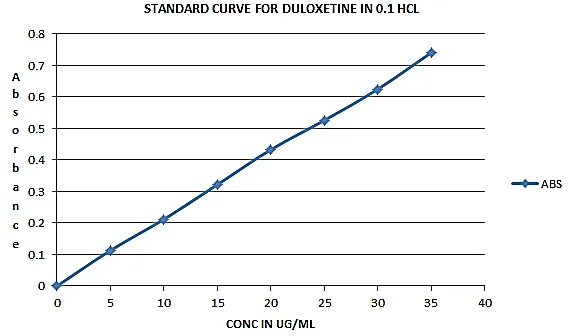
Figure 1. UV spectrophotometric calibration curve of duloxetine hydrochloride (288 nm)
Solid-State Characterisation of Inclusion Complexes
FTIR analysis of the 1:2 and 1:5 inclusion complexes showed reduction, broadening, and/or shifting of characteristic duloxetine-associated peaks relative to the pure drug, with more pronounced changes in the 1:5 complex, suggesting greater drug–carrier interaction. DSC analysis showed a distinct melting endotherm for pure duloxetine hydrochloride that was markedly reduced and broadened in the 1:2 complex and further reduced or absent in the 1:5 complex, indicating progressive loss of detectable crystallinity. XRD confirmed sharp, intense diffraction peaks for the pure drug that were progressively reduced in the complexes, with the 1:5 complex showing the lowest apparent crystallinity. Collectively, FTIR, DSC, and XRD findings supported drug–β-cyclodextrin interaction with greater crystallinity reduction in the 1:5 complex than the 1:2 complex.
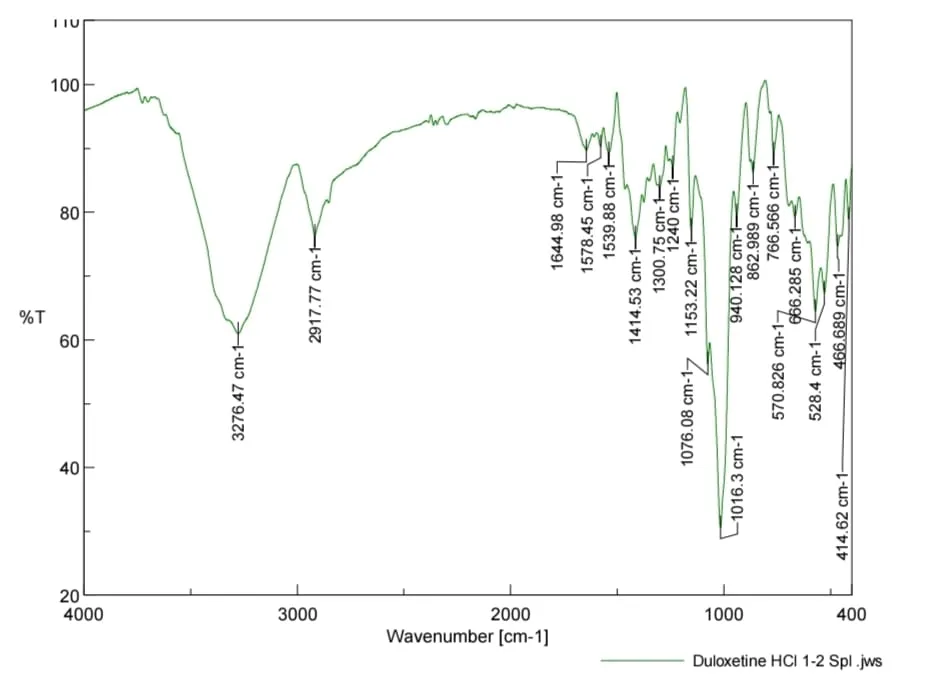
Figure 2. FTIR spectrum of the duloxetine hydrochloride–β-cyclodextrin inclusion complex (1:2)
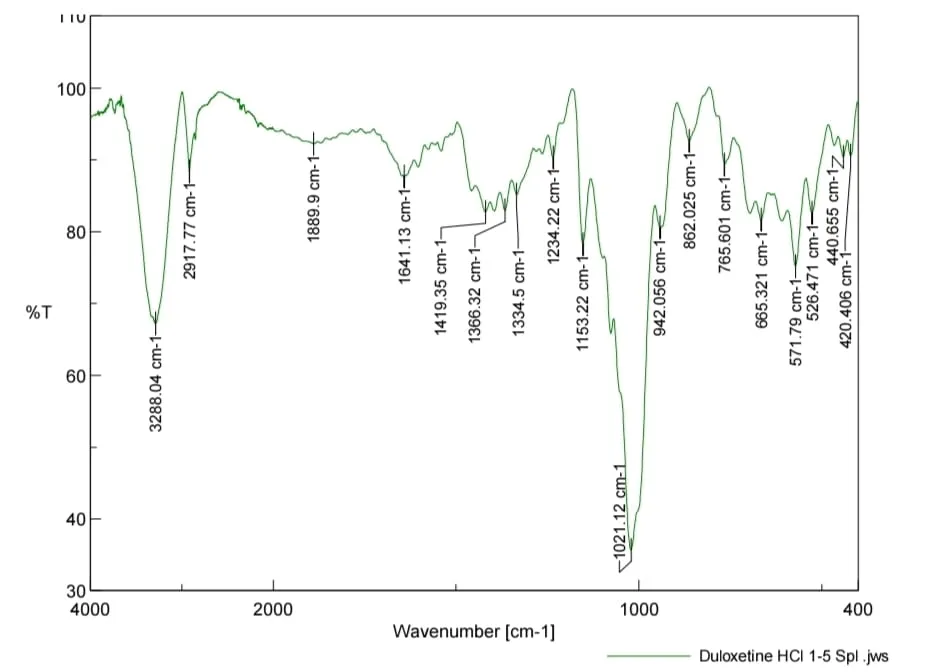
Figure 3. FTIR spectrum of the duloxetine hydrochloride–β-cyclodextrin inclusion complex (1:5)
Formulation and Pre-compression Evaluation of Chewable Tablets
Based on inclusion-complex evaluation, the 1:2 and 1:5 complexes were selected for chewable tablet formulation, designated F1 (1:2) and F2 (1:5) respectively, each with a total tablet weight of 240 mg. Powder blends showed angle of repose of 23.2° (F1) and 26.6° (F2); bulk density 0.50 and 0.49 g/cm³; tapped density 0.64 and 0.59 g/cm³; Carr's compressibility index 21.88% and 16.95%; and Hausner's ratio 1.28 and 1.20, respectively, indicating passable-to-good flow properties.
|
Parameter |
F1 (1:2) |
F2 (1:5) |
|
Angle of repose (°) |
23.2 |
26.6 |
|
Bulk density (g/cm³) |
0.50 |
0.49 |
|
Tapped density (g/cm³) |
0.64 |
0.59 |
|
Carr's index (%) |
21.88 |
16.95 |
|
Hausner's ratio |
1.28 |
1.20 |
Table 2. Pre-Compression Characteristics Of Chewable Tablet Formulations
Post-compression Evaluation and Drug Content
Both formulations complied with pharmacopeial limits for weight variation (±7.5%) and showed a hardness of 3.0 kg/cm² and friability of 1.0%. Disintegration times were 25 minutes for F1 and 30 minutes for F2. Assay results showed drug content of 86% for F1 and 91% for F2, corresponding to absorbance values of 0.348 and 0.368, concentrations of 17.2 and 18.2 µg/mL, and amounts found of 8.6 and 9.1 mg, respectively.
|
Parameter |
F1 (1:2) |
F2 (1:5) |
|
Weight variation |
±7.5% |
±7.5% |
|
Hardness (kg/cm²) |
3.0 |
3.0 |
|
Friability (%) |
1.0 |
1.0 |
|
Disintegration time (min) |
25 |
30 |
|
Absorbance |
0.348 |
0.368 |
|
Concentration (µg/mL) |
17.2 |
18.2 |
|
Amount found (mg) |
8.6 |
9.1 |
|
Assay (%) |
86 |
91 |
Table 3. Post-Compression Characteristics And Drug Content (Assay) Of Chewable Tablet Formulations
In-vitro Drug Release
In-vitro dissolution profiles showed slower drug release for F2 than F1 throughout the study period. At 5 minutes, release was 22.5% (F1) and 14.6% (F2); at 10, 15, 20, and 25 minutes, release was 41.2%, 58.8%, 73.5%, and 85.1% for F1 versus 28.5%, 44.1%, 59.4%, and 71.8% for F2. At 30 minutes, cumulative release reached 93.6% (F1) and 81.3% (F2).
|
Time (min) |
F1 (1:2) release (%) |
F2 (1:5) release (%) |
|
5 |
22.5 |
14.6 |
|
10 |
41.2 |
28.5 |
|
15 |
58.8 |
44.1 |
|
20 |
73.5 |
59.4 |
|
25 |
85.1 |
71.8 |
|
30 |
93.6 |
81.3 |
Table 4. In-Vitro Drug-Release Profile Of Chewable Tablet Formulations
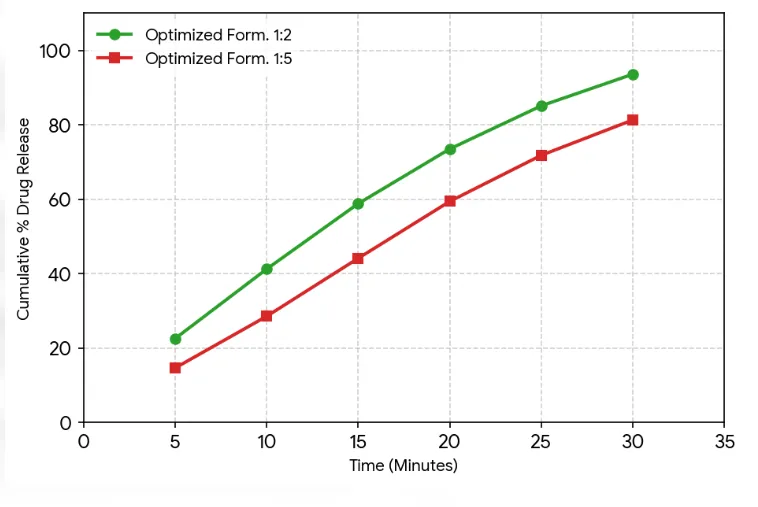
Figure 4. In-vitro drug-release profiles of F1 (1:2) and F2 (1:5) chewable tablet formulations
The lower early-stage drug release observed with F2 indicates that the higher β-cyclodextrin proportion was associated with reduced initial drug availability compared with F1, consistent with the intended taste-masking approach. As dissolution sampling began at 5 minutes, these data are best interpreted as supportive of a taste-masking effect rather than definitive evidence of taste masking during the actual (much shorter) oral residence period.
Accelerated Stability Evaluation
Following six months of accelerated storage (40 °C ± 2 °C / 75% ± 5% RH), both formulations showed minimal change in physical characteristics. For F1, hardness changed from 3.0 to 3.1 kg/cm², with friability and disintegration time unchanged at 1.0% and 25 minutes. For F2, hardness likewise changed from 3.0 to 3.1 kg/cm², with friability and disintegration time unchanged at 1.0% and 30 minutes. Assay values changed only marginally: F1 from 86.0% to 86.5%, and F2 from 91.0% to 91.5%. Dissolution at 30 minutes changed from 93.6% to 93.7% (F1) and from 81.3% to 81.4% (F2), with similarly small differences at other time points. Overall, both formulations retained their evaluated physical characteristics, assay, and drug-release profiles over six months of accelerated storage.
|
Parameter |
F1 Before |
F1 After 6 months |
F2 Before |
F2 After 6 months |
|
Absorbance |
0.348 |
0.350 |
0.368 |
0.370 |
|
Concentration (µg/mL) |
17.2 |
17.3 |
18.2 |
18.3 |
|
Amount found (mg) |
8.60 |
8.65 |
9.10 |
9.15 |
|
Assay (%) |
86.0 |
86.5 |
91.0 |
91.5 |
Table 5. Assay Results Before And After Six Months Of Accelerated Stability Testing
DISCUSSION
The findings of this study demonstrate that β-cyclodextrin inclusion complexation by the kneading method is a viable, technically simple strategy for masking the intensely bitter taste of duloxetine hydrochloride while delivering it in a paediatric-friendly chewable tablet format. Percentage yield and drug content both increased progressively with increasing β-cyclodextrin proportion, peaking at the 1:5 ratio (95% yield, 99% drug content). This trend is consistent with the expectation that a higher molar excess of complexing agent drives more complete inclusion complex formation, reducing losses of unreacted or poorly entrapped drug during processingâ··â¹. The comparatively lower yield and drug content observed for the 1:1 complex likely reflect incomplete complexation at this ratio, leaving a larger proportion of free, more readily lost drug during kneading, drying, and sieving.
The solid-state characterisation data provide convergent, complementary evidence for genuine host–guest interaction rather than a simple physical admixture. The progressive attenuation and broadening of duloxetine-specific FTIR bands, the marked reduction and eventual near-disappearance of the drug's DSC melting endotherm, and the parallel loss of sharp XRD diffraction peaks in the 1:5 complex relative to the 1:2 complex together indicate that duloxetine becomes increasingly entrapped within the β-cyclodextrin cavity as the carrier ratio increases, with a corresponding reduction in detectable crystallinity⶷¹â°. This pattern mirrors that reported for other bitter, poorly soluble actives complexed with β-cyclodextrin, where amorphization and reduced crystalline character are recognised hallmarks of successful inclusion complex formationâ··â¸.
Selection of the 1:2 and 1:5 complexes for tablet development allowed a direct comparison of moderate versus high β-cyclodextrin loading on tablet performance. Both powder blends showed passable-to-good flow (Carr's index 21.88% for F1, 16.95% for F2; Hausner's ratio 1.28 and 1.20, respectively), with F2 showing modestly better flow despite its higher excipient load, plausibly reflecting the more extensively complexed, less cohesive nature of the 1:5 complex particles. Both formulations met standard pharmacopeial acceptance criteria for weight variation, with hardness of 3.0 kg/cm² and friability of 1.0% for both formulations, confirming that incorporation of either inclusion complex did not compromise the essential mechanical quality attributes required for a chewable dosage form intended for repeated handling by children and caregivers.
The most clinically informative results are the disintegration time, assay, and dissolution data. F2 showed a longer disintegration time (30 vs. 25 minutes) and slower, more gradual dissolution (81.3% vs. 93.6% cumulative release at 30 minutes) than F1, a pattern directly attributable to the greater degree of drug entrapment within the larger β-cyclodextrin excess. Because taste perception in the oral cavity occurs over a much shorter timescale (seconds) than the dissolution sampling window reported here (5–30 minutes), the lower early-stage drug release from F2 provides supportive evidence of improved taste-masking potential; however, direct taste-masking efficacy should be confirmed using short-interval saliva-release testing or a validated sensory/e-tongue assessment. Notably, the assay values were 86% and 91% for F1 and F2, respectively, both within the predefined acceptance criterion of 85–115% for drug content, with F1 showing relatively lower drug recovery than F2 and indicating scope for further optimisation of the inclusion complex preparation or blending/compression process to improve content uniformity and recovery in a future formulation iteration.
The accelerated stability data are reassuring: both formulations retained essentially unchanged hardness, friability, disintegration time, assay, and dissolution profiles after six months at 40 °C/75% RH, suggesting that the inclusion complex and the surrounding chewable tablet matrix are not prone to significant physicochemical degradation or drug leaching under accelerated stress. This is consistent with the general observation that cyclodextrin complexation, in addition to its taste-masking function, can confer a modest protective effect against environmental degradation of the entrapped drugâ··â¸.
Taken together, these results suggest that the 1:5 duloxetine–β-cyclodextrin inclusion complex offers the more favourable overall profile for a paediatric chewable tablet, combining the highest yield and drug content at the inclusion-complex stage with slower, more controlled release and comparable mechanical and stability performance at the tablet stage. However, several limitations should be acknowledged. First, taste masking was inferred indirectly from dissolution kinetics and qualitative solid-state evidence rather than from a validated in-vivo or electronic-tongue sensory panel, which limits the strength of conclusions regarding actual palatability in paediatric patients. Second, F1's assay value (86%), while within the predefined 85–115% acceptance criterion, was relatively low and warrants process refinement to improve drug recovery before scale-up. Third, the present evaluation was limited to laboratory-scale batches and a single accelerated stability time course; long-term and real-time stability studies, together with pharmacokinetic bridging to the approved delayed-release capsule, would be necessary before clinical translation. Future work should incorporate sensory/e-tongue evaluation, dose-proportional scale-up across the paediatric weight range, and formal bioequivalence assessment.
CONCLUSION
Duloxetine hydrochloride–β-cyclodextrin inclusion complexes were successfully prepared by the kneading method across drug:carrier ratios of 1:1 to 1:5, with the 1:5 ratio giving the highest yield (95%) and drug content (99%) and the strongest solid-state evidence of host–guest interaction on FTIR, DSC, and XRD. Chewable tablets incorporating the 1:2 (F1) and 1:5 (F2) complexes met standard pharmacopoeial requirements for weight variation, with hardness of 3.0 kg/cm² and friability of 1.0% for both formulations, and F2 showed slower and more controlled in-vitro drug release, supportive of improved taste-masking potential, alongside acceptable stability over six months of accelerated storage. These findings support β-cyclodextrin inclusion complexation as a feasible platform for developing a palatable, age-appropriate chewable tablet formulation of duloxetine for paediatric patients, while highlighting the need for direct sensory validation, assay optimisation, and further scale-up studies prior to clinical application.
ACKNOWLEDGMENT
The authors thank the Department of Pharmaceutics, C. L. Baid Metha College of Pharmacy, Chennai, Tamil Nadu, India, for providing the facilities necessary to carry out this work.
REFERENCES


Selvi G.*, A. Abinaya, J. Madhumithra, M. Monika, M. Nandhini, B. Nirja, A. Lakshmi Priya, S. Shyam Sundar, Formulation And Evaluation Of Duloxetine Chewable Tablets For Paediatric Population Using Inclusion Complex For Taste Masking, Int. J. Sci. R. Tech., 2026, 3 (9), 808-817. https://doi.org/10.5281/zenodo.23120993
 10.5281/zenodo.23120993