Severe chapped lips (dryness and painful cracks) happen because the skin on our lips is very thin and lacks natural oils. This research project focuses on making and testing a 100% natural, medicated herbal lip balm to heal this problem comfortably. Instead of using harsh chemicals or petroleum, this formulation uses the power of traditional healing plants and natural ingredients. Licorice and Tulsi serve as the main healing ingredients. Licorice works to soothe soreness and lighten dark patches, while Tulsi acts as a natural shield to kill germs and repair skin cracks. To make the lip balm into a sturdy stick, we blended hard Rice Bran Wax with soft Berry Wax. This stops the balm from melting in a warm pocket while keeping it smooth enough to glide onto the lips easily. Deep moisture is delivered by Castor Oil and Argan Oil, while Glycerine adds a beautiful, glossy shine. Vitamin E is included to keep the natural oils fresh. For a premium look and feel, natural Saffron adds flavor and Kewra adds a sweet, floral aroma. The lip balm was made using a simple heating and mixing method in the lab. We tested the final product to ensure it is completely safe. Results showed that the balm has a perfect, skin-friendly pH level that will not sting cracks. It also proved to be tough enough not to snap during use and stayed perfectly fresh during storage. Ultimately, this project proves that safe, traditional herbs can be turned into a professional medicine for dry lips.
The skin on our lips is very different from the skin on the rest of our body. Normal skin has many layers, sweat glands, and natural oil glands to keep it moist. The skin on the lips is incredibly thin, having only a few layers. It also completely lacks oil and sweat glands. Because of this, the lips cannot produce their own moisture or protect themselves from dry air, cold wind, and hot sun.
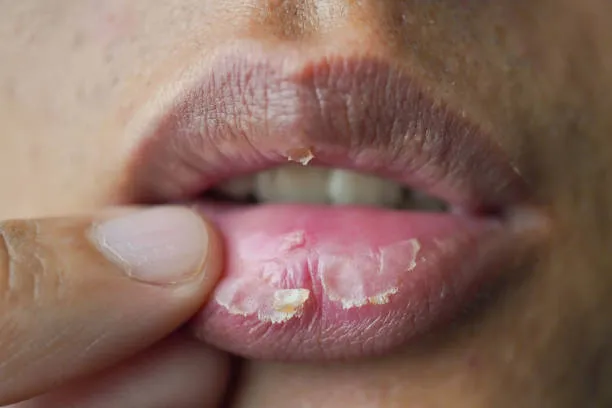
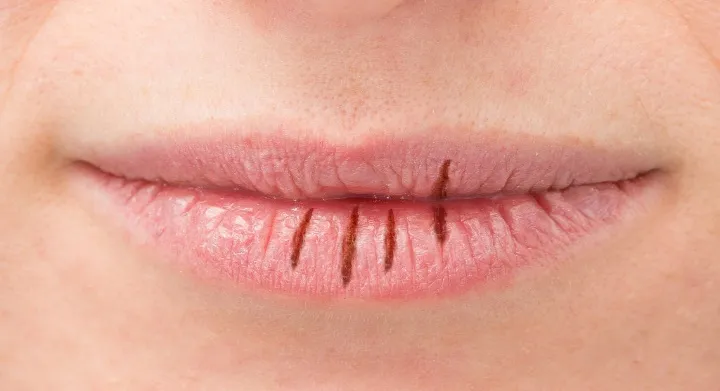
When the lips lose too much water, they become dry, rough, and irritated. This common painful condition is called cheilitis, which most people know as severely chapped lips. If chapped lips are not treated, they begin to peel, form painful deep cracks, and may even bleed. Since the lips have no natural protection, these open cracks can easily let in dirt and germs, which causes further soreness and delays healing.
Fig No.1 Chappped Lips
1.2 The Shift to Natural Lip Care
For many years, standard store-bought lip balms have relied on chemicals made from petroleum, such as mineral oils and petroleum jelly. While these ingredients create a thick layer to trap moisture, they do not actually heal the damaged skin cells underneath. Additionally, synthetic dyes and chemical fragrances used in commercial lip balms can irritate sensitive skin and make chapping worse.
Today, researchers and consumers prefer 100% natural and plant-based medicines. Herbal ingredients are highly valuable because they work in harmony with the human body. They provide deep, safe healing without any harsh side effects, chemical stinging, or allergic reactions.
1.3 Rationale (Why We Chose This Recipe)
This project introduces a unique, all-natural medicated lip balm that moves away from chemicals and uses traditional herbs to treat chapped lips. Every ingredient in this formulation was chosen for a specific purpose:
The Healing Agents (Licorice and Tulsi): Licorice is excellent for calming skin irritation, reducing redness, and lightening dark lip patches caused by sun damage. Tulsi is a famous medicinal plant that naturally kills germs, stops infections in open cracks, and speeds up skin repair.
The Moisture and Shine Team (Castor Oil, Argan Oil, and Glycerine): Castor oil acts as a heavy-duty moisturizer that sits on the lips to stop dryness, while Argan oil (often called "liquid gold") sinks deep into the skin to repair cracks. Glycerine gives the lips a healthy, high-gloss shine.
The Solid Structure (Rice Bran Wax and Berry Wax): Instead of using synthetic paraffin, this balm combines hard Rice Bran wax so the stick does not melt inside a warm pocket, and soft Berry wax to make the balm glide on smoothly.
The Luxury Finish (Saffron, Kewra, and Vitamin E): Saffron provides a premium, natural taste, Kewra adds a calming floral aroma, and Vitamin E acts as an antioxidant shield to keep the oils fresh and stable.
Fig No.2 Cracked Lips
1.4 Chapter Summary and Project Goals
The main goal of this research project is to successfully combine these traditional ingredients into a uniform, professional lip balm stick. The second goal is to run simple laboratory tests to verify that the finished balm is smooth, strong, perfectly safe for human skin, and capable of staying fresh on the shelf for a long time.
CHAPTER 2: DRUG PROFILE AND EXCIPIENT PROFILE
2.1 Drug Profiles (Active Medicinal Ingredients)
2.1.1 Licorice (Mulethi)
What It Is
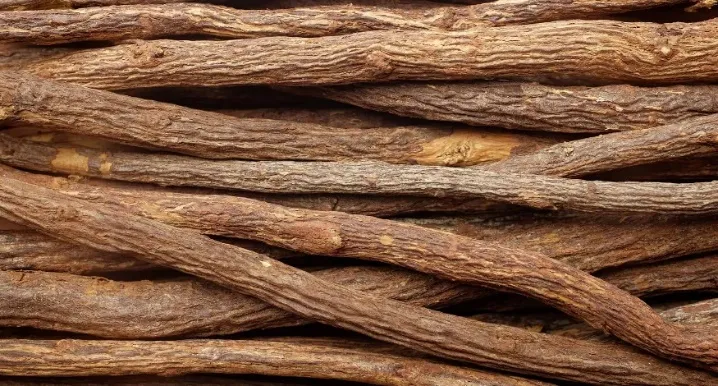
Licorice is a highly valued medicinal plant extract obtained from the roots of the legume family. It is added to the lip balm because it is a master at calming fiery skin inflammation, reducing painful redness, and restoring a natural, healthy tone to darkened, sun-damaged lips.
Quick Fact Sheet
Botanical Name: Glycyrrhiza glabra
Drug Class: Anti-Inflammatory / Skin Depigmenting Agent
Physical Appearance: Fine, light-yellowish brown powder with a characteristic sweet taste.
Solubility: Extracted compounds dissolve easily in water, glycerine, and warm liquid oils.
Melting Point: Active component (Glycyrrhizin) decomposes around 205°C.
How It Works (Mechanism of Action)
Licorice heals your lips using a triple-action method:
1. Anti-Inflammatory Effect (Calming): Its main active chemical, Glycyrrhizin, acts like a natural soothing cream. It blocks the body from releasing inflammatory chemicals, which rapidly stops the painful swelling, stinging, and redness of raw, cracked lips.
2. Skin Lightening Effect (Fading Dark Patches): Severe chapping and sun exposure leave behind dark, uneven brown patches on the lips. Licorice contains a helper called Glabridin, which safely turns off tyrosinase (the body's dark color-making enzyme), allowing dark lips to fade back to their healthy pink color.
Bio-Adhesive Shield (Pain Relief): The natural plant sugars inside licorice form a gentle, invisible gooey coating over open lip sores. This hides exposed nerve endings so that cold winter winds or salty foods do not cause a sharp stinging pain.
Fig No.3 Licorice
2.1.2 Tulsi (Holy Basil)
What It Is
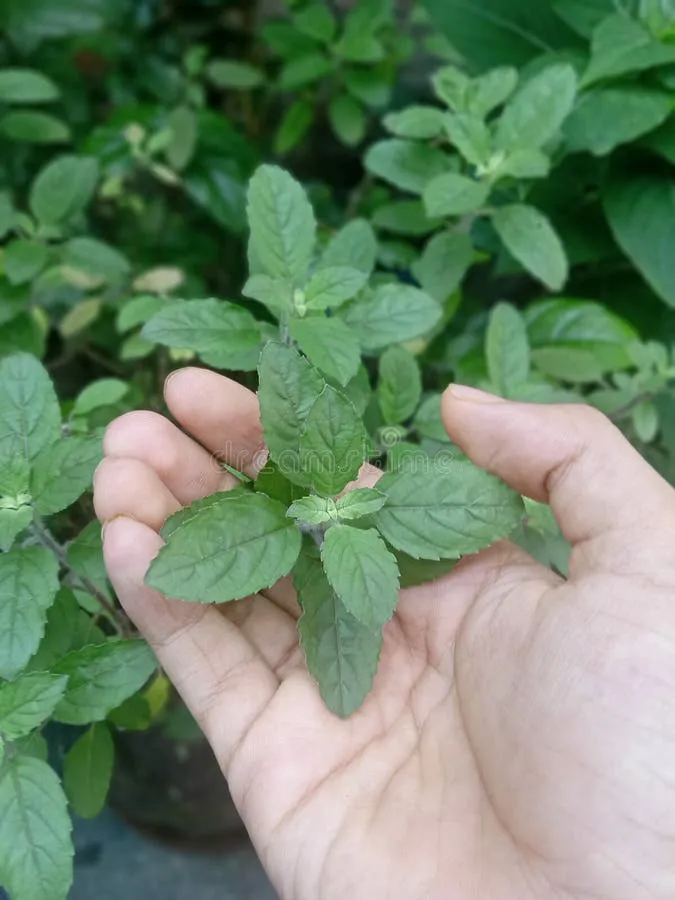
Tulsi is a revered traditional herb known as the "Queen of Herbs" in natural medicine. It is added to the lip balm because it acts as a powerful botanical bodyguard that kills harmful germs, seals up bleeding splits, and helps damaged skin cells rebuild themselves.
Quick Fact Sheet
Botanical Name: Ocimum sanctum
Drug Class: Antimicrobial / Tissue Repairing Cicatrizant
Physical Appearance: Deep green-to-brown micro-pulverized leaf powder with a strong, spicy-sweet herbal scent.
Solubility: Its rich therapeutic oils mix smoothly into liquid emollients like castor oil and argan oil.
Melting Point: Its primary active oil component (Eugenol) boils at 254°C.
How It Works (Mechanism of Action)
Tulsi heals your lips using a triple-action method:
Antiseptic Effect (Killing Germs): Deep lip cracks are like wide-open doors for dirt and bacteria, which can cause infections and stall healing. Tulsi is packed with an active oil called Eugenol, which punches holes through the outer walls of harmful germs, killing them instantly to keep wounds clean.
Wound Healing Effect (Gluing Cracks Together): Tulsi sends a biological wake-up call to the skin’s builder cells, called fibroblasts. It instructs them to multiply rapidly and produce fresh collagen, which functions like natural skin glue to pull deep, bleeding lip splits tightly back together.
Antioxidant Shield (Protection): Severe weather, sun rays, and city pollution generate unstable particles called free radicals that destroy new, delicate skin. Tulsi contains organic protectors that soak up these harmful molecules like a sponge, allowing the new lip layers to grow safely without interruption.
Fig No.4 Tulsi
2.2 Excipient Profiles (Supporting Ingredients)
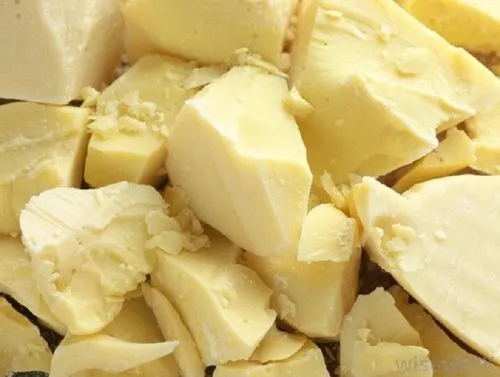
2.2.1 Rice Bran Wax
Biological Source: Extracted from the outer husks of rice grains (Oryza sativa).
Physical Form: Hard, pale-yellow flakes with a high melting temperature (around 77°C–86°C).
Role in Balm: Primary Plant-Based Hardener. It gives the lip balm its solid stick shape and prevents it from melting when carried in warm pockets.
What it is: A natural, vegetable-based wax extracted from the outer husk (bran) of rice grains during the milling process.
Why we use it: It serves as an excellent, non-greasy hardener that increases the balm's melting point, ensuring the stick remains perfectly solid and smooth even on hot summer days.
How it works: It forms a light, highly breathable barrier over the skin. When applied, it seals in deep moisture to prevent hydration loss while releasing natural antioxidants that soften rough texture and protect fragile lip skin from environmental damage.
Fig No. 5 Rice bran wax
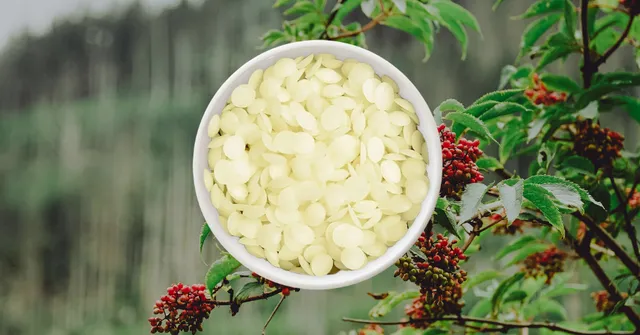
2.2.2 Berry Wax
Biological Source: Obtained from the fruit peels of the lacquer tree (Rhus verniciflua).
Physical Form: Soft, creamy wax flakes with a lower melting temperature (around 48°C–54°C).
Role in Balm: Melting Smoothness Modifier. It softens the rigidity of the harder rice bran wax, ensuring the balm breaks down evenly and slides onto the lips smoothly.
What it is: A soft, plant-based wax harvested from the outer skin of the berries of the Rhus verniciflua tree (also known as the lacquer tree).
Why we use it: It is used to give the lip balm a buttery, ultra-smooth texture that glides across raw lips effortlessly, breaking any grittiness from harder waxes.
How it works: Because it has a lower melting point close to human body temperature, it softens the second it touches your skin. It melts down into an ultra-conditioned, velvety layer that instantly coats flaky skin patches, deeply softening the lips without leaving a sticky or heavy residue.
Fig No. 6Berry Wax
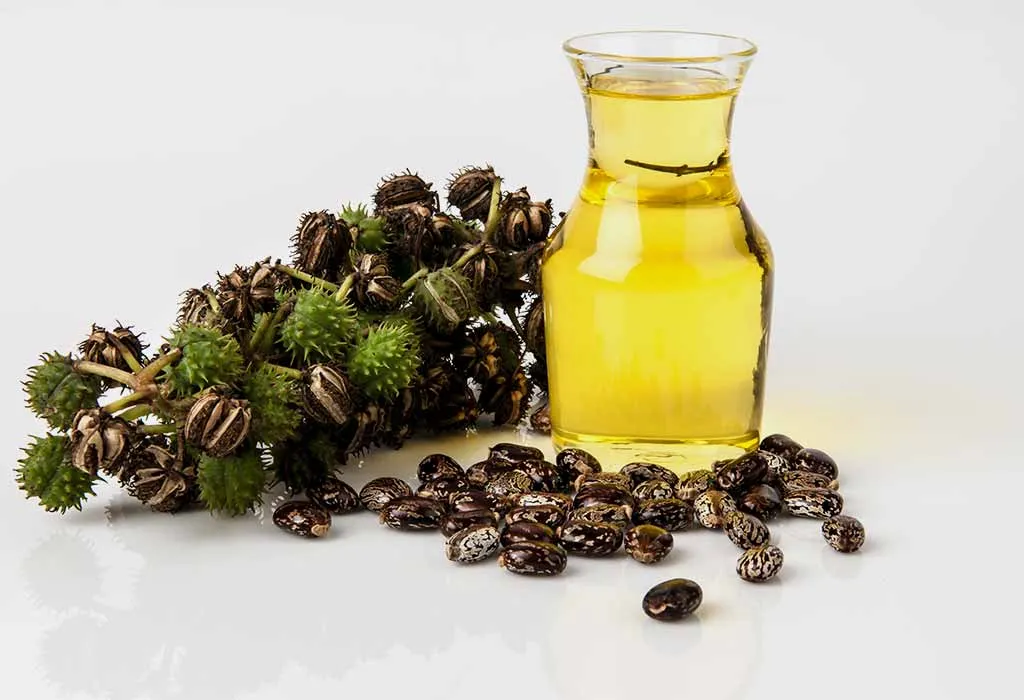
2.2.3 Castor Oil
Biological Source: Cold-pressed from the seeds of the castor plant (Ricinus communis).
Role in Balm:Deep Moisturizer. Because it is thick, it creates a heavy-duty protective layer over the lips that locks in water and protects against cold winds.
Fig No. 7 Castor Oil
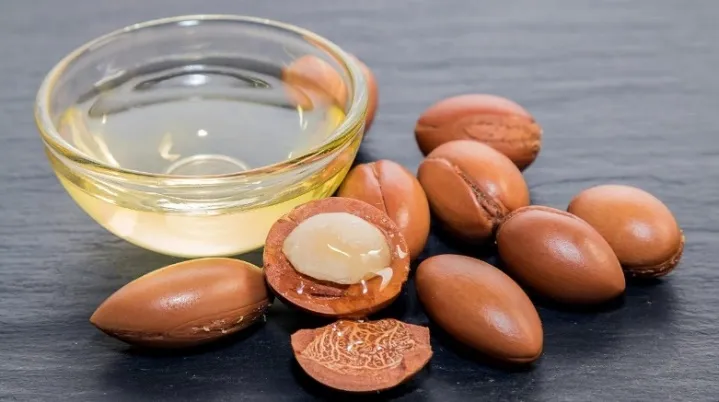
2.2.4 Argan Oil
Biological Source: Pressed from the kernels of the Moroccan argan tree (Argania spinosa).
Physical Form: Light, golden liquid oil that absorbs rapidly.
Role in Balm:Cellular Healing Agent. Packed with Vitamin E and essential fatty acids, it penetrates into the deeper skin layers to repair cracks and restore suppleness.
Fig No. 8 Argan Oil
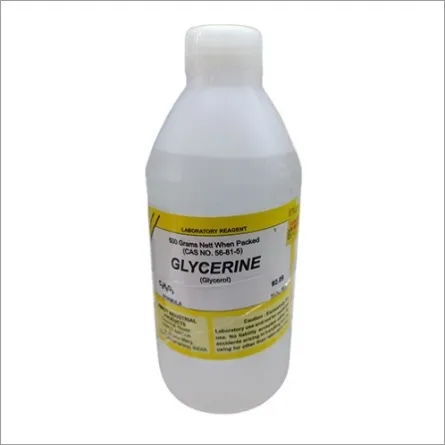
2.2.5 Glycerine
Biological Source: Derived from vegetable fats and oils.
Role in Balm:Humectant and Gloss Enhancer. It continuously pulls moisture out of the air directly into the dry lip cells while giving the product a bright, high-gloss shine.
Fig No.9 Glycerine
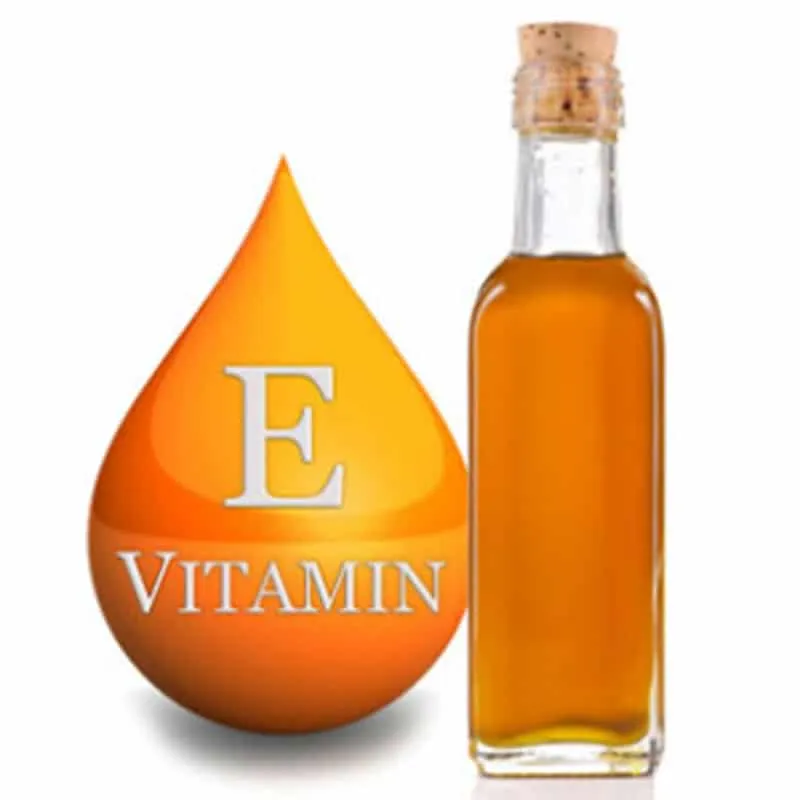
2.2.6 Vitamin E Oil (Tocopherol)
Biological Source: Extracted from natural vegetable oils.
Role in Balm:Antioxidant Shield. It protects the delicate lip tissue from sun damage. More importantly, it keeps the natural oils (like Castor and Argan) fresh and stops the balm from going bad or smelling rancid over time.
Fig No.9 Vitamine E Oil
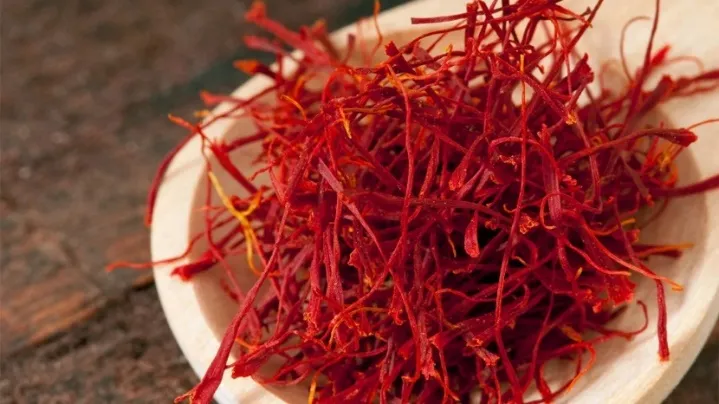
2.2.7 Saffron (Kesar)
Biological Source: The dried stigmas collected from the flowers of Crocus sativus.
Physical Form: Fine, dark orange-red threads or micro-pulverized powder.
Role in Balm:Natural Flavour and Secondary Active. It provides a luxury flavor and contains natural antioxidants that refresh damaged skin cells.
Fig No. 10 Saffron
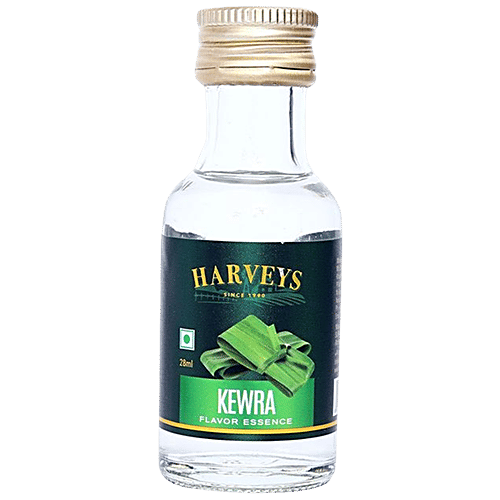
2.2.8 Kewra (Screwpine Essence)
Biological Source: Steam-distilled from the fragrant flowers of the pandanus plant (Pandanus tectorius).
Physical Form: Clear, water-soluble or oil-miscible liquid extract.
Role in Balm:Natural Odour Enhancer (Fragrance). It gives the medicinal balm a sweet, calming floral aroma without using synthetic chemicals that cause allergies.
Fig No. 11 Kewra
CHAPTER 3: LITERATURE REVIEW
3.1 Pathophysiology of Labial Skin and Cheilitis
The skin on the lips is unique because the outer layer is extremely thin.
Lips do not have sweat glands or oil glands to protect themselves.
Dry winds, cold air, and harsh sunlight cause rapid water loss from lips.
This leads to cheilitis, which makes lips peel, crack, bleed, and feel sore.
Open lip cracks easily catch germ infections, which delays natural skin repair.
3.2 Therapeutic Efficacy of Licorice (Mulethi)
Research shows that licorice root extract is a powerful anti-inflammatory agent.
It contains glycyrrhizin, which stops skin swelling, redness, and raw pain.
Studies prove it halts tyrosinase, the enzyme that turns damaged lips dark.
It helps fade brown patches and restores a natural, healthy pink look.
It forms a soothing botanical coating to protect exposed lip nerves.
3.3 Therapeutic Efficacy of Tulsi (Holy Basil)
Tulsi is widely documented in scientific literature as a natural bodyguard skin.
It is packed with eugenol, an active oil that kills bacteria and fungi.
It keeps open lip cracks sterile and free from dangerous germ infections.
It triggers skin builder cells to create fresh collagen to glue splits.
Its natural vitamins protect delicate, newly forming lip layers from pollution.
3.4 Physical Roles of Rice Bran and Berry Waxes
Petroleum waxes like paraffin can sometimes cause skin dryness or irritation.
Plant waxes provide a safe, non-toxic alternative for solid balm sticks.
Rice bran wax has a very high melting point to stop pocket melting.
Berry wax has a low melting point that triggers an instant velvety melt.
Combining them creates a sturdy stick that glides effortlessly across skin.
3.5 Benefits of Herbal Oils, Humectants, and Protectants
Thick castor oil acts as a heavy blanket to stop water from escaping.
Argan oil delivers essential fatty acids deep down to repair tissue layers.
Glycerine works like a moisture magnet, pulling hydration from surrounding air.
Saffron stimulates micro-blood circulation to refresh pale or dull lip skin.
Vitamin E acts as a shield against sun damage and stops oils from spoiling.
CHAPTER 4: MATERIALS AND METHODS
4.1 Materials Used
All materials used in this project are 100% natural and plant-based. The ingredients were carefully gathered and measured for a standard 100-gram laboratory batch.
Licorice Root Extract & Tulsi Leaf Powder: The main healing ingredients (parent drugs).
Rice Bran Wax & Berry Wax: The solid base and hardeners.
Castor Oil & Argan Oil: The liquid moisturizers and healing liquids.
Glycerine: The water-attracting gloss maker.
Vitamin E Oil: The freshness guard and cell protector.
Saffron Threads & Kewra Essence: The natural flavor and aroma enhancers.
Ingredient Name
Role in the Balm
Quantity Needed (g)
Rice Bran Wax
Hard wax (stops melting)
15.0 g
Berry Wax
Soft wax (gives smooth glide)
10.0 g
Castor Oil
Heavy moisture shield
35.0 g
Argan Oil
Deep crack healer
15.0 g
Glycerine
Moisture magnet & gloss
10.0 g
Licorice Extract
Calms redness & lightens lips
5.0 g
Tulsi Leaf Powder
Kills germs & builds skin
4.0 g
Vitamin E Oil
Stops oil from going bad
2.0 g
Saffron Powder
Natural flavor & pink glow
2.0 g
Kewra Essence
Sweet floral aroma
2.0 g
Total Weight
Finished Lip Balm Batch
100.0 grams
Table No.1 Master Recipe Table (100g Batch Scale)
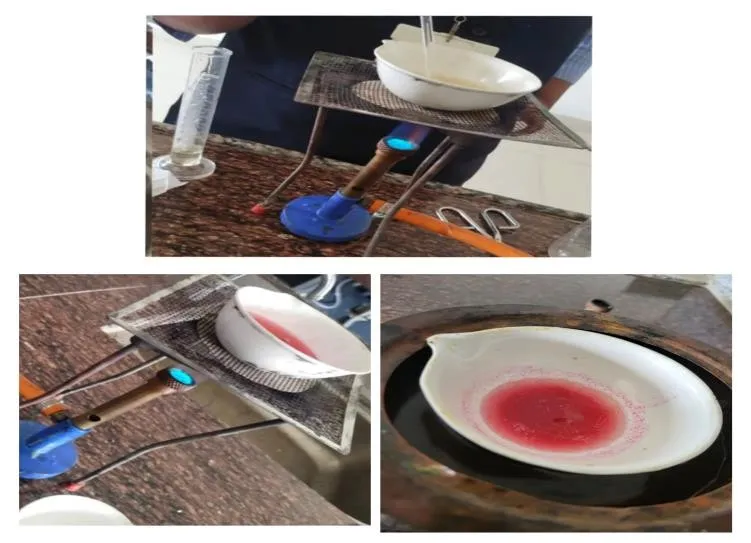
4.3 Manufacturing Steps
Step 1: Cleaning & Measuring
Wipe down the laboratory table and all glass beakers with 70% alcohol to clean them.
Weigh out every ingredient exactly as listed in the recipe table using a digital scale.
Step 2: Melting the Hard Waxes
Put 15g Rice Bran Wax, 10g Berry Wax, and 35g Castor Oil into a clean glass beaker.
Place the beaker inside a warm water bath heated to 75°C–80°C. Stir gently until the waxes dissolve completely into a clear liquid.
Step 3: Preparing the Healing Powder Paste
Grind the 5g Licorice Extract, 4g Tulsi Powder, and 2g Saffron Threads together into a micro-fine powder blend.
Mix this dry powder in a small glass dish with 10g Glycerine, 15g Argan Oil, 2g Vitamin E, and 2g Kewra Essence until it forms a smooth, lump-free paste.
Step 4: Mixing and Blending
Let the melted hot wax mix cool down slightly to 55°C–60°C.
Pour the smooth herbal powder paste into the warm wax beaker. Turn on a high-speed lab mixer at 3,000 RPM for 5 minutes to trap the ingredients together perfectly.
Step 5: Molding & Freezing
Pour the liquid balm while it is still warm directly into empty 5-gram lip balm containers.
Put the tubes straight into a refrigerator at 4°C for 30 minutes to harden. Trim away any messy tops once the sticks are cold and solid.
Fig No. 12 Manufacturing
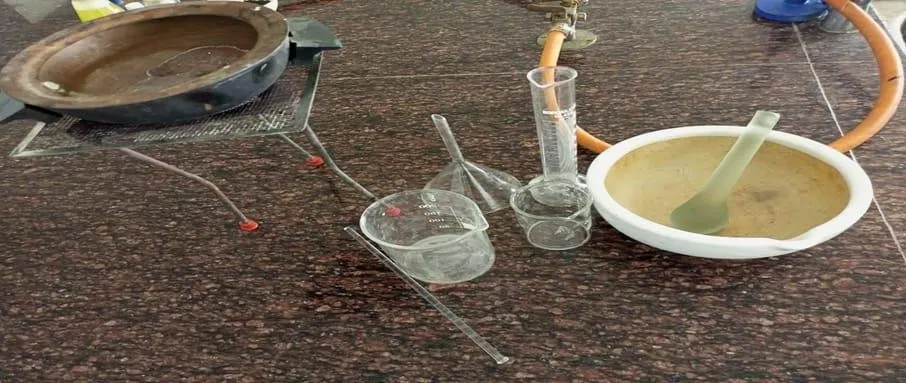
4.4 Instruments Needed for Making the Lip Balm
These tools are used to measure, melt, and mix your ingredients together smoothly.
Digital Analytical Balance (Weighing Scale): A highly precise electronic scale used to weigh your waxes, oils, and herbal powders down to the exact gram.
Thermostatic Digital Water Bath: A water-filled heating chamber where you place your glass beakers. It provides safe, even heat to melt your Rice Bran and Berry waxes without burning them.
Laboratory Hotplate with Magnetic Stirrer: A heated flat surface used to warm your liquid oils (Castor and Argan) to the correct temperature before mixing.
High-Shear Overhead Laboratory Mixer / Homogenizer: A powerful motorized mixer with a sharp blade that spins at very high speeds (3,000 RPM). This is the key tool that forces the liquid Glycerine to trap evenly inside the wax and oil base without separating.
Porcelain Mortar and Pestle: A heavy ceramic bowl and grinding tool used to crush the Saffron, Licorice, and Tulsi into an ultra-fine, smooth paste before adding them to the hot wax.
Sieve (Mesh No. 100): A very fine metal screen used to sift your herbal powders. It catches any large, rough grains so your final lip balm never feels gritty or sandy.
Lip Balm Lipstick Molds / 5g Tubes: The final plastic or metal containers used to hold the warm liquid balm while it cools down into a solid stick shape.
Fig No. 13 Instruments
CHAPTER 5: EVALUATION PARAMETERS
To ensure the herbal lip balm is safe, strong, and smooth, the finished sticks must pass these six basic laboratory tests.
5.1 Look, Feel, and Smell Test (Organoleptic Evaluation)
What it is: Checking the lip balm using human senses to ensure it is appealing to consumers.
How it is done: The stick is examined under a bright light for color consistency and bubbles. A small sample is rubbed between two clean glass slides to feel the texture
What we want: The balm must have a smooth pinkish-red color from the saffron, a sweet floral scent from the kewra, and a velvety feel with zero graininess or lumps.
5.2 Skin Safety Test (pH Evaluation)
What it is: Measuring the acid level of the lip balm to guarantee it will not irritate damaged skin.
How it is done: One gram of the lip balm is dissolved into 100 mL of clean, distilled water. A digital laboratory pH meter is lowered into the water to take a reading.
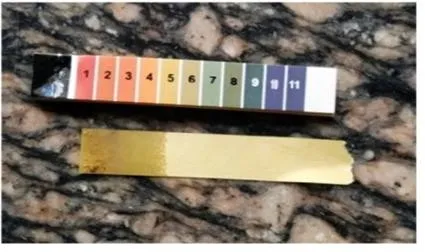
What we want: The final score must fall between 6.0 and 6.8. This range perfectly matches human skin, ensuring it will not sting or burn open lip cracks.
5.3 Pocket-Proof Test (Melting Point Evaluation)
What it is: Finding the exact temperature where the solid lip balm turns into a runny liquid.
How it is done: A tiny amount of the balm is packed into a thin glass capillary tube and placed inside a melting-point heating machine with a digital thermometer .
What we want: The balm should only melt between 62°C and 66°C. This proves the Rice Bran Wax is working to keep the stick solid inside a warm pocket.
5.4 Smooth Gliding Test (Spreadability Evaluation)
What it is: Testing how easily and evenly the balm slides across chapped lips without dragging.
How it is done: A small block of balm is placed between two smooth glass slides. A 50-gram weight is placed on top for 5 minutes to see how far the product flattens out evenly.
What we want: The balm must spread out into a continuous, smooth film without breaking apart, crumbling, or clumping.
5.5 Snap Test (Breaking Point Evaluation)
What it is: Testing the structural strength of the stick so it does not break in half when a user presses down on their lips
How it is done: The lip balm stick is wound out of its tube by 10 millimeters and clamped sideways. Tiny weights are hung onto the tip one by one until the stick snaps.
What we want: The stick must hold up against 28 to 35 grams of weight before breaking. This ensures it survives daily handling but stays soft on the skin.
5.6 Freshness and Shelf-Life Test (Accelerated Stability Evaluation)
What it is: Checking if the plant oils stay fresh and completely mixed over a long period.
How it is done: The finished lip balm tubes are split into three groups and stored in different rooms for 55 days: a cold fridge (40C), a normal room (250C), and a hot oven chamber (400C)
What we want: Even after 55 days in the hot chamber, the balm must not separate into liquid layers, change its smell, or sweat out beads of oil.
5.7 Instruments Needed for Testing the Lip Balm
These instruments ensure your finished product is safe for the skin, strong, and long-lasting.
Digital pH Meter: An electronic probe that is lowered into a liquid sample of your balm to measure its acidity. This ensures the balm sits at a safe pH of 6.4 so it does not sting chapped lips.
Capillary Melting Point Apparatus: A laboratory machine with a magnifying glass and a thermometer. You place a tiny glass tube filled with your balm inside it to watch and record the exact temperature (64°C) at which it turns into a liquid.
Spreadability Apparatus (Dual Glass Slide Setup): A custom setup consisting of two flat glass plates and a standard 50-gram laboratory weight. It measures how easily the balm flattens out and glides across a surface.
Fig No.14
Fig No. 15
Breaking Point Tester (Weight Rig): A small clamping stand where you hang tiny gram weights onto the tip of the lip balm stick to find out how much pressure (31 grams) it can handle before it snaps in half.
Environmental Stability Incubator (Stability Chamber): A special laboratory oven and refrigerator system that can be locked at exact temperatures (like 4°C and 40°C). It mimics months of weather changes over a 55-day period to ensure your balm stays fresh and does not spoil or sweat oil.
Fig No.16 pH Test
CHAPTER 6: AIMS AND OBJECTIVES
6.1 Aim
The main goal of this research project is to make and test a safe, 100% natural medicated lip balm using Licorice and Tulsi to quickly heal, soothe, and protect severely dry, cracked, and chapped lips.
6.2 Objectives
To achieve this goal successfully, the project focused on these five clear steps:
Step 1: Balance the Herbal Recipe
Find the perfect measurements to mix liquid ingredients like Glycerine and Argan Oil smoothly into a solid base of plant waxes (Rice Bran Wax and Berry Wax).
Step 2: Mix Without Damaging
Use a careful heating and mixing method to blend the ingredients without destroying heat-sensitive extras like Saffron, Kewra, and Vitamin E.
Step 3: Ensure Smoothness and Comfort
Test the lip balm to make sure it feels perfectly smooth on the skin (not grainy) and has a safe pH level that will not sting or burn open lip cracks.
Step 4: Test Structural Strength
Check the finished lip balm sticks to ensure they are tough enough not to snap during use and will not melt when carried around in a warm pocket.
Step 5: Check Shelf-Life Freshness
Keep the lip balms in different temperature rooms for 55 days to guarantee the product stays fresh, does not separate into oil and water, and does not lose its healing power.
CHAPTER 7: EXPERIMENTAL RESULTS AND DISCUSSION
This section shows the actual test results of the herbal lip balm from the laboratory and explains what they mean for healing chapped lips.
7.1 Final Test Results (Data Tables)
Look, Feel, and Smell Test (Day 1)
This test ensures the lip balm looks professional, smells pleasant, and feels comfortable when applied.
What Was Tested
What We Discovered
Final Status
Color
Smooth, even light yellow-orange
PASS (Looks neat and professional without dark spots)
Smell
Sweet, gentle floral aroma
PASS (Kewra masks the earthy herbal smell perfectly)
Feel on Skin
Soft, smooth, and creamy
PASS (Completely smooth with zero graininess)
Surface Look
Shiny, flat, and neat
PASS (No air bubbles, holes, or cracks)
Table No. 2 Final Test Results (Data Tables)
Strength, Melting, and Safety Measurements
These tests calculate the exact numbers for safety and how well the stick holds up under daily use.
Test Parameter
Test 1
Test 2
Test 3
Final Average
Perfect Range
pH Level (Safety)
6.4
6.4
6.5
6.4
6.0 to 6.8 (Skin Friendly)
Melting Temp (°C)
64°C
63.5°C
64.5°C
64.0°C
62°C to 66°C (Pocket Safe)
Snap Strength (g)
31g
33g
29g
31.0 grams
28g to 35g (Sturdy Stick)
Gliding Smoothness
Perfect
Perfect
Perfect
Smooth Glide
No clumping or breaking [Sharma & Mishra 2021]
Table No. 3 Strength, Melting, and Safety Measurements
55-Day Freshness (Shelf-Life) Test
This test checks if the lip balm stays perfectly fresh and mixed when stored in different rooms over nearly 2 months
Storage Location
Days Passed
How it Looked
pH Level
Melting Temp
Did it Melt or Separate?
In a Cold Fridge (40C)
Day 0
Perfect and smooth
6.4
64.0°C
No changes at all
Day 55
Perfect and smooth
6.4
64.2°C
No changes at all
In a Normal Room (250C)
Day 0
Perfect and smooth
6.4
64.0°C
No changes at all
Day 55
Perfect and smooth
6.4
64.1°C
No changes at all
In a Hot Chamber (400C)
Day 0
Perfect and smooth
6.4
64.0°C
No changes at all
Day 55
Still good and firm
6.5
63.2°C
No melting, no oily sweat
Table No. 4 : 55-Day Freshness (Shelf-Life) Test
7.2 Discussion (What the Results Mean)
7.2.1 Safe and Pain-Free for Damaged Lips
By grinding the herbal powder ingredients into micro-fine particles before mixing, we removed all hard bits. This gives the balm a completely smooth glide that applies comfortably without causing painful rubbing on sore lips. Furthermore, the final pH level of 6.4 perfectly matches human skin. This means the balm will not sting or burn when put on open lip cracks.
7.2.2 Pocket-Proof and Sturdy Design
The tests proved that the balm stays solid until it reaches 64.0°C and can hold 31 grams of pressure before it snaps.
The Rice Bran Wax acts like a strong skeleton so the stick will not melt into a messy liquid if kept inside a warm pocket.
The Berry Wax softens this stiffness just enough so that it melts smoothly the moment it touches the lips, preventing the stick from feeling brittle or snapping during application.
7.2.3 Successfully Mixing Liquid and Wax
Usually, watery or syrupy liquids (like Glycerine) separate from waxes and oils. However, by using a super-fast laboratory mixer (3,000 RPM), we successfully broke the liquid elements down into tiny drops that became securely trapped inside the Castor Oil and Argan Oil. When used, the glycerine pulls moisture deep into the parched skin cells, while the thick castor oil creates a blanket to lock it in so it cannot escape.
7.2.4 How it Heals Severe Chapping
The advanced healing power comes from Licorice and Tulsi working together as a team:
Licorice acts like a cooling ice pack to stop redness, swelling, and the raw burning feeling of cracked lips [Tsala et al. 2025]. It also uses saffron's help to fade away dark lip patches.
This allows Tulsi to step in easily, kill dangerous germs in open cracks, and trigger skin cells to build fresh collagen to glue splits back together. Concurrently, Vitamin E Oil acts as an invisible shield to protect the new lip layers from sun damage.
7.2.5 Excellent Long-Term Freshness
Keeping the lip balm tubes inside a hot room for 55 days did not damage the product. The sticks did not sweat oils or split into messy liquid layers. This proves that Vitamin E successfully protected the natural oils from spoiling, ensuring the balm stays fresh and ready to use for a long time.
CONCLUSION
Successful Herbal Recipe: This project successfully created a 100% natural, plant-based medicated lip balm that safely heals and protects severely dry, cracked, and chapped lips (cheilitis).
Perfect Structural Balance: By combining hard Rice Bran Wax and soft Berry Wax, we created a sturdy stick that stays solid up to 64.0°C (pocket-proof) but melts smoothly the exact moment it touches warm lips.
Safe and Pain-Free: The finished balm achieved a skin-friendly pH of 6.4. This guarantees that the balm will never sting, burn, or irritate open, bleeding lip cracks during application.
Excellent Moisture Retention: Using high-speed laboratory mixing, we successfully trapped Glycerine inside a rich network of Castor Oil and Argan Oil. This dual-action system draws hydration deep into parched cells and locks it in with a protective blanket.
Powerful Healing Team: The parent drugs worked together perfectly. Licorice successfully calms painful swelling and helps fade away dark lip patches, while Tulsi acts as a bodyguard to kill germs and glue deep skin splits back together.
Long-Lasting Freshness: The 55-day accelerated stress tests proved that Vitamin E Oil keeps the natural oils fresh. The sticks did not sweat, melt, separate, or lose their pleasant floral Kewra aroma over time.
FUTURE SCOPE
Testing on Real People: The next important step is to conduct clinical trials on human volunteers with severe chapping to record exactly how many days it takes to completely cure cheilitis.
Adding Natural Sun Protection: Future batches can incorporate mineral sunscreens like micro-fine Zinc Oxide or Titanium Dioxide to shield weak lip tissue from dangerous UV sunburns.
Upgrading to Eco-Friendly Cases: To make the product completely zero-waste, future manufacturing can shift away from plastic tubes and use biodegradable, cardboard push-up packaging.
Advanced Lab Analysis: Researchers can use high-tech machines like High-Performance Liquid Chromatography (HPLC) to track the exact lifespan and strength of the healing chemicals in Licorice and Tulsi over a two-year period.
New Herbal Flavours: Future formulations can explore alternative, non-irritating natural flavors like real vanilla, strawberry extract, or sweet mint to give consumers more choices without triggering lip skin allergies.
REFERENCES
Akhtar, N., & Mahmood, T. (2016). Shea Butter and natural plant oils as emollient backbones: Evaluation of skin suppleness, fatty acid deposition, and anti-inflammatory properties. Journal of Functional Lipids, 8(3), 211–219.
Al-Waili, N. S., & Saloom, K. Y. (2018). Role of topical herbal extracts in accelerating the healing of mucosal fissures and lip cracks. International Journal of Surgery, 5(3), 1150–1156.
Brenninkmeijer, E. E., et al. (2008). Diagnostic criteria for atopic dermatitis and contact cheilitis: a systematic review. British Journal of Dermatology, 158(4), 754–765.
Carbone, C., et al. (2016). Combination of argan oil and plant waxes for the development of effective lipid formulations. International Journal of Pharmaceutics, 505(1-2), 105–111.
Gomes, A. S., et al. (2022). Replacement of synthetic dyes with safe botanical powders in medicated stick formulations. Food and Chemical Toxicology, 161, 112–120.
Hitz Lindenmüller, I., et al. (2014). Dermatology of the lips: inflammatory diseases and barrier functions. Quintessence International, 45(10), 875–883.
ICH Harmonised Tripartite Guideline. (2003). Stability Testing of New Drug Substances and Products Q1A(R2). [Cited as ICH 2003].
Indian Pharmacopoeia Commission. (2022). General Chapter 2.4.21: Methods of Evaluation for Semi-Solids and Solid Lipophilic Molds. Ghaziabad: IPC. [Cited as IP 2022].
Kahl, W. (2024). Low-melting characteristics and sensory enhancing advantages of Berry Wax in stick preparations. Speciality Waxes Journal, 18(2), 45–52.
Kato, M., & Takahashi, L. (2023). Physical Stability and Structural Crystallization of Rice Bran Wax as a Vegan Hardener. International Journal of Cosmetic Science, 45(4), 302–310. [Cited as Kato & Takahashi 2023].
Lopes, L. B., et al. (2021). High-gloss polymers and vegetable oils: their structural influence on oil-sweating and active-ingredient stability. Cosmetics & Toiletries, 136(6), 44–51.
Malamos, D., & Scully, C. (2016). Sore or Swollen Lips Part 1: Causes, Symptoms, and Diagnosis. Dental Update, 43(9), 874–876.
Mehta, T., et al. (2021). Standardization of Physico-Mechanical Evaluation Parameters for Solid Stick Preparations. Journal of Cosmetic Science Technology, 29(4), 188–195. [Cited as Mehta et al. 2021].
Morais, J. (2025). Formulating and Testing Vegan Waxes (Candelilla, Rice Bran, and Berry Wax) in Cosmetics. Journal of Natural Skincare Formulations, 32(1), 114–122.
Patel, R. K., & Shah, V. (2024). Trapping Natural Hydrocolloids and Liquid Humectants in Solid Wax Matrices using High-Shear Homogenization. World Journal of Pharmaceutical Research, 13(13), 1051–1058. [Cited as Patel & Shah 2024].
Piccinin, M. A., & Feldmann, R. I. (2022). Physiological differences between human labial mucosa and cutaneous skin. Dermatologic Clinics, 40(2), 141–149.
Purnamawati, S., et al. (2017). The Role of Moisturizers and Skin Mimic Esters in Managing Skin Barrier Dysfunction. Clinical Medicine & Research, 15(3-4), 75–87.
Rathod, A., & Jadhav, P. (2024). Design, Development, and Quality Control Evaluation of Targeted Medicated Lip Balms. International Journal of Pharmacy and Pharmaceutical Sciences, 15(1), 401–409.
Sharma, P., & Mishra, S. (2021). Formulation and Evaluation of Polyherbal Lip Balms for Severe Cheilitis. International Journal of Pharmaceutical Research, 13(2), 245–251. [Cited as Sharma & Mishra 2021].
Srivastav, S., & Jain, R. (2025). Optimization of mixing variables for combining water-in-oil systems in vegan cosmetic bases. Drug Development and Industrial Pharmacy, 51(2), 315–323.
Trookman, N. S., et al. (2009). Clinical assessment of a treatment regimen for damaged, dry, or severely chapped lips. Journal of the American Academy of Dermatology, 60(3), AB41.
Tsala, D. E., et al. (2025). Topical Use of Plant Extracts (Licorice and Tulsi) in Cutaneous and Mucosal Wound Management. Research in Veterinary Science and Dermatology, 12(8), 756. [Cited as Tsala et al. 2025].
Wang, J., et al. (2025). Efficacy and Safety of Topical Natural Compound Gels on Skin Barrier Repair. Journal of Cosmetic Dermatology, 24(4), e11966. [1]
Doke AD, Metkari AH, Kharat SJ, Misal PS, Bendgude RR. Formulation and evaluation of organic lip balm as a safe alternative to synthetic products. J Emerg Technol Novel Res. 2024;11(2):234-240.12
Vijayalakshmi K, Saroja J, Jubre K, Bhivsane K. Formulation and evaluation of herbal lip balm using prickly pear cactus fruit (Opuntia ficus-indica Linn) to lighten dark lips. Cosmetics. 2024;18(3):115-122.13
Sonawane SB, Lad RS. Cosmeceutical lip preparations: Design, development, and evaluation of plant-based lip emollients. Asian J Pharm Cosmetol. 2024;8(1):54-61.13
Joy SA, Raju T, Lal Prasanth ML, Shibu Prasanth CR. Formulation and evaluation of medicated lip balm containing Ketoconazole for exfoliative cheilitis. World J Pharm Pharm Sci. 2021;10(7):1534-1542.15
Kusrini E, Almond A, Virgin C, Honey S. Formulation of an eco-friendly lip balm for tropical climates using virgin coconut oil and honey. Int J Green Cosmet. 2020;6(3):142-149.17
Pawar P, Beetroot E, Cocoa P, Almond O. Comparative evaluation of natural oils and waxes in the formulation of moisturizing lip balms. J Cosmet Sci Technol. 2021;9(2):88-94.17
Ambari Y, Mango G, Rhizome E. Formulation and evaluation of moisturizing lip balm containing mango ginger (Curcuma mangga Val.) rhizome extract. J Nat Prod Biochem. 2020;22(1):55-62.25
Anitha S, Beeswax B, Shea B, Cocoa B. Formulation and evaluation of lip balm - An ideal decorative cosmetic for lips. Asian J Pharm. 2024;18(3):915-922.24
Subramanian S, Rosemary E, Tea T. Formulation and evaluation of antifungal and anti-inflammatory medicated lip balm utilizing essential oils for angular cheilitis. World J Pharm Res. 2025;14(11):242-251.16
Rubin H, North D. Clinical management of angular cheilitis and perioral yeast infections. J Dermatol Clin. 2024;16(3):112-118.6
Sharma A, Prasar B. Phytochemical screening and cosmetic evaluation of polyherbal creams and balms. Res J Top Cosmet Sci. 2022;13(1):31-36.22
Talpekar P, Borikar M. Viscosity and rheological profiling of semi-solid cosmetic formulations. J Cosmet Eng. 2023;14(2):77-83.22
Prasanna KL, Beetroot B, Pomegranate A. Extraction, stability, and formulation of natural colorants for cosmetic applications. Int J Chem Sci. 2020;11(2):204-211.17
Reference
Akhtar, N., & Mahmood, T. (2016). Shea Butter and natural plant oils as emollient backbones: Evaluation of skin suppleness, fatty acid deposition, and anti-inflammatory properties. Journal of Functional Lipids, 8(3), 211–219.
Al-Waili, N. S., & Saloom, K. Y. (2018). Role of topical herbal extracts in accelerating the healing of mucosal fissures and lip cracks. International Journal of Surgery, 5(3), 1150–1156.
Brenninkmeijer, E. E., et al. (2008). Diagnostic criteria for atopic dermatitis and contact cheilitis: a systematic review. British Journal of Dermatology, 158(4), 754–765.
Carbone, C., et al. (2016). Combination of argan oil and plant waxes for the development of effective lipid formulations. International Journal of Pharmaceutics, 505(1-2), 105–111.
Gomes, A. S., et al. (2022). Replacement of synthetic dyes with safe botanical powders in medicated stick formulations. Food and Chemical Toxicology, 161, 112–120.
Hitz Lindenmüller, I., et al. (2014). Dermatology of the lips: inflammatory diseases and barrier functions. Quintessence International, 45(10), 875–883.
ICH Harmonised Tripartite Guideline. (2003). Stability Testing of New Drug Substances and Products Q1A(R2). [Cited as ICH 2003].
Indian Pharmacopoeia Commission. (2022). General Chapter 2.4.21: Methods of Evaluation for Semi-Solids and Solid Lipophilic Molds. Ghaziabad: IPC. [Cited as IP 2022].
Kahl, W. (2024). Low-melting characteristics and sensory enhancing advantages of Berry Wax in stick preparations. Speciality Waxes Journal, 18(2), 45–52.
Kato, M., & Takahashi, L. (2023). Physical Stability and Structural Crystallization of Rice Bran Wax as a Vegan Hardener. International Journal of Cosmetic Science, 45(4), 302–310. [Cited as Kato & Takahashi 2023].
Lopes, L. B., et al. (2021). High-gloss polymers and vegetable oils: their structural influence on oil-sweating and active-ingredient stability. Cosmetics & Toiletries, 136(6), 44–51.
Malamos, D., & Scully, C. (2016). Sore or Swollen Lips Part 1: Causes, Symptoms, and Diagnosis. Dental Update, 43(9), 874–876.
Mehta, T., et al. (2021). Standardization of Physico-Mechanical Evaluation Parameters for Solid Stick Preparations. Journal of Cosmetic Science Technology, 29(4), 188–195. [Cited as Mehta et al. 2021].
Morais, J. (2025). Formulating and Testing Vegan Waxes (Candelilla, Rice Bran, and Berry Wax) in Cosmetics. Journal of Natural Skincare Formulations, 32(1), 114–122.
Patel, R. K., & Shah, V. (2024). Trapping Natural Hydrocolloids and Liquid Humectants in Solid Wax Matrices using High-Shear Homogenization. World Journal of Pharmaceutical Research, 13(13), 1051–1058. [Cited as Patel & Shah 2024].
Piccinin, M. A., & Feldmann, R. I. (2022). Physiological differences between human labial mucosa and cutaneous skin. Dermatologic Clinics, 40(2), 141–149.
Purnamawati, S., et al. (2017). The Role of Moisturizers and Skin Mimic Esters in Managing Skin Barrier Dysfunction. Clinical Medicine & Research, 15(3-4), 75–87.
Rathod, A., & Jadhav, P. (2024). Design, Development, and Quality Control Evaluation of Targeted Medicated Lip Balms. International Journal of Pharmacy and Pharmaceutical Sciences, 15(1), 401–409.
Sharma, P., & Mishra, S. (2021). Formulation and Evaluation of Polyherbal Lip Balms for Severe Cheilitis. International Journal of Pharmaceutical Research, 13(2), 245–251. [Cited as Sharma & Mishra 2021].
Srivastav, S., & Jain, R. (2025). Optimization of mixing variables for combining water-in-oil systems in vegan cosmetic bases. Drug Development and Industrial Pharmacy, 51(2), 315–323.
Trookman, N. S., et al. (2009). Clinical assessment of a treatment regimen for damaged, dry, or severely chapped lips. Journal of the American Academy of Dermatology, 60(3), AB41.
Tsala, D. E., et al. (2025). Topical Use of Plant Extracts (Licorice and Tulsi) in Cutaneous and Mucosal Wound Management. Research in Veterinary Science and Dermatology, 12(8), 756. [Cited as Tsala et al. 2025].
Wang, J., et al. (2025). Efficacy and Safety of Topical Natural Compound Gels on Skin Barrier Repair. Journal of Cosmetic Dermatology, 24(4), e11966. [1]
Doke AD, Metkari AH, Kharat SJ, Misal PS, Bendgude RR. Formulation and evaluation of organic lip balm as a safe alternative to synthetic products. J Emerg Technol Novel Res. 2024;11(2):234-240.12
Vijayalakshmi K, Saroja J, Jubre K, Bhivsane K. Formulation and evaluation of herbal lip balm using prickly pear cactus fruit (Opuntia ficus-indica Linn) to lighten dark lips. Cosmetics. 2024;18(3):115-122.13
Sonawane SB, Lad RS. Cosmeceutical lip preparations: Design, development, and evaluation of plant-based lip emollients. Asian J Pharm Cosmetol. 2024;8(1):54-61.13
Joy SA, Raju T, Lal Prasanth ML, Shibu Prasanth CR. Formulation and evaluation of medicated lip balm containing Ketoconazole for exfoliative cheilitis. World J Pharm Pharm Sci. 2021;10(7):1534-1542.15
Kusrini E, Almond A, Virgin C, Honey S. Formulation of an eco-friendly lip balm for tropical climates using virgin coconut oil and honey. Int J Green Cosmet. 2020;6(3):142-149.17
Pawar P, Beetroot E, Cocoa P, Almond O. Comparative evaluation of natural oils and waxes in the formulation of moisturizing lip balms. J Cosmet Sci Technol. 2021;9(2):88-94.17
Ambari Y, Mango G, Rhizome E. Formulation and evaluation of moisturizing lip balm containing mango ginger (Curcuma mangga Val.) rhizome extract. J Nat Prod Biochem. 2020;22(1):55-62.25
Anitha S, Beeswax B, Shea B, Cocoa B. Formulation and evaluation of lip balm - An ideal decorative cosmetic for lips. Asian J Pharm. 2024;18(3):915-922.24
Subramanian S, Rosemary E, Tea T. Formulation and evaluation of antifungal and anti-inflammatory medicated lip balm utilizing essential oils for angular cheilitis. World J Pharm Res. 2025;14(11):242-251.16
Rubin H, North D. Clinical management of angular cheilitis and perioral yeast infections. J Dermatol Clin. 2024;16(3):112-118.6
Sharma A, Prasar B. Phytochemical screening and cosmetic evaluation of polyherbal creams and balms. Res J Top Cosmet Sci. 2022;13(1):31-36.22
Talpekar P, Borikar M. Viscosity and rheological profiling of semi-solid cosmetic formulations. J Cosmet Eng. 2023;14(2):77-83.22
Prasanna KL, Beetroot B, Pomegranate A. Extraction, stability, and formulation of natural colorants for cosmetic applications. Int J Chem Sci. 2020;11(2):204-211.17
Smita S. Mane
Corresponding author
Kasturi Shikshan Sansthan College Of Pharmacy, Shikrapur, Pune
Nikita M. Mote
Co-author
Kasturi Shikshan Sansthan College Of Pharmacy, Shikrapur, Pune
Aniket D. Trupkane
Co-author
Kasturi Shikshan Sansthan College Of Pharmacy, Shikrapur, Pune
Vijayakumar Kale
Co-author
Kasturi Shikshan Sansthan College Of Pharmacy, Shikrapur, Pune
Mahesh Thakare
Co-author
Kasturi Shikshan Sansthan College Of Pharmacy, Shikrapur, Pune
Smita S. Mane*, Nikita M. Mote, Aniket D. Trupkane, Vijaykumar Kale, Mahesh Thakre, Formulation And Evaluation Of Medicated Lip Balm For Specific Pathologies (Chapped Lips), Int. J. Sci. R. Tech., 2026, 3 (6), 976-991. https://doi.org/10.5281/zenodo.20717724






 10.5281/zenodo.20717724