

We use cookies to ensure our website works properly and to personalise your experience. Cookies policy
SND Collage of B.Pharmacy Babhulgaon Yeola
Sideritis species, particularly Sideritis scardica and Sideritis perfoliata, commonly known as Greek Mountain Tea, are traditional medicinal plants of the Mediterranean region with considerable phytochemical and pharmacological potential. These plants contain diverse bioactive constituents, including phenylethanoid glycosides, flavonoids, phenolic acids, coumarins, and terpenes. Studies have demonstrated significant antioxidant activity of Sideritis extracts, with aqueous and methanolic extracts generally showing strong radical-scavenging and reducing properties. Various Sideritis extracts have also exhibited enzyme-inhibitory activities against acetylcholinesterase, butyrylcholinesterase, tyrosinase, ?-amylase, and ?-glucosidase, suggesting potential applications in neuroprotective, cosmetic, and metabolic health research. In vitro studies have reported antiviral and cytotoxic effects of selected Sideritis constituents and extracts. Of particular interest, S. perfoliata ethanolic extract demonstrated elastase-inhibitory activity with an IC?? of 57.18 ± 3.22 ?g/mL, supporting its potential relevance to anti-wrinkle and anti-aging formulations. A small randomized, double-blind, placebo-controlled clinical study of a standardized Sideritis extract also reported improvements in selected cardiovascular and antioxidant parameters. Overall, the available evidence indicates that Sideritis species are promising sources of natural bioactive compounds for pharmaceutical, nutraceutical, and cosmetic applications. However, further standardized preclinical studies and larger, well-controlled clinical trials are required to establish their efficacy, safety, mechanisms of action, and appropriate therapeutic or cosmetic applications.
Mount Olympus is the home of sideritis species, it’s one of Europe’s highest peaks, soaring more than 9,500 feet above the serene Aegean Sea. The sacred mountain is high, dry chaparral with a wealth of biodiversity, the birthplace of one of the Greek Mountain Tea (Sideritis scardica: translation “he who is made of iron”), frequently called “Olympos” tea by Greeks and their Mediterranean neighbors. Also called “ironwort” or “shepherd’s tea,” Greek Mountain Tea (GMT) grows wild at altitudes above 3,200 feet. It’s a survivor, growing wild and thriving on poor soil and limited water. Most Greek Mountain Tea is wild-grown, harvested by local farmers, and minimally processed at those same high altitudes. Its popularity is well-deserved. In ancient times, Greek shepherds began to harvest GMT to help them stay healthy, warm, and mentally alert. The medicinal use of Greek mountain tea was described by the Greek physician Dioscorides in De Materia Medica in 77 C.E. Hippocrates, the father of modern medicine, lauded GMT’s benefits for immune dysfunction and respiratory illnesses. Greeks still use the tea today to combat winter colds and flu. They also used GMT for wound healing, especially wounds caused by iron weapons, hence the nickname “ironwort.” In modern times, GMT has been widely acclaimed for its vast healing power. Modern scientific research confirms GMT can combat Alzheimer’s disease, lower blood pressure, reduce the risk of heart attacks and strokes, improve digestive health, increase bone density, enhance immune function and prevent colds and flu, reduce anxiety and depression, reduce insulin resistance, promote weight loss, relieve joint pain. The most exciting for us is GMT’s effectiveness against Alzheimer’s disease and dementia, confirmed through several well-researched published studies.[1-5]
History:
The Warrior's Healing Herb
In ancient Greece, Sideritis was not just a comforting beverage; it was a critical battlefield medicine. The name was used as a generic reference for plants capable of healing wounds caused by iron weapons during warfare.
• The Spartan Shield: Spartan warriors and Greek soldiers regularly drank infusions of the herb after battles. It was believed to accelerate healing, prevent infections, and restore physical strength to those injured by iron swords and spears.
• The Spear Tip Semantics: While some ancient writers noted it healed iron wounds, others pointed out a visual folklore: the shape of the plant’s flowering sepal closely resembles the tip of a spear, linking the plant poetically to the very weapons it was meant to cure.
The "Tea of the Titans" and the Gods
Because Sideritis flourishes only at extreme high altitudes—typically above 3,000 feet on rocky, harsh limestone cliffs—it became deeply intertwined with Greek mythology.
• Prevalent on the slopes of Mount Olympus (the mythical home of the Greek gods), the herb earned the nicknames "Tea of the Gods" and "Tea of the Titans".
• Ancient local lore suggested that the Titans—the primordial deities known for their immense size, resilience, and raw power—consumed the plant as a primary source of nourishment and strength to survive the rugged mountain landscape.The Ancient Pharmacological Record
The earliest written accounts of Sideritis date back over 2,000 years, firmly planting the herb in the foundational texts of Western medicine:
• Theophrastus (372–287 BC): The ancient Greek philosopher and pioneering botanist was among the first to formally catalog the plant. In his botanical treatises, he specifically documented its capability to knit flesh back together, establishing its primary historical role as a trauma medicine.
• Pedanius Dioscorides (c. 40–90 AD): A Greek physician, pharmacologist, and botanist who served in the Roman army, Dioscorides included Sideritis in his landmark five-volume encyclopedia, De Materia Medica. He described three distinct species of the herb, prescribing it to soldiers for its ability to check inflammation and stop internal bleeding during long military campaigns.[6,7]
Cultivation:
It mainly grows in mountainous and semi-mountainous areas,mainly in the mediaterranean, and thrives in dry, rocky soil. It is characterized by thin, silvery shoots and small yellow green flowers that bloom during the summer. This plant is resistant to difficult temperature weather conditions and has minimal water requirements.
There are more than 150 species of siderite, most grow in mediterranean regions mainly Greece, turkey, spain. The famous are:
Sideritis scardica: known famously known as Olympus tea it grows in the mountain of Thessaly and Macedonia. It has mild flavor and strong anti- inflammatory properties.
Sideritis clandestine: also known as taygetos tea, it has intense aroma and powerful soothing properties.
Sidritis syriaca: also called as Cretan malotiras. It stands out for its strong aroma and digestive properties.[6,7]
Sideritis perfoliate: said to be found in Macedonia and Trace, it is lesser known species of siderite.
Siderits raeseri: it is fron Epirus and pindos.it has a pleasant, slightly sweet aroma and is rich in antioxidants.[8]
The plant loves mountainous and semi mountainous climates. It grows in areas with an altitudes of 800-200 meters, where the soil is limestone and the climate is dry. It prefers sunny slopes and withstands low temperatures
In country of Greece, it is cultivated and grows wild mainly in the following areas:
Olympos, Pindos and Taygetos- Rich in natural siderite.
Crete- the sideritis syriaca is mainly found
Macedonia and Trace- Various plant varieties are grow here that can withstand extreme wether conditions.
The recent demand of siderite has push the cultivation for foreign markets.
Siderite is harvested during summer months, when the plant is in full bloom. The process includes:
Collection: the flowering tops are carefully cut to preserve the quality of the plant.
Drying: place in shady, ventilated area, as direct exposure to the sun can alter the essential oils.
Storage: ones it dried, they are store in cloth bags or glass containers to preserve aroma.
Consumer and health product-
The dried flowers, leaves, and stems of the plant are used to create several types consumer and health products:
Herbal tea (Main product)
The main product is loose-leaf herbal tea or tea bags. It is traditionally brewed by boiling the dried ariel parts of the plant in water (serve with honey and lemon).
Traditional and herbal medicines[1-3,24]
Under the standardized pharmaceutical name sideritis herba, it is commercially packed and approved as traditional herbal medicinal product by organization like European medicines agency like European medicines agency (EMA).[1-3,24]
Cough and cold symptoms
Mild gastrointestinal or stomach discomfort
Dietary supplements and Extracts:
Siderits is packed with antioxidants, flavonoids, and iron, manufacturers process it into specialized health as supplements:
Liquids extracts and tinctures used as tonics or to aid in reducing cognitive decline.
Dietary supplements marketed for anemia managing due to its historical reputation for supporting healthy iron absorption.
Powdered formulations sold for dietary blending and relaxation.
Common extraction methods:
• Conventional Infusion & Maceration: Traditional preparation involves hot water brewing or solvent maceration using ethanol, methanol, or ethyl acetate.[1-3,24]
• Green & Assisted Extraction: Modern methods like microwave-assisted extraction (MAE), ultrasound-assisted extraction (UAE), and high-pressure extraction drastically cut processing times down to under 20 minutes while protecting thermosensitive molecules.
• Supercritical Fluid Extraction: Uses carbon dioxide (COâ‚‚) at low temperatures to extract non-polar or semi-polar compounds safely.
• Solvent Polarity: 70% aqueous ethanol or methanol consistently yields the highest recovery of polar phenolics, flavonoids, and phenylethanoid glycosides. Dichloromethane and n-hexane target less polar diterpenes and essential oils.
Major Phytochemical Classes Identified[2-6,9,14,16]
Using high-resolution profiling (such as LC-MS/MS and Orbitrap UHPLC–HRMS), studies on Sideritis scardica, Sideritis raeseri, and other taxa typically isolate over 100 secondary metabolites:
• Flavonoids: Isoscutellarein, hypolaetin, apigenin derivatives, and acetylated glycosides.
• Phenylethanoid Glycosides: Verbascoside (a major active compound).
• Phenolic & Carboxylic Acids: Chlorogenic acid, rosmarinic acid, quinic acid, and caffeic acid.
• Terpenoids & Diterpenes: Ent-kaurane diterpenes (e.g., siderol, sideroxol, 7-epicandicandiol) and essential oil components.
3. Analytical Techniques
• UHPLC–HRMS (Ultra-High-Performance Liquid Chromatography – High-Resolution Mass Spectrometry): Used for untargeted metabolite profiling and exact mass elucidation.
• HPLC with Diode-Array Detection (DAD): Used for quantifying major polyphenols and flavonoids against external standards.
• Bioactivity Assays: Extracts are routinely tested via DPPH, ABTS, and Rancimat methods for antioxidant capacity, alongside α-amylase and acetylcholinesterase inhibition tests for metabolic and neuroprotective potential.[12,16]
Table 1: Some Important Species of Sideritis
| species | Activity |
|---|---|
| S.scardica | Antioxidant, antiinflammatory, antimicrobial, neuroprotective, anxiolytic, antidepressant-like effects |
| S.raeseri | Antioxidant, anti-inflammatory, cognitive enhancing,gastroprotective |
| S.syriaca | Antimicrobial, antioxidant, anti-inflammatory, cytotoxic |
| S.euboea | Antioxidant,antimicrobial |
| S.perfoliata | Antimicrobial, antioxidant, anti-inflammatory |
| S.montana | Antioxidant, antimicrobial, antiinflammatory |
| S.libanotica | Antimicrobial, cytotoxic, antioxidant |
| S.hirusita | Antiulcer, antioxidant, anti-inflammatory |
| S.romana | Antiproliferative, antioxidant, antimcobial |
| S.italica | Antioxidant, anti-inflammatory, antimicrobial |
| S.congesta | Antiproliferative, antioxidant |
| S.niveomentosa | Antimicrobial, antioxidant, anticancer |
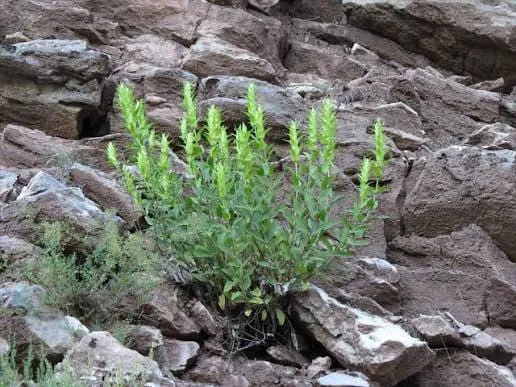
Figure of sideritis griseb on mountain
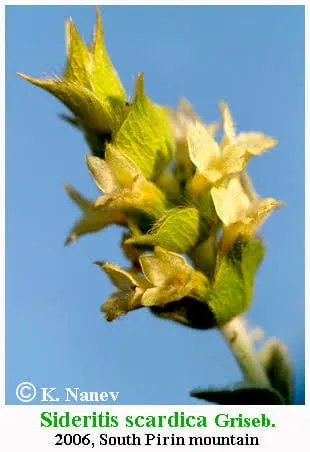
Figure of Sideritis scardica griseb
Name:
Sideritis scardica Griseb.
order: Lamiales
Family: Lamiaceae
Genus: Sideritis
(is an Internationally accepted name (WFO PlantList, 2023) for Herba Sideritis.)
Synonyms:
• Navicularia scardica (Griseb.) Soják
• Sideritis florida Boiss. & Heldr.
• Sideritis raeseri subsp. Florida (Boiss. & Heldr.) Papan. & Kokkini
• Sideritis scardica subsp. Longibracteata Papan. & Kokkini
GEOGRAPHICAL DISTRIBUTION
Sideritis ssp. has been characterized as a genus with more than 150 perennial species widely distributed in the Mediterranean and the Canary and Madeira Islands (Bojovic et al., 2011). The plants grow in the Balkan peninsula, while 17 species are indigenous in Greece alone.
General appearance: Hardy perennial with creeping roots.
Stems - in the bottom are woody, 15-50 cm tall, flower-bearing stems (sprigs)-erect or prostrate, 4-angle; simple or branched (usually unbranched).
Leaves - opposite, entire (smoothed) or serrated leaf blade, leaves vary by their shape: from oblanceolate (long lanceolate) to obtuse - in the lowest veins; to longer in the middle veins; to lanceolate (linear-lanceolate) - acute in the highest veins. Lower leaves have a short stalk, 40-80 mm long, 6-20 mm wide. Upper leaves from the 4th vein upward are prostrate as the stem is shortened gradually from lower to upper leaves.
Bracts have an almost elliptical shape (wide heart shape at the base, acutely pointed to the apex) with soft skin consistency. When ripening, they get a lemon-yellow color. In the first vein, they are 38 mm long and 50-80 mm wide as to the apex of the inflorescence; their dimensions decrease. Flowers are gathered in dense spike-like inflorescences, 50-80 mm long, about 30 mm wide; the receptacle is tube cup-shaped, with ten veins and five equal teeth, pubescent and coated by fine intertwined hairs.[12,16]
The whorl is yellow with a tube hidden in the receptacle, two-lipped with a three-lobe lower lip. Four stems are hidden in the tubes of the whorl. The fruit is dry and decomposed into four nuts. Leaves and stems are white, woolly-villous [12-16]
Depending on the sea level and climate properties, the plant comes out in blossom from the end of June to the beginning of September. (Heywood, 1972). GMT is one of the medicinal and aromatic plants with great global economic importance due to its nutritional value, pharmacological activities, and potential applications in the cosmetic and perfume industries (Kaparakou et al., 2023).[12,16]
Organoleptic properties: Its smell is pleasant, and the taste is slightly bitter (Heywood, 1972). GMT infusions have a pleasant characteristic aroma (Chrysargyris et al., 2023). General identity tests: Macroscopic examinations (Heywood, 1972), thin-layer chromatography (Heiner et al., 2018; Feistel et al., 2018; Pihan et al., 2021), and HPLC (Mroz et al., 2023; Heiner et al., 2018; Feistel et al., 2018).
Purity tests:
Microbiological: Tests for specific microorganisms and microbial contamination limits were described in the WHO guidelines on assessing the Quality of herbal medicines with reference to microbiological contminants.
Foreign organic matter: Aerial part: not more than 2% as described in the WHO guidelines on assessing the Quality of herbal medicines with reference to foreign organic matter (Quality Control Methods for Medicinal Plant Materials, 1998).
Total ash: Aerial part: not more than 10% as described in the WHO guidelines on assessing the Quality of herbal medicines with reference to total ash (Quality control methods for medicinal plant materials, 1998; Panossian, 2023).
Acid-insoluble ash: Aerial part: not more than 2.5% as described in the WHO guidelines on assessing the Quality of herbal medicines with reference to acid-insoluble ash (Quality control methods for medicinal plant materials, 1998).
Water-soluble extractive: Aerial part: not less than 15.0% as described in the WHO guidelines on assessing the Quality of herbal medicines with reference to water-soluble extractives (Quality control methods for medicinal plant materials, 1998). Loss on drying: Aerial part: not more than 12% w/w (Hofrichter et al., 2016); 5.5% w/w/ (Mroz et al., 2023).
Pesticide residues: The recommended maximum limits of pesticides (European Pharmacopeia, 2008) and the WHO guidelines on assessing the Quality of herbal medicines with reference to contaminants and pesticide residues (Quality control methods for medicinal plant materials, 1998).
Heavy metals: For maximum limits and analysis of heavy metals, consult the WHO guidelines on assessing the Quality of herbal medicines with reference to contaminants and residues (Quality control methods for medicinal plant materials, 1998; Panossian, 2023).
Radioactive residues: Where applicable, consult the WHO guidelines on assessing the Quality of herbal medicines with reference to contaminants and residues (Quality Control Methods for Medicinal Plant Materials, 1998).
Traditional uses:[1-3,24]
antimicrobial, analgesic, stomachic, carminative, anti-inflammatory, anti-ulcer, and vasoprotective. It is also used for colds, coughs, and flu.
The genus is drunk as a tea (decoction or infusion of aerial parts), popular in Greece, Turkey, Albania, Kosovo, Bulgaria, and North Macedonia.
2. Phytochemical Profile of Sideritis scardica and Other Sideritis Species:
To protect its own tissues, plants developed an efficient antioxidant system. Among nonenzymatic antioxidants, phenolic compounds deserve special Attention. Qualitative analysis of polyphenolic compounds from several related Sideritis species (S. scardica, S. raeseri, S. taurica, S. syriaca, and S. perfoliata) from the Balkan Penisula revealed that all the taxa produce a similar set of polyphenol. Methanol extracts from the above-mentioned Sideritis species were characterized by the presence of mainly phenylethanoid glycosides (echinacoside, lavandulifolioside, verbascoside, forsythoside A, isoverbascoside, samioside, allysonoside, and leucoseptoside A) and flavonoid acetylglycosides (3-O-methylhypolaetin 7-O-[6-O-acetyl]-allosyl (1→2) glucoside and 4-O-methylhypolaetin 7-O-[6-O-acetyl]-allosyl-(1→2)- [6-O-acetyl]-glucoside), which accounted for 90% of all phenolic compounds [3].
Apart fromflavonoid glycosides, Sideritis species (S. scardica and S. raeseri) also contain 5,7hydroxyflavones (apigeninandluteolin) and 8-hydroxyflavones (isoscutellarein (8-OHapigenin) and hypolaetin (8-OHluteolin) andtheirderivatives) [5].
The presence of 8-hydroxyflavones such as isoscutellarein and hypolaetin and their methoxy derivatives is very characteristic for Sideritis plants [6]. Furthermore, in Sideritis extracts hydroxy cinnamic acid derivatives were detected:3-O-caffeoyl quinic acid and 5-O-caffeoyl quinic acid (main representative of chlorogenic acids), p-coumaric acid 4-O-glucoside, and feruloyl quinic acid [3,5].
Later studies confirmed that plants belonging to the genus Sideritis (samples of S.scardica and S.raeseri) collected from the Balkans countries are similar in chemical composition [4]. Similar polyphenolic pattern indicates that all these species are very closely related and may exert the same health benefits on human. Although the genus Sideritis belongs to the Lamiaceae family, it is not very rich in essential oils. Despite the low concentration of essential oils, the infusion of S.scardica has a very pleasant aroma and it is used as are freshing herbal tea, sometimes with honey and lemon juice[6]. According to the review of Todo rovaetal.[5] the chemical composition of essential oils extracted from S.scardica differs
significantly depending on the location of obtaining plants. These differences may result from soil and climate conditions, as well as parts of the plants from which oils were extracted (flowering tops, and it is used as a refreshing herbal tea, sometimes with honey and lemon juice [6]. the chemical composition of essential oils extracted from S. scardica differs significantly depending on the location of obtaining plants. These differences may result from soil and climate conditions, as well as parts of the plants from which oils were extracted (flowering tops, leaves or whole aerial parts). Notwithstanding the quantitative disparity in the S. scardica essential oils dominate monoterpenes, sesquiterpenes, and diterpenoids. leaves or whole aerial parts). Notwithstanding the quantitative disparity in the S. scardica essential oils dominate monoterpenes, sesquiterpenes, and diterpenoids. The major components of water-distilled essential oil from plants collected in European part of Turkey were β-pinene (17.9%), carvacrol (14.8%), and α-pinene (7.3%) [8]. In recent researches, other authors examined two different samples of S. scardica organically cultivated in two regions of Greece and noticed that main constituents of essential oils were as follows; α-pinene (8.2–17.8%), β-pinene (12.8–13.1%), cis-caryophyllene (6.6–7.6%), bicyclogermacrene (6.6–7.1%), The major components of water-distilled essential oil from plants collected in European part of Turkey were β-pinene (17.9%), carvacrol (14.8%), and α-pinene (7.3%) [8].
Table 2: Important Phenolic Compound in Sideritis Species
| COMPOUND | REFERENCE |
|---|---|
| Phenylethanoid glycosides | |
| Lavandulifolioside | [6] |
| Verbascoside | [6] |
| Forsythoside A | [6] |
| Echinacoside | [6] |
| Isoverbascoside | [6,5,9] |
| Samioside | [6,5] |
| Leucoseptide A | [6,5] |
| Allysonoside | [6,5] |
| Martynoside | [9] |
| Phenolic acids | |
| 3-Caffeoylquinic acid | [6] |
| 5-Caffeoylquinic acid | [9] |
| Feruloylquinic acid | [9] |
| p-Coumaric acid 4-O-glucosides | [6] |
| 6-O-Caffeoyl-glucose | [9] |
| Flavonoid glycosides | |
| 3’-O-Methylhypolaetin 7-O-[6’’’-O-acetyl]-allosyl (1→2) glucoside | [6,5] |
| 4’-O-Methylhypolaetin 7-O-[6’’’-O-acetyl]-allosyl-(1→2)- [6’’-O-acetyl]-glucoside | [6,5] |
| 4’-O-Methylisoscutellarein 7-O-[6’’-O-acetyl]-allosyl-(1→2) glucoside | [5] |
| 4’-O-Methylisoscutellarein 7-O-allosyl (1→2) glucoside | [6,5] |
| 3’-O-Methylhypolaetin 7-O-allosyl (1→2) glucoside | [6] |
| 4’-O-Methylisoscutellarein 7-O-[6’’’-O-acetyl]-allosyl-(1→2)-[6’’-O -acetyl]-glucoside | [6,5] |
| Isoscutellarein 7-O-[6’’’-O-acetyl]-allosyl (1→2) glucoside | [6,5] |
| Isoscutellarein 7-O-[6’’’-O-acetyl]-allosyl-(1→2)-[6’’-O-acetyl]-glucoside | [6] |
| Isoscutellarein 7-O-allosyl (1→2) glucoside | [6,5] |
| Hypolaetin 7-O-[6’’’-O-acetyl]-allosyl (1→2) glucoside | [5,9] |
| Hypolaetin 7-O-allosyl-(1→2)-[6’’-O-acetyl] glucoside | [6,5,9] |
| Apigenin 7-(4’’-p-coumaroylglucoside) | [6,5,9] |
| Apigenin 7-(6’’-p-coumaroylglucoside) | [6,5,9] |
| Apigenin 7-O-allosyl (1→2) glucoside | [5,9] |
| Apigenin 7-O-[6’’-O-acetyl]-allosyl (1→2) glucoside | [6,5,9] |
| Luteolin 7-O-allosyl (1→2) glucoside | [5] |
| Luteolin 7-O-allosyl-(1→2)-[6’’-O-acetyl]-glucoside | [5] |
| Luteolin 7-O-[6’’’-O-acetyl]-allosyl (1→2) glucoside | [5] |
| Luteolin 7-O-[6’’’-O-acetyl]-allosyl-(1→2)-[6’’-O-acetyl]-glucoside | [9] |
| Hypolaetin 7-O-allosyl (1→2) glucoside | [6] |
| Apigenin 7-O-glucoside | [9] |
| Chryseriol 7-O-[6’’’-O-acetyl]-allosyl (1→2) glucoside | [6] |
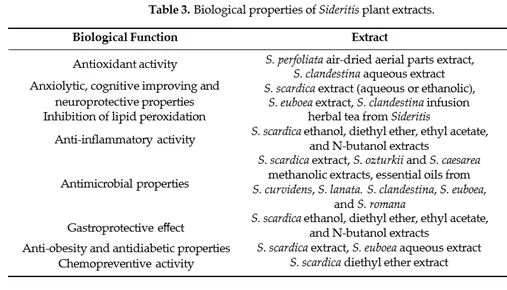
3. Coumarin (8-methoxycoumarsabin, Compound 1) — Antiviral Testing
Compound 1 was tested in an in vitro pretreatment assay against SARS-CoV-2. Infectious virus particles (100 PFU, strain 2019-nCoV/IDF0372/2020) were pre-incubated with the compound, then added to Vero E6 cells; cell viability after 72 h was measured using the CellTiter-Glo® Luminescent Cell Viability Assay as a surrogate for infection, with protective effect calculated from luminescence ratios against virus-only and untreated controls. Compound 1 was tested at a concentration of 2.5 μg/mL (c = 9.4 μM, n = 2) alongside Remdesivir as a positive control at 3.3 μM (n = 3) and 10 μM (n = 3). The results showed compound 1 produced a modest protective effect at 9.4 μM, statistically comparable to Remdesivir at the lower 3.3 μM concentration, but substantially weaker than Remdesivir at 10 μM (~0.97% protective effect vs. ~0.12–0.15%). The whole DCM extract of S. cypria (in which compound 1 is the dominant coumarin) had separately shown a stronger effect — 57% ± 9% protection at 33.3 μg/mL with no cytotoxicity to Vero E6 cells at that concentration.[1,8,32]
Extract used
Dichloromethane (DCM) extracts
Aerial parts of 8 Sideritis taxa
Extracts redissolved in DMSO
Tested at 1.2–100 µg/mL
4.S. scardica Extracts (IVS, FGP, ICP) — Antitumor Testing[1,8,32]
Three extract types — in vitro-propagated shoots (IVS), field-grown in vitro-obtained plants (FGP), and in situ-cultivated plants (ICP) — were tested via the MTT dye reduction assay on four cell lines: BALB/3T3 (non-tumor control), HeLa (cervical), HT-29 (colorectal), and MCF-7 (breast cancer). Cells were treated with four concentrations (125–1000 μg/mL) for 24 and 48 h, then optical density was read at 540 nm after MTT-formazan solubilization. IC50 values were calculated by nonlinear regression. Results: FGP showed the broadest cytotoxicity, with the strongest effect on MCF-7 (IC50 633.5 μg/mL at 24 h) and significant toxicity to non-tumor BALB/3T3 cells only at concentrations >125 μg/mL after 48 h. ICP showed selective cytotoxicity toward MCF-7 (IC50 709.1–719.2 μg/mL) with minimal effect on non-tumor cells (>1000 μg/mL, i.e., no meaningful toxicity). IVS showed low cytotoxicity at 24 h across all lines but became markedly more active against HeLa by 48 h (IC50 629.2 μg/mL), exceeding the other two extracts on that cell line specifically, while leaving non-tumor cell viability essentially unaffected.
A follow-up cytomorphological analysis was performed on HeLa cells treated with the IVS extract at its IC50 for 48 h, using DAPI staining (nuclear morphology) and acridine orange/ethidium bromide (AO/EB) dual staining (viability/apoptosis discrimination) under fluorescence microscopy. Control cells showed normal mitotic figures and homogenous green (viable) AO/EB signal; IVS-treated cells showed a marked reduction in mitotic cells and the appearance of orange/red-staining cells consistent with early/late apoptosis and necrosis.
Extract used:
ICP – in-situ cultivated plants
FGP – in-vitro-obtained, field-grown plants
IVS – in-vitro-propagated shoots
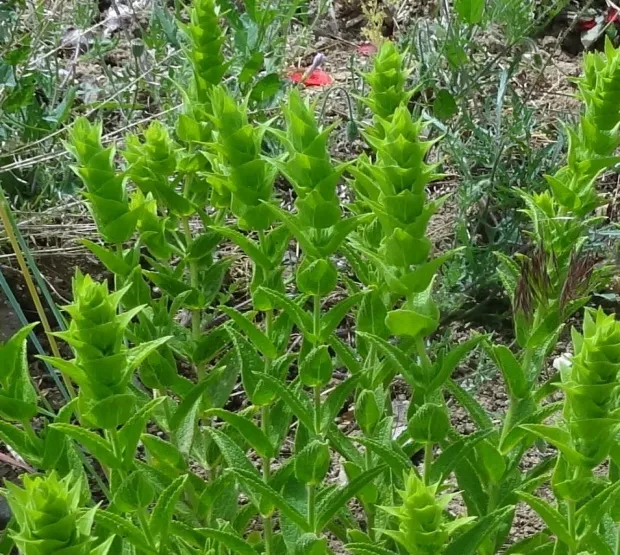
figure of sideritis perfoliata in wild area
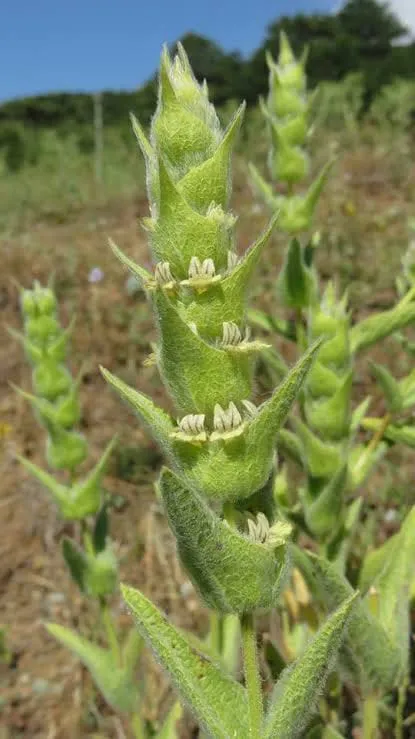
Figure of sideritis perfoliata
S. perfoliata Extracts (Ethyl Acetate, Methanol, Water) — Antioxidant Testing[12,16]
Antioxidant capacity was assessed using nine complementary assays: four radical-scavenging assays — DPPH, ABTS radical cation, superoxide anion (O2·â»), and nitric oxide (·NO) — expressed as mg Trolox equivalents (TE)/g extract; three reducing-power assays — potassium ferricyanide, CUPRAC, and FRAP, also as mg TE/g; total antioxidant capacity by phosphomolybdenum (mg ascorbic acid equivalents/g); β-carotene–linoleic acid bleaching (% inhibition); and ferrous ion chelating activity (mg EDTA equivalents/g). Across nearly all assays, activity ranked water > methanol > ethyl acetate (e.g., DPPH: 405.53 vs. 266.25 vs. 101.61 mg TE/g, respectively), tracking with total phenolic content. The exception was β-carotene bleaching, where the order was water > ethyl acetate > methanol, attributed to rosmarinic acid being present only in the ethyl acetate extract.
Extracts used:
Ethyl acetate extract
Methanol extract
1.Sideritis Perfoliata Anti-Wrinkle[12,16]
Wrinkle formation is closely tied to the breakdown of elastin, the protein that keeps skin firm and elastic, by the enzyme elastase. In this study, the ethanolic extract of Sideritis perfoliata showed noteworthy elastase-inhibitory activity, with an IC50 of 57.18 ± 3.22 µg/mL, compared to 18.45 ± 2.23 µg/mL for the positive control, ursolic acid. This represents the first report of elastase inhibition for S. perfoliata or any species in the genus. The result compares favorably with other plant extracts studied for the same activity — for example, Areca catechu (IC50 42.4 µg/mL) and Peltophorum africanum (IC50 55.83 µg/mL) — placing S. perfoliata in a similar range of efficacy. The authors attribute this activity in part to the essential oil's monoterpene content, since related monoterpenes (e.g., p-cymene, carvacrol, thymol) have separately been shown to inhibit elastase. Together, these findings support the plant's traditional use for wound healing and suggest a potential application in anti-aging and antiwrinkle skincare formulations
Extract used
Extract: Ethanolic extract
Solvent: Ethanol
Test: Elastase inhibition assay
ICâ‚…â‚€: 57.18 ± 3.22 µg/mL
Positive control: Ursolic acid — ICâ‚…â‚€ 18.45 ± 2.23 µg/mL
2.Sideritis perfoliata Extracts — Enzyme Inhibition Testing
The same three extracts were tested against five enzymes relevant to neurodegeneration, hyperpigmentation, and diabetes: acetylcholinesterase (AChE) and butyrylcholinesterase (BChE) via Ellman's colorimetric method (galantamine equivalents); tyrosinase via the dopachrome method with L-DOPA substrate (kojic acid equivalents); α-amylase via the Caraway–Somogyi iodine/potassium iodide method (acarbose equivalents); and α-glucosidase via a PNPG-based colorimetric assay (acarbose equivalents). Results showed the water extract had the lowest AChE/BChE and α-glucosidase inhibitory activity but the highest tyrosinase inhibitory activity (14.65 mg kojic acid equiv./g, versus 5.97 and 7.80 for ethyl acetate and methanol), consistent with its higher phenolic content. Methanol extract showed the strongest α-amylase inhibition (48.76 mg acarbose equiv./g). Ethyl acetate and methanol extracts performed similarly against AChE and tyrosinase
3.Anti-Inflammatory and Immunomodulatory Effects[1,3,8,24,31]
Sideritis helps reduce inflammation not just by fighting free radicals, but also by directly affecting the signals and chemicals that cause inflammation, as shown in animal studies, lab tests on cells, and computer models that predict how molecules interact [1,2]. The most thorough in vivo characterization used carrageenan-induced rat paw edema with S.scardica extracts: diethyl ether and n-butanol fractions produced ~50% inflammation reduction at 200 and 100 mg/kg, respectively, comparable to indomethacin (50% at 4 mg/kg), with HPLC fingerprinting attributing the effect primarily to apigenin, luteolin, and their glycosides; all four fractions also showed dose-dependent gastroprotection com-parable to ranitidine against ethanol-induced gastric lesions [18]. At the cell level, extracts from S.pisidica changed how melanoma cells make pro-inflammatory cytokines.At a specific concentration called IC50, these extracts increased levels of TNF-α, TGF-β, DEF-β2, and IL-1β.This shows that the extracts have an immune-boosting effect instead of weakening the immune system in the tumor area.This suggests that these extracts might help the body's immune system fight cancer while also protecting healthy tissues from damage by acting as antioxidants [9].Another study on S.bilgeriana found that its metabolic extract reduced cell movement and lowered TNF-α and IL-1β in a pleurisy model.These effects were linked to less activity in a pathway called NF-κB.Similar results were seen in models of nerve pain, where these extracts helped reduce pain by lowering TNF-α and NF-κB levels [19]. The extracts from S.congesta showed protection for liver cells that were damaged by acetaminophen (APAP) in HepG2 cells.They helped restore the activity of enzymes like SOD and CAT, kept the levels of GSH steady, reduced the increase in MDA, and also had anti-mutagenic effects [12]. The underlying molecular reasons for these effects have been studied using computer models and physical science methods. In a computer-based screening of 657 chemicals from Sideritis, verbascoside and apigenin 7,4′-bis (trans-p-coumarate) were found to be the strongest predicted molecules that could bind to both the NLRP3 inflammasome and NF-κB.This prediction was tested in a lab experiment called microscale thermophoresis, which showed that verbascoside binds to NLRP3 with a K_d value of 0.67 ± 0.18 µM and to NF-κB with a K_d value of about 0.01 µM [20]. The prediction of docking along with the direct measurement of binding offers an explanation at the molecular level for the anti-inflammatory effects of preparations rich in verbascoside.However, that study did not measure the suppression of downstream pathways in a cellular test that checks the NF-κB/NLRP3 system, and this needs to be confirmed in future research [20]. Because NF-κB and NLRP3 signaling are linked to long-term inflammation and cancer development, the same pattern of binding has been suggested to explain both the inflammation-reducing and cancer-fighting effects of verbascoside.[2-6,9,14,16]
Methanolic and acetone extracts-Anticancer activity[1,8,32]
The anticancer activity of Sideritis niveotomentosa was evaluated using the MTT cytotoxicity assay. Methanolic and acetone extracts prepared from the leaves and flowers of the plant were tested against DLD1 (human colorectal cancer), HL60 (human leukemia), and ARH77 (human multiple myeloma) cell lines. The cells were treated with different concentrations of the extracts for 24 and 48 hours, and cell viability was determined by the MTT assay. The extracts showed dose- and time-dependent cytotoxic effects against the tested cancer cell lines.
8.SidTea+™ Extract — In Vitro Cell-Free Testing[10,11]
The extract's total phenolic content (TPC) was determined by the Folin–Ciocalteu method (gallic acid equivalents, 765 nm), yielding 112 mg GAE/g extract. Radical-scavenging capacity was assessed by DPPH assay (515 nm, ethanolic DPPH solution, 30 min reaction), giving an IC50 of 157.82 μg/mL.
9.SidTea+™ Extract — Human Clinical Testing1,3,7,10-12]
In a randomized, double-blind, placebo-controlled trial, 28 healthy adults consumed 1500 mg/day of SidTea+™ or placebo for 4 weeks, with physiological, metabolic, and redox parameters assessed pre- and post-supplementation. Physiological/performance testing included resting blood pressure (manual sphygmomanometer), resting heart rate (telemetry), handgrip strength (Jamar dynamometer), and estimated VO2max (single-stage treadmill test). SidTea+™ significantly reduced systolic blood pressure (−10.8 mmHg, p = 0.002), mean arterial pressure (−4.5 mmHg, p = 0.026), and resting heart rate (−3.1 bpm, p = 0.036), and increased estimated VO2max (+1.1 mL/kg/min, p = 0.031).
Metabolic testing used an automated clinical chemistry analyzer for serum markers (glucose, lipid panel, liver enzymes, renal markers). SidTea+™ significantly reduced γ-GT (−3.7 U/L, p = 0.039) and SGPT (−3.3 U/L, p = 0.049), with no significant change in glucose, cholesterol fractions, or other markers.
Redox testing was performed spectrophotometrically on plasma (total antioxidant capacity/TAC, thiobarbituric acid reactive substances/TBARS, protein carbonyls) and erythrocyte lysate (glutathione, catalase activity), normalized to hemoglobin where relevant. SidTea+™ significantly increased plasma TAC (p < 0.001) and decreased TBARS (p = 0.008 within-group; p = 0.021 vs. placebo post-supplementation), with no significant change in glutathione, catalase, or protein carbonyls.
CONCLUSION:
Sideritis species, particularly Sideritis scardica and Sideritis perfoliata, are rich sources of biologically active phytochemicals, including phenylethanoid glycosides, flavonoids, phenolic acids, coumarins, and terpenes. The reported studies demonstrate significant antioxidant, enzyme-inhibitory, antimicrobial/antiviral, cytotoxic, and potential anti-aging activities.[12,16]
Among these findings, the elastase-inhibitory activity of S. perfoliata is particularly relevant to anti-wrinkle applications, as inhibition of elastase may help protect elastin and maintain skin elasticity. Its strong antioxidant activity may provide additional protection against oxidative stress associated with skin aging. Studies on S. scardica extracts also indicate potential biological activities, including effects observed in cancer-cell models and improvements in selected physiological and antioxidant parameters in a small human clinical trial.[10,11]
Overall, the available evidence suggests that Sideritis species have considerable potential as sources of natural bioactive compounds for pharmaceutical, nutraceutical, and cosmetic applications. However, many findings are based on in vitro or preliminary studies, and further standardized animal studies, larger and longer human clinical trials, identification of active compounds, dose optimization, and safety evaluation are needed before therapeutic or anti-aging claims can be firmly established.
REFERENCES

Sumit Kamble, Shital Jagtap, From Traditional mountainTea to Modern Medicine: Chemical and Therapeutic Insight into Sideritis Species, Int. J. Sci. R. Tech., 2026, 3 (10), 1456-1468. https://doi.org/10.5281/zenodo.23762592
 10.5281/zenodo.23762592